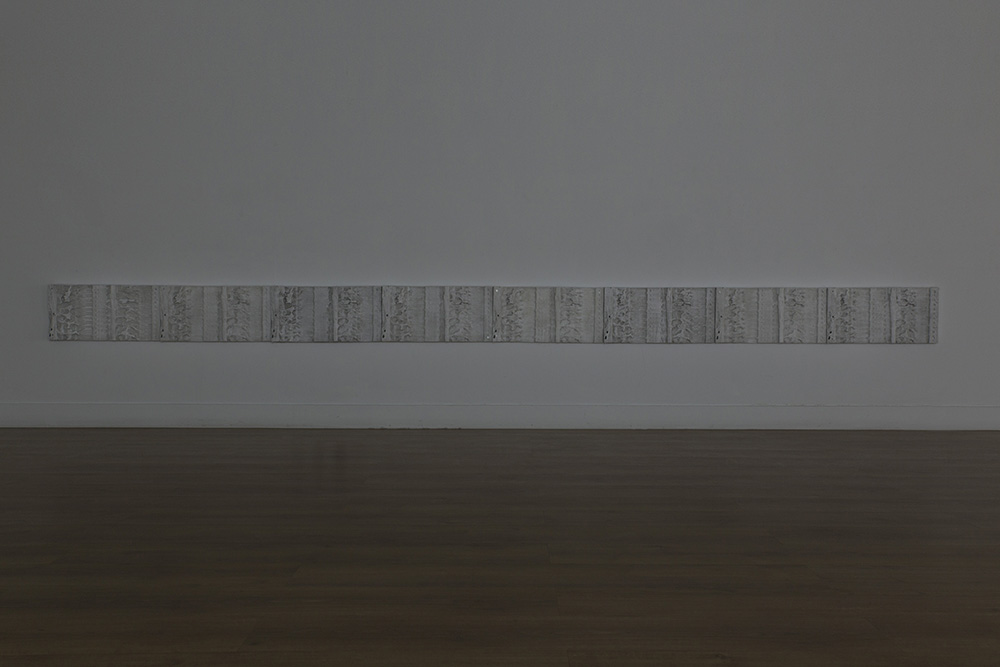
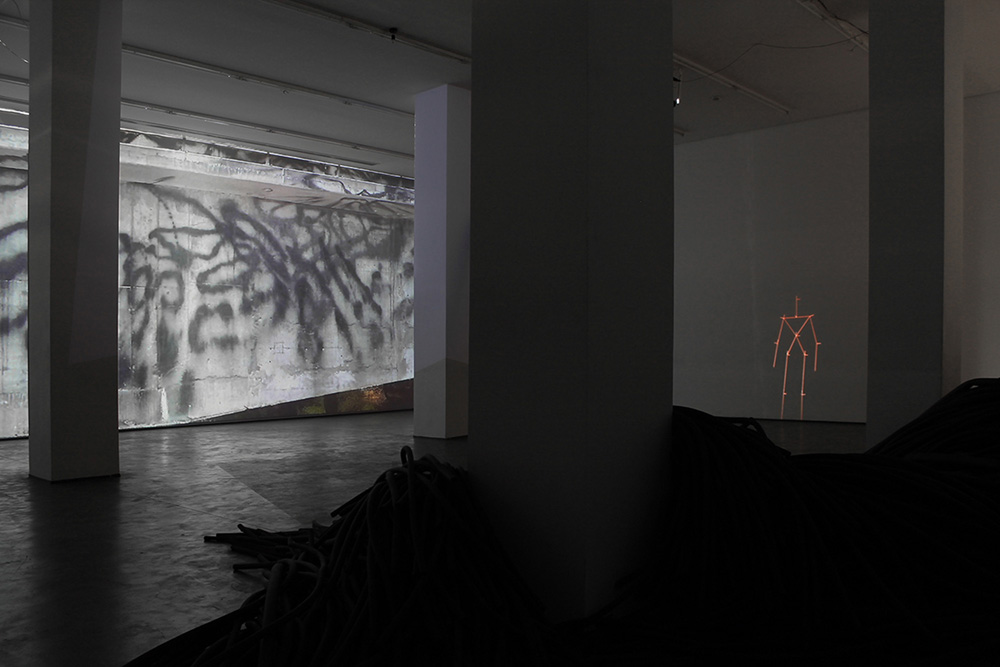
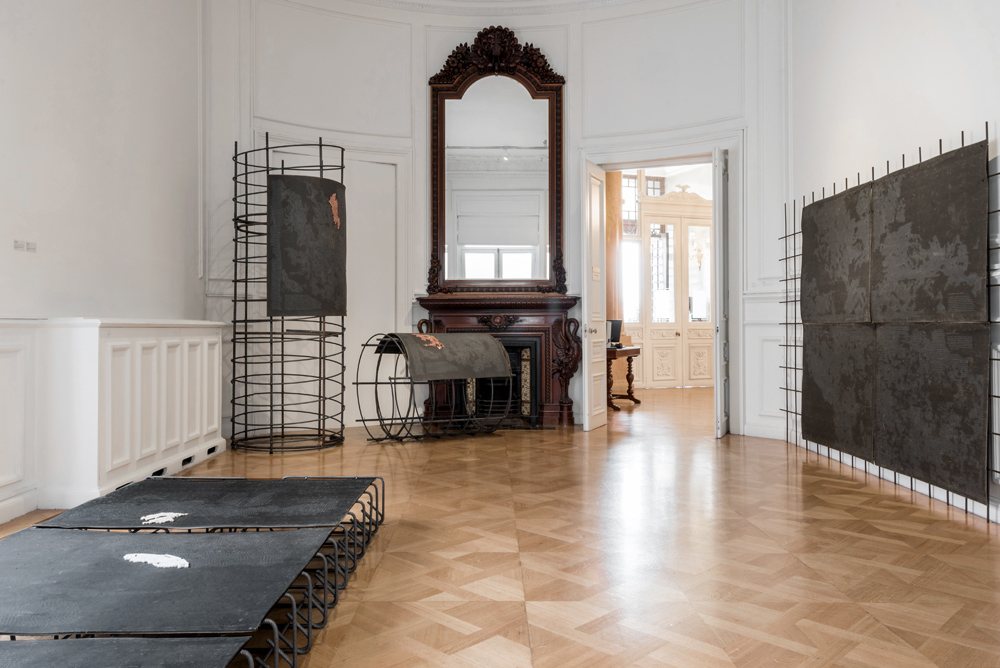
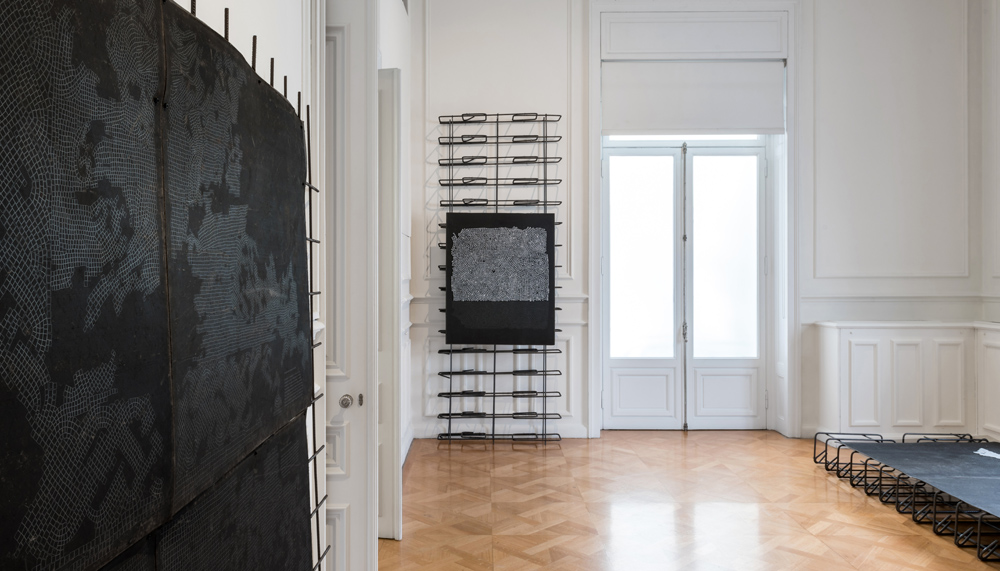
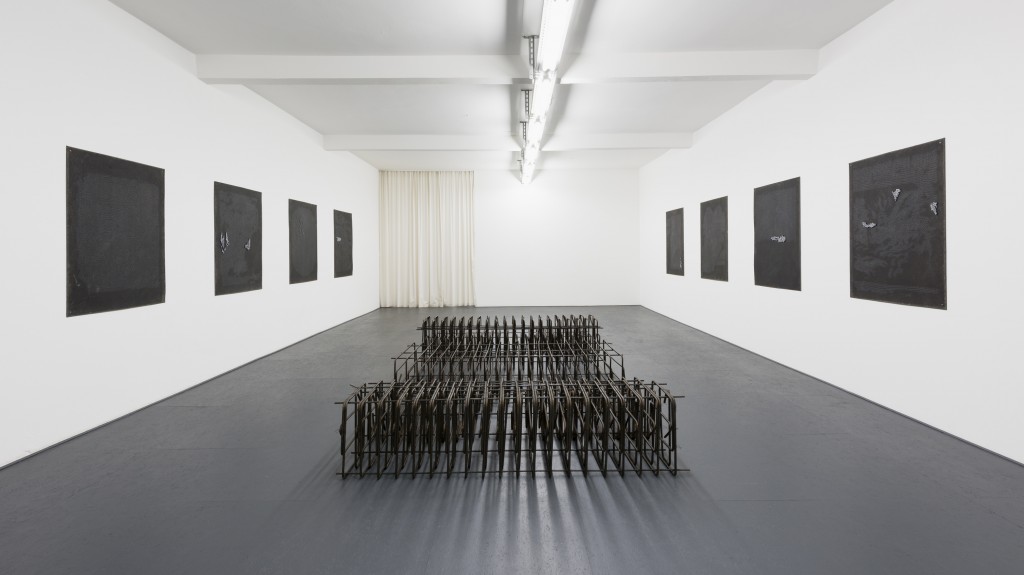
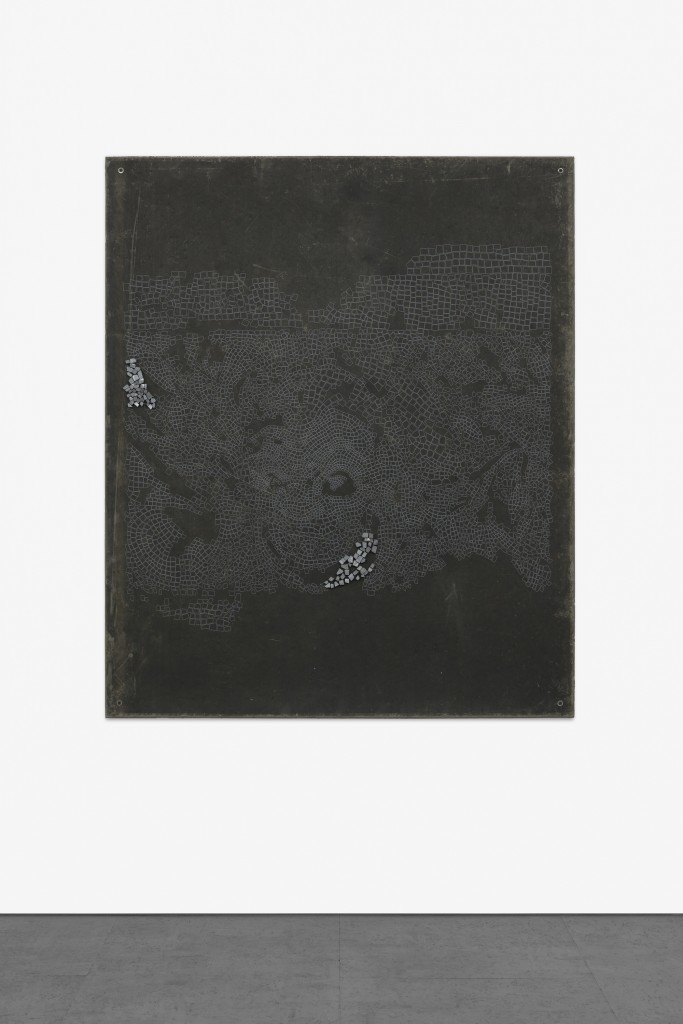
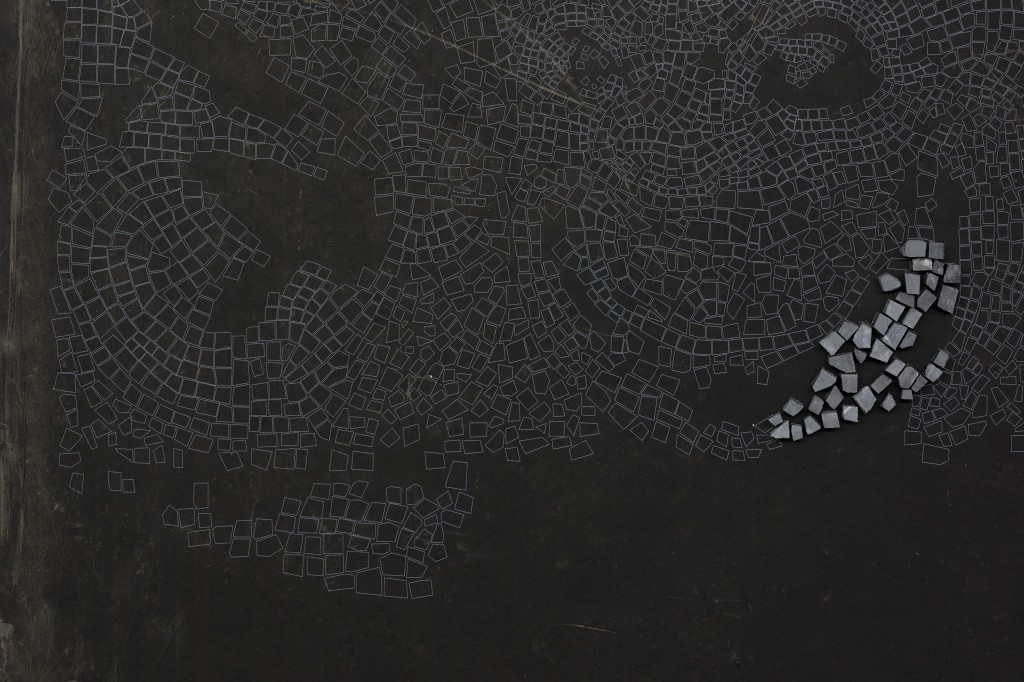
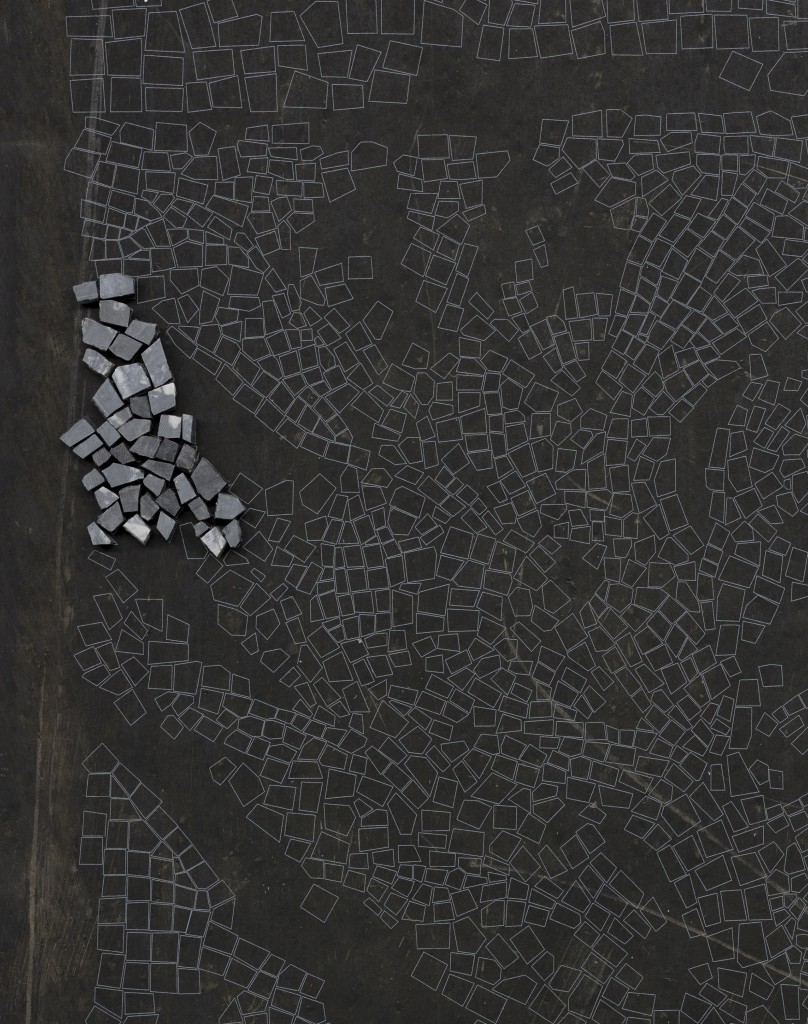
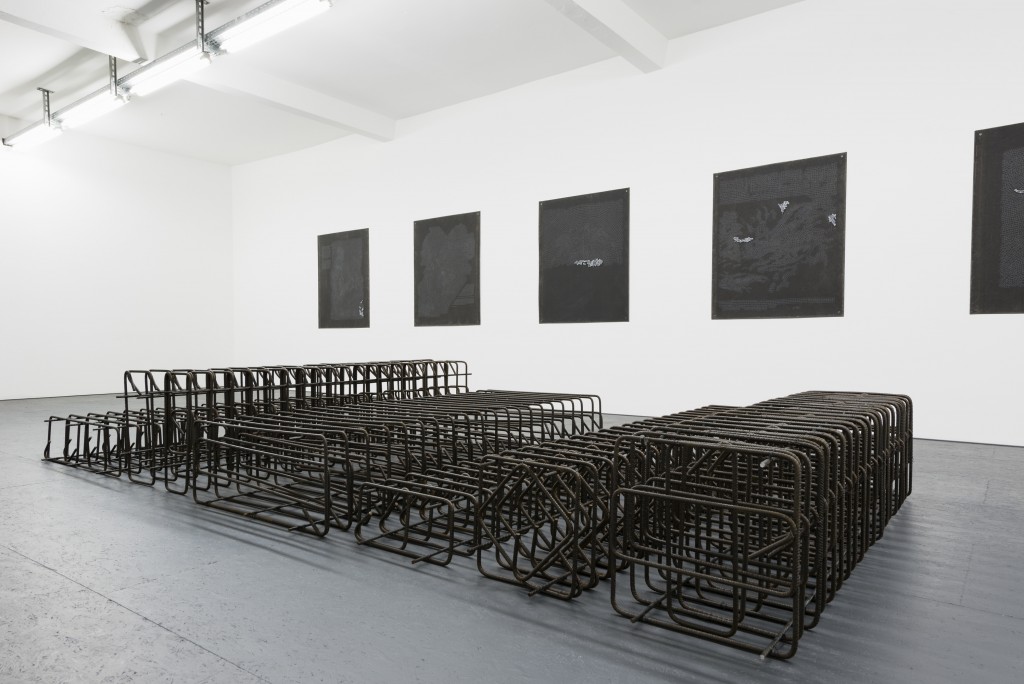
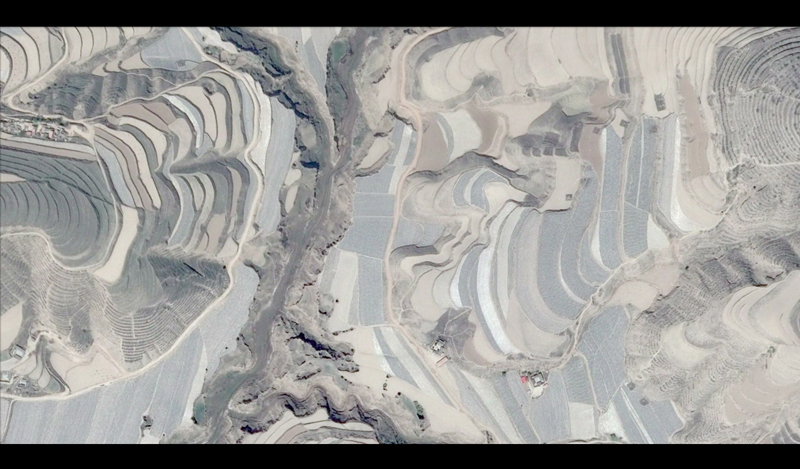
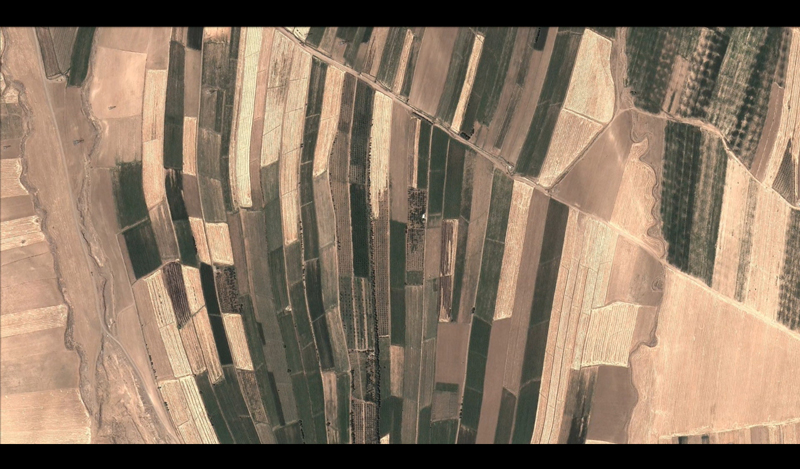
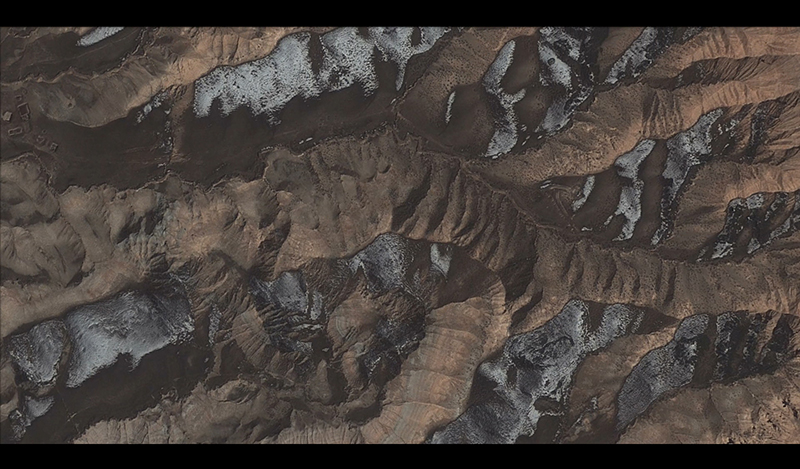
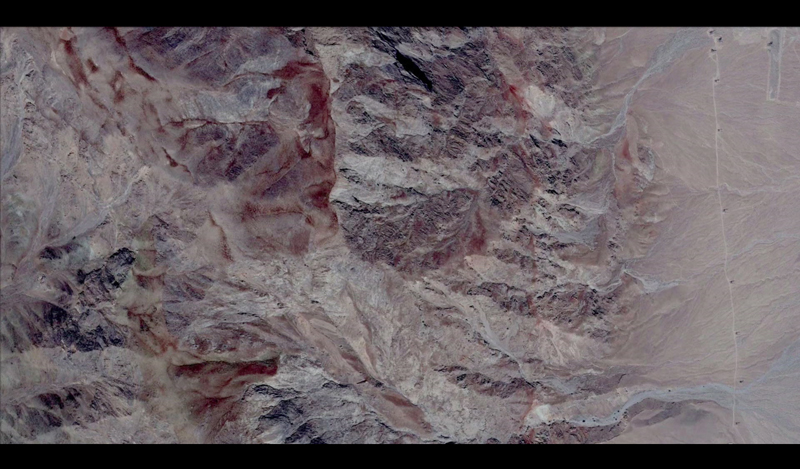
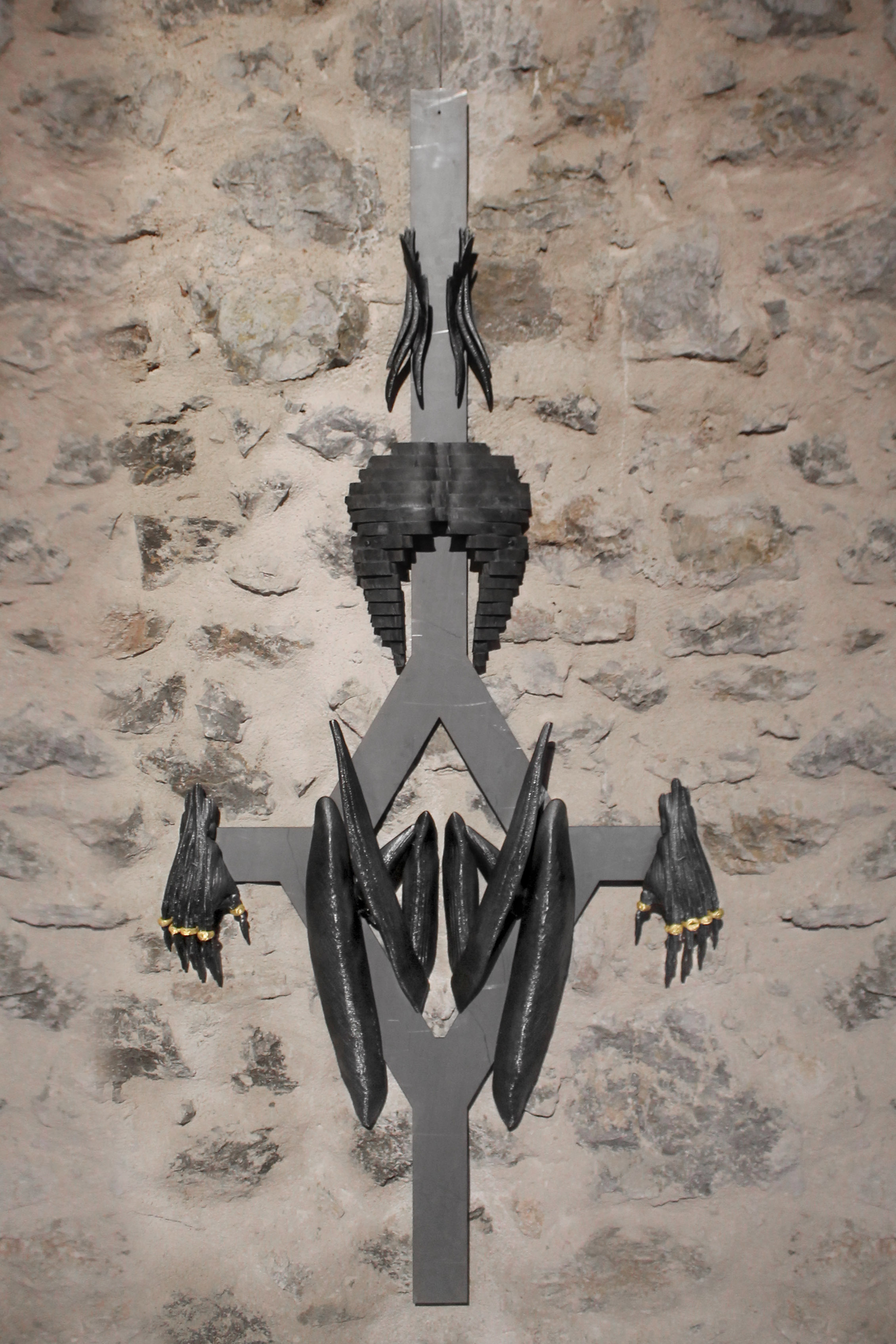
O R A C L E : a site of historical memory and projection of future possibilities; an assemblage of mythological, historical, and speculative beings that channel divine wisdom; or an artefact of language, offering cryptic messages open to interpretation.
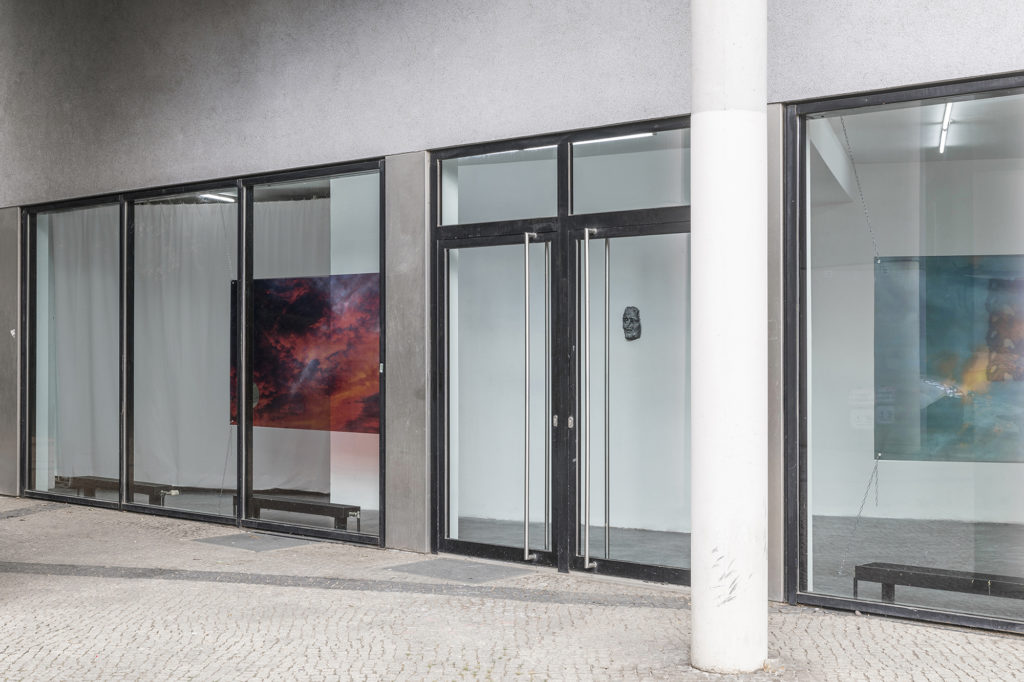
Oracle examines how narratives of progress, identity, and survival are shaped by both natural forces and human actions. It presents a cyclic perspective of history, where past, present, and future converge, suggesting that narratives resurface in new forms rooted in our collective consciousness. Drawing on the potential of ruins, Petros Moris explores how fragments of history can serve as foundations for alternative futures, transforming remnants into symbols of renewal. Taking place in the subterranean gallery space of Duarte Sequeira, Oracle embodies the buried histories of geological spaces, using their (in)tense atmosphere as a metaphor for collapsing timelines. The exhibition weaves geological, industrial, and historical narratives, reflecting the processes of extraction and their psychosocial impacts. By applying the concept of the oracle, Moris addresses contemporary uncertainties related to technological, socioeconomic, and environmental shifts, revealing parallels between these narratives and the complex realities of resource extraction.
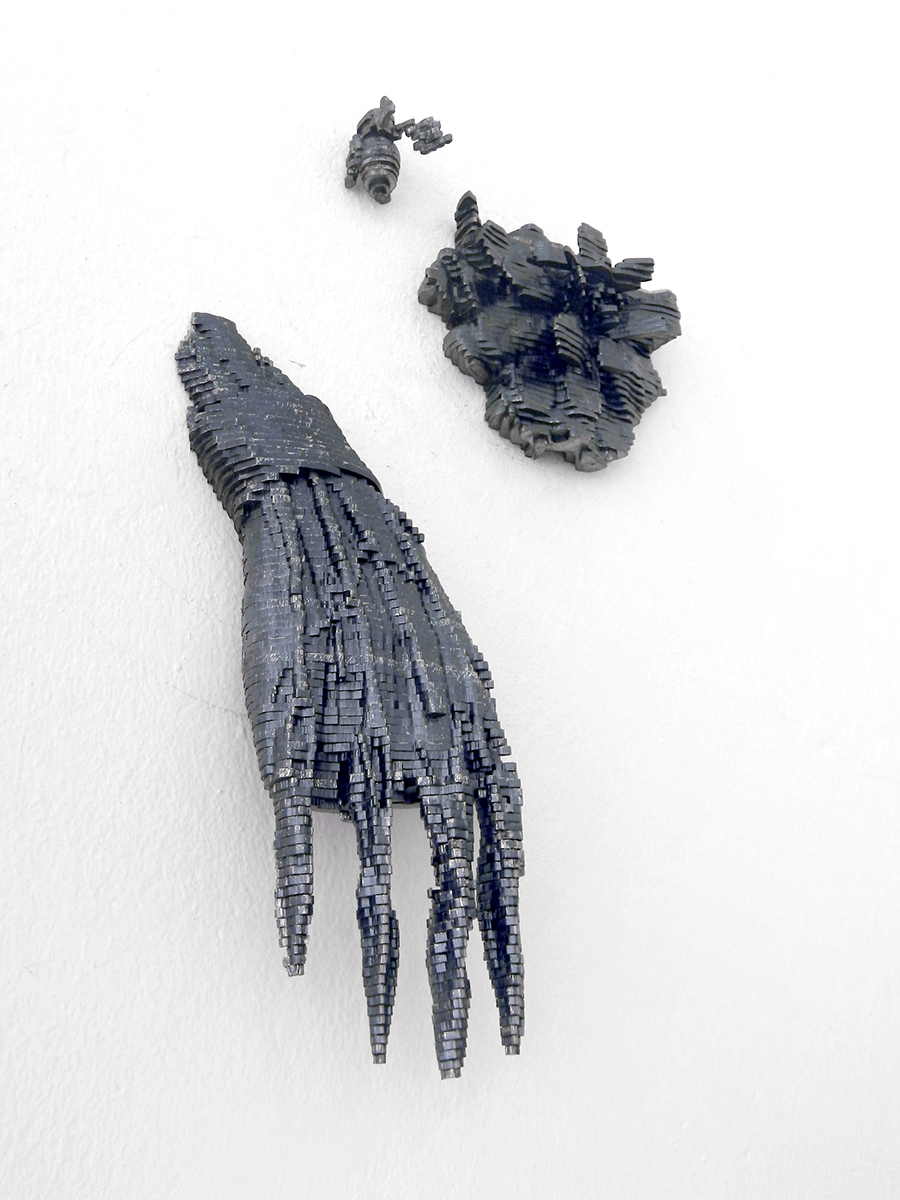
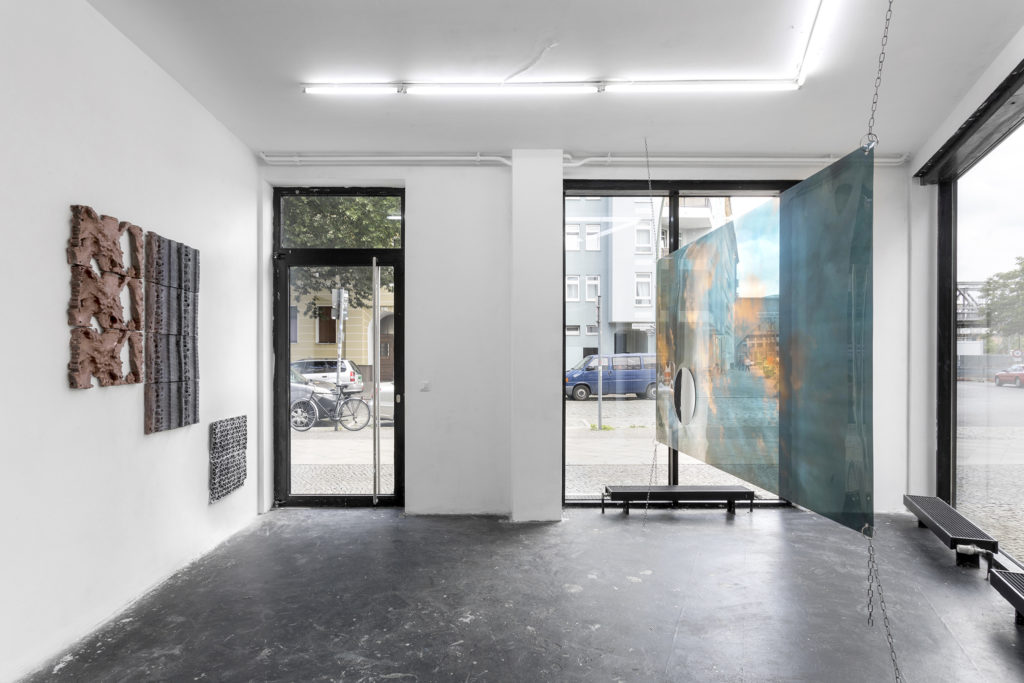
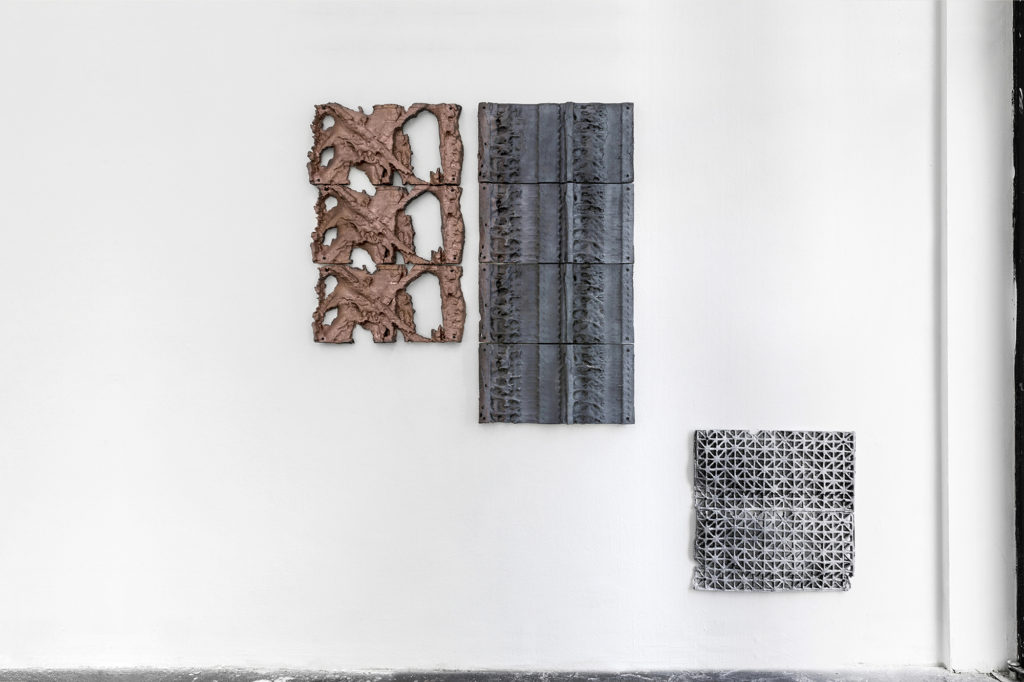
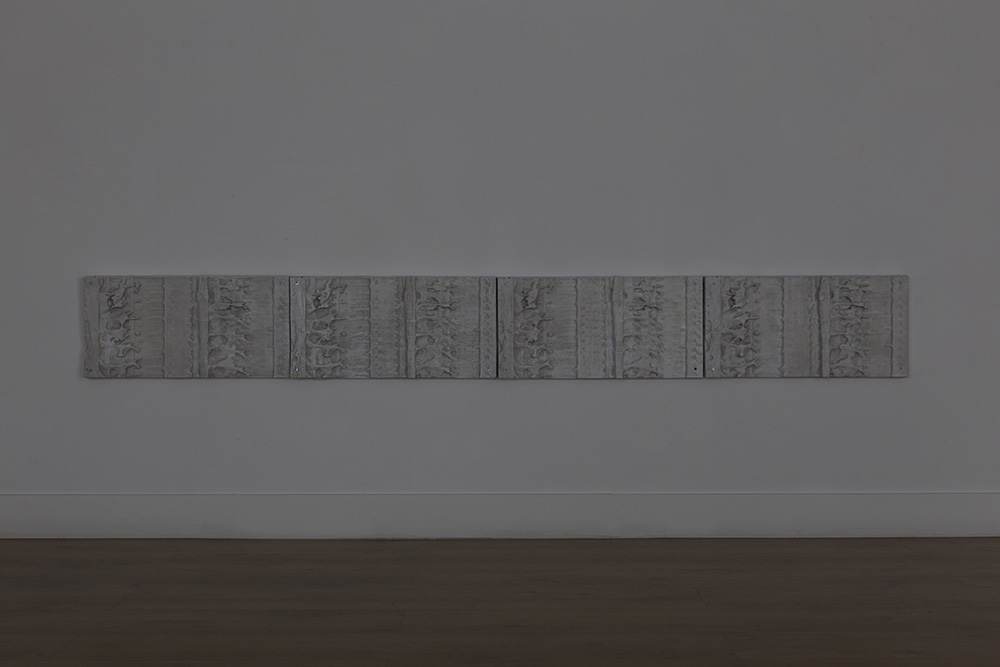
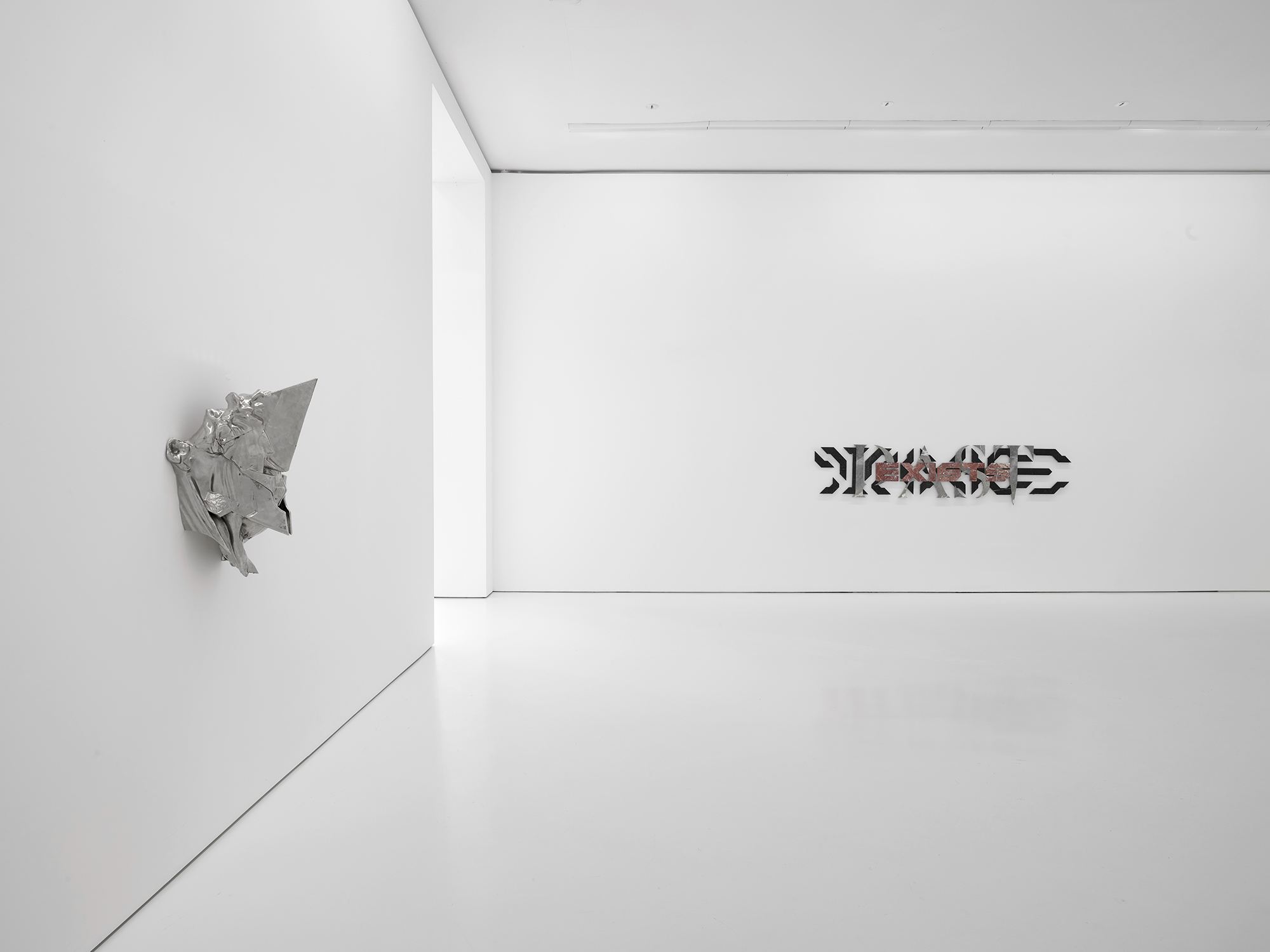
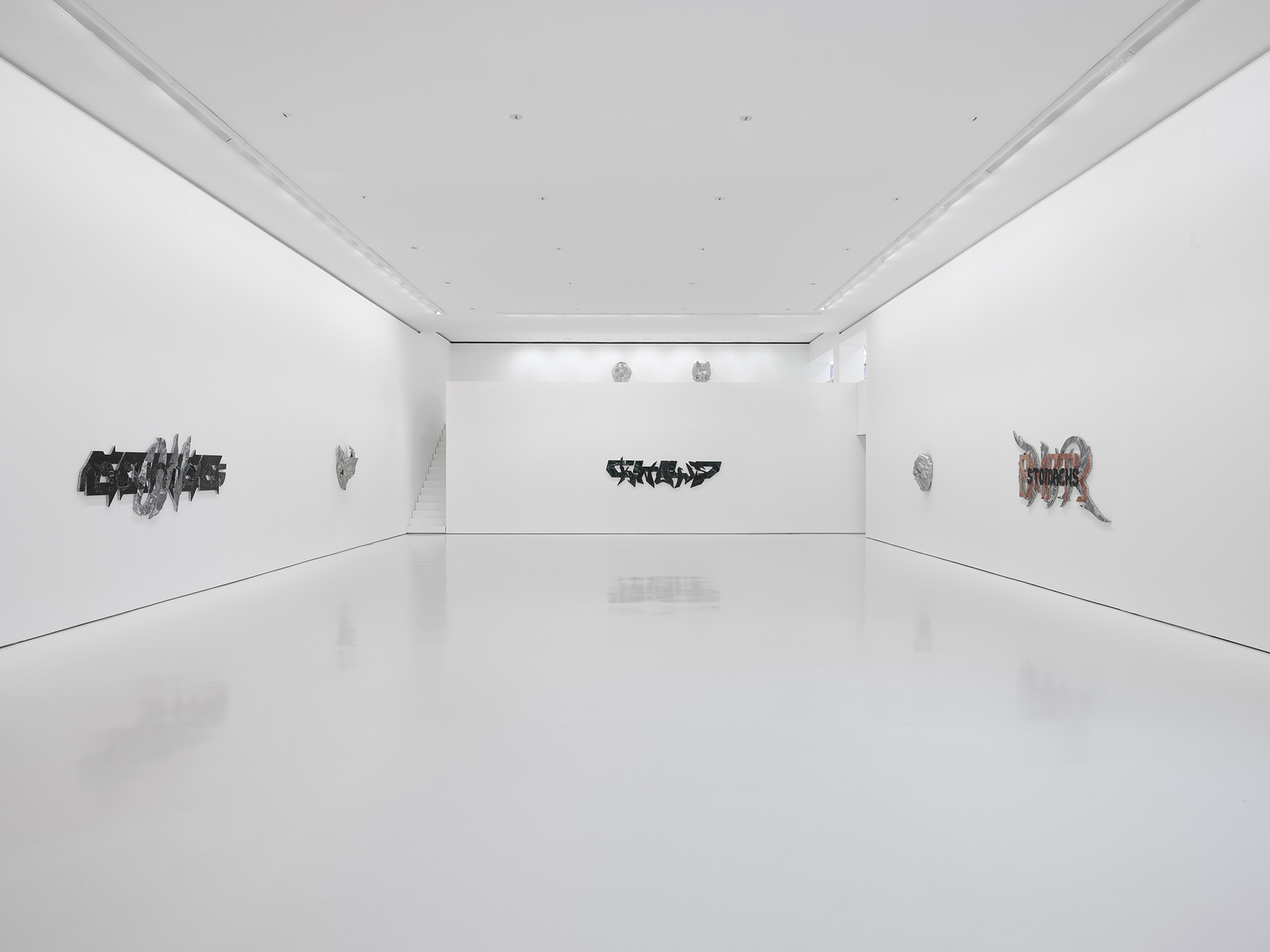
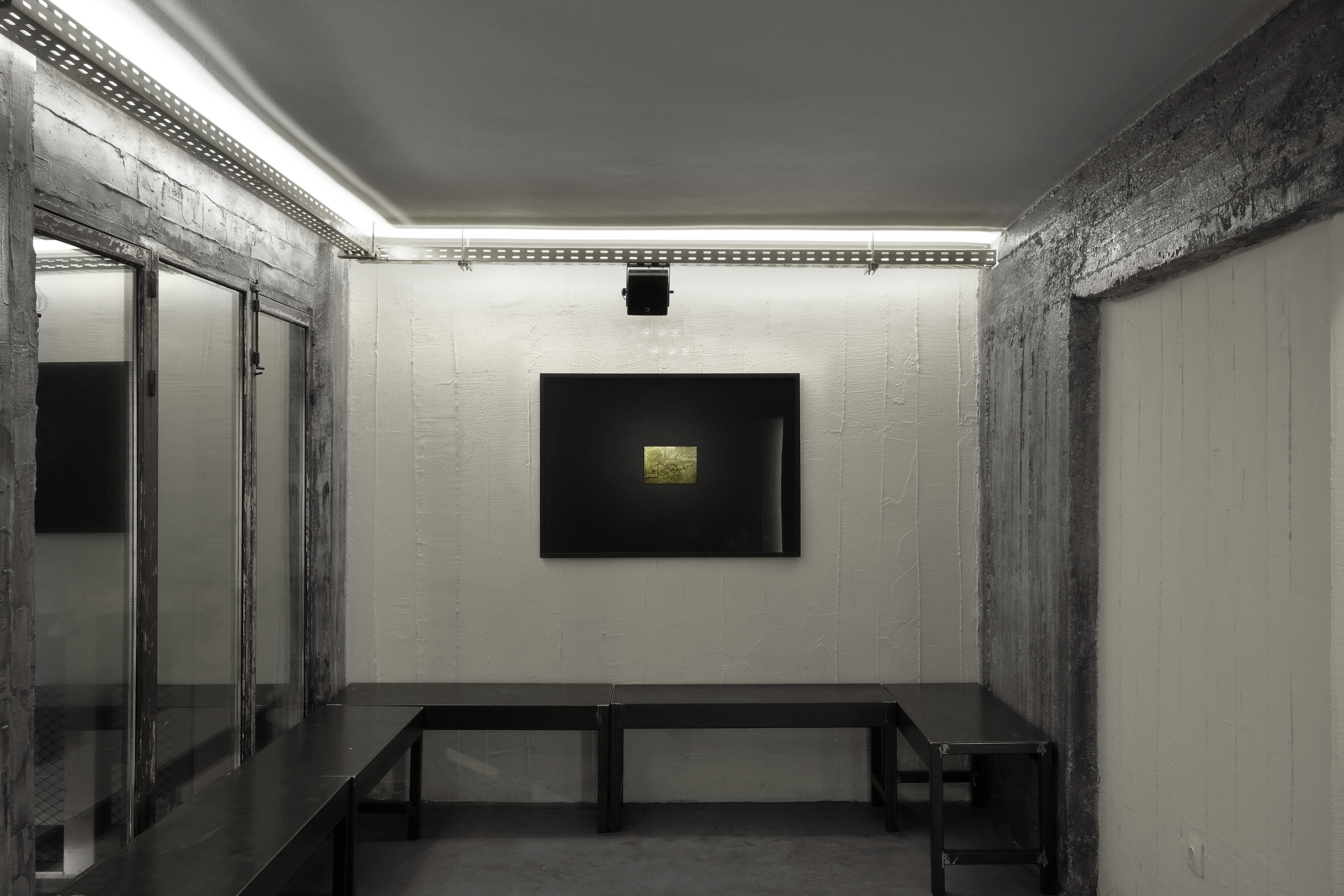
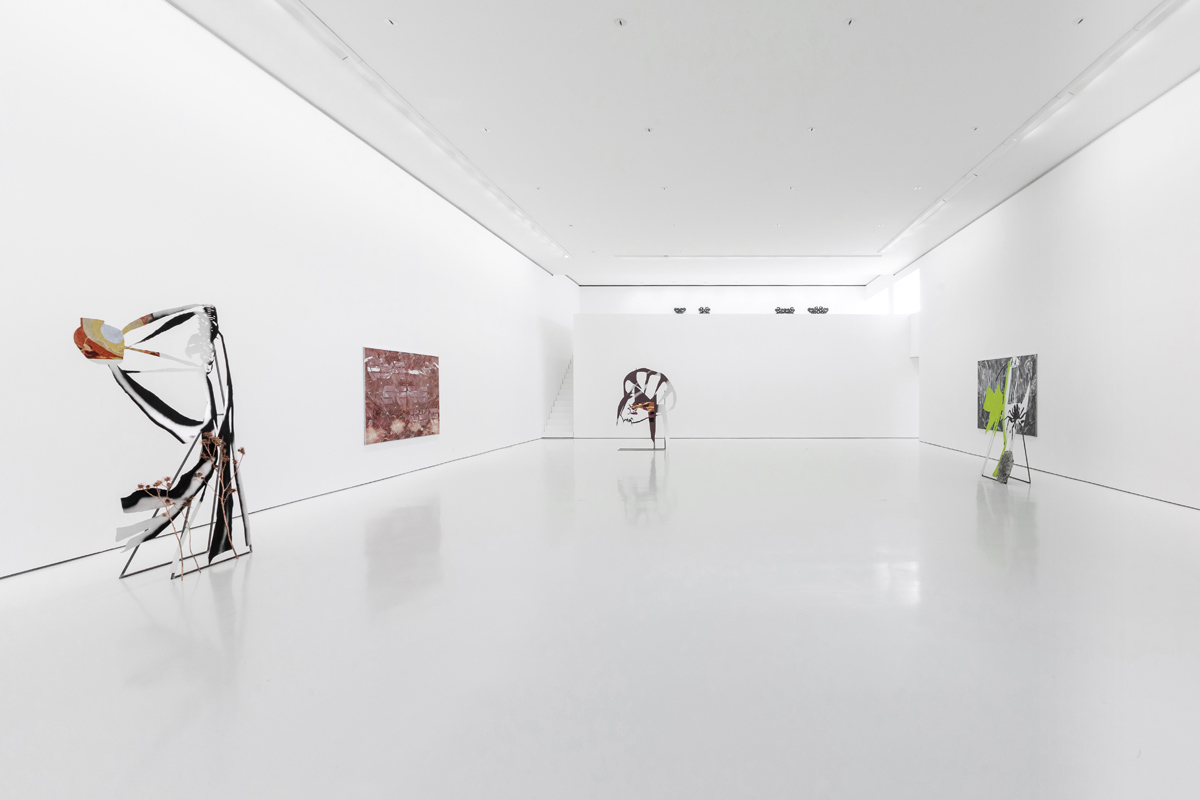
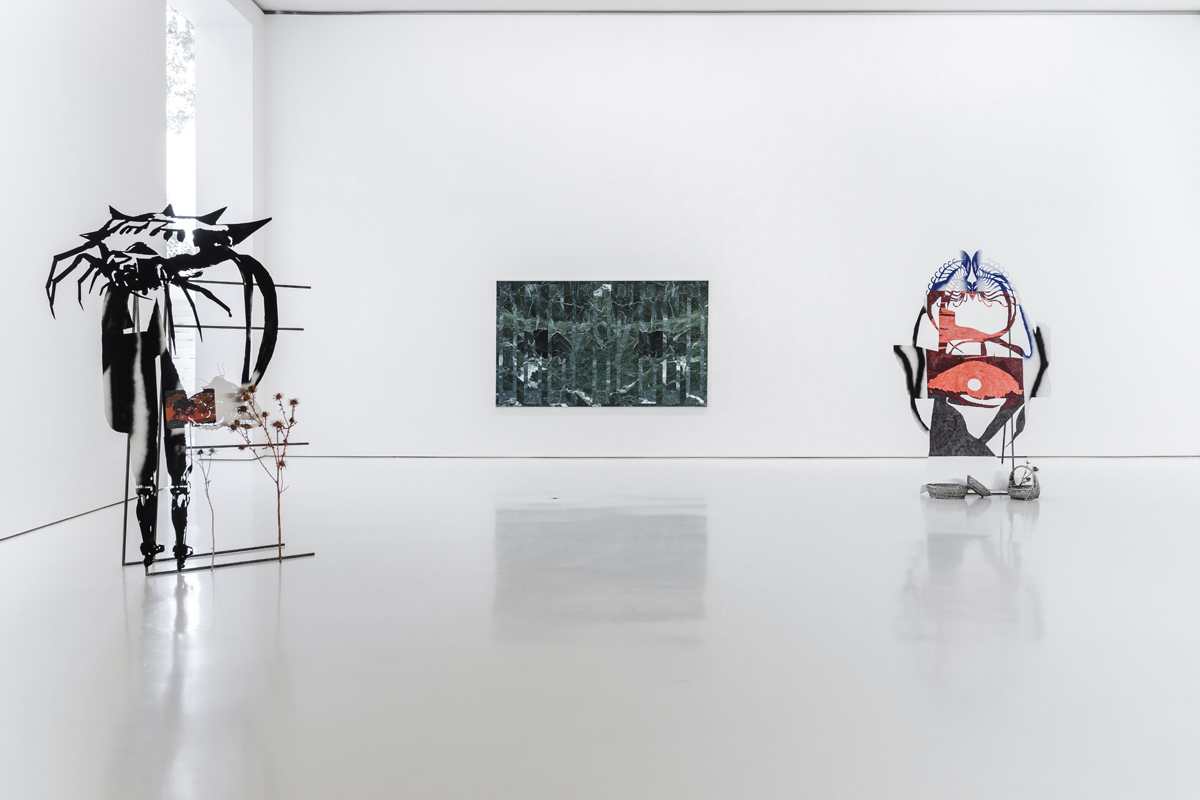
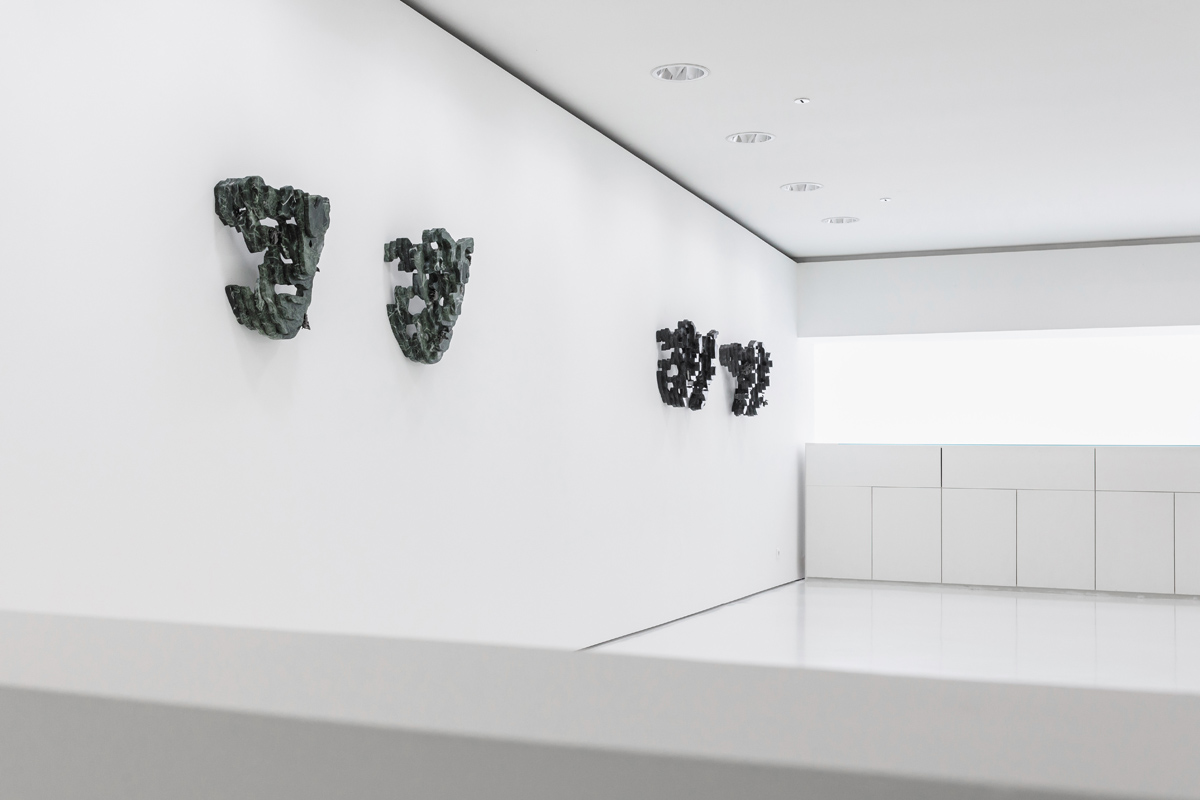
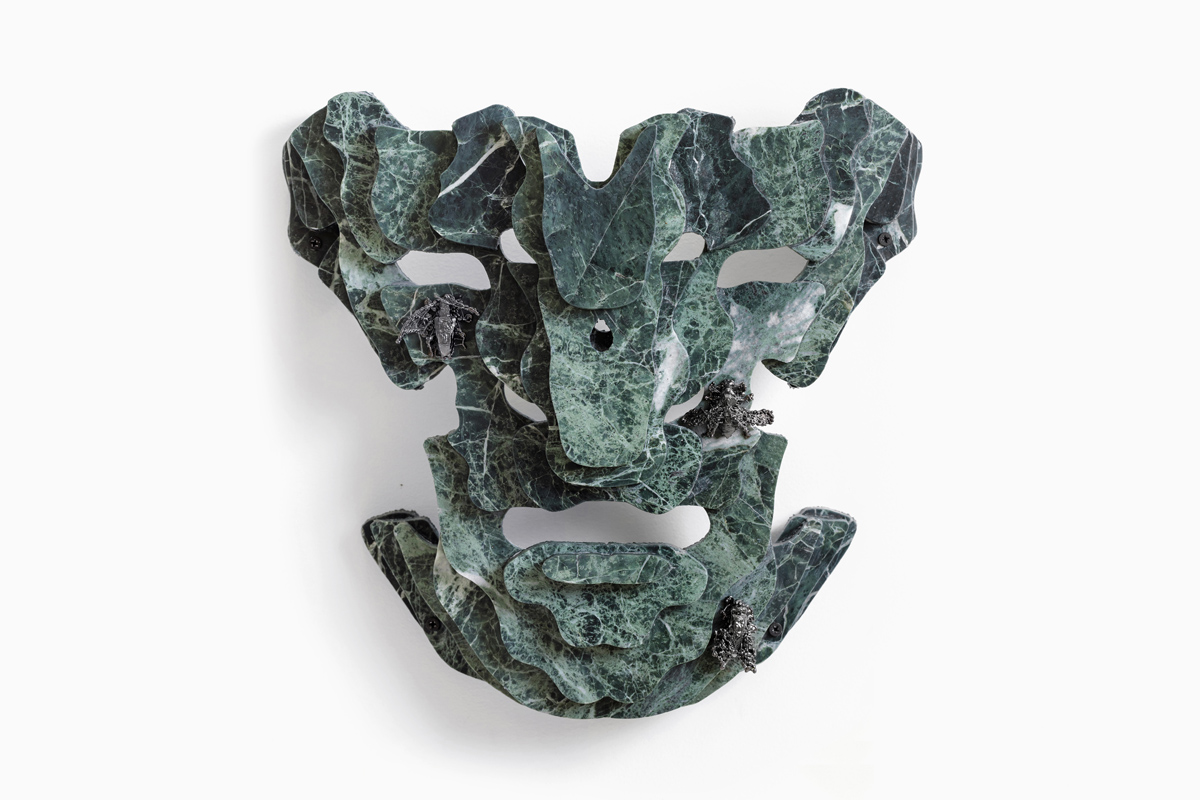
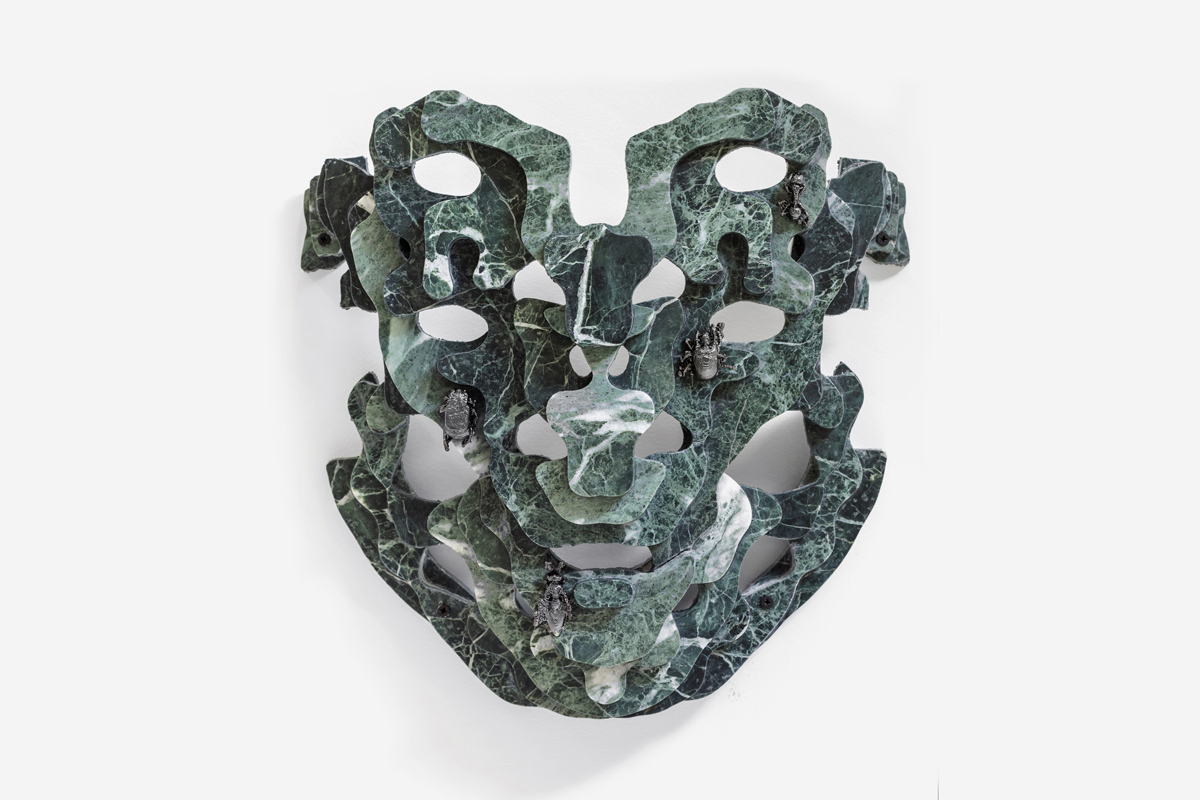
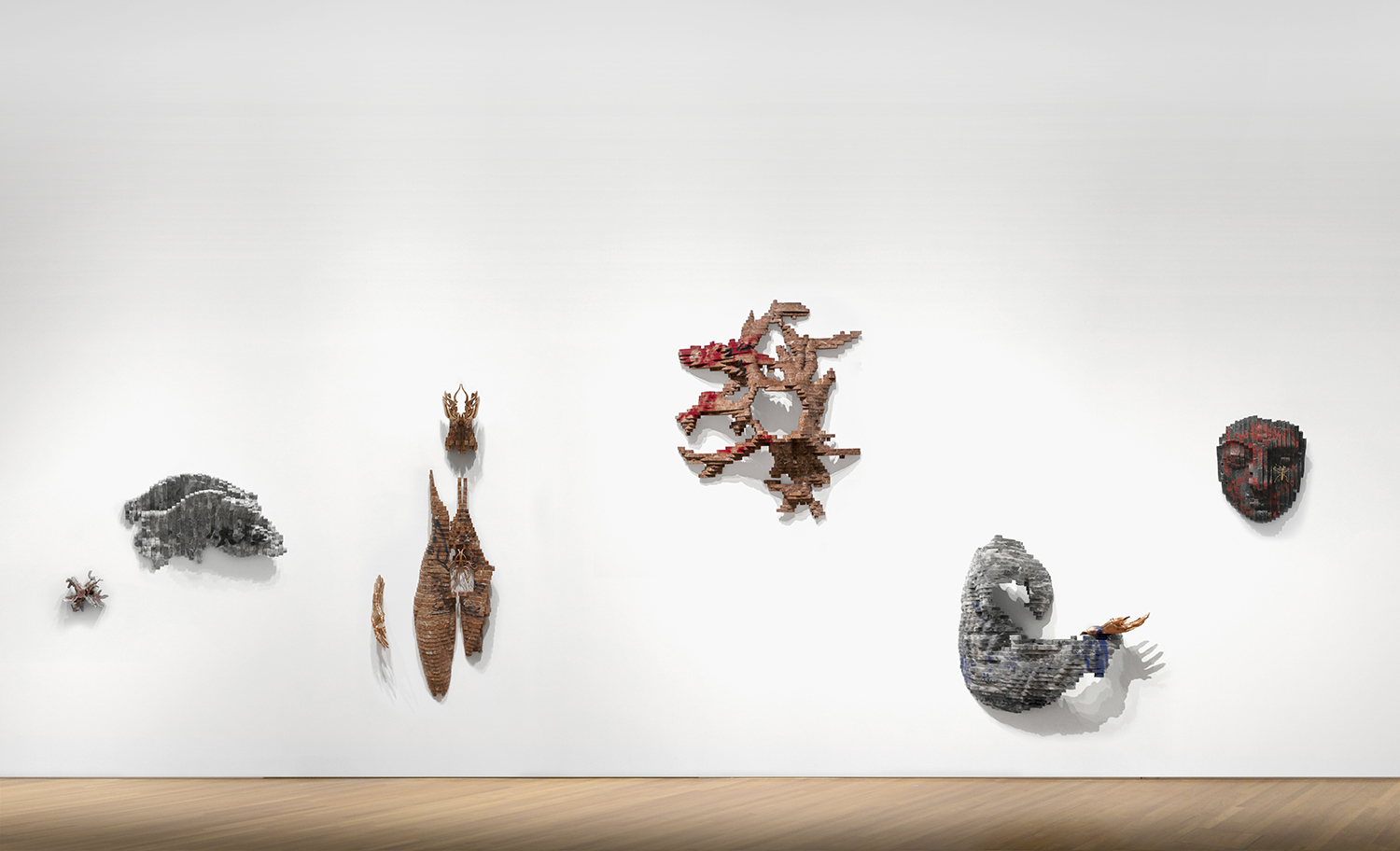
Here, Moris presents two bodies of works: Oracle (Generation) and Oracle (Membrane).
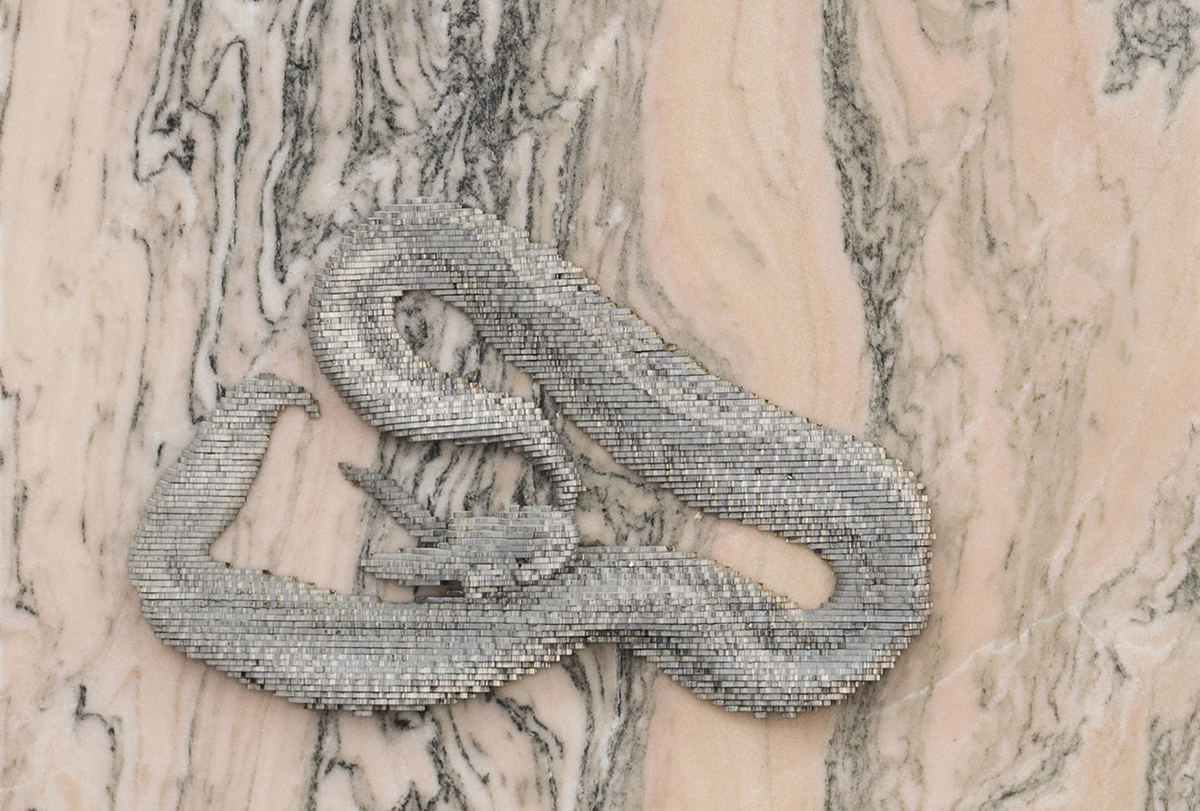
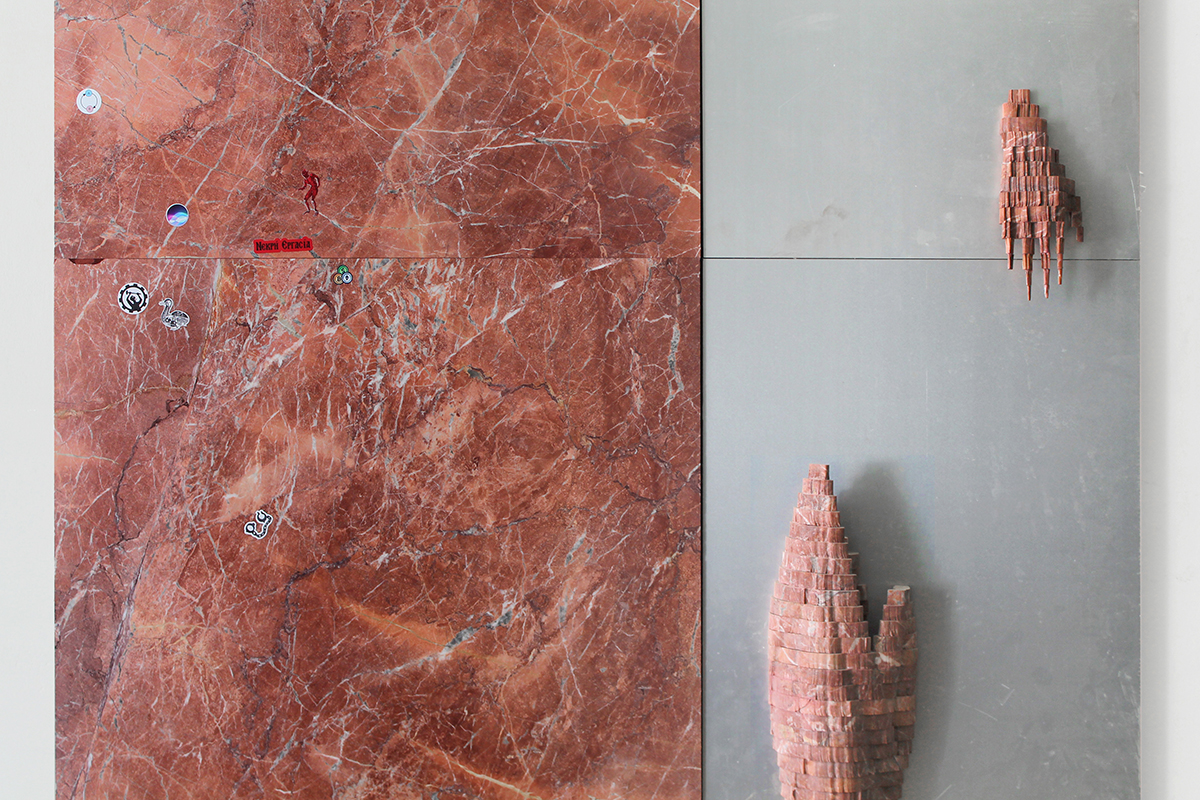
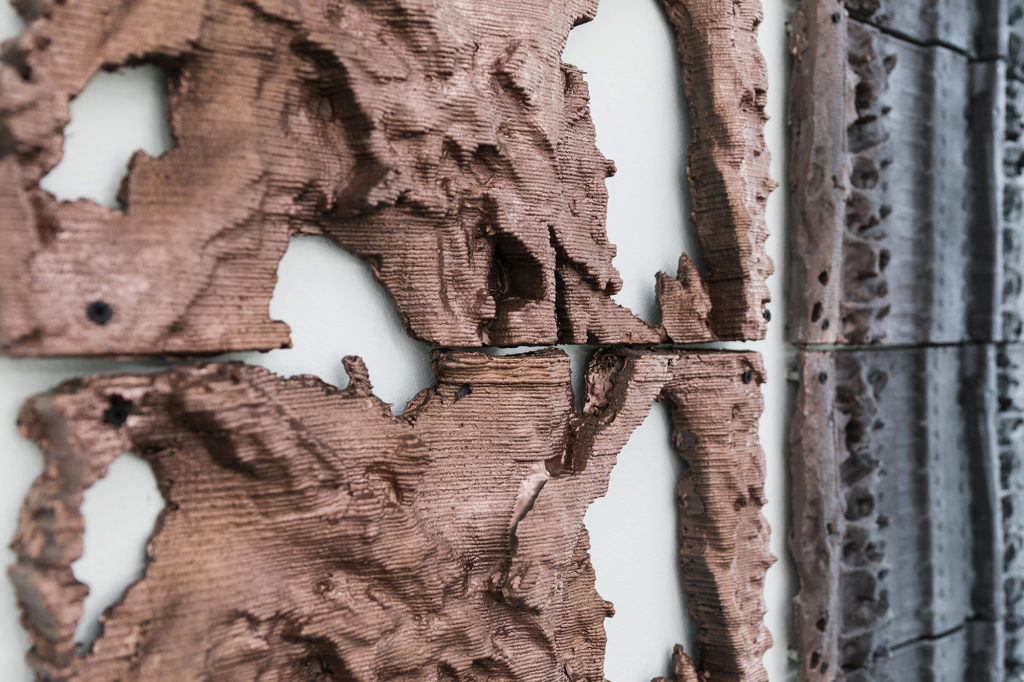
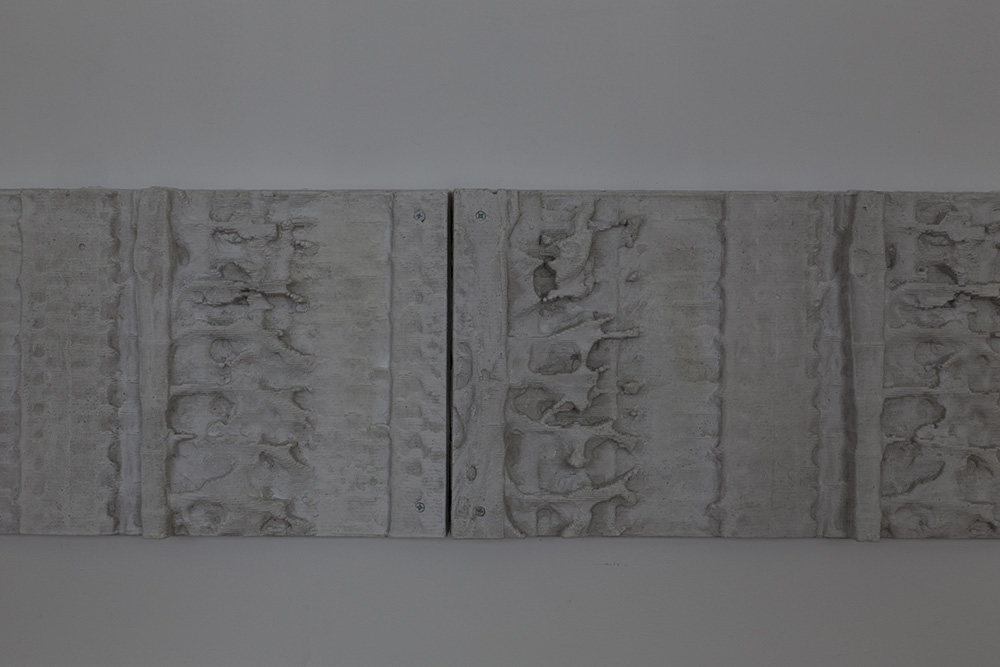
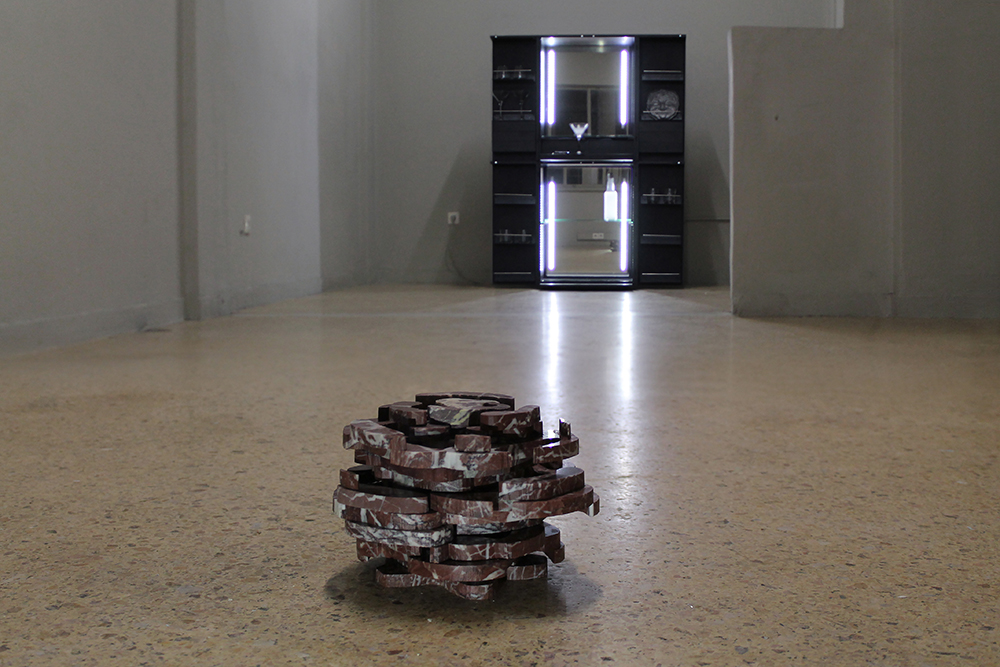
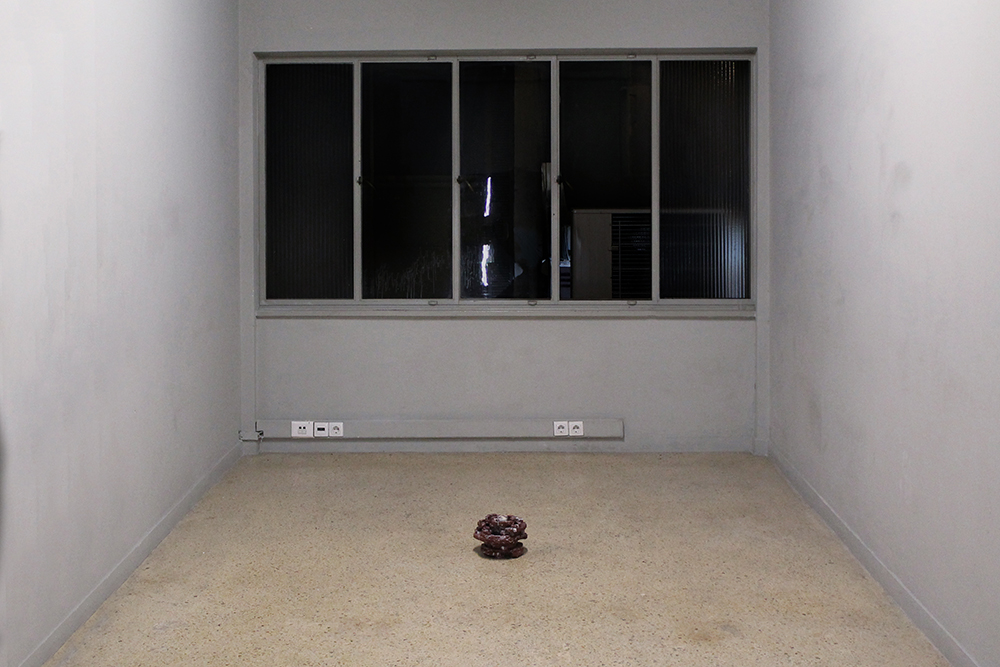
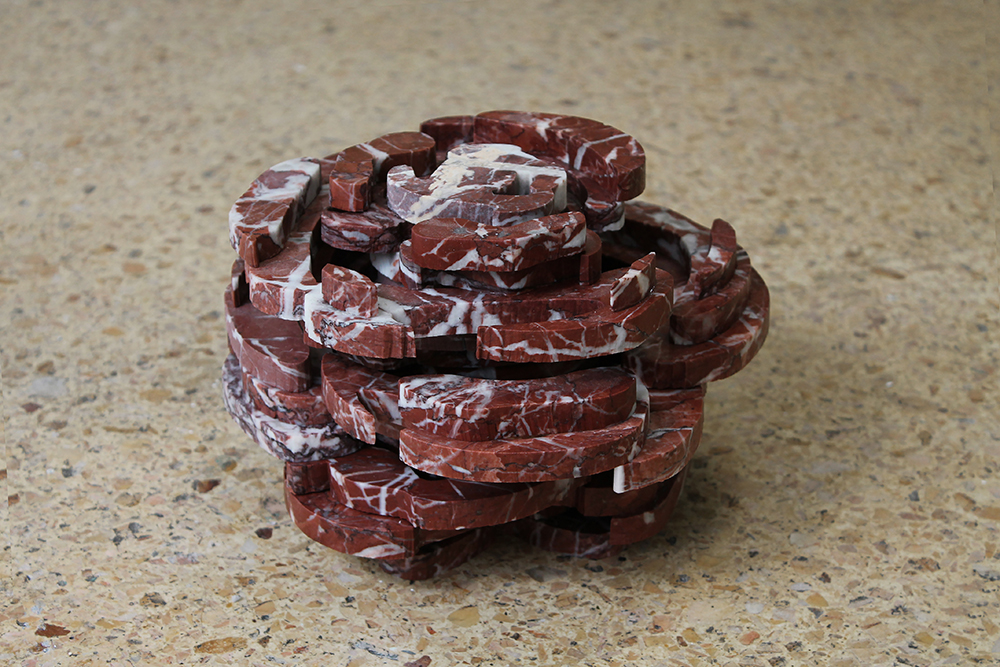
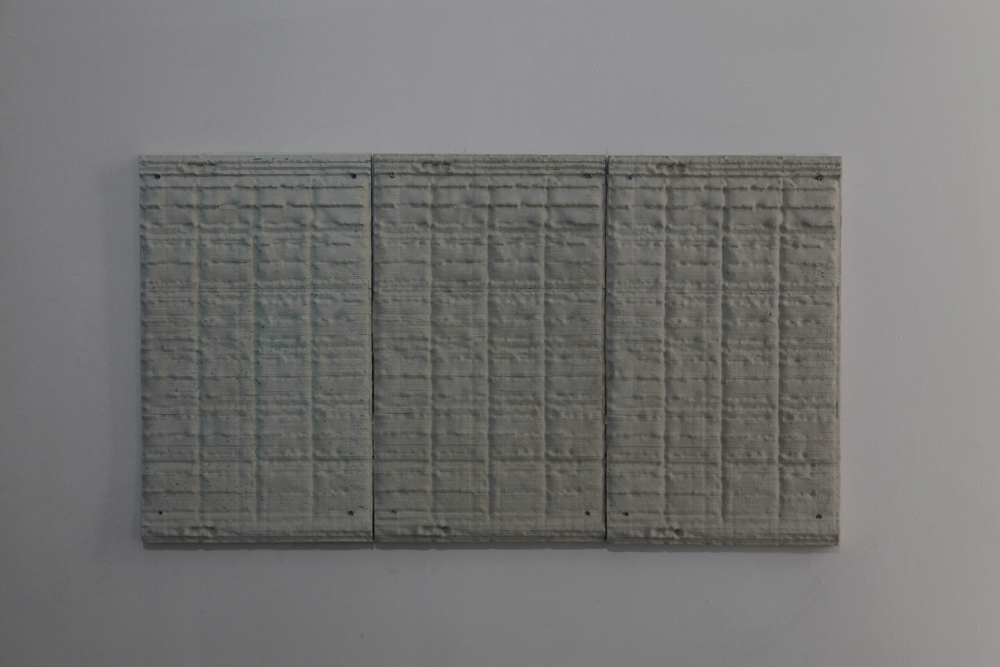
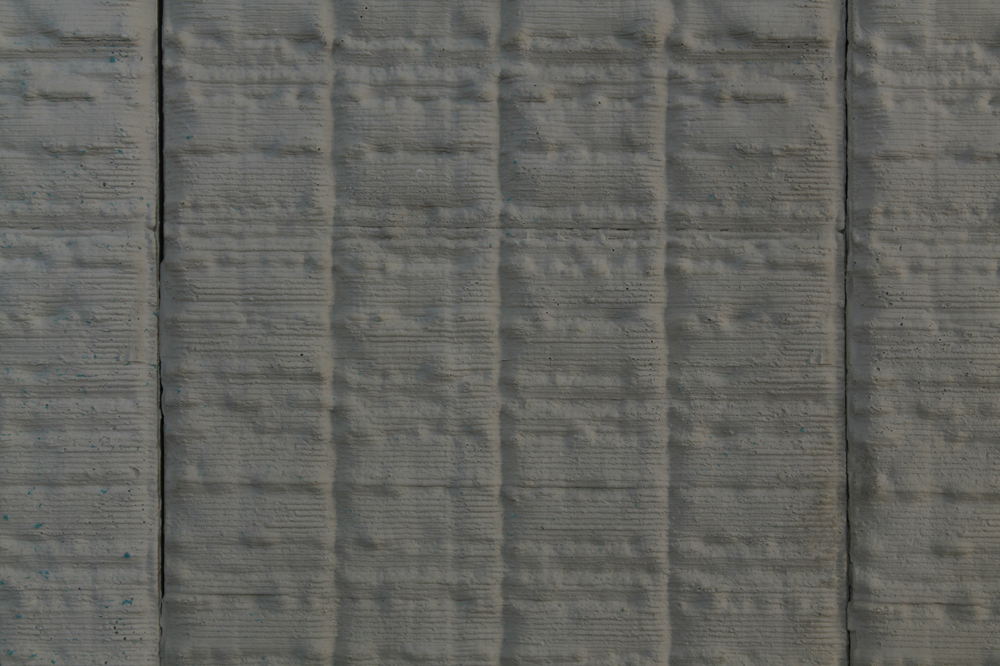
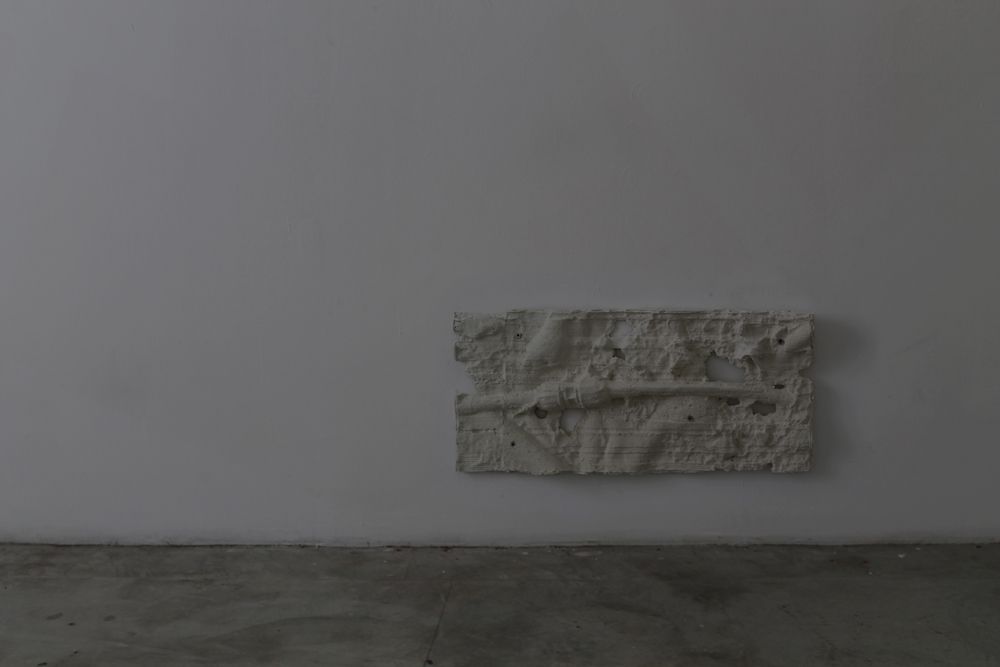
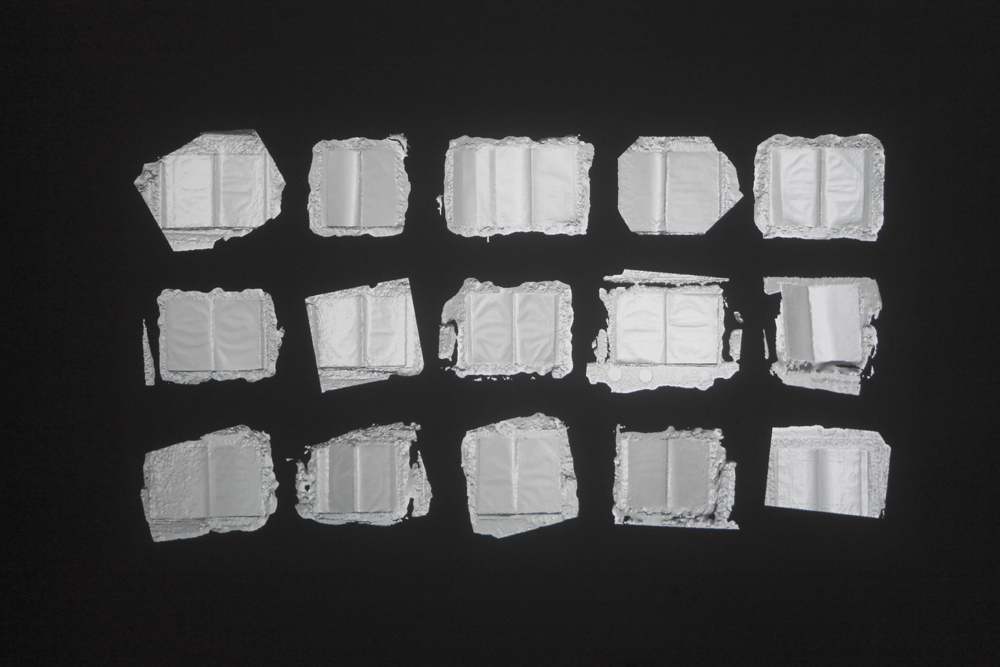
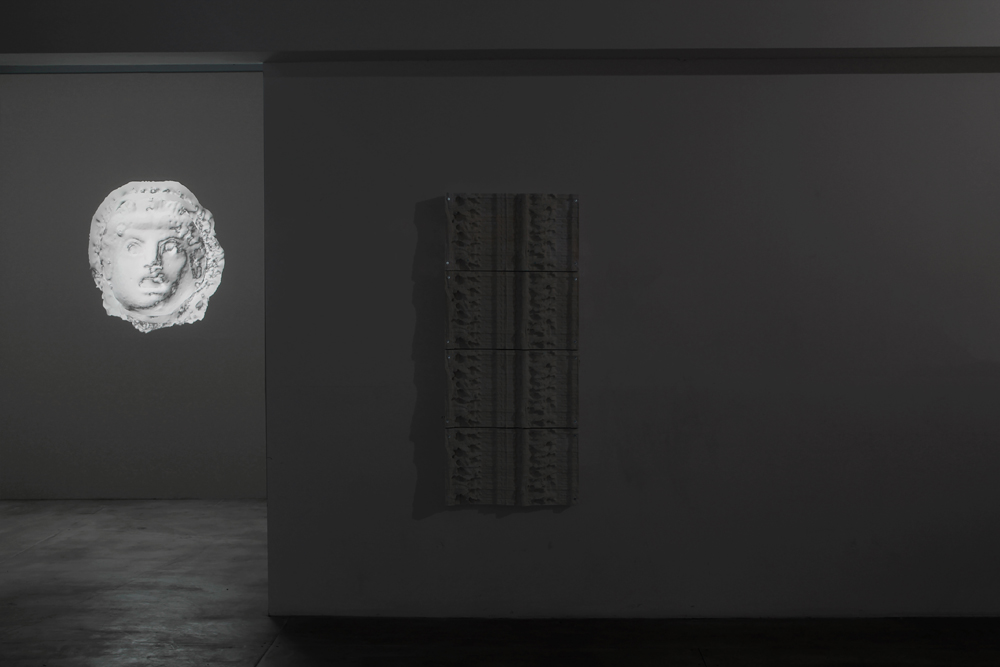
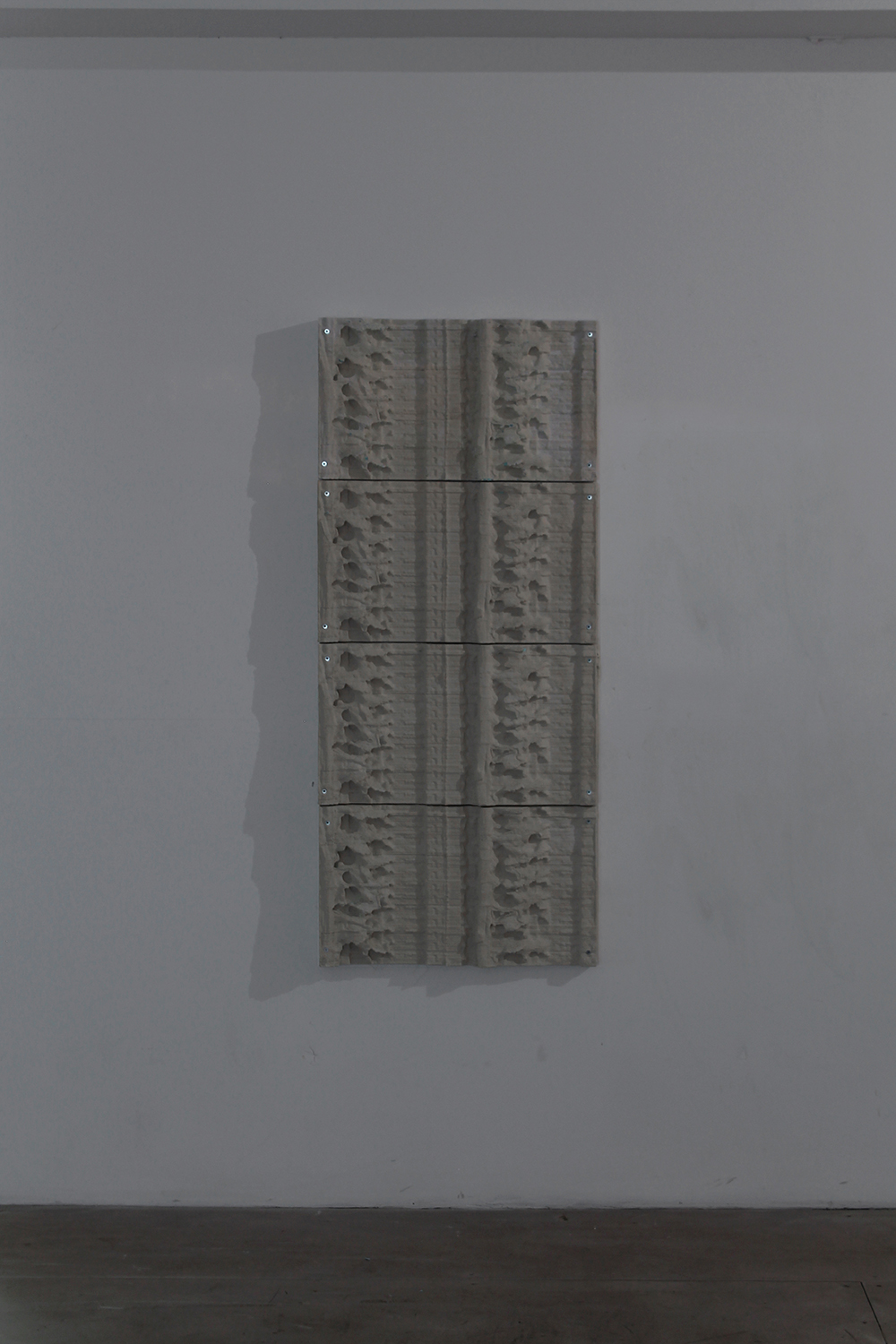
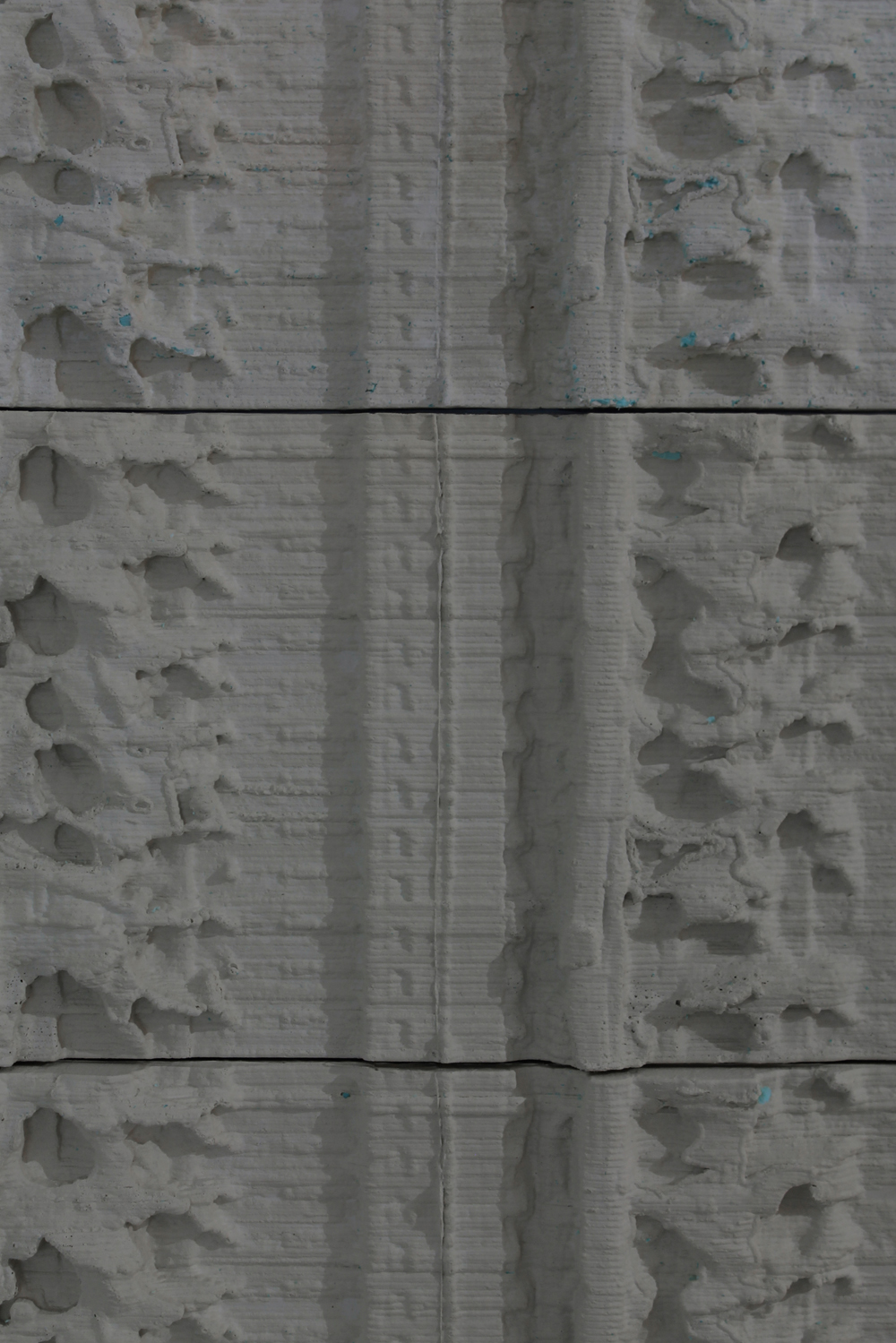
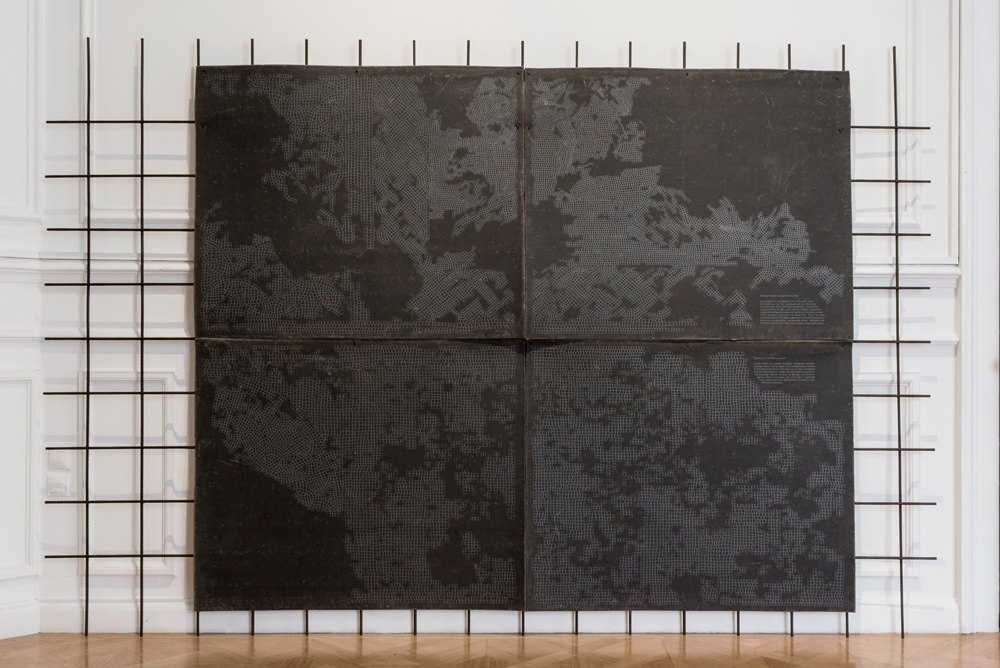
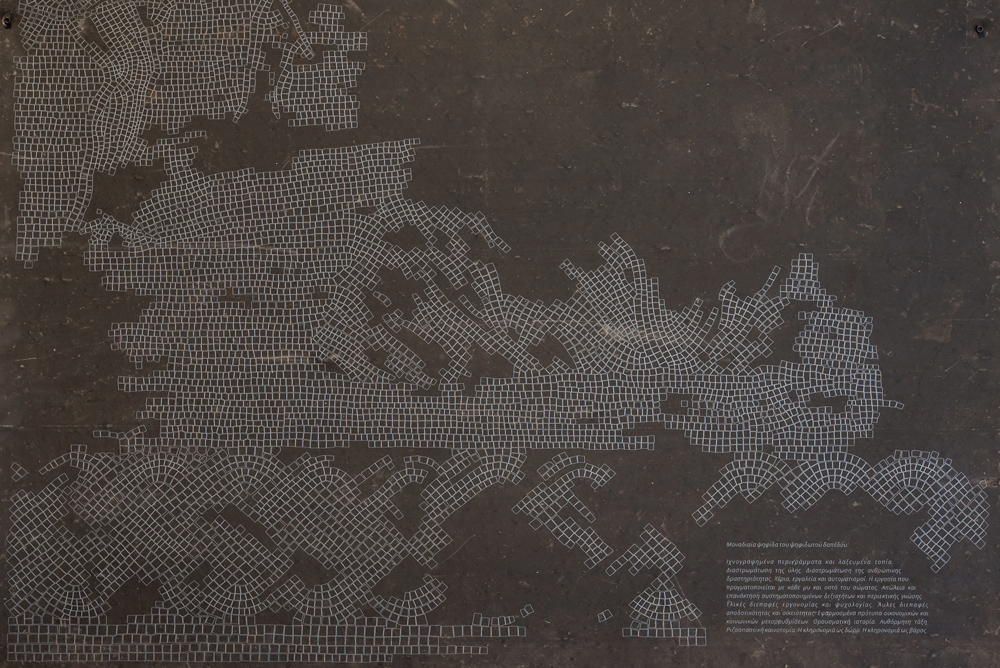
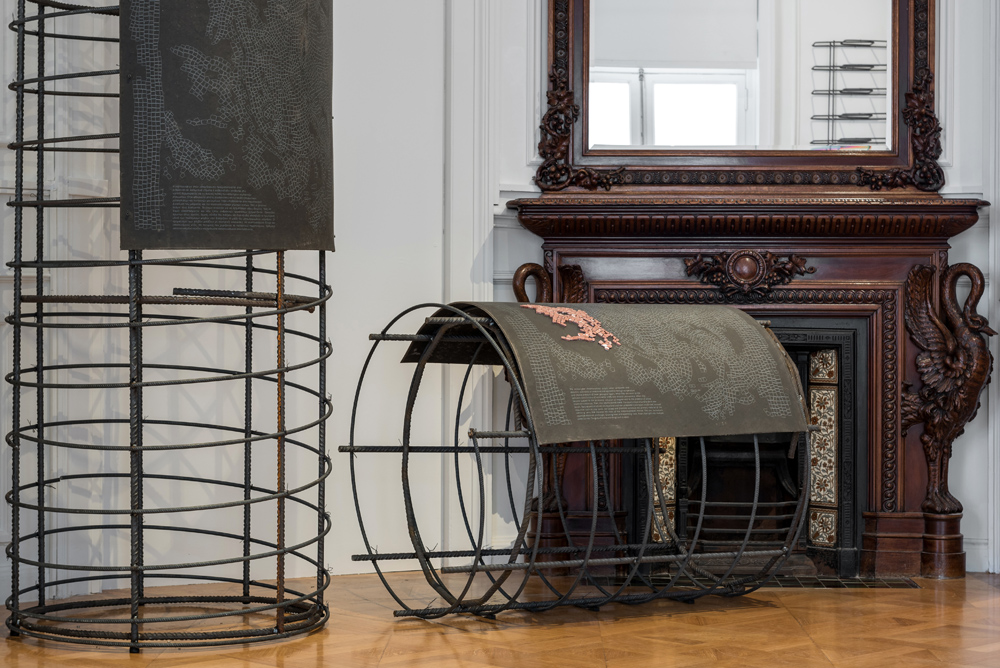
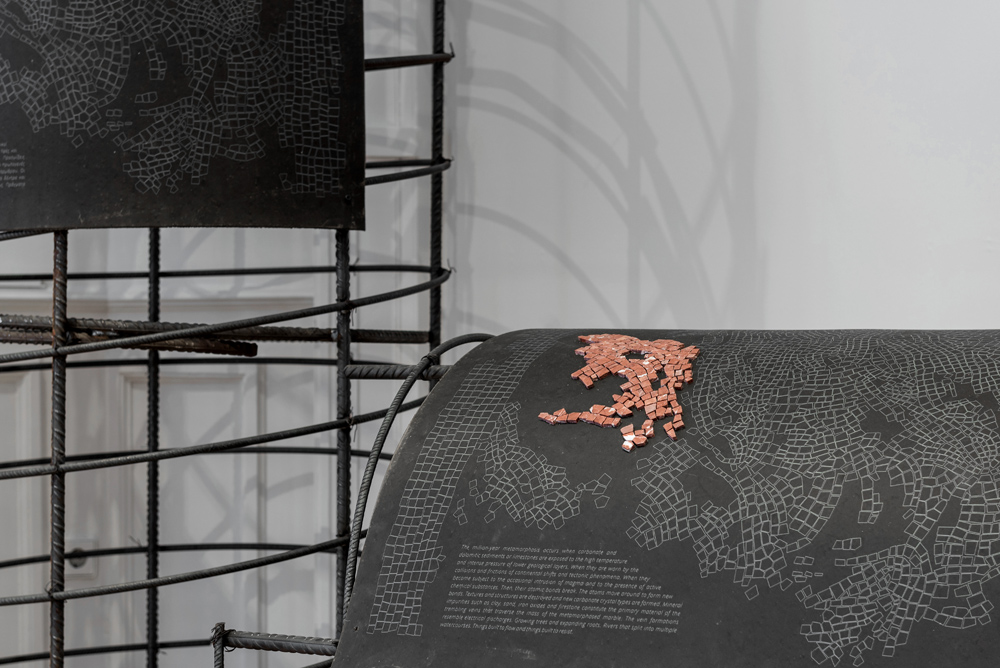
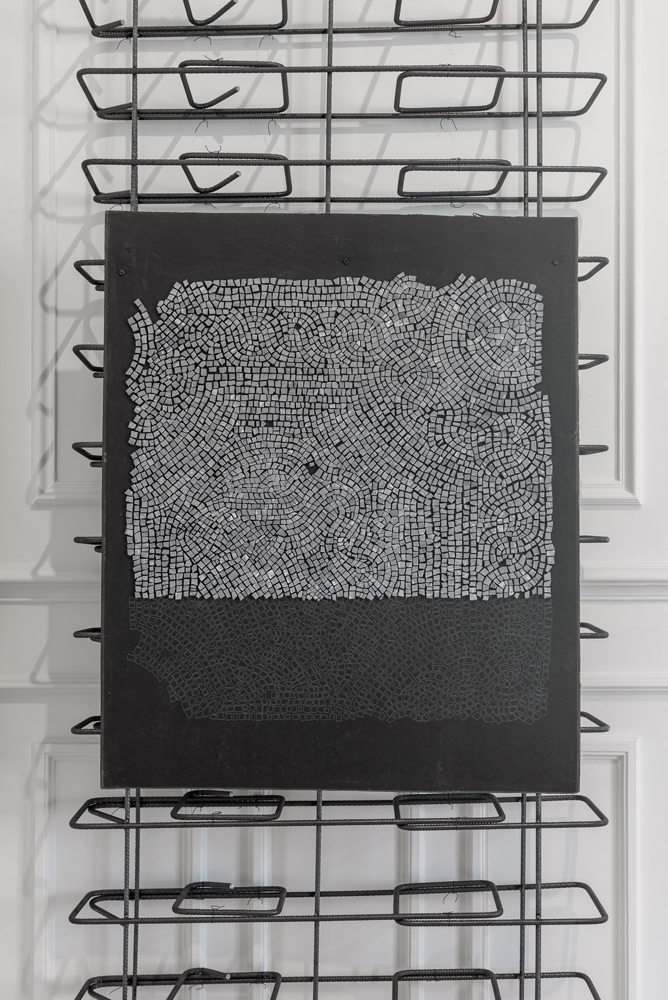
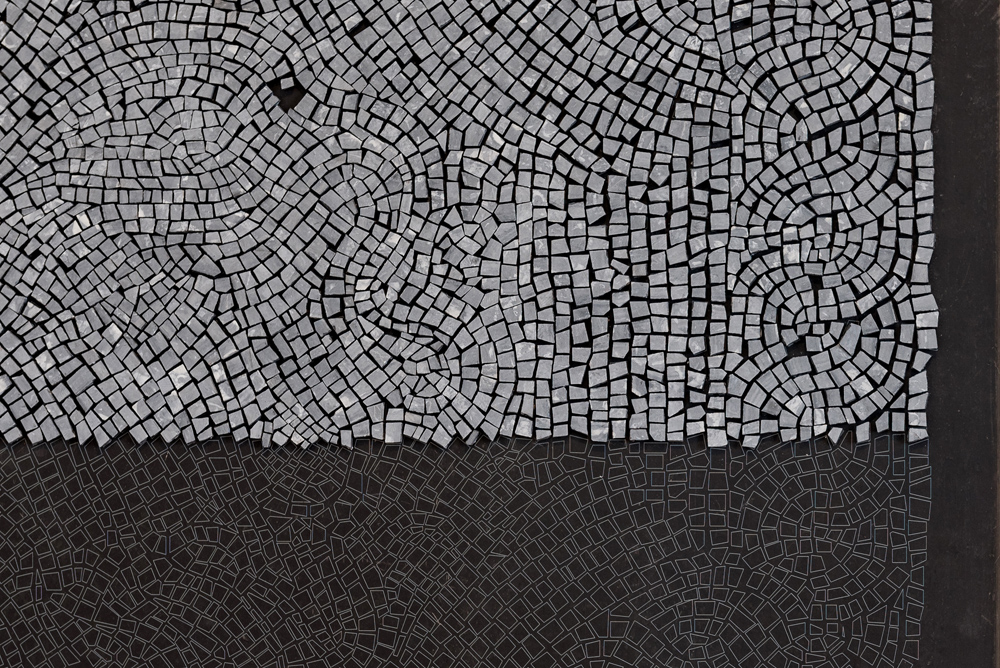
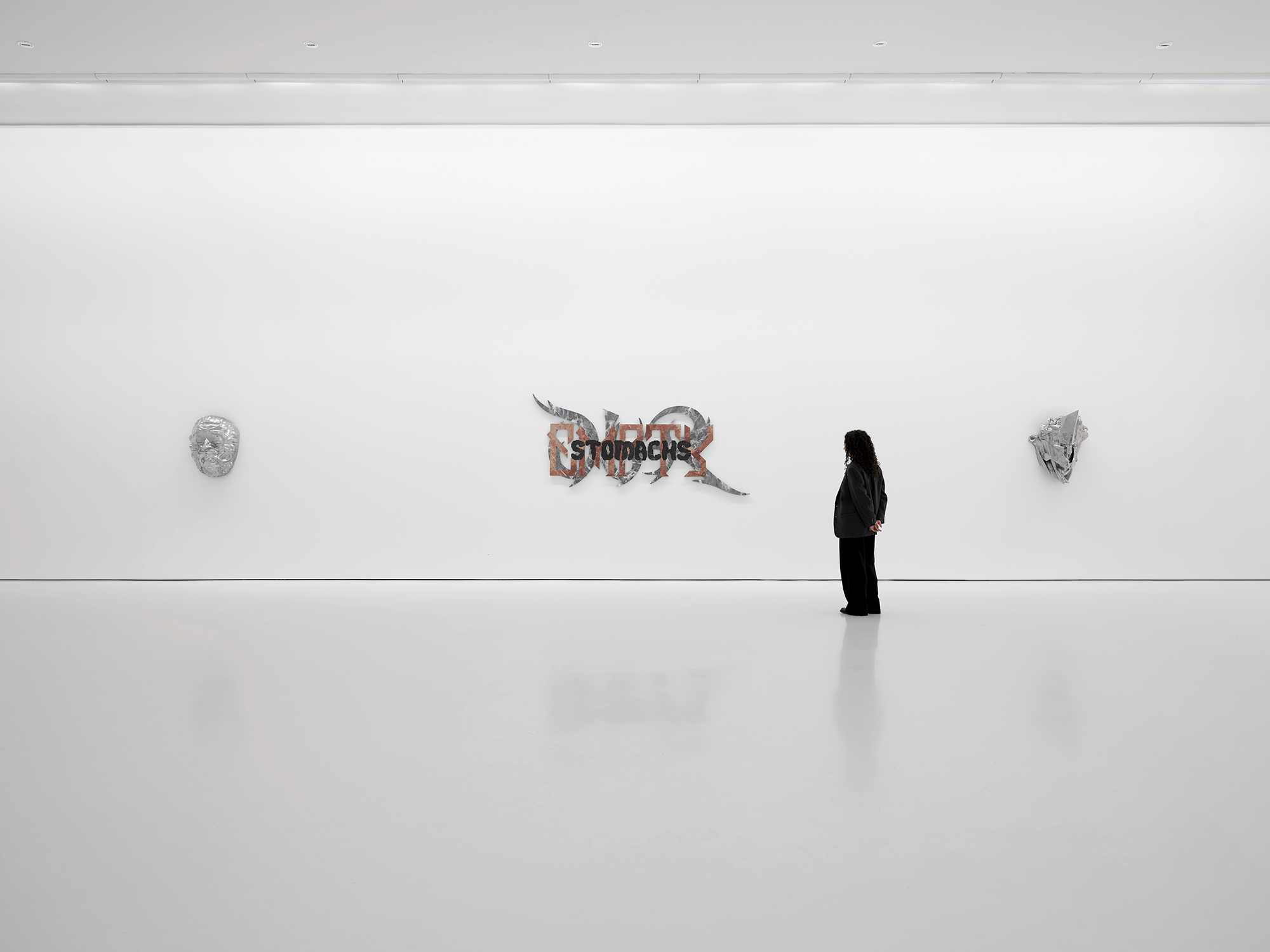
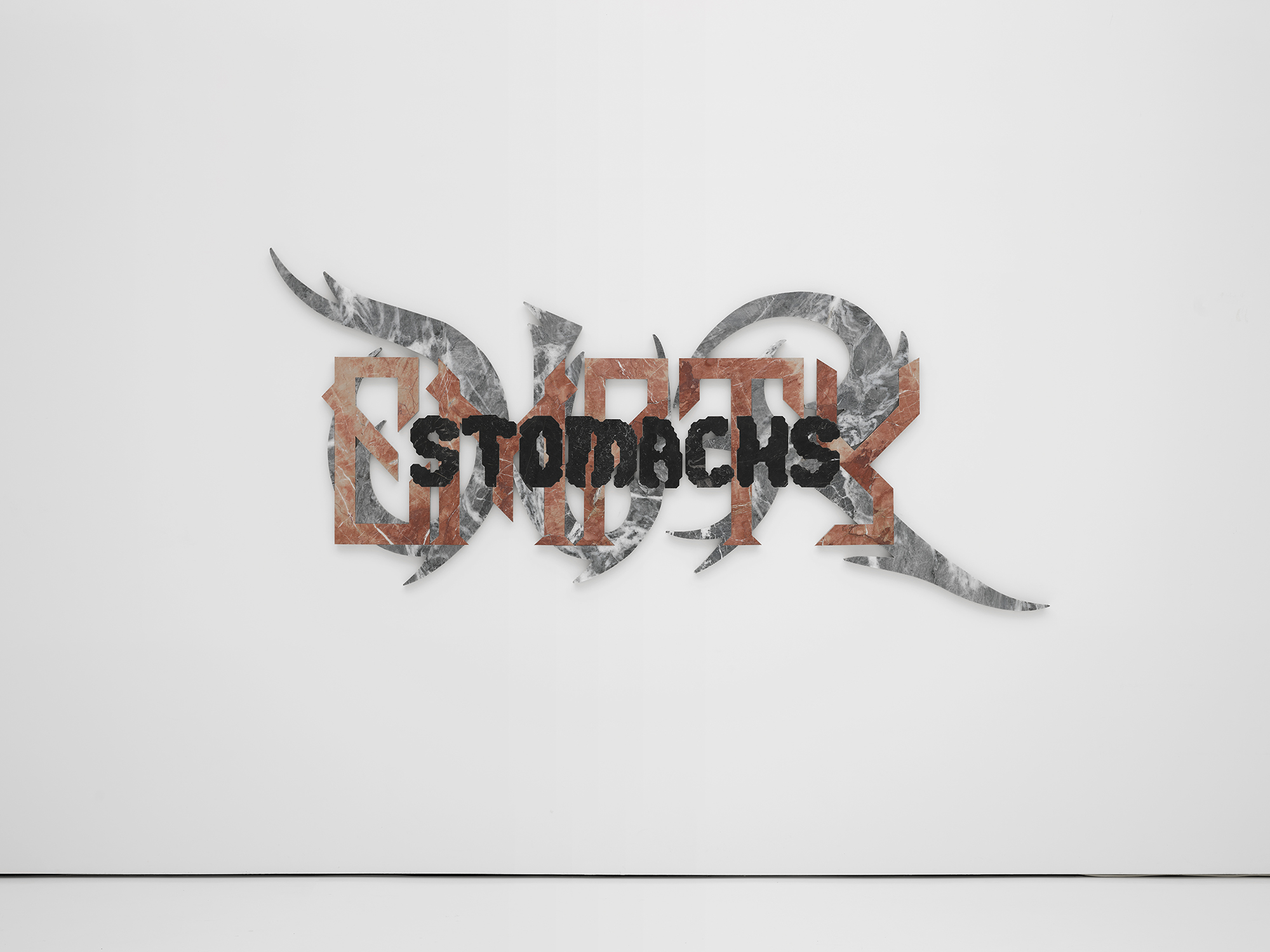
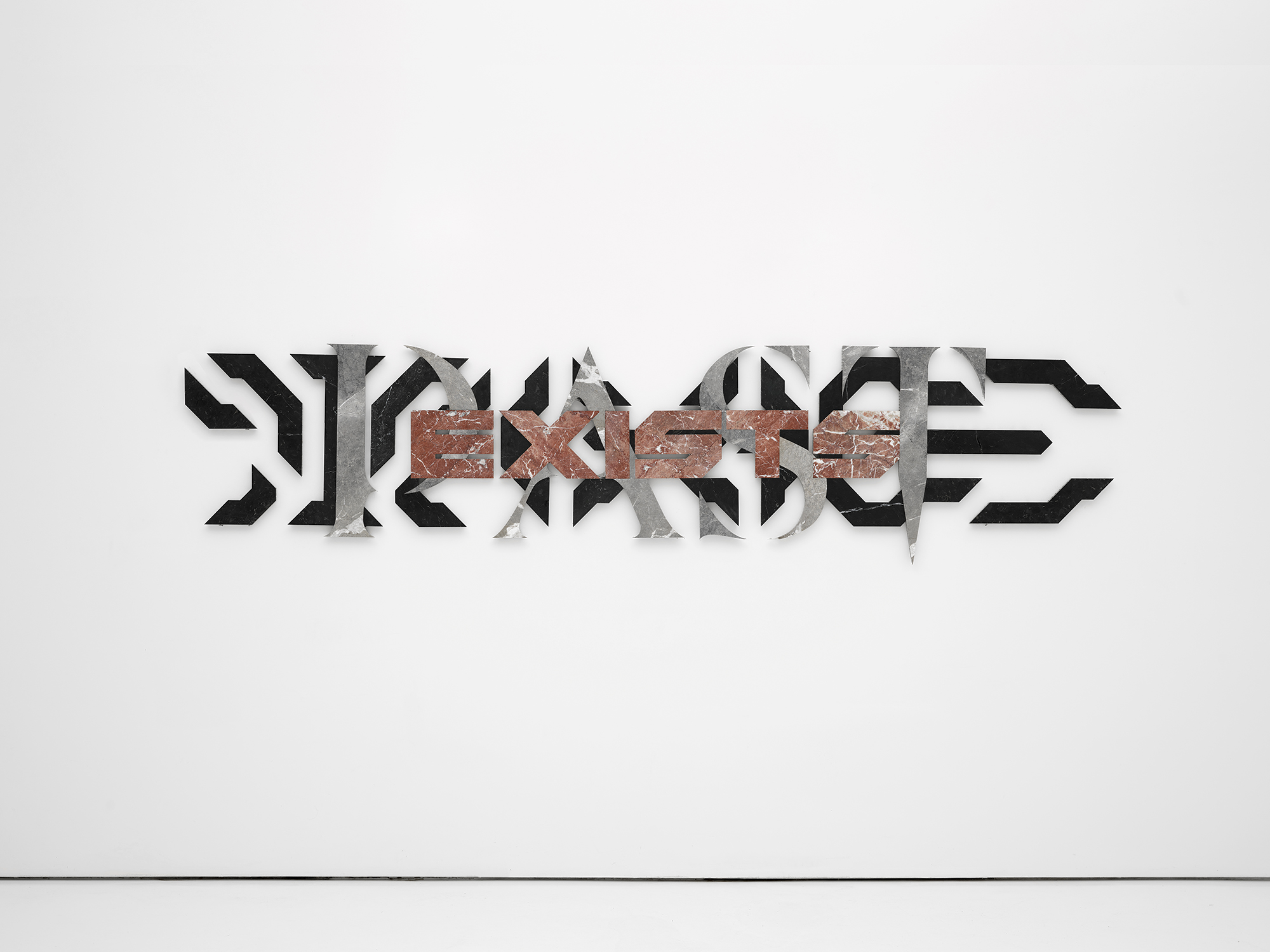
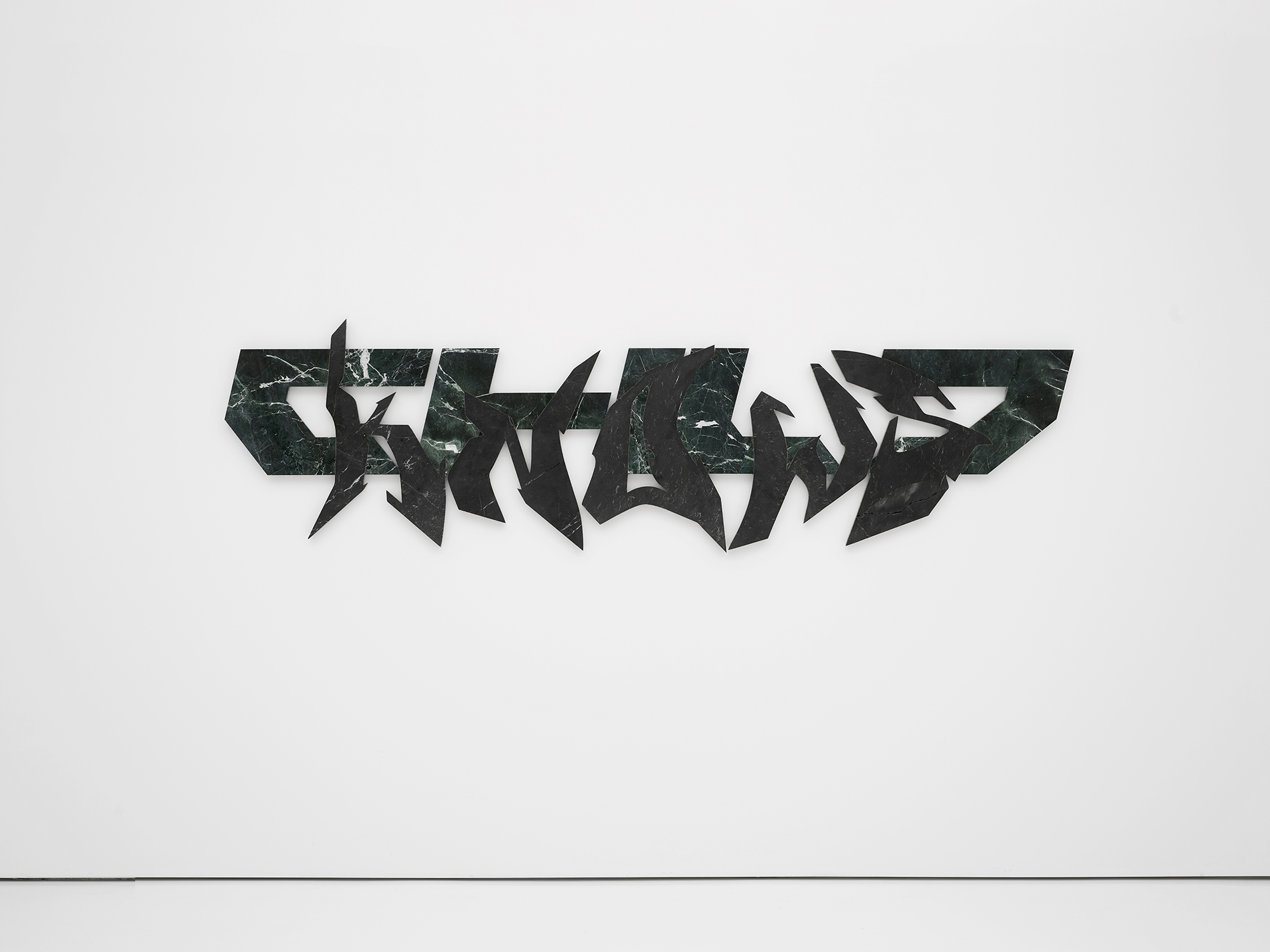
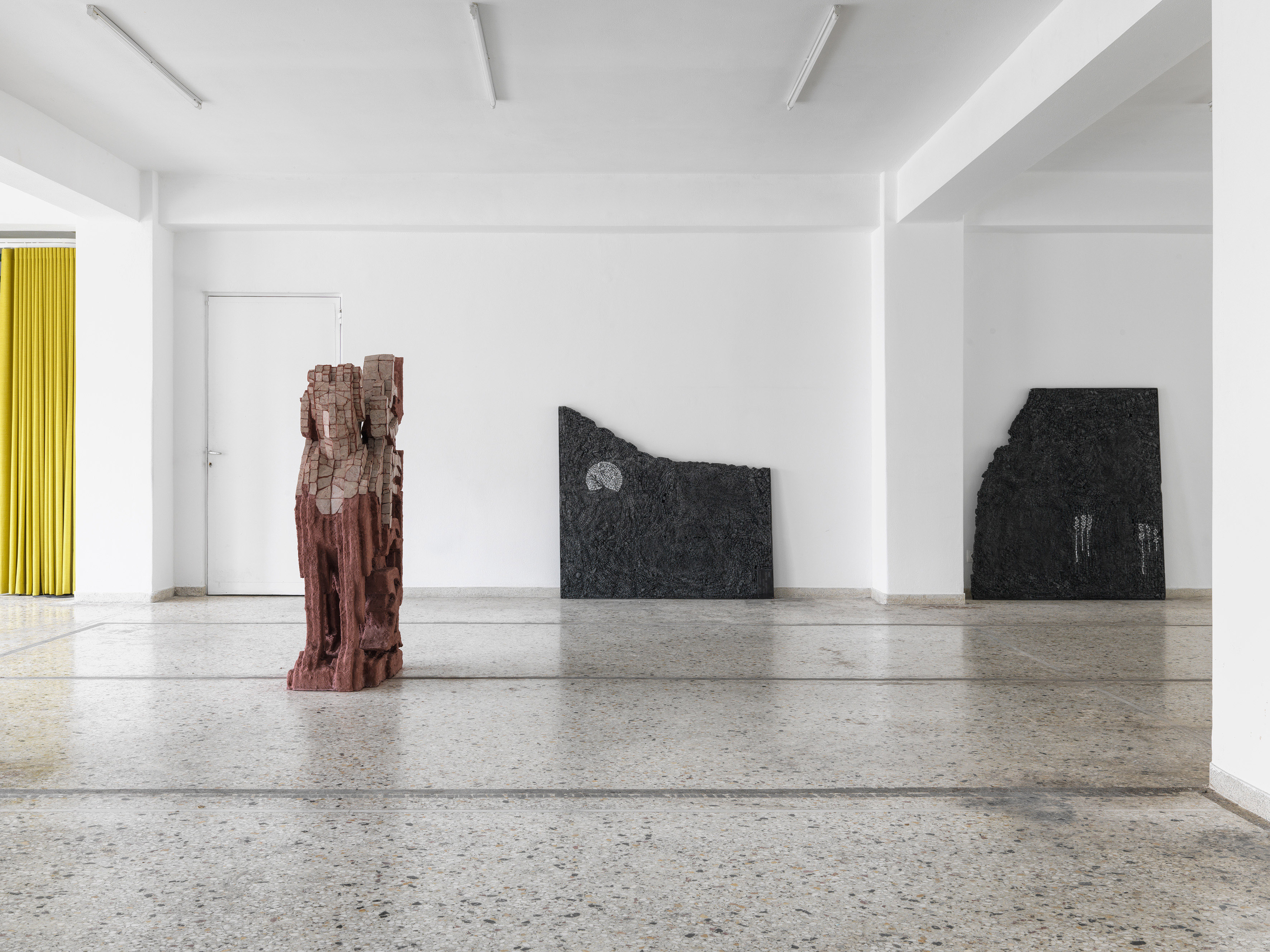
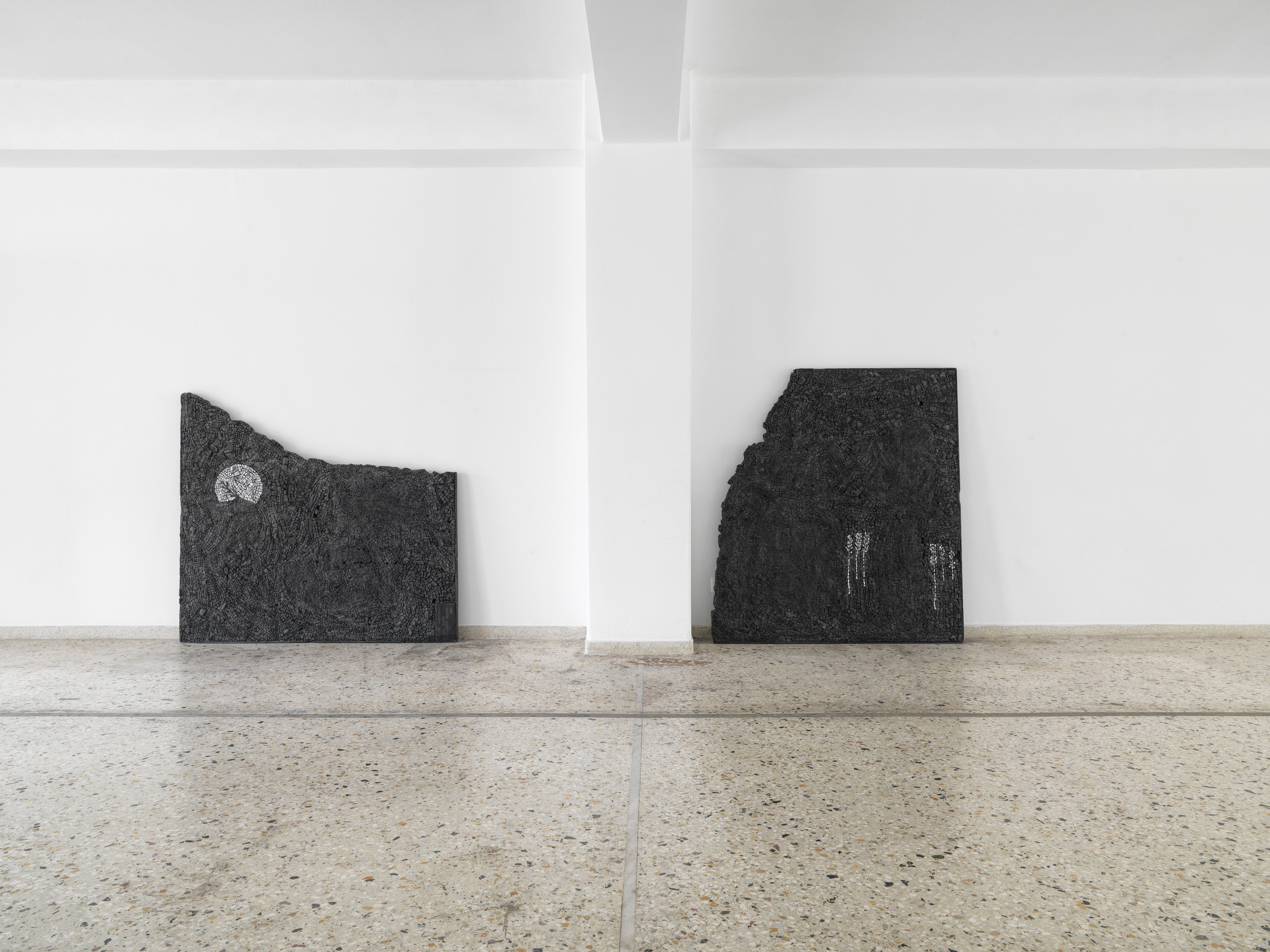
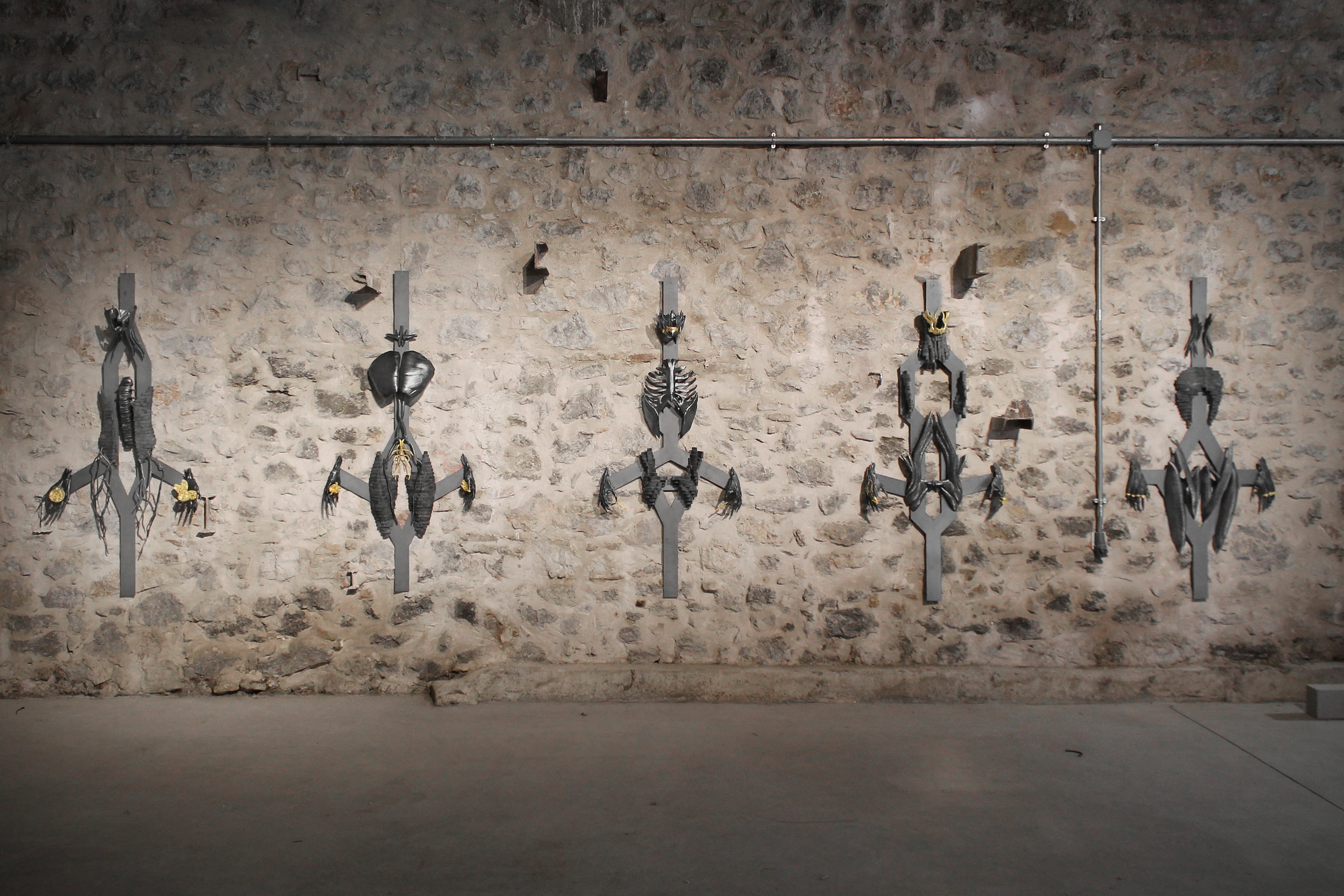
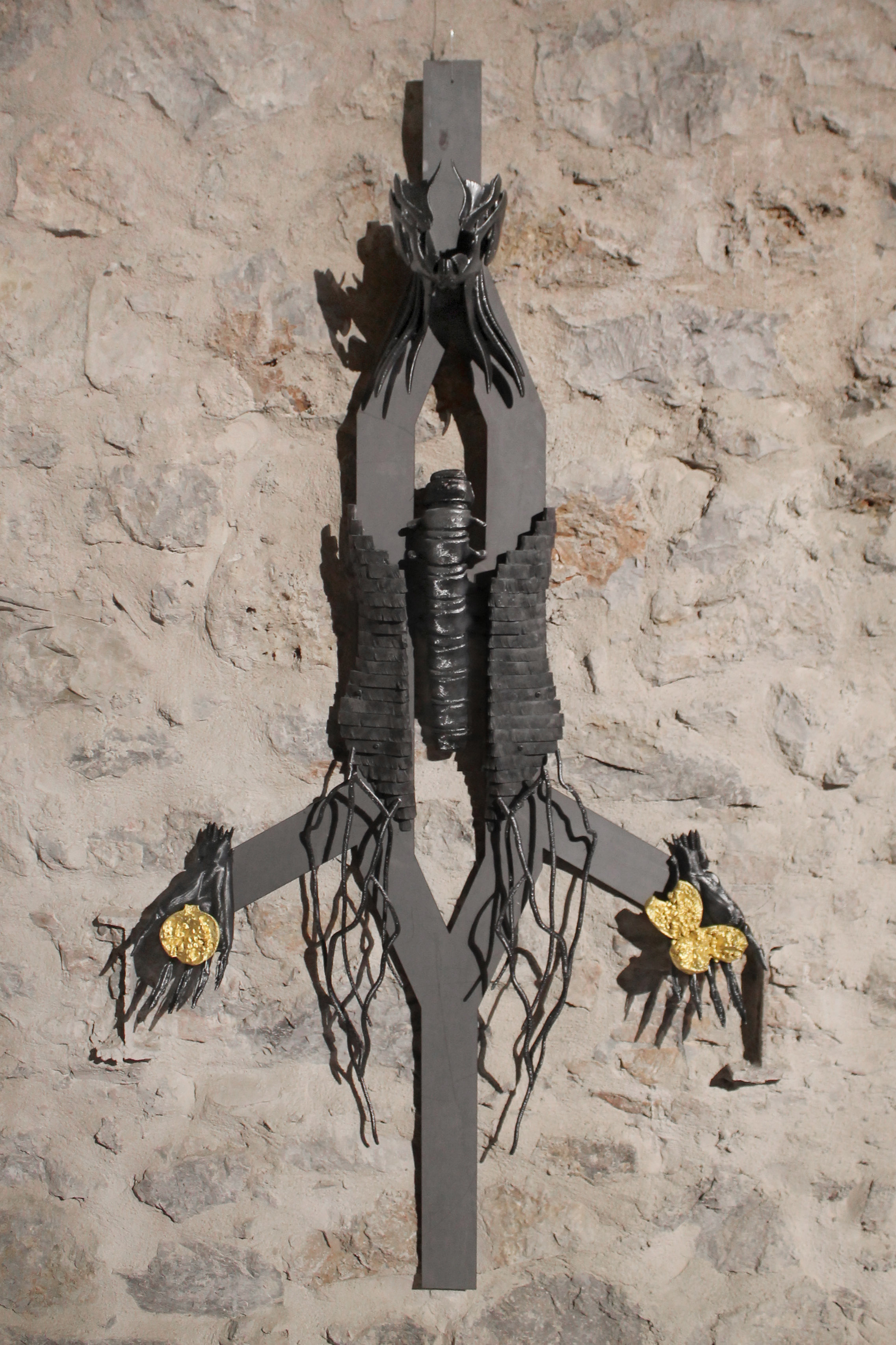
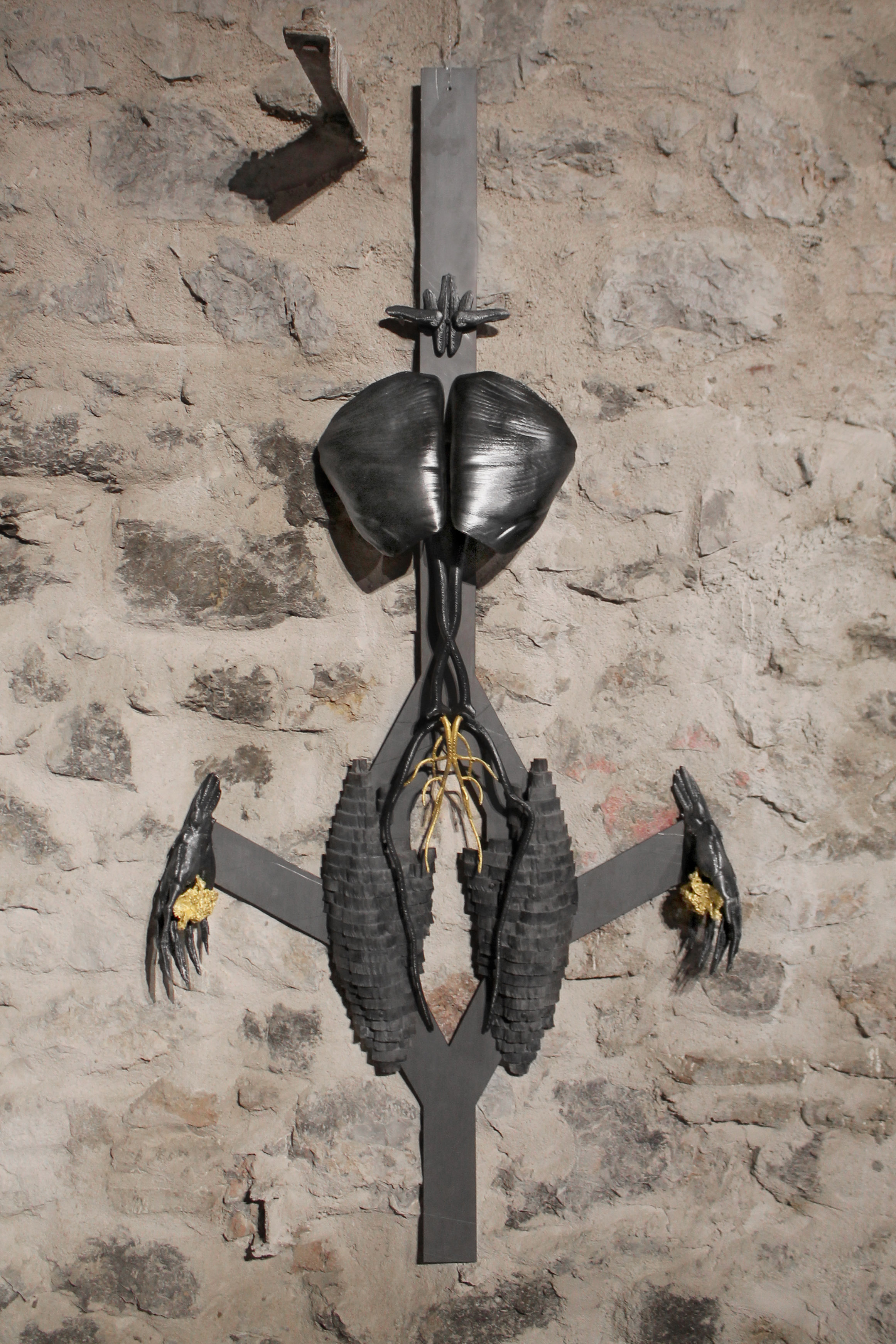
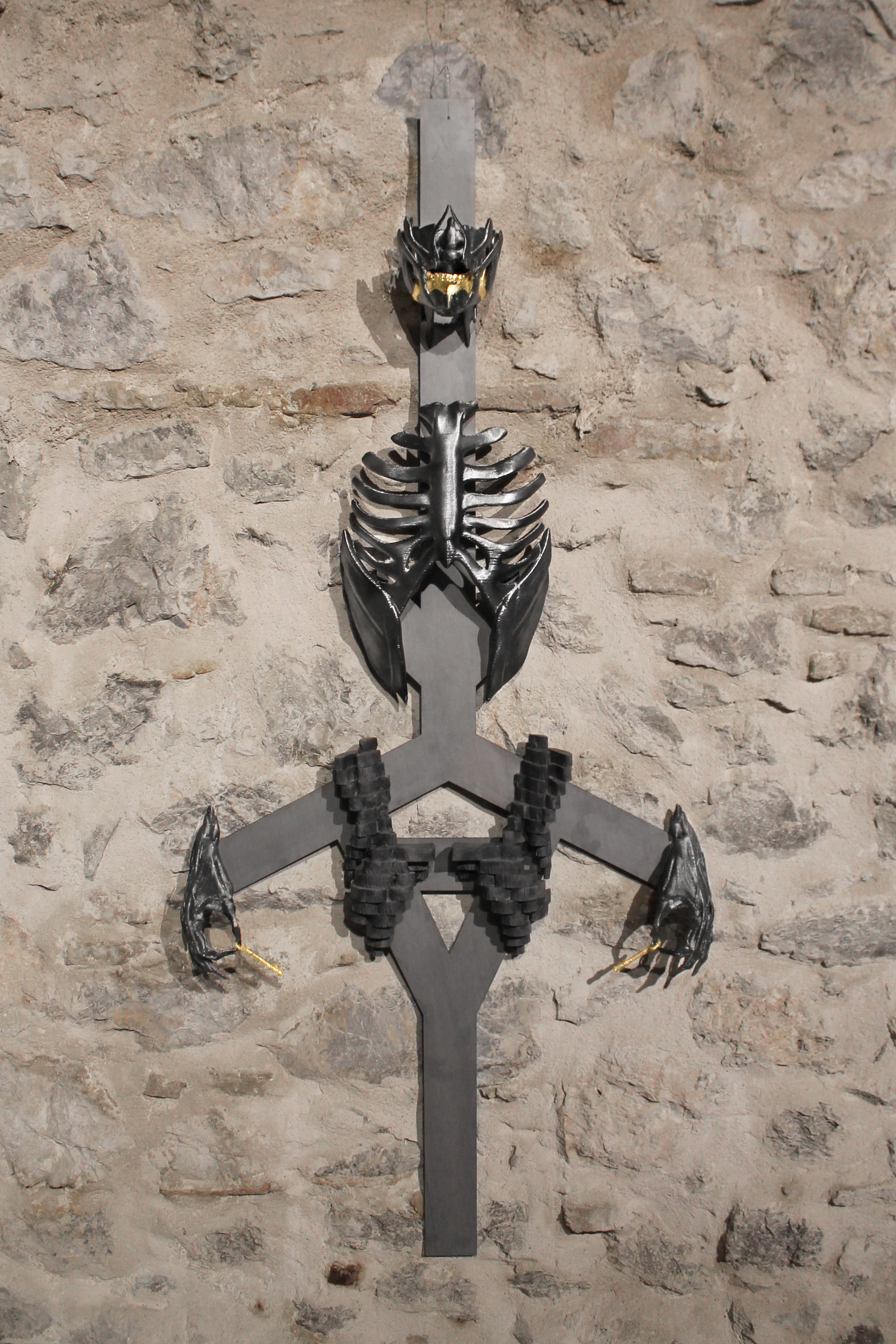
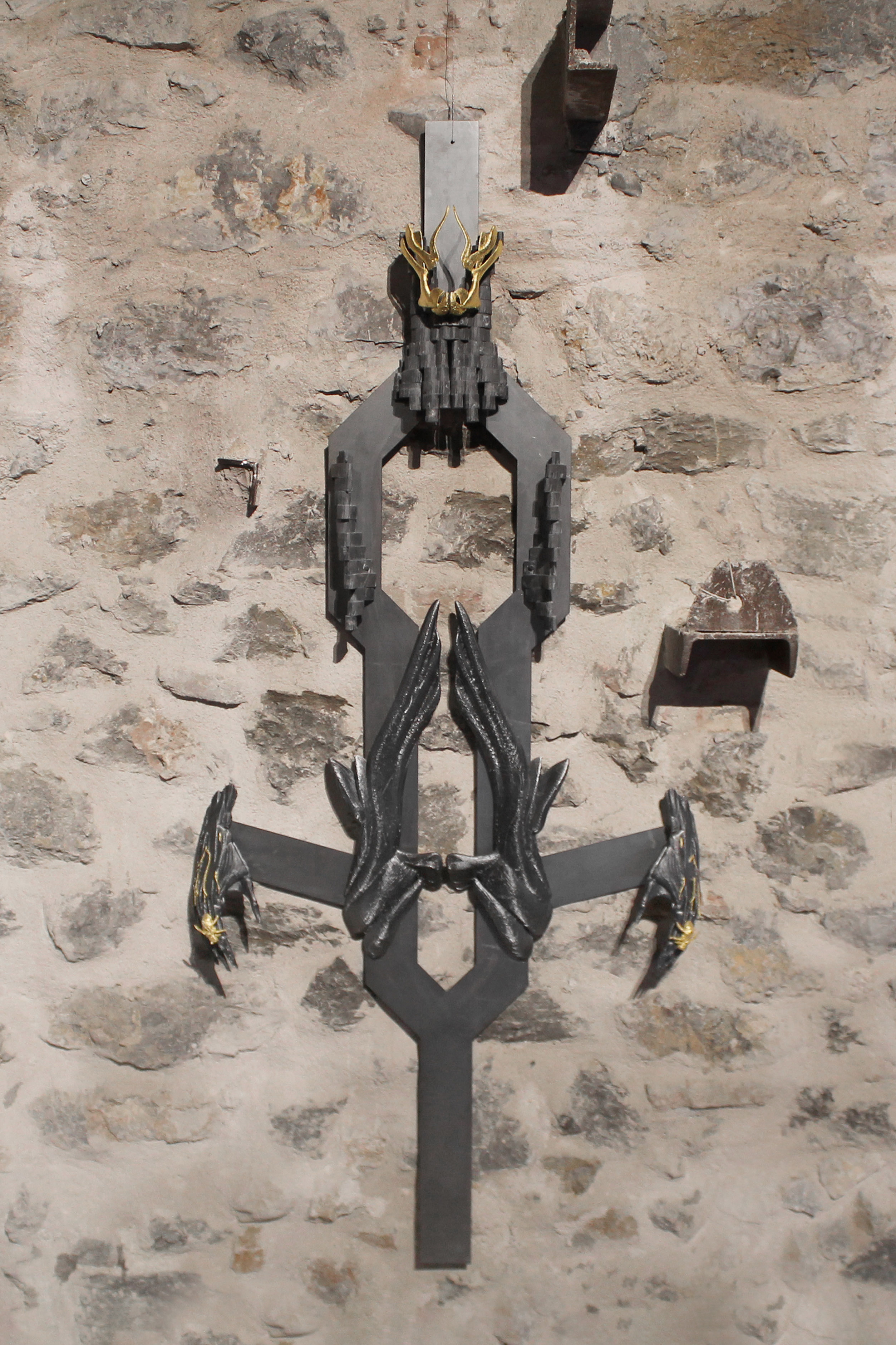
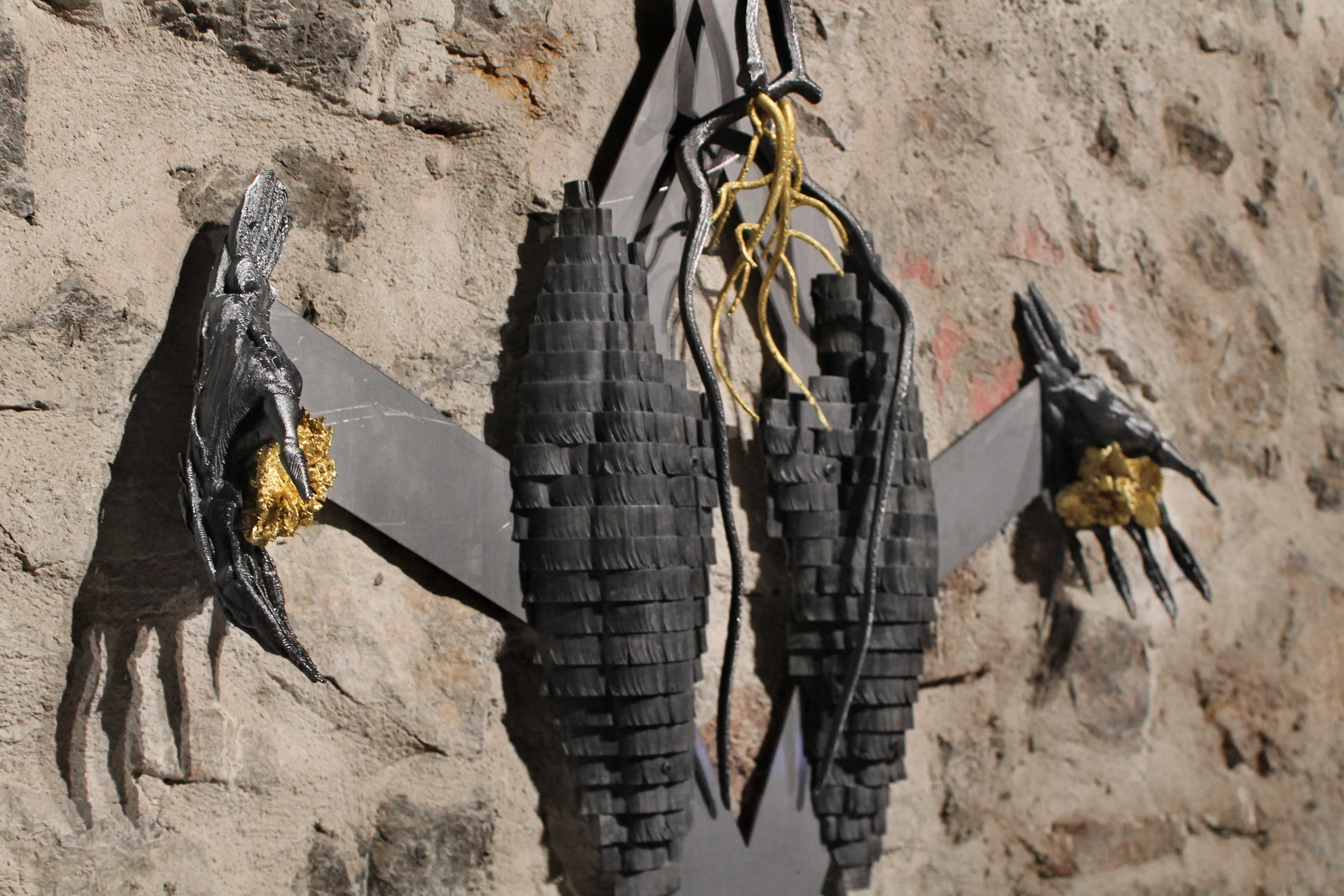
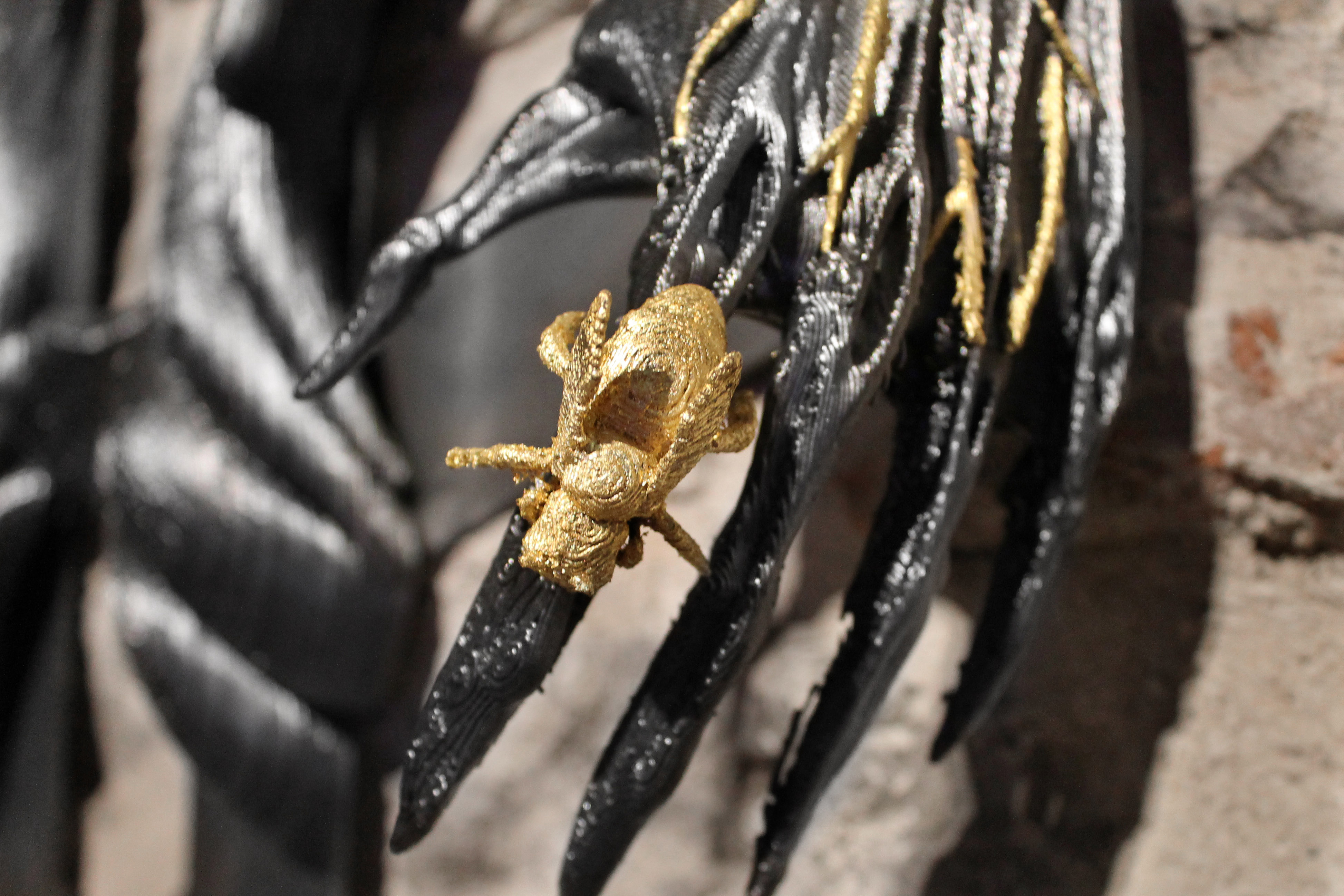
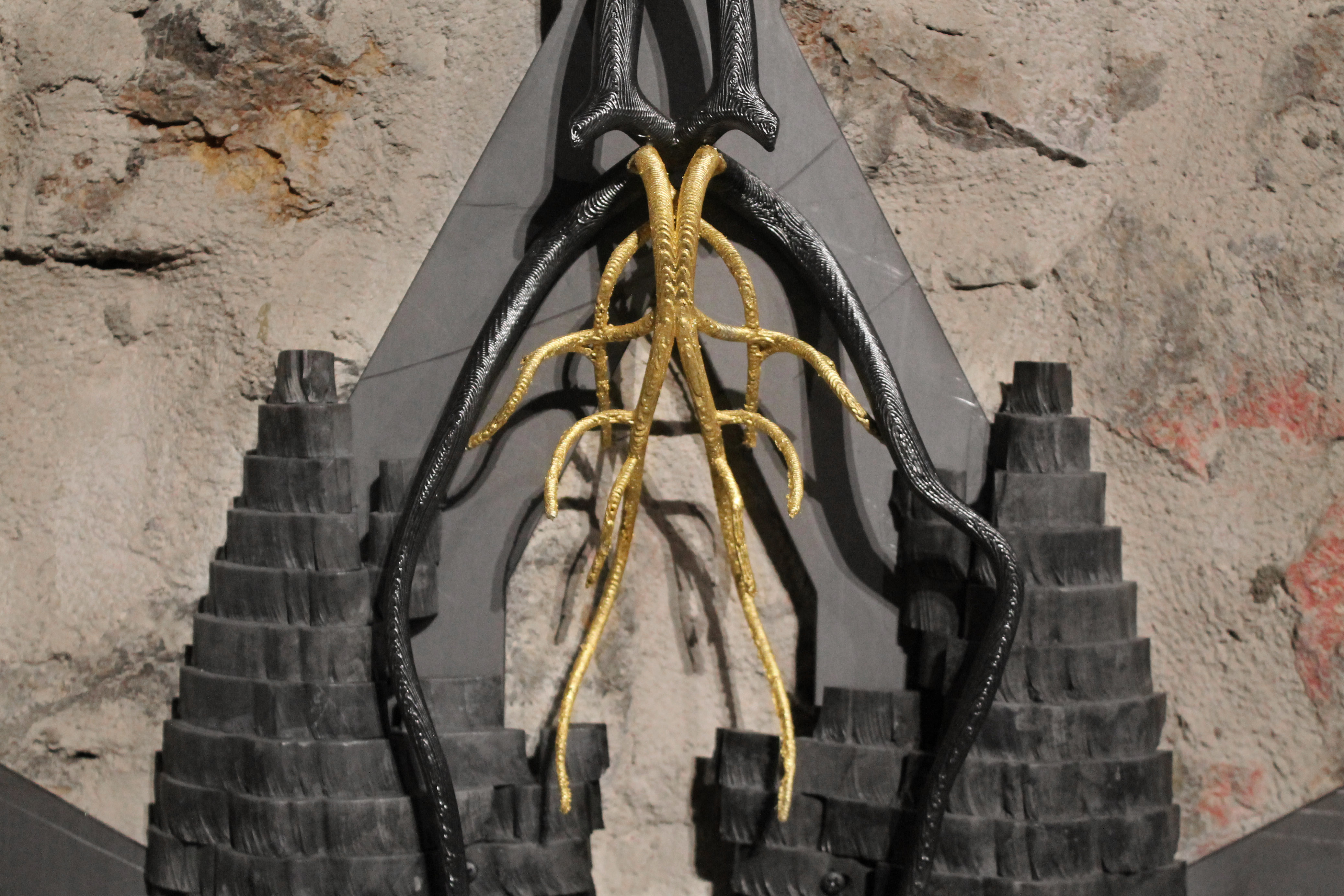
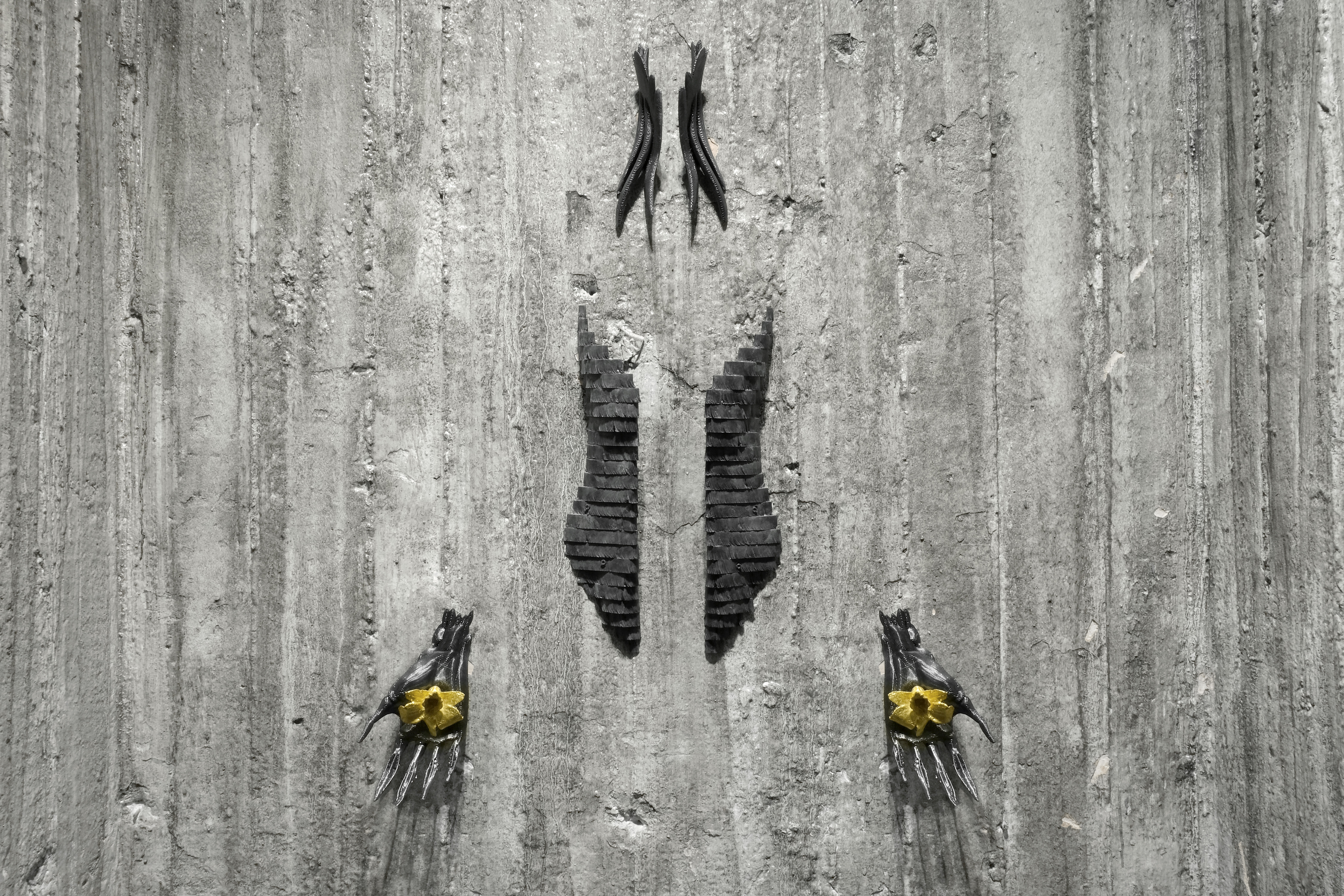
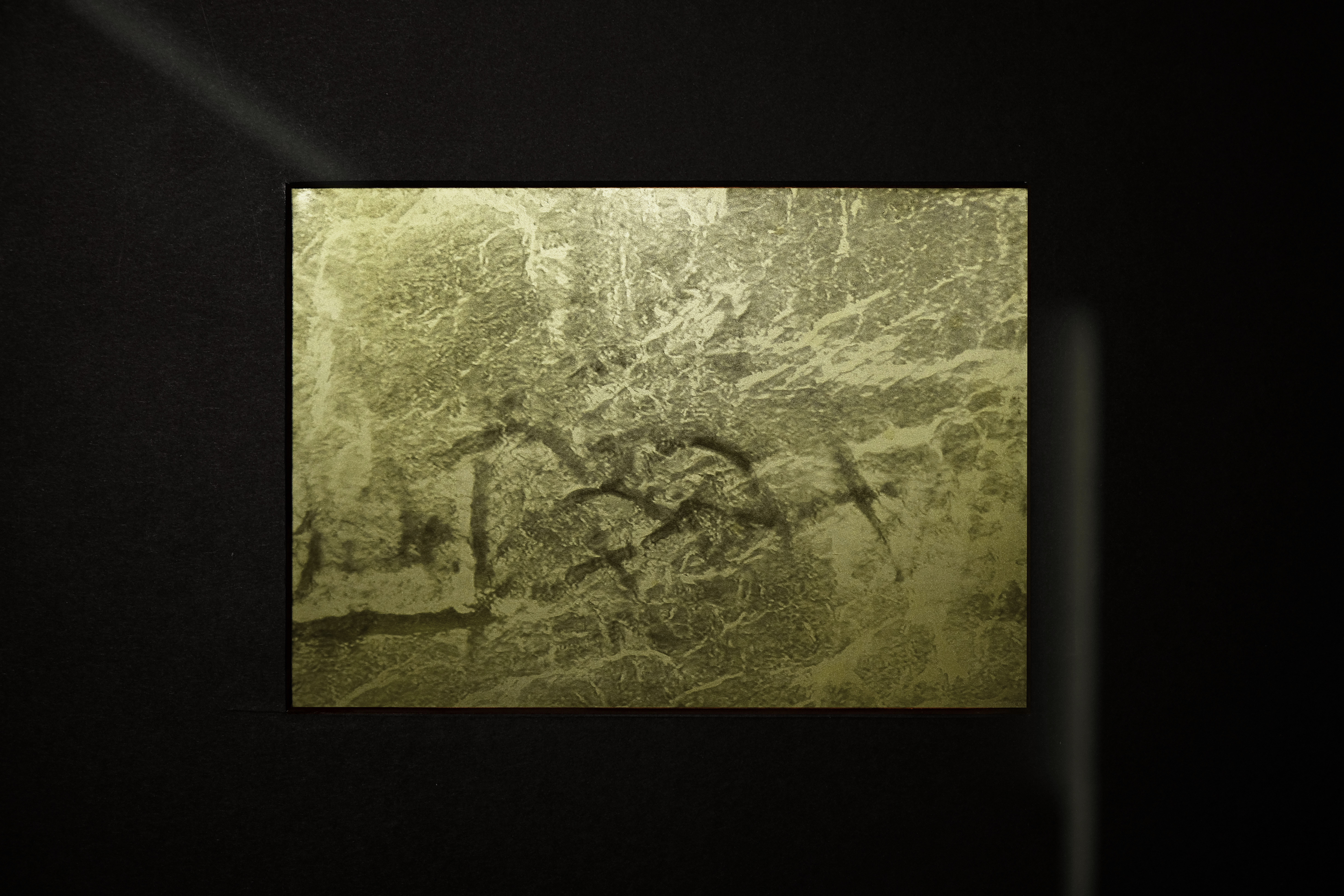
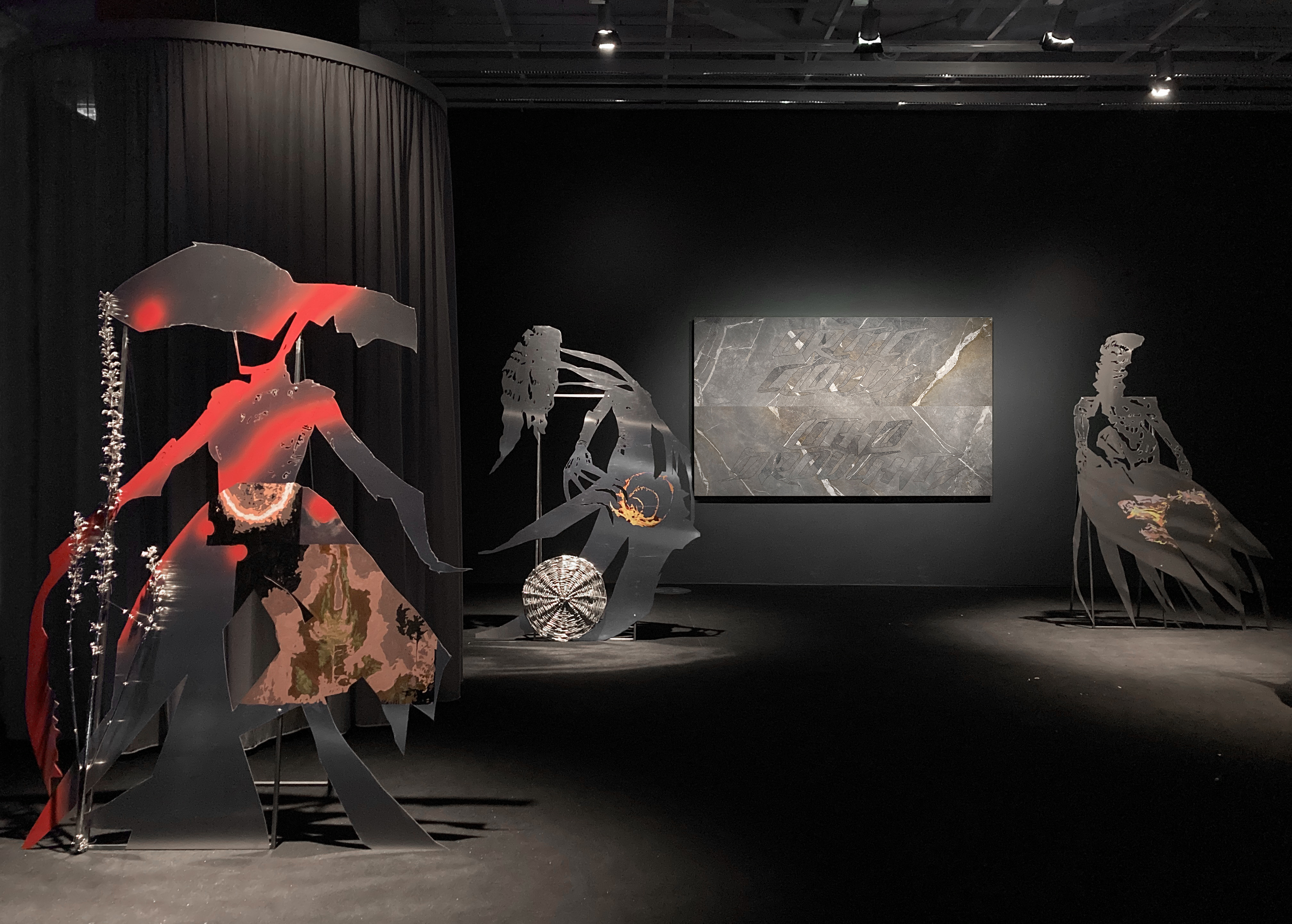
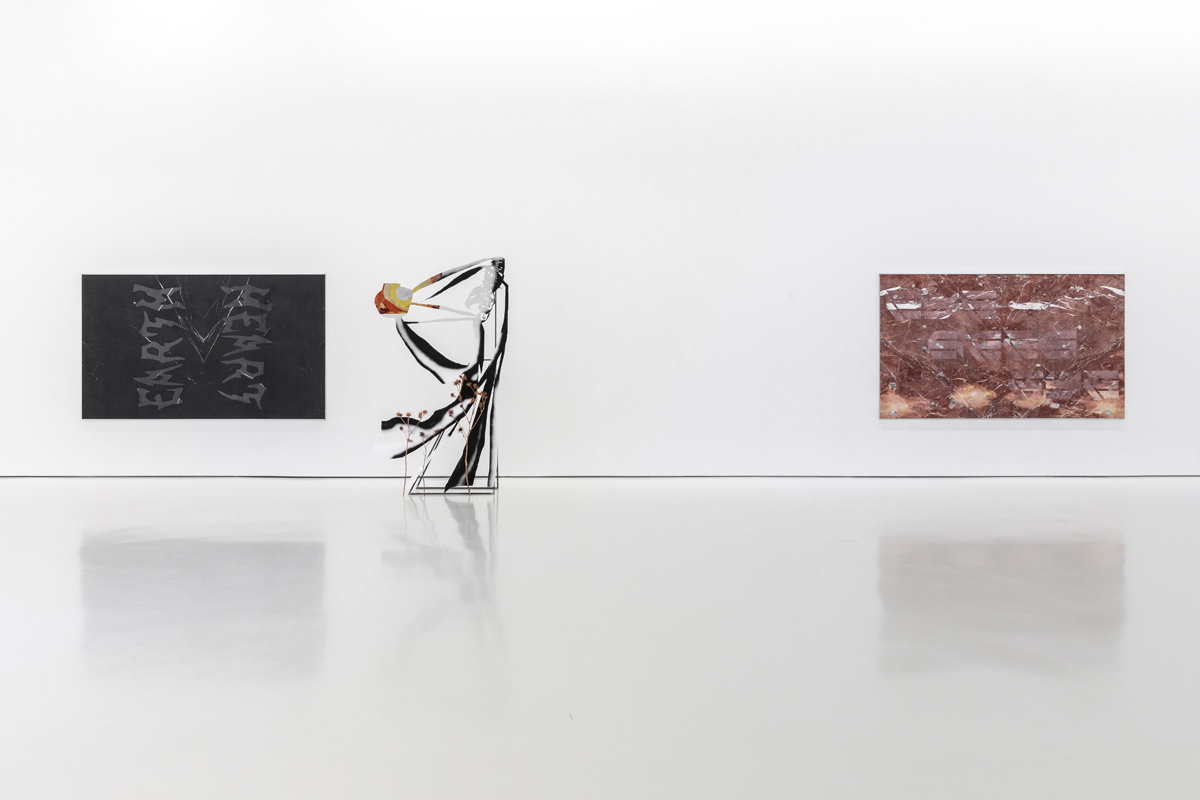
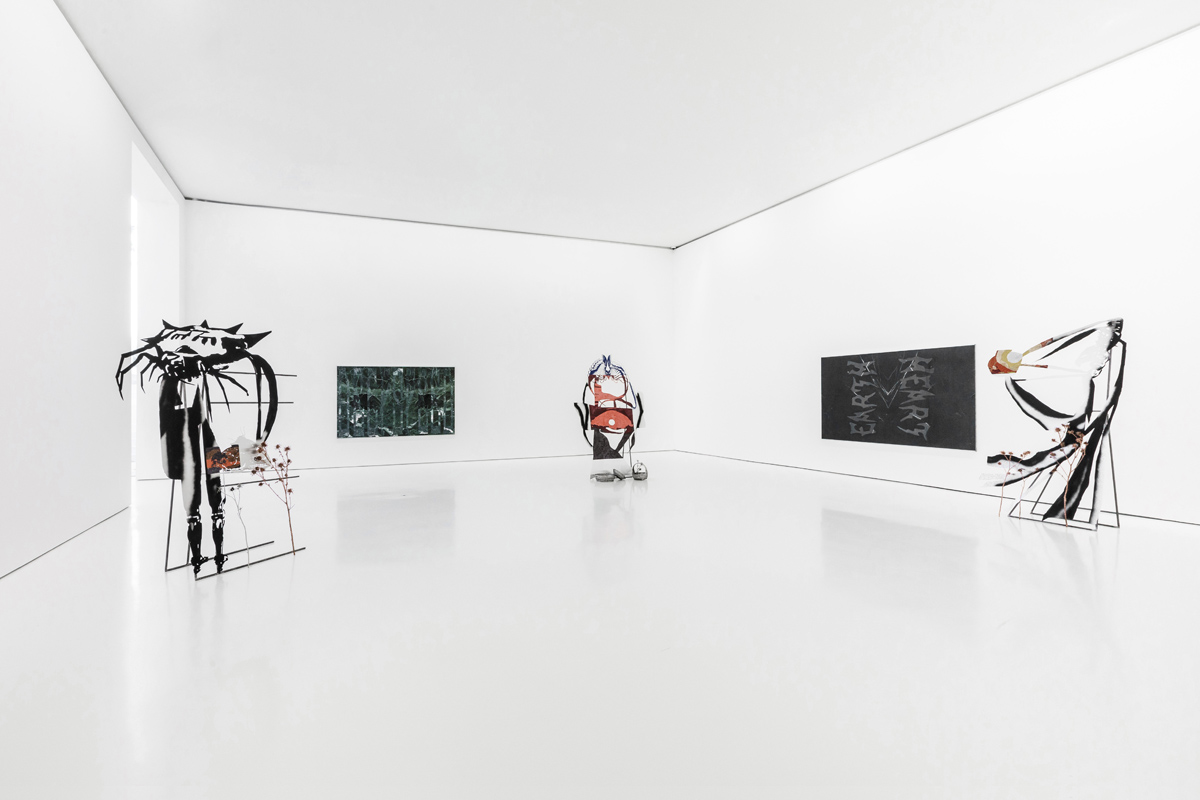
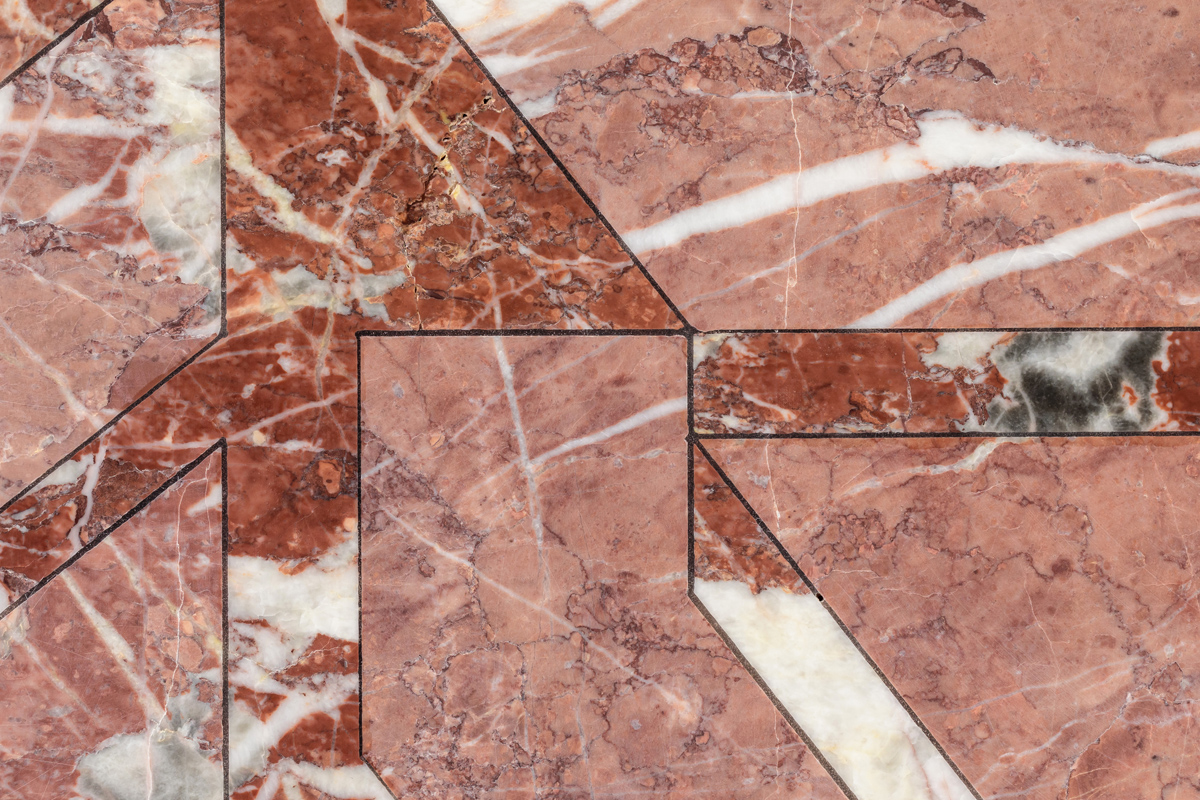
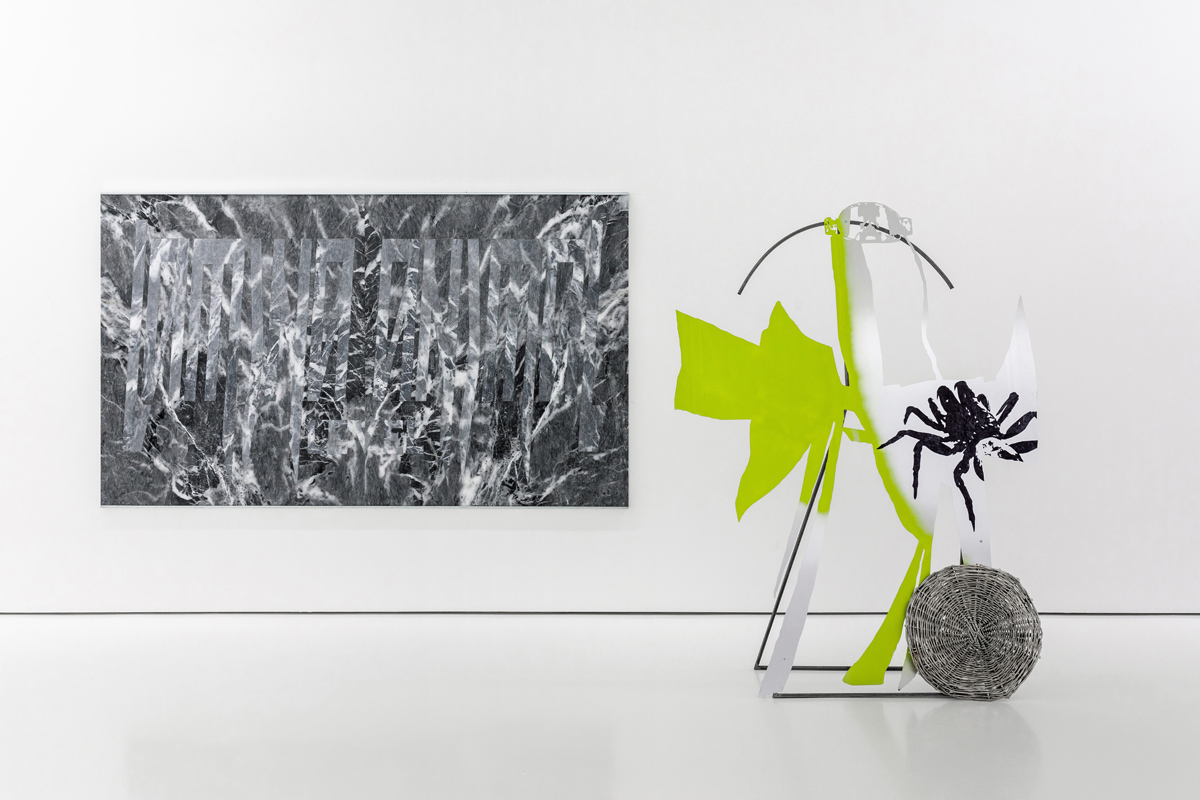
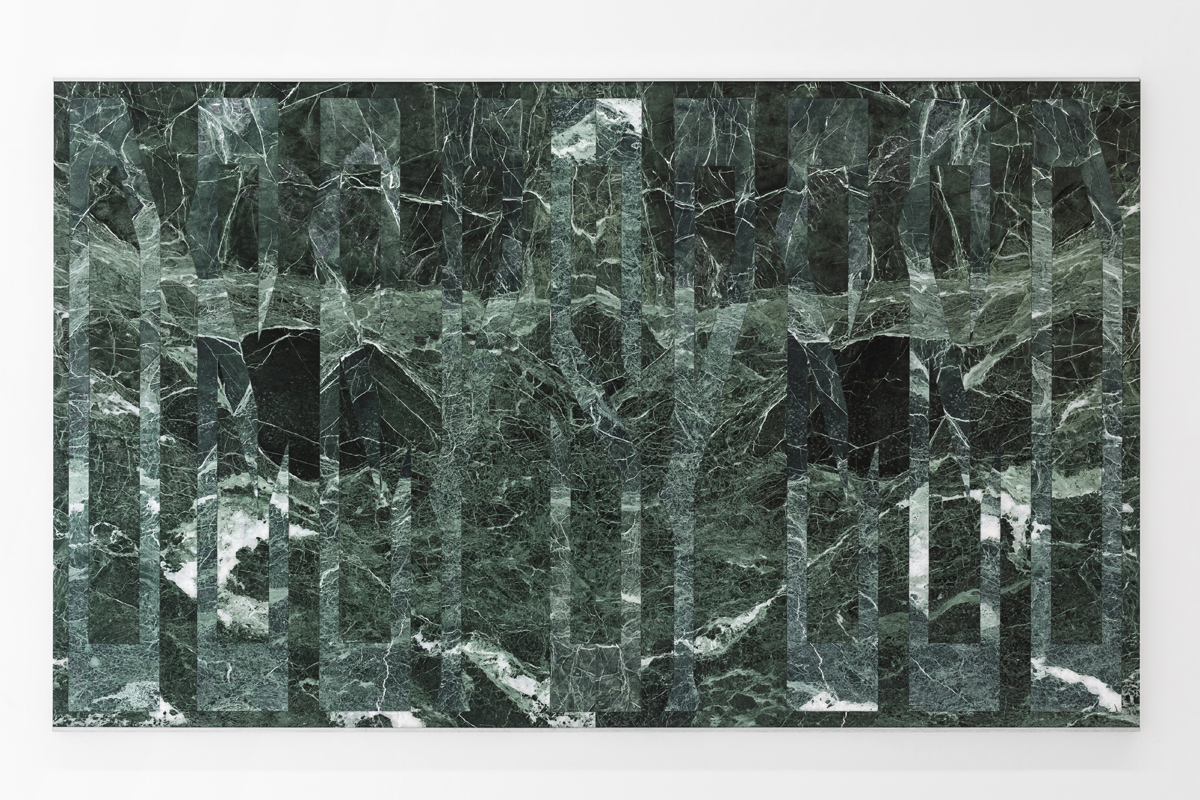
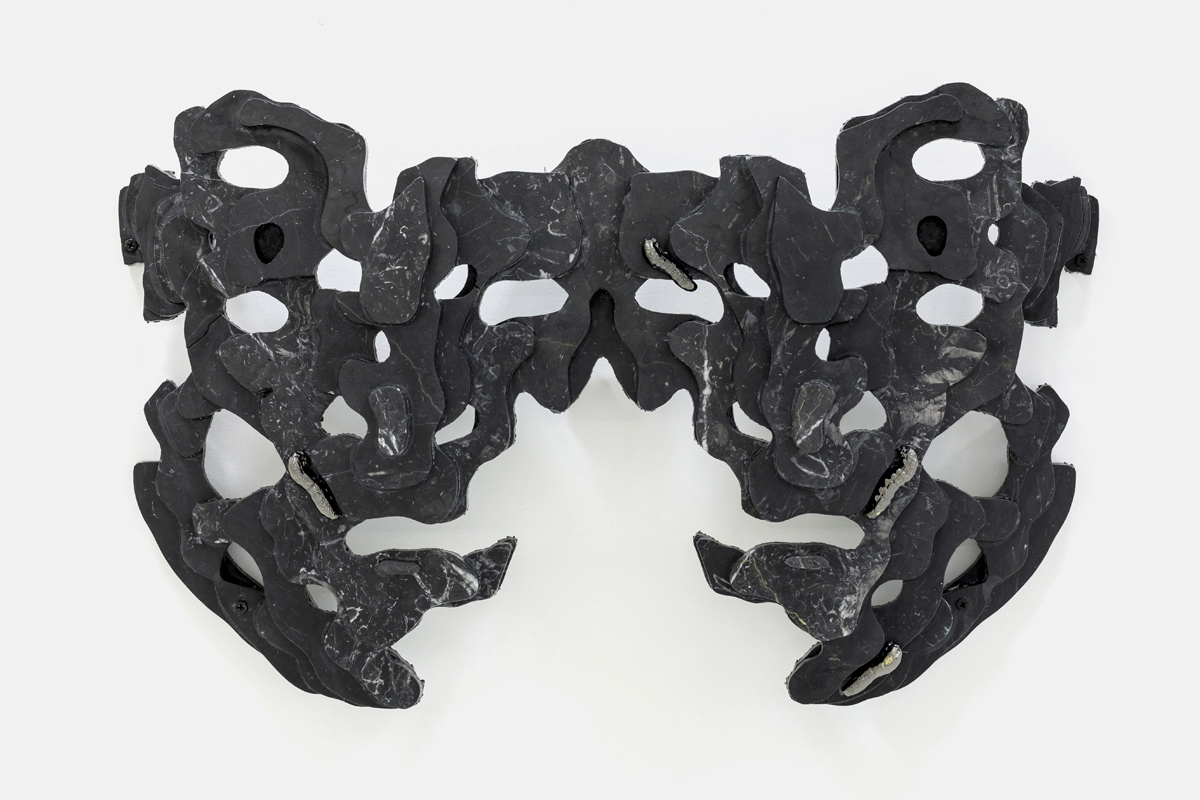
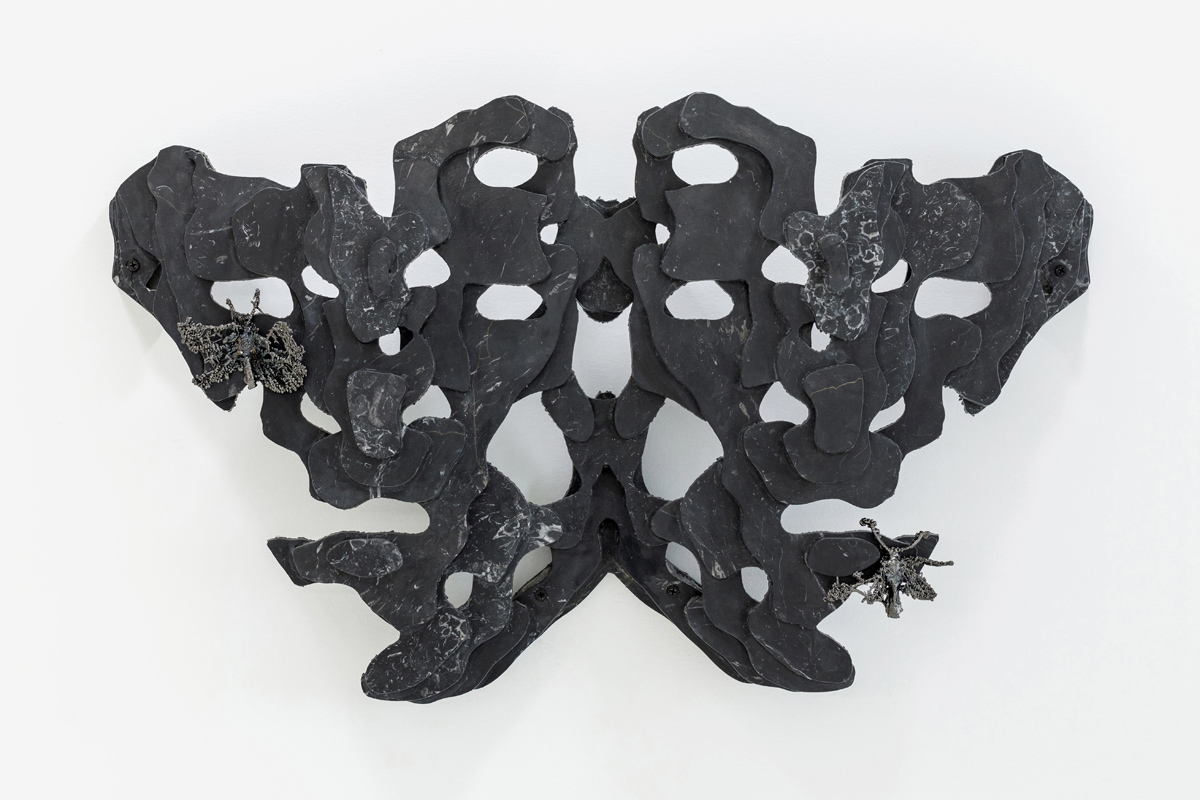
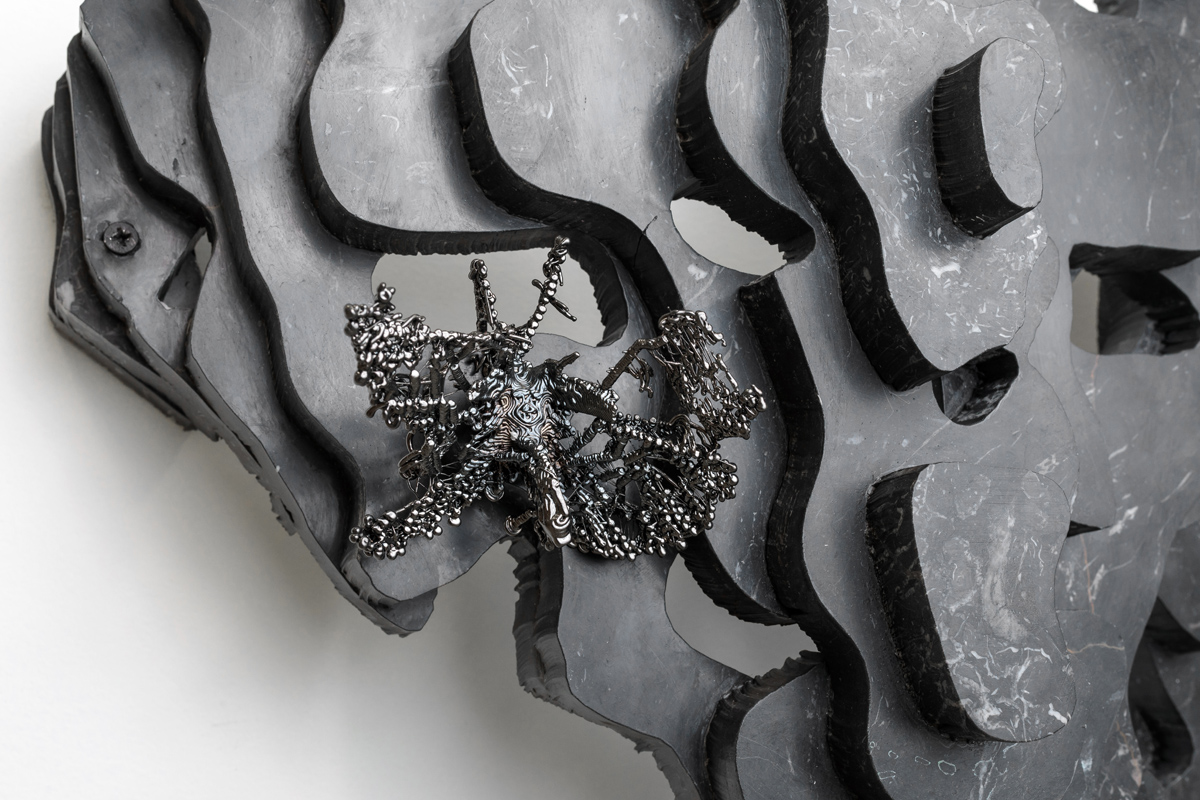
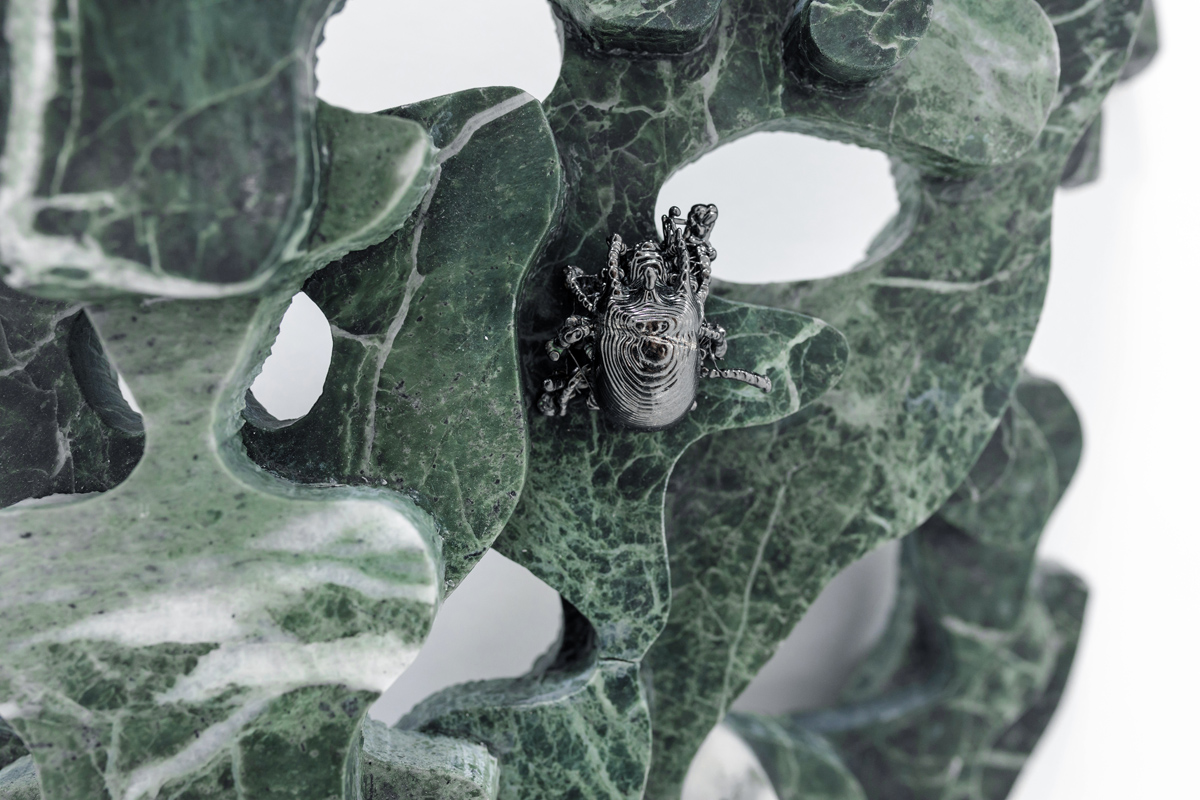
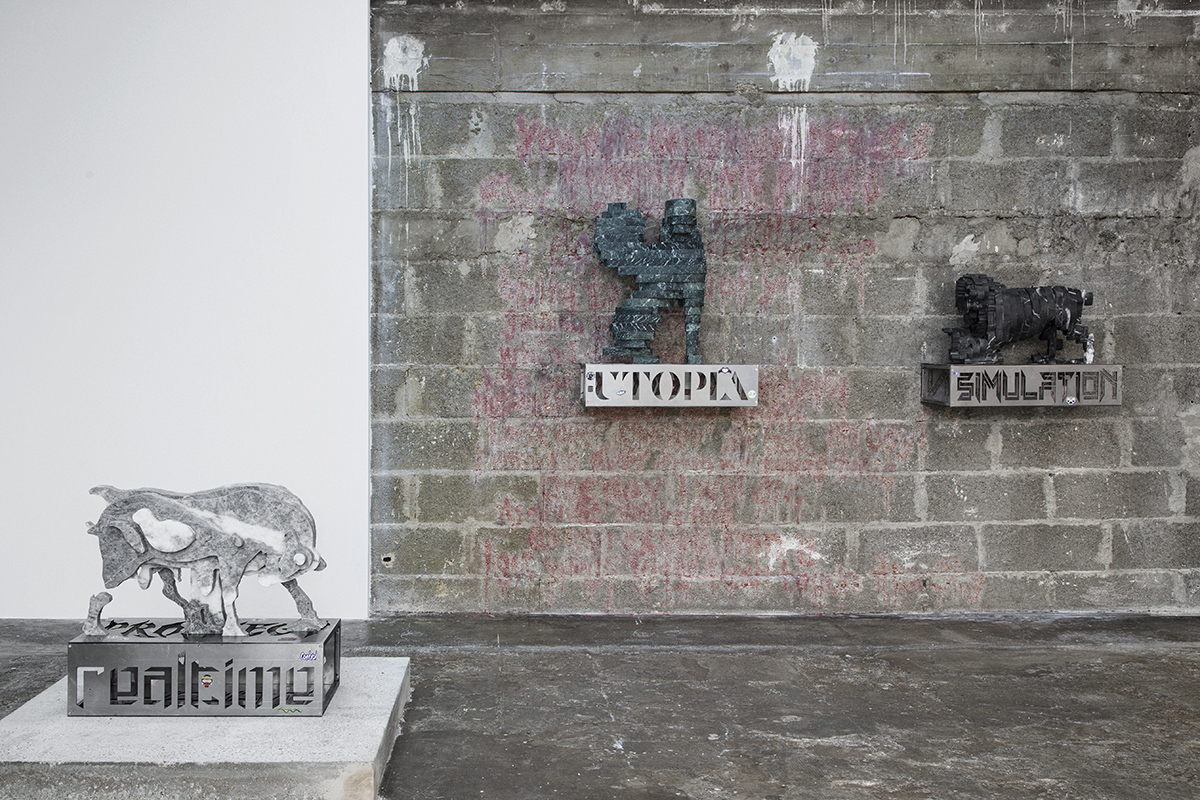
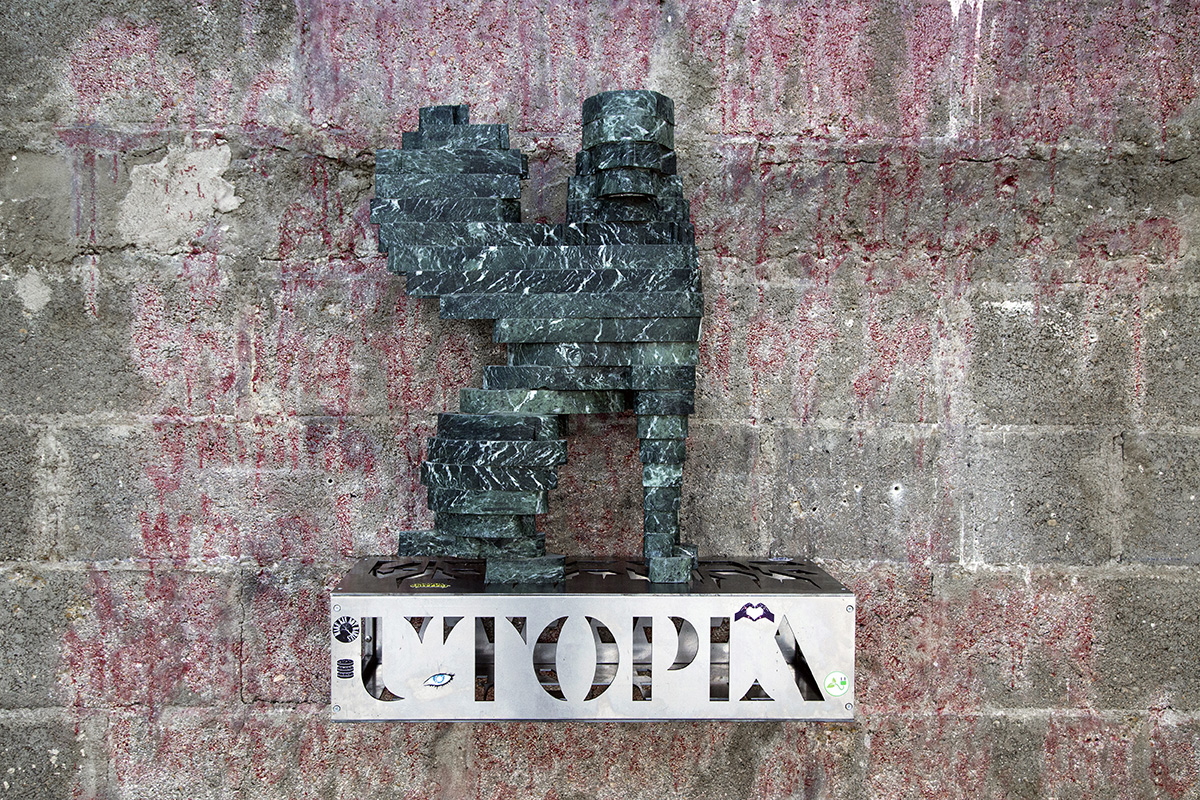
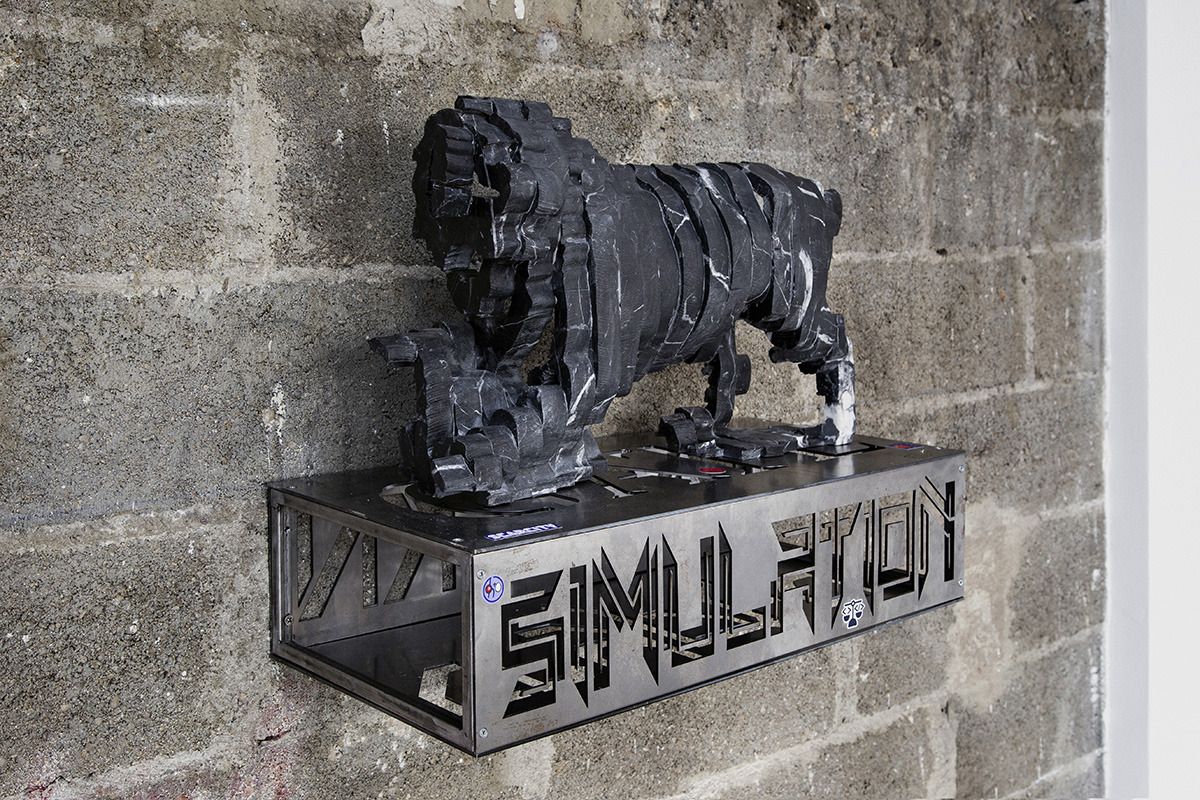
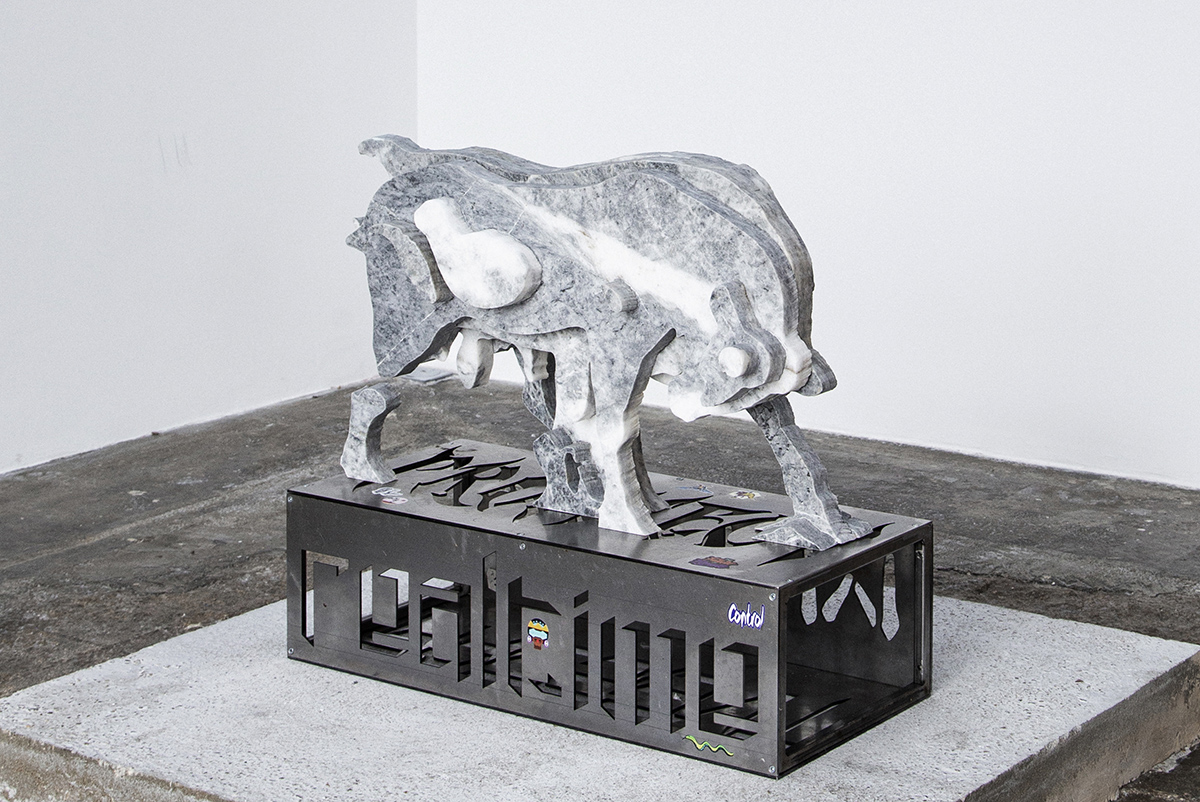
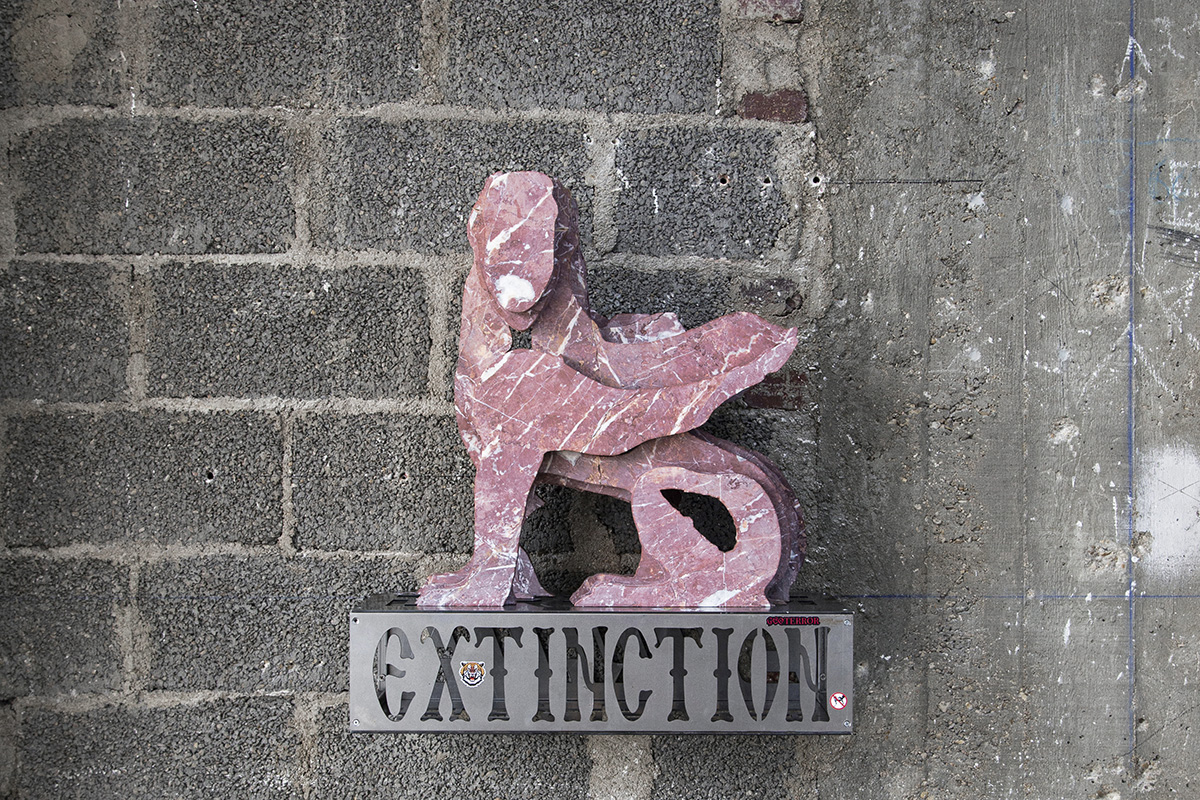
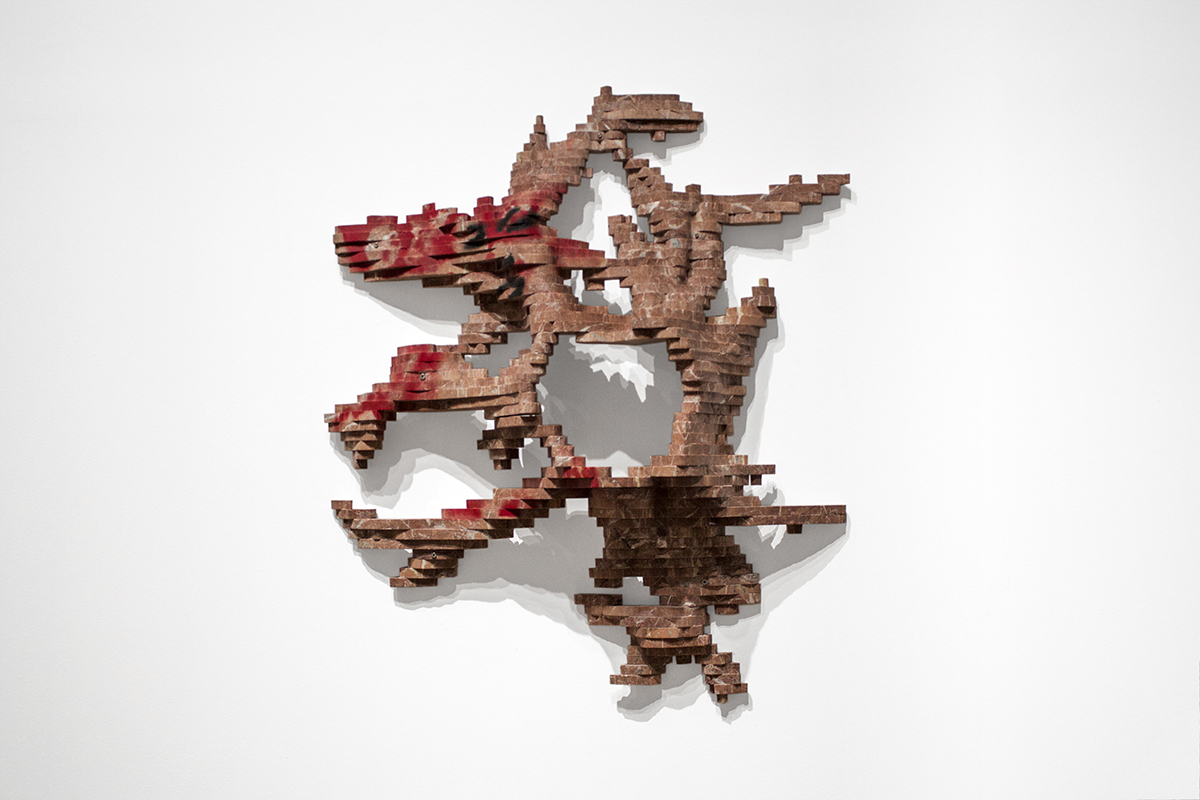
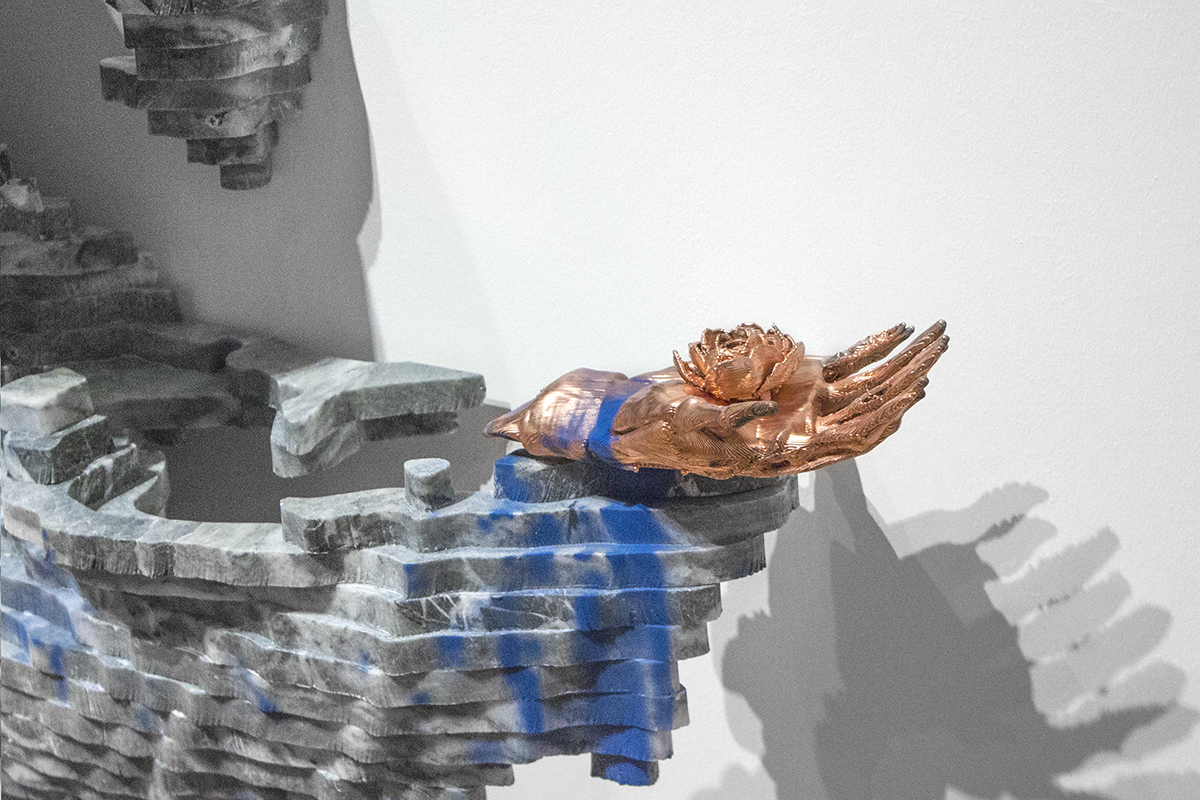
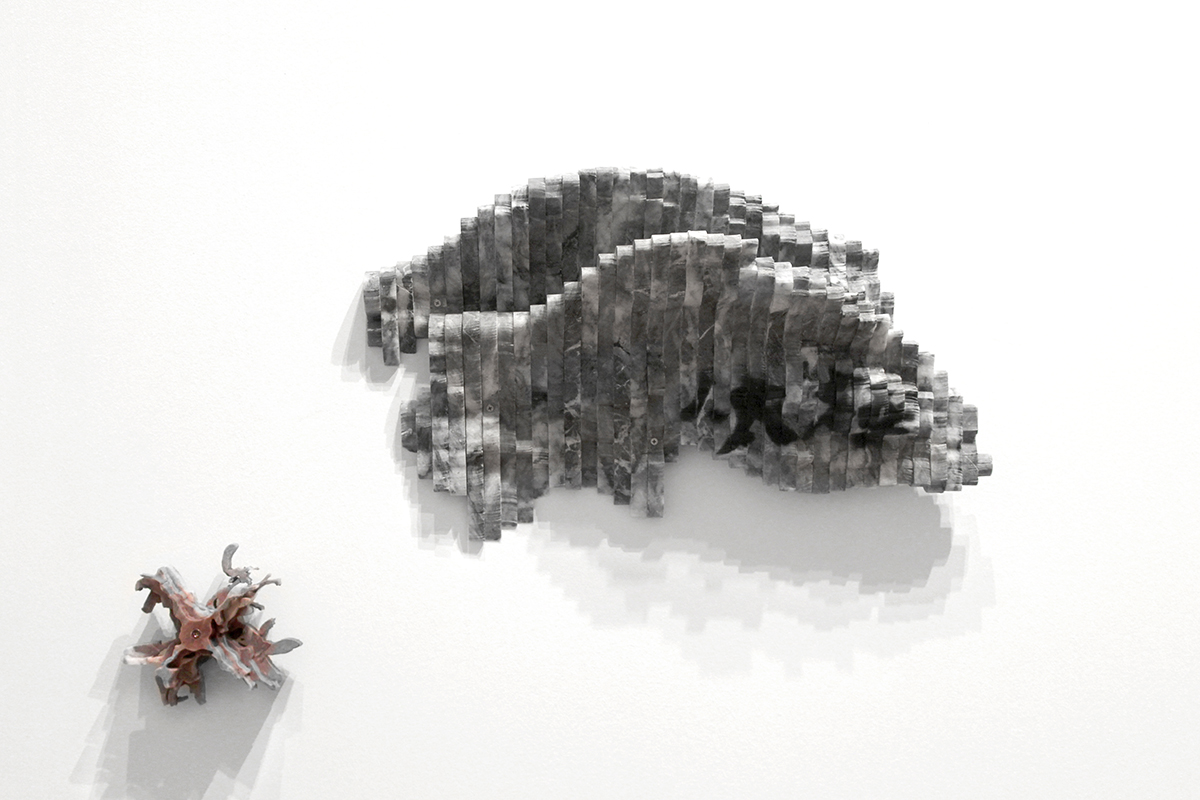
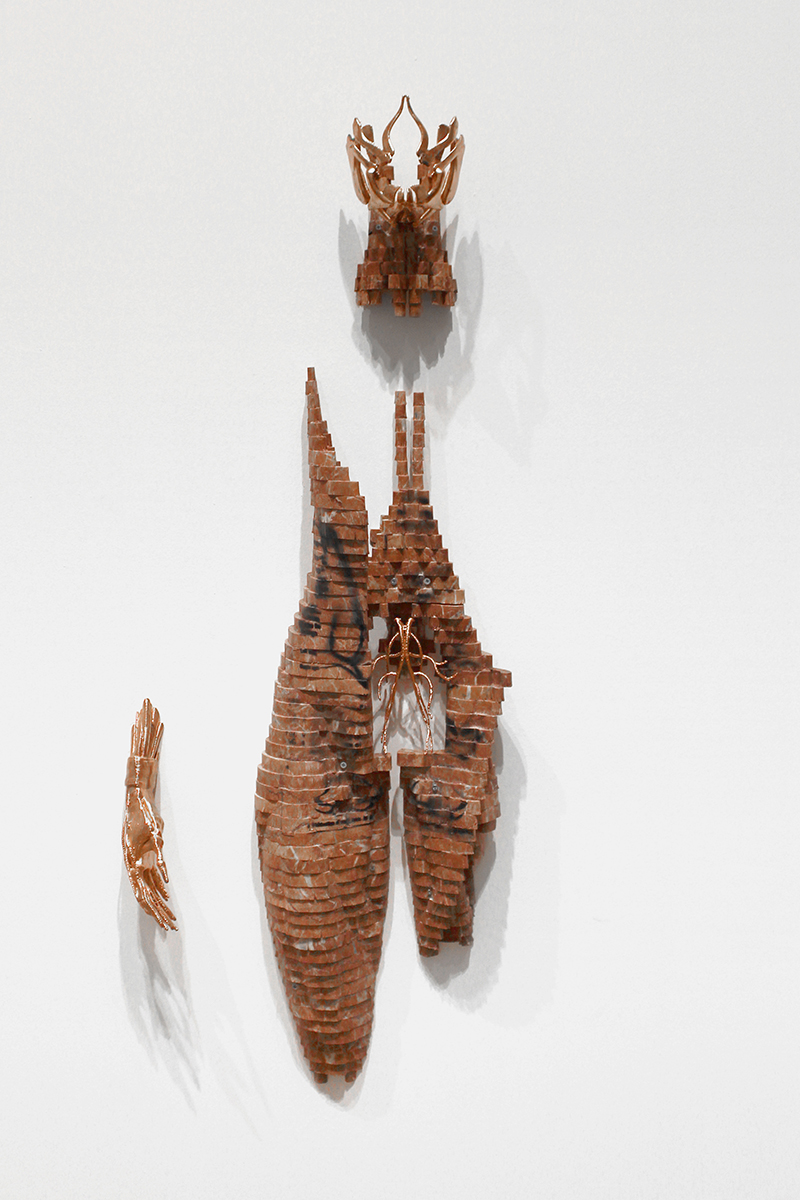
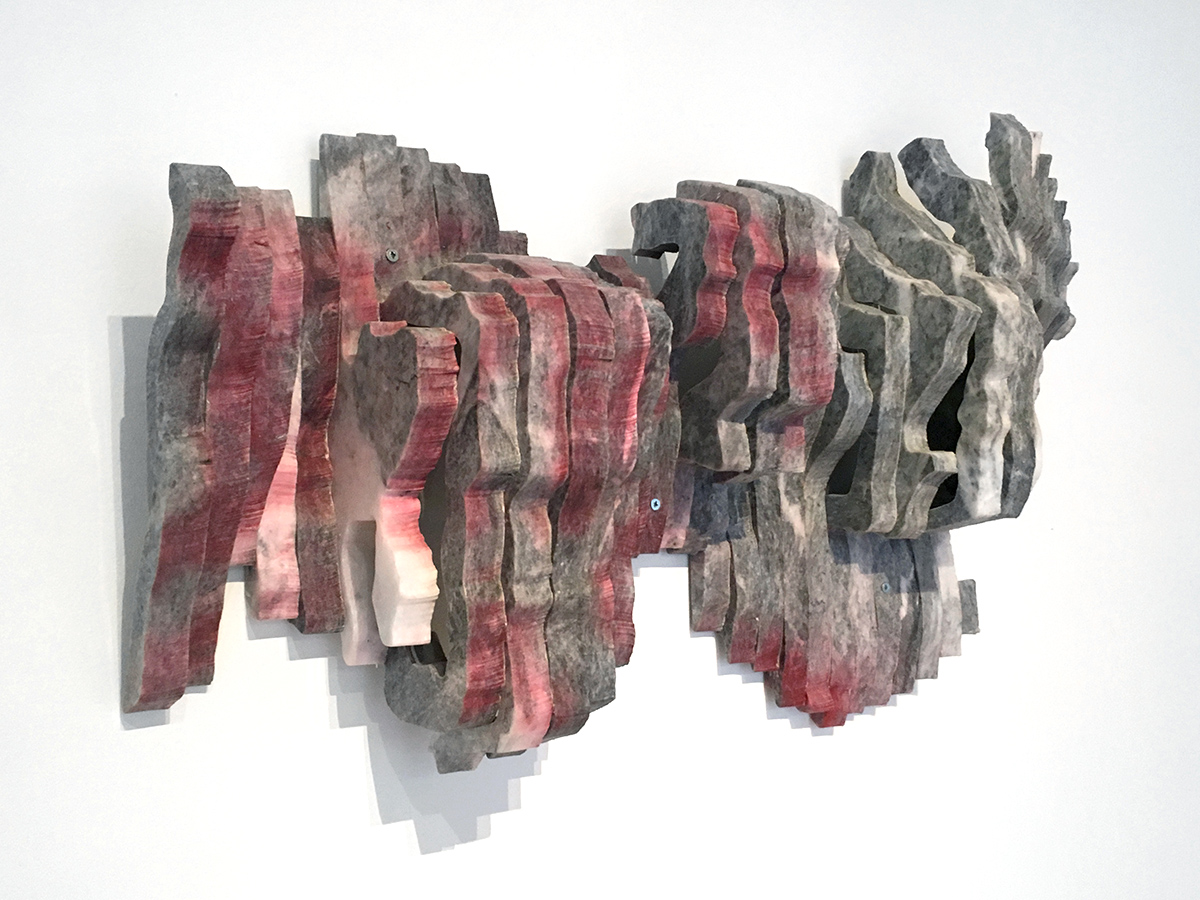
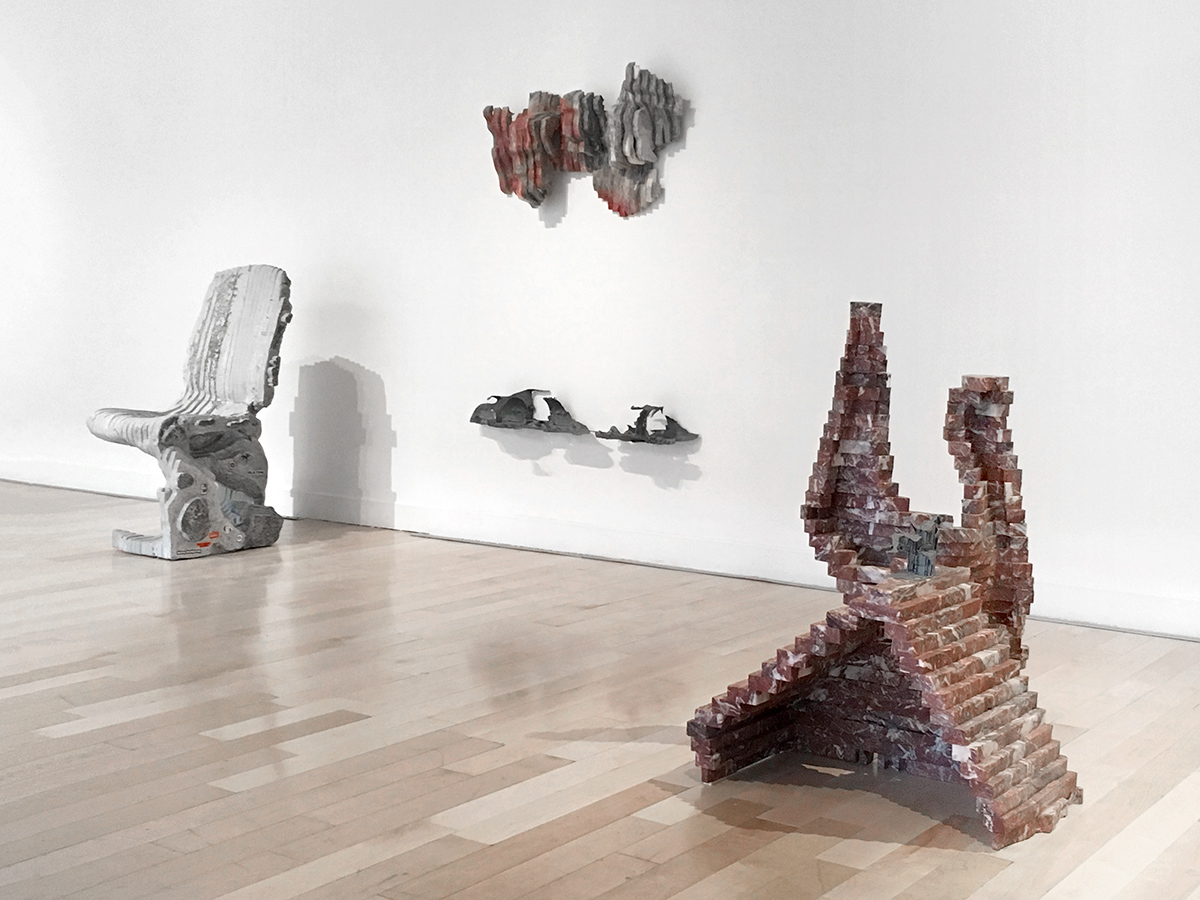
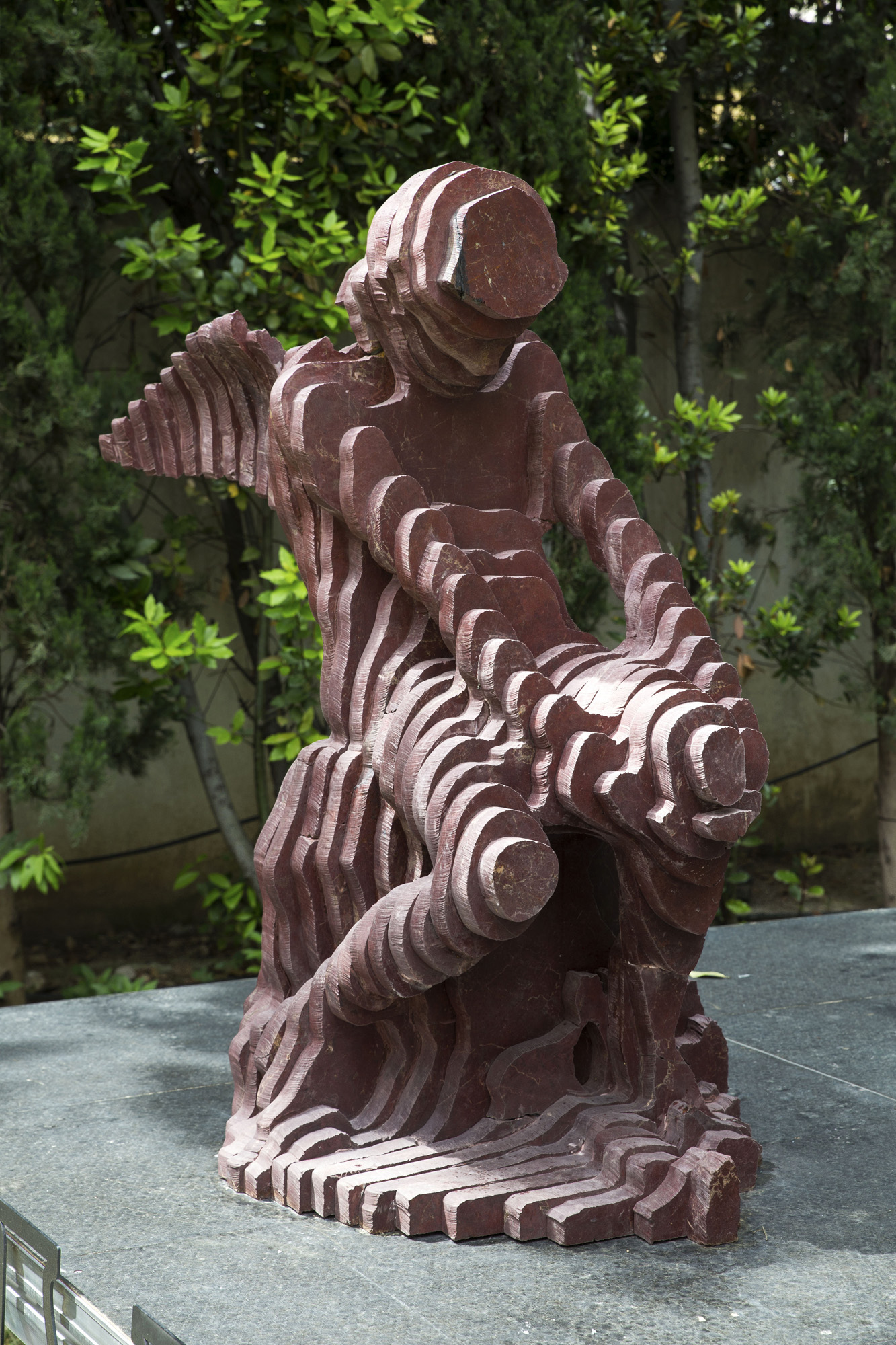
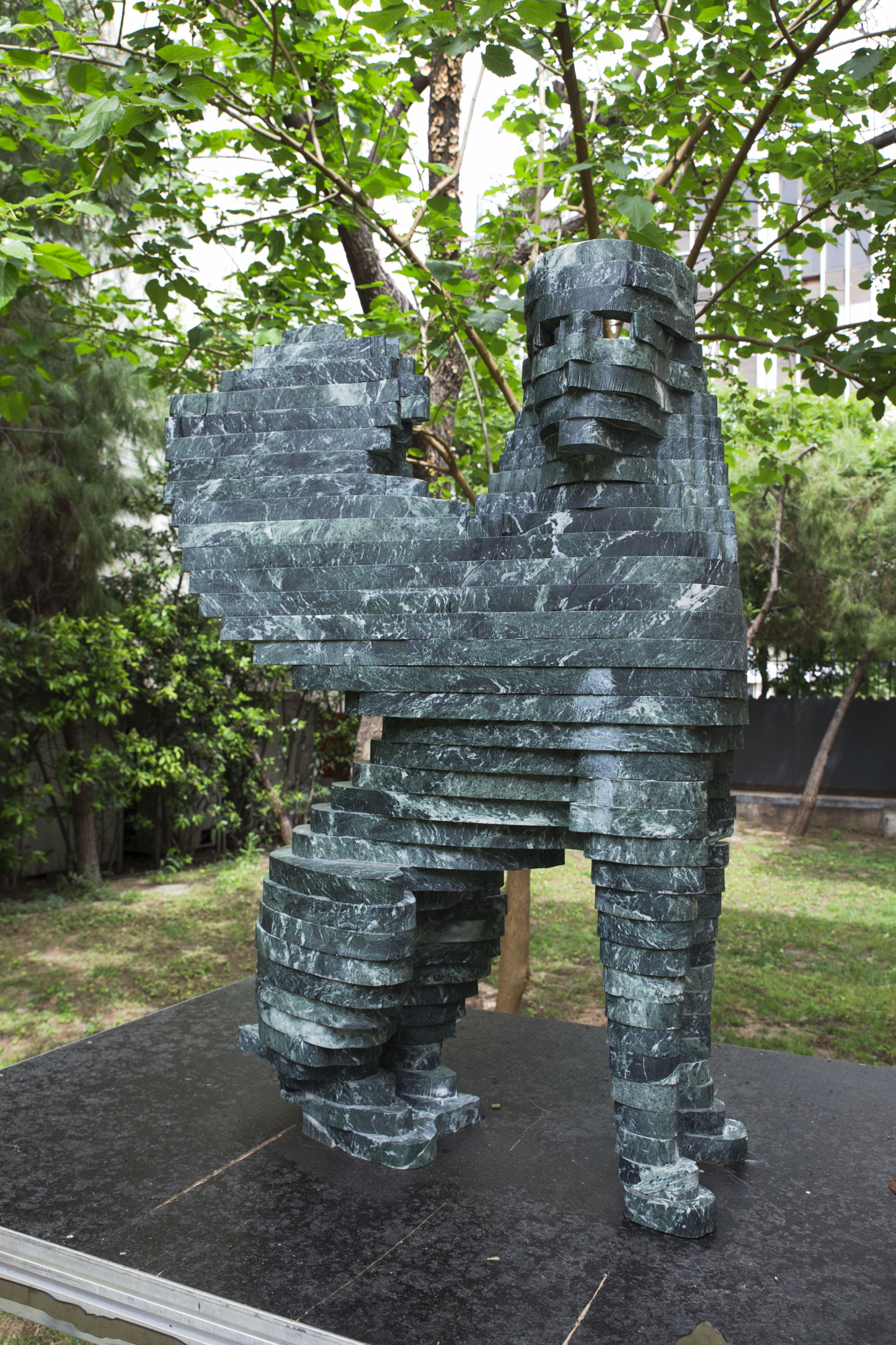
Oracle (Generation) includes four wall sculptures that combine marbles sourced from Greek quarries. Formed through geological pressures, marble embodies the relationship between earth’s transformations and human histories, unveiling layers of meaning within material and cultural realms. The work looks at how language emerges through (and because of) anthropomorphic interpretations in the search for meaning, revealing its influence on our understanding of time and the cognitive patterns humans use to assign significance. These language-constructs reconfigure perceptions of meaning, materiality, and time through algorithmic processes reminiscent of ancient oracular practices.
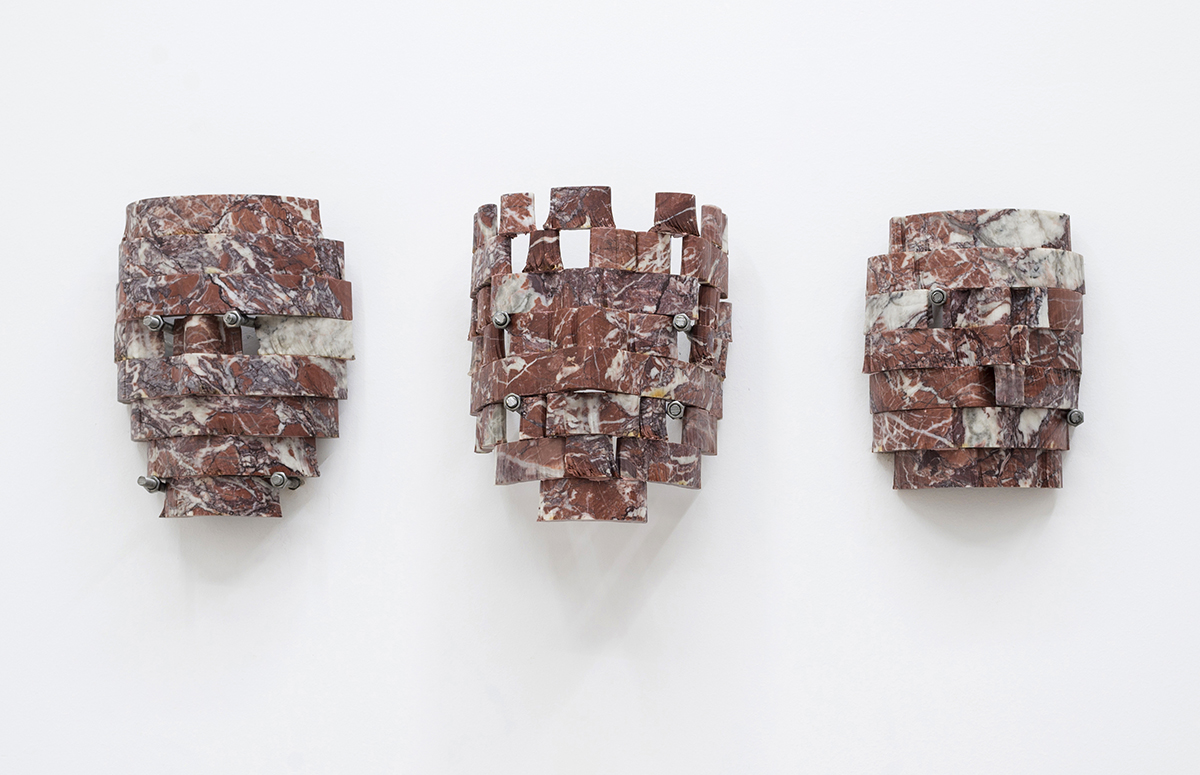
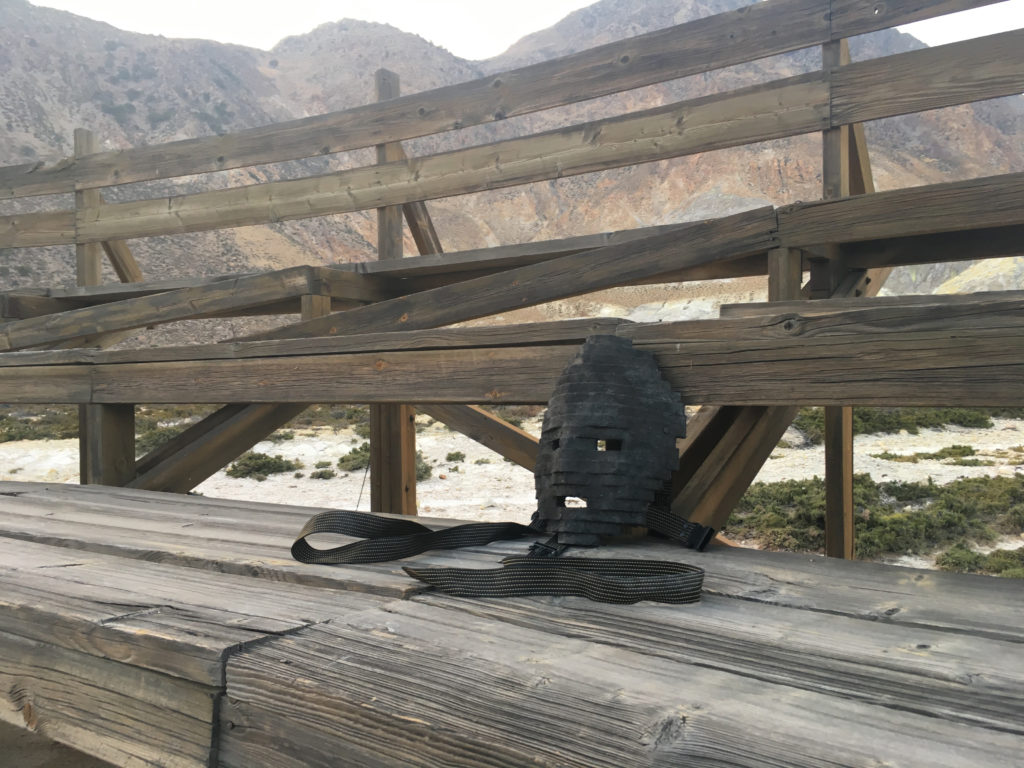
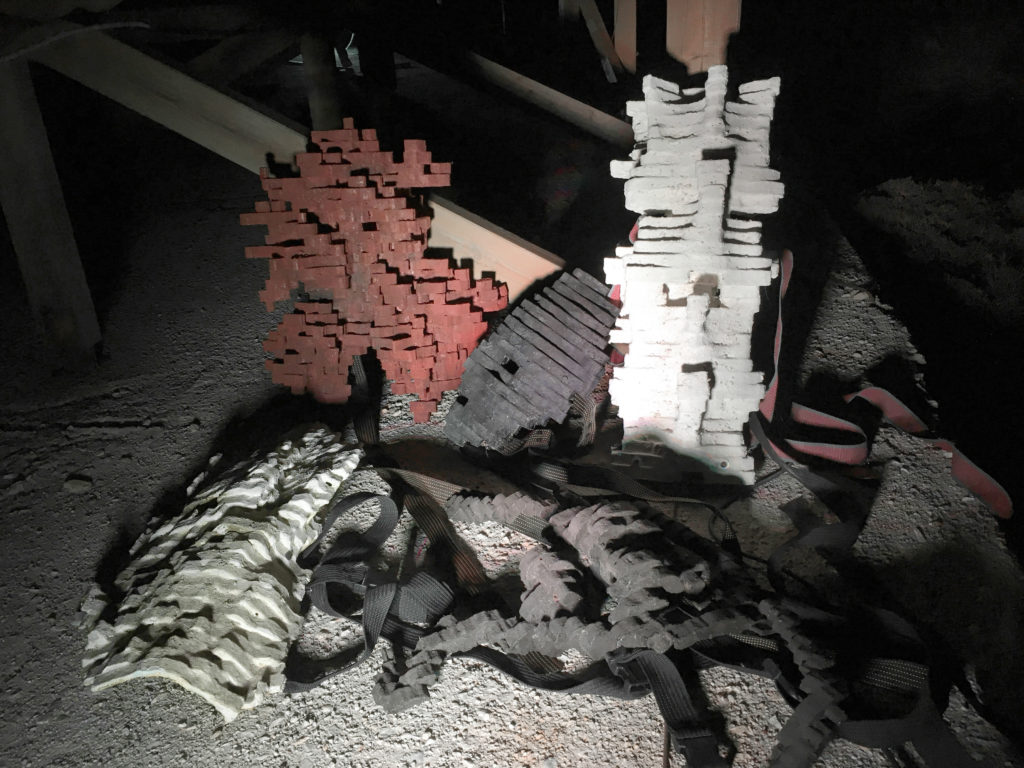
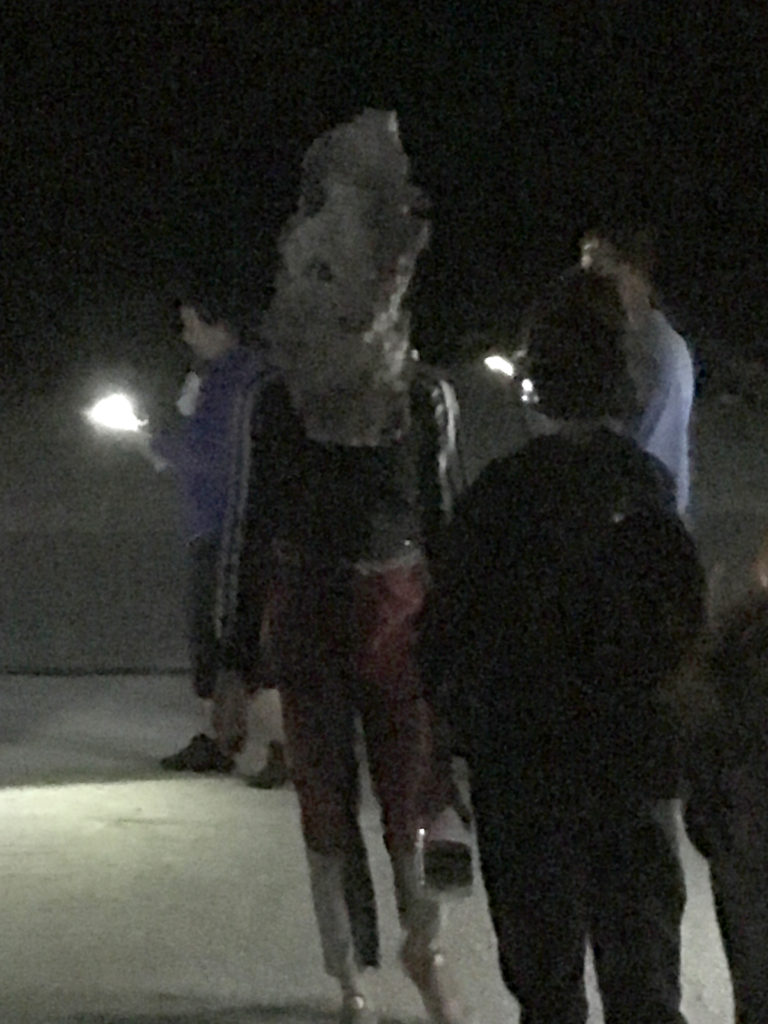
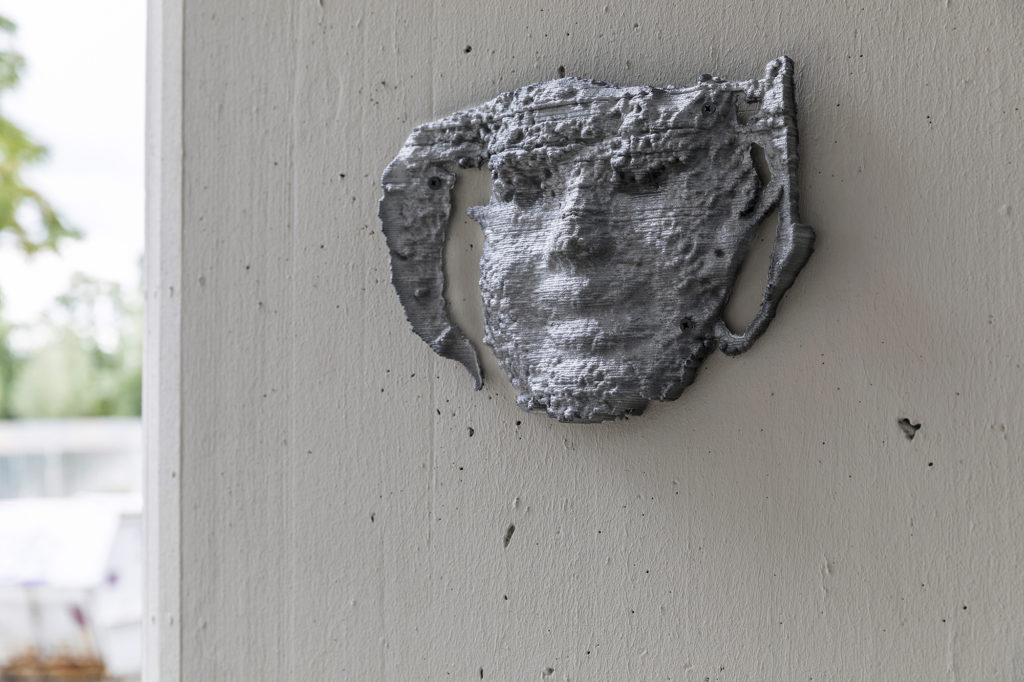
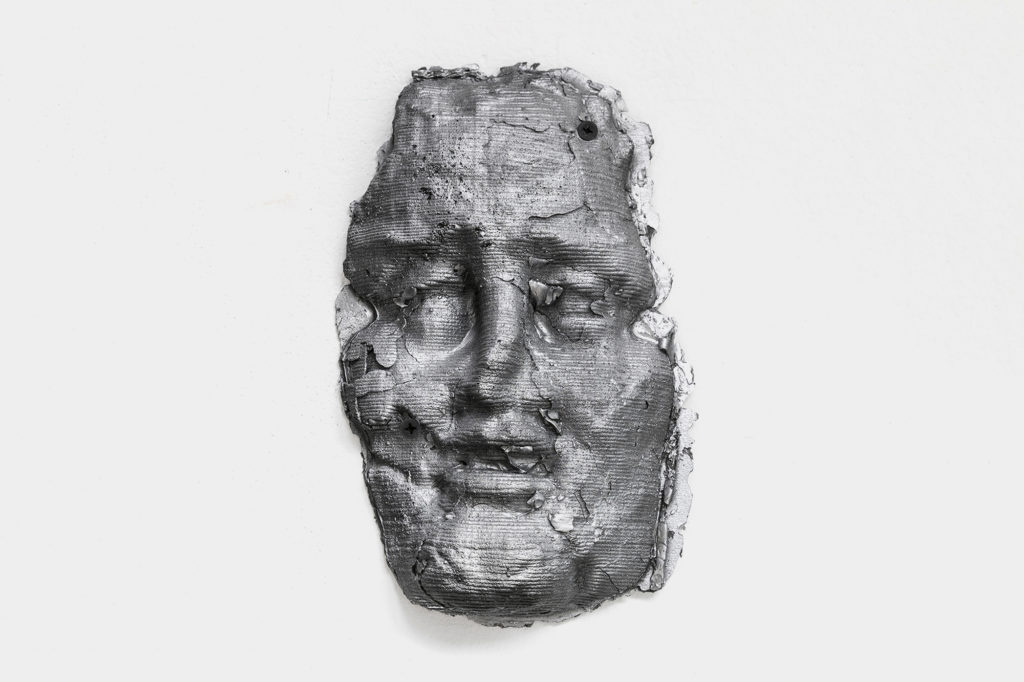
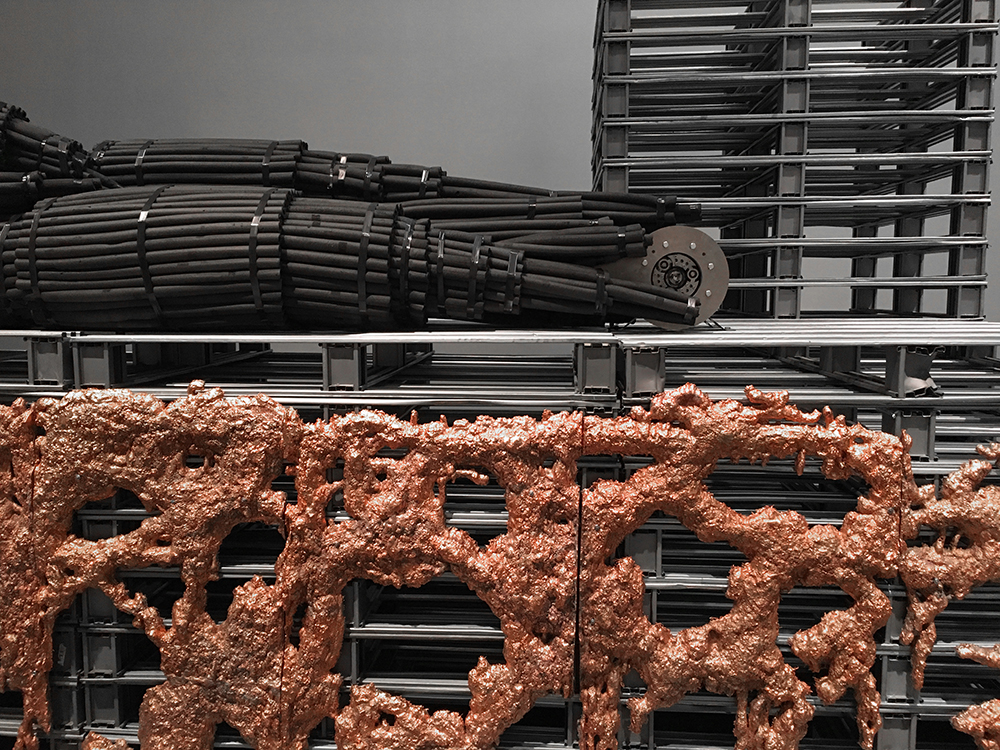
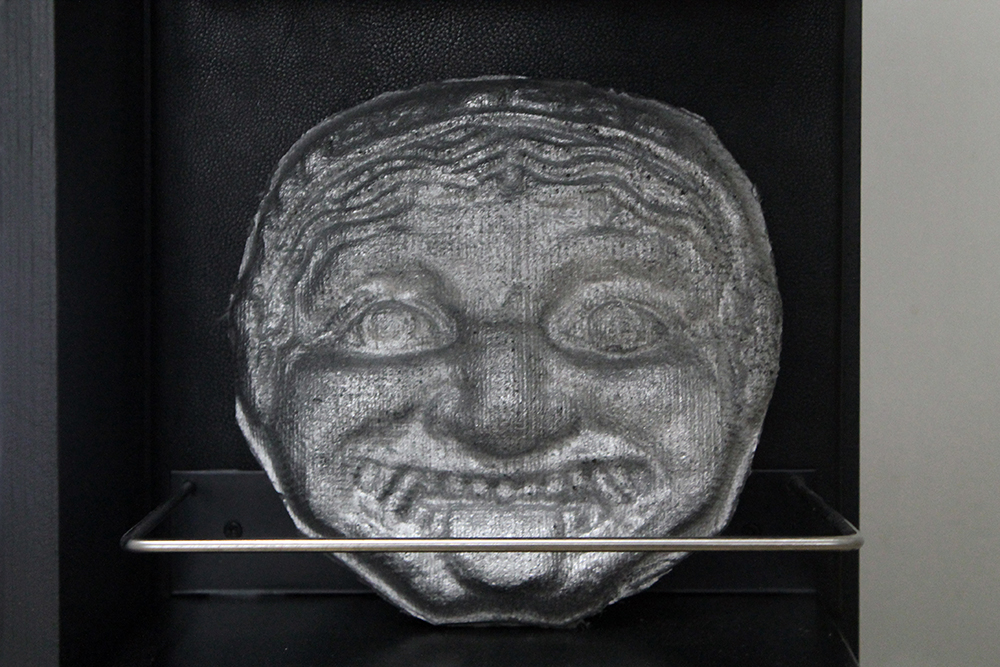
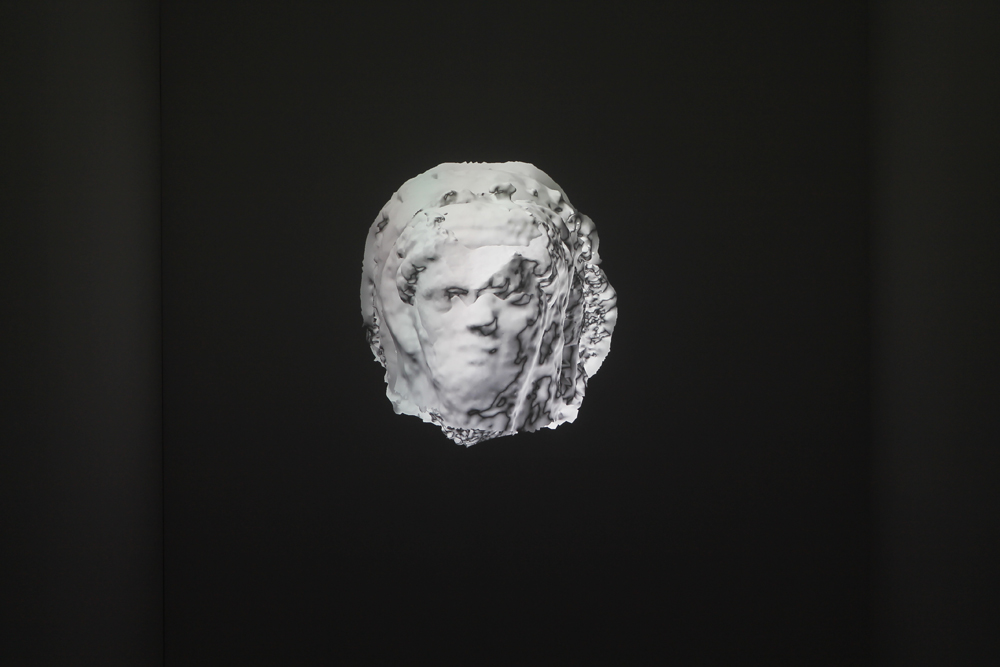
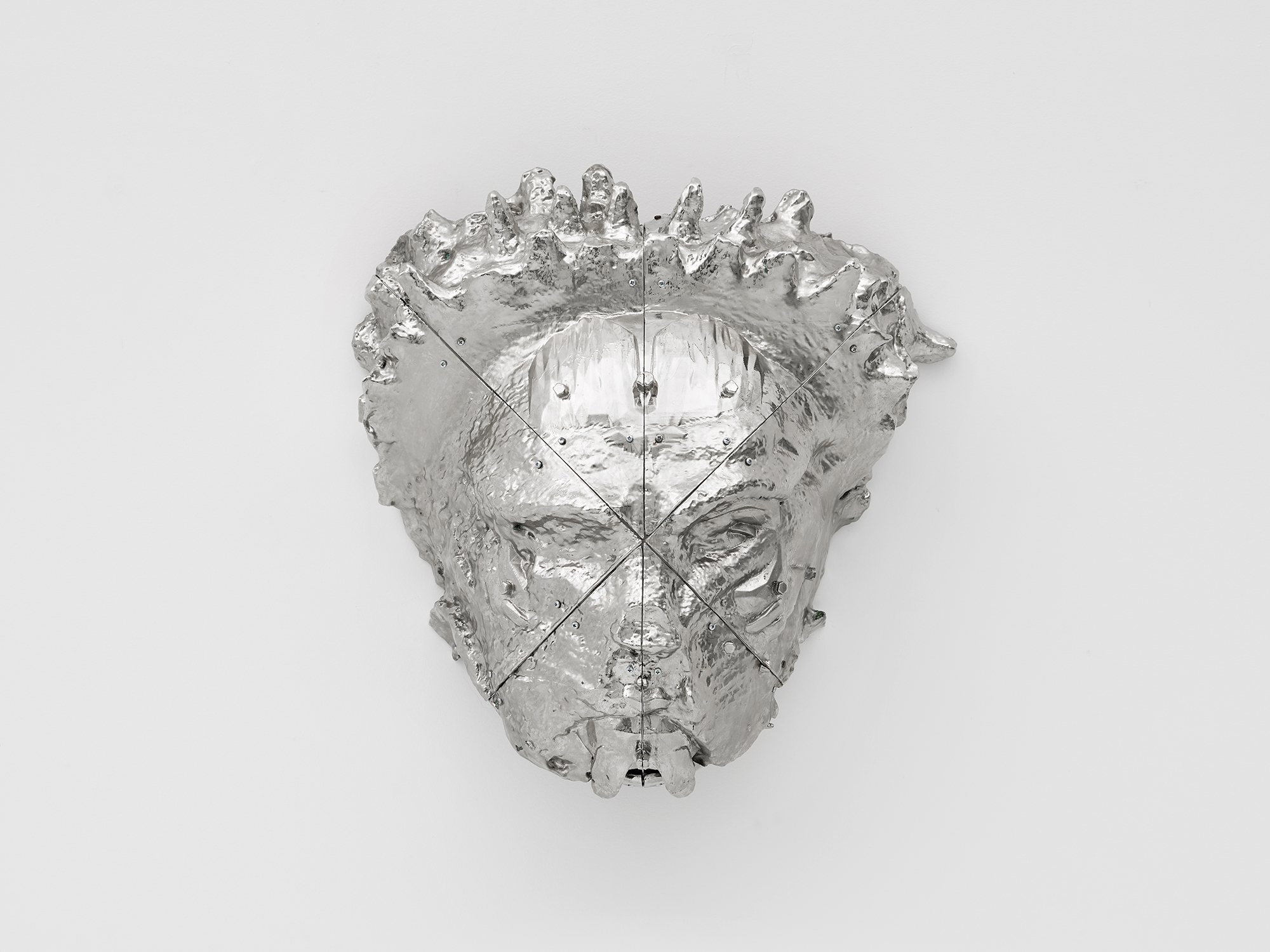
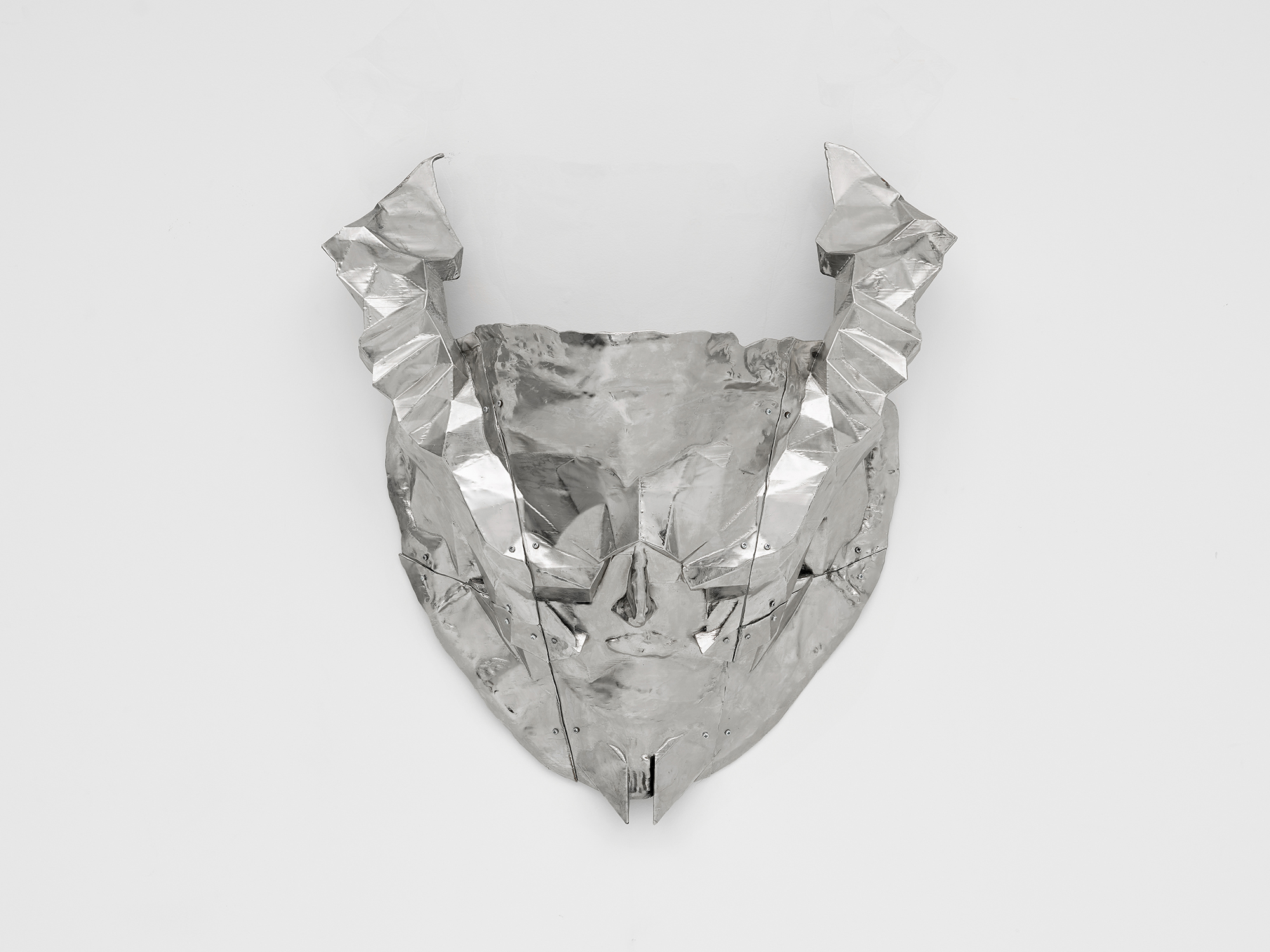
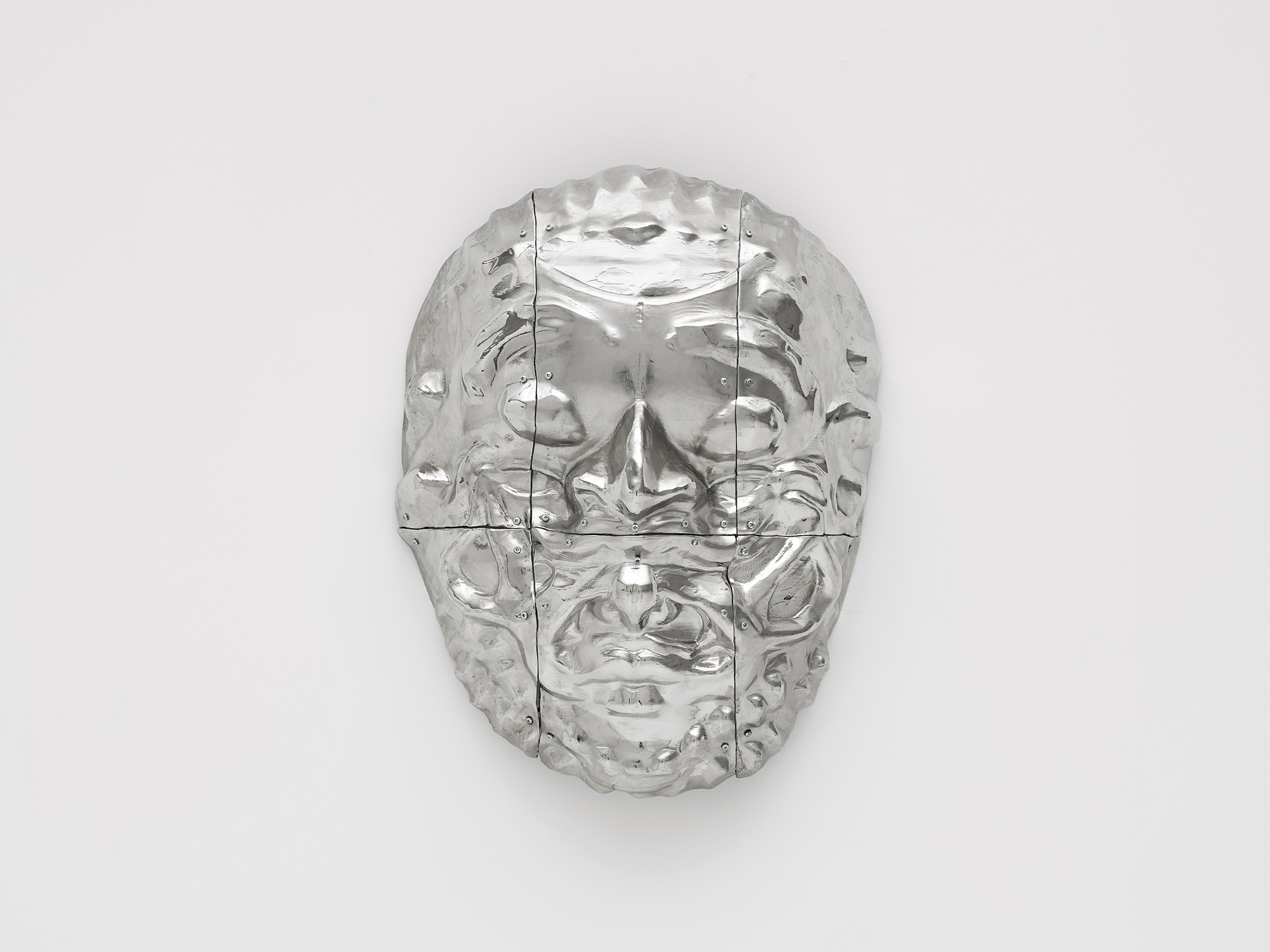
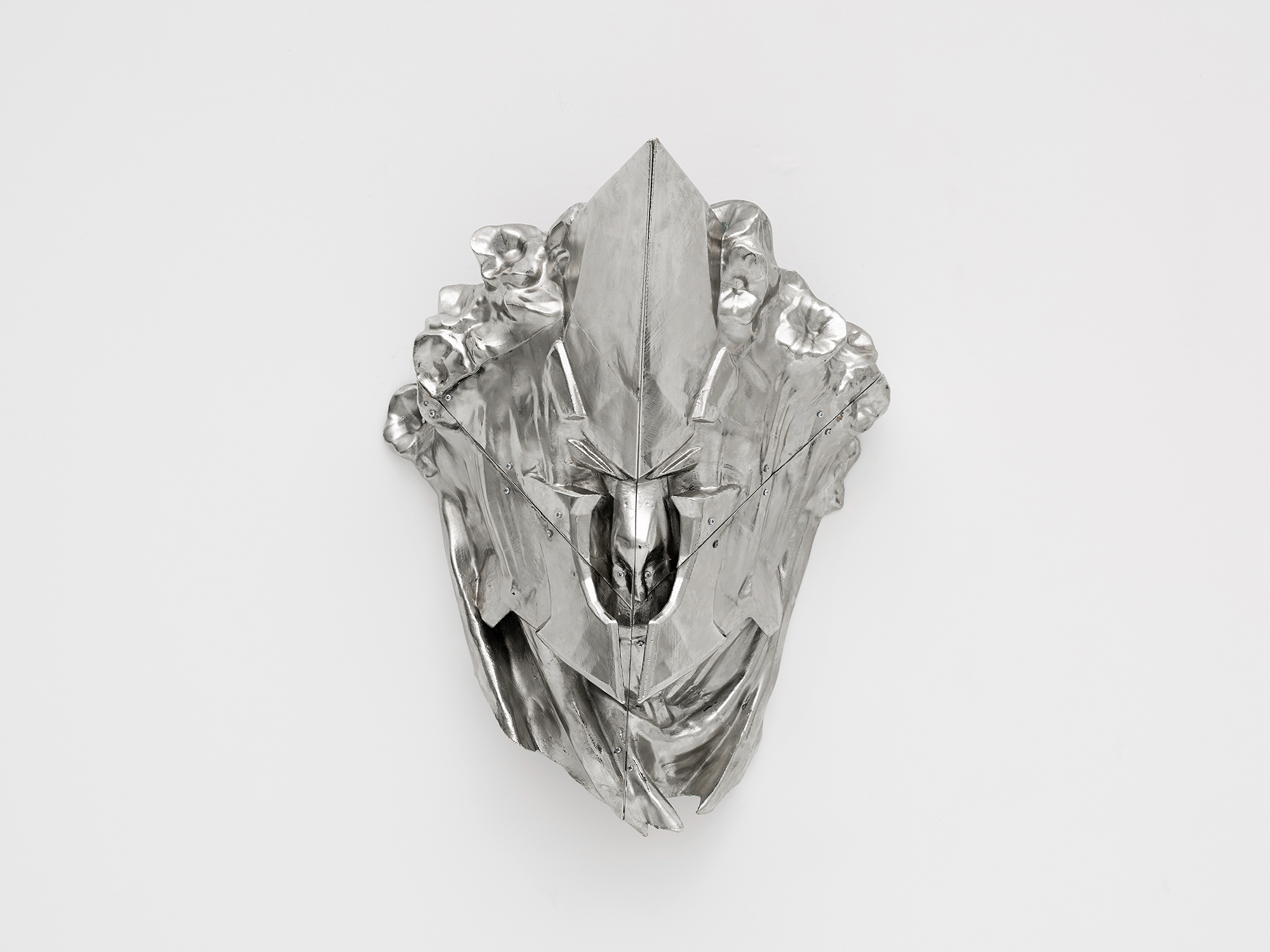
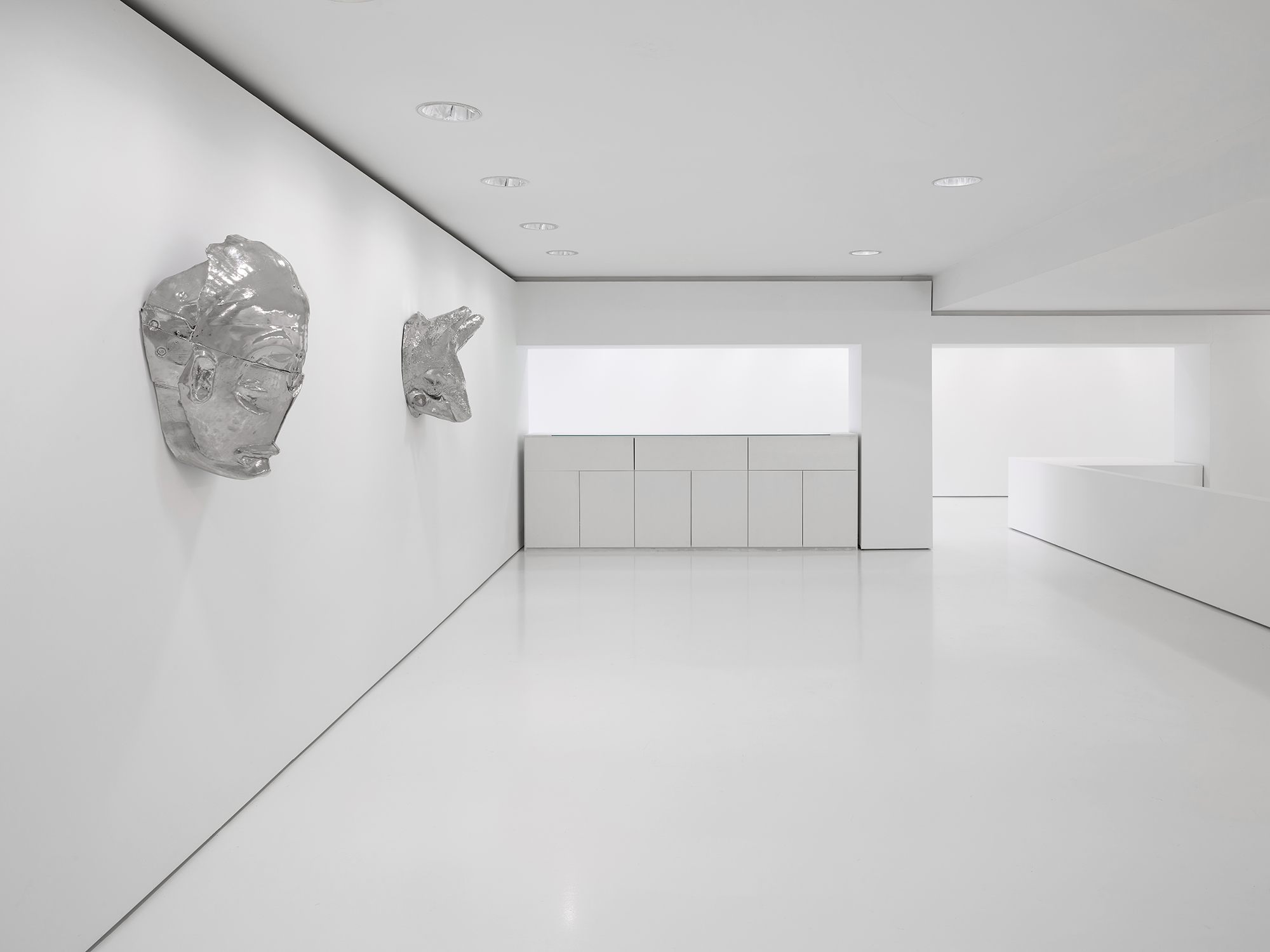
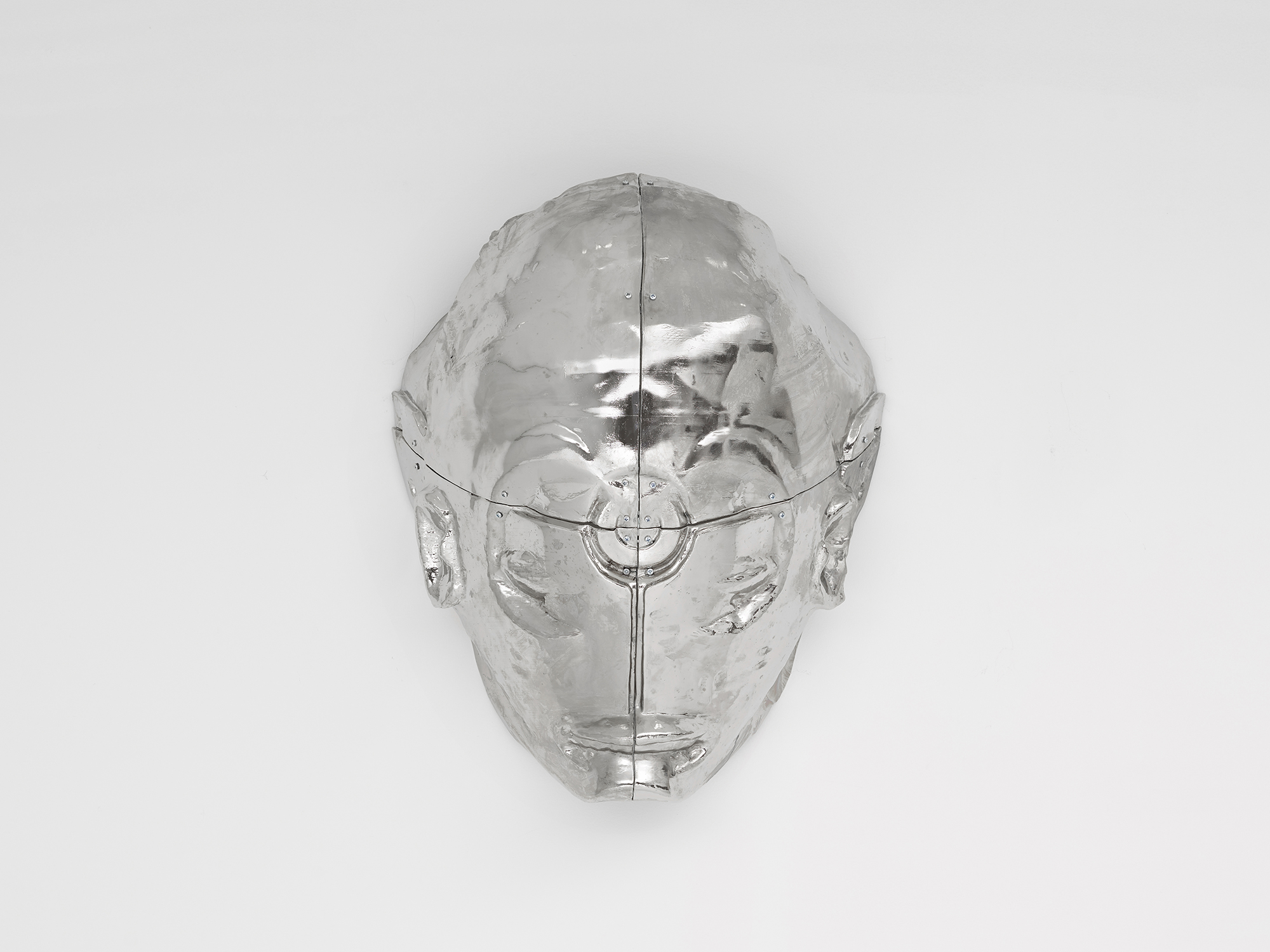
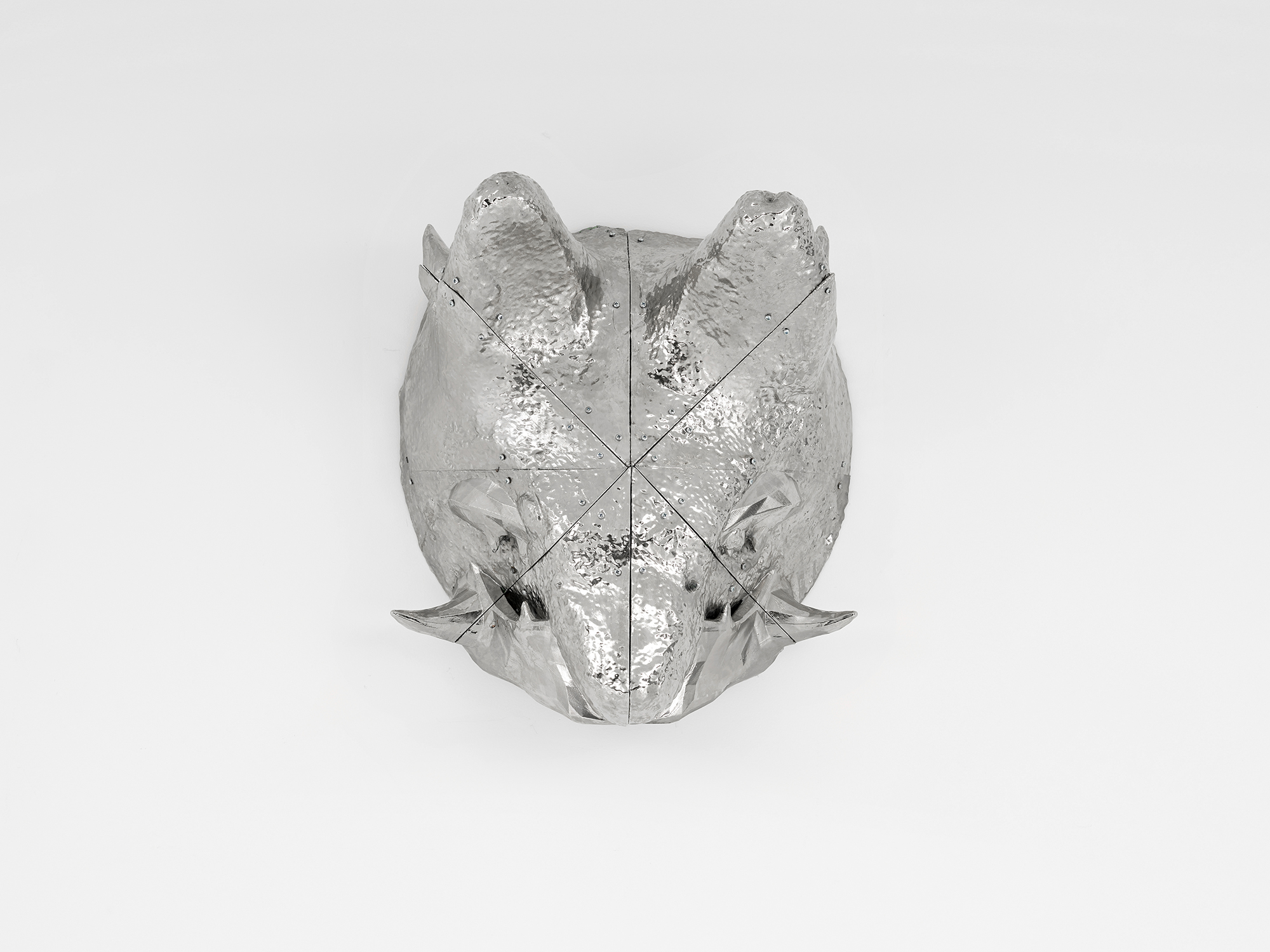
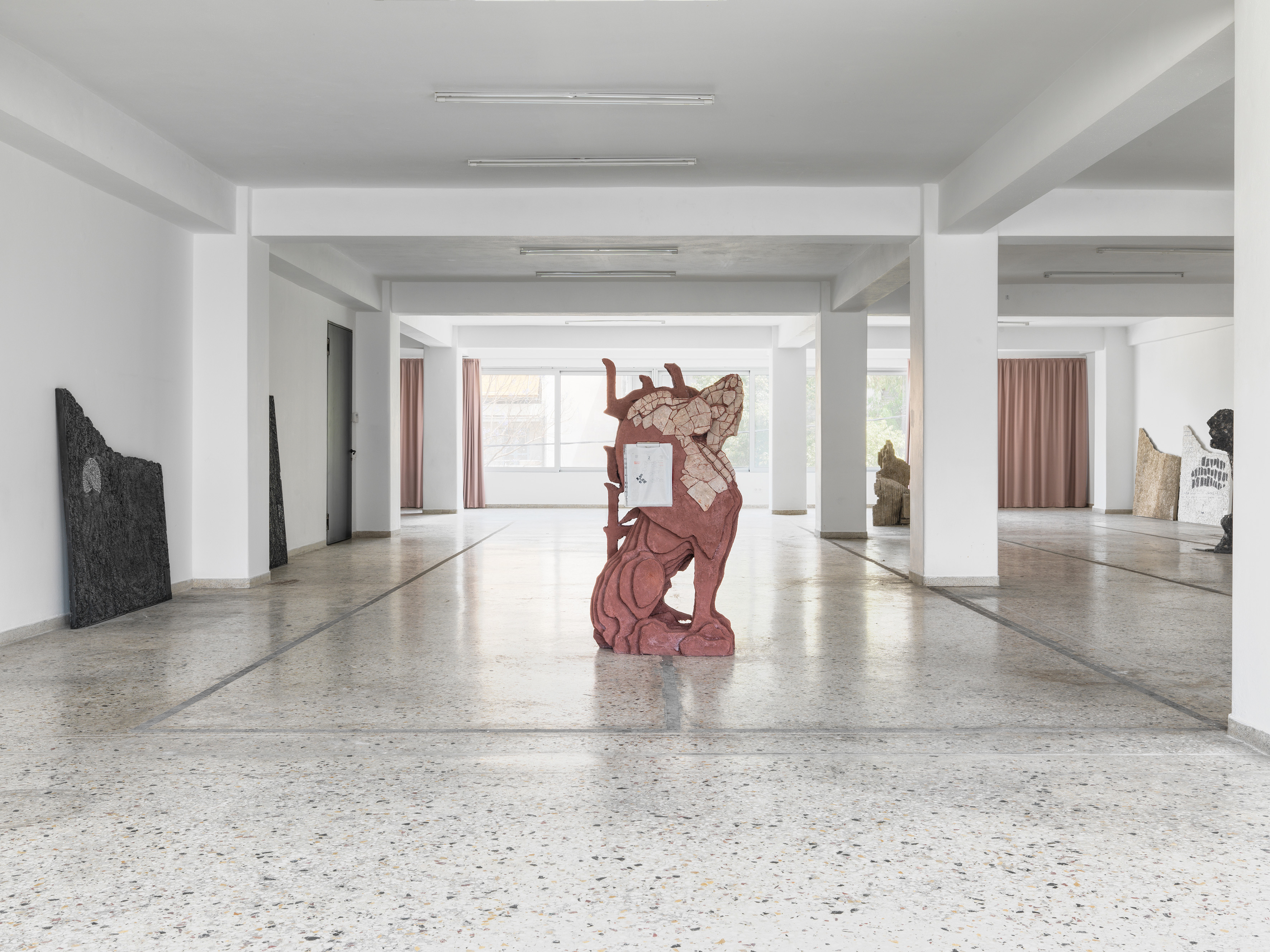
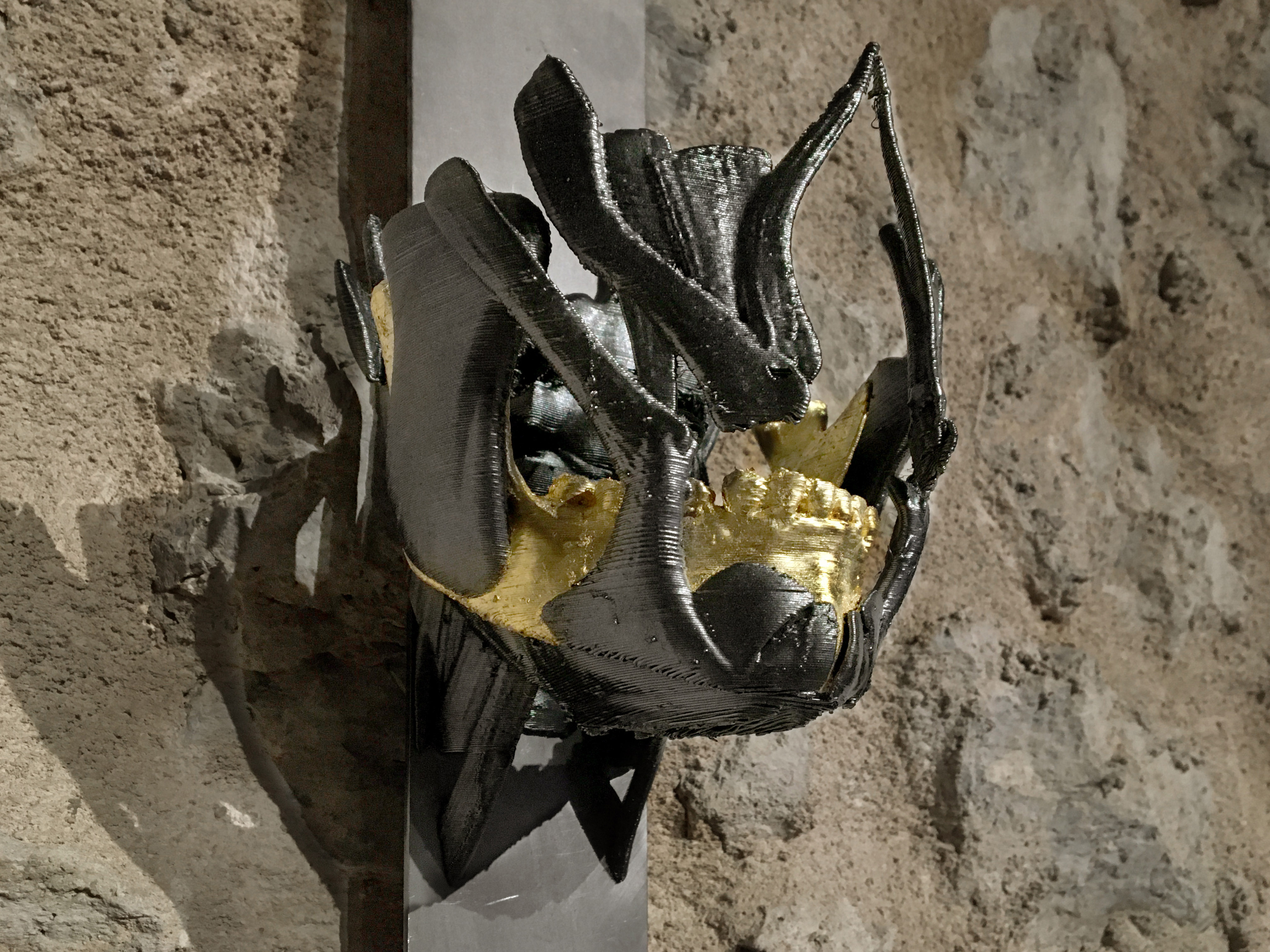
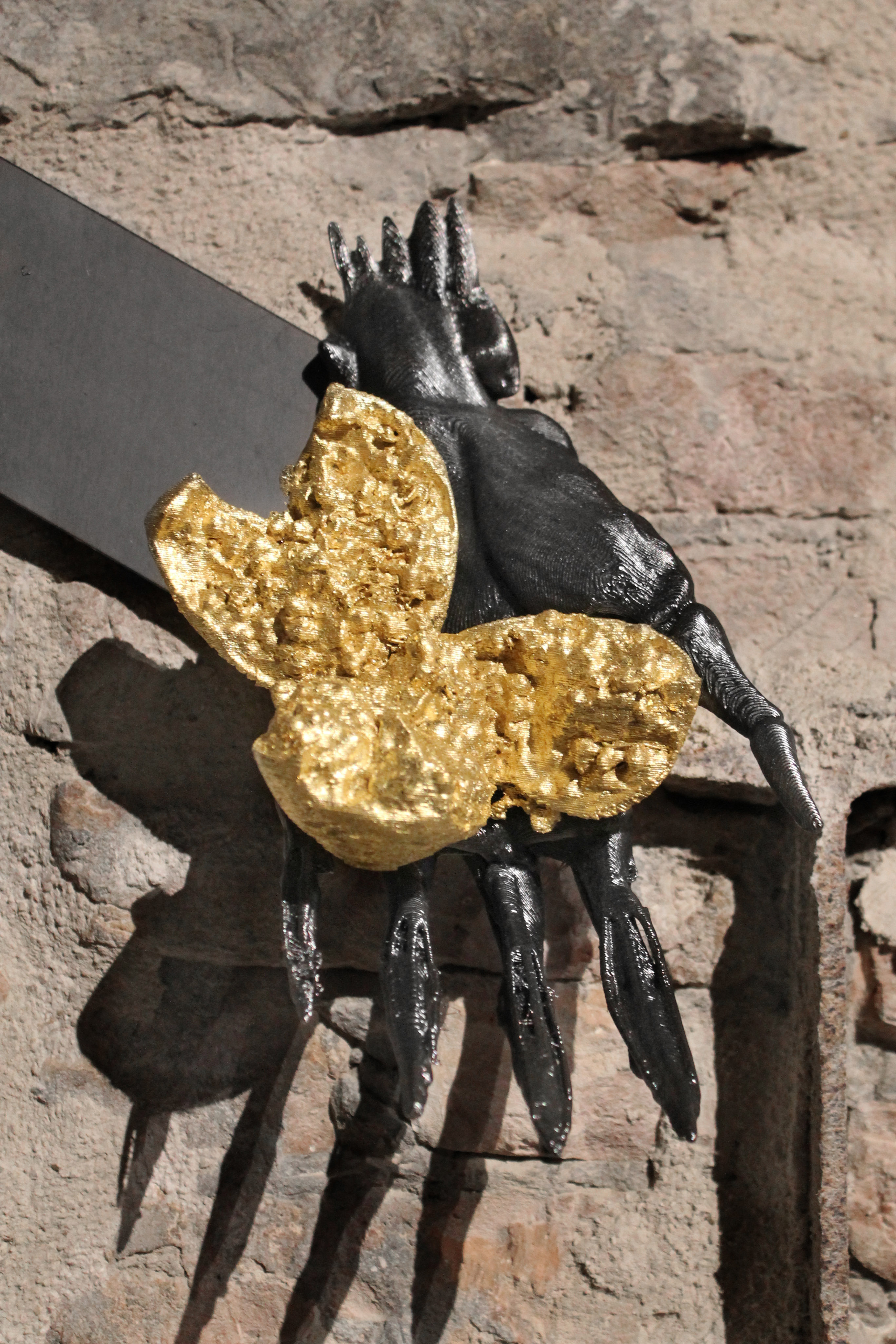
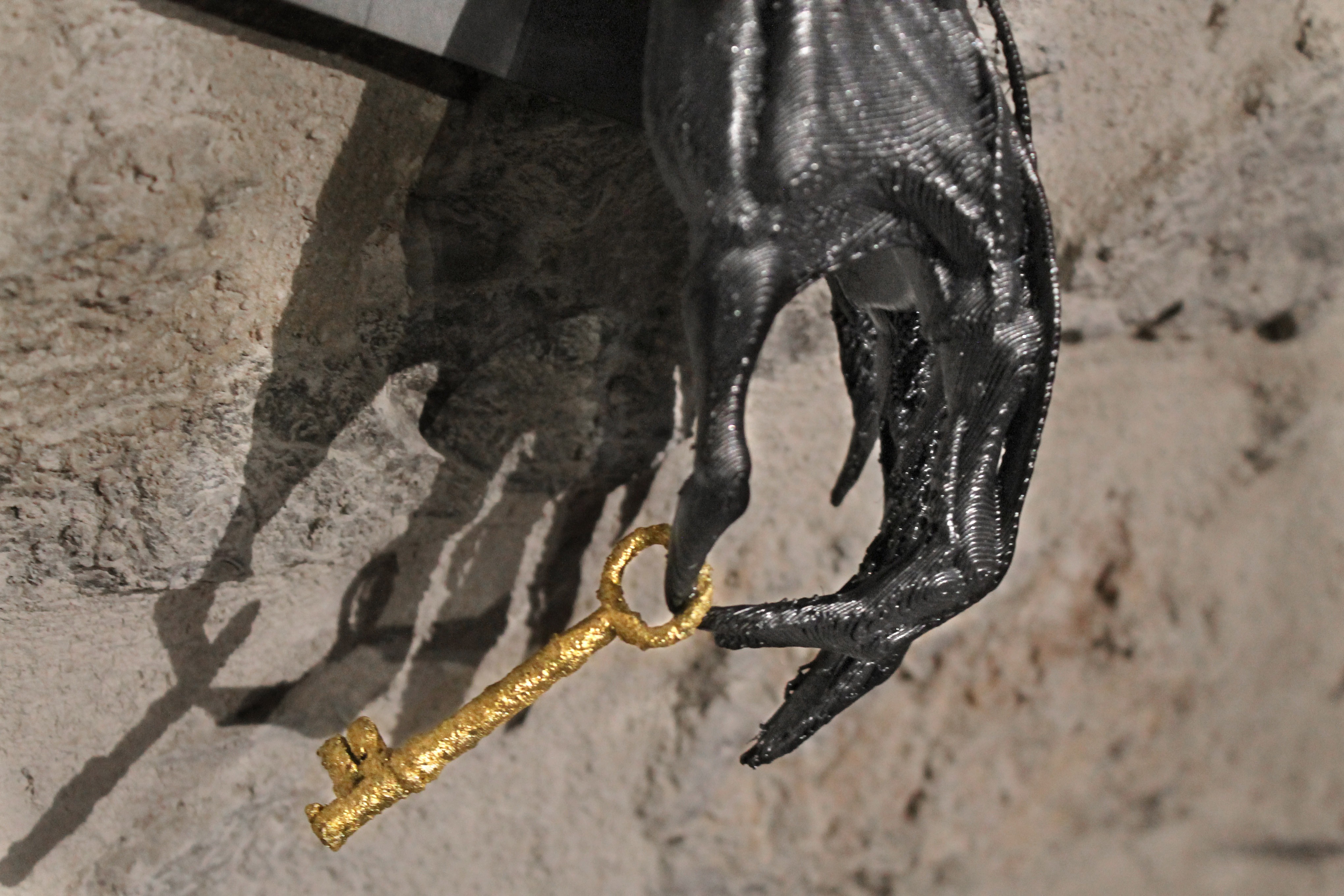
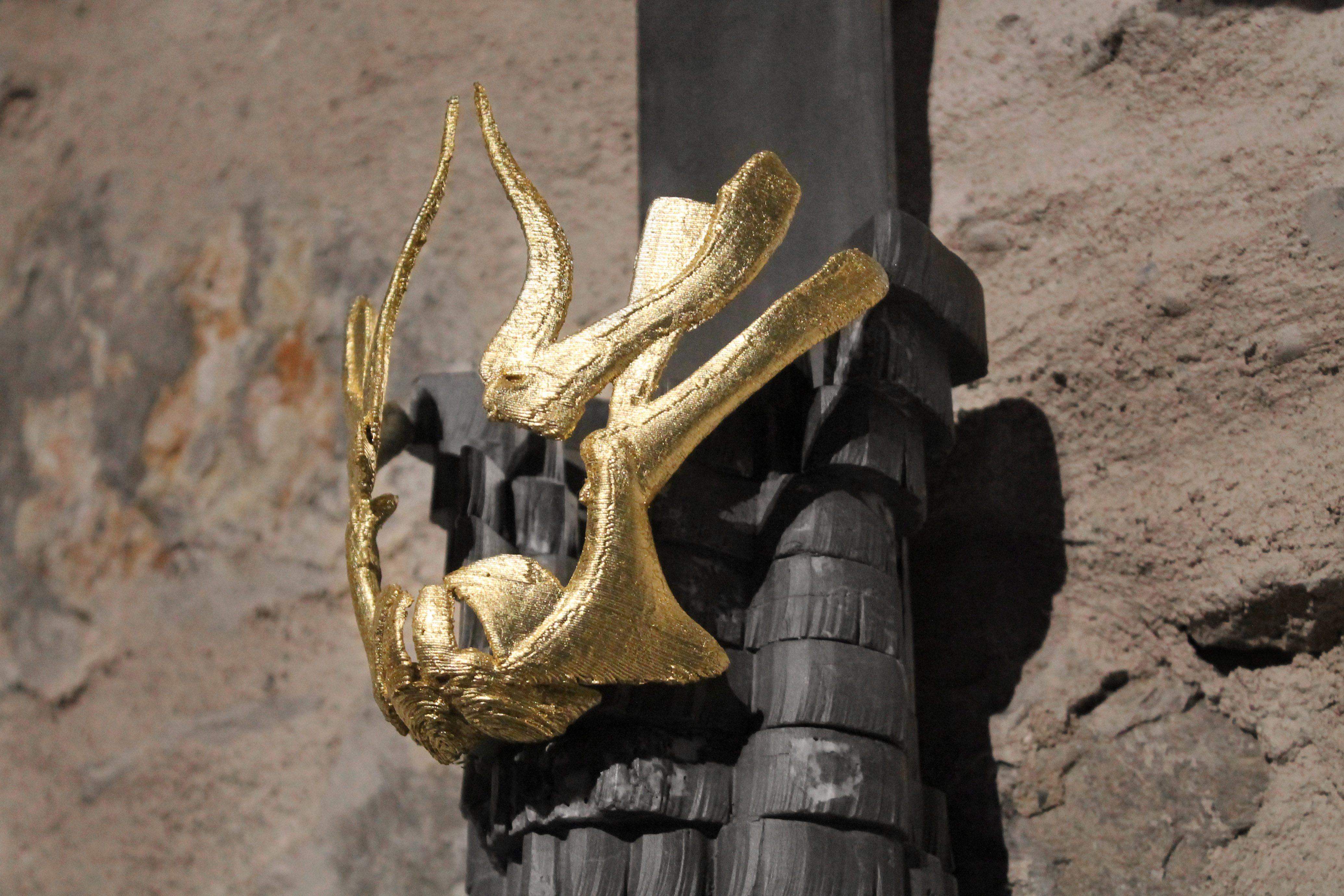
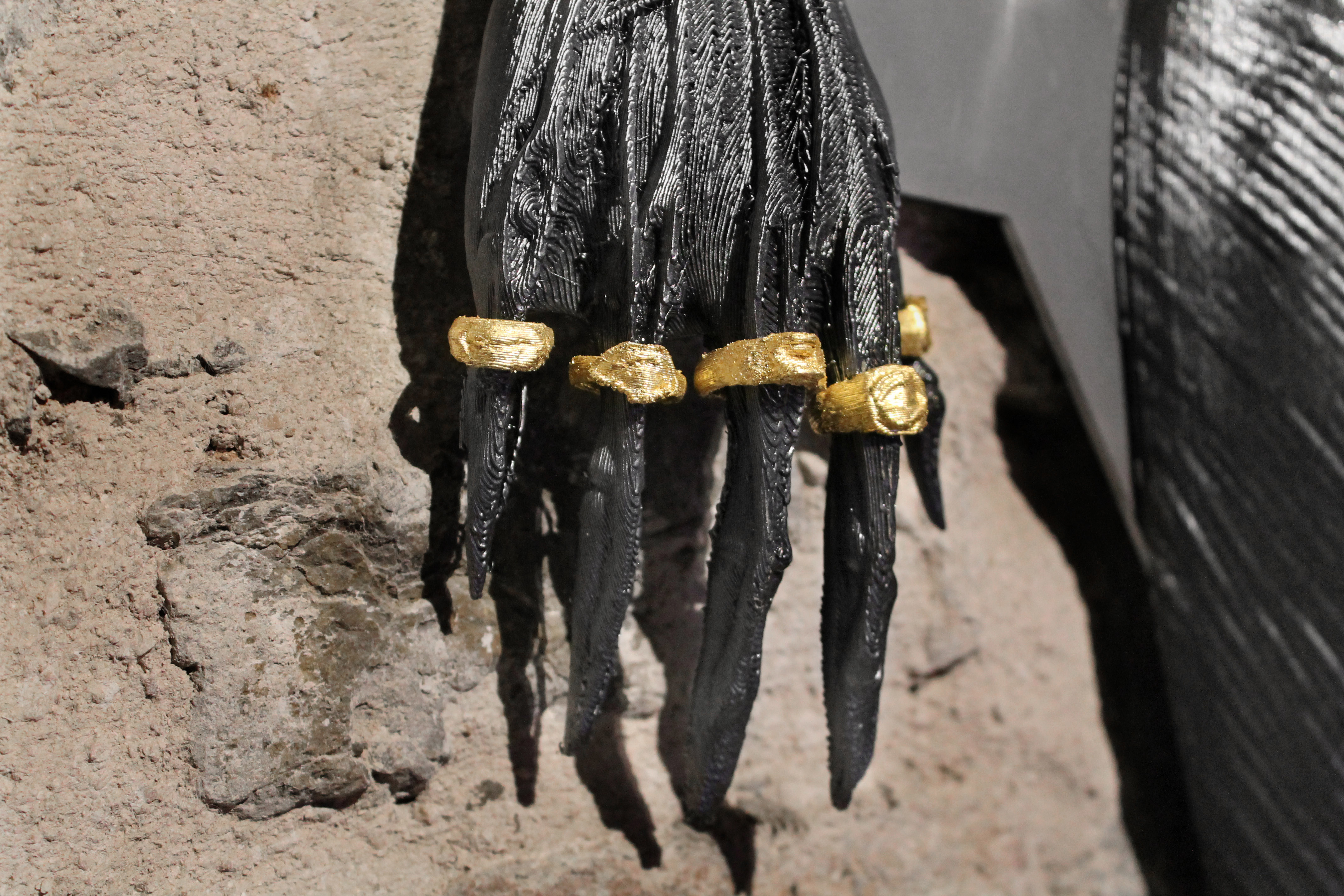
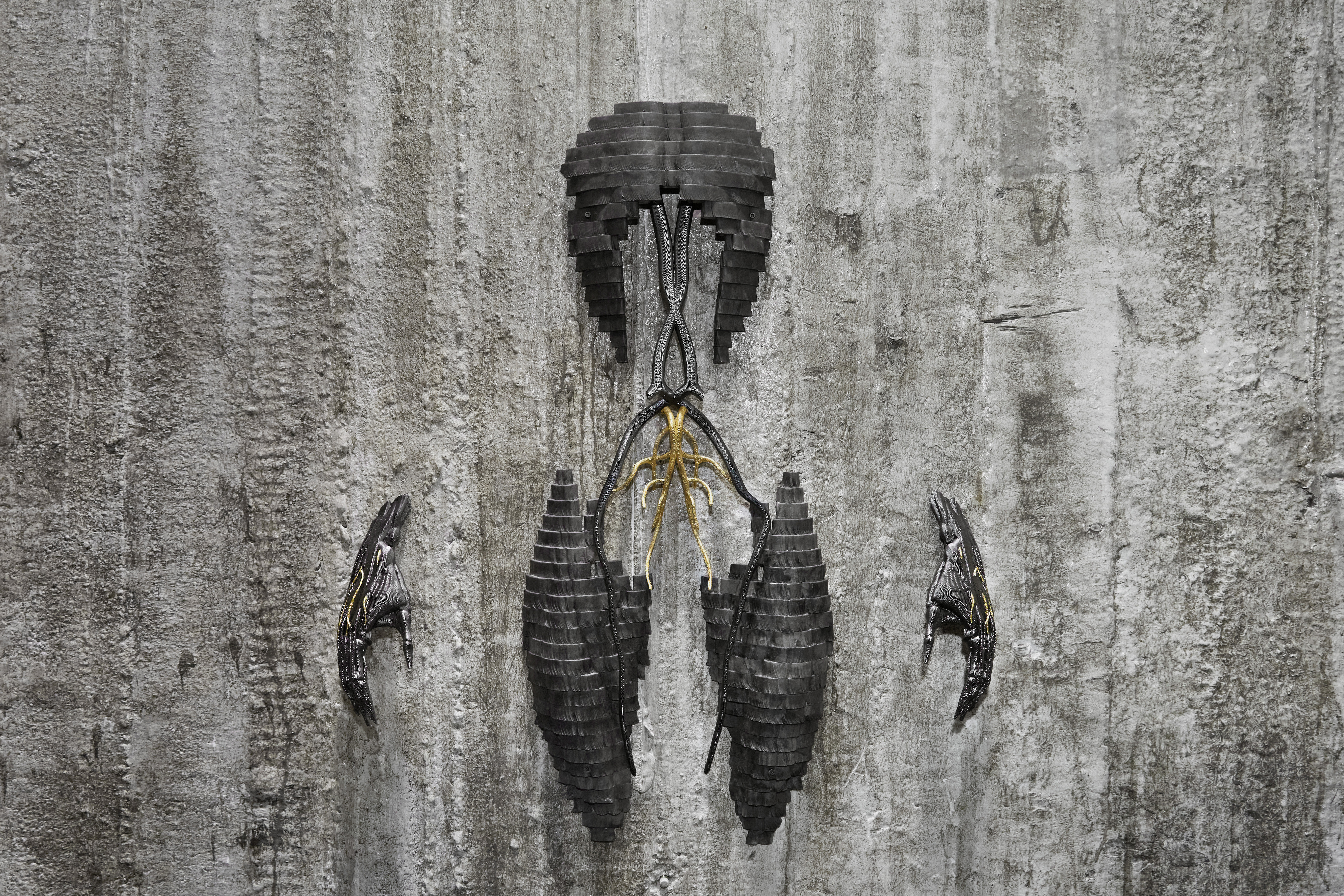
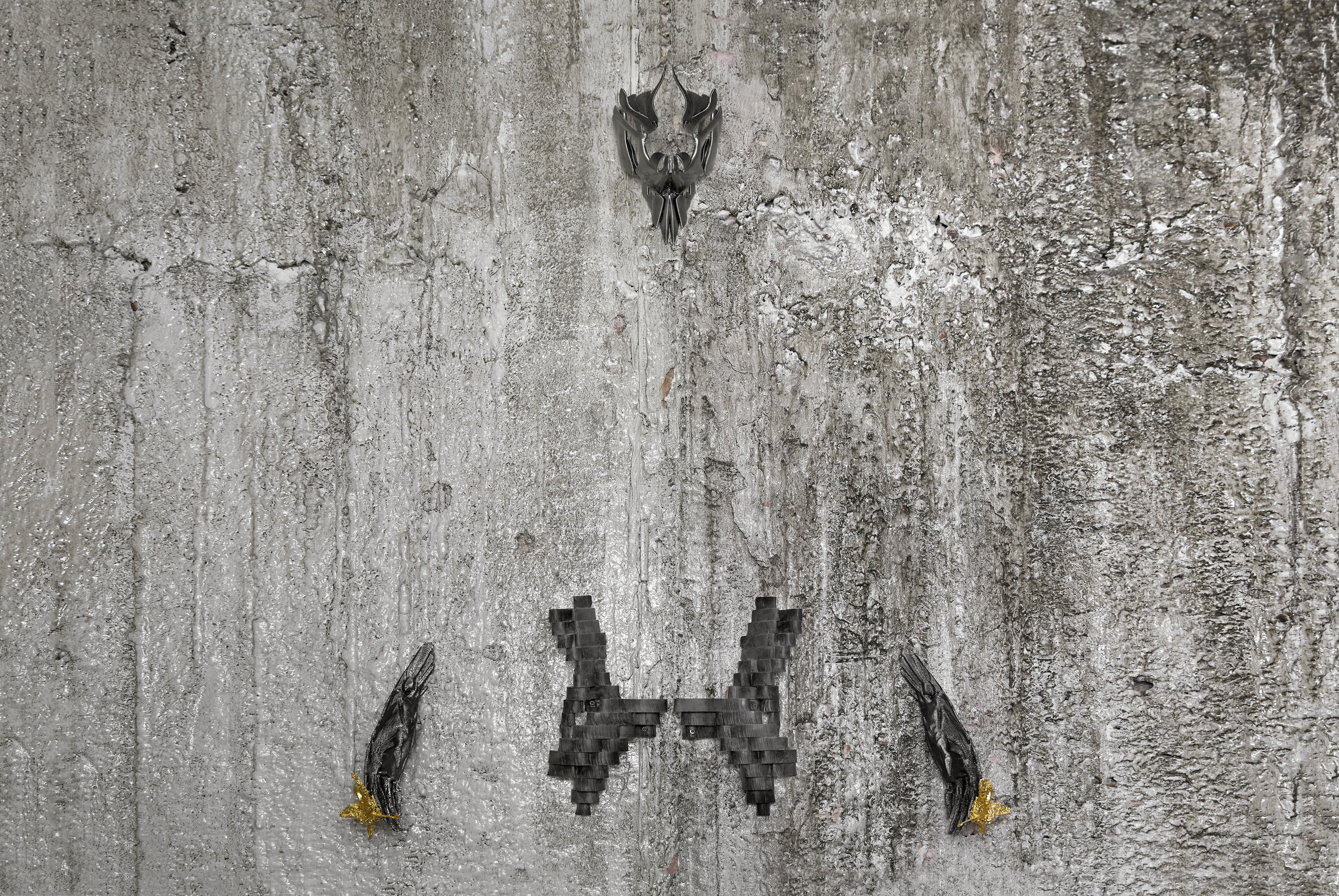
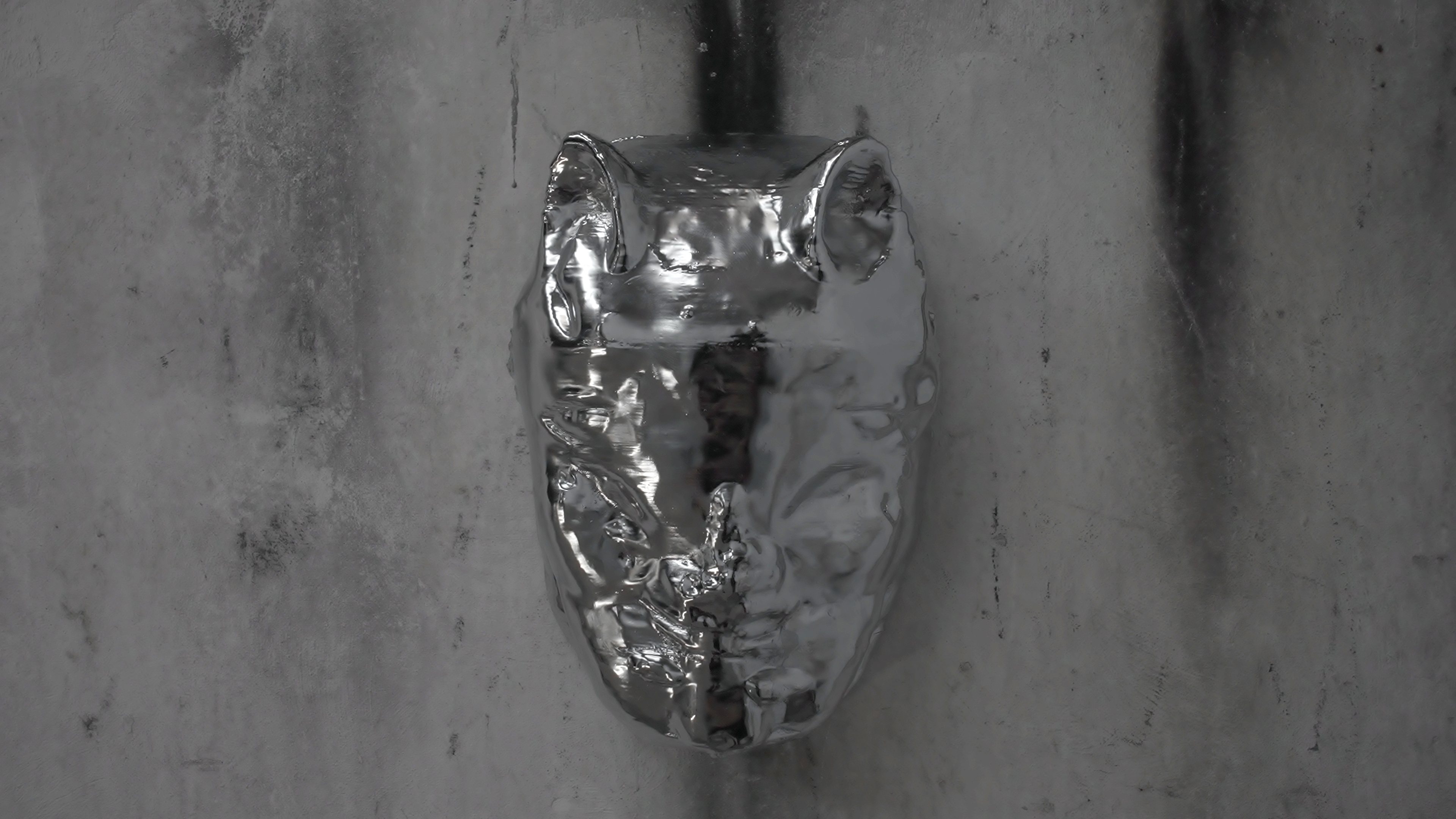
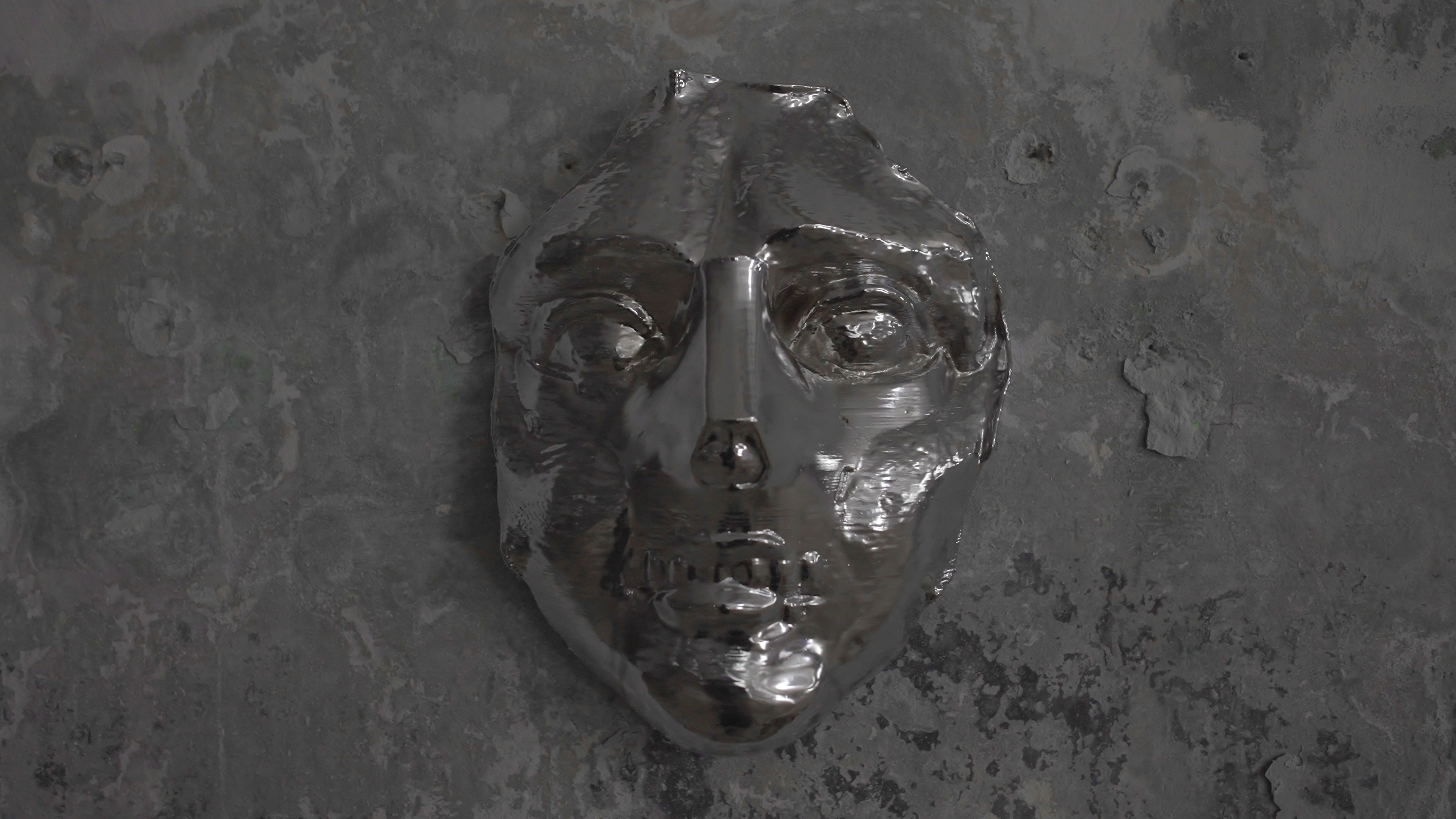
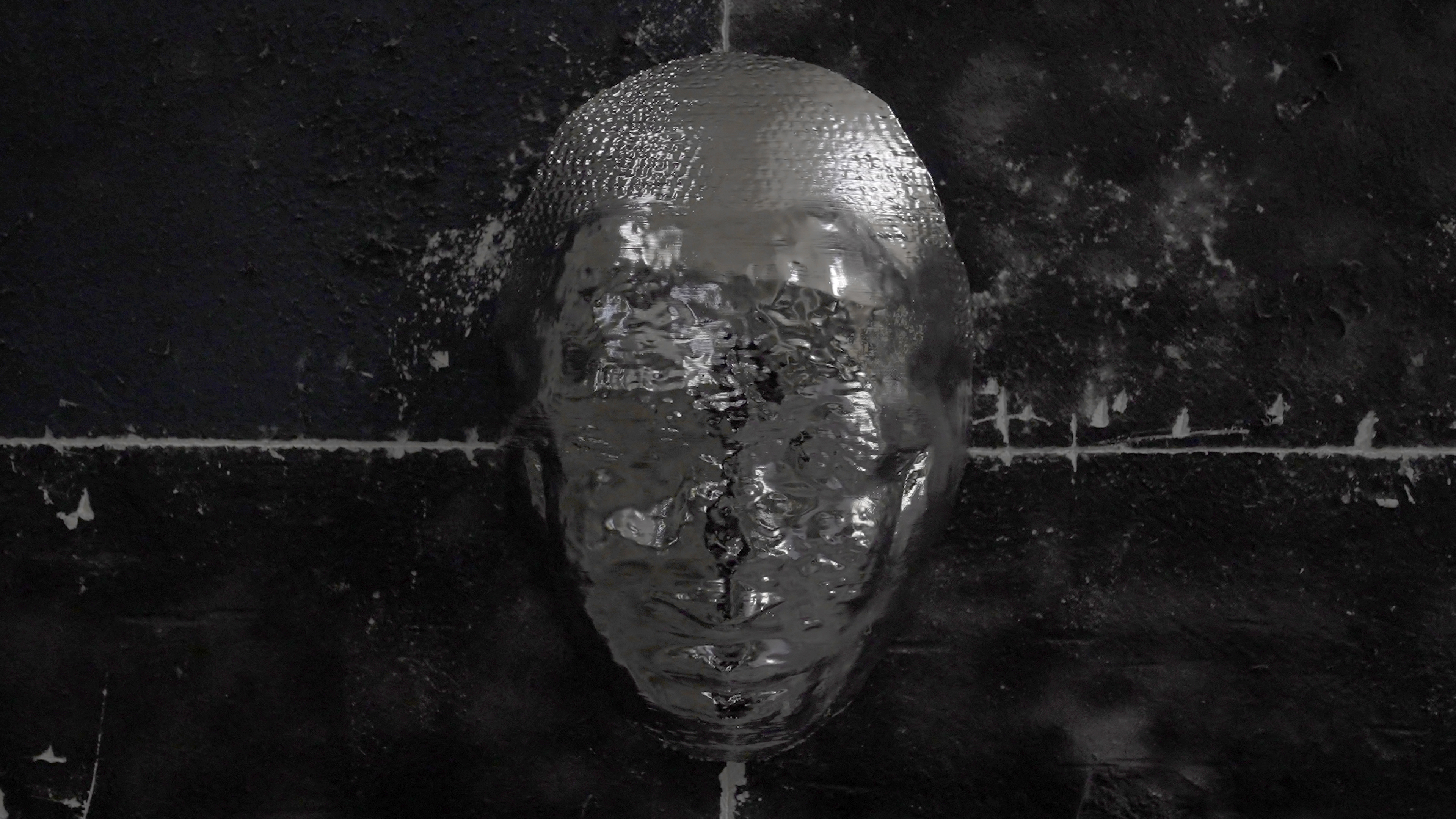
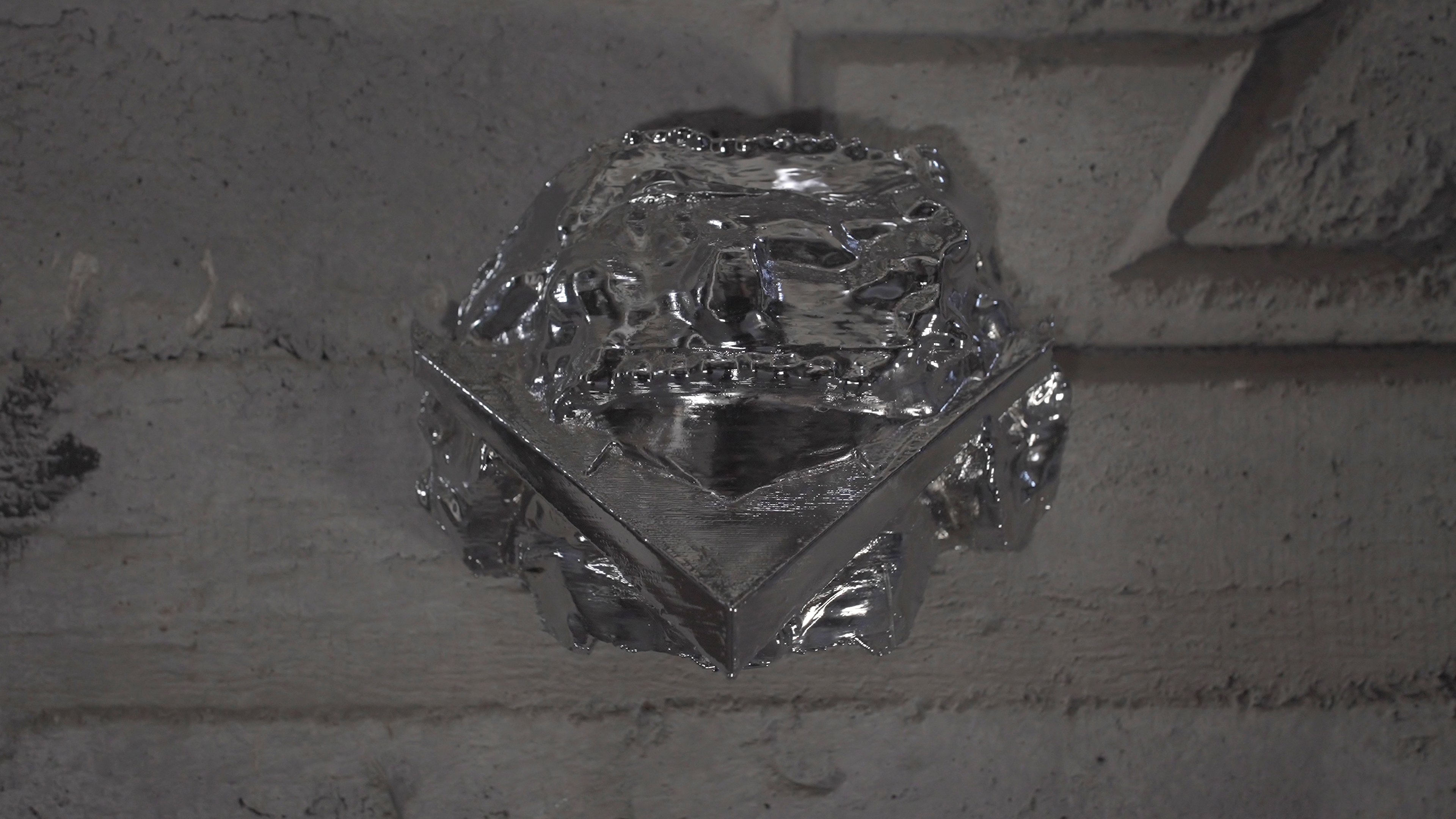
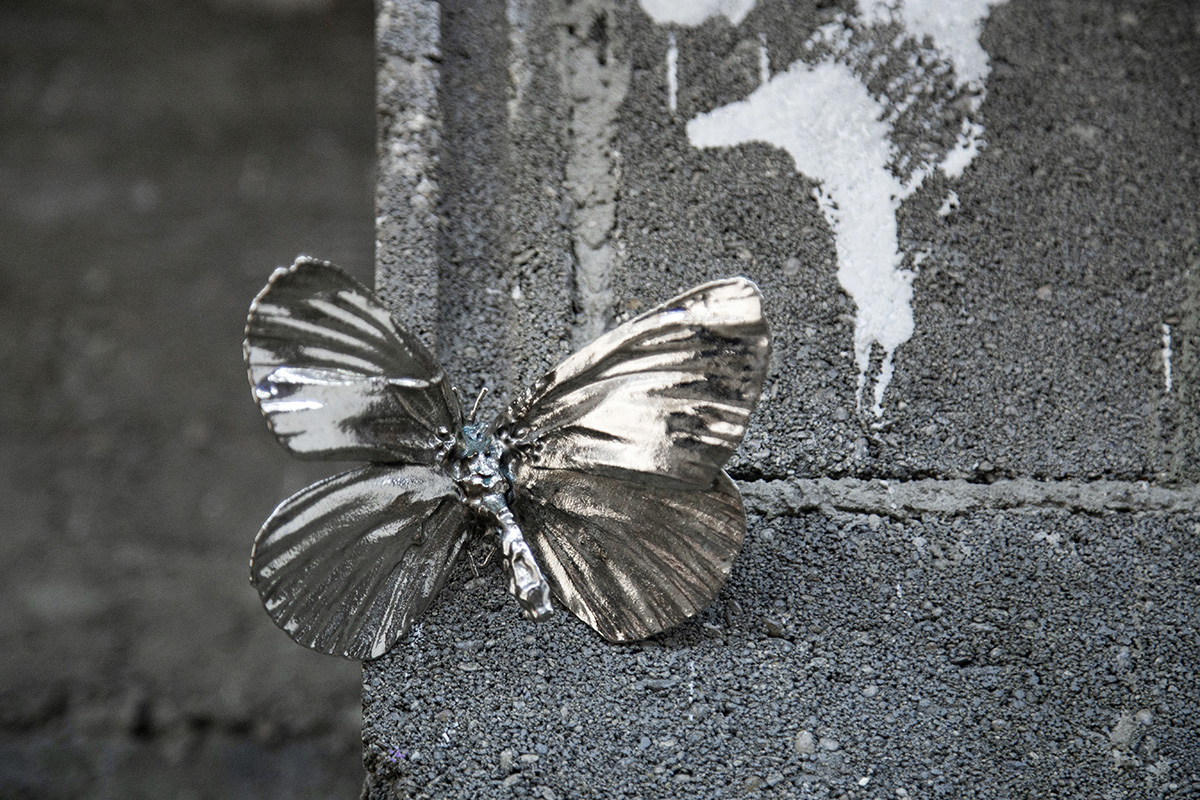
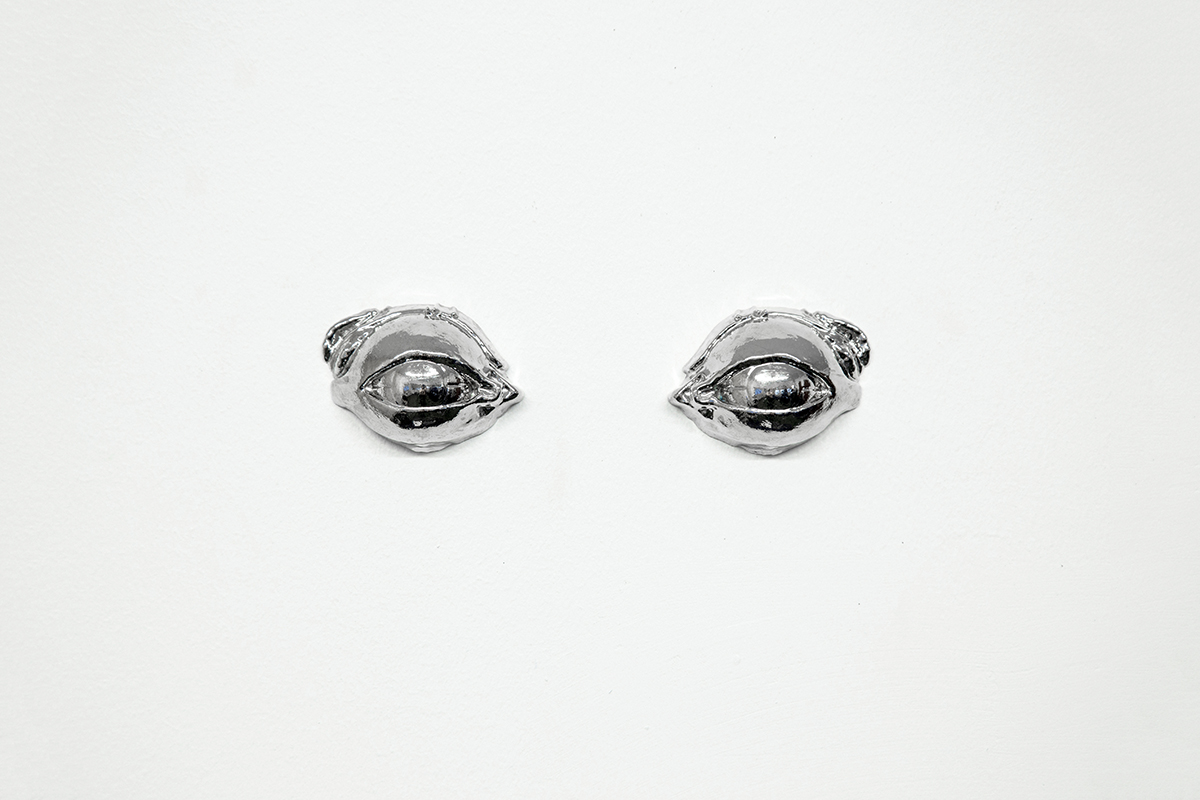
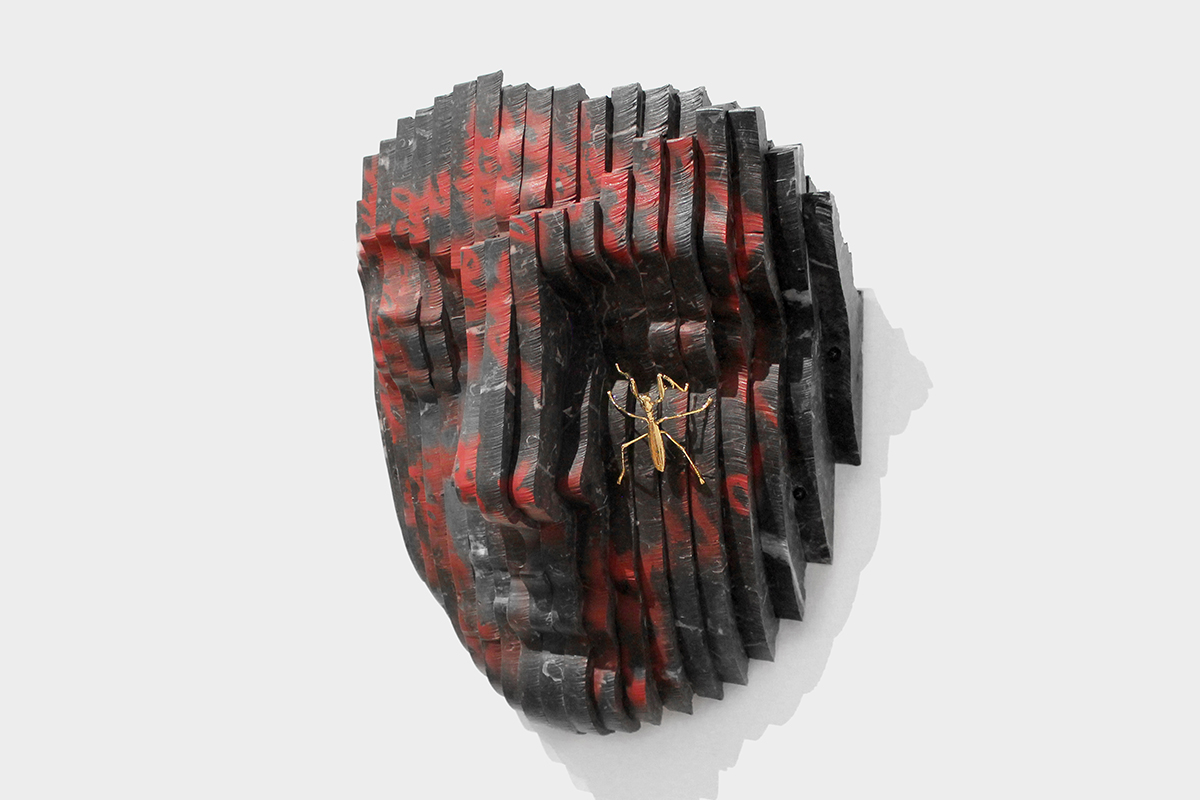
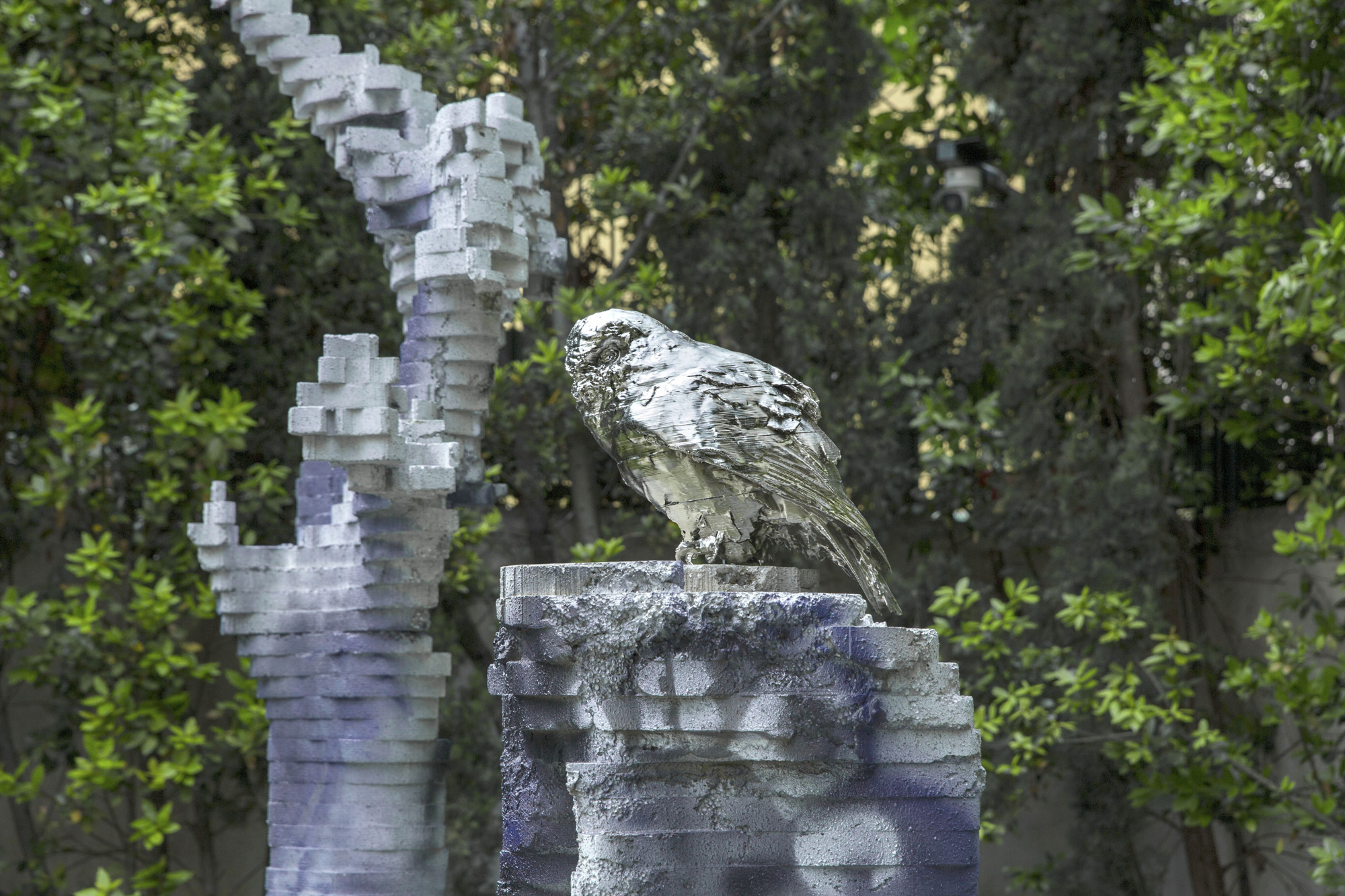
In Oracle (Membrane), Moris presents six face-like sculptures made from nickel-plated copper, combining archaeological scans with 3D forms sourced online to create chimeric masks that incorporate human and non-human features. Transfigured through digital fabrication and traditional techniques, these sculptures exist between ritual masks and haunting species. Their metallic surfaces reflect their geological origins and the mineral foundations of technological infrastructures. Their reflections shift as viewers move, emphasizing the fluidity of identity and perception. By questioning distinctions between the more-than-human, the mythical, and the machinic, this series explores how identity and agency emerge from both biological and cultural elements, emphasizing their relationship in shaping our understanding of the world.
Text by Despoina Tzanou
Tuesday, January 14th, 2025 | Posted in activity |
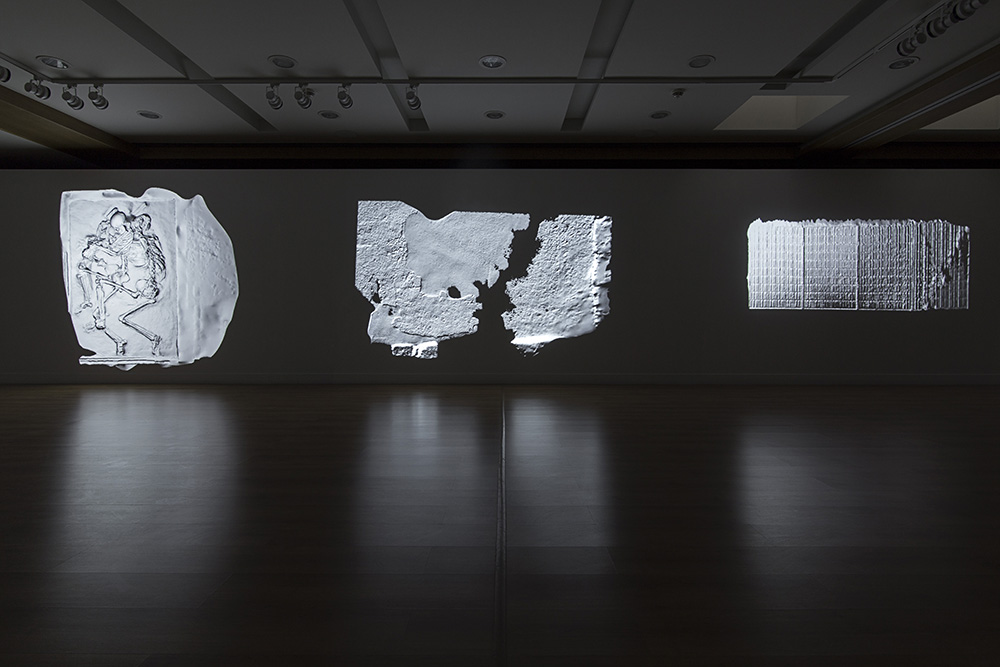
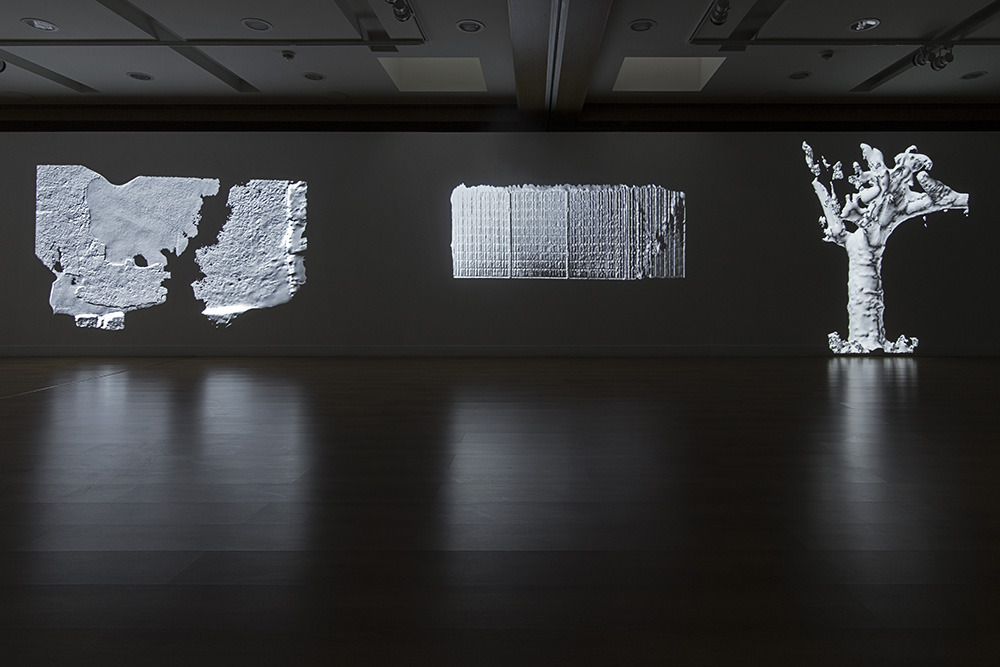
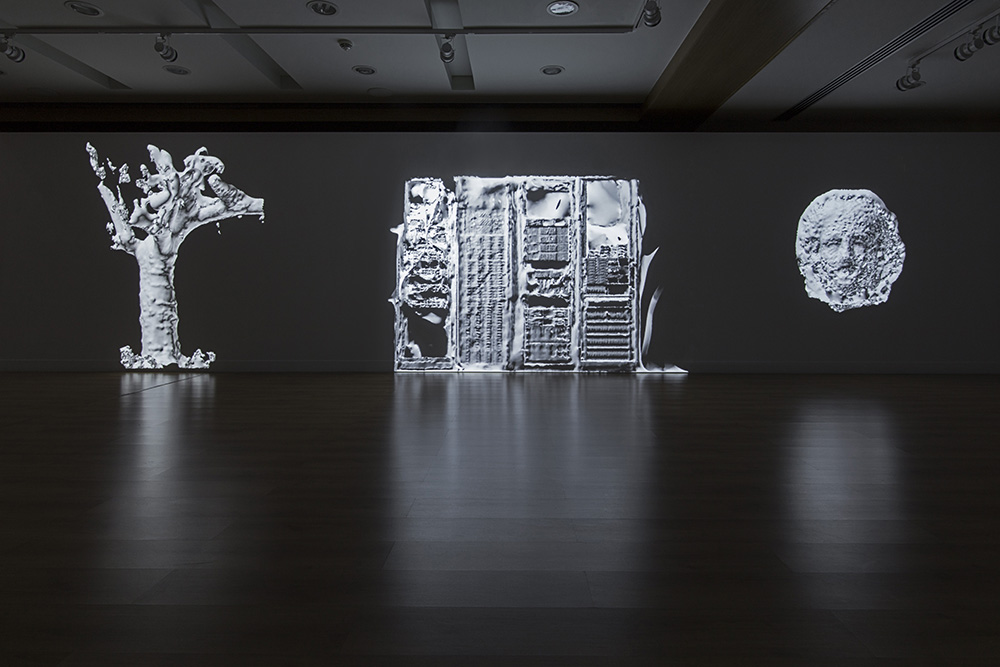
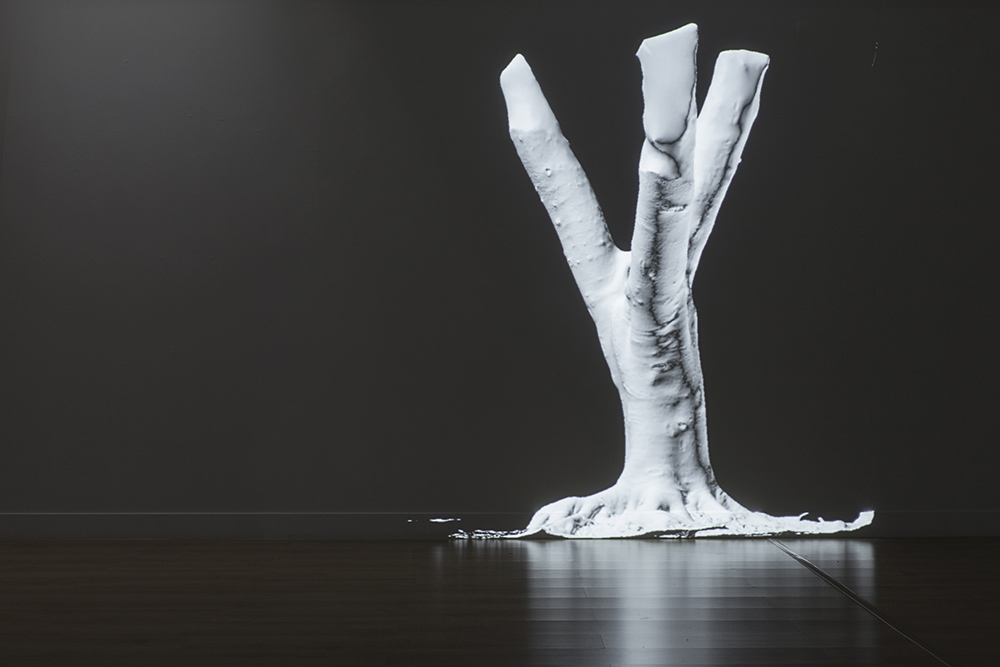
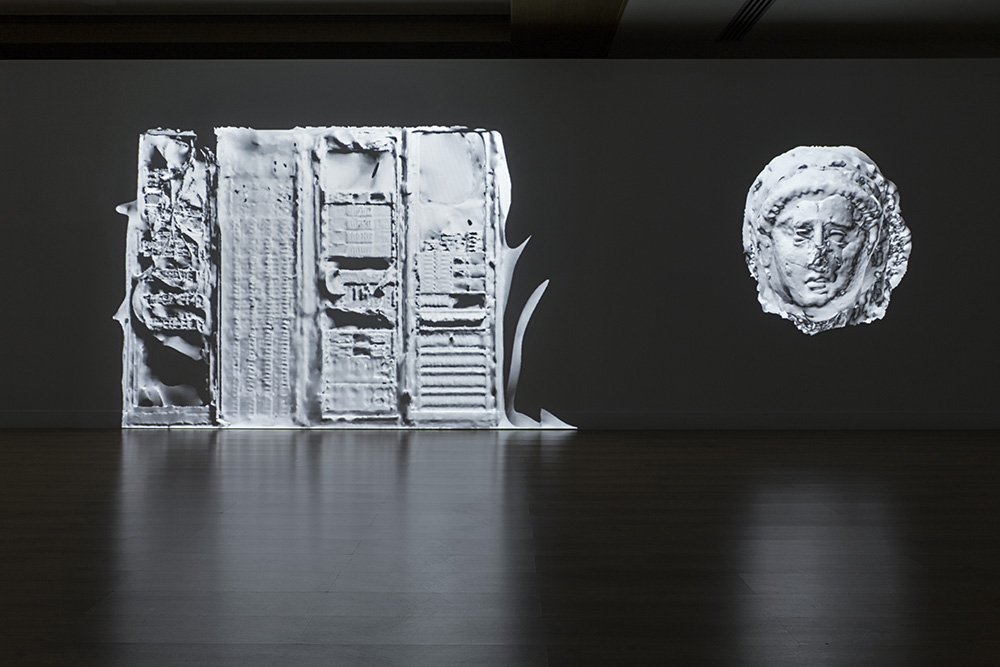
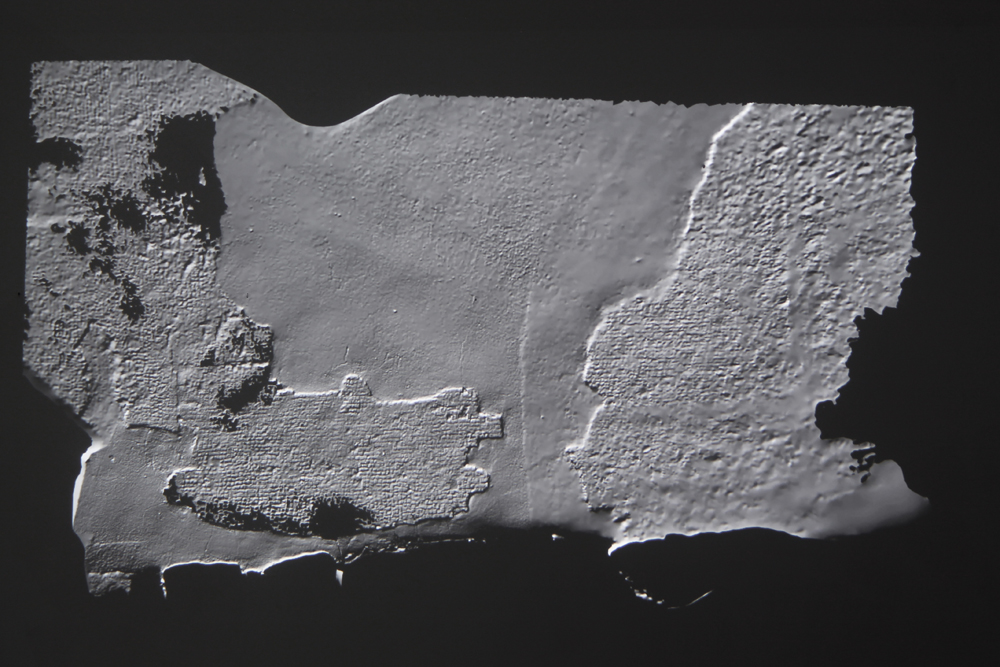
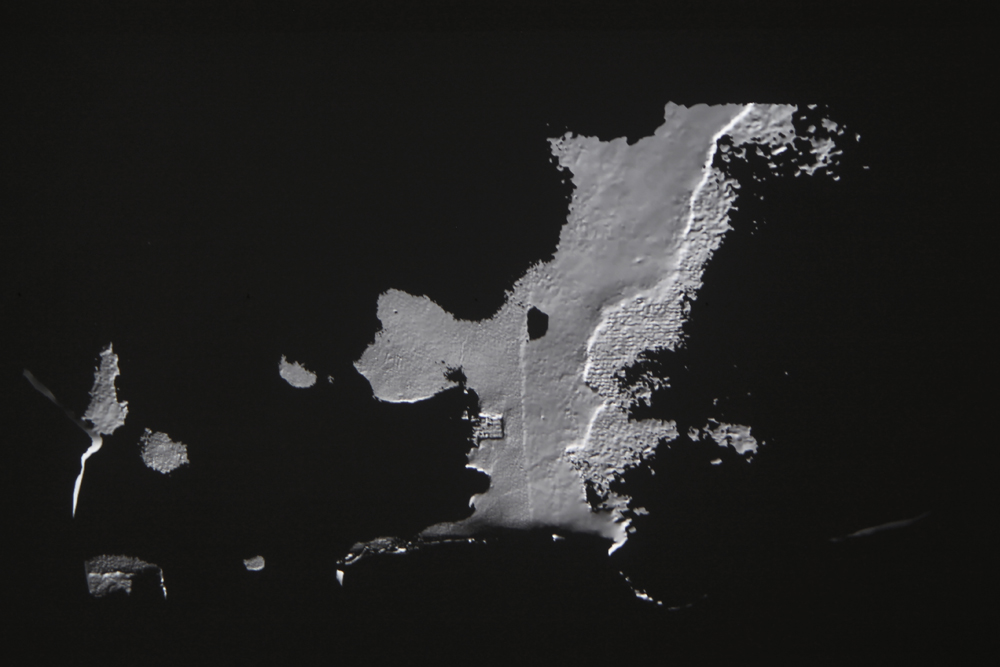
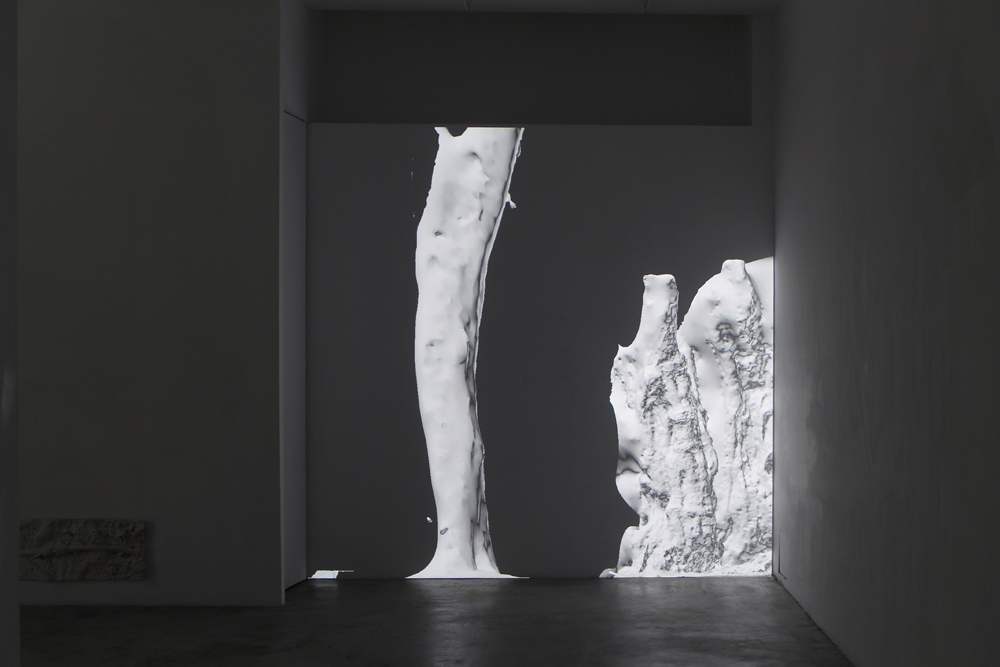
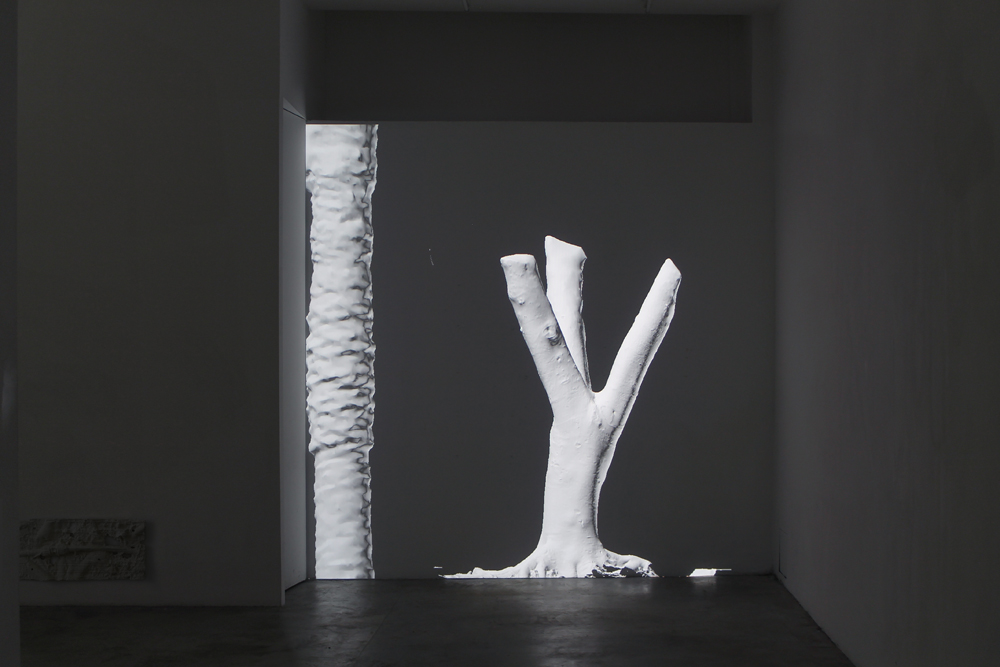
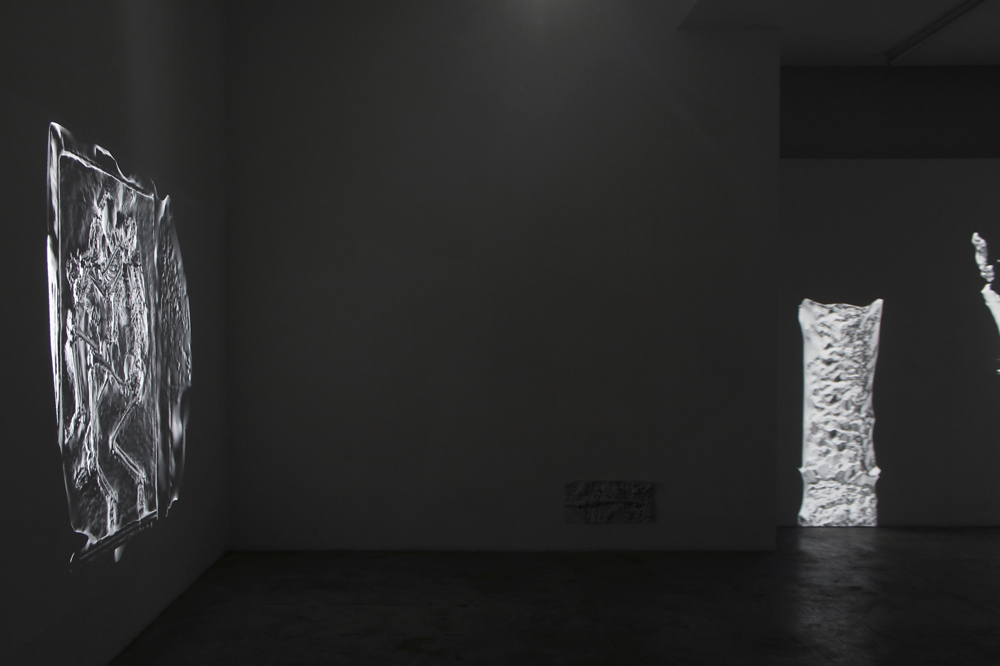
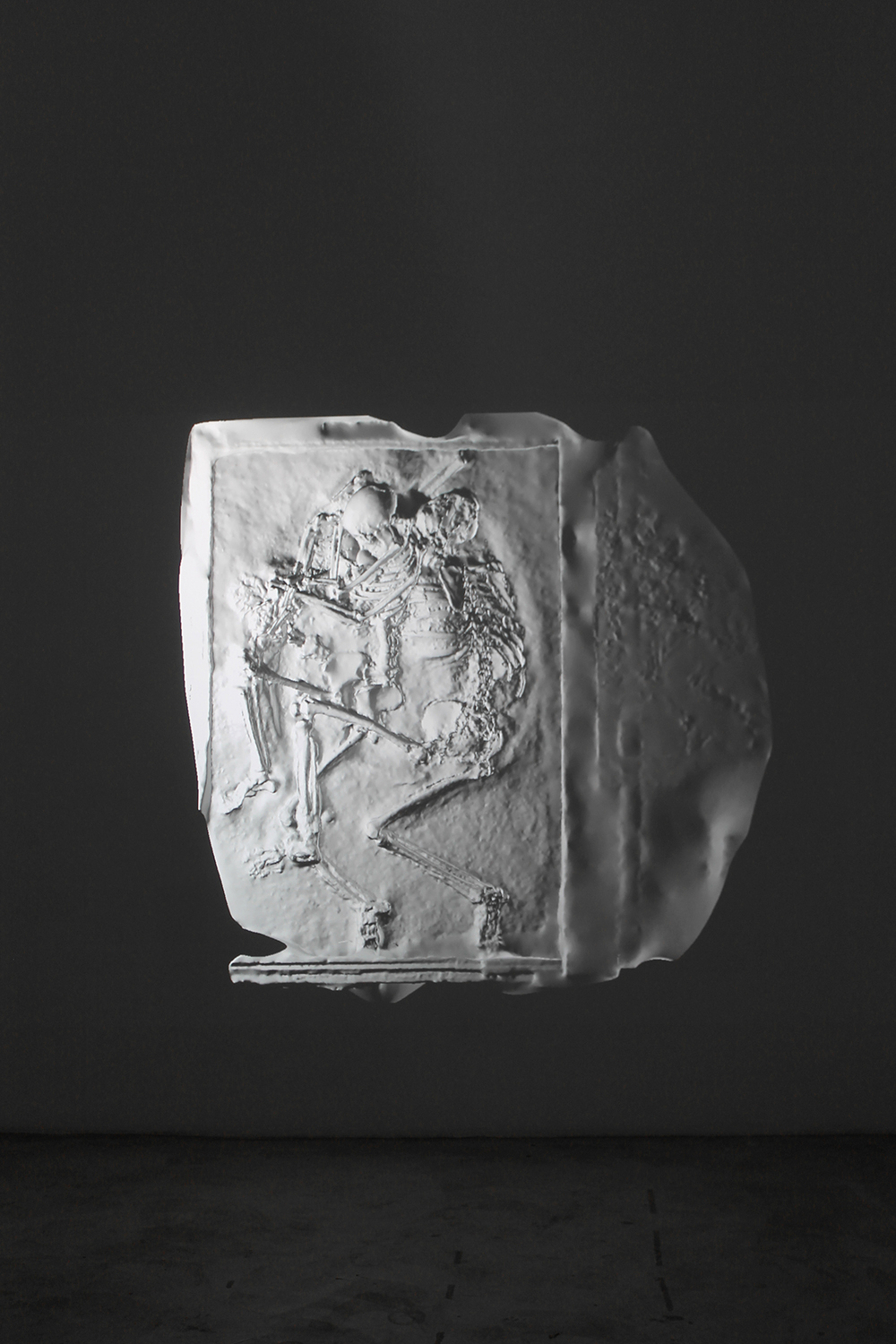
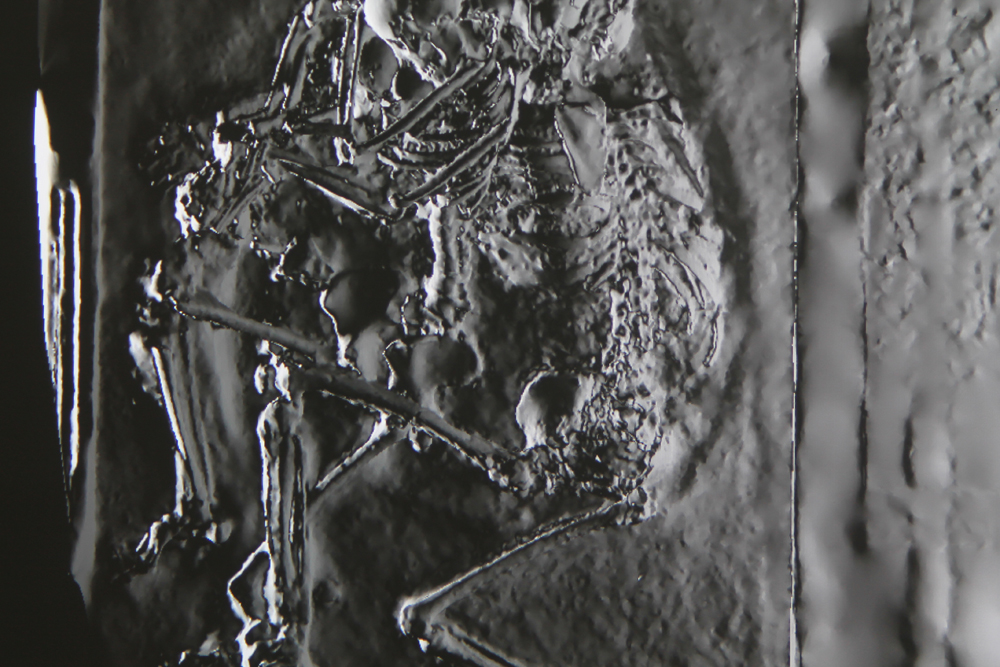
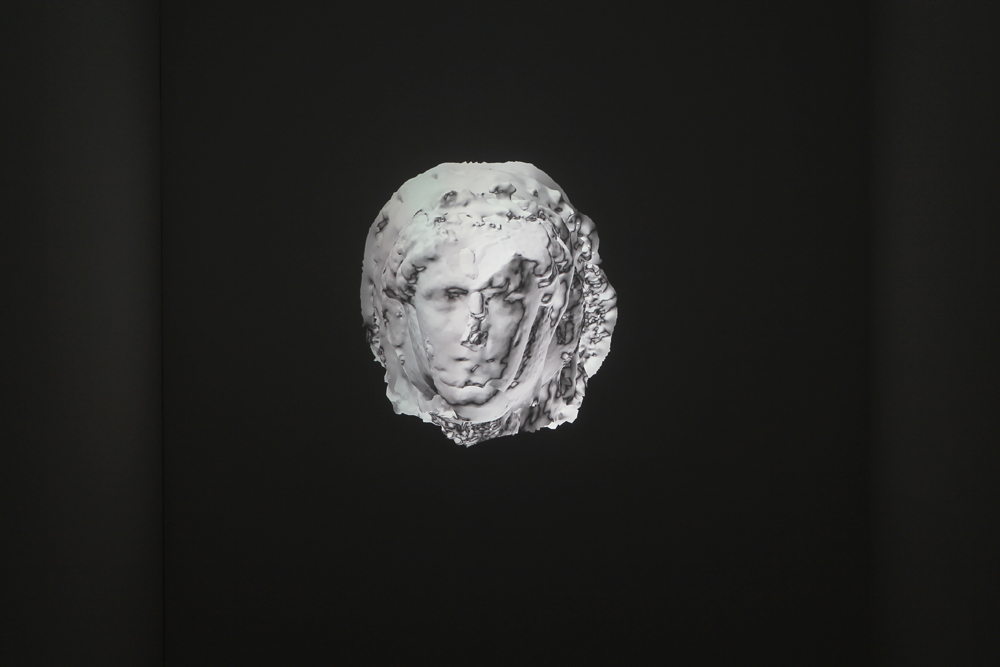
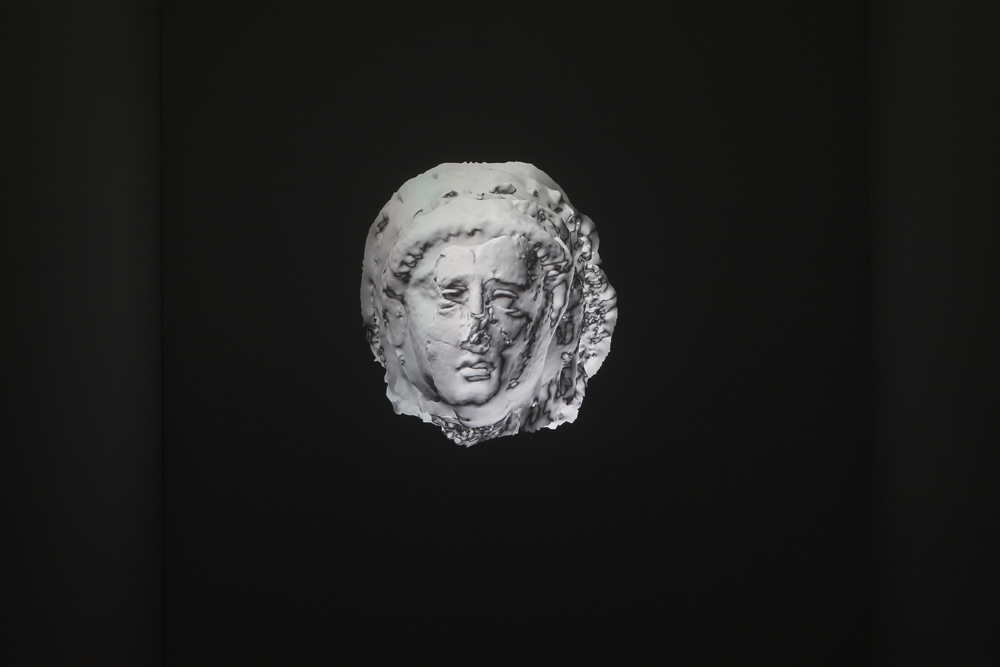
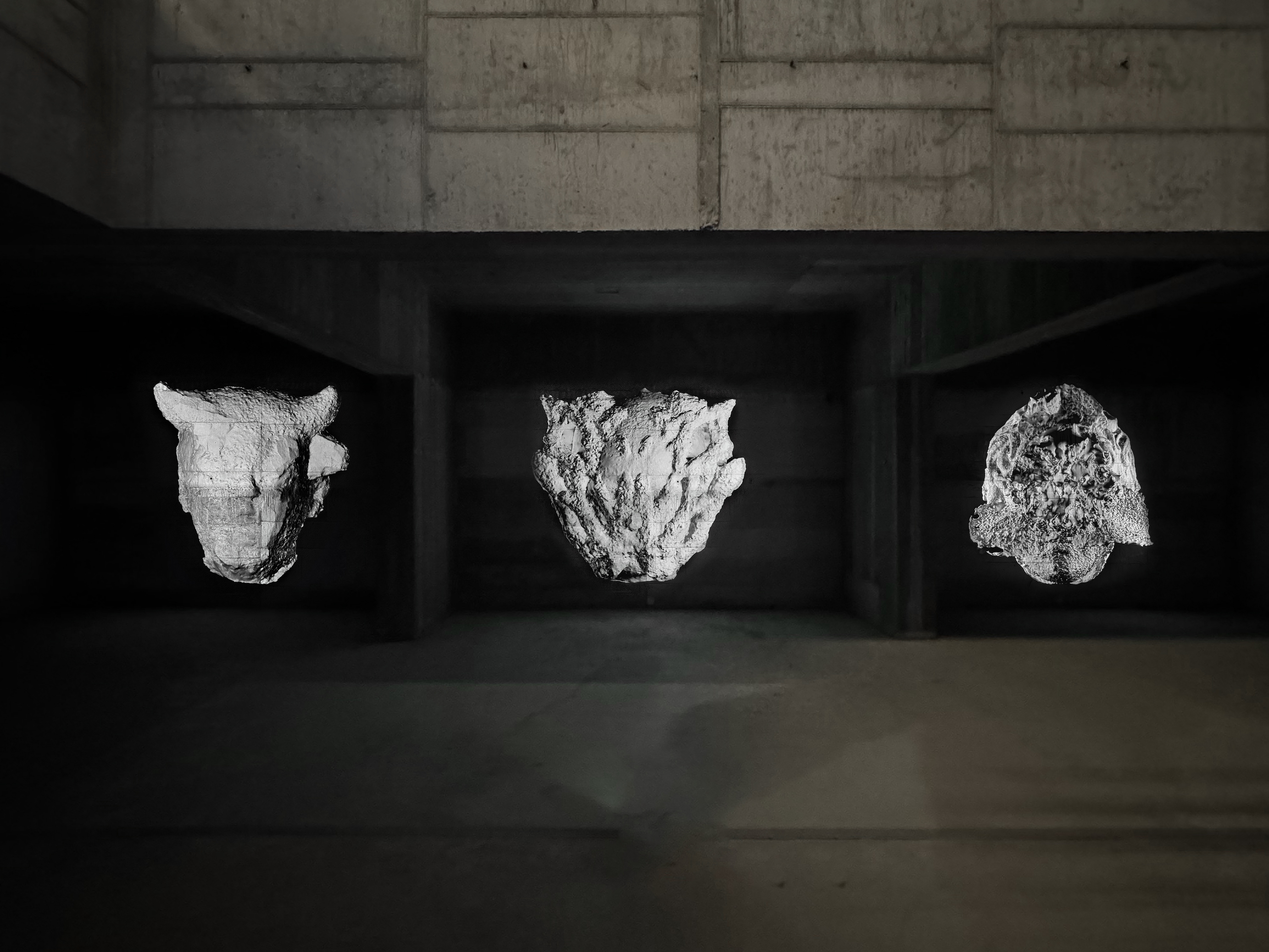
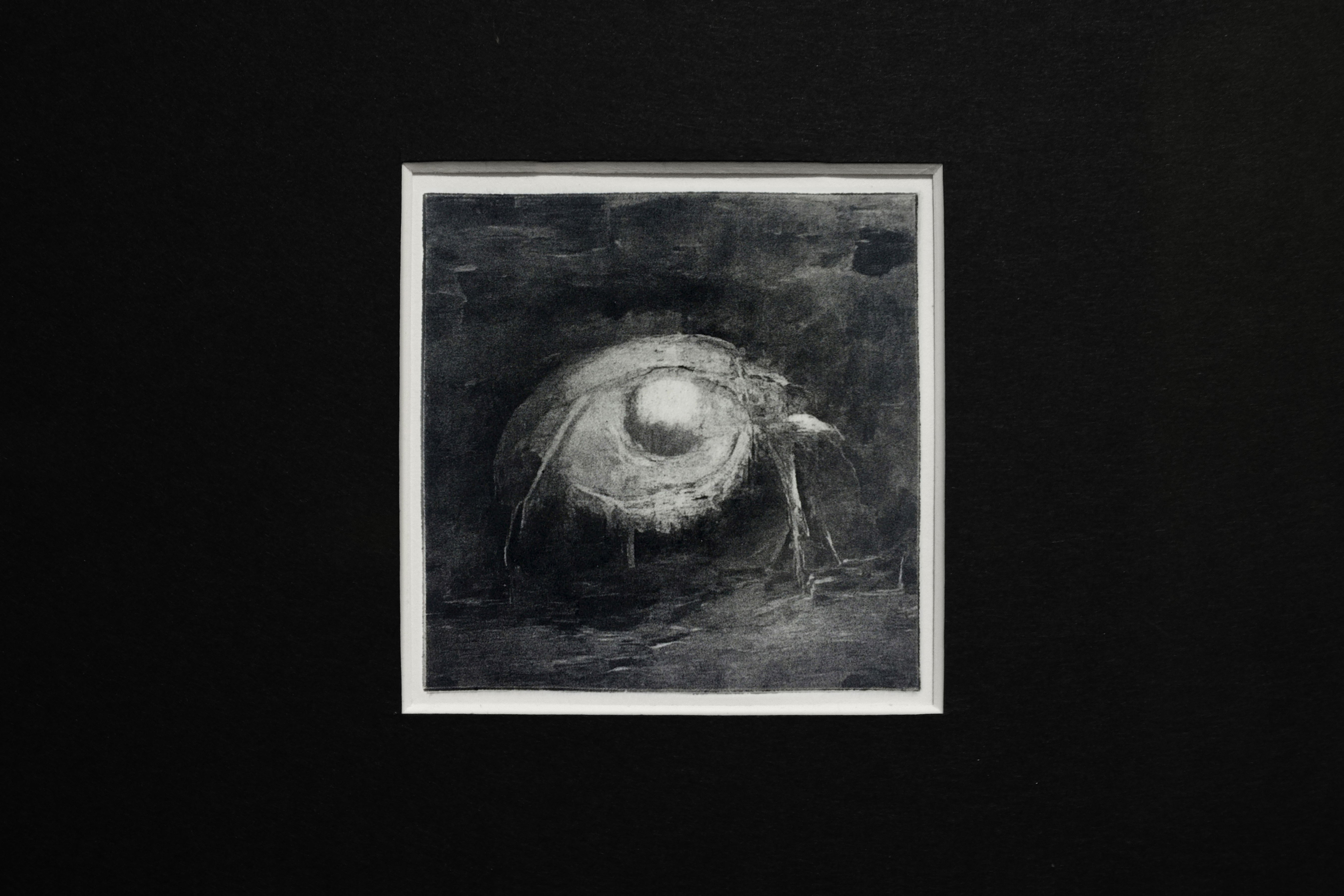
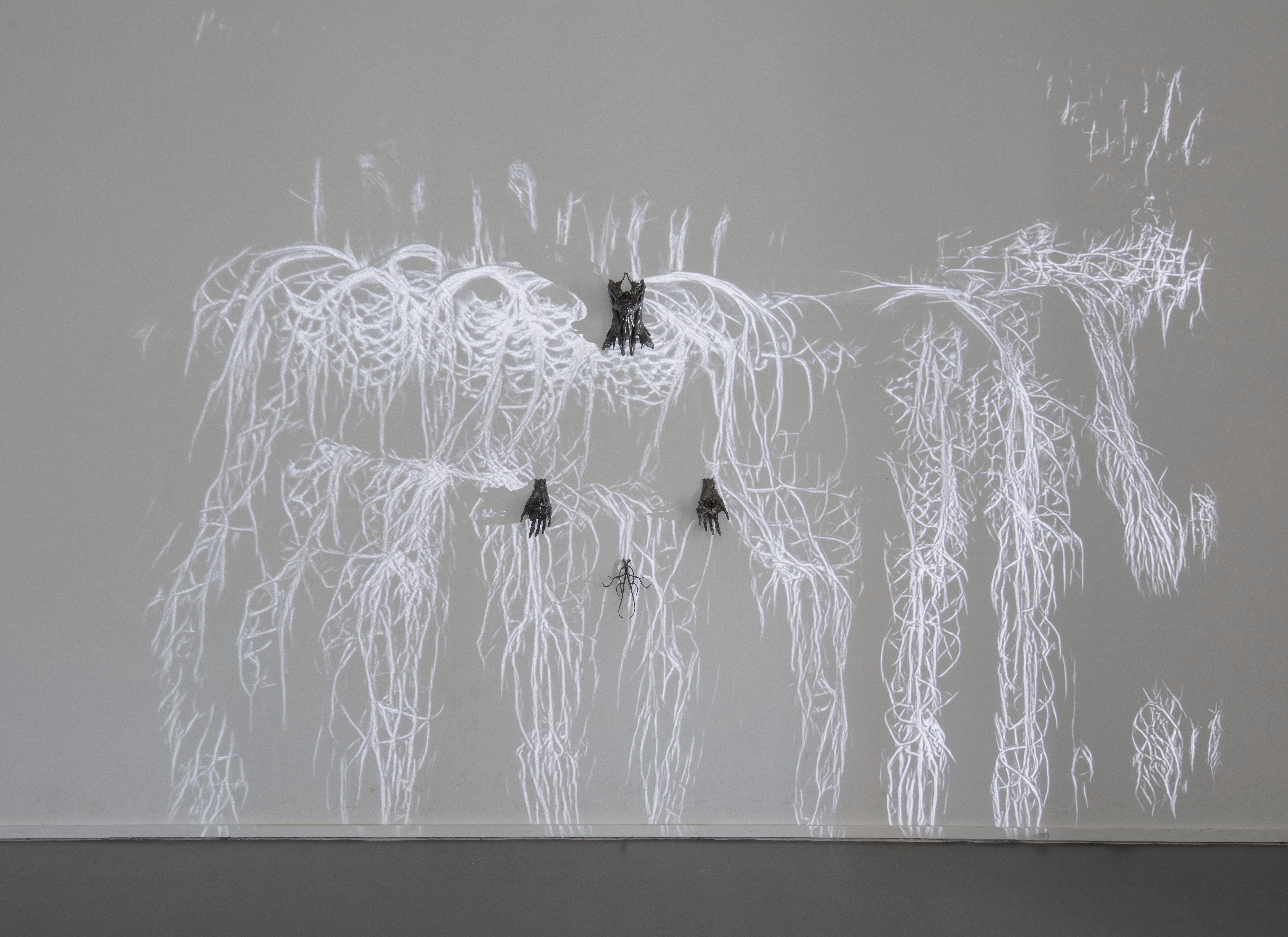
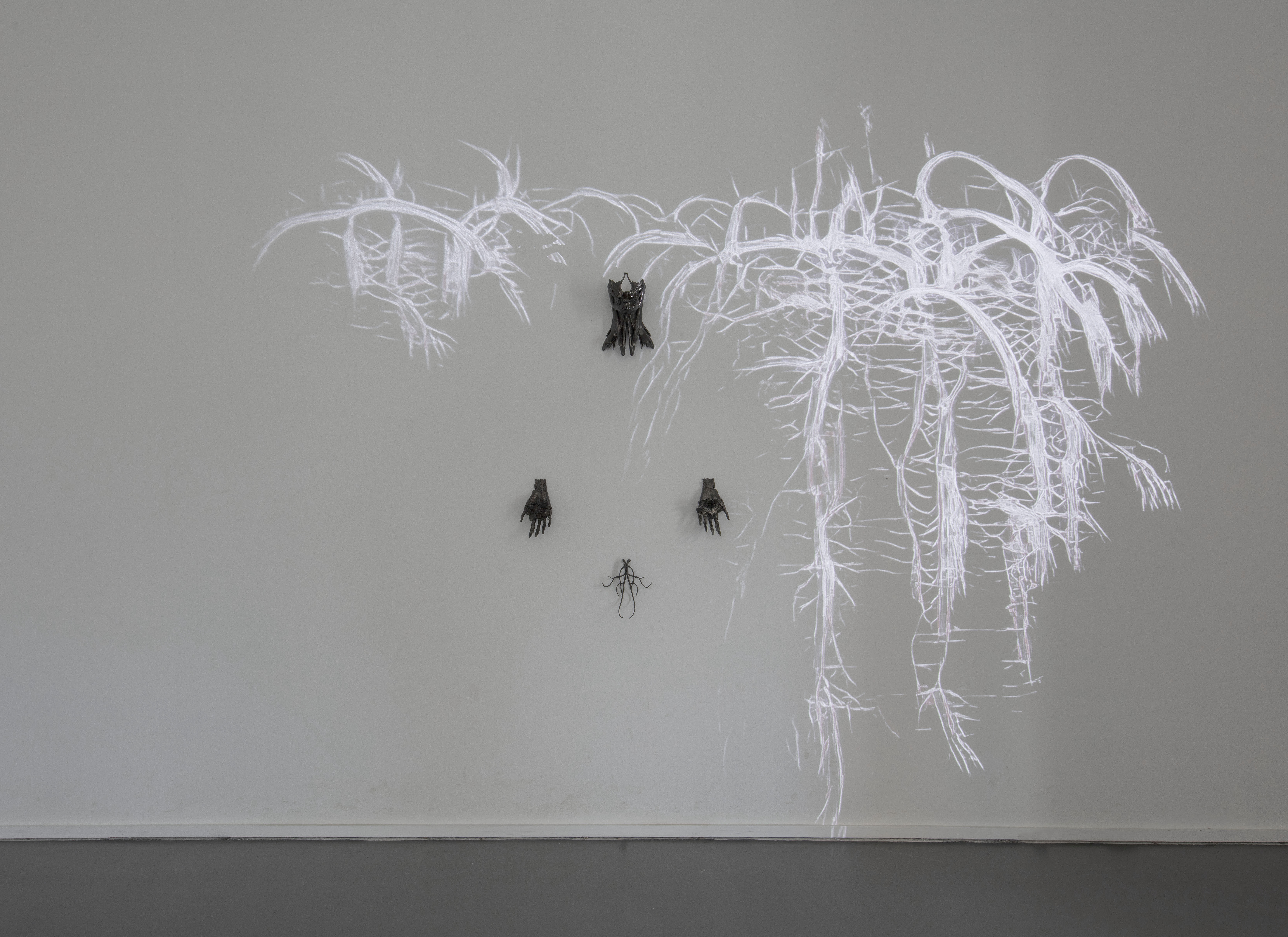
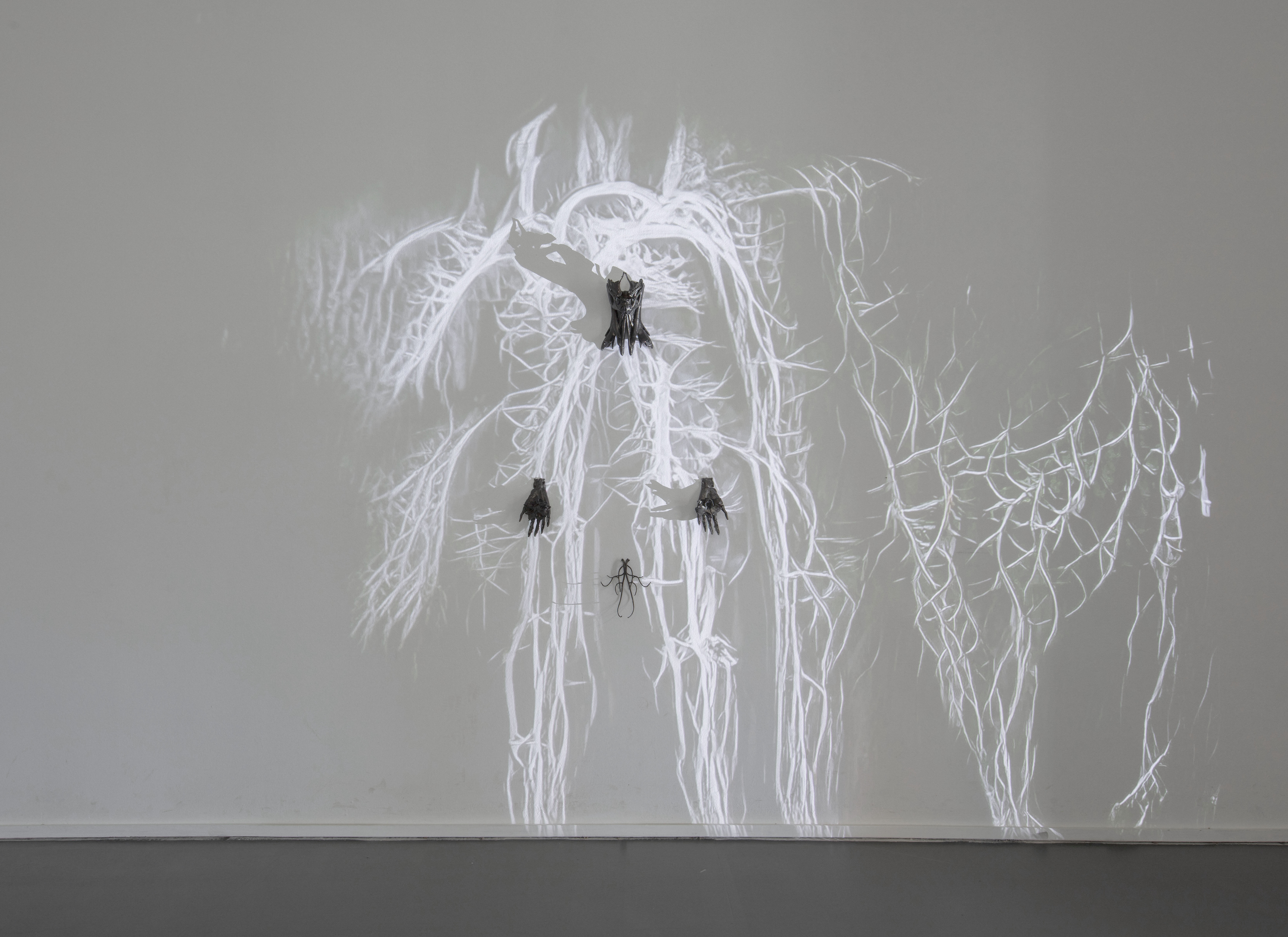
Echoes are sculptures made of light, ghostly appearances originating from the three-dimensional documentation of existing sculptures constructed with geological matter. Their structures emerged from the splicing of animal, vegetal and human representations, resulting in forms that resemble metamorphosed faces, geological fragments, cosmic bodies, composite phenomena. An abstract conception of the face as a biological and cultural interface of recognition and difference is being proposed here as an inversion of the anthropocentric imaginary, maintaining however the paradoxical fate of anthropomorphism as a plea for the bridging with everything that could be considered as non-human.
Thursday, November 14th, 2024 | Posted in activity |
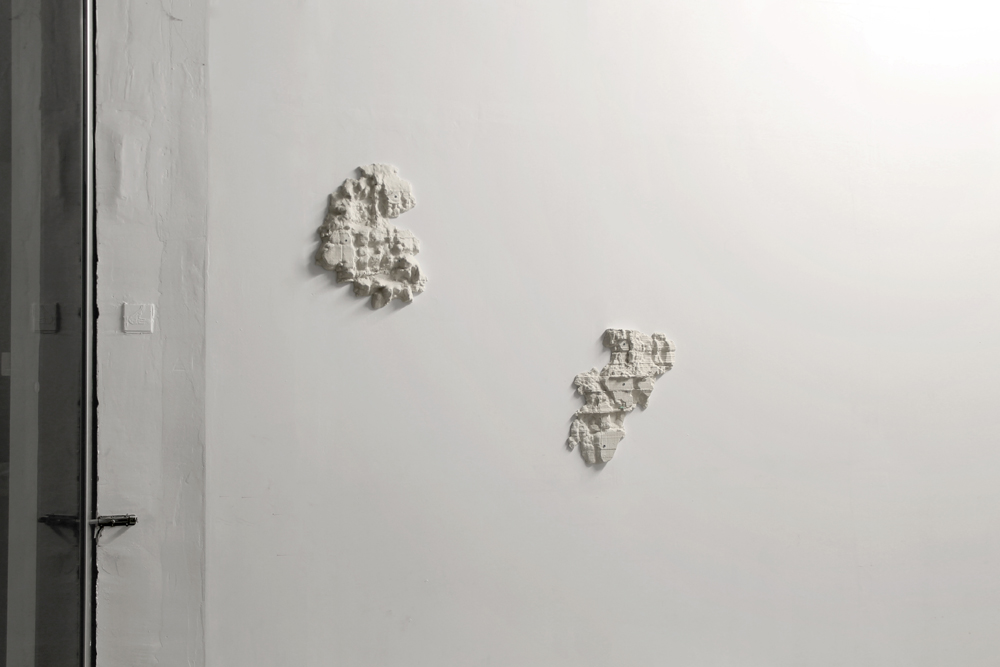
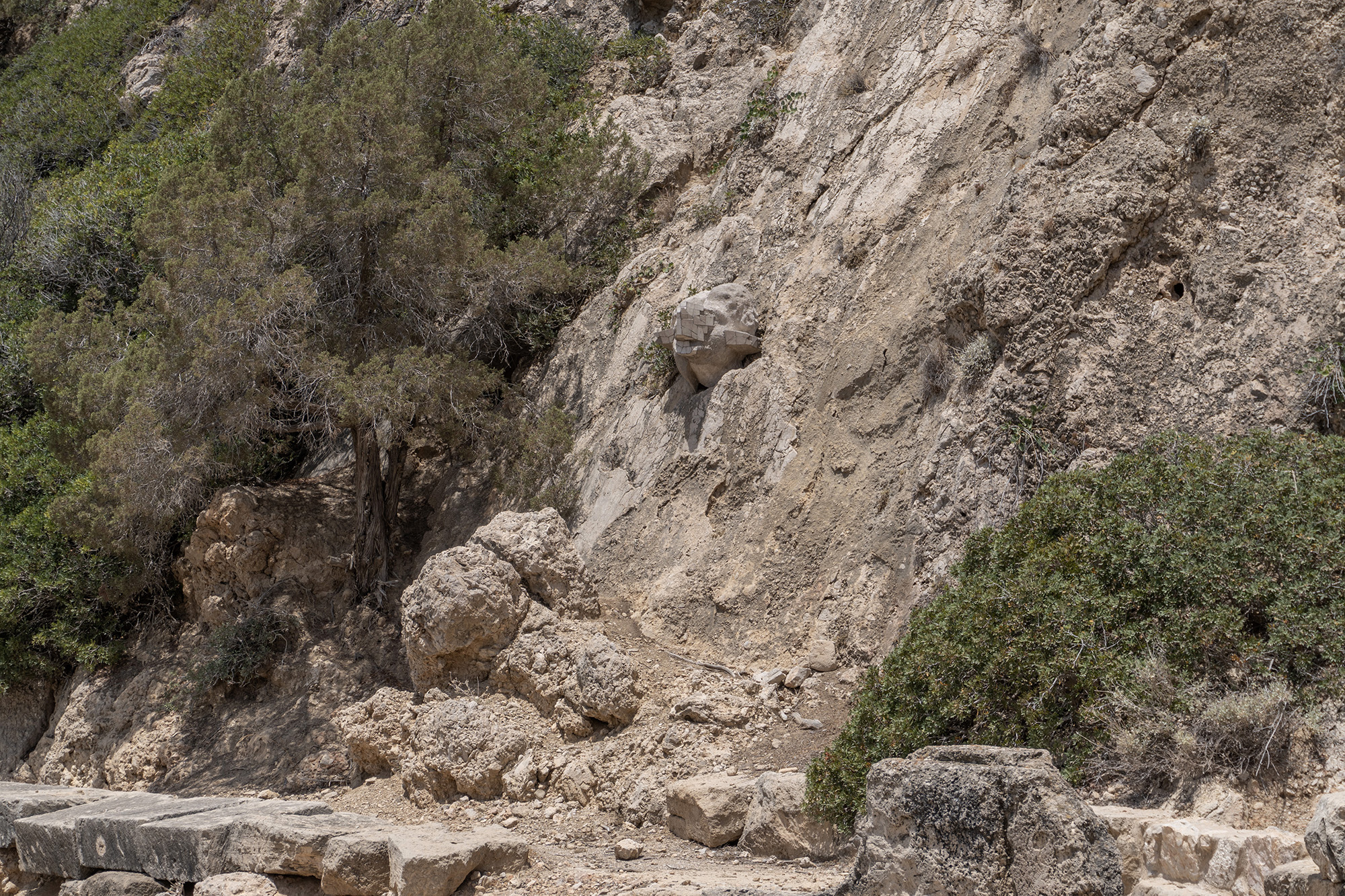
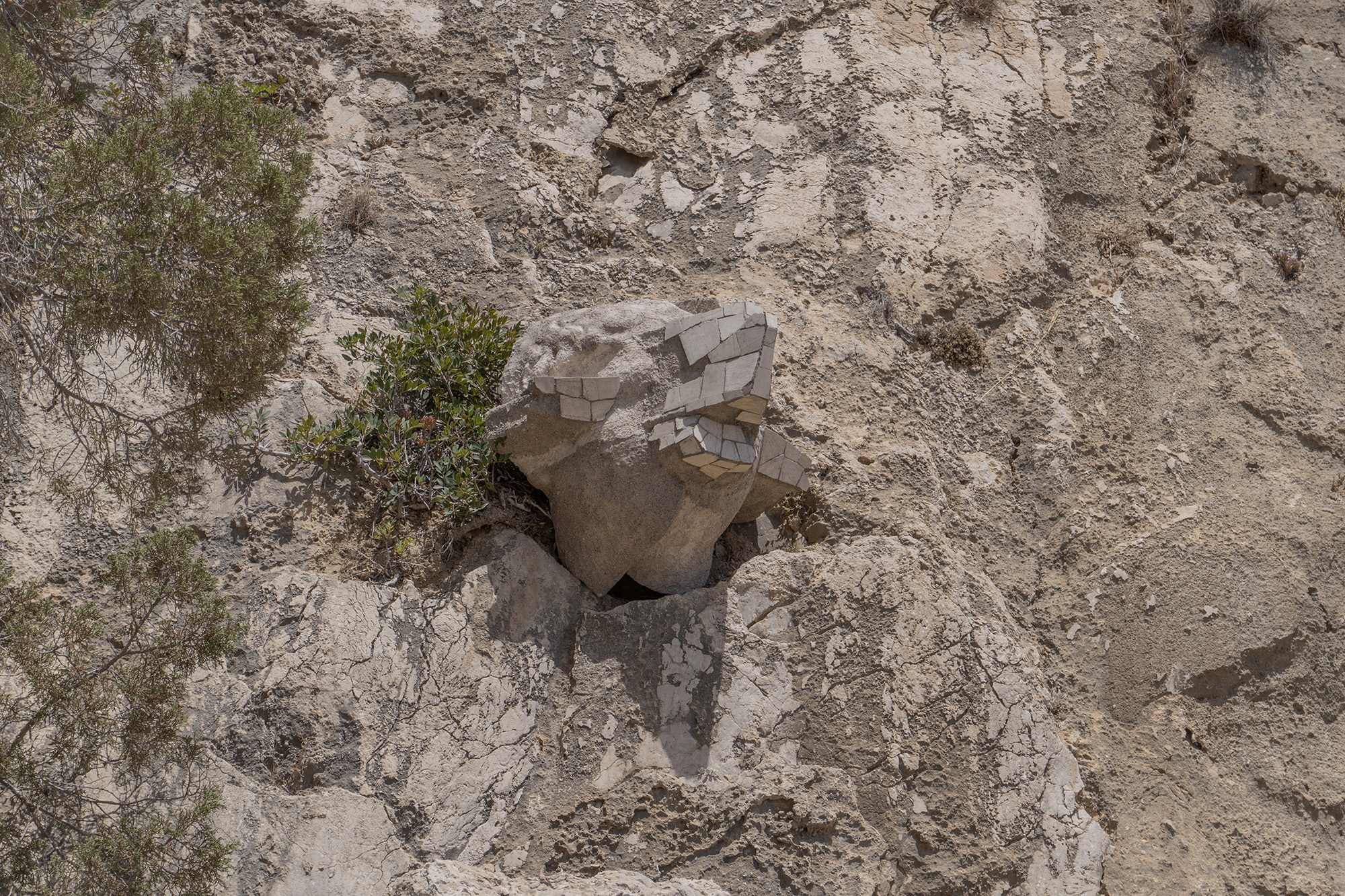
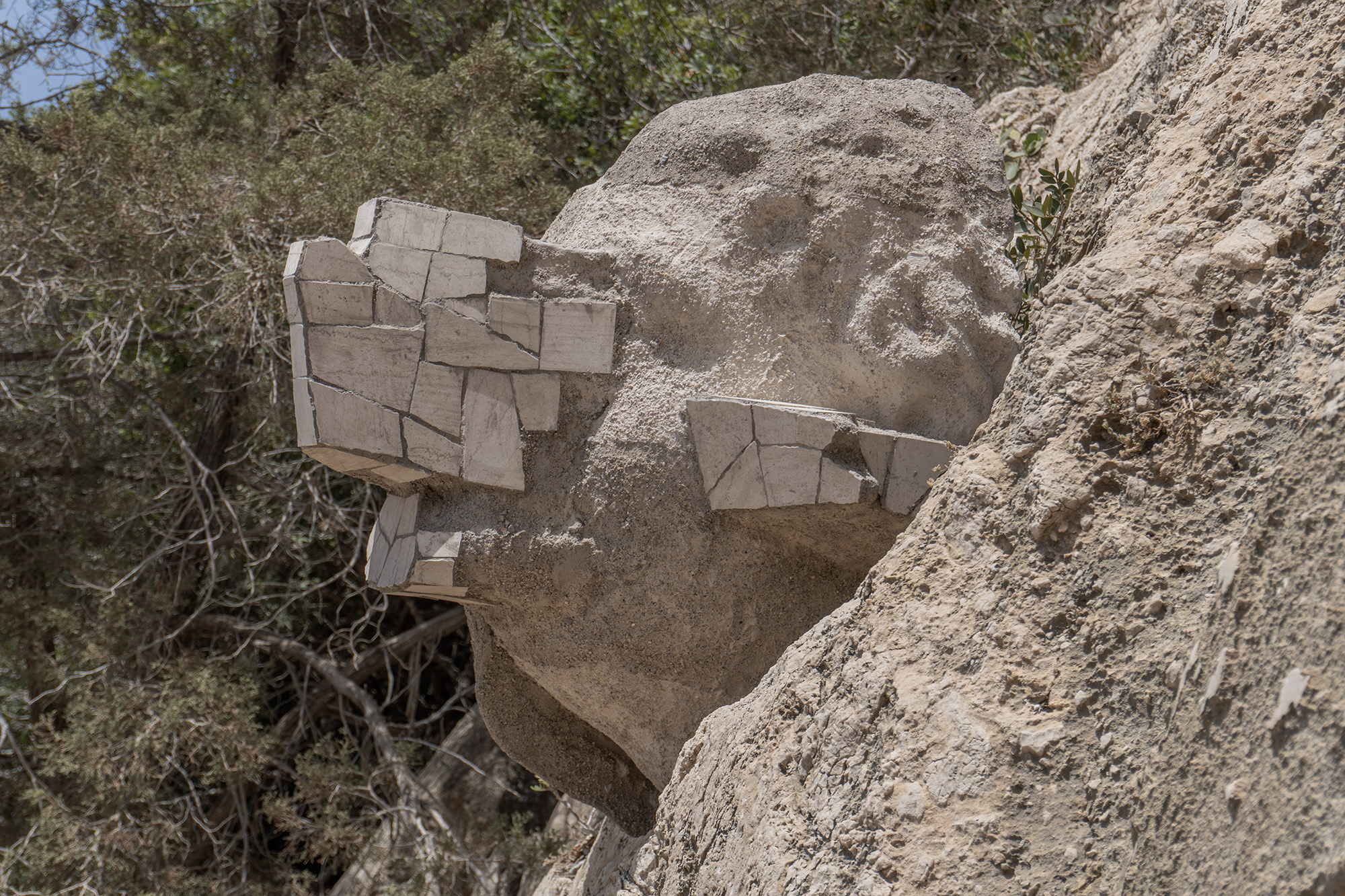
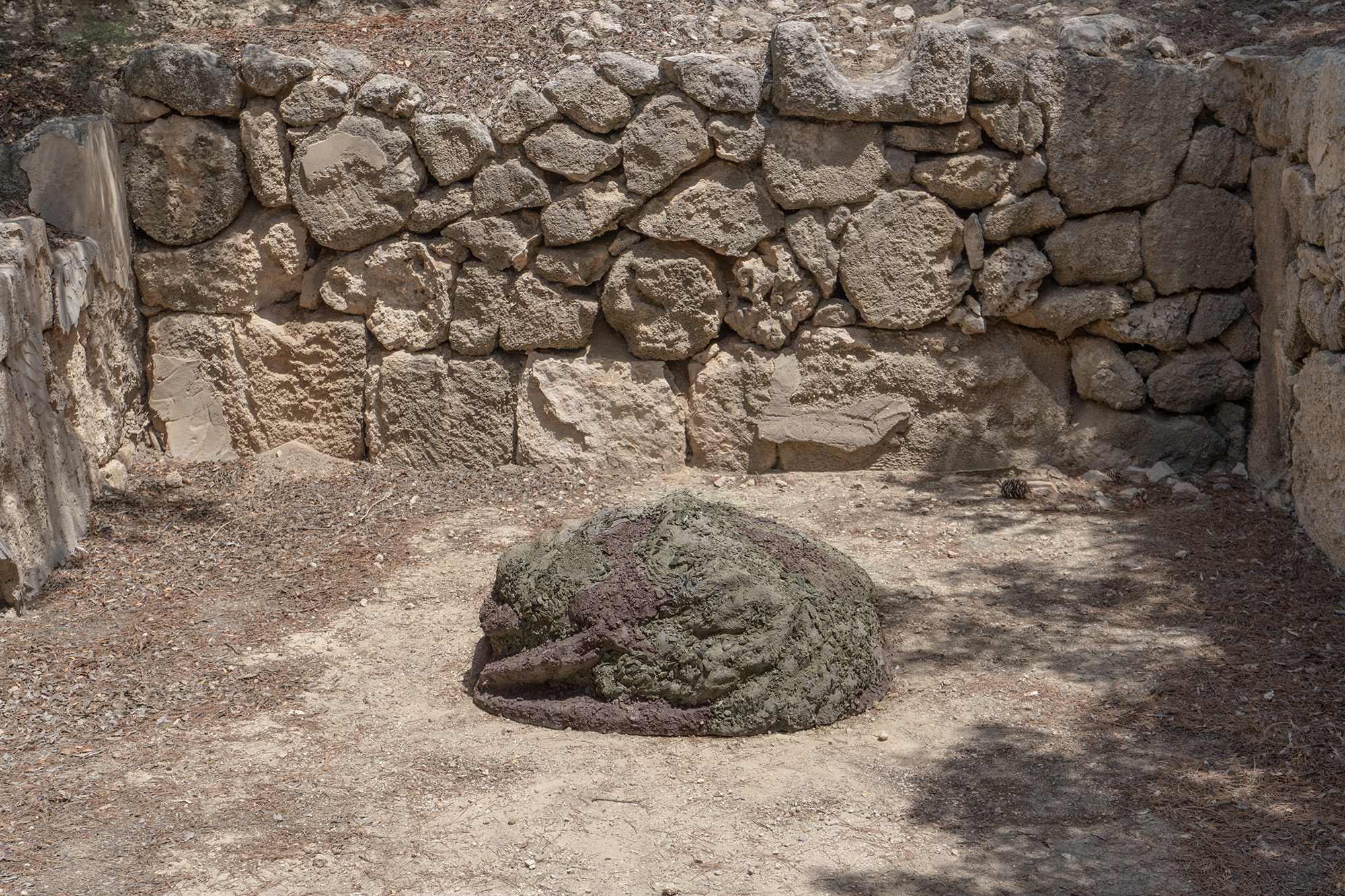
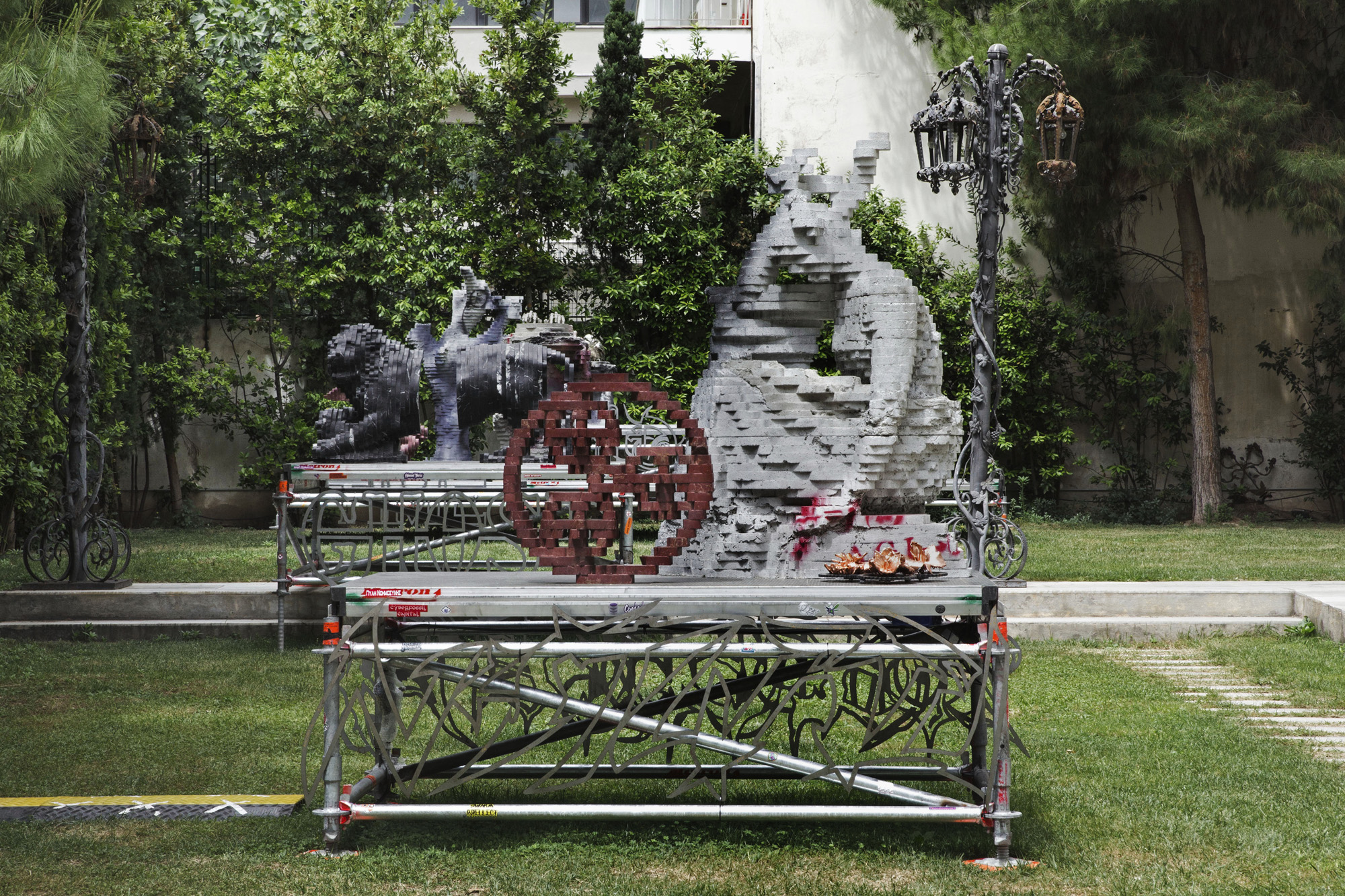
Seven Children was inspired by the myths of the Heraion temple and constructed out of the geological matter of Perachora. Incorporating the spliced forms of archaeological artifacts and tectonic phenomena, the seven sculptures of the installation inhabit the site as the specters of the youth that were symbolically sacrificed to Hera by the Korinthians, in memory of Medea’s murdered children.
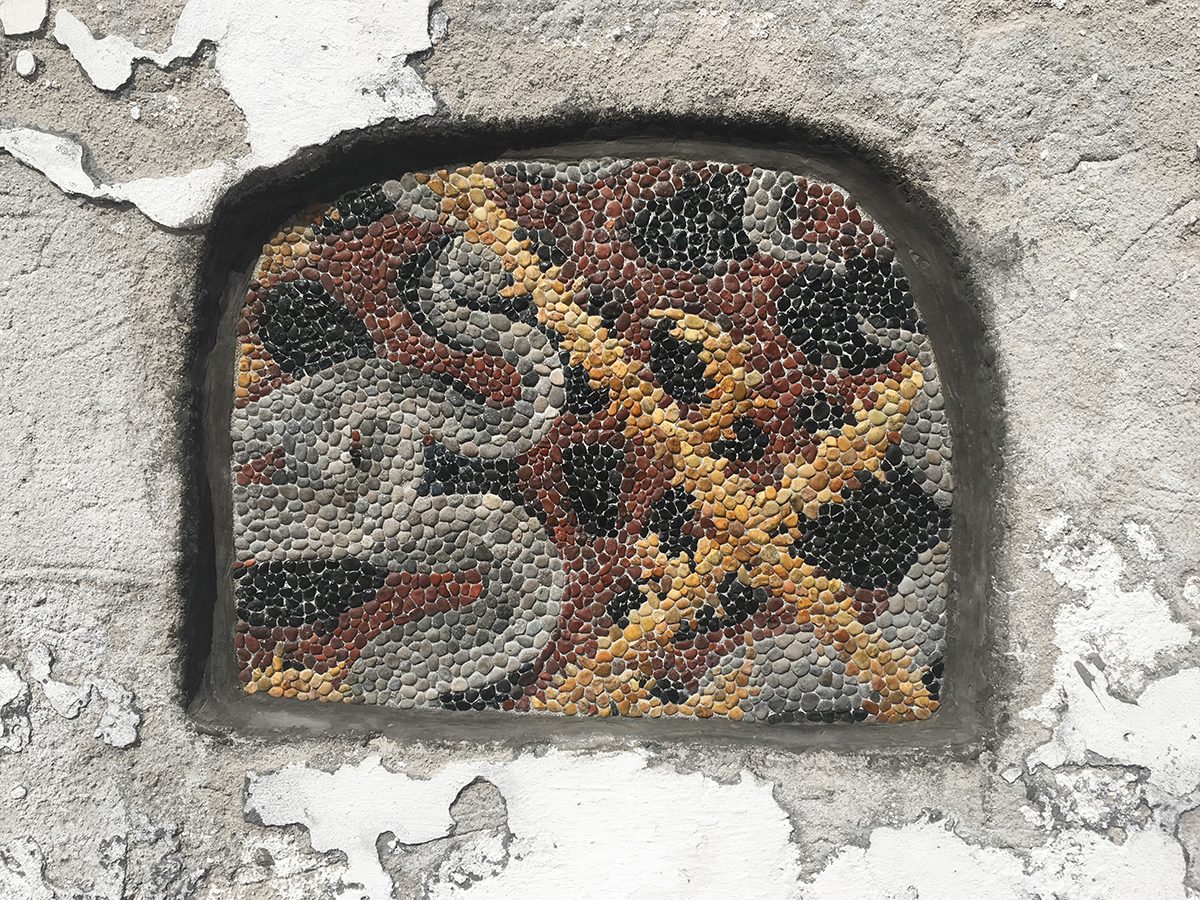
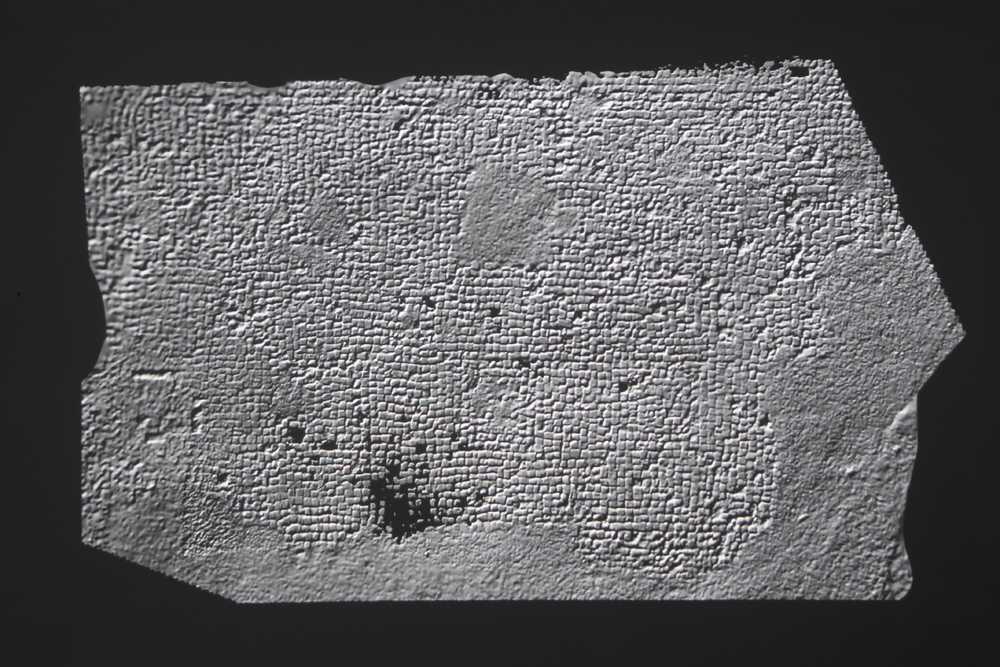
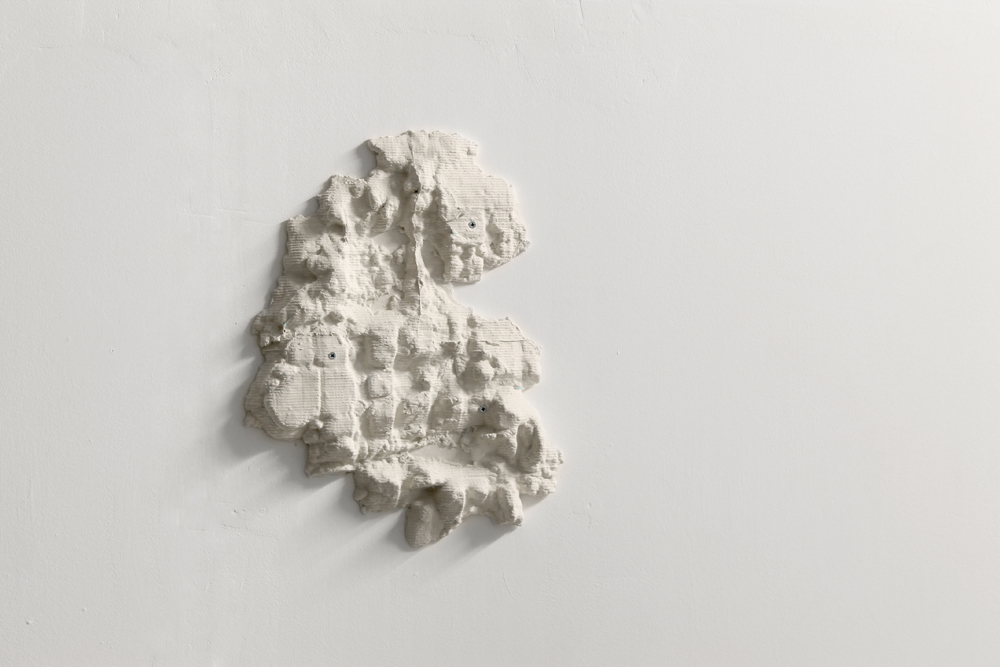
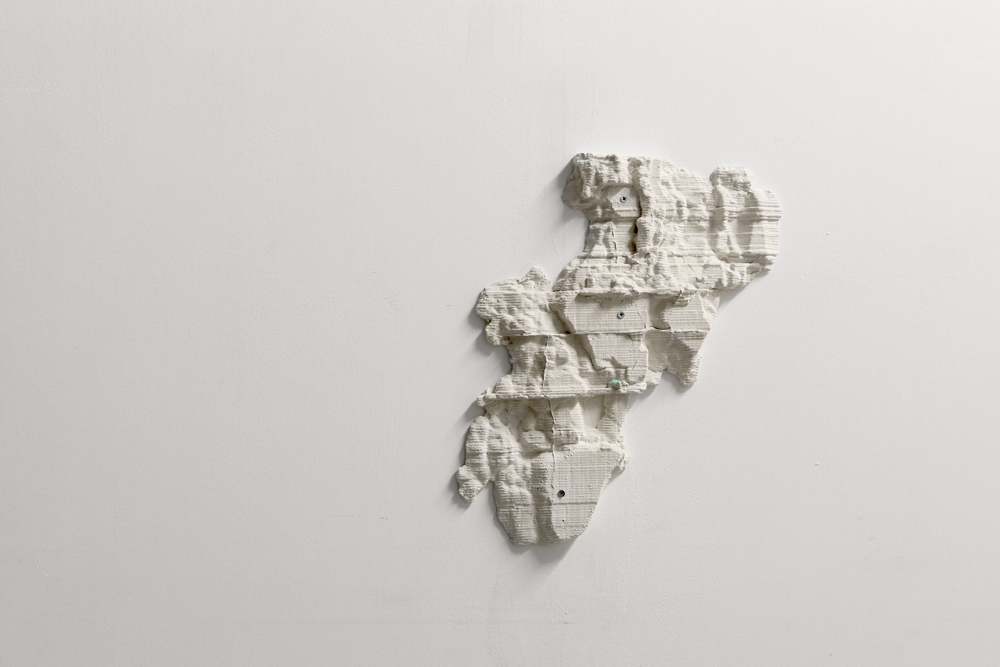
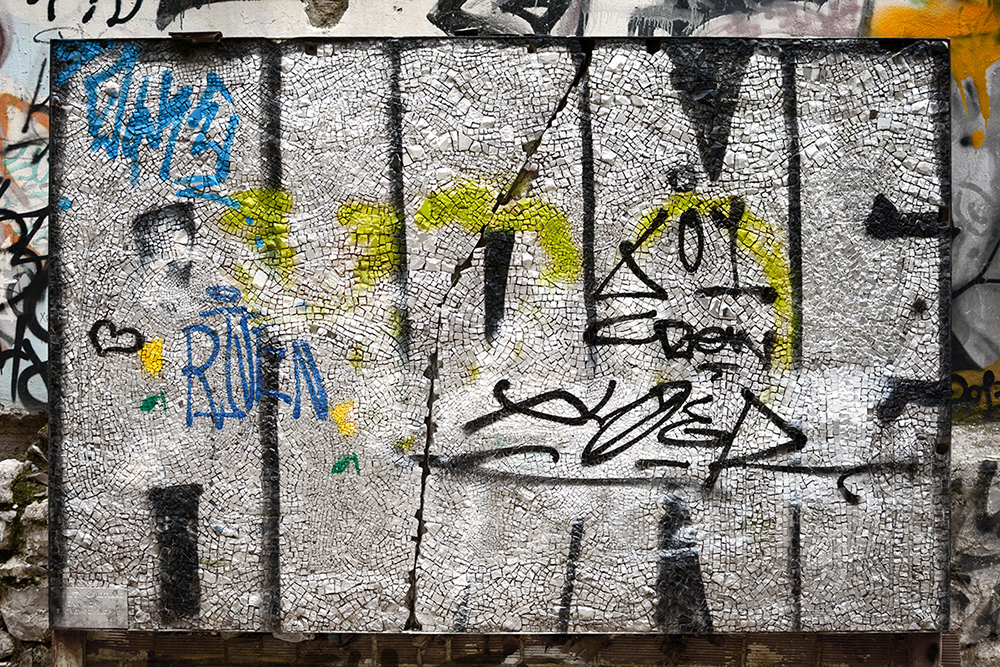
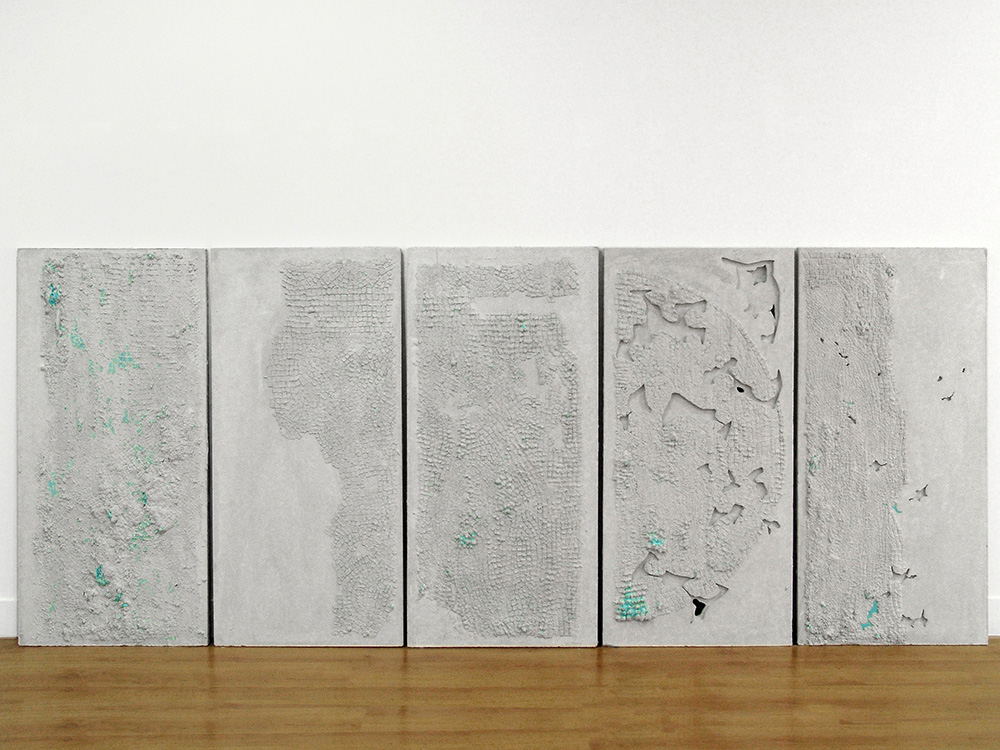
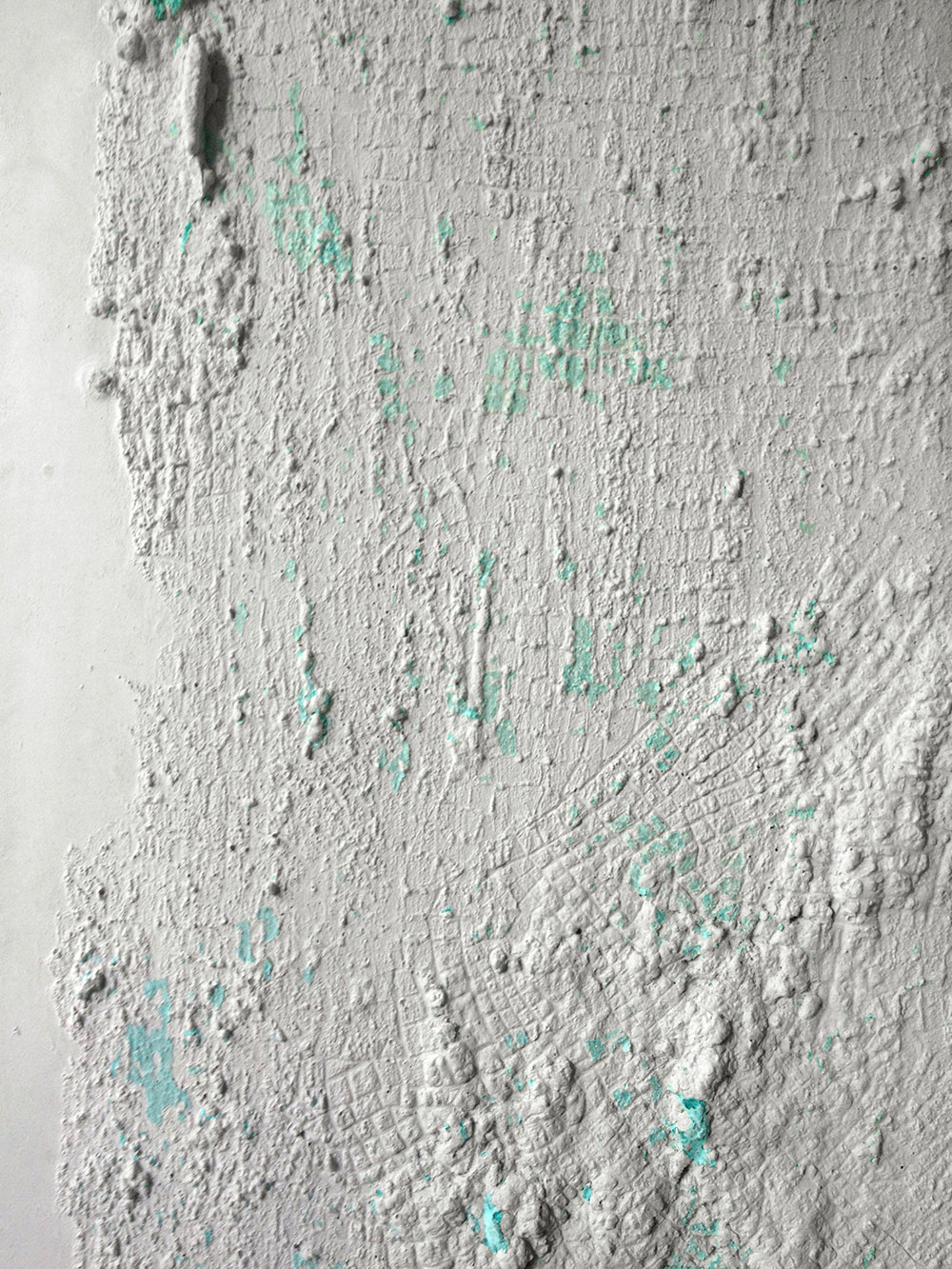
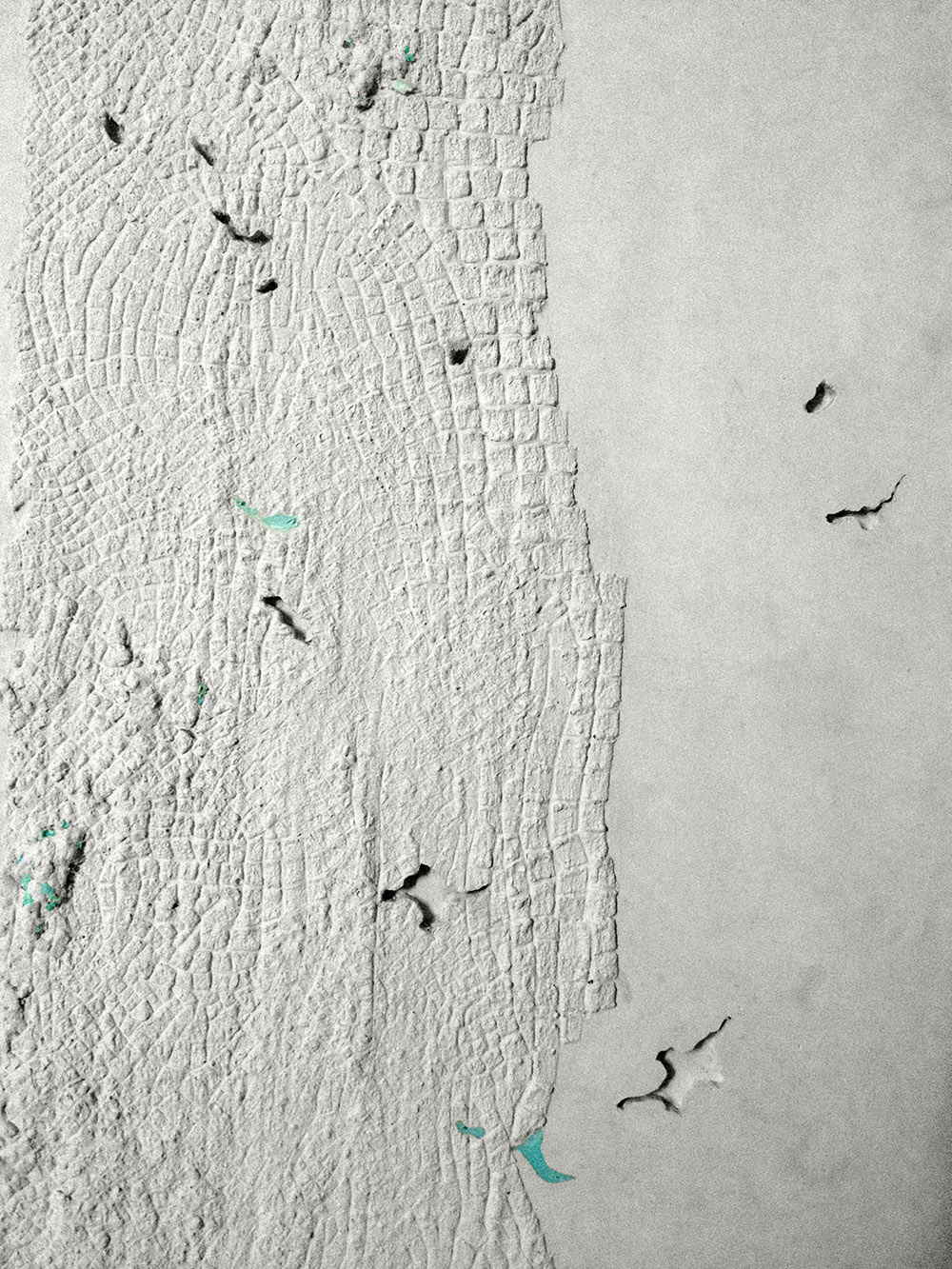
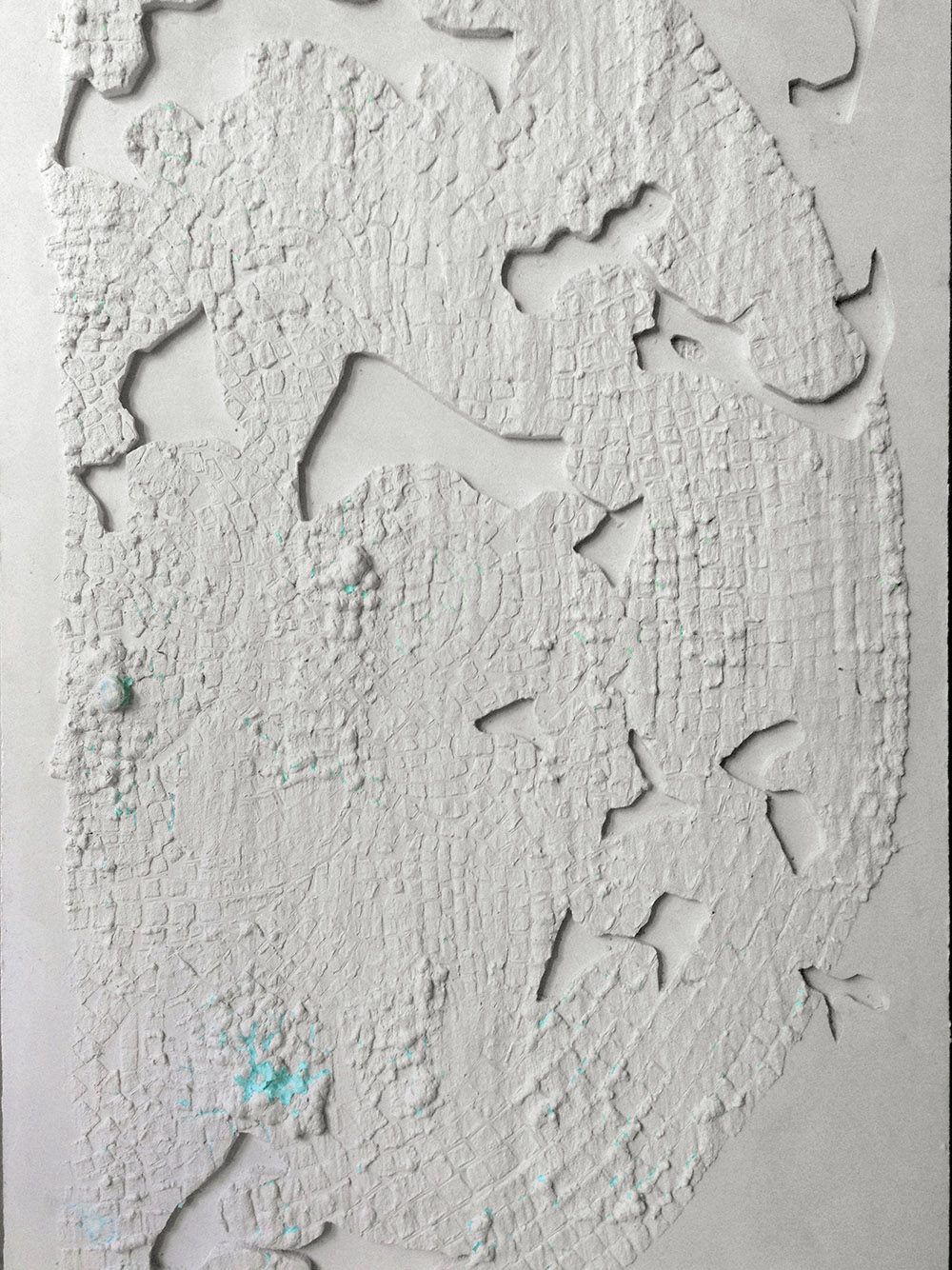
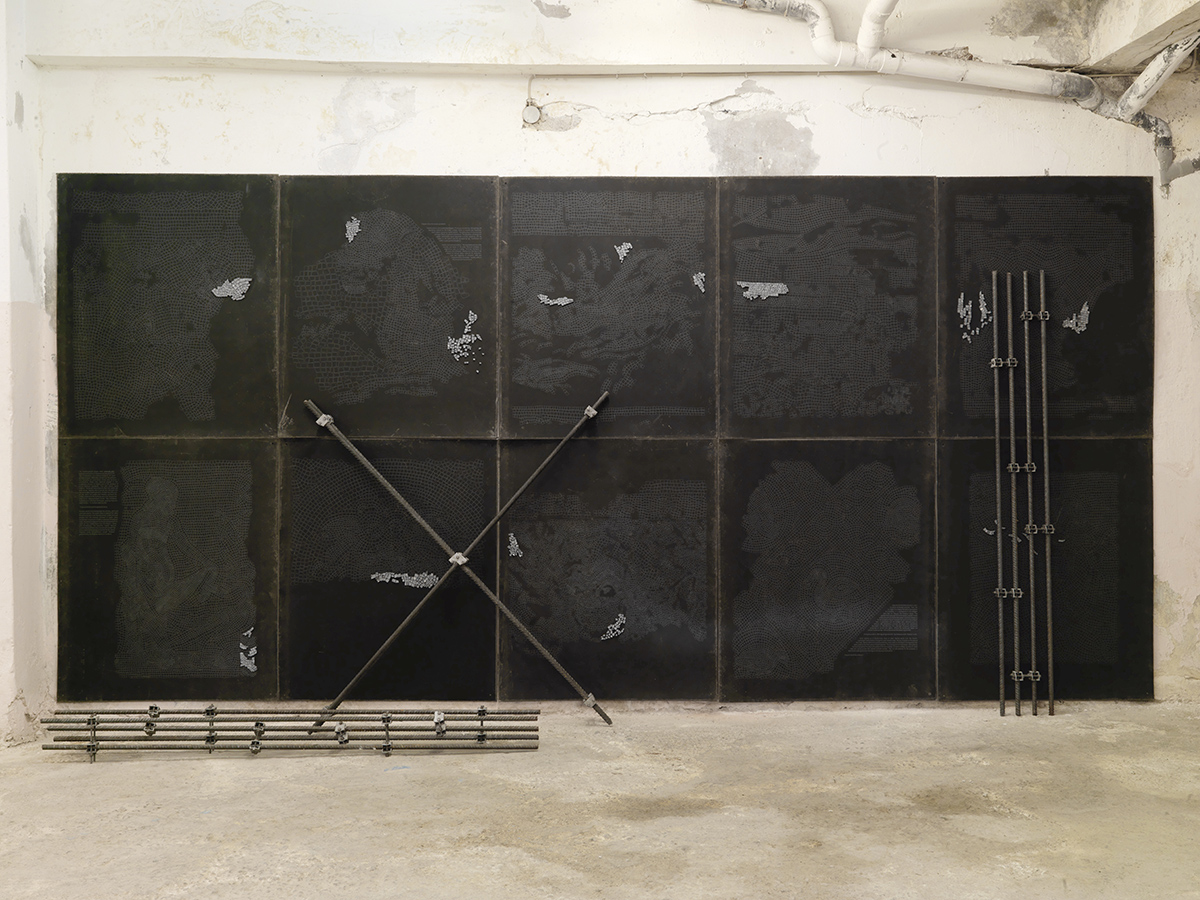
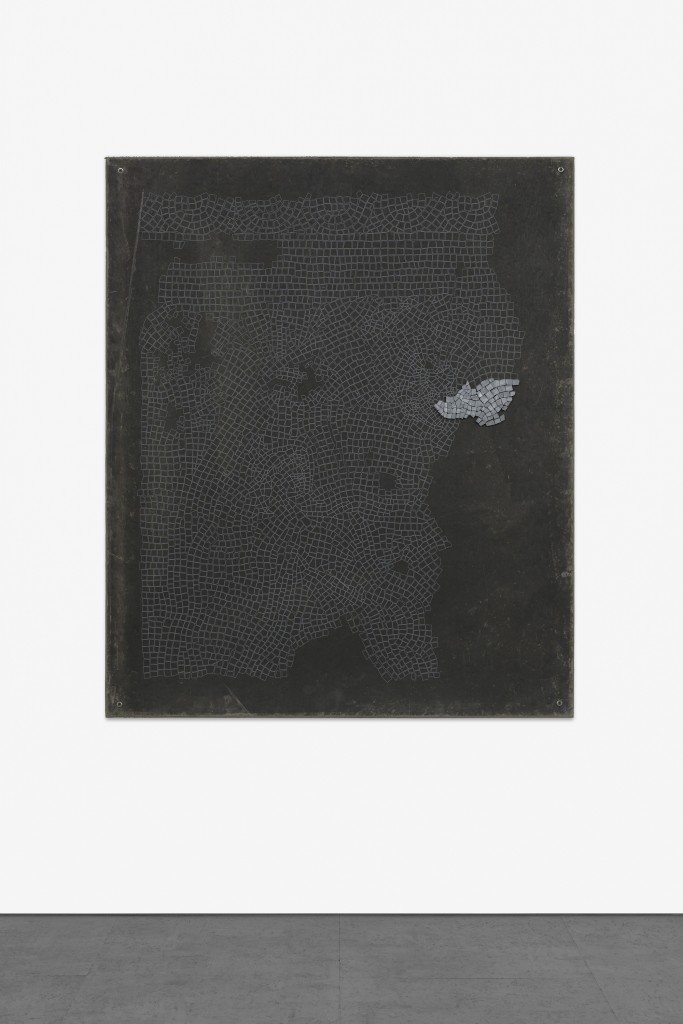
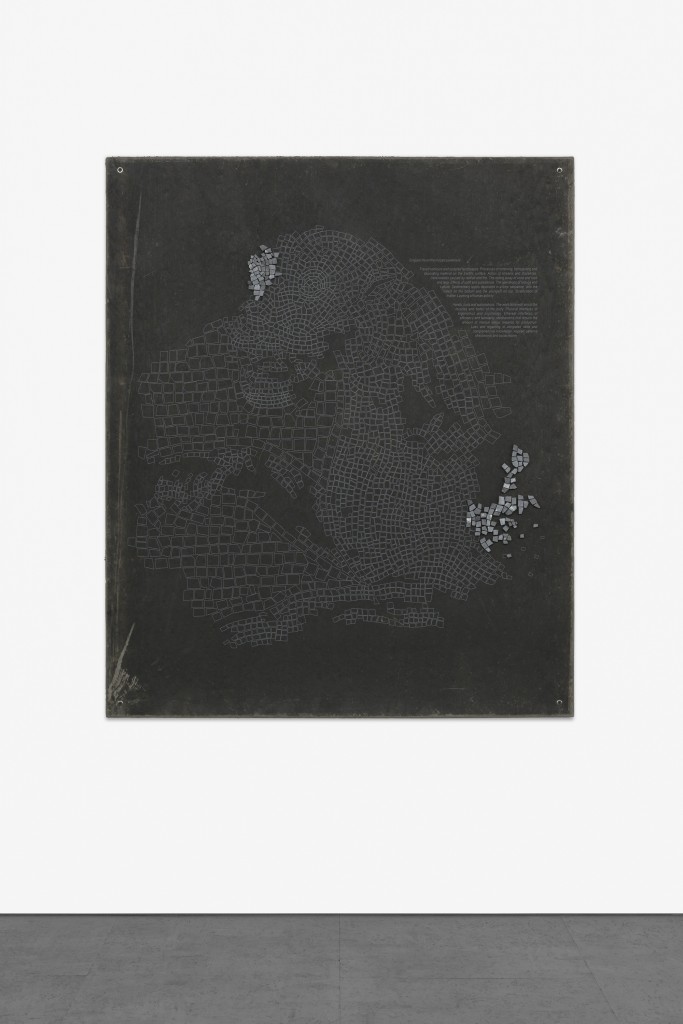
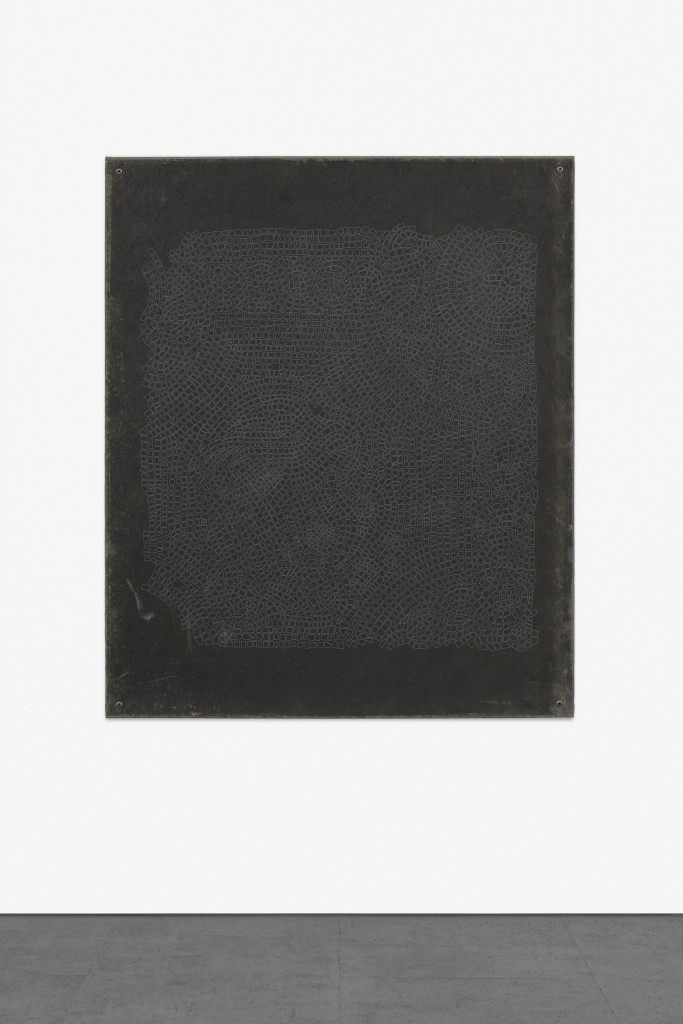
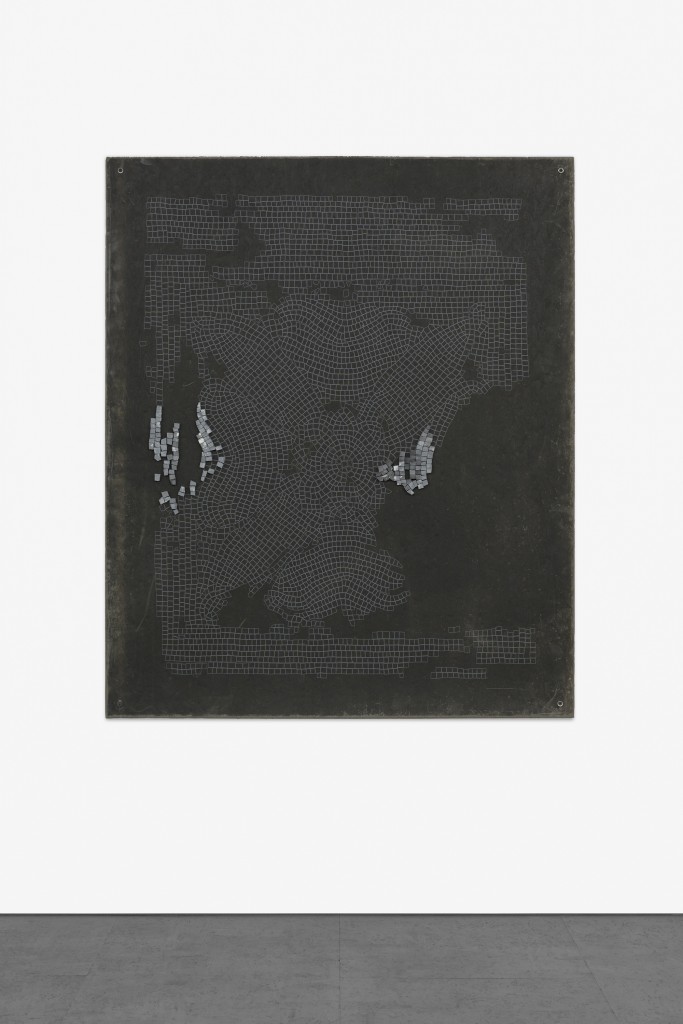
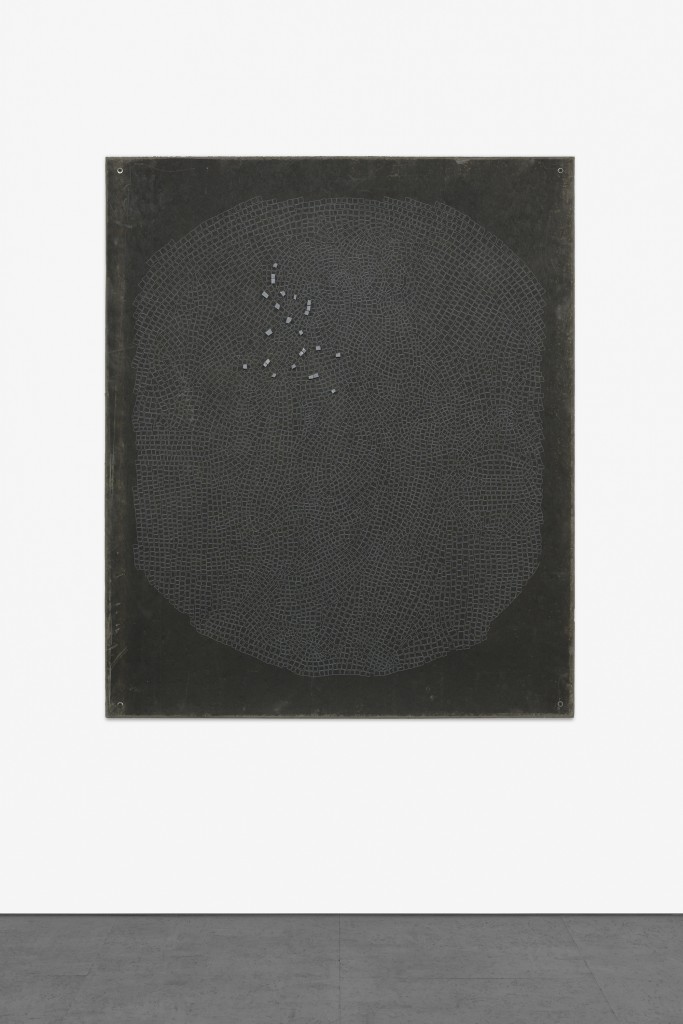
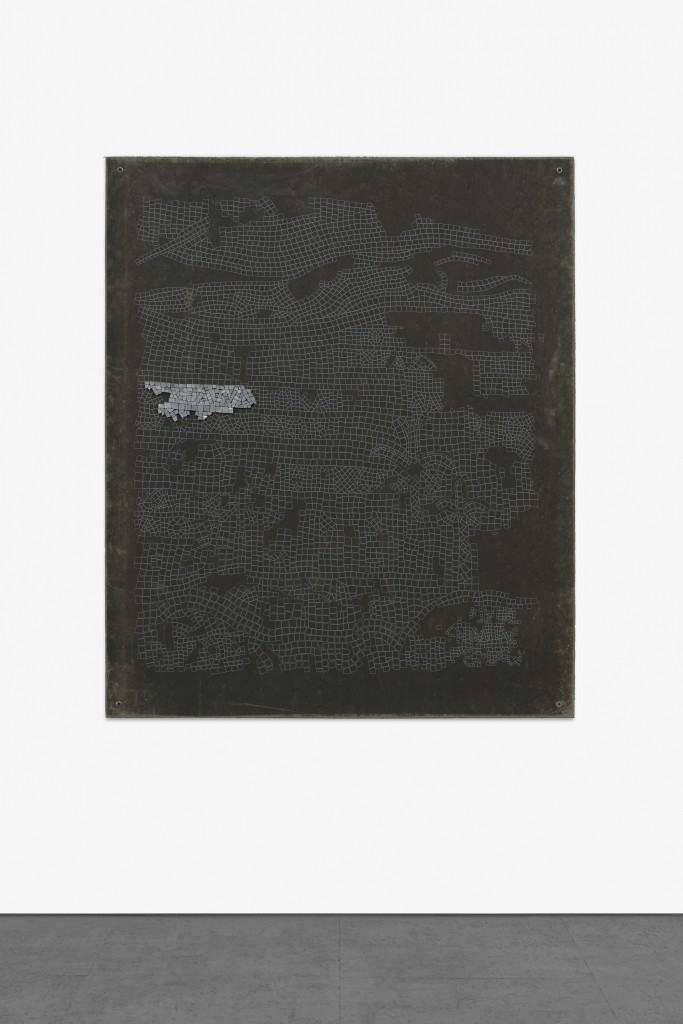
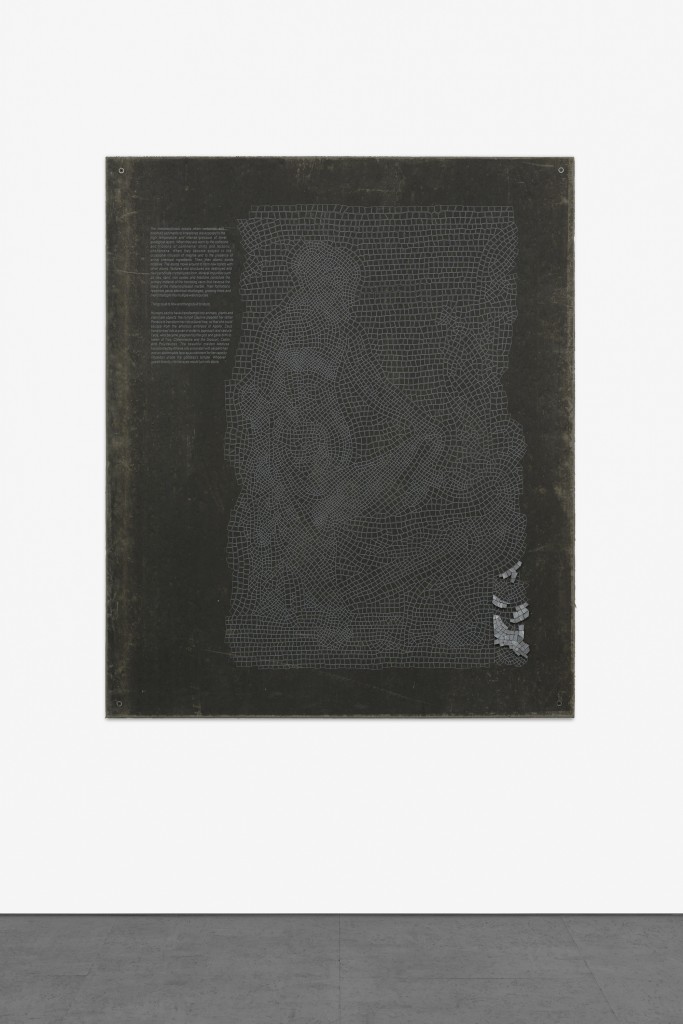
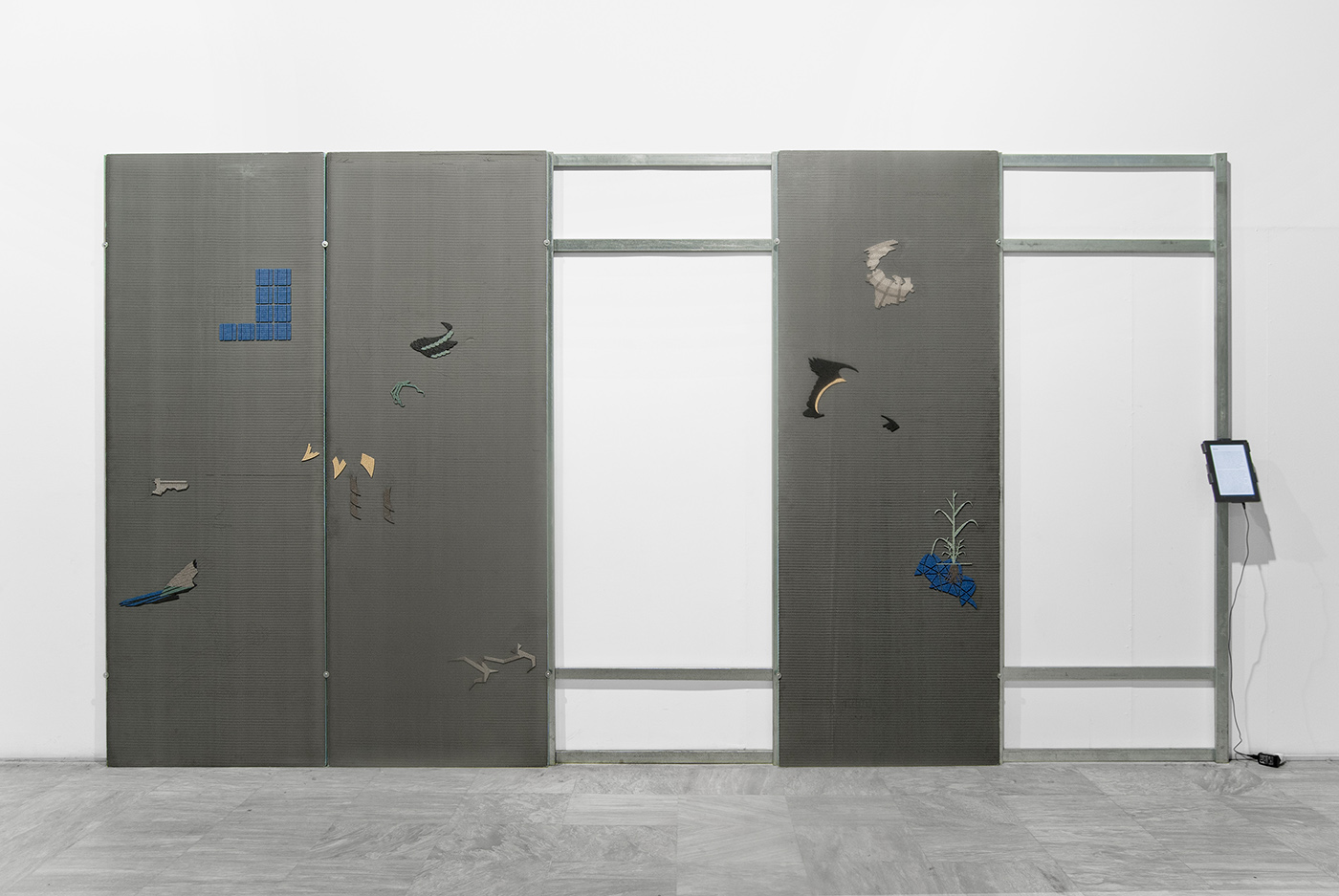
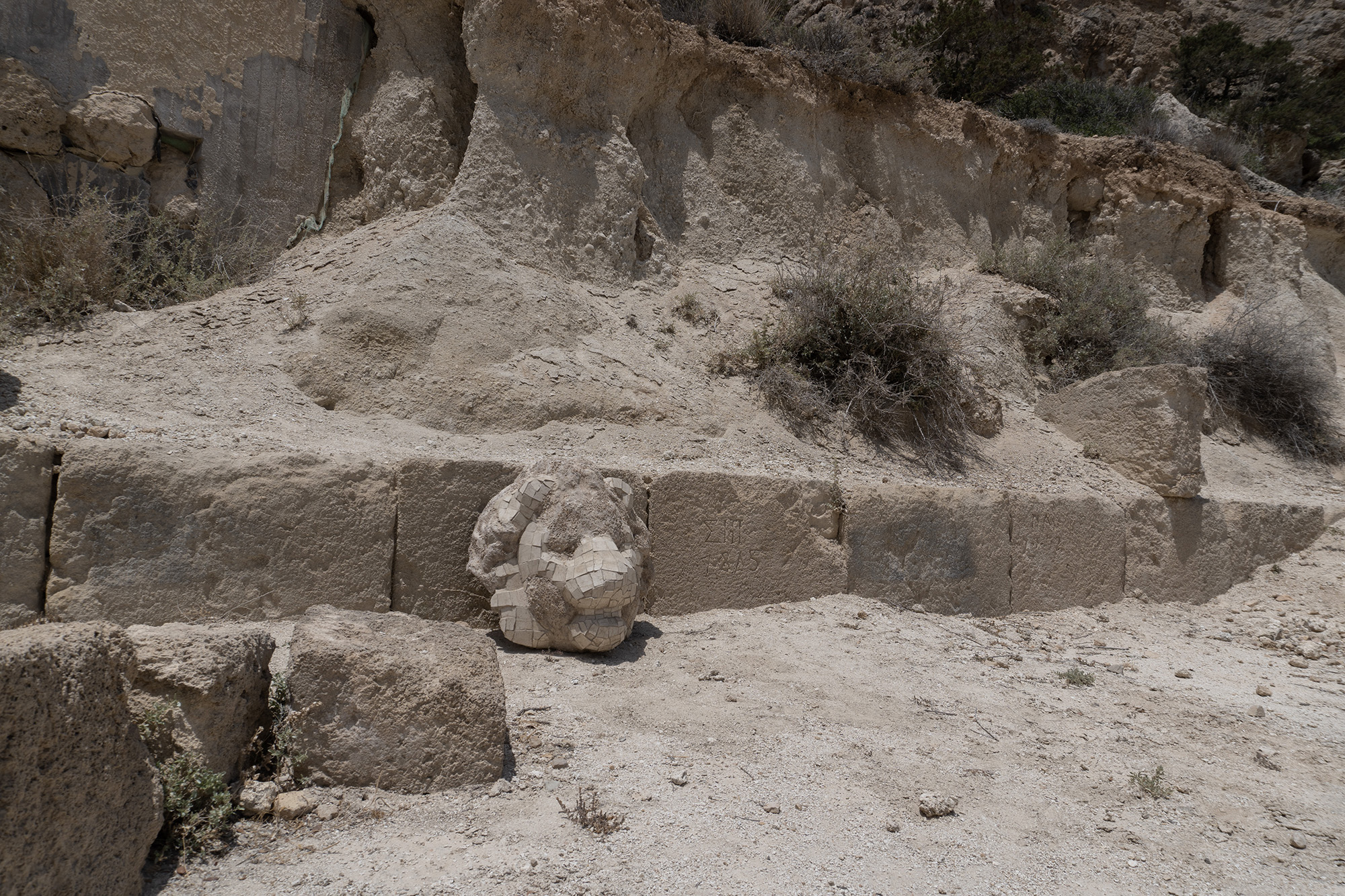
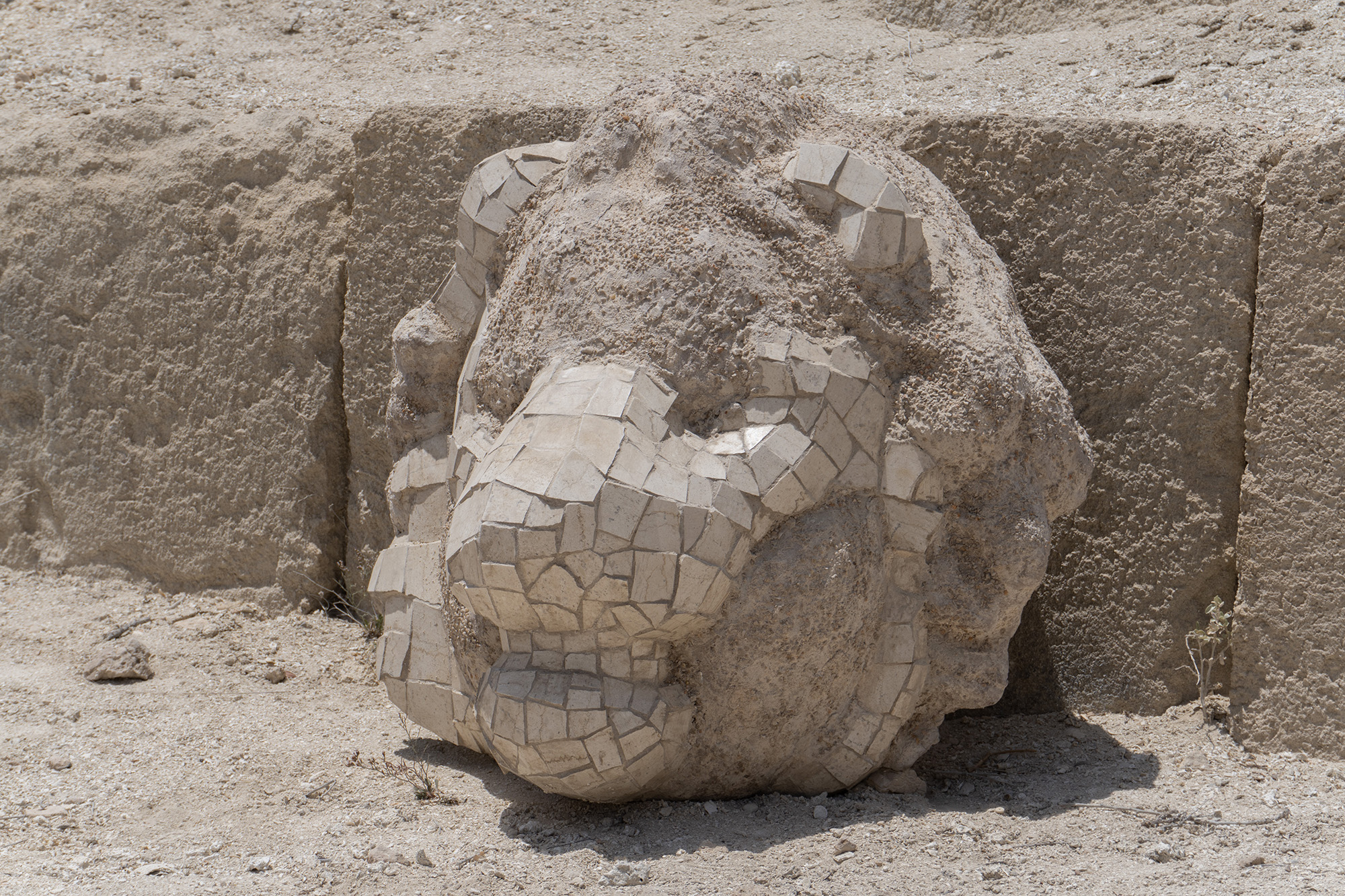
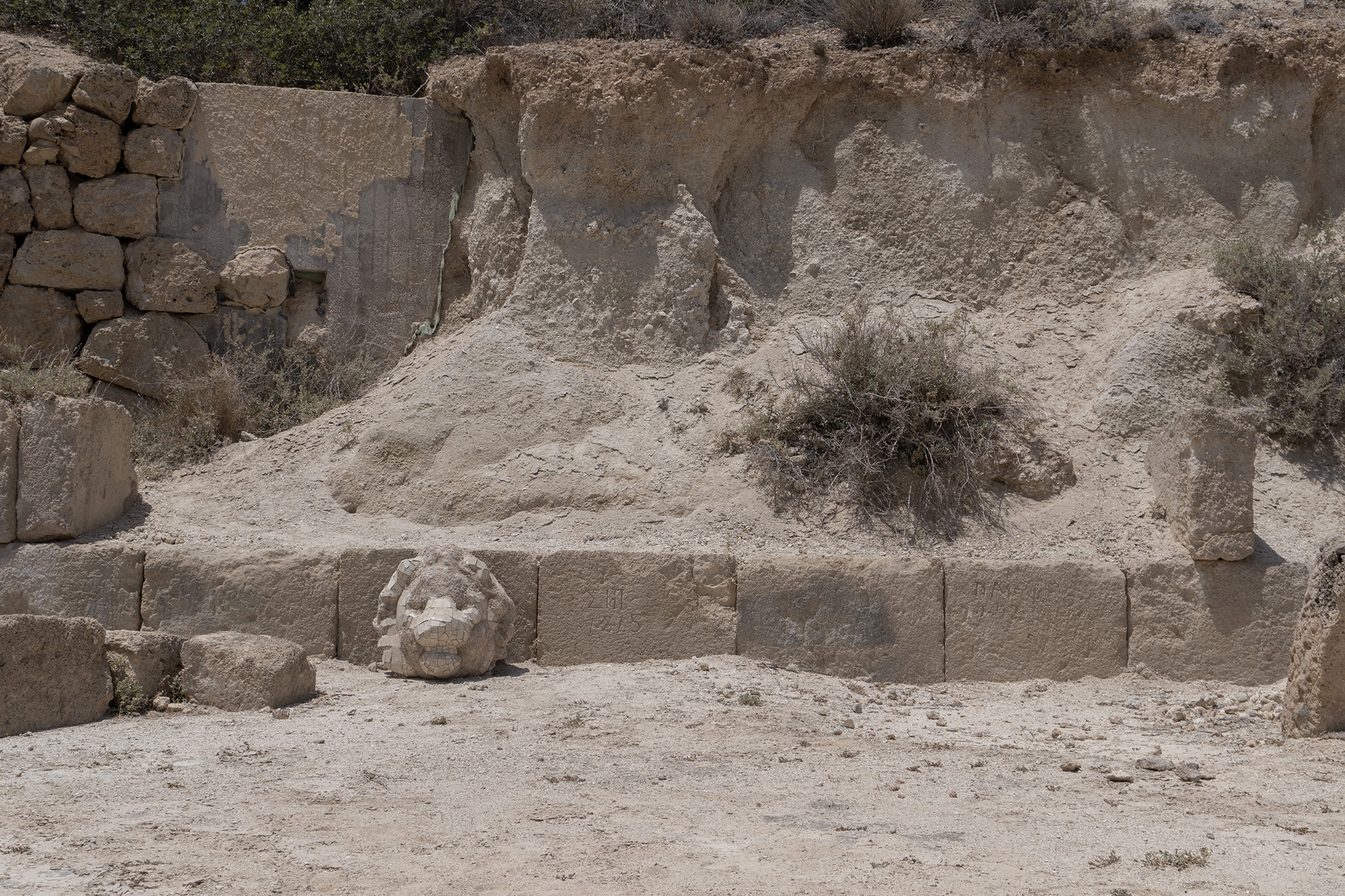
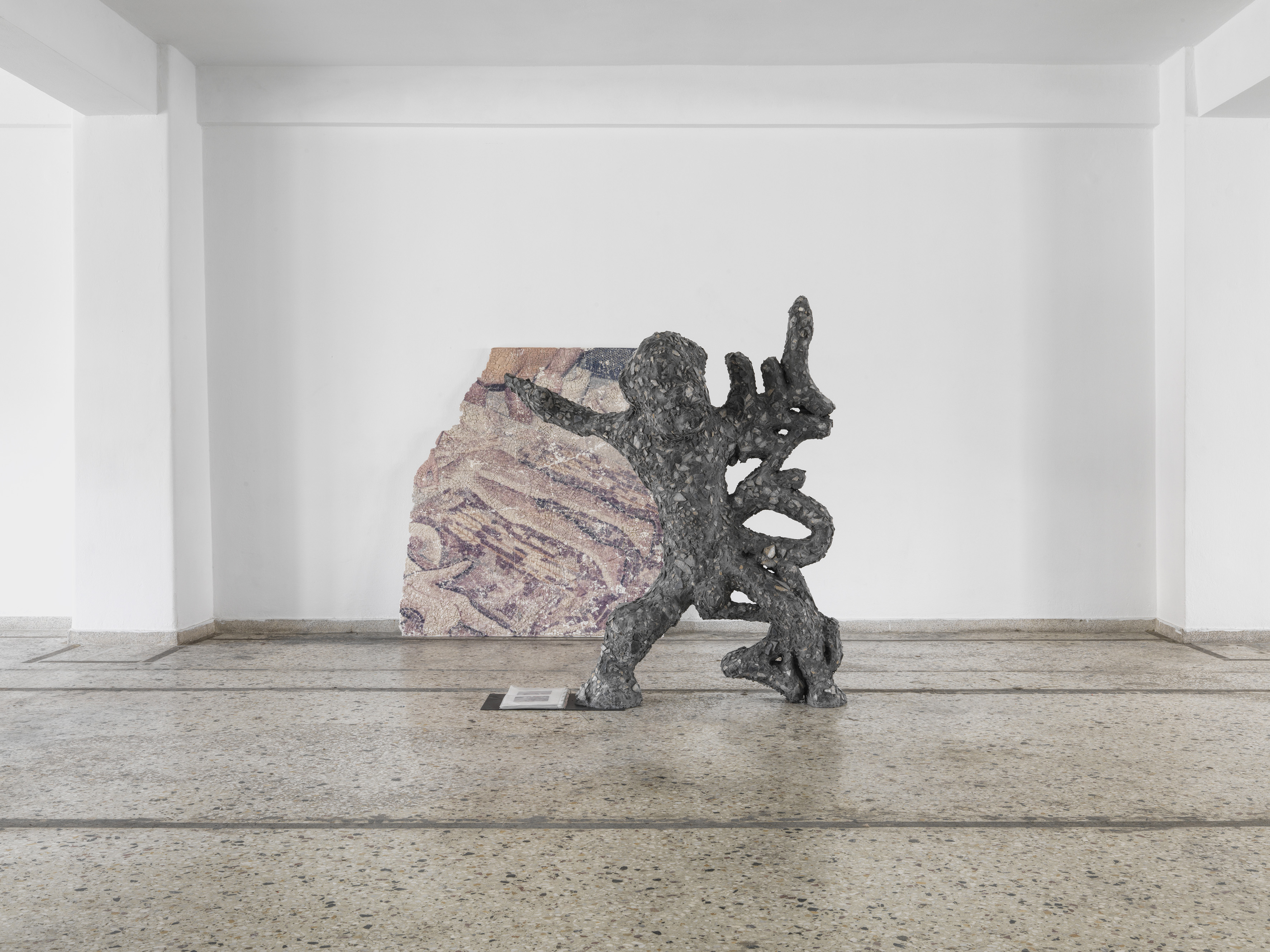
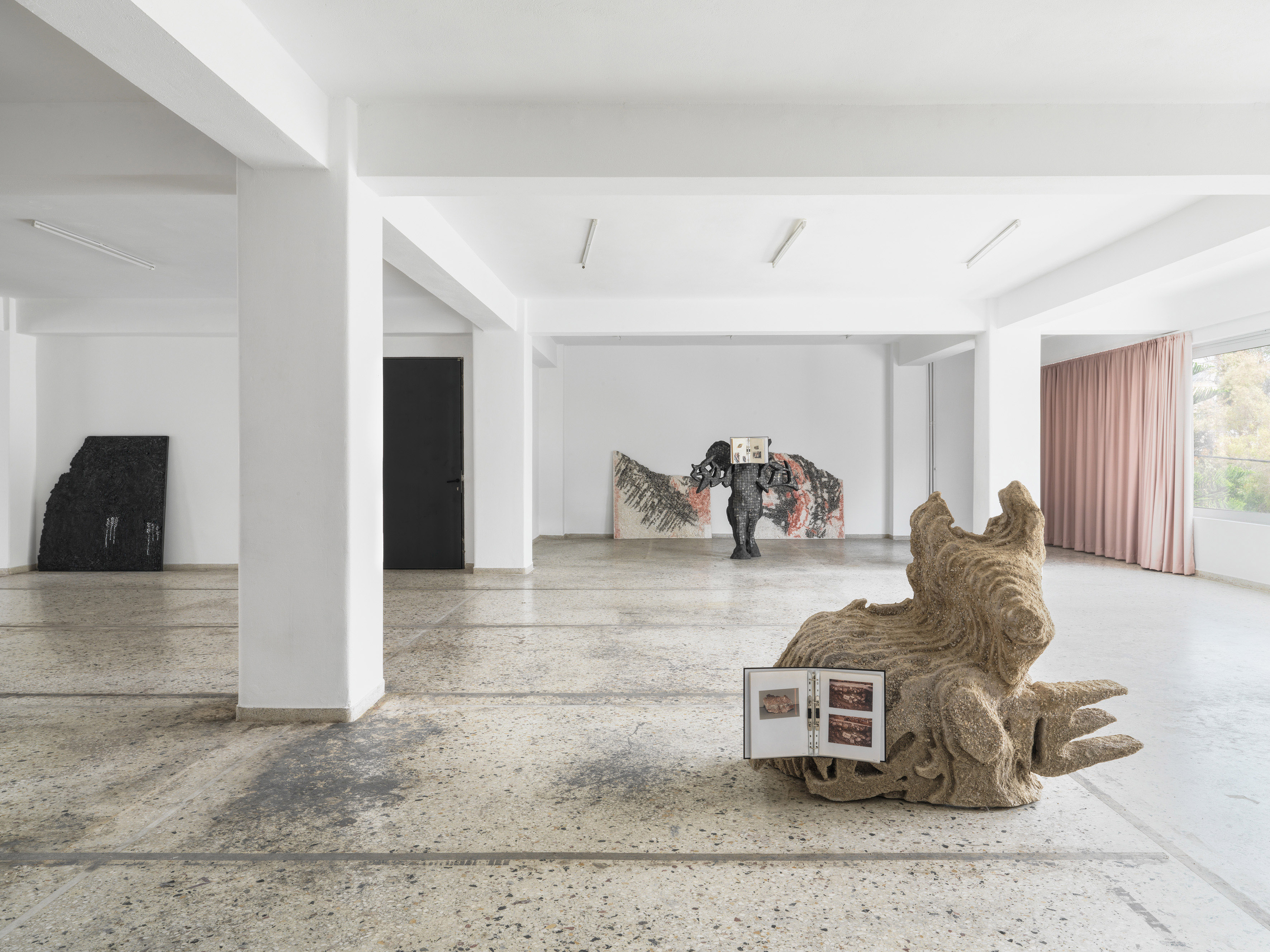
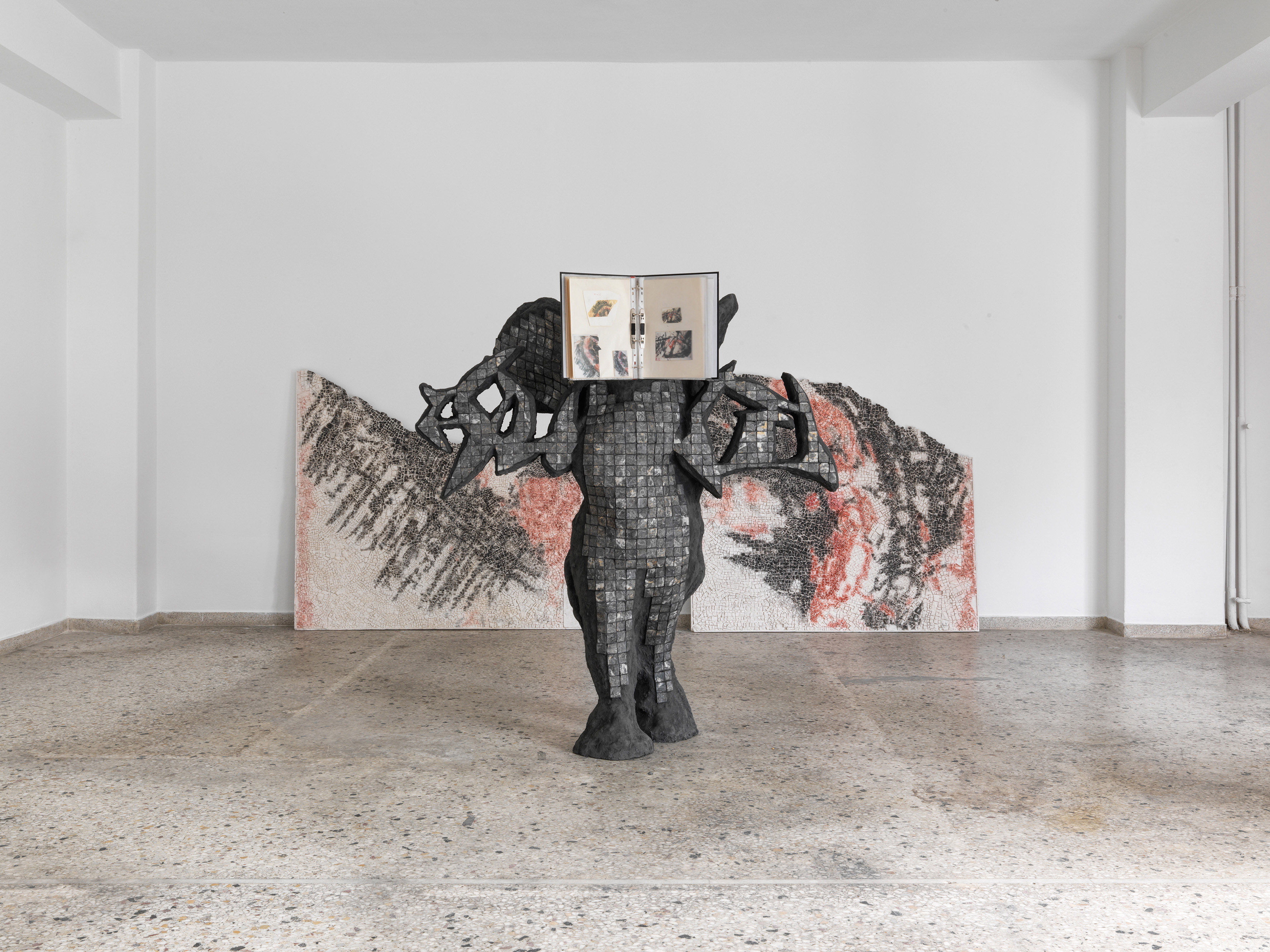
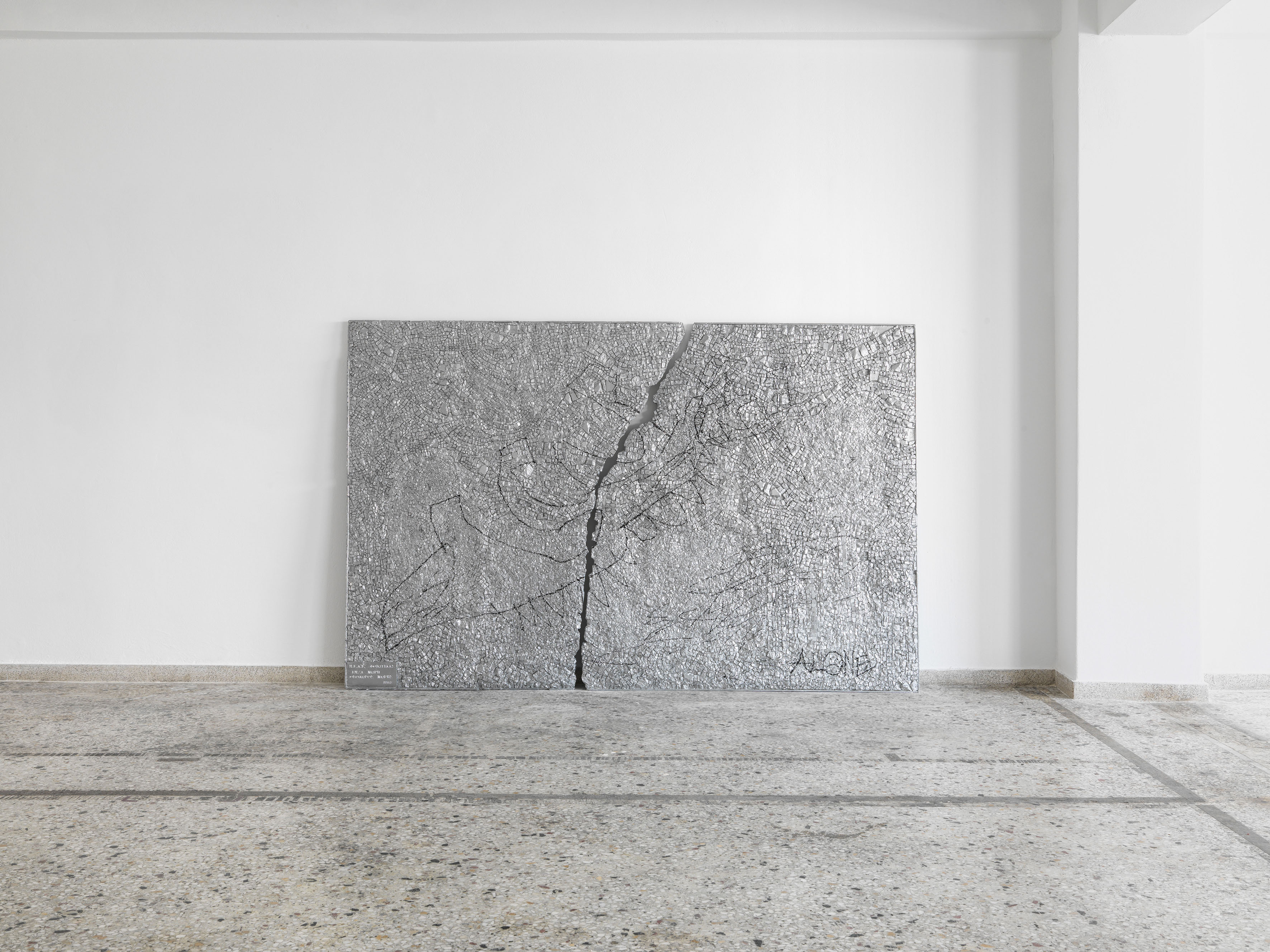
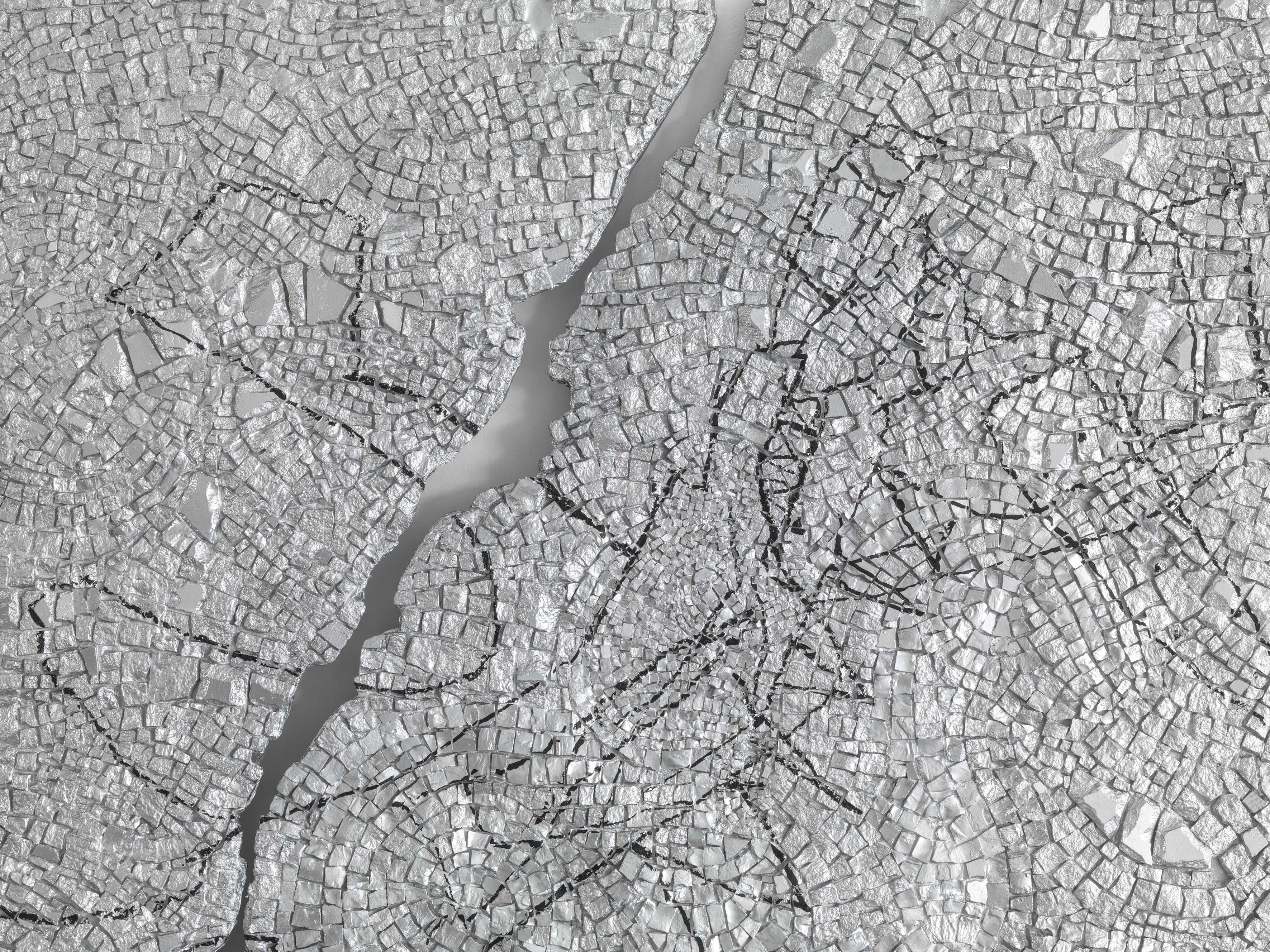
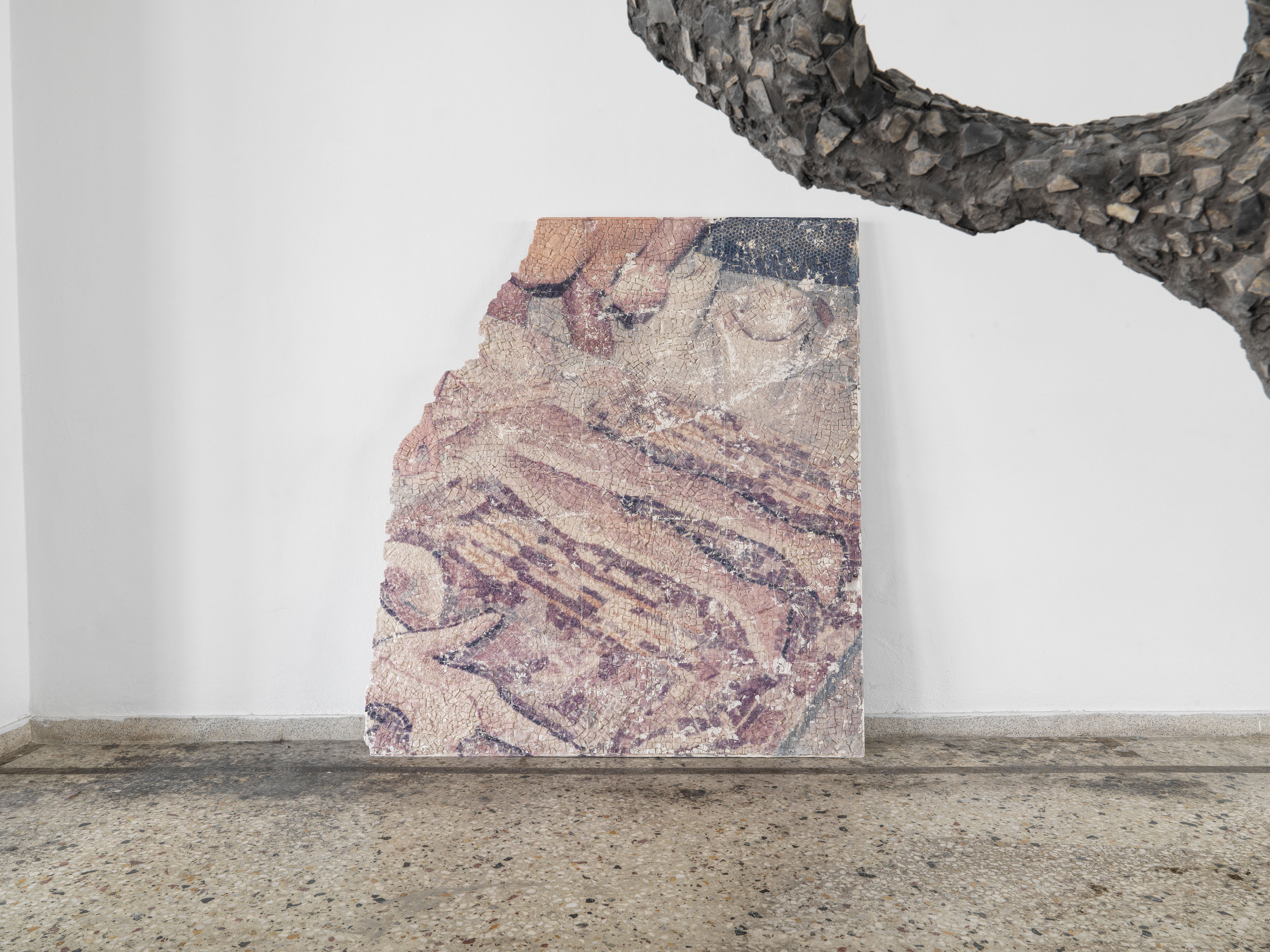
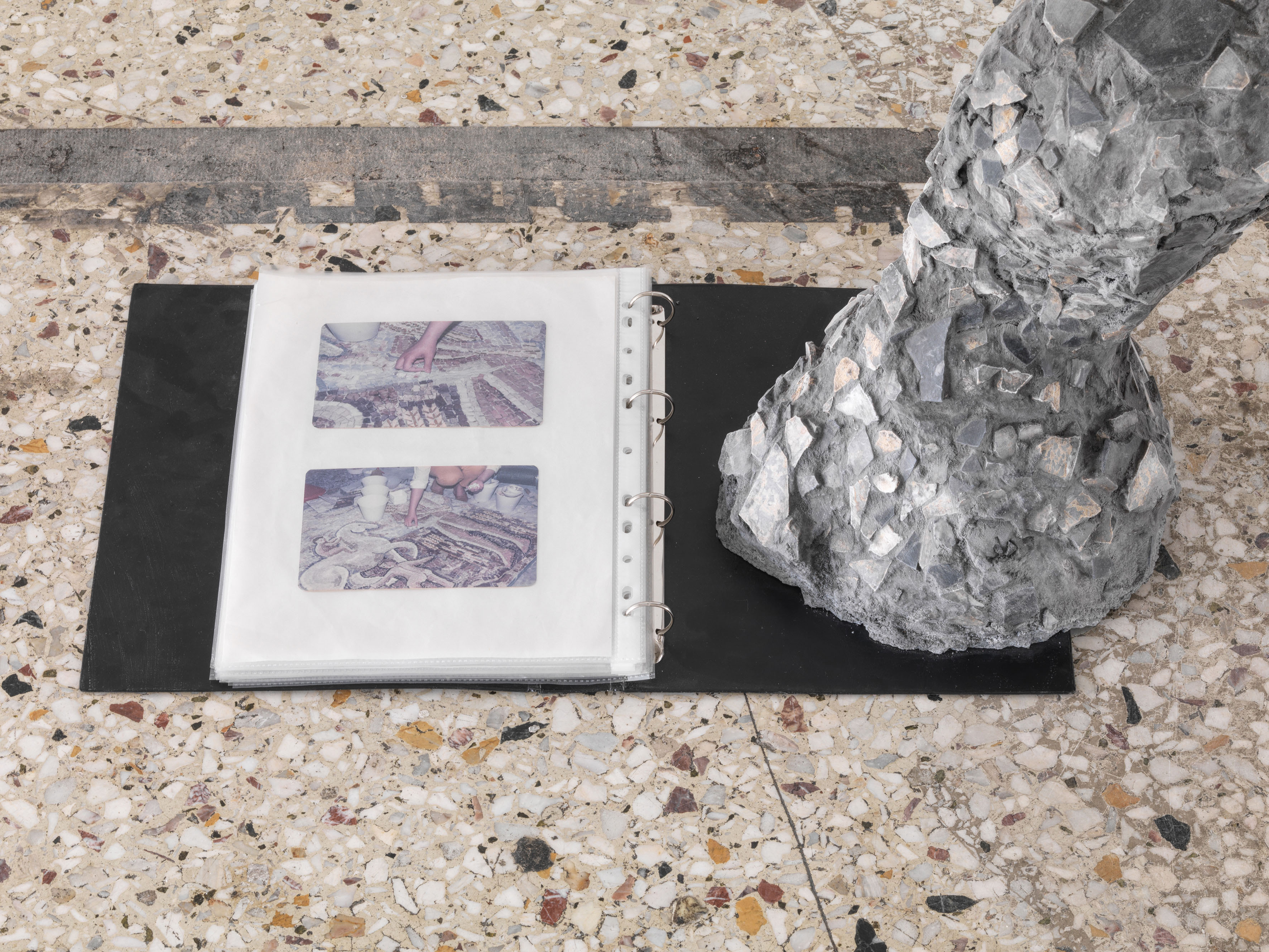
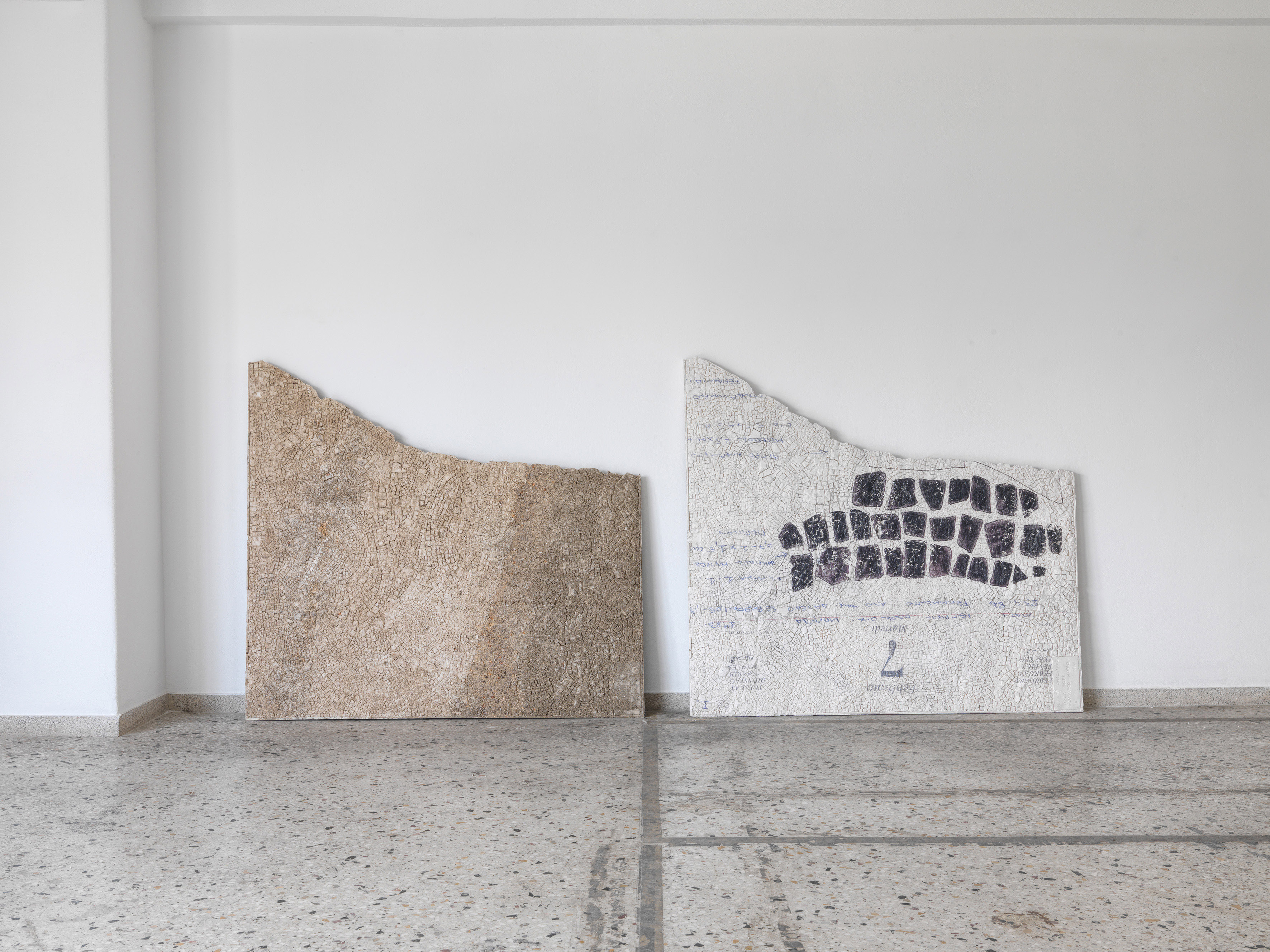
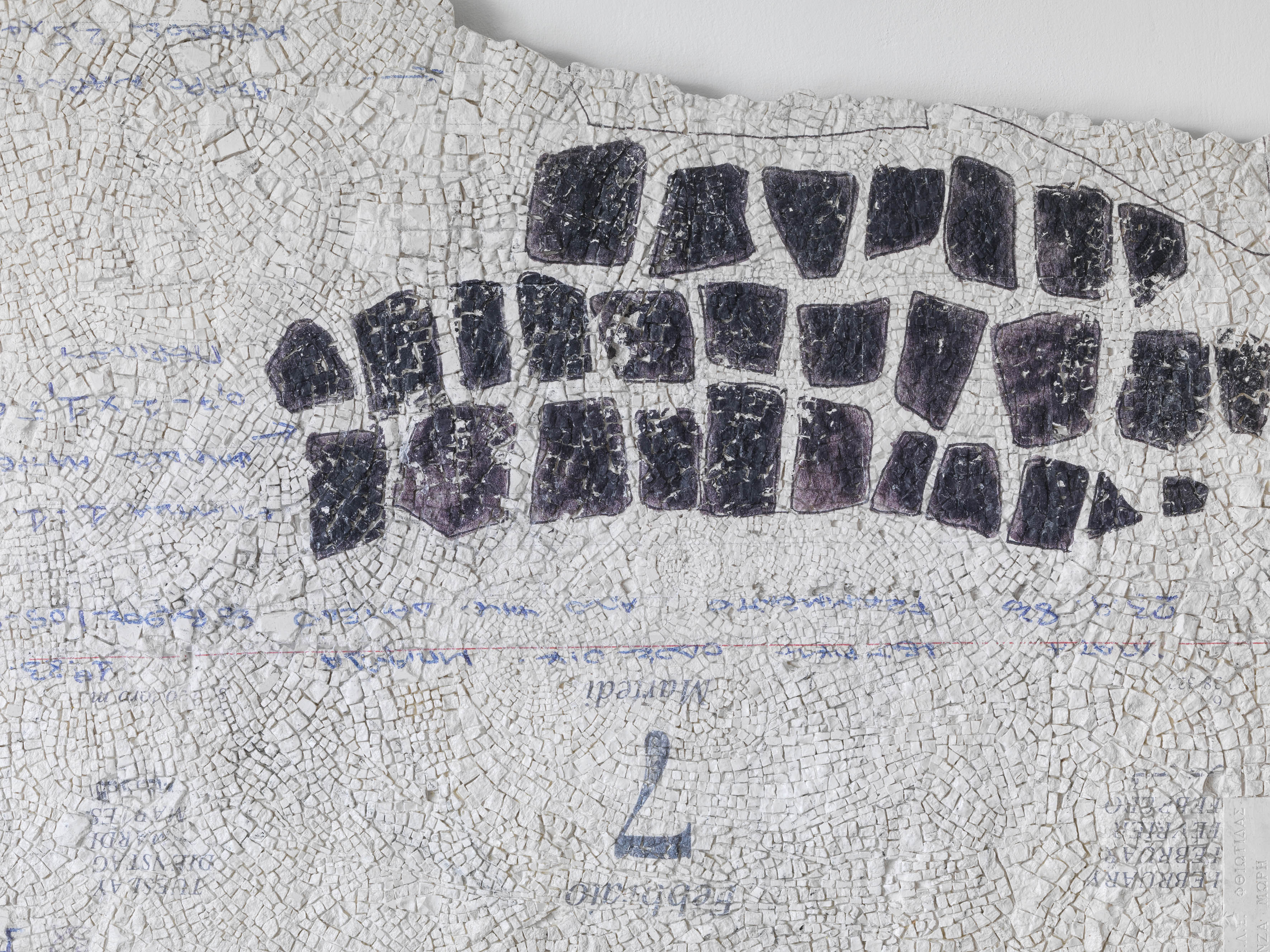
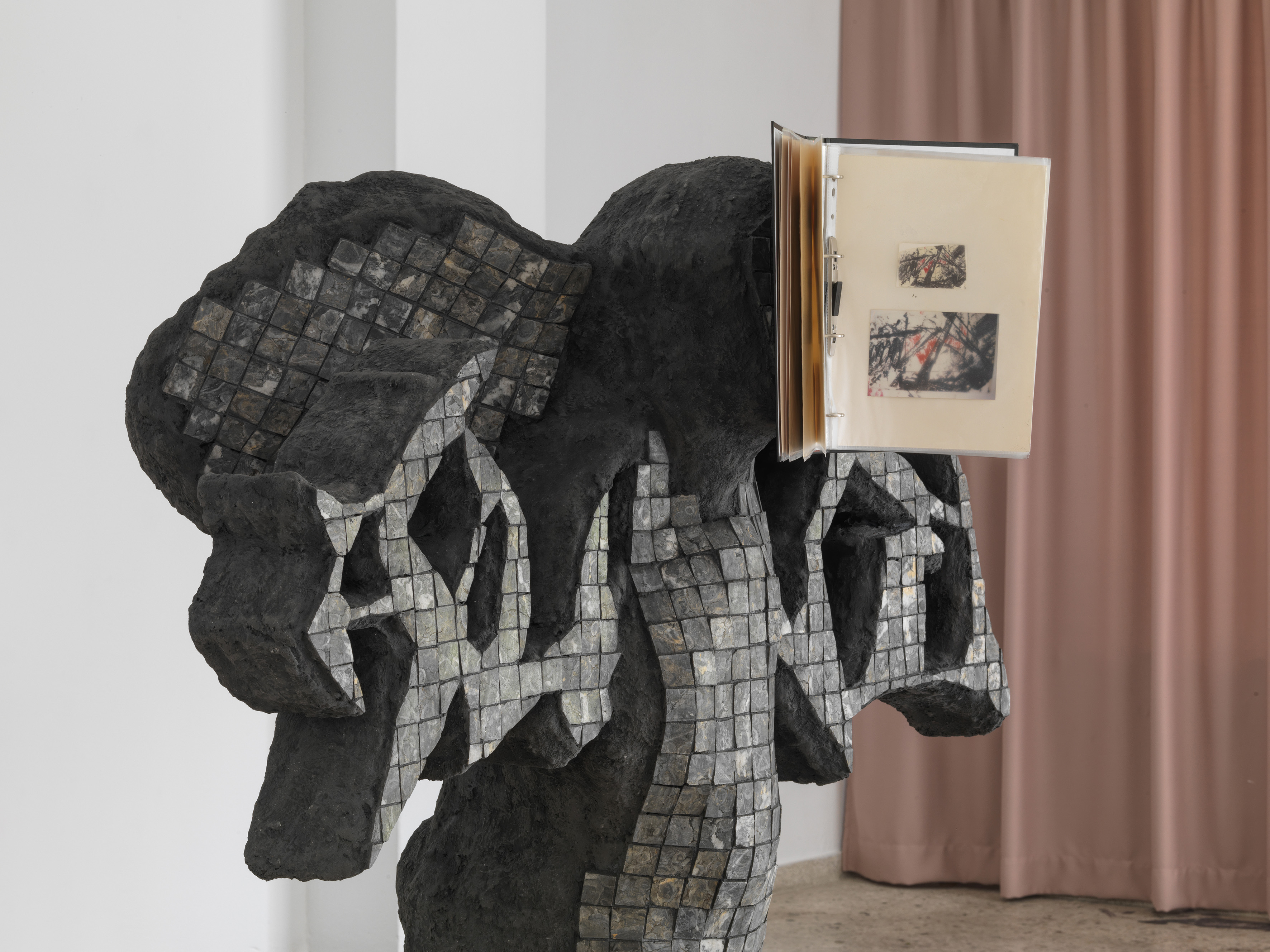
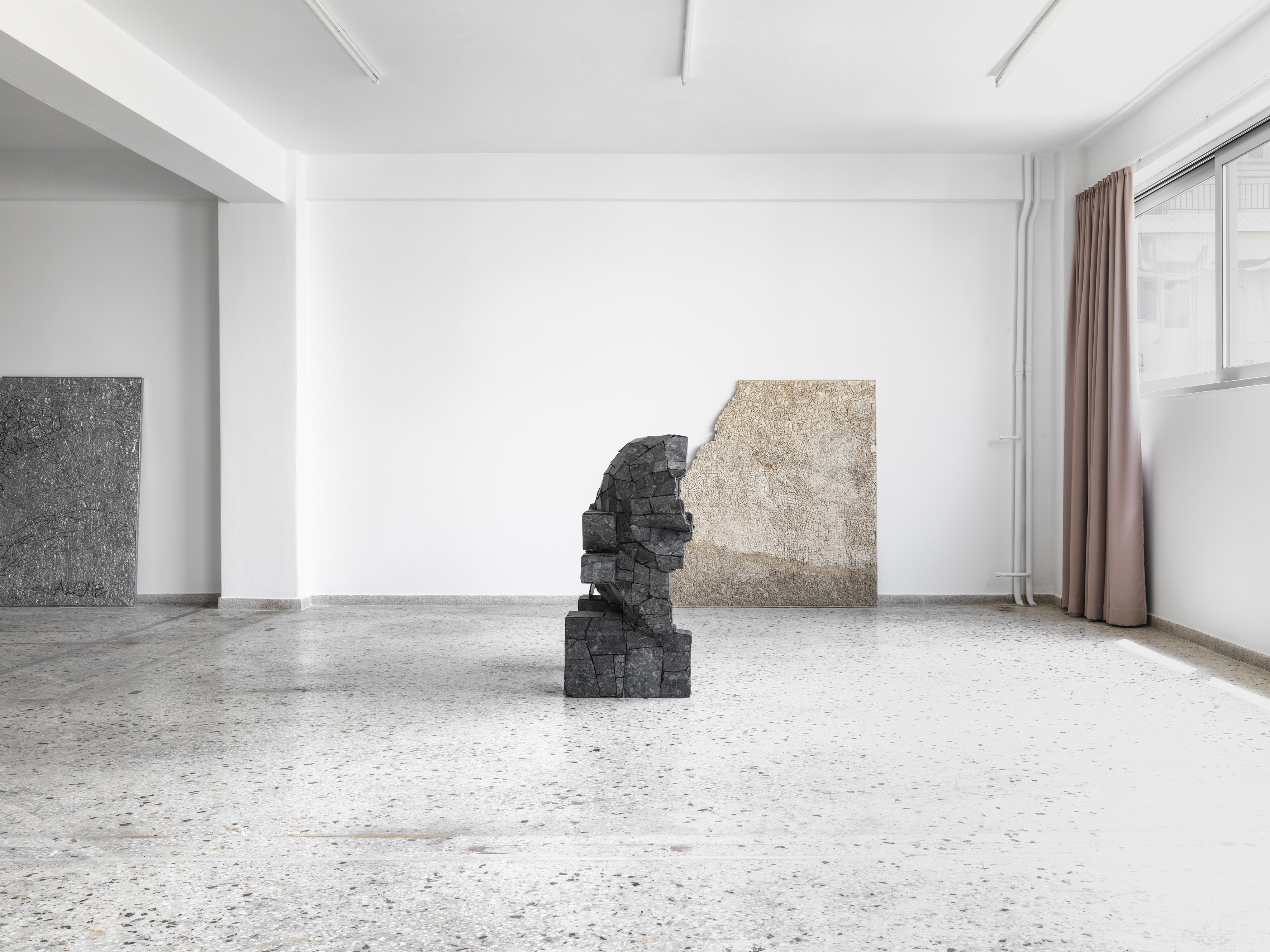
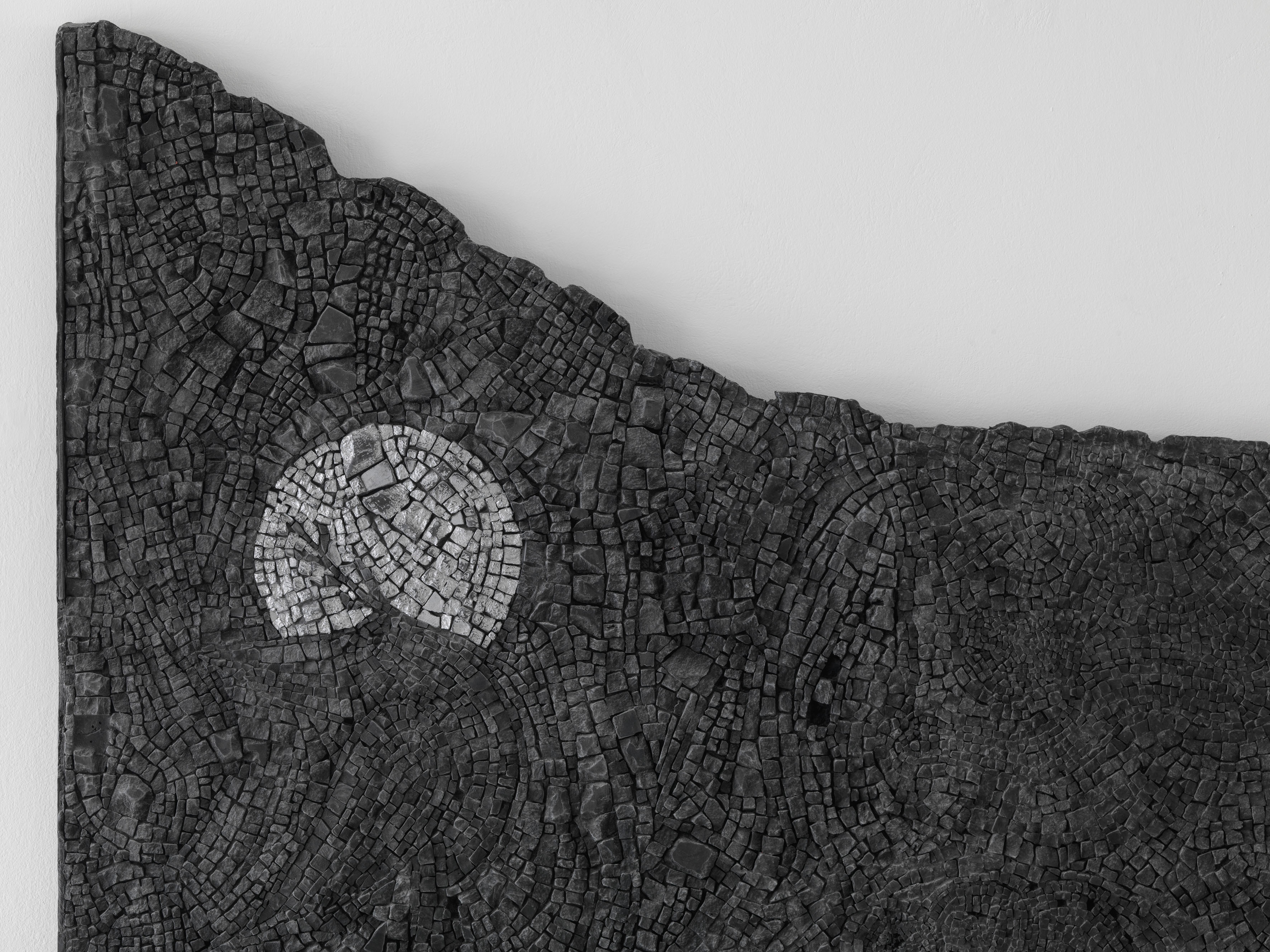
ALONE presents a series of ten sculptures which form part of an origin story. In an abandoned urban playground in Lamia, Petros Moris’ hometown, a mosaic work crafted by his parents caught his interest once tagged by a local graffiti artist with the word: Alone. Moris extracted this ‘ready-made’ from public space, fascinated by the complexity of its inadvertently communal workmanship, labour and authorship. Through the anonymous gesture of tagging and Moris’ own appropriation, the mosaic transforms into what the artist calls an ‘assembled cultural artefact’.
ALONE is then a parable on provenance, asking what matter are we made of? Who shapes our identities? What flows and fluxes of information do we contain? Which soil, earth, urban detritus are we derived from? Biography may be reductive, but to what extent? ALONE posits itself as an open-ended query, born from a hesitancy regarding how much of one’s work should or could be a revelation of self, demonstrative of the demons of childhood, the fault lines of our past. Physical presence, whether human, geological or urban, internalised here as fractured and broken, is presented, perhaps misunderstood yet always tangible in its multilayered complexity.
One speaks a word: I.
Out of this stream
the great forms..[1]
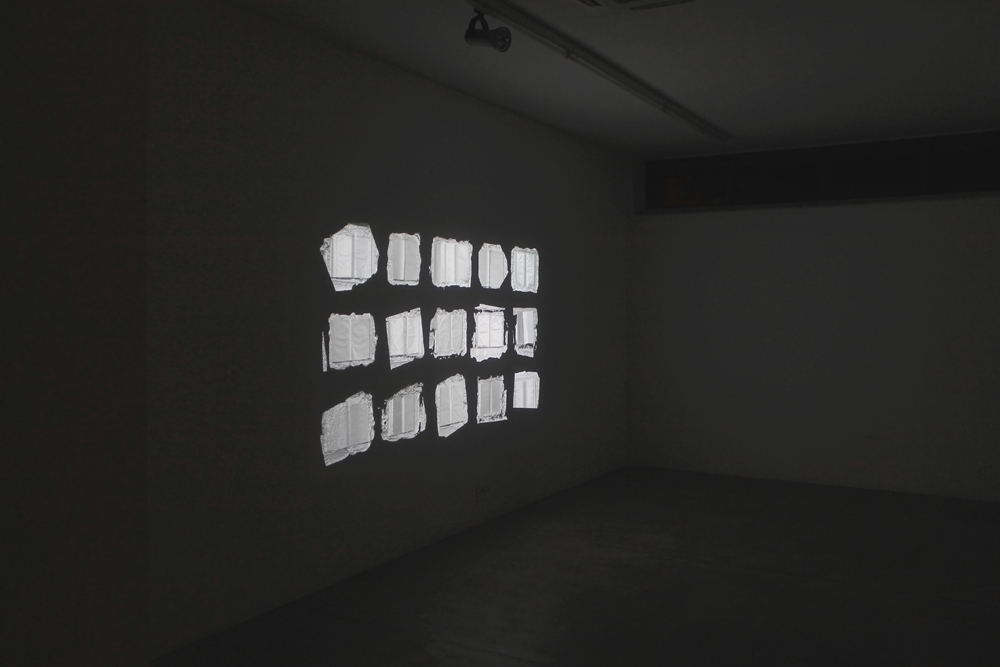
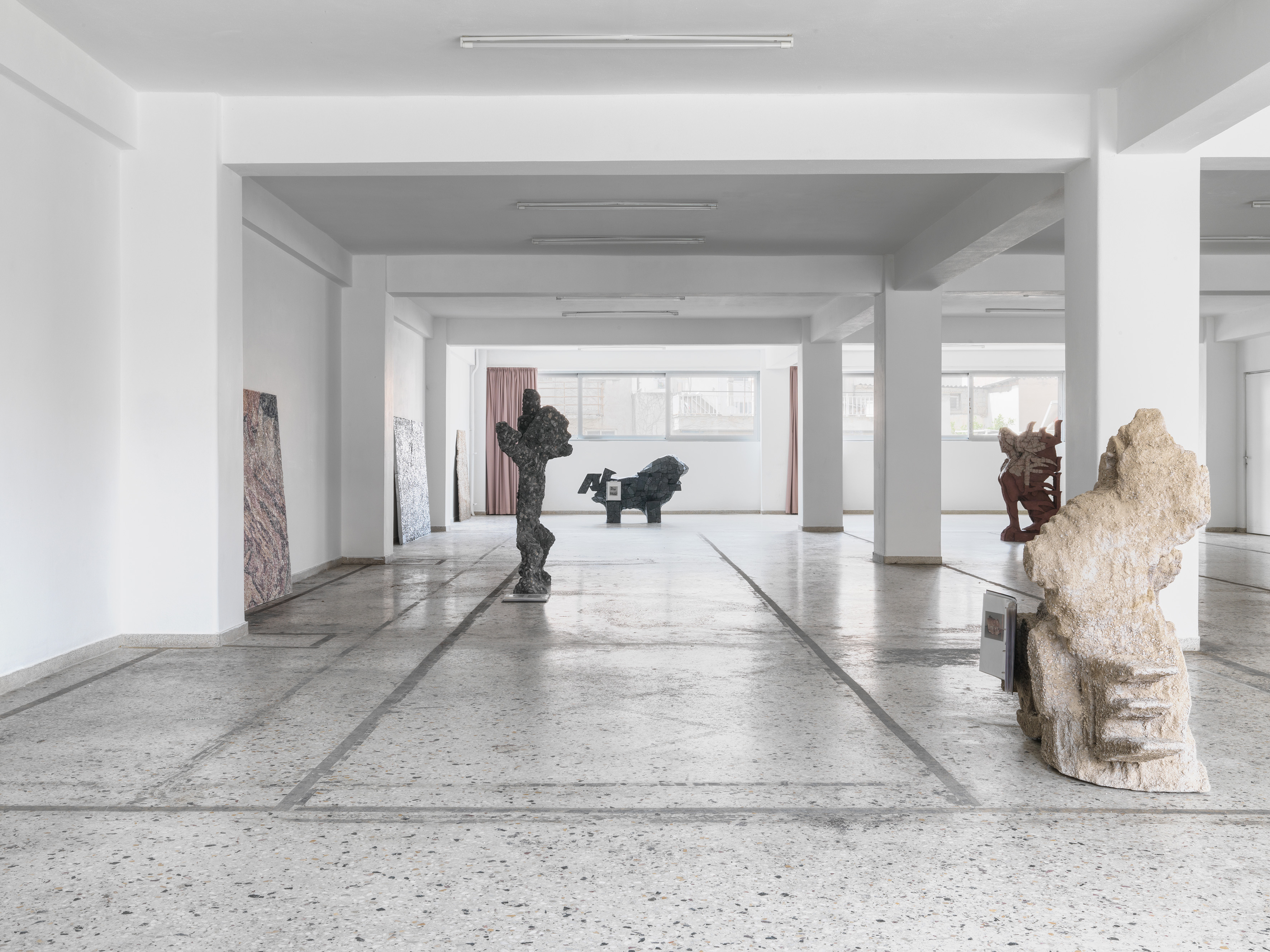
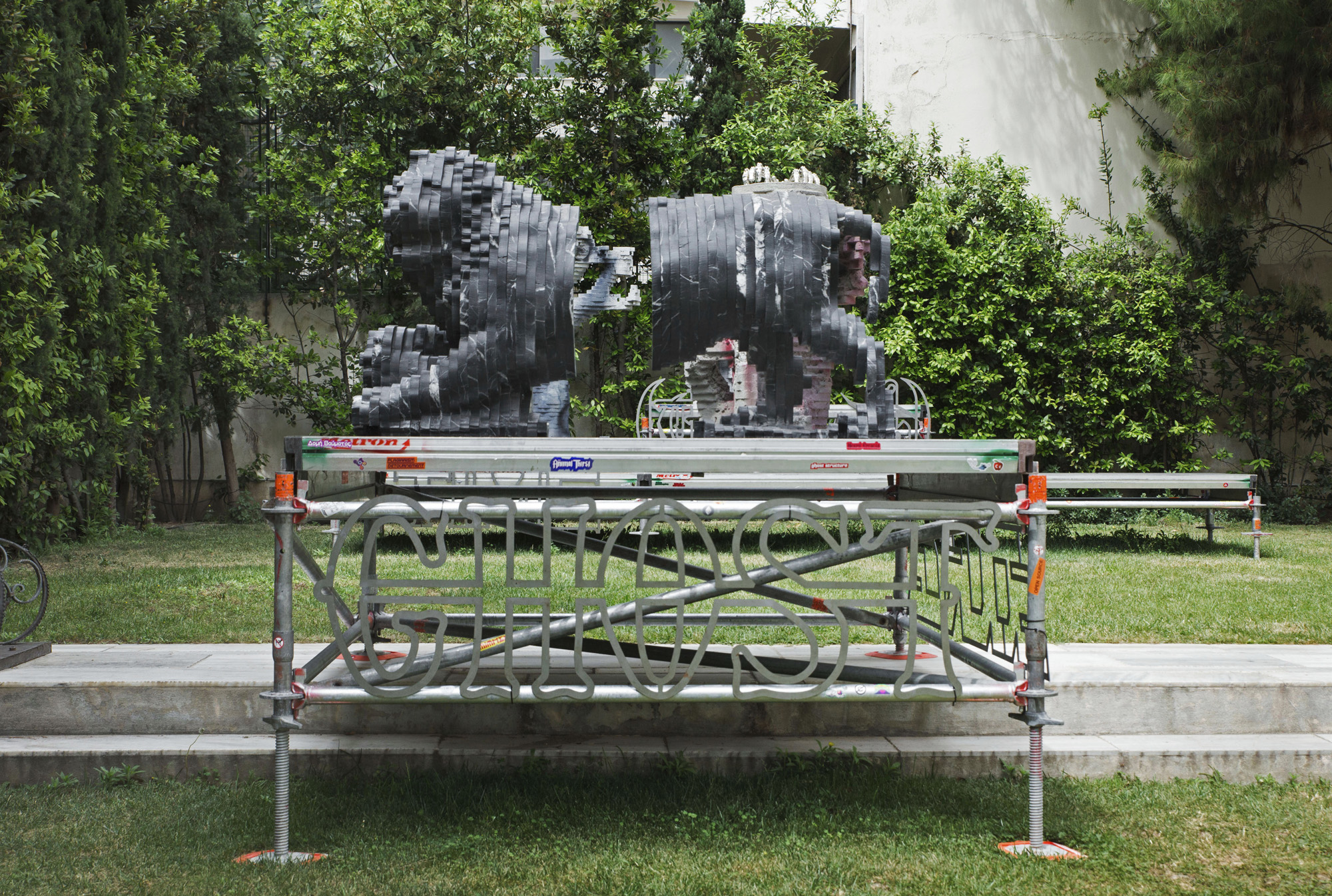
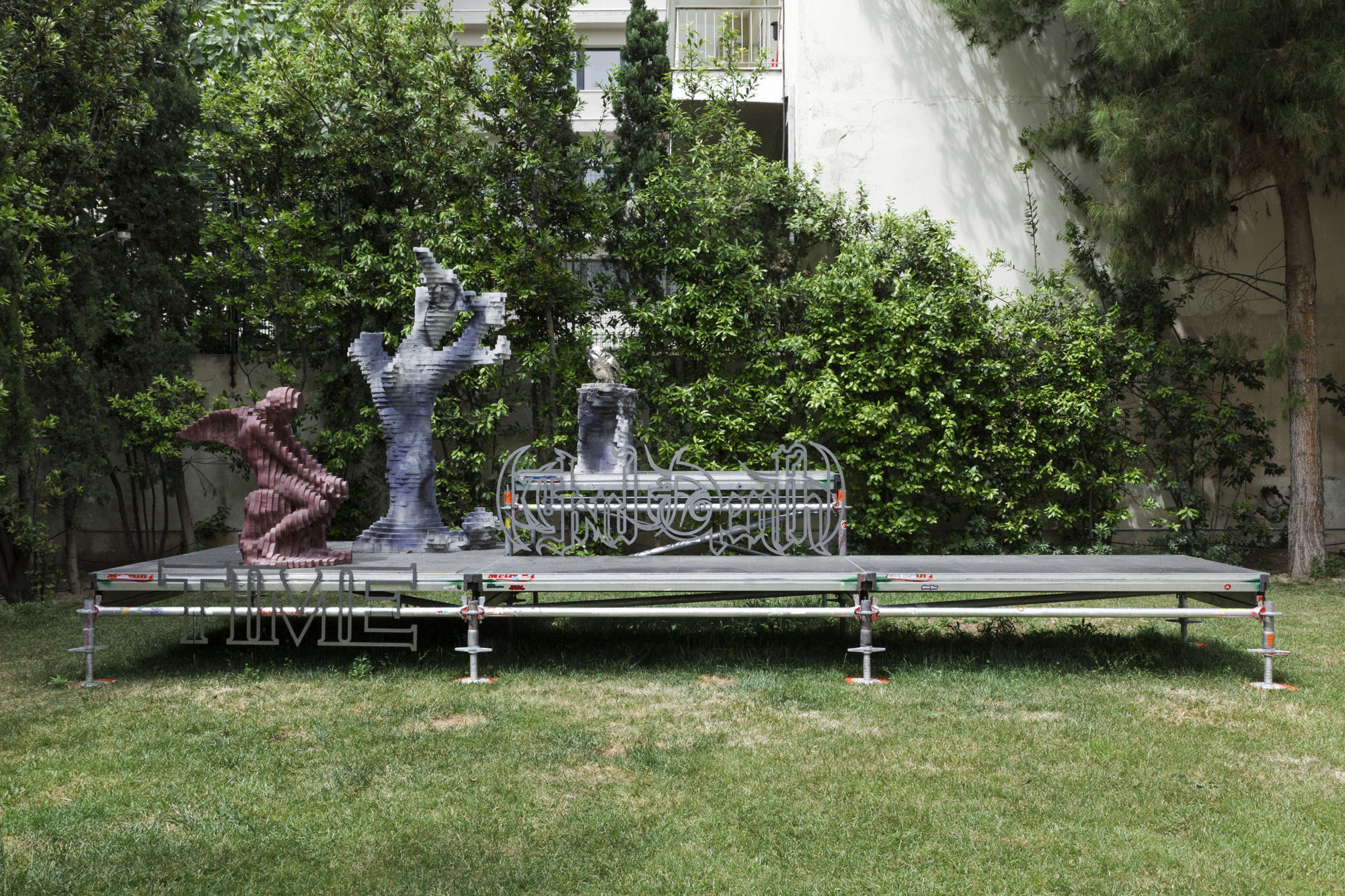
Compressed in the eerie post-human sculptures and ghost-like mosaic slabs (cast from the original found mosaic) inhabiting TAVROS for a few months are the complex wirings of Moris’ circuitous thinking about scale, entropy, the geological and the urban. The importance of scale implicit in mosaic-making is ever-present, from the abstract non-human (molecular or quantum) to the human and cultural, to the ‘sensible’, that which can be understood by humans as a representational whole. Scale also embodies genealogy: from parent to child, from past to present. In the urban entropy of the abandoned playground situated on archaeological finds, scale zooms in and out from literal to cosmological, resonating the camera eye’s constant movement from the domestic to the astrological in Powers of Ten.[2]
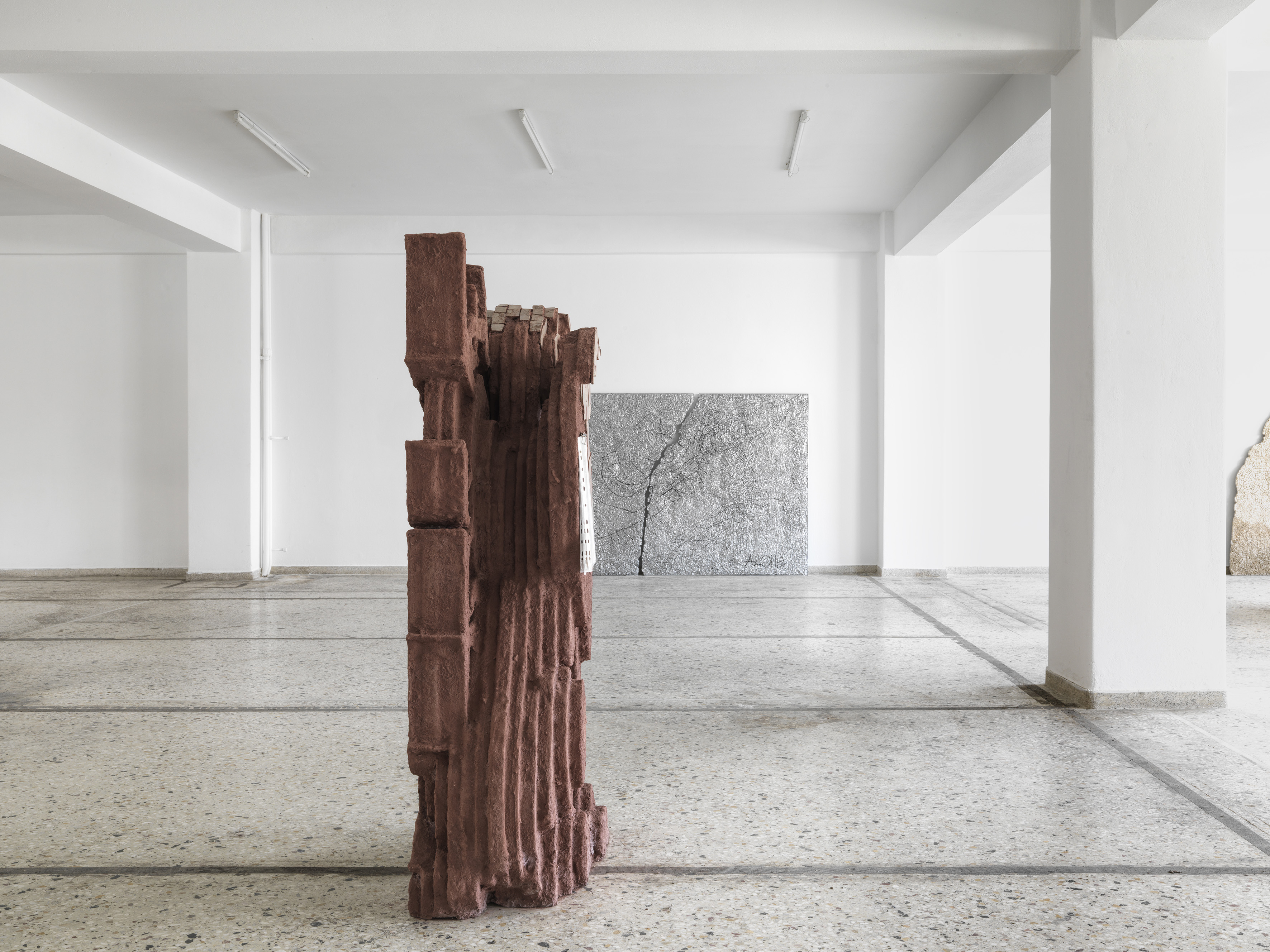
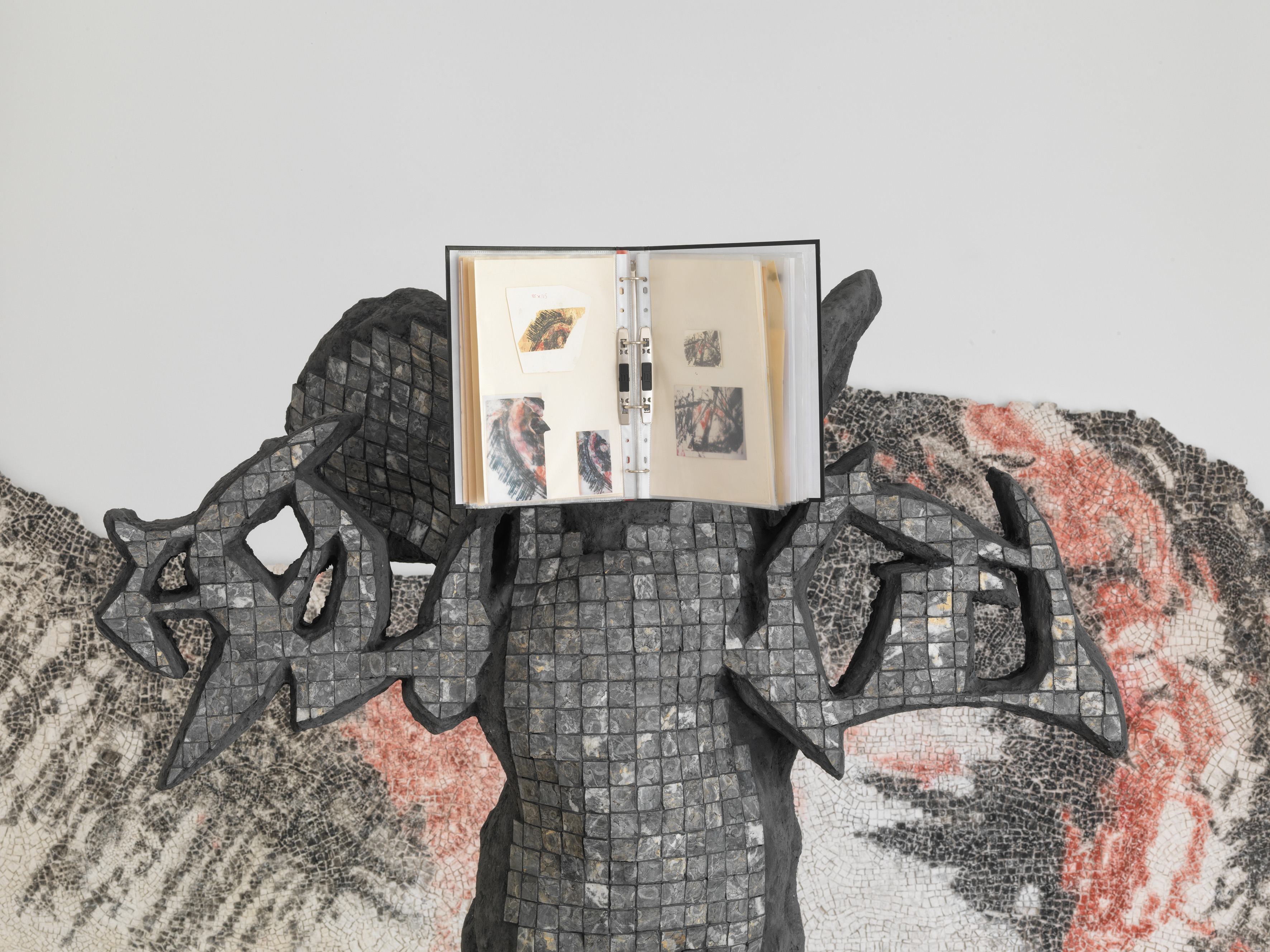
And then, there are the creatures: riffing off the sculptural presence of ancient toys or votive offerings found in nearby graves (of the kind Moris assumes could have been found in the abandoned playground). Moris lowers the definition of the original references and meta-morphs them into physical space, scaled up into impressive haptic and spatial objects via the processes of digital fabrication and traditional sculpting techniques. The toys, as ancient cultural artefacts, are transformed via technological mediation back into cultural objects of an altogether other order: ghoulish creatures, half playthings, half haunting species from the underworld. These epic, sacred, mythological hybrid characters, sublimated from ancient games to contemporary works, function both as sculptural continuities and as material ruptures. How much do these works differ from his parents’ mosaics? How much of the personal or social, historical, technological is condensed into their materiality? Moris, in this strange parade of unworldly beings, claims ambivalence, discomfort even, with what they imply and reveal. Do these creatures concede too much? Are they a warning of what is to come?
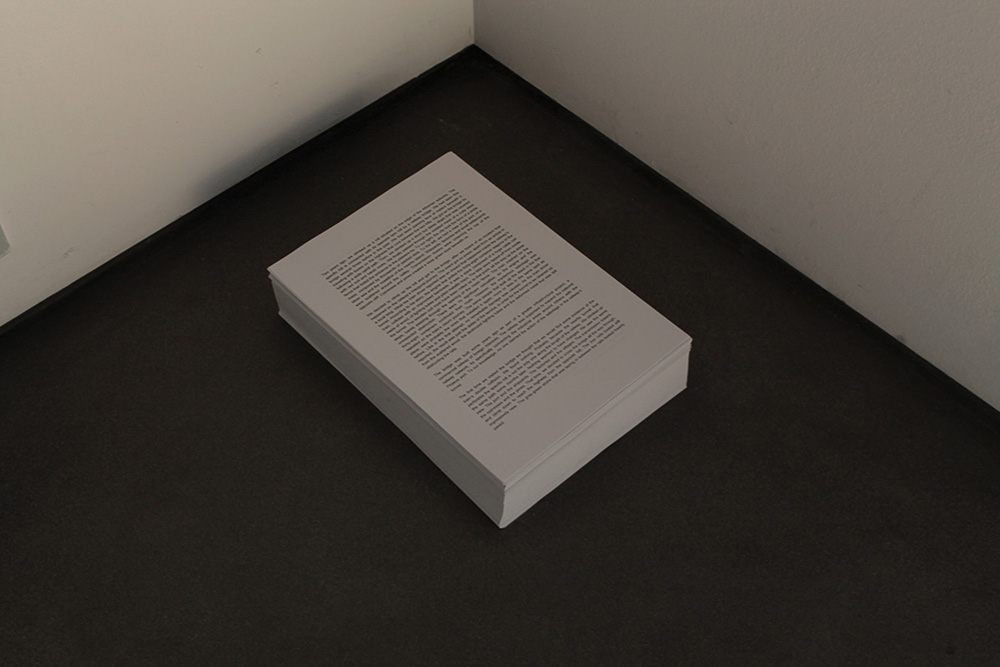
As an extension of his sculptural offerings, Moris includes for the first time, a text as an integral part of the exhibition format: a torrent of words, alluding to his labyrinthine philosophical and psychoanalytical readings, forming an essay of sorts that hovers between personal annotations and magical thinking. Deliberations here are dense as matter.
Language urgent, material calcified, and flesh immortal, all grounded in earth.
ALONE marks the third in a series of exhibitions at TAVROS this year, dedicated to thinking about our interconnectedness with earth, soil, and the subterranean.
Maria-Thalia Carras
[1] Louise Glück, Faithful and Virtuous Night, Manchester: Carcanet Press, 2014, p. 31
[2] Charles Eames and Ray Eames, Powers of Ten (1977), film.
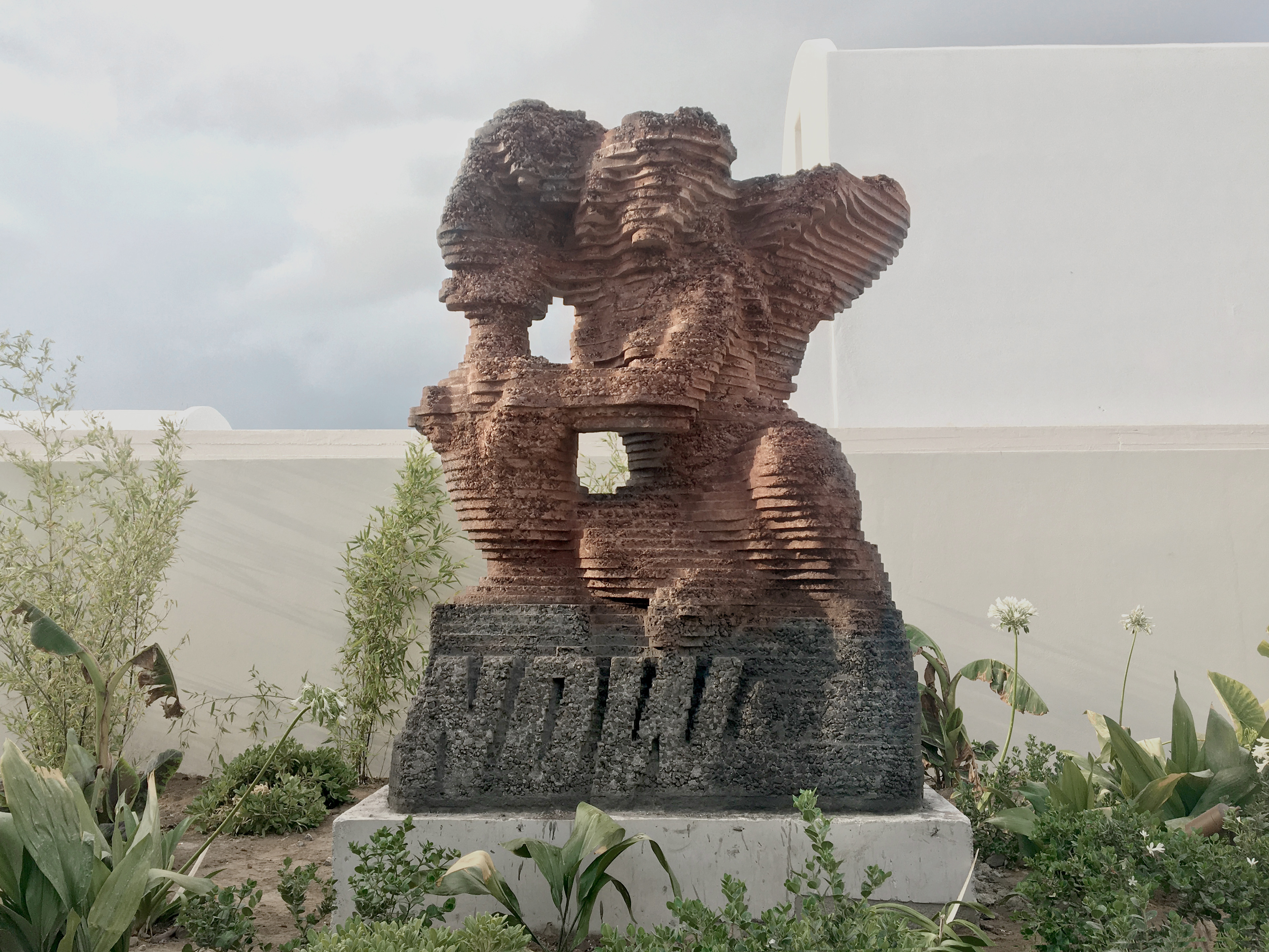
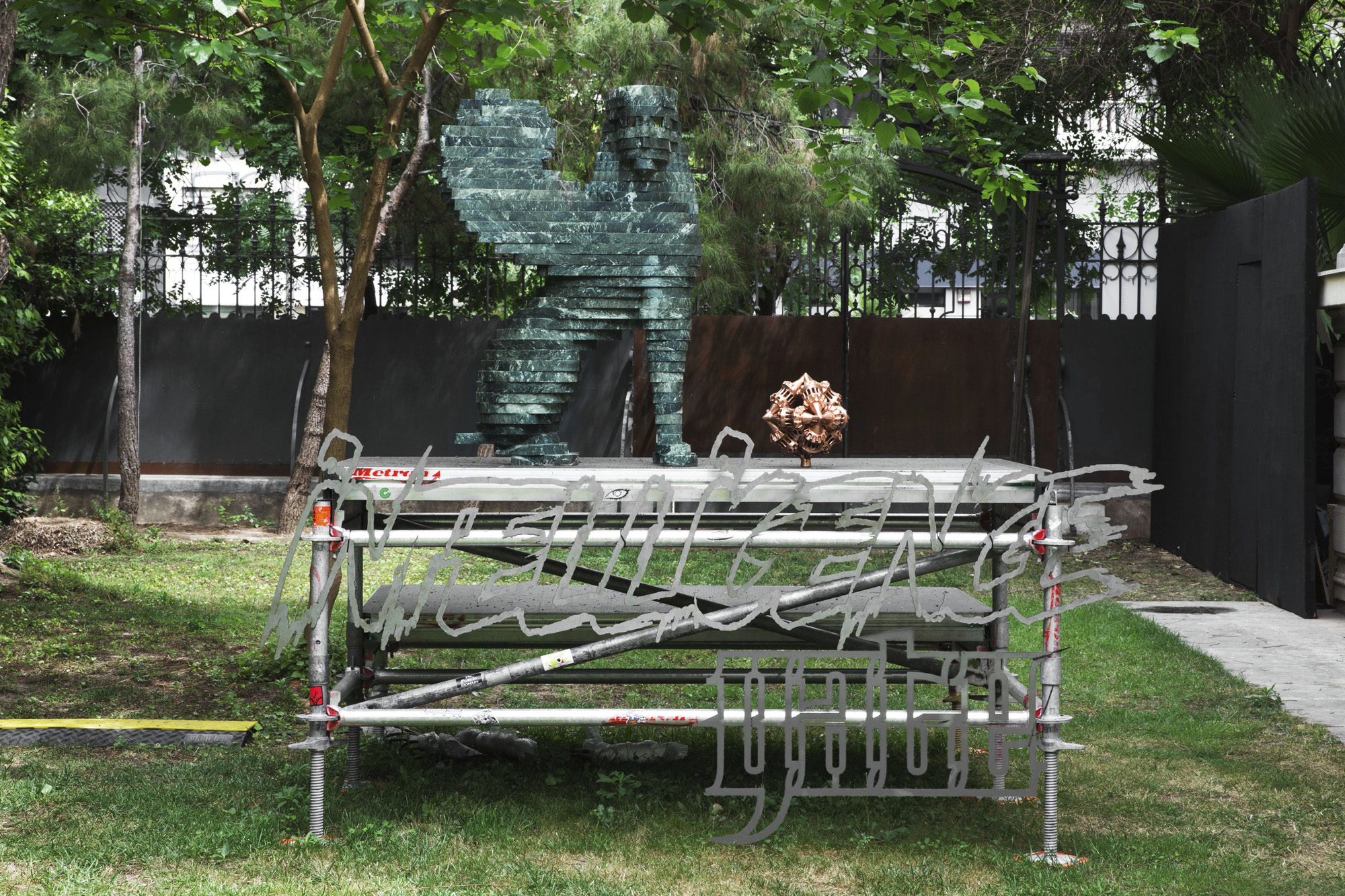
Sphinx (NOW), 2020
230 x 250 x 90 cm
Lava rock, cement mix
Sphinx (NOW) constitutes a hybrid sculptural rendering of an unfinished marble statue of a Sphinx/Arpia from the 2nd century BC, which came from Delos and is now located in the Archaeological Museum of Athens, after an idiosyncratic journey through the Cyclades islands in the early 19th century. The material of the sculpture, the mineral lava, reflects the volcanic origins of the island of Santorini, entangling geological materiality with the mythological history of the Cyclades and the contemporary technologies of archaeological visualization and post-digital production.
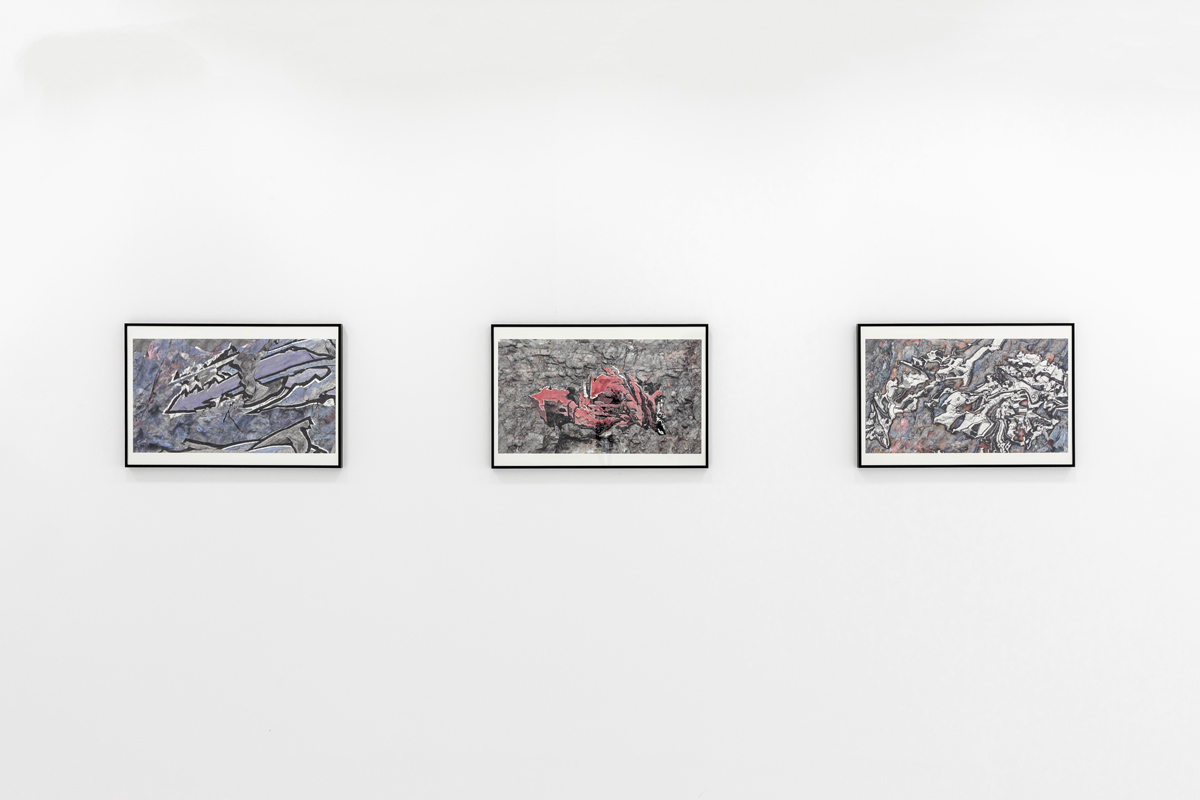
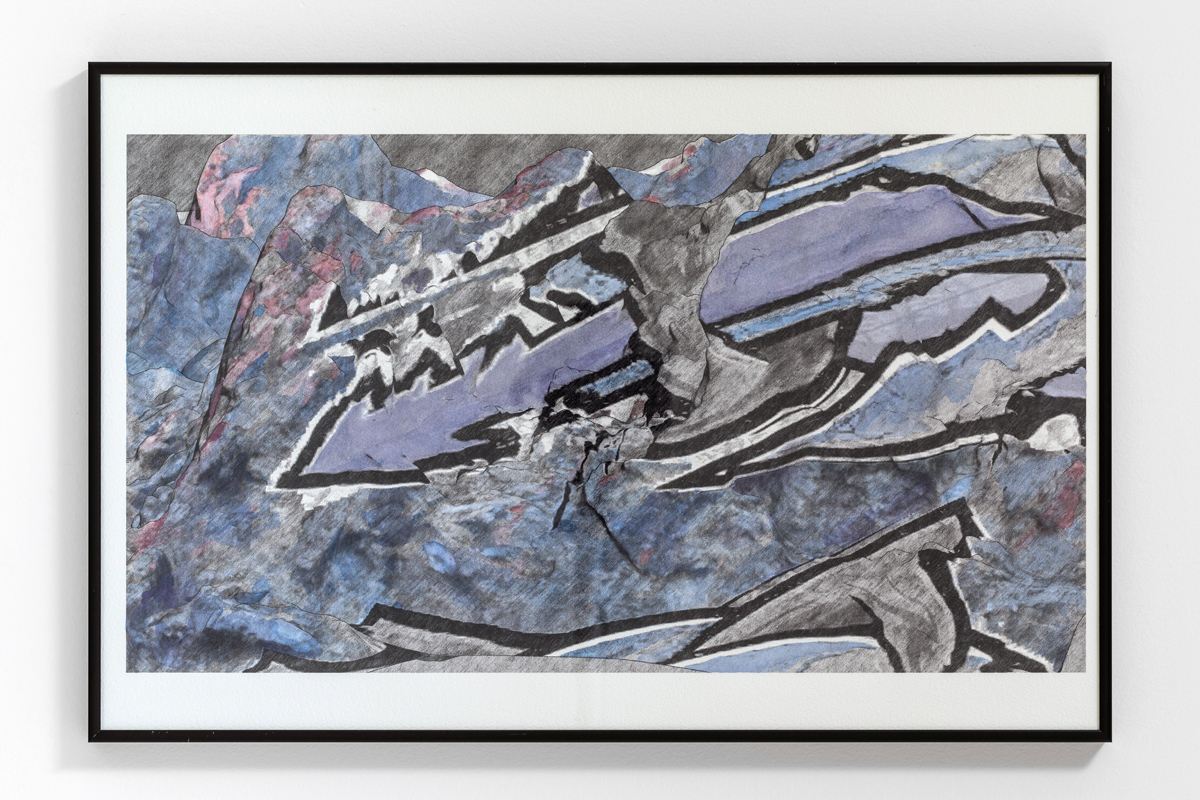
Vector 50996, 2022
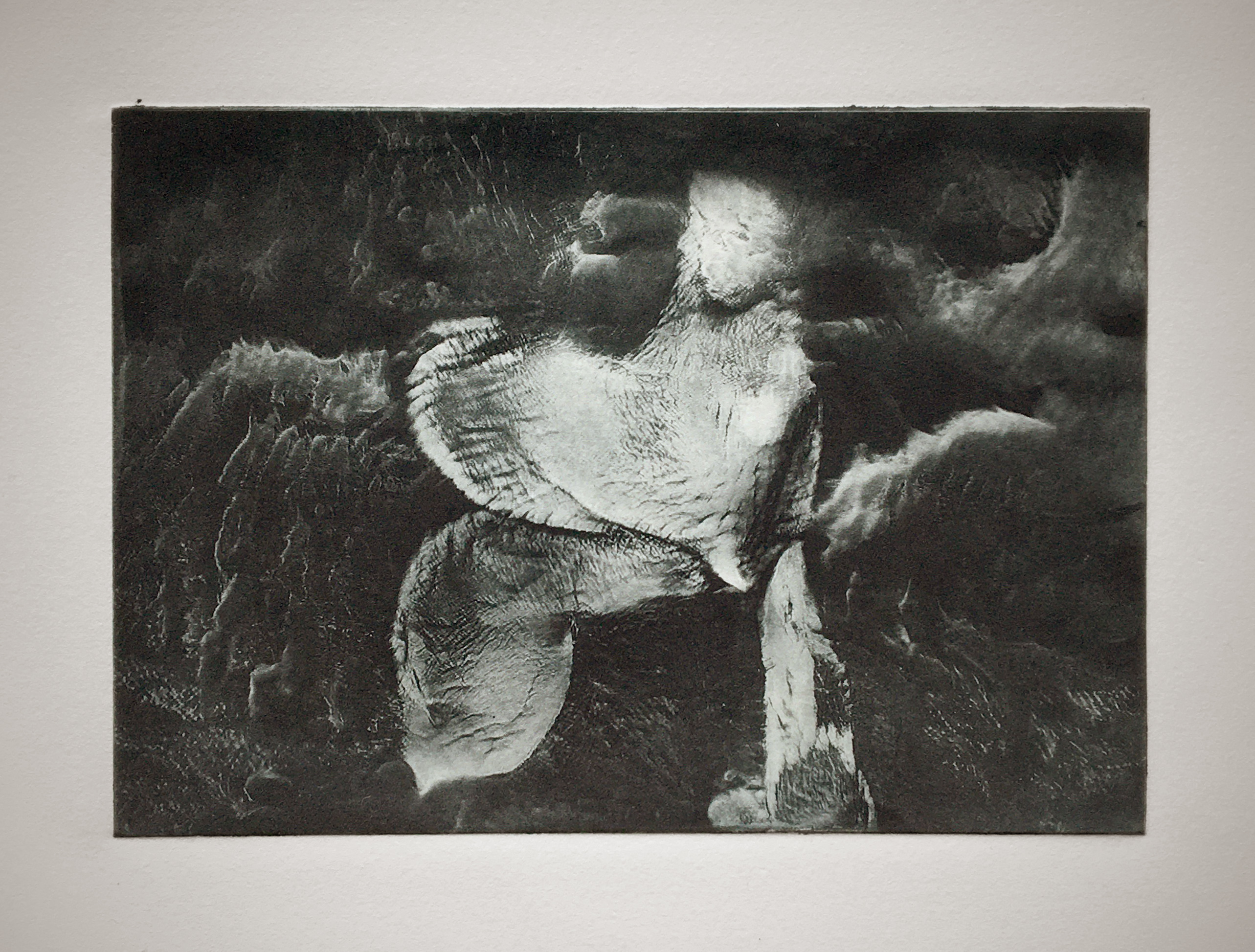
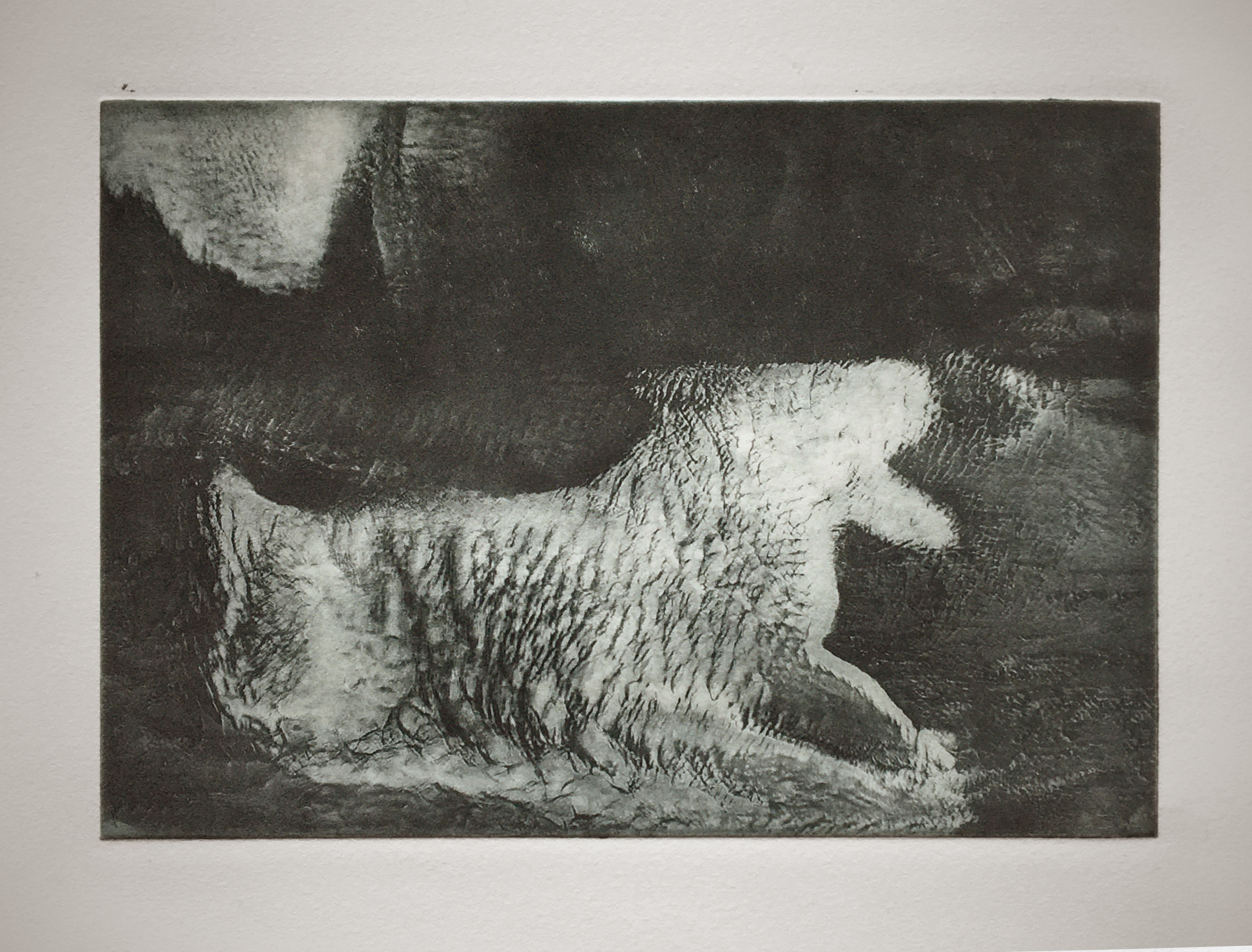
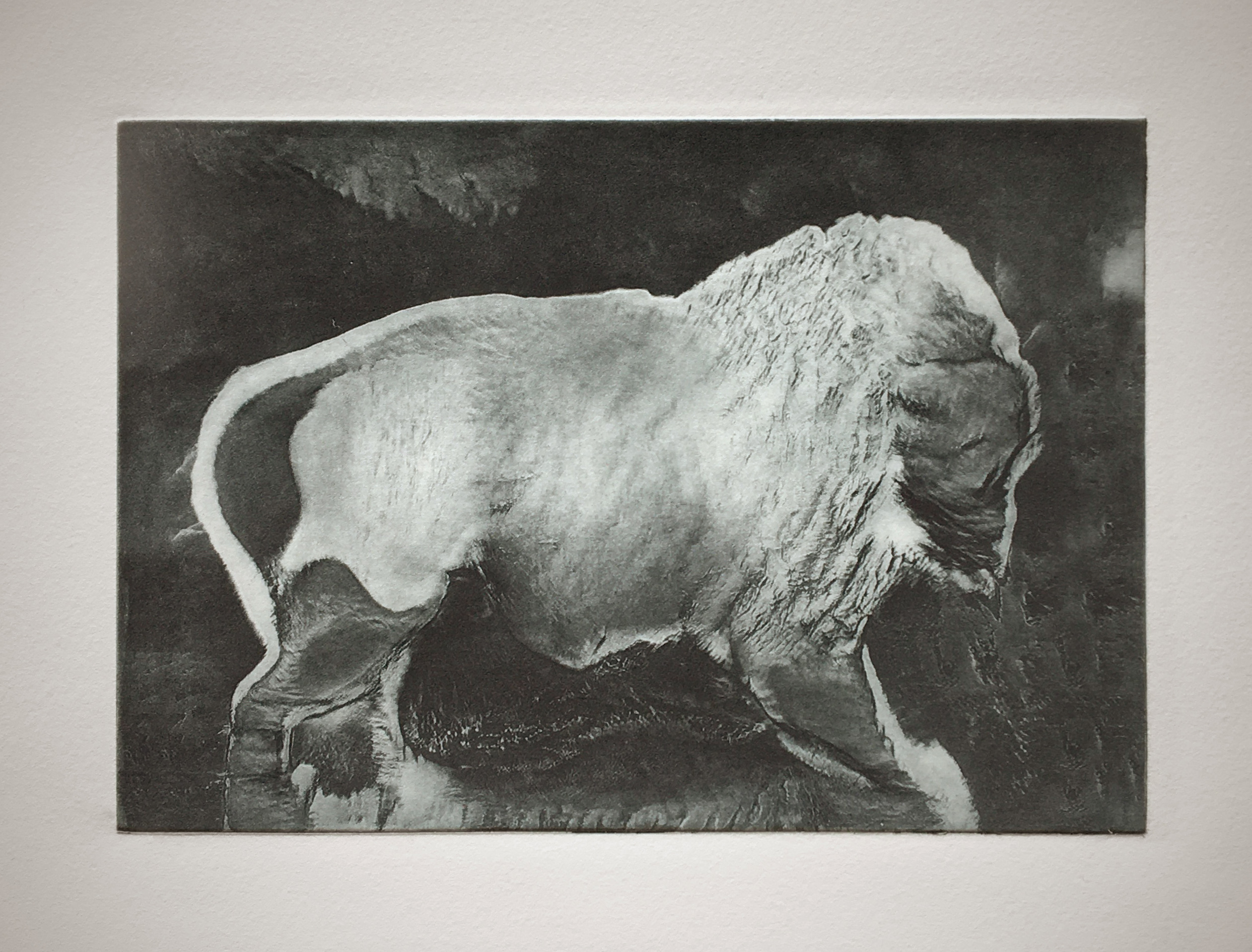
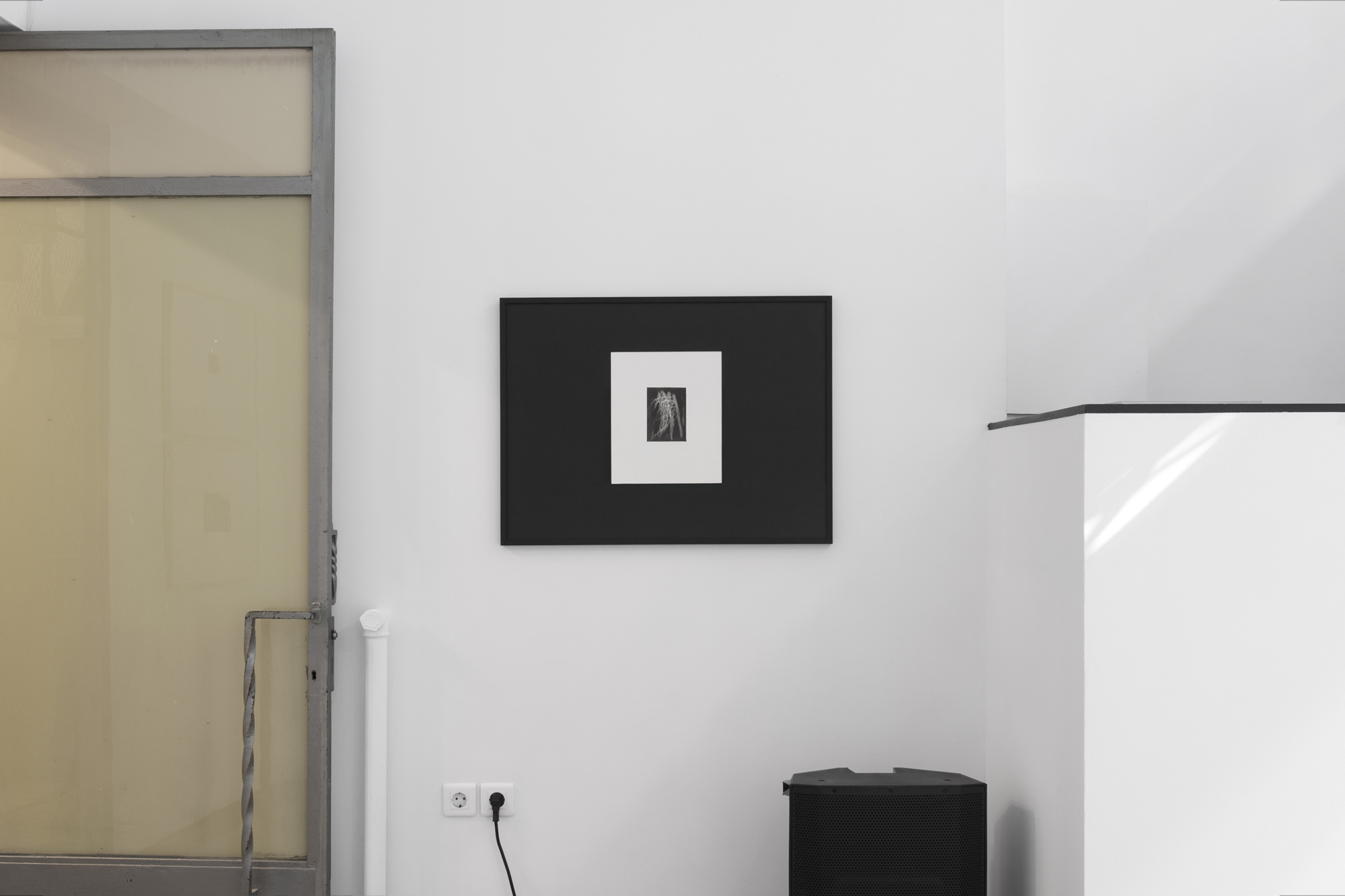
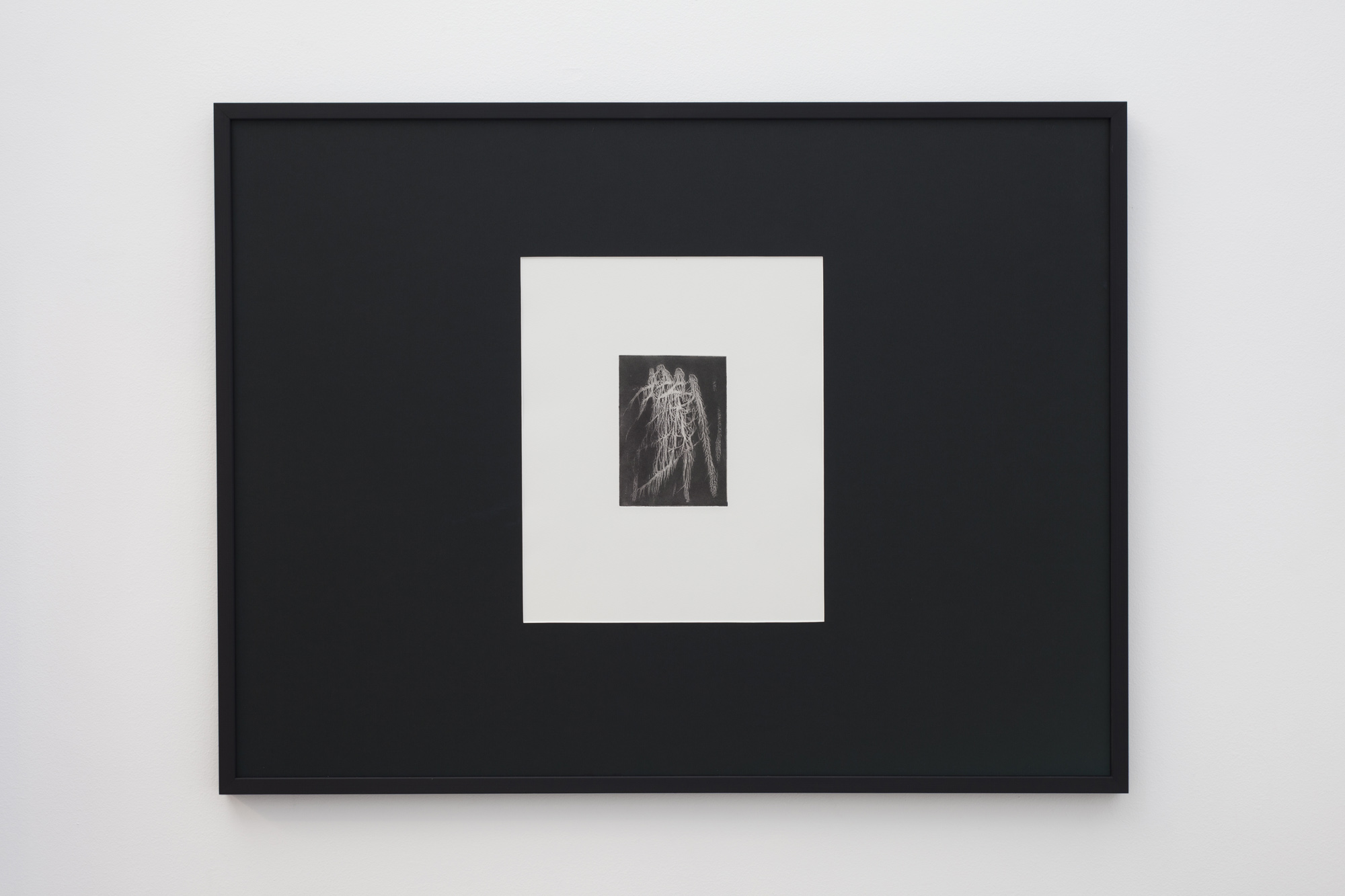
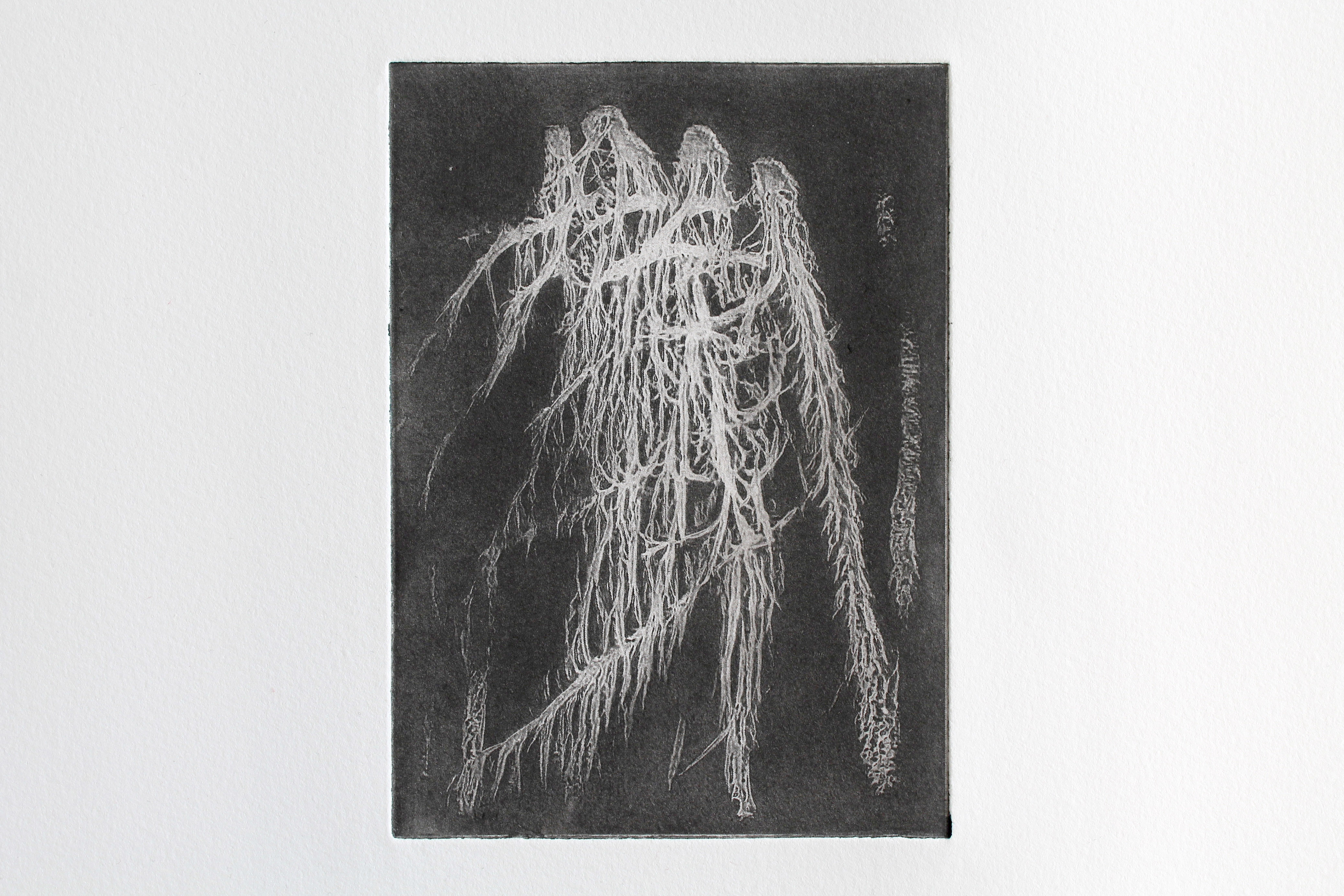
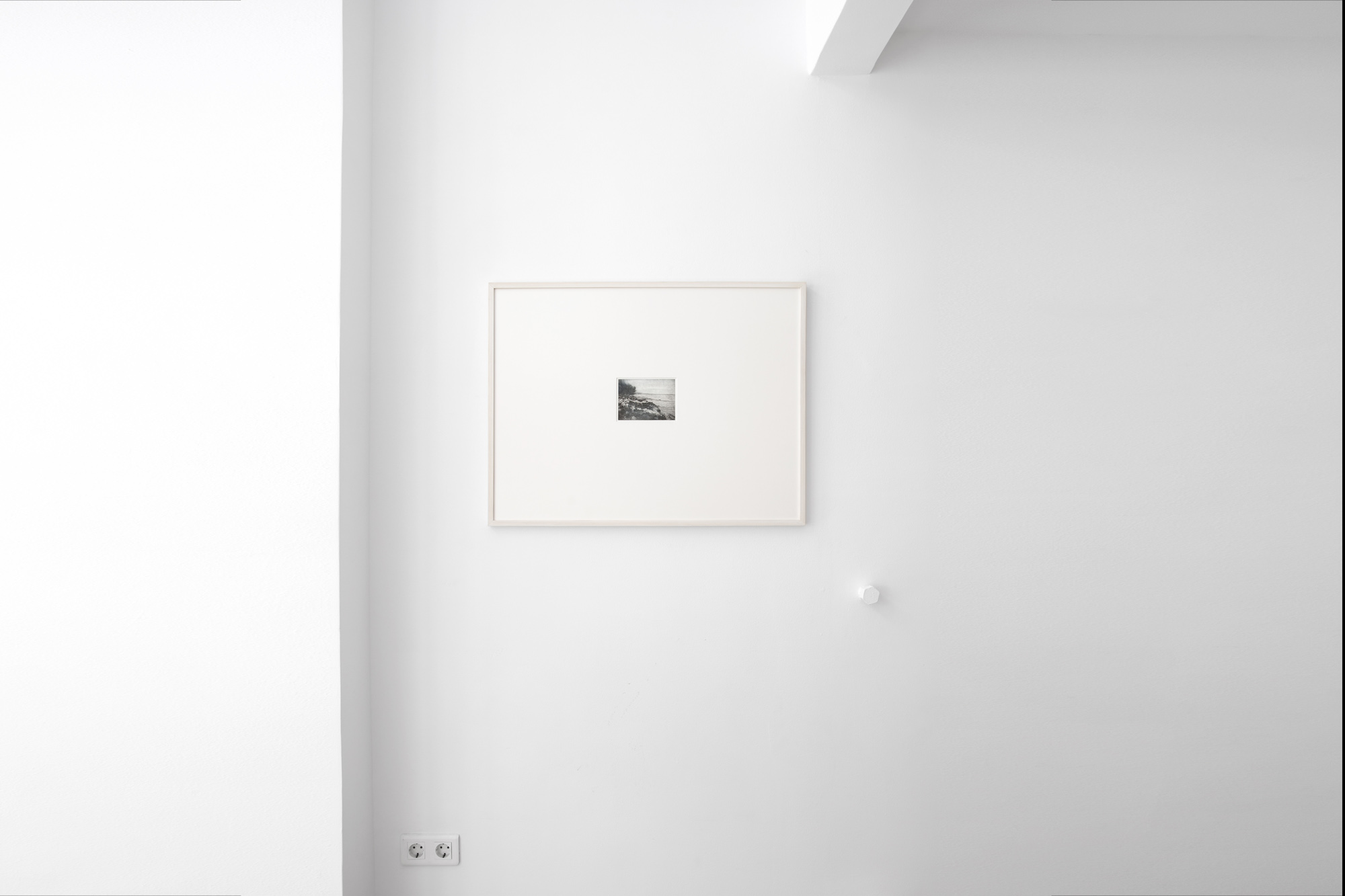
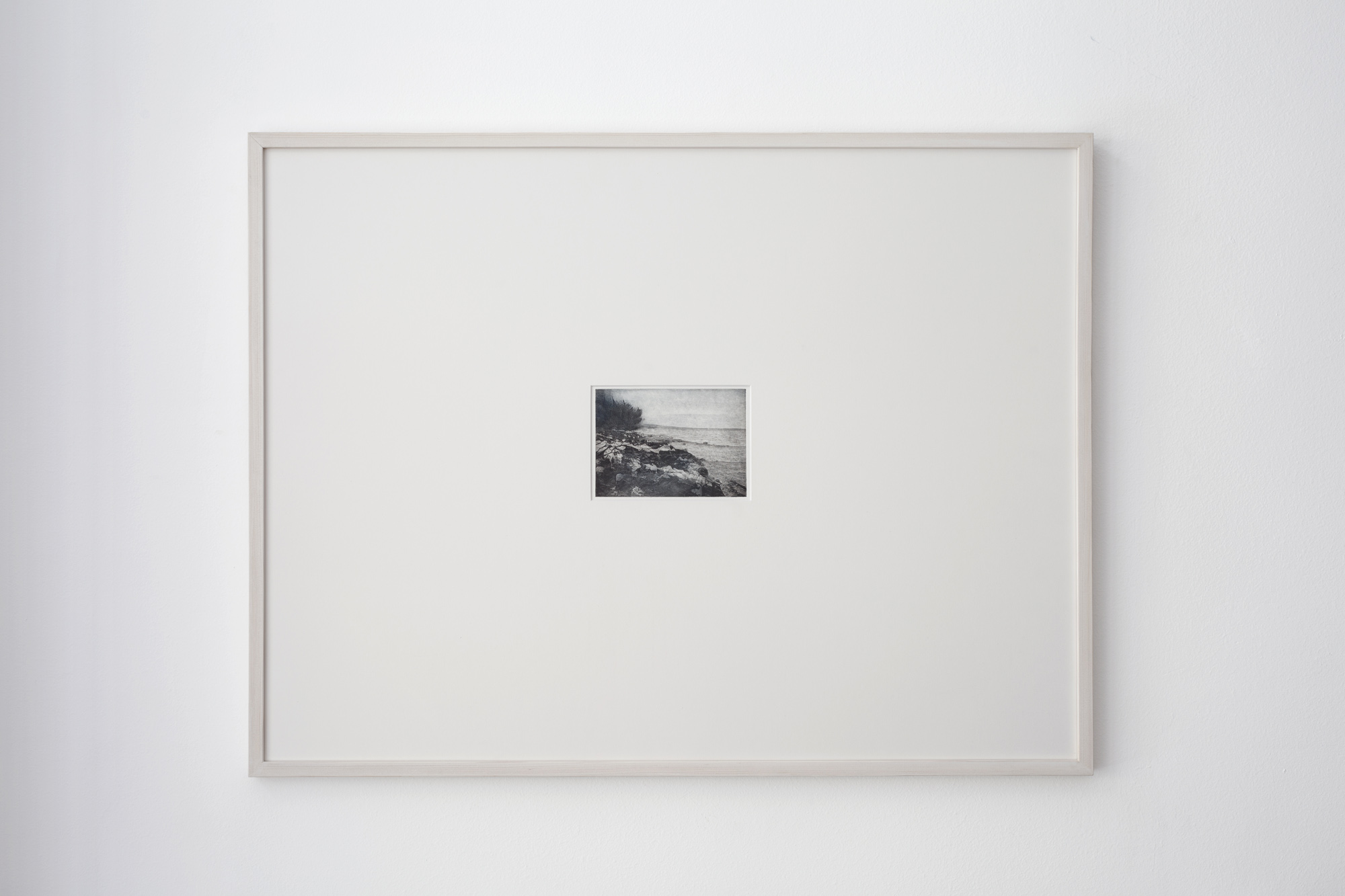
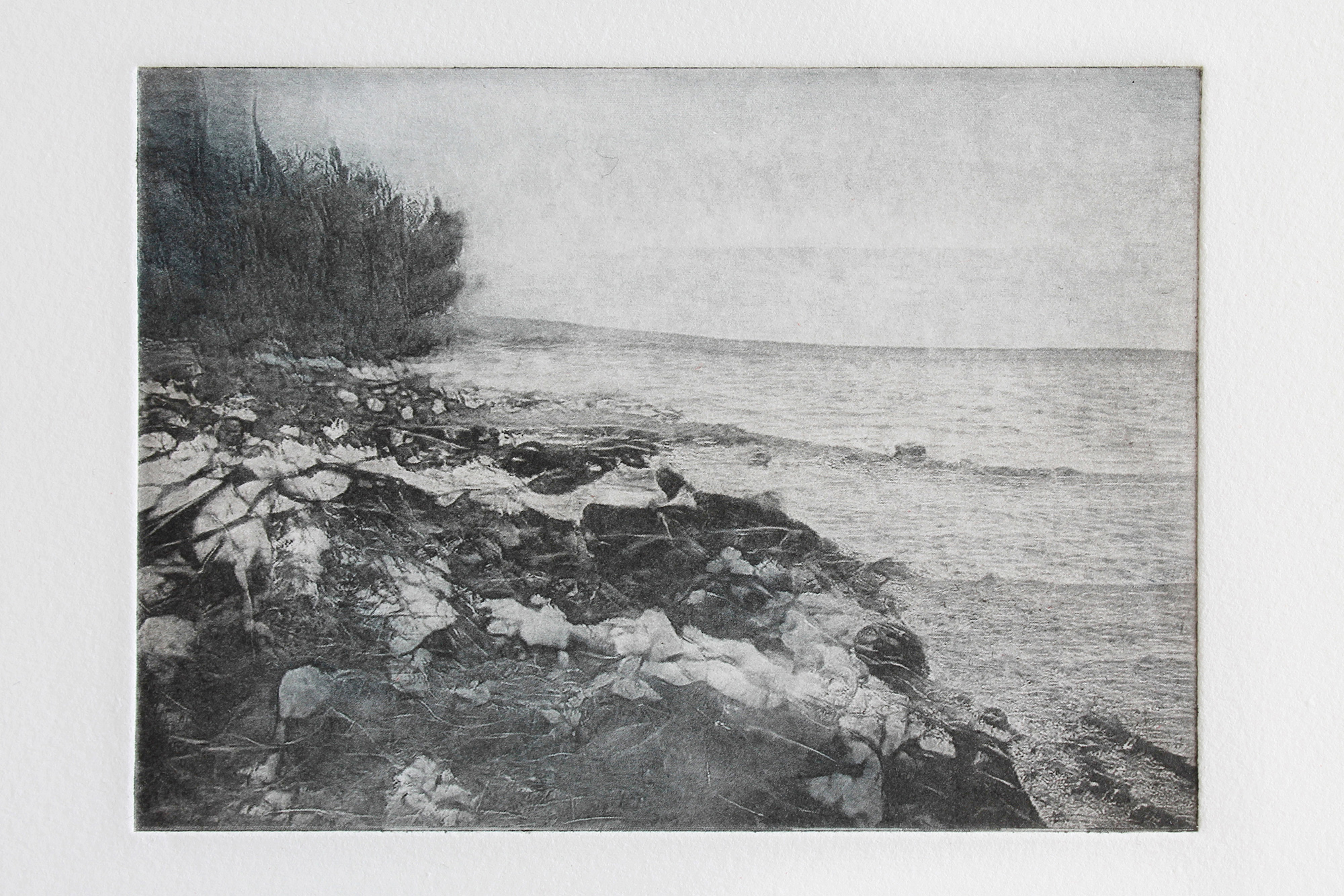
Solar etching (intaglio), oil-ink on cotton paper
Plate size: 30*42 cm
Frame size: 150*100 cm
Vector 50996, 2022
Solar etching (intaglio), oil-ink on cotton paper
Plate size: 30*42 cm
Frame size: 150*100 cm
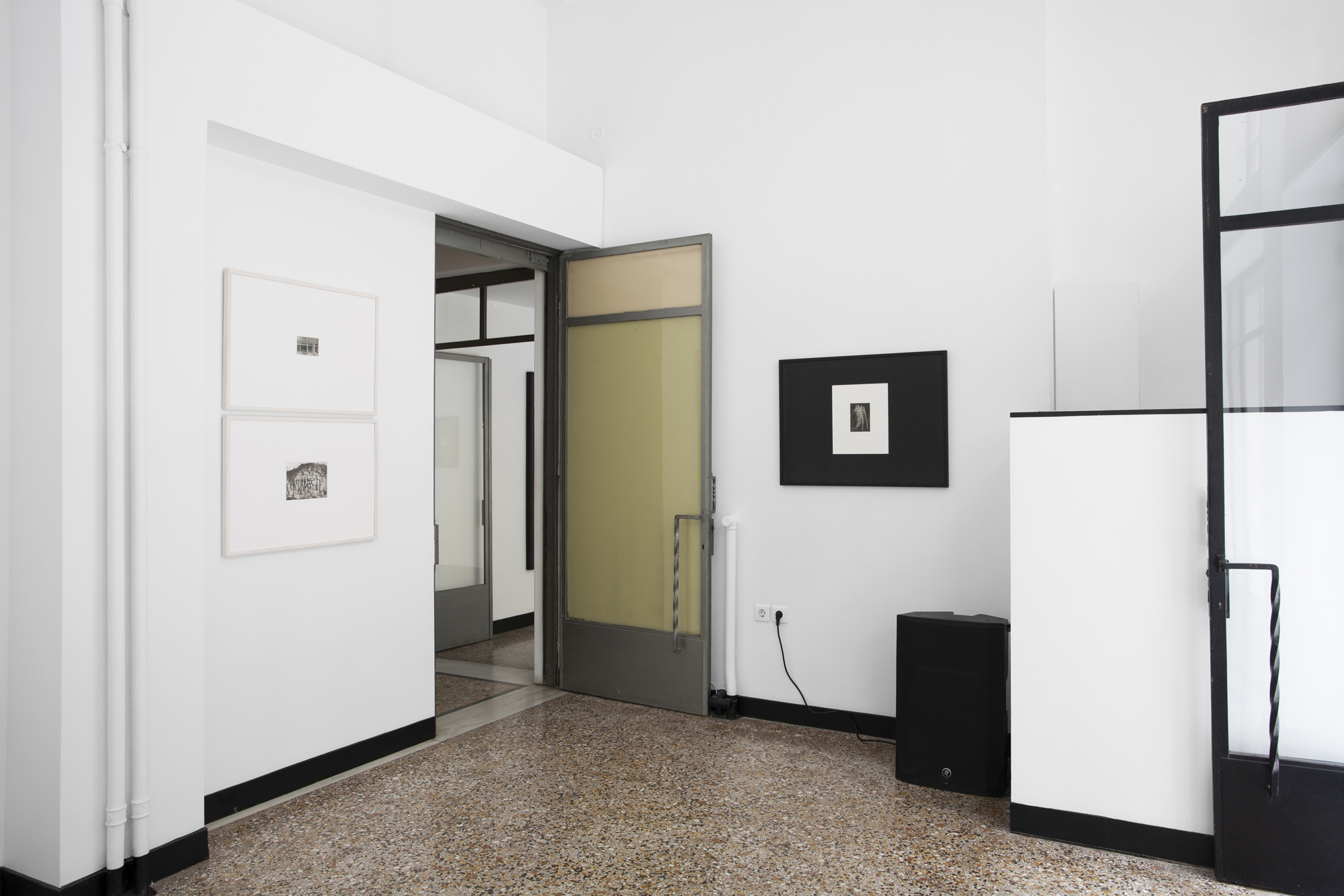
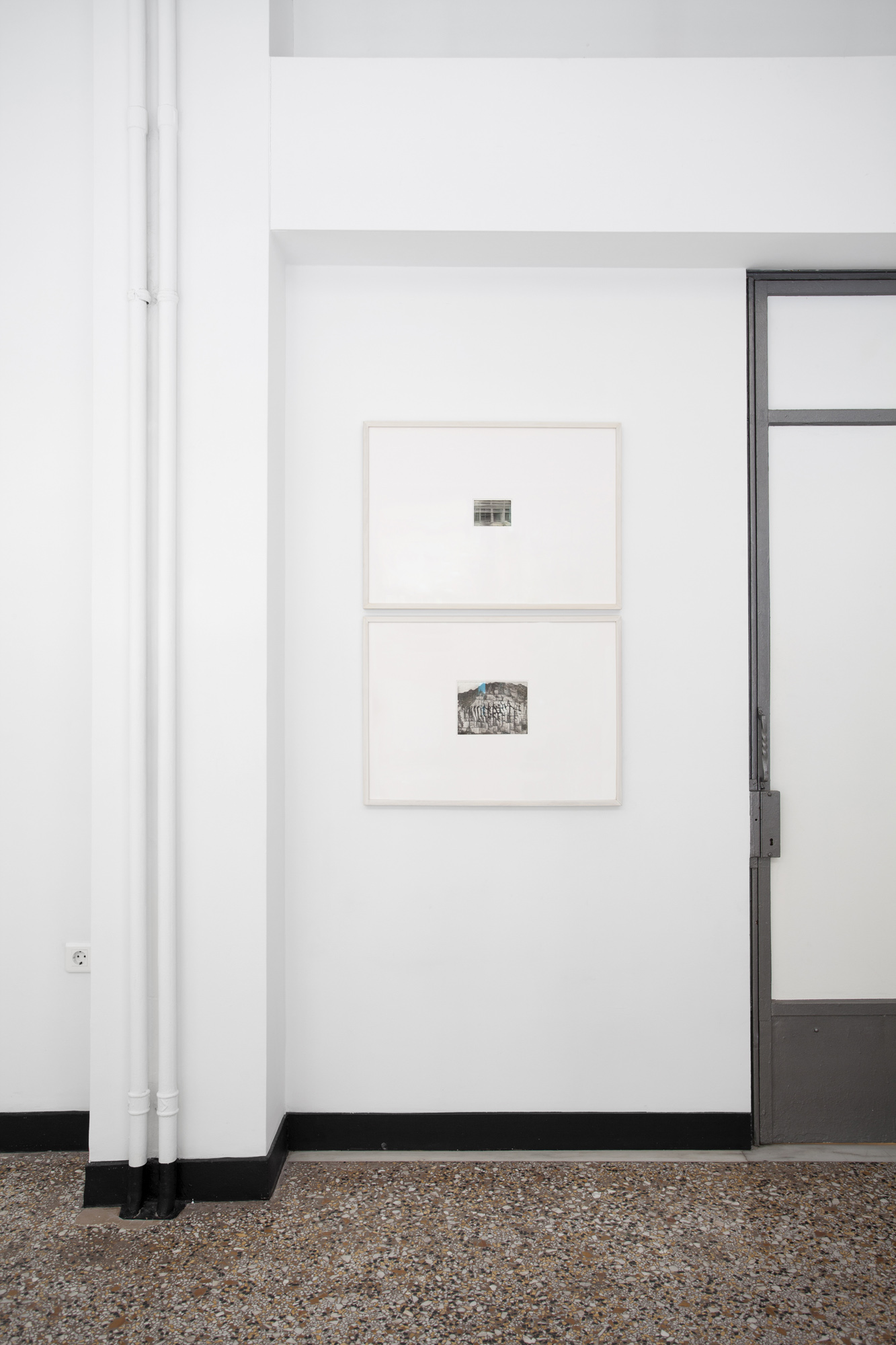
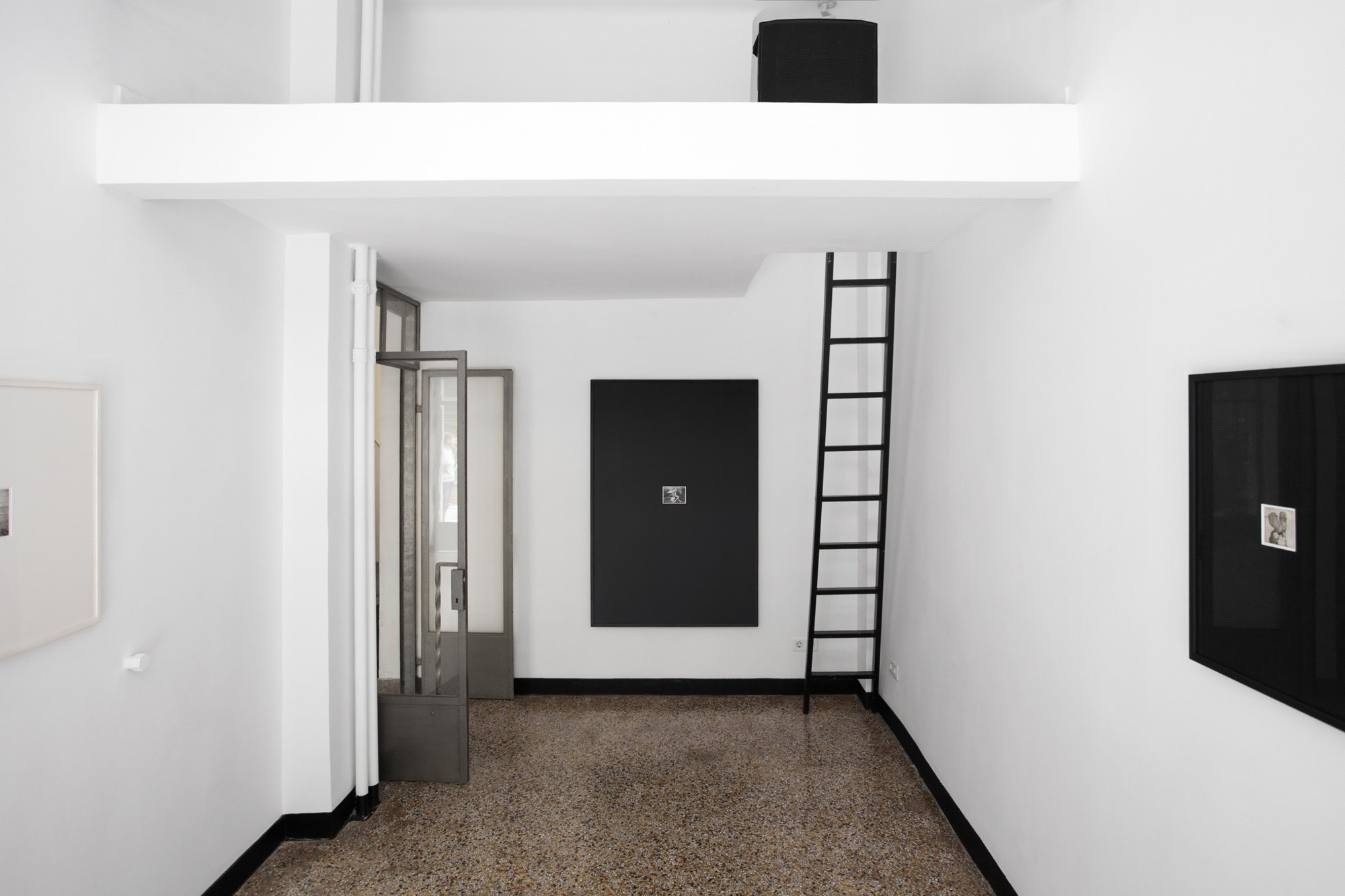
Installation view at PTX, Athens
Installation view at PTX, Athens
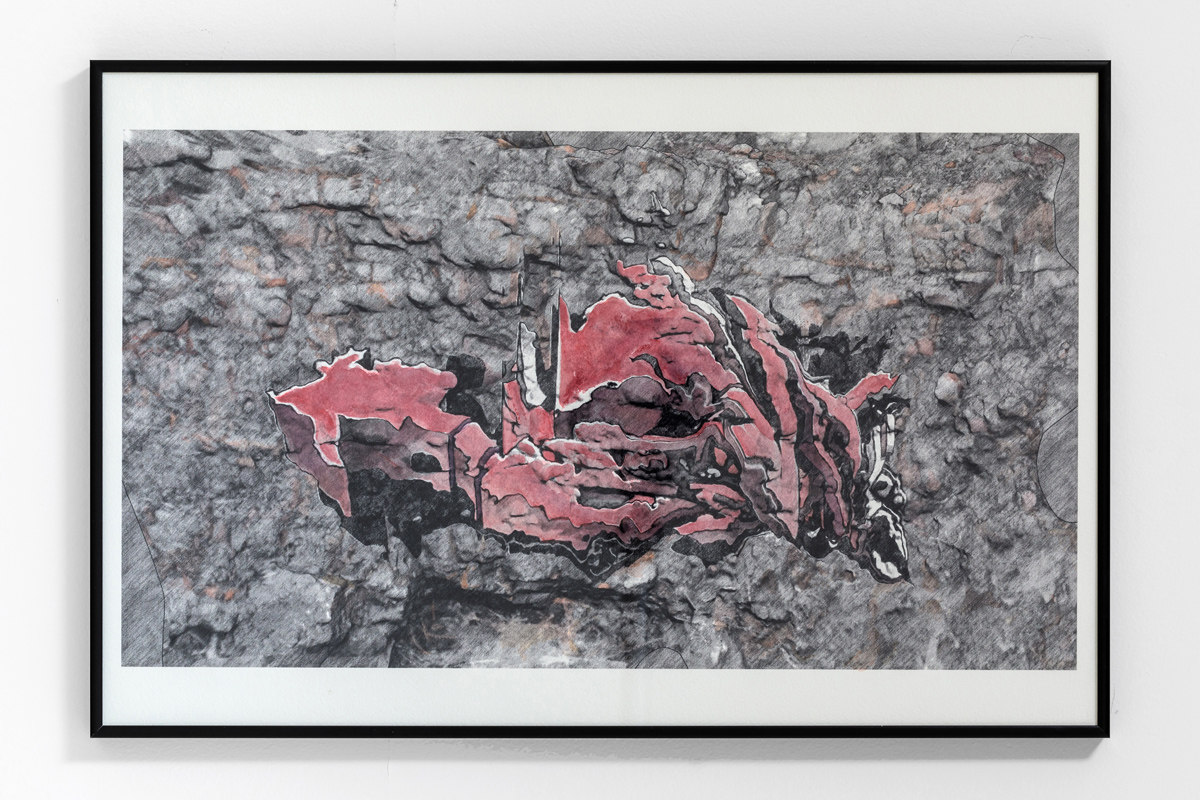
Vector 50308, 2022 (detail)
Solar etching (intaglio), oil-ink on cotton paper
Plate size: 30*42 cm
Frame size: 150*100 cm
Installation view at PTX, Athens
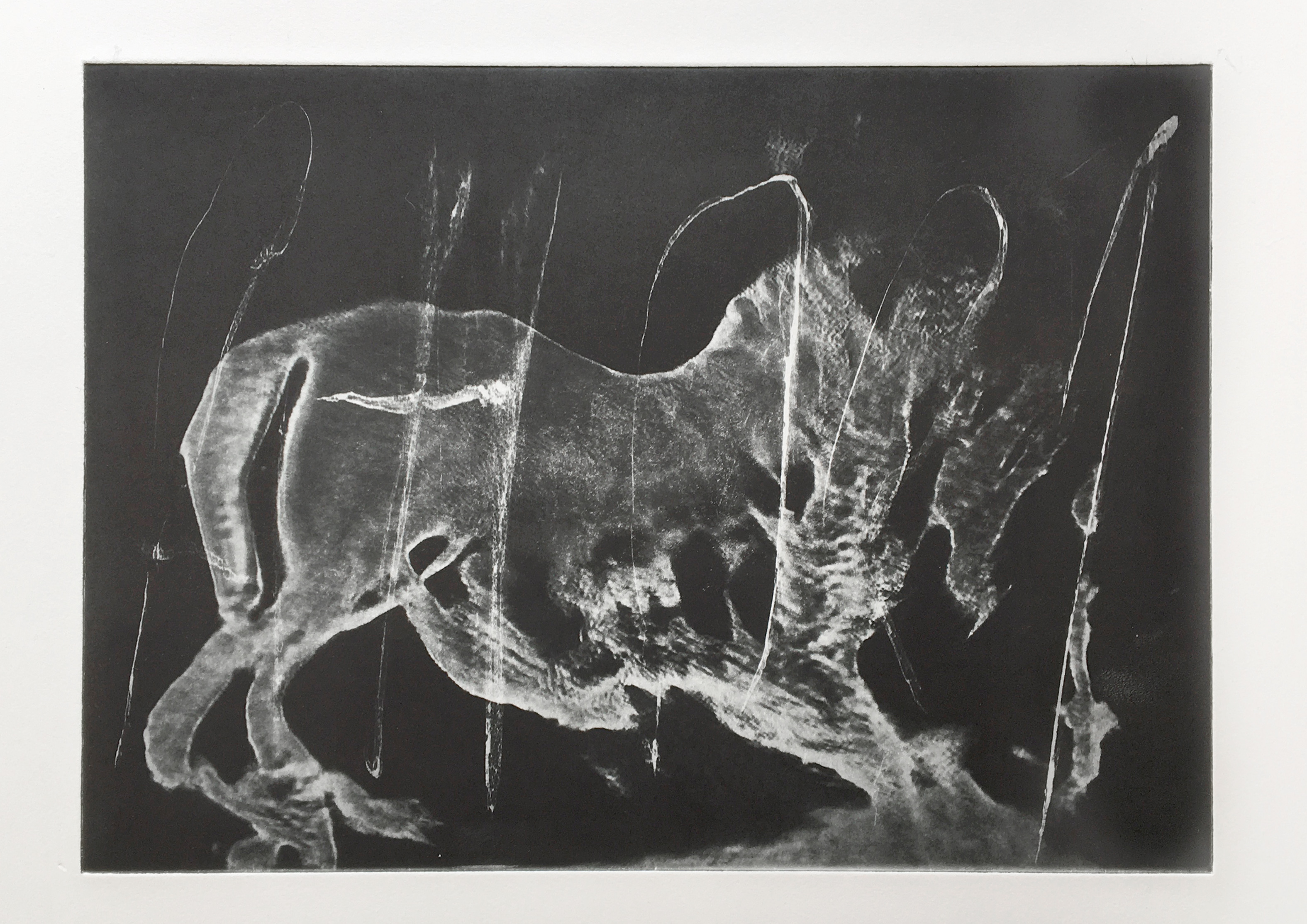
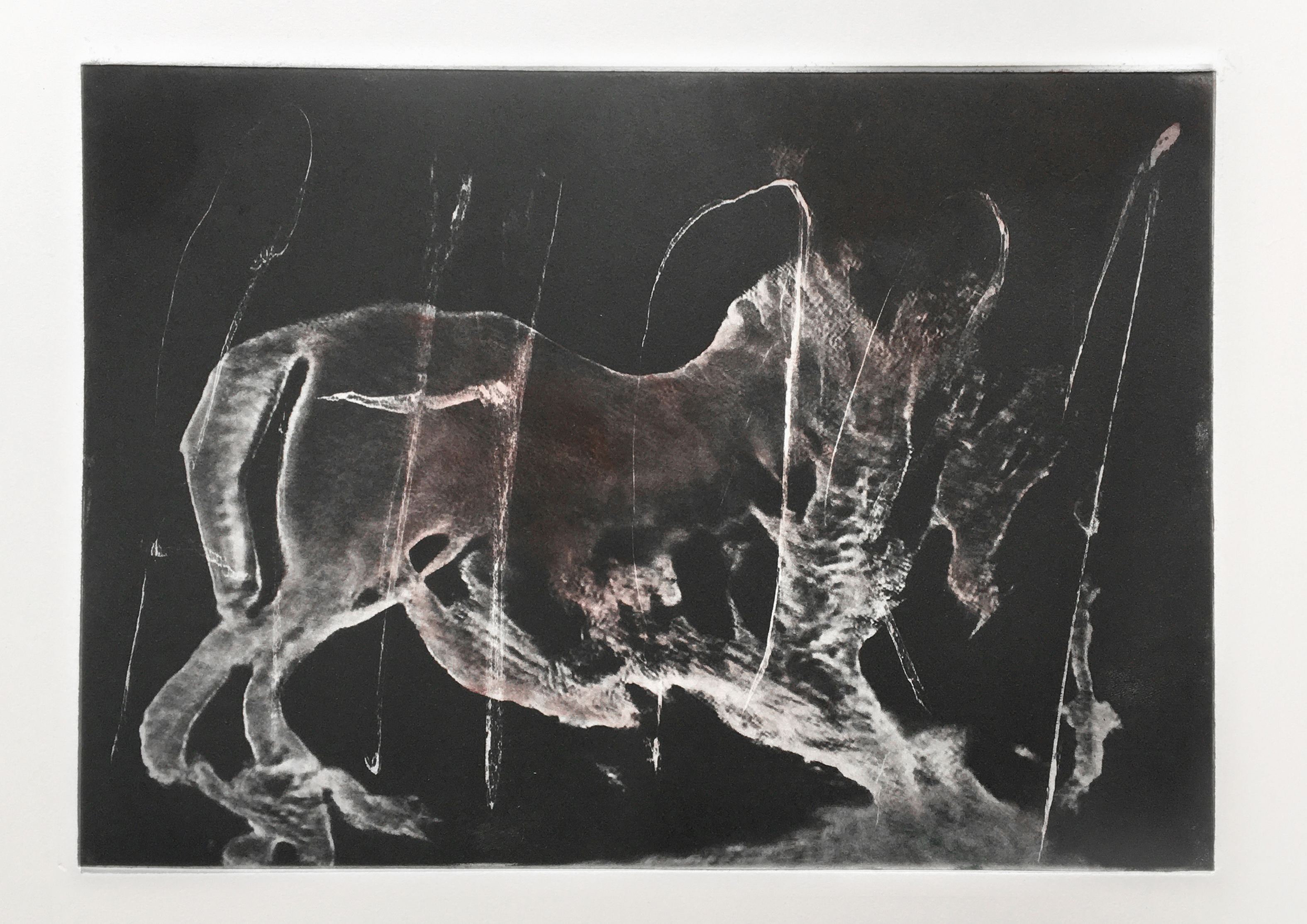
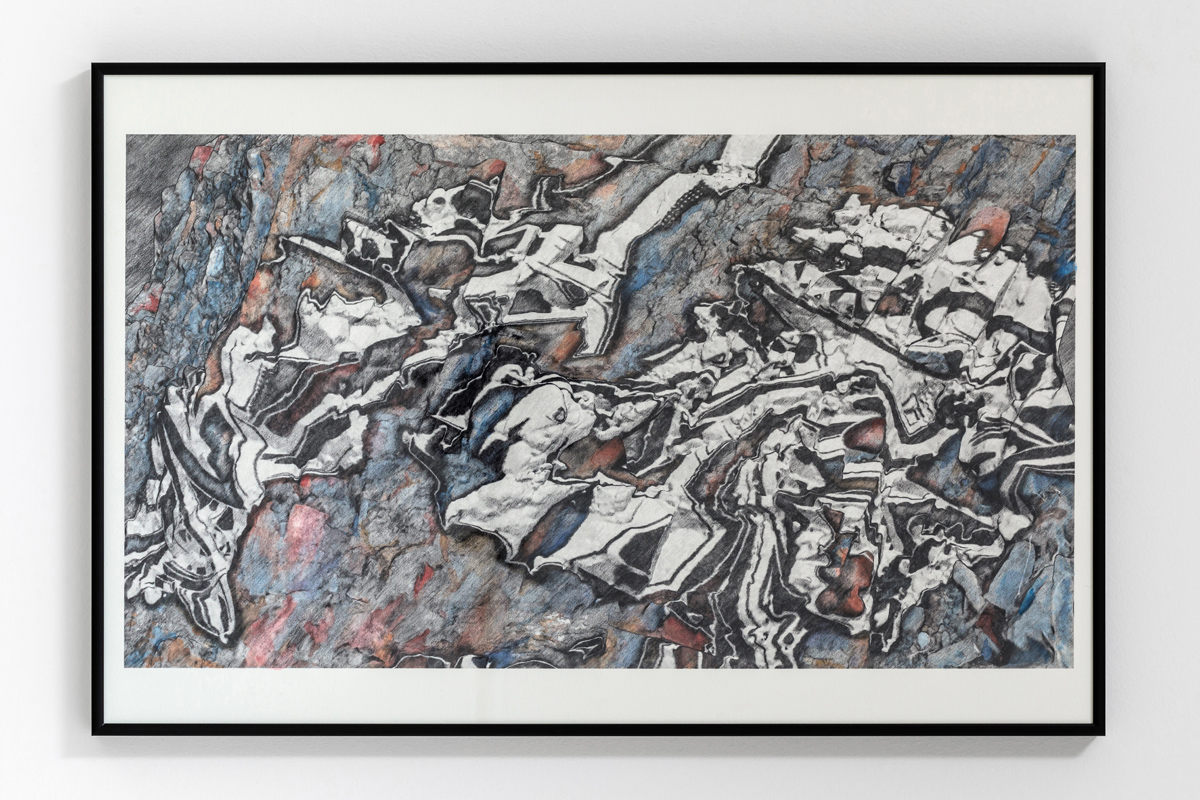
Vector 50031, 2022
Solar etching (intaglio), oil-ink on cotton paper
Plate size: 30*42 cm
Frame size: 150*100 cm
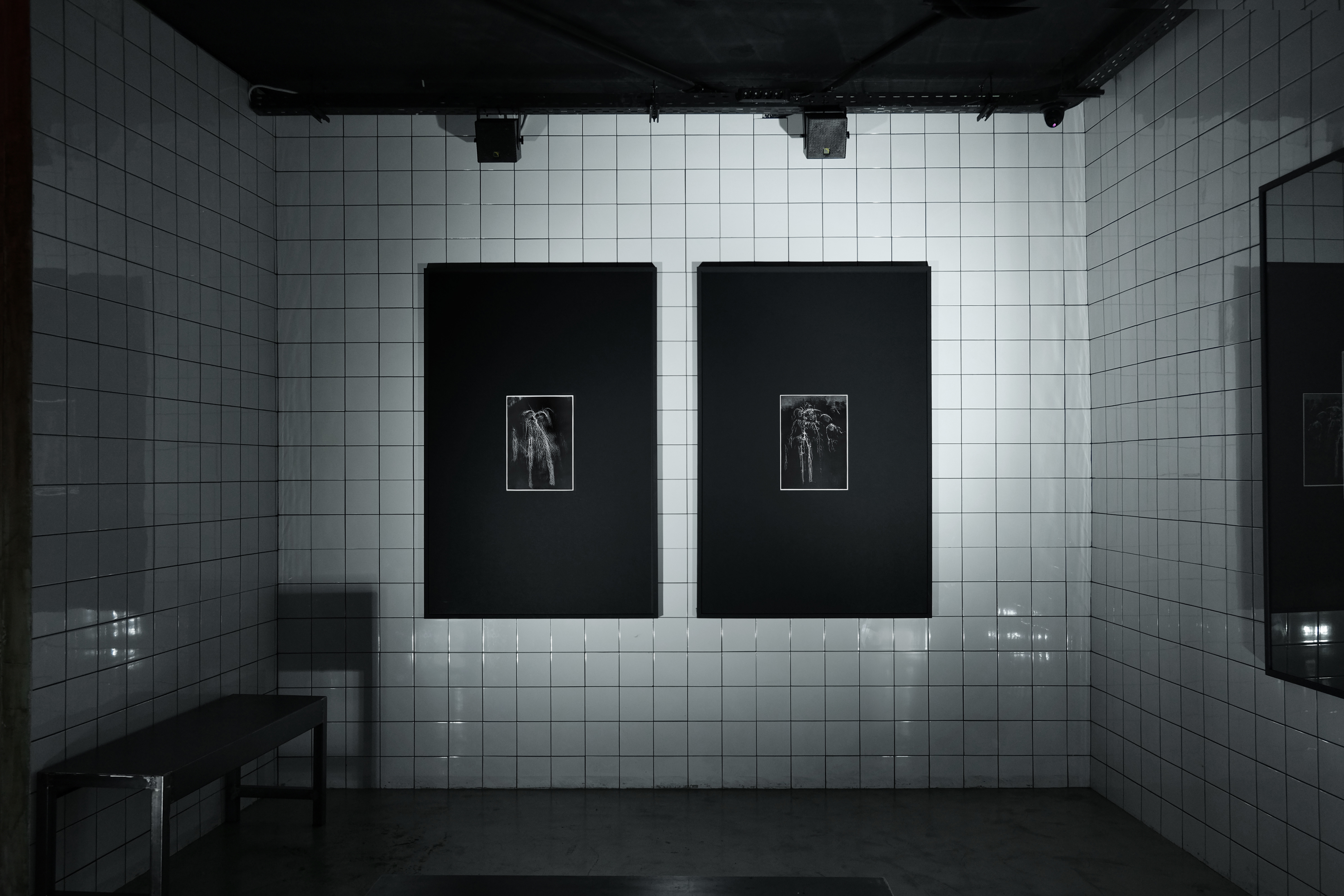
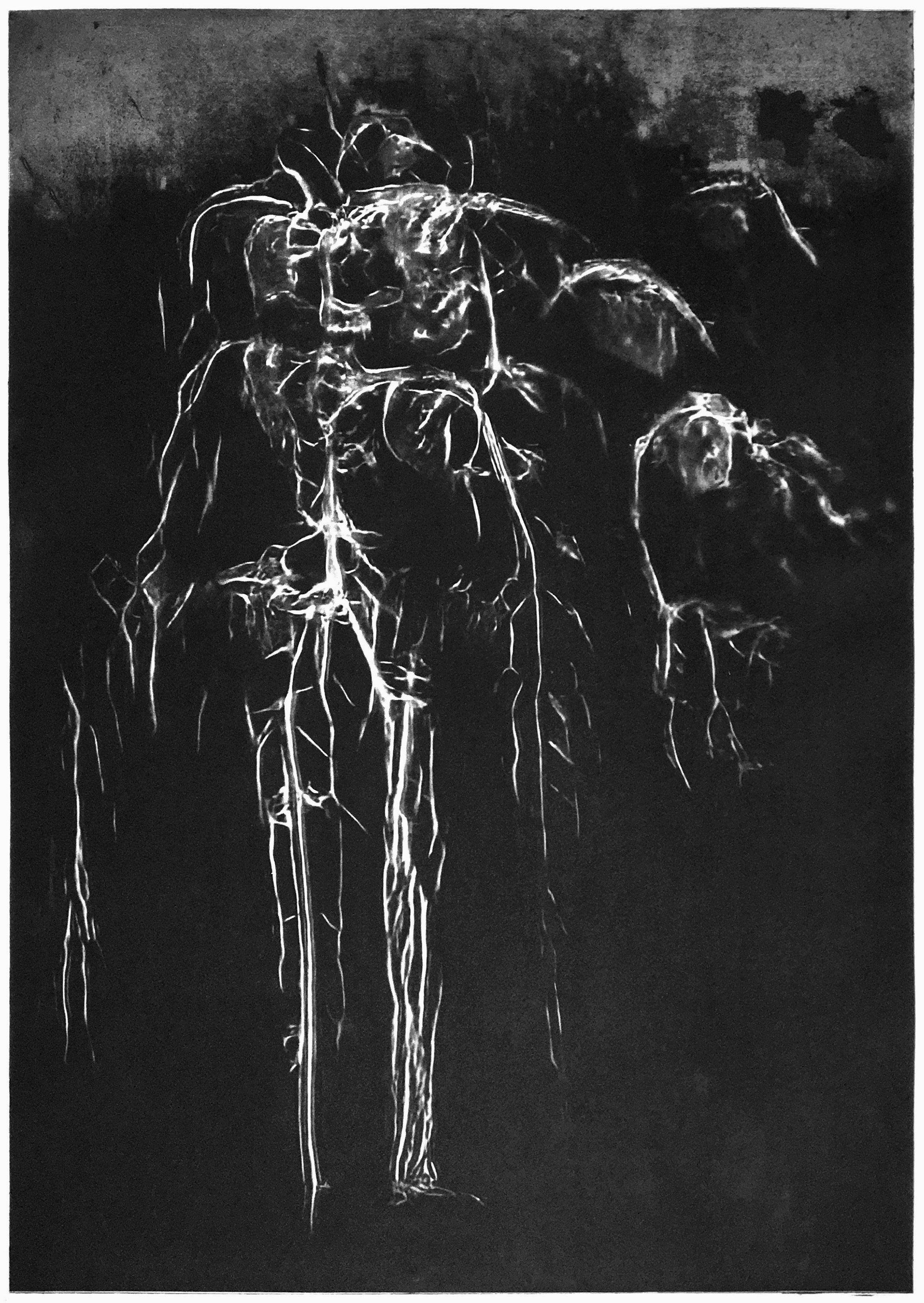
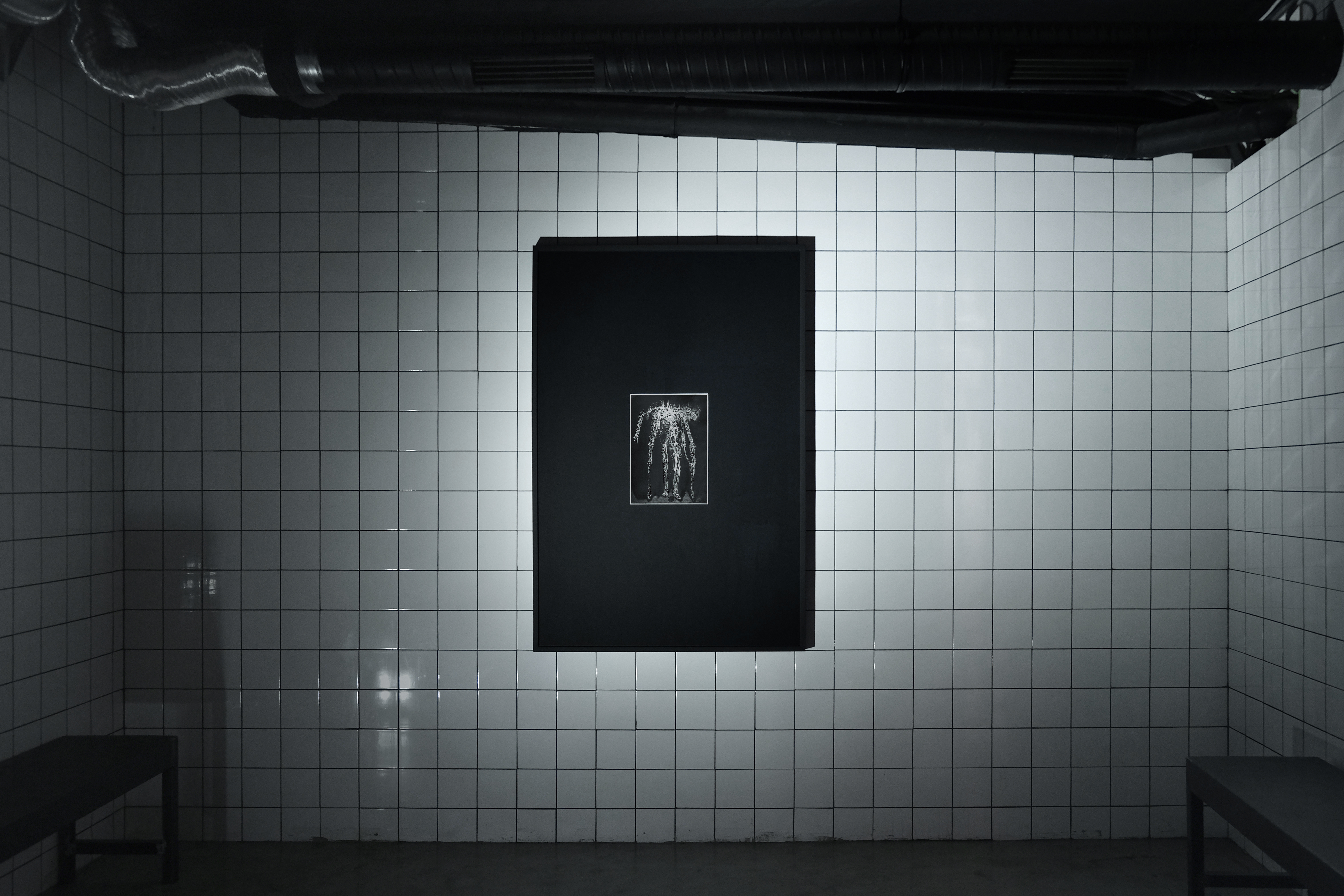
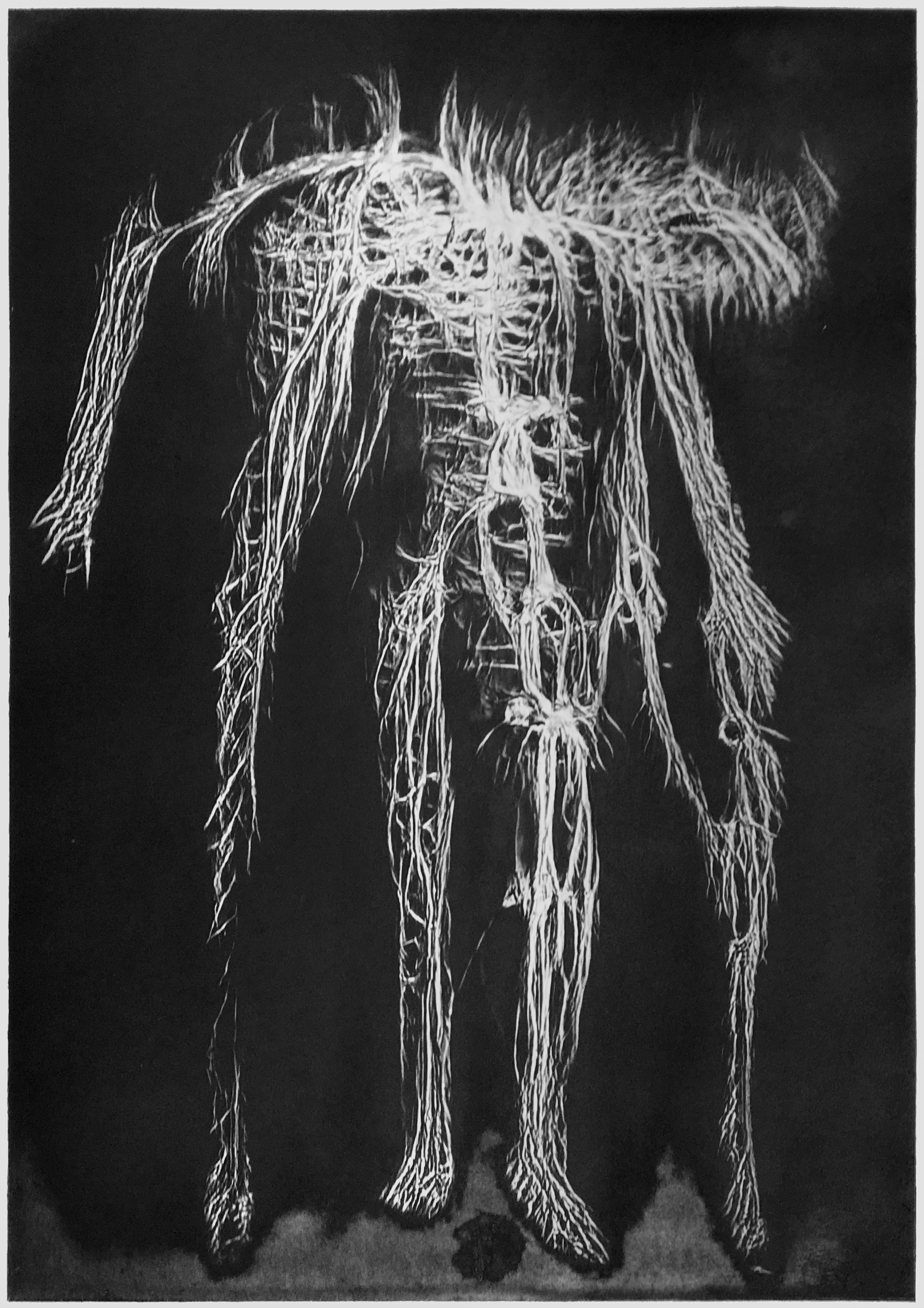
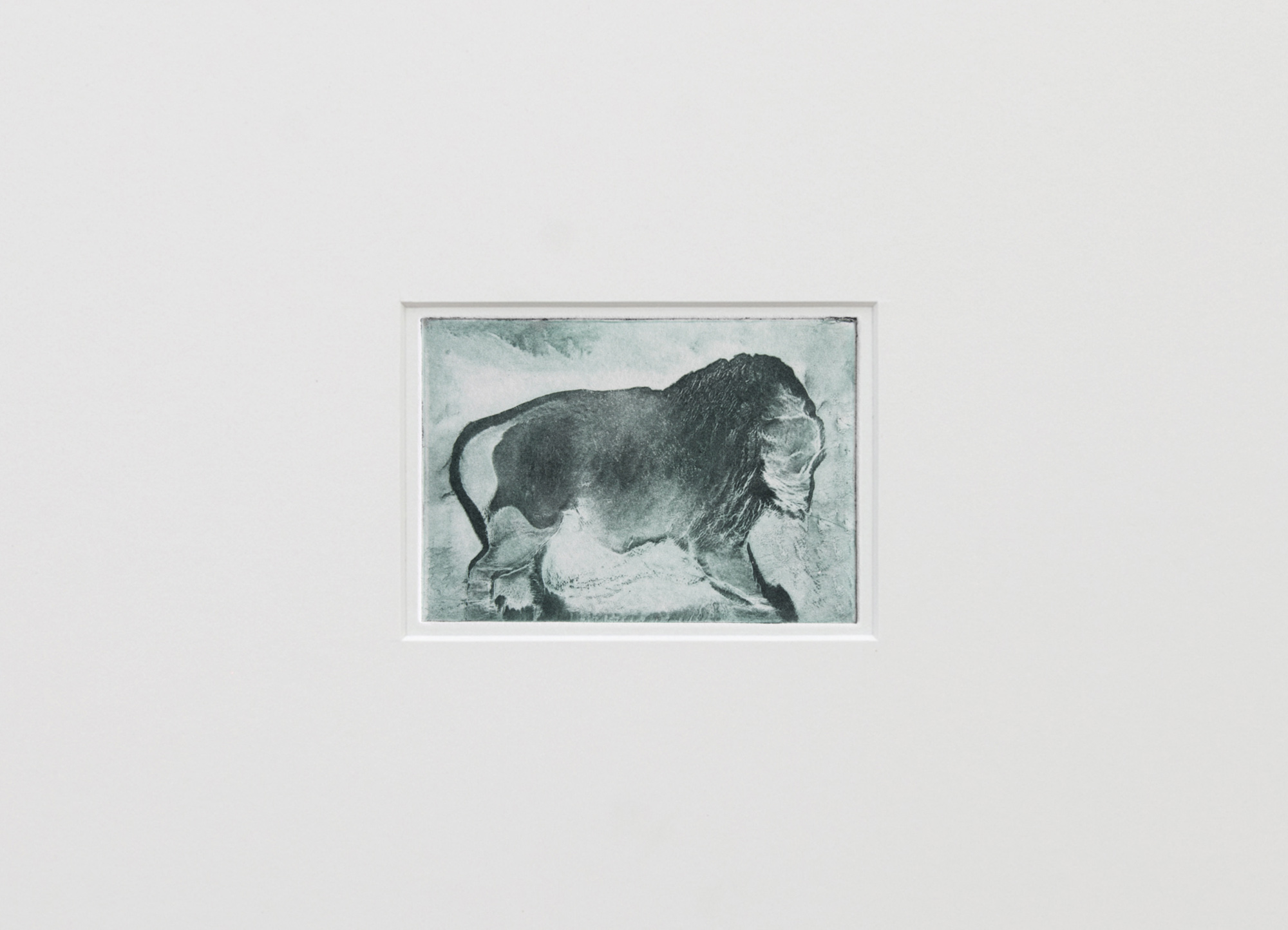
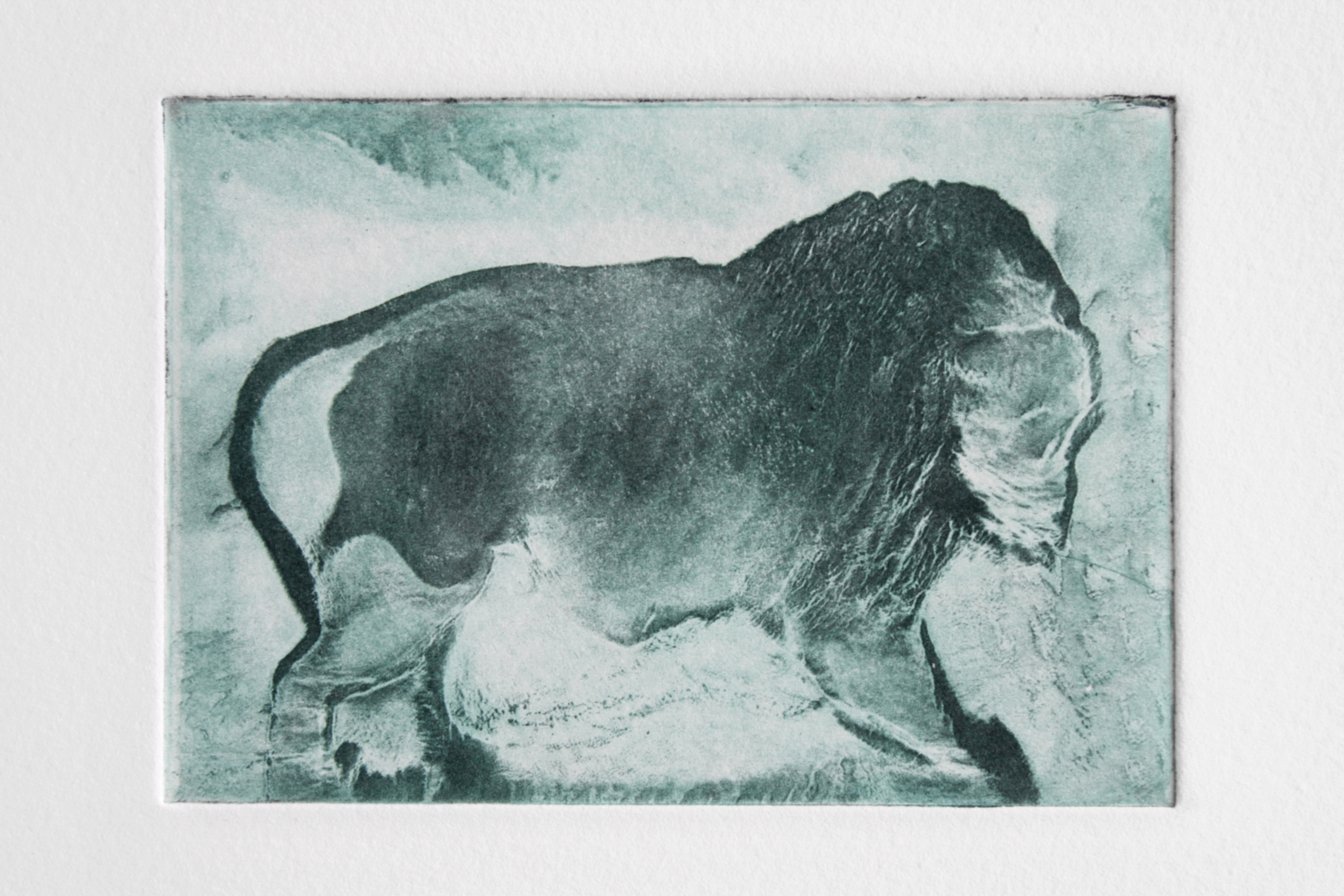
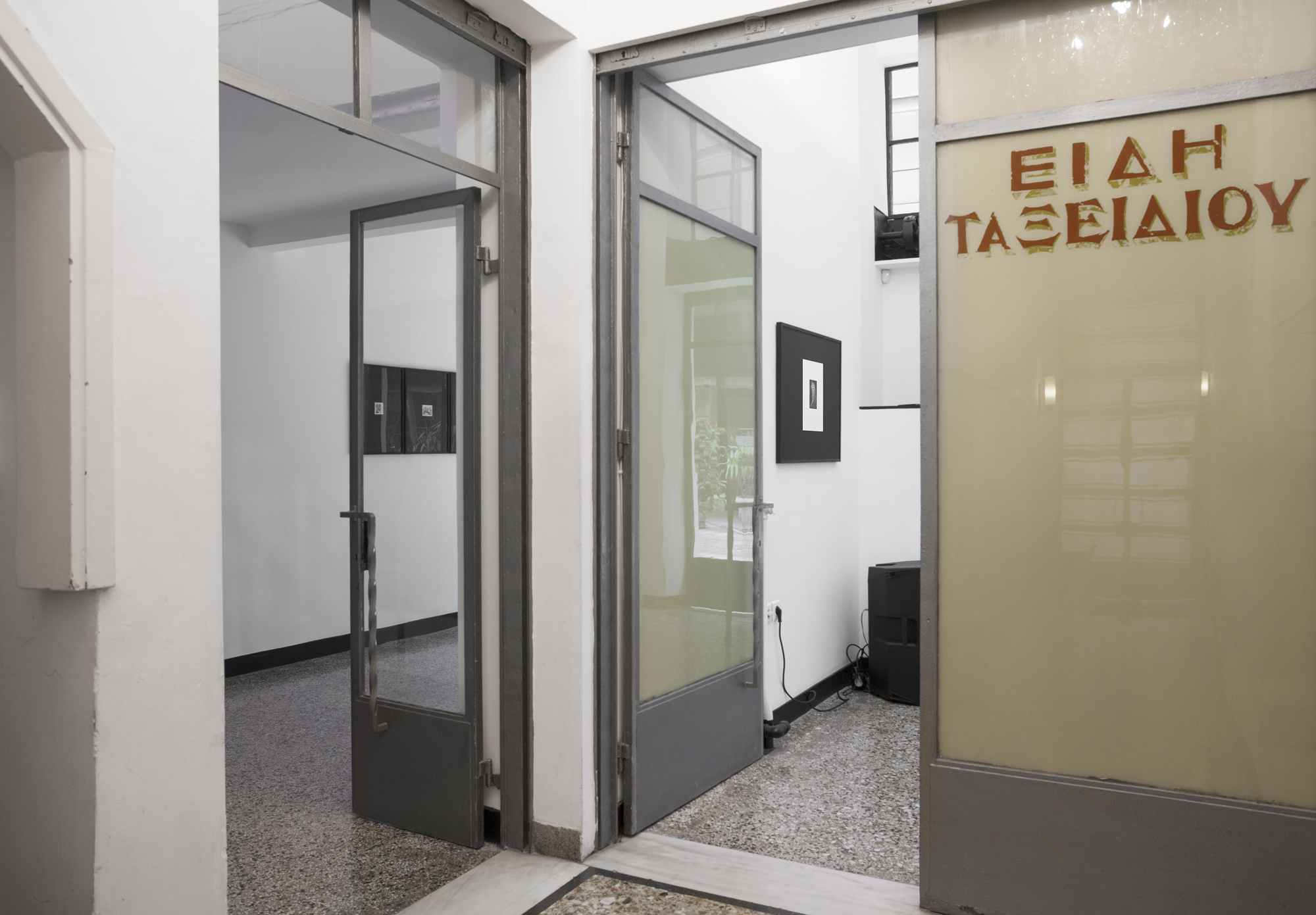
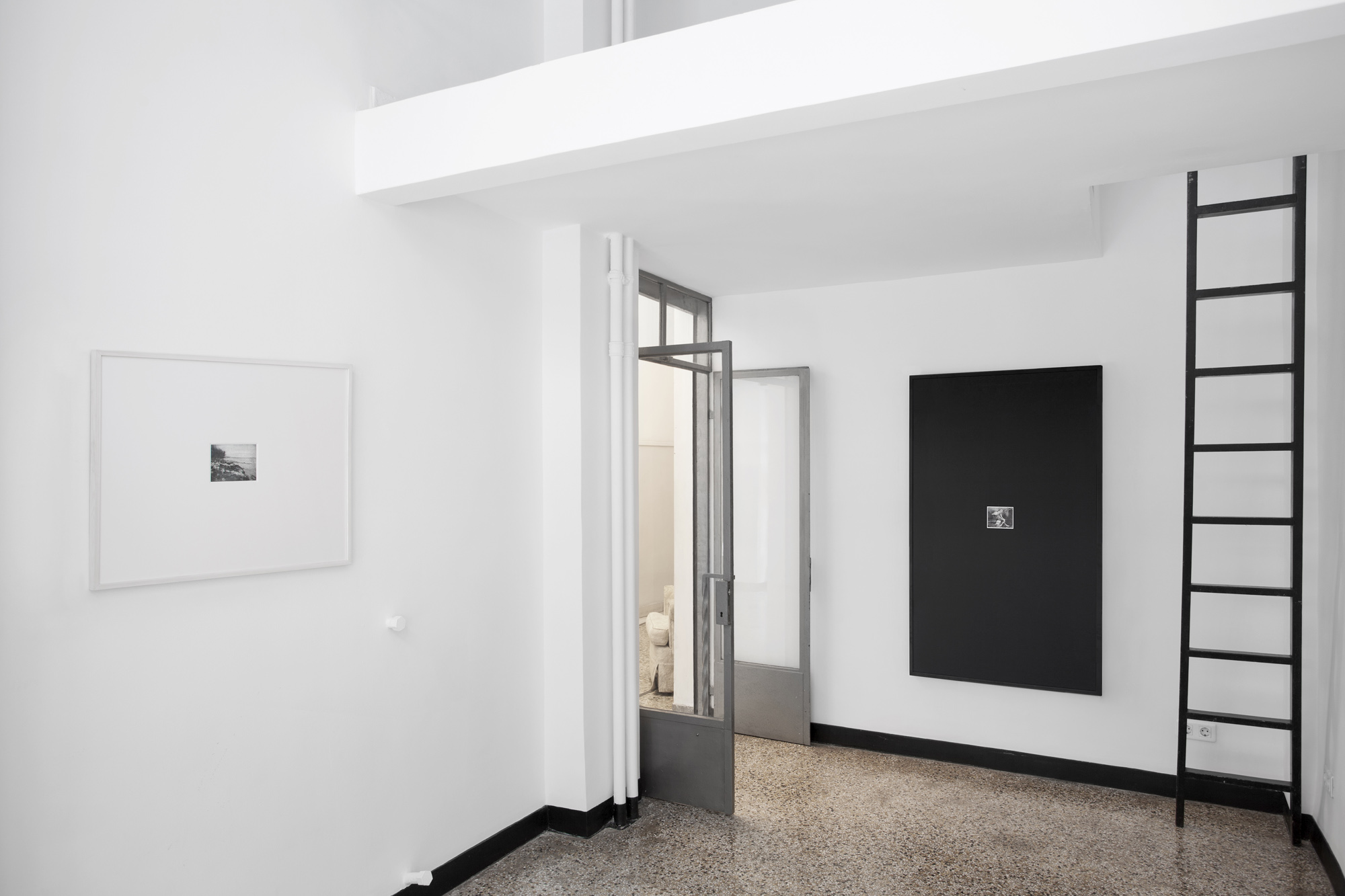
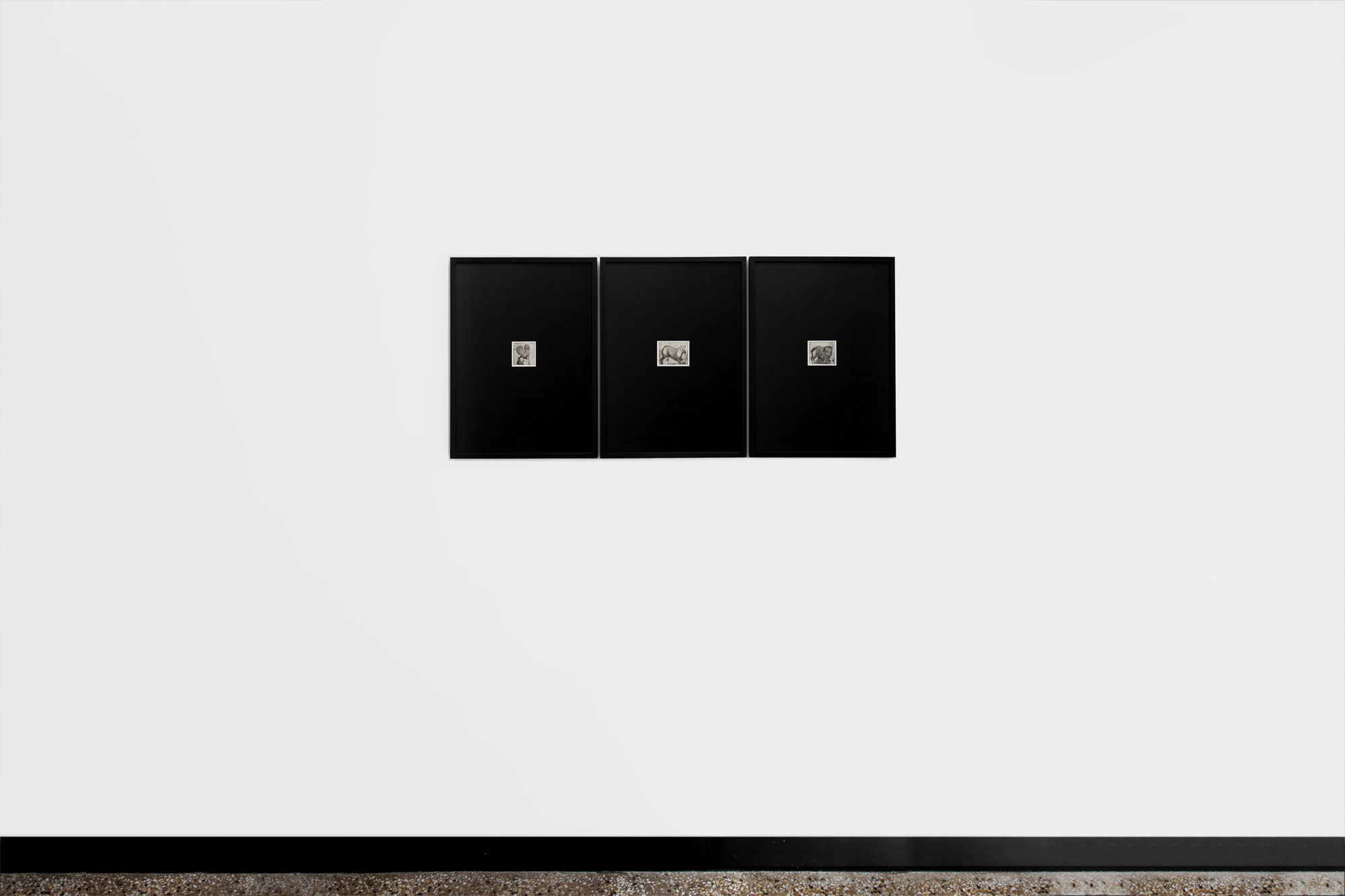
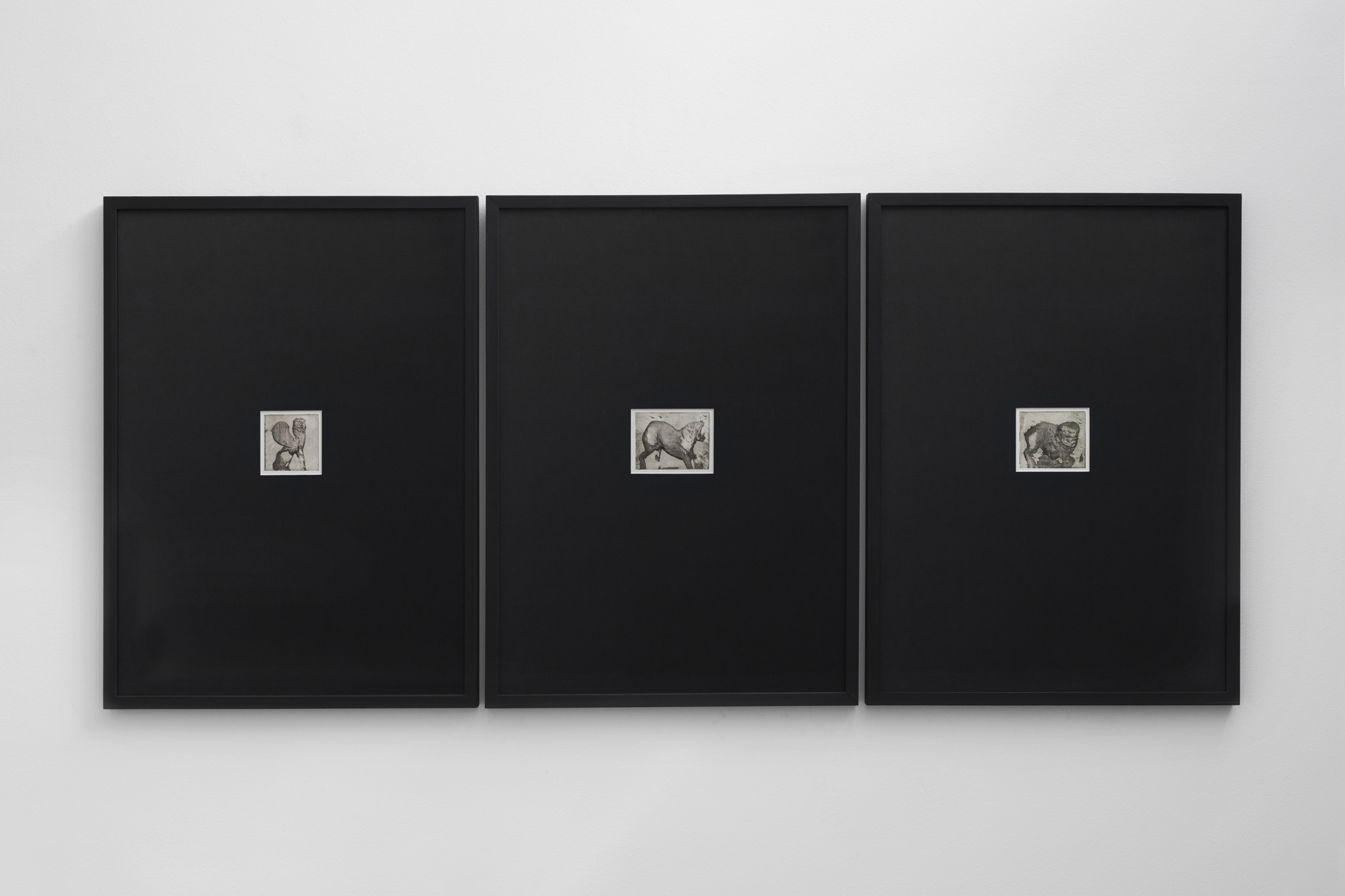
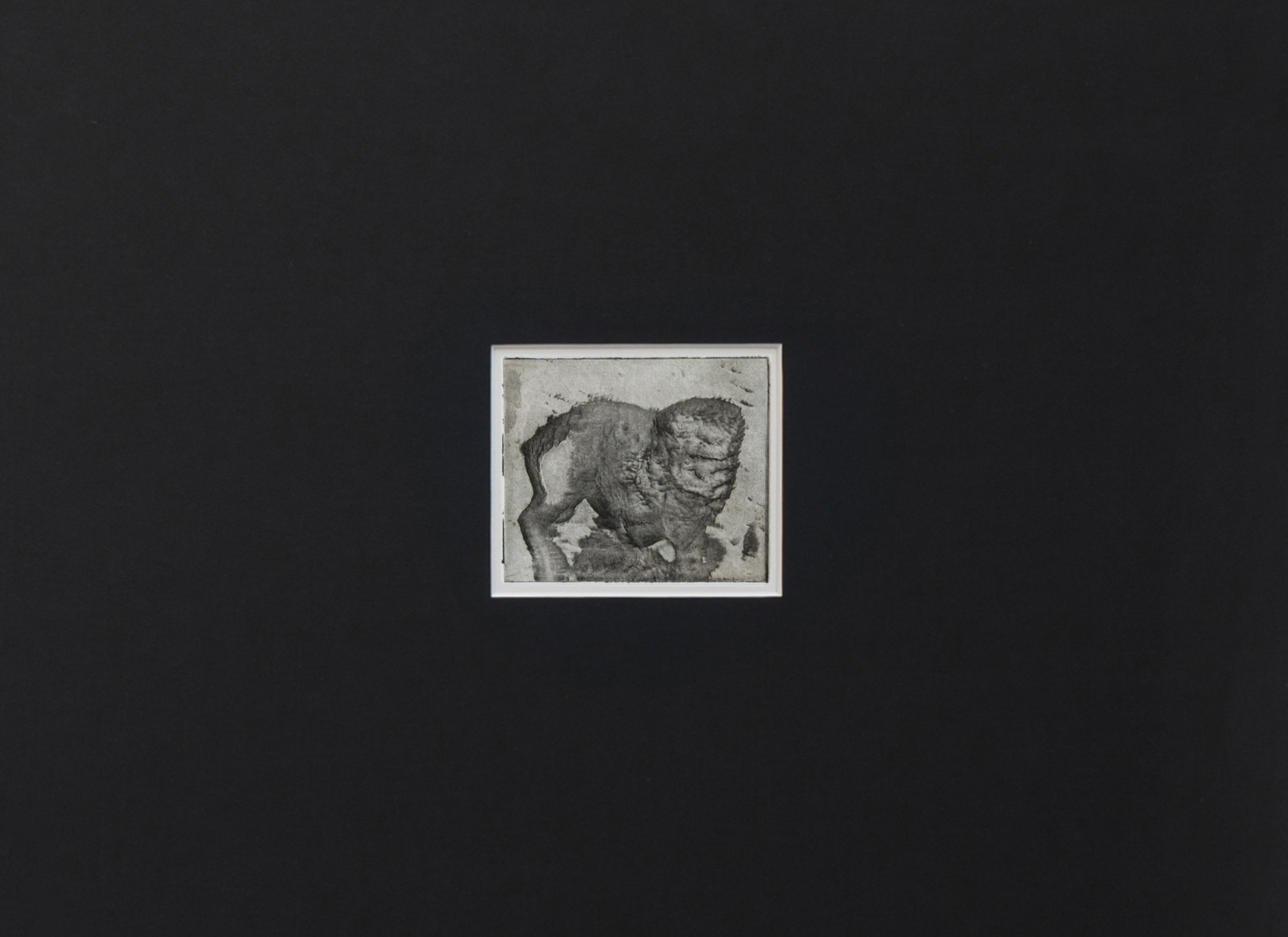
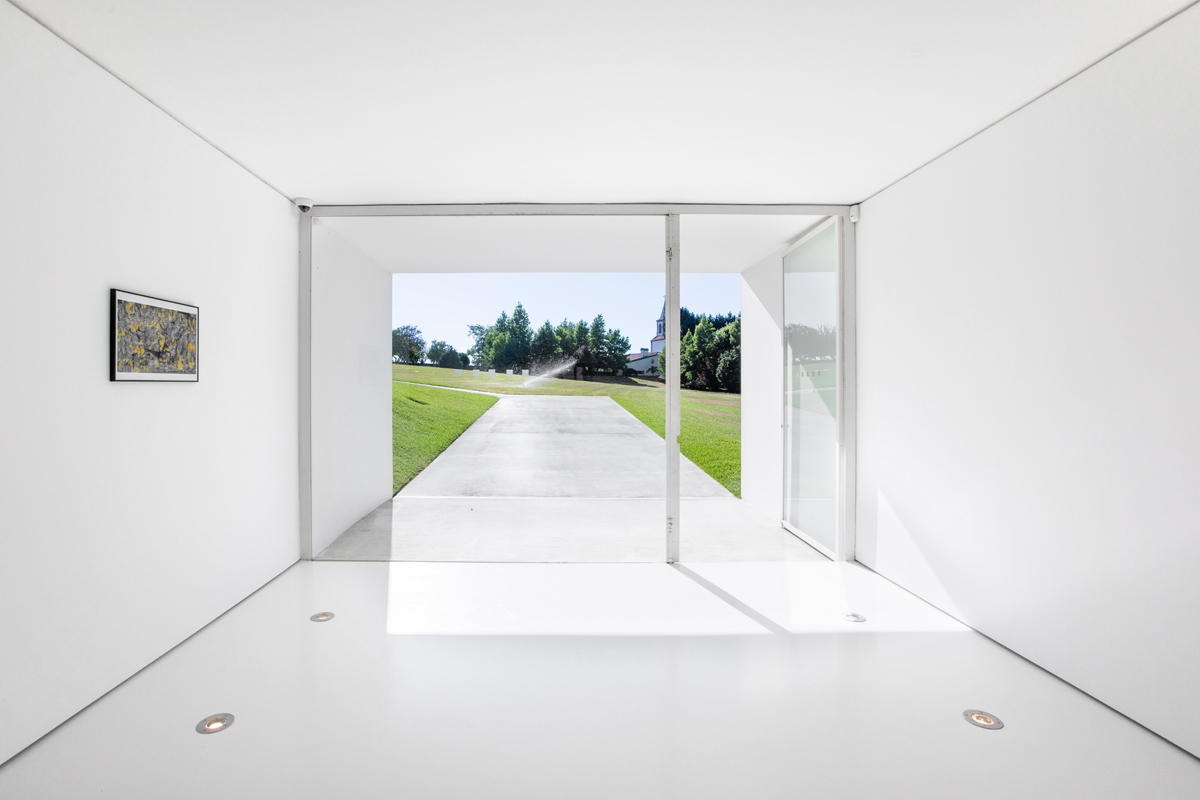
In Spirit Structures, Petros Moris unfolds a ranging installation of sculptures, etchings and video both inside and outside PTX; a dialogue of works revolving around the entanglements between the material and metaphorical undergrounds of geology, bodies, and psyches. Equally employing both computational and archaic production techniques, machine learning algorithms, makeshift rapid prototyping and intaglio printing, the artist looks at the internal anatomies beneath surfaces and skins – domains that reverberate the processes of animation and transformation, engendered by the fateful interdependencies of earthly and cosmic phenomena.
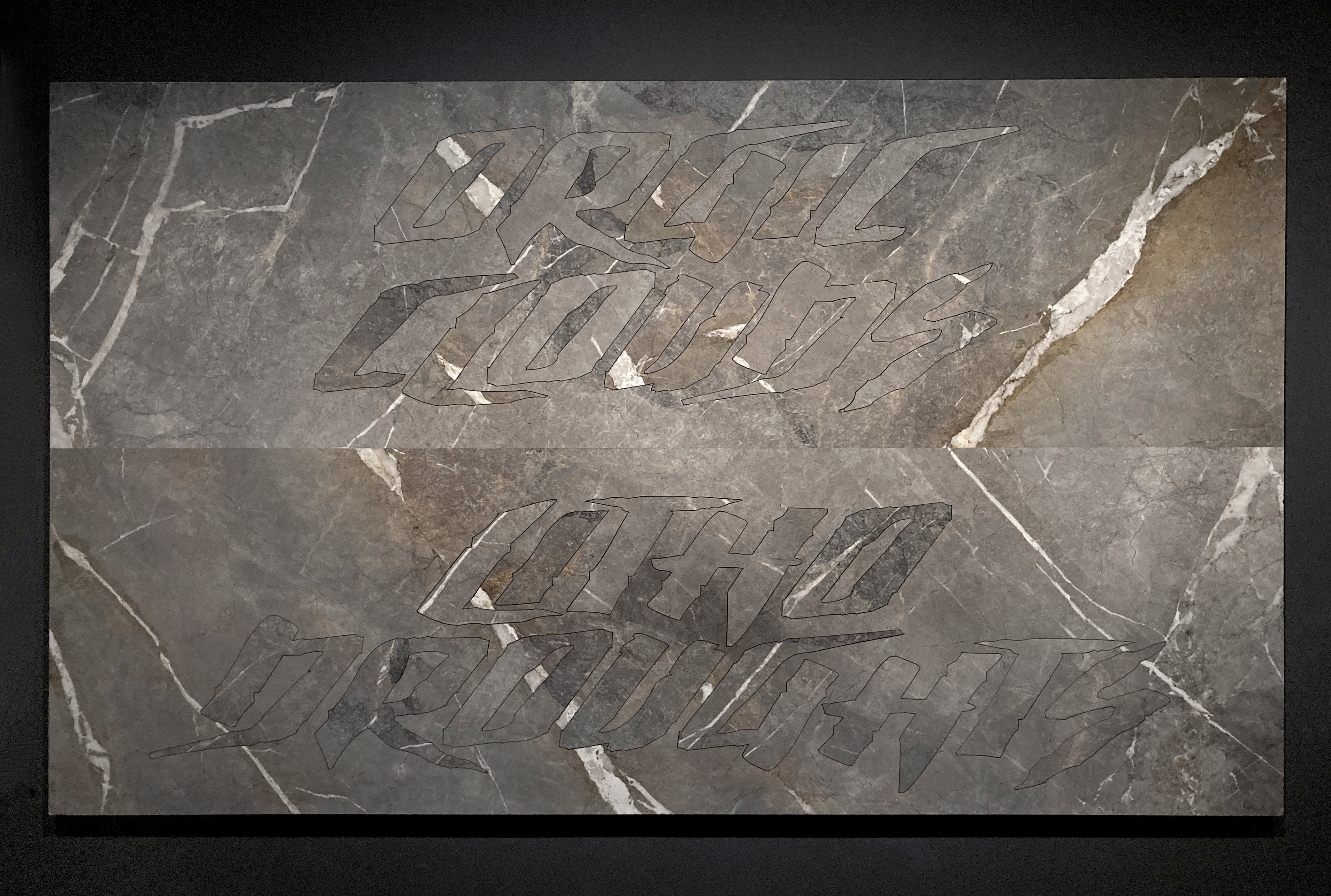
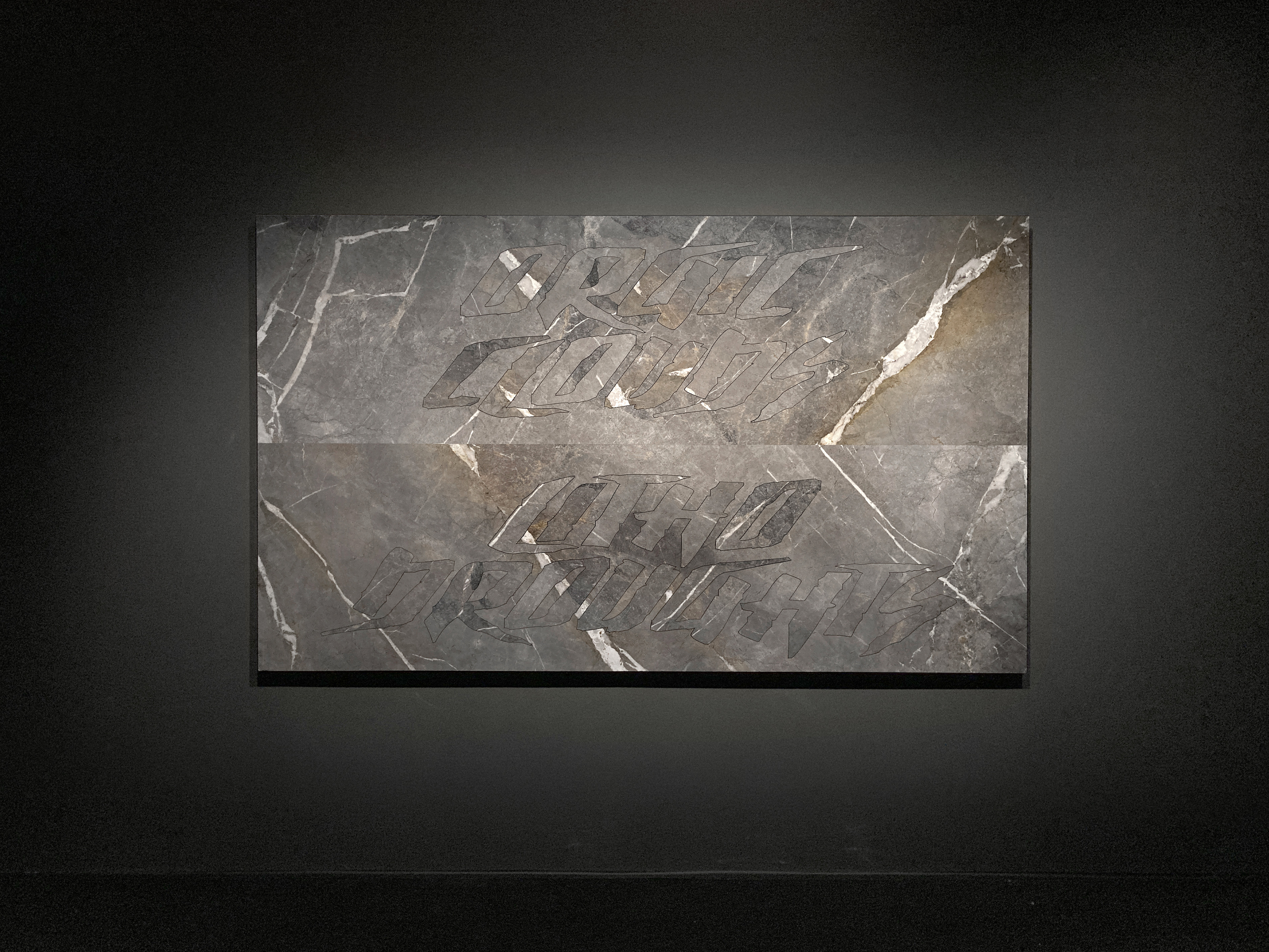
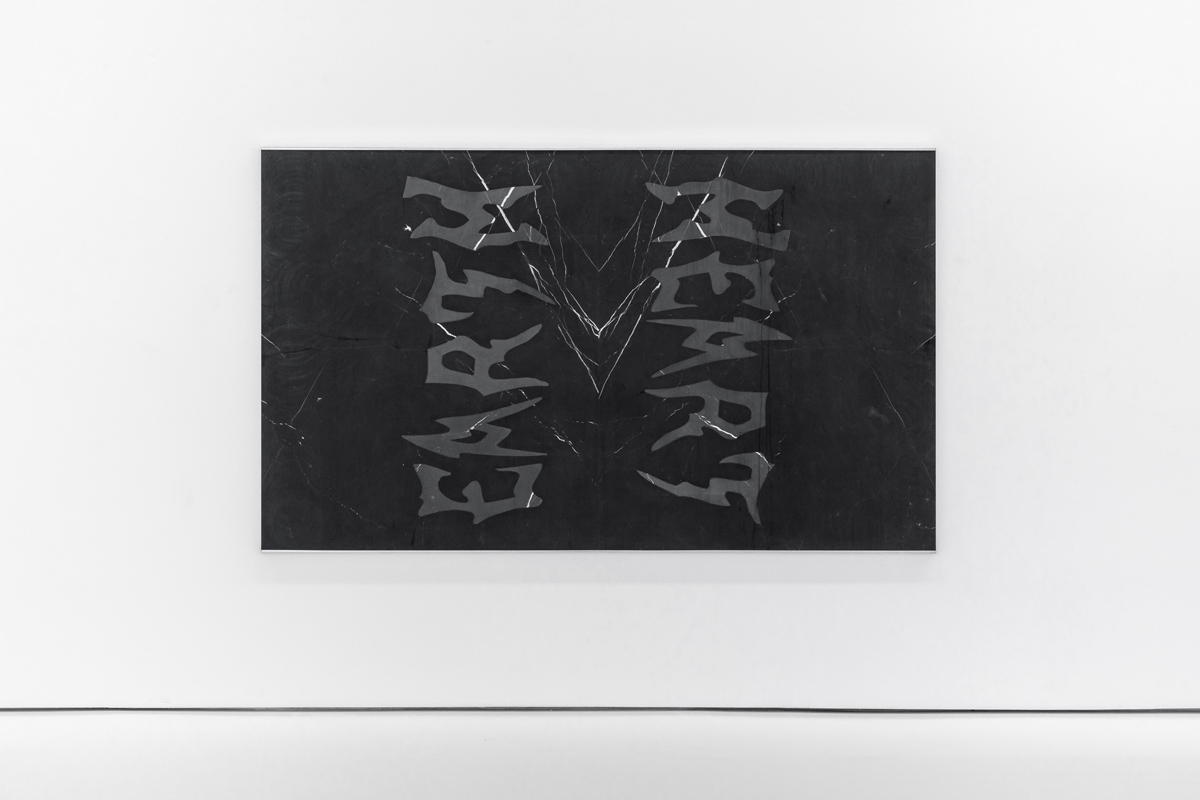
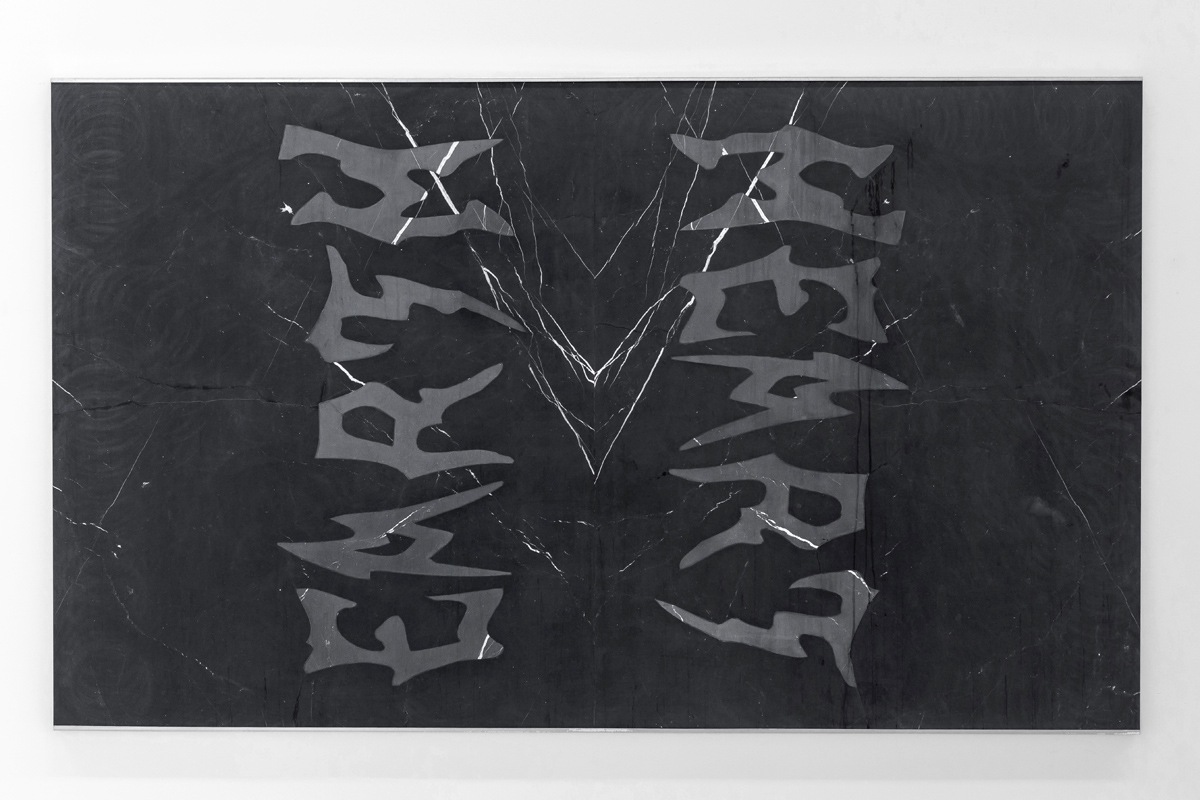
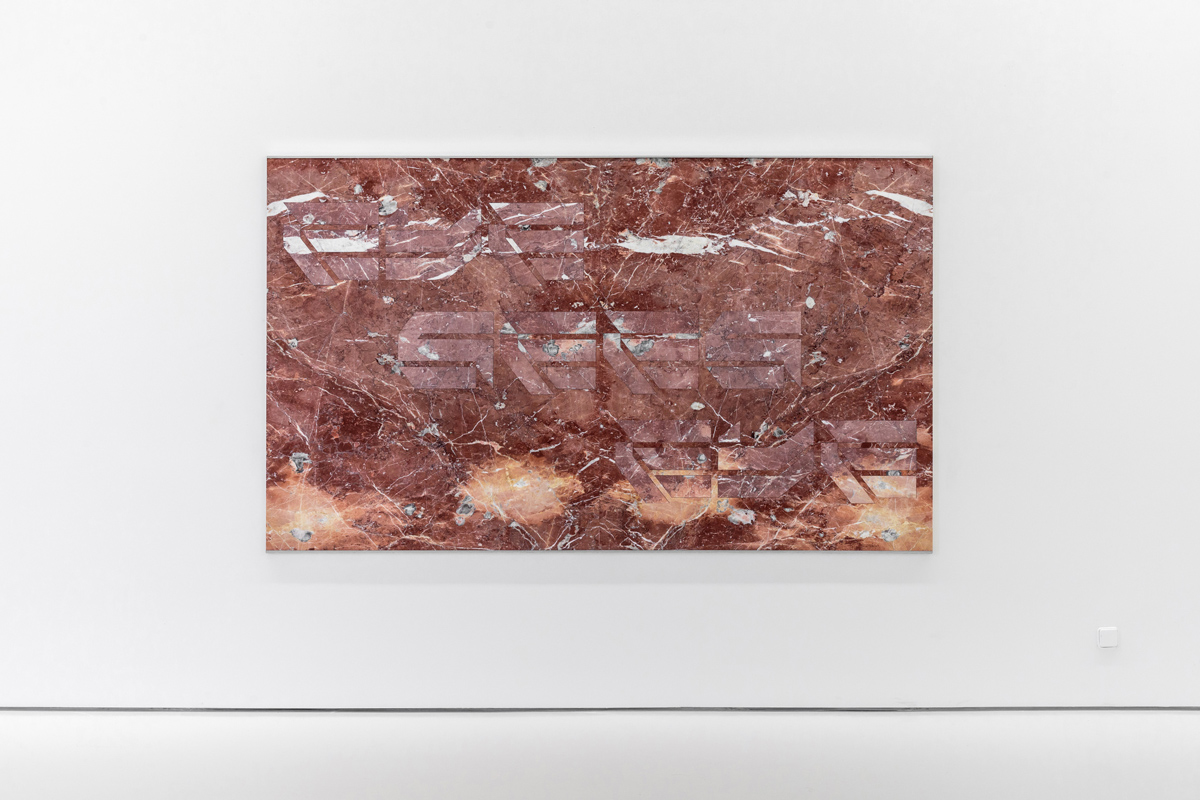
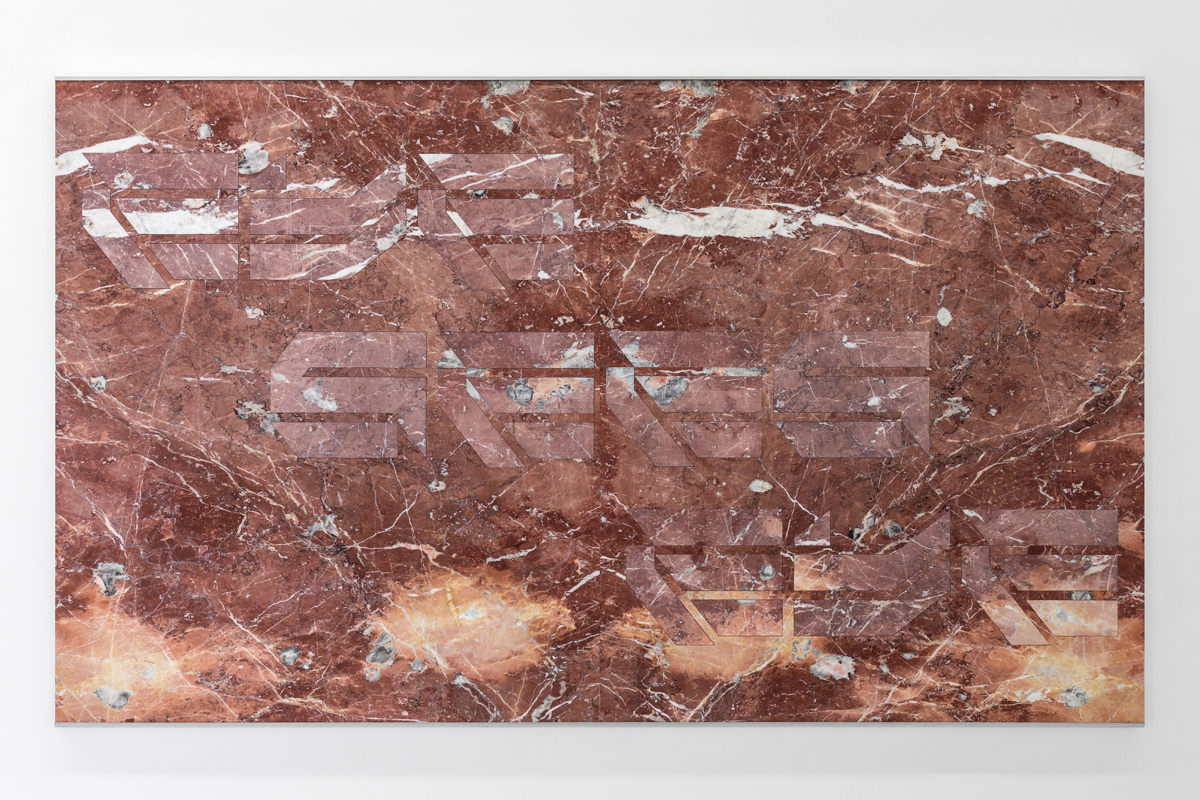
Anagram (Orgic Clouds, Litho Droughts), 2022
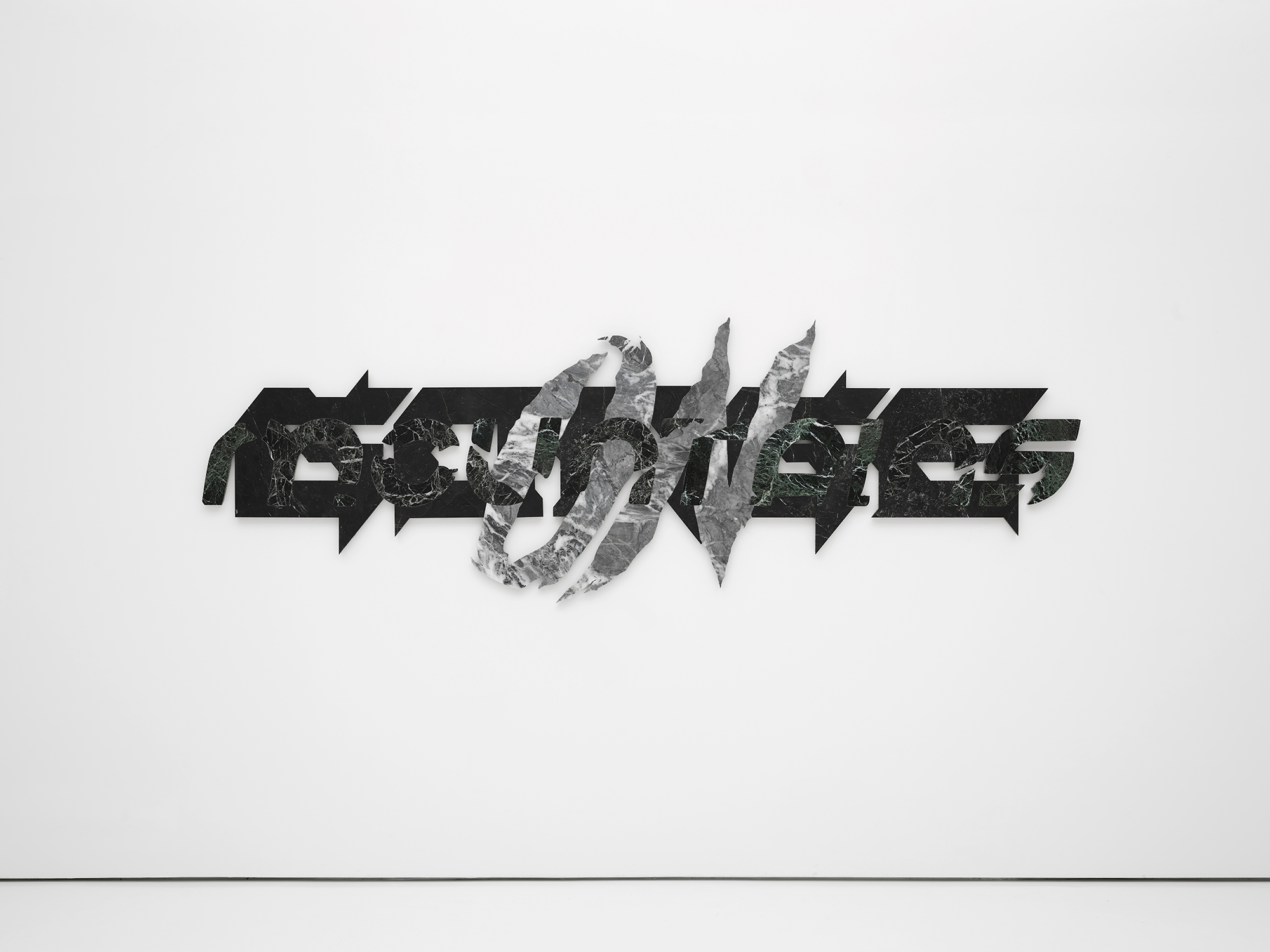
250 x 150 x 3 cm
Marble, aluminum honeycomb pannel
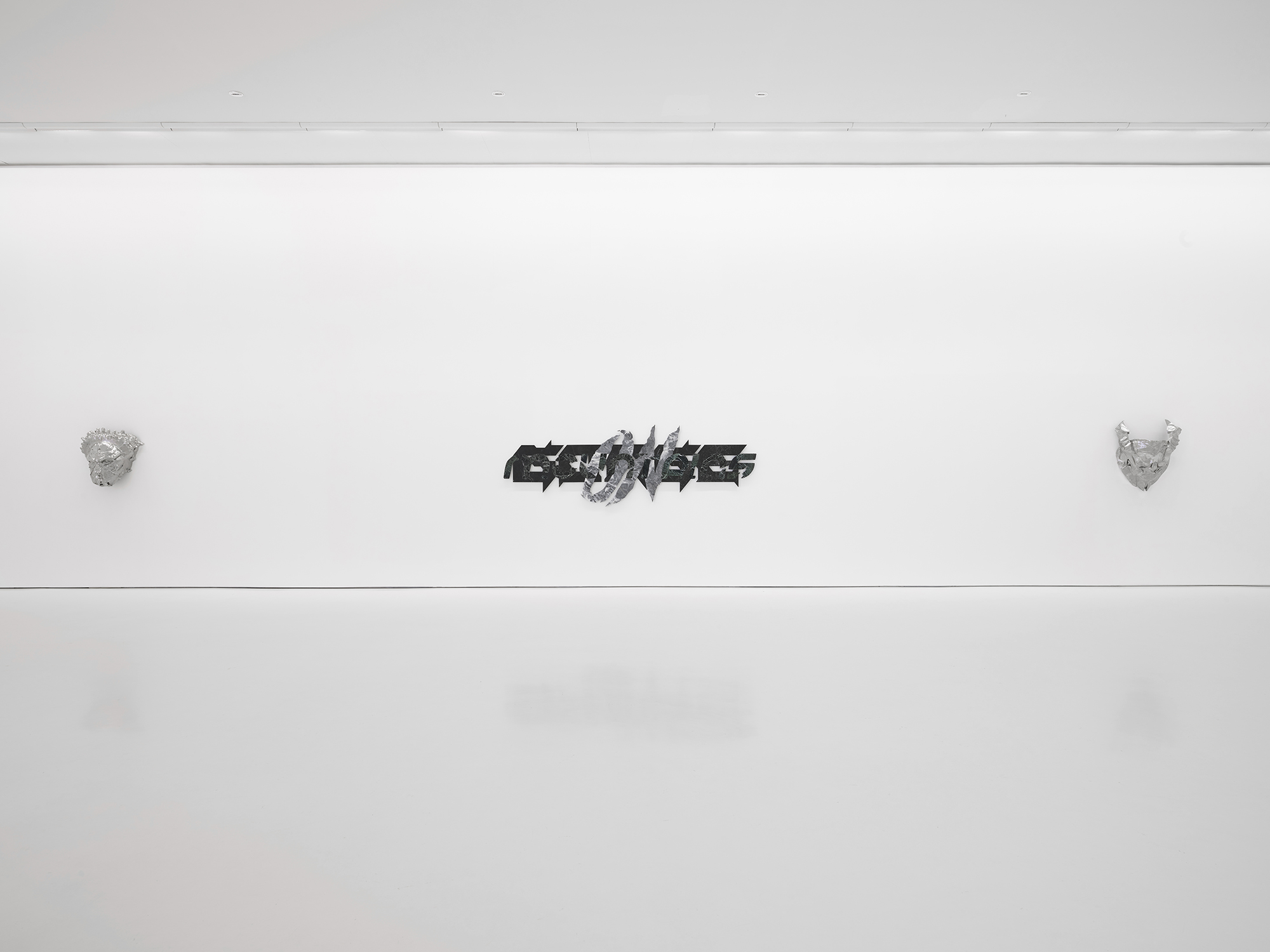
Installation view with Lito Kattou’s Bodies at Weather Engines, Onassis Stegi, Athens 2022
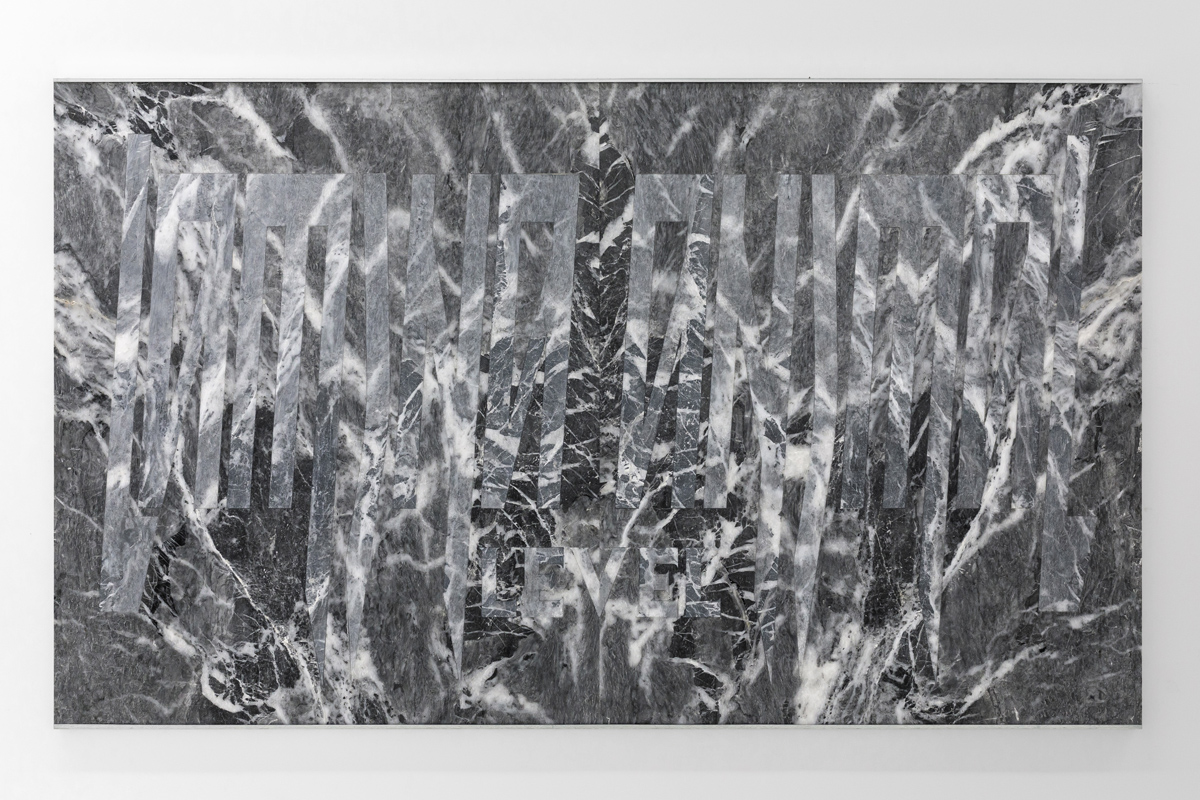
Anagram (Orgic Clouds, Litho Droughts) is a marble-inlay sculpture created as an apotropaic dedication to Earth’s evolving extreme weather phenomena. Floods and droughts –becoming more and more intense and frequent– are captured in a two-part anagram poem and are discussed together as destructive effects of climate change, deforestation and human intervention. The letters of the poem are cut with the aid of CNC waterjet and switched around within the surface, disrupting the natural pattern of the stone. The surface of the aliveri marble used broadly in the city of Athens resembles a cloudy sky and at the same time it constitutes a visual encoding of the slow geological processes of the planet. As a metamorphic rock, it was formed by the high temperature and pressure of Earth’s crust. ‘Anagram’ looks at geology, climate and civilization as an integrated network that entangles inorganic matter, biological processes and cultural codes into a common ‘Earth System’.
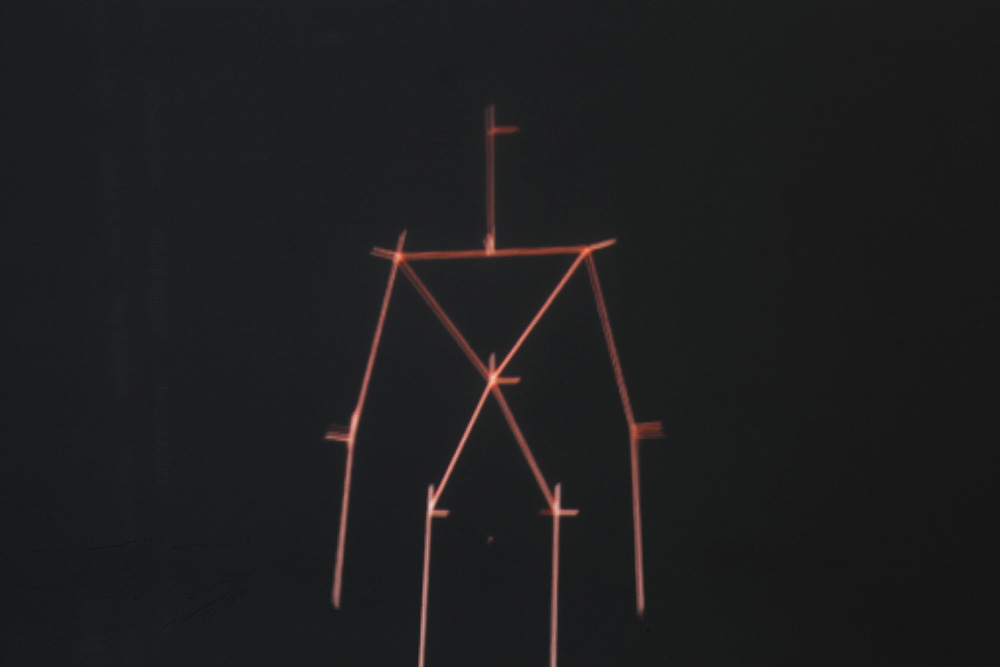
Spirit Structure is part of a continuum of works that can be considered as light-sculptures. Acting as elementary holograms that animate forms captured as visual data, these more-than-sculptural appearences resonate the wonder-machines of ancient theater, 19th century Phantasmagoria mechanisms, and sci-fi imaginaries of ethereally disembodied subjectivities. Spirit Structure reflects on the uncanniness of the interior body-form, the silent perpetual dance of the circulatory systems of life support, the fragility and vitality of the Other that is to be found in the inner-self. It mirrors multi-scalar structures from the inorganic to the vegetal and animal domain, the networked infrastructures that facilitate contemporary sociality, the quantum and cosmic phenomena of flux, movement and etropic metamorphosis. It pleads for the reclaiming of the eery powers and vigorous symbolisms of “anatomy” from its unjust institutional past of marginalization and exploitation of sexualized, racialized, and convict bodies.
Subterranean Sun is an installation presented at the exhibition space of Delfina Foundation, stemming from Petros Moris’s ongoing interest in the material and mythological manifestations of underground space as the origin of cultural pasts and technological futures.
This new body of work presented in Subterranean Sun takes the form of a series of solar intaglio etchings, a prototype of an algorithmically generated text-based work presented on-screen, a 3D animation based on the photogrammetric scans of a quarry in Greece, and a helioseismological soundscape.
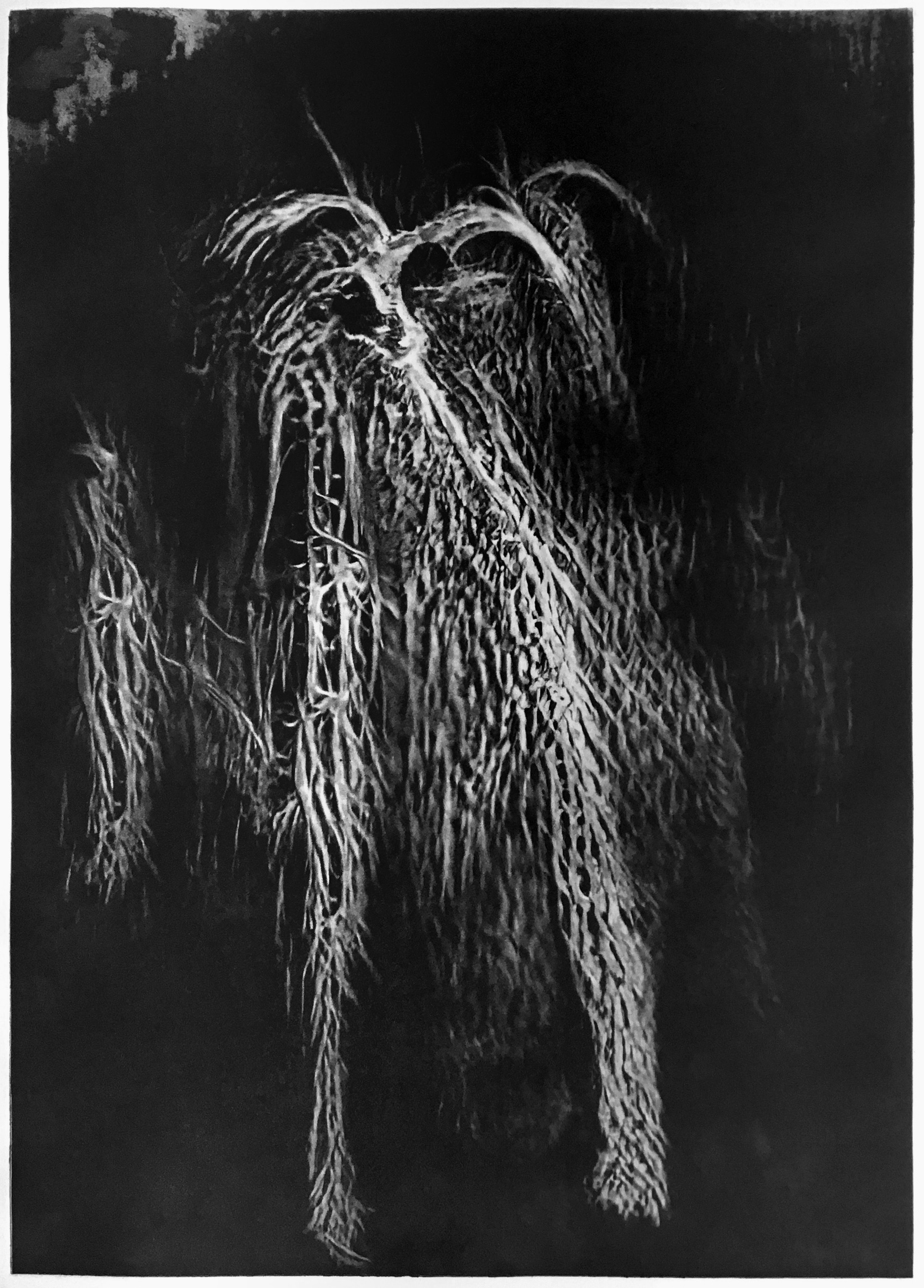
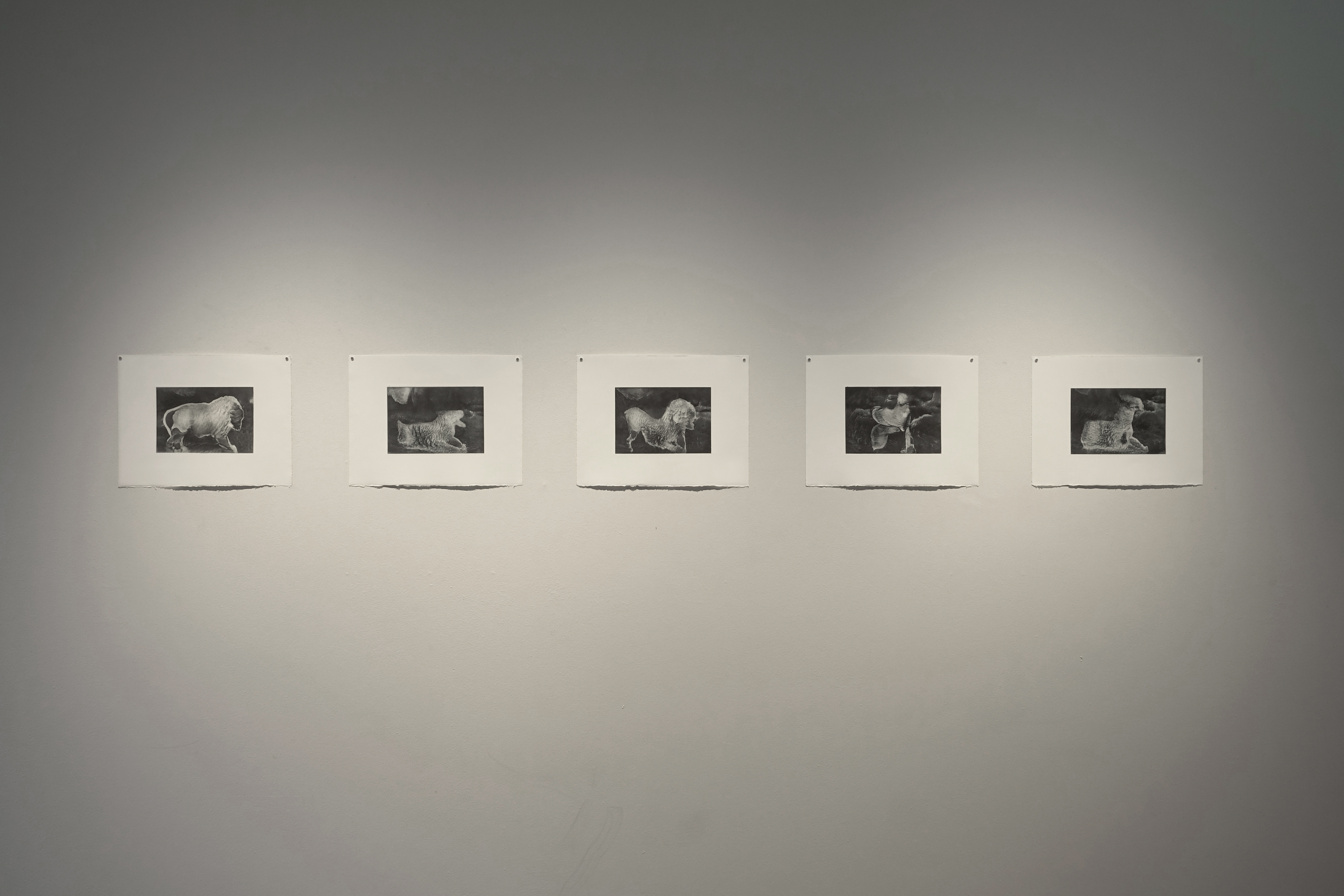
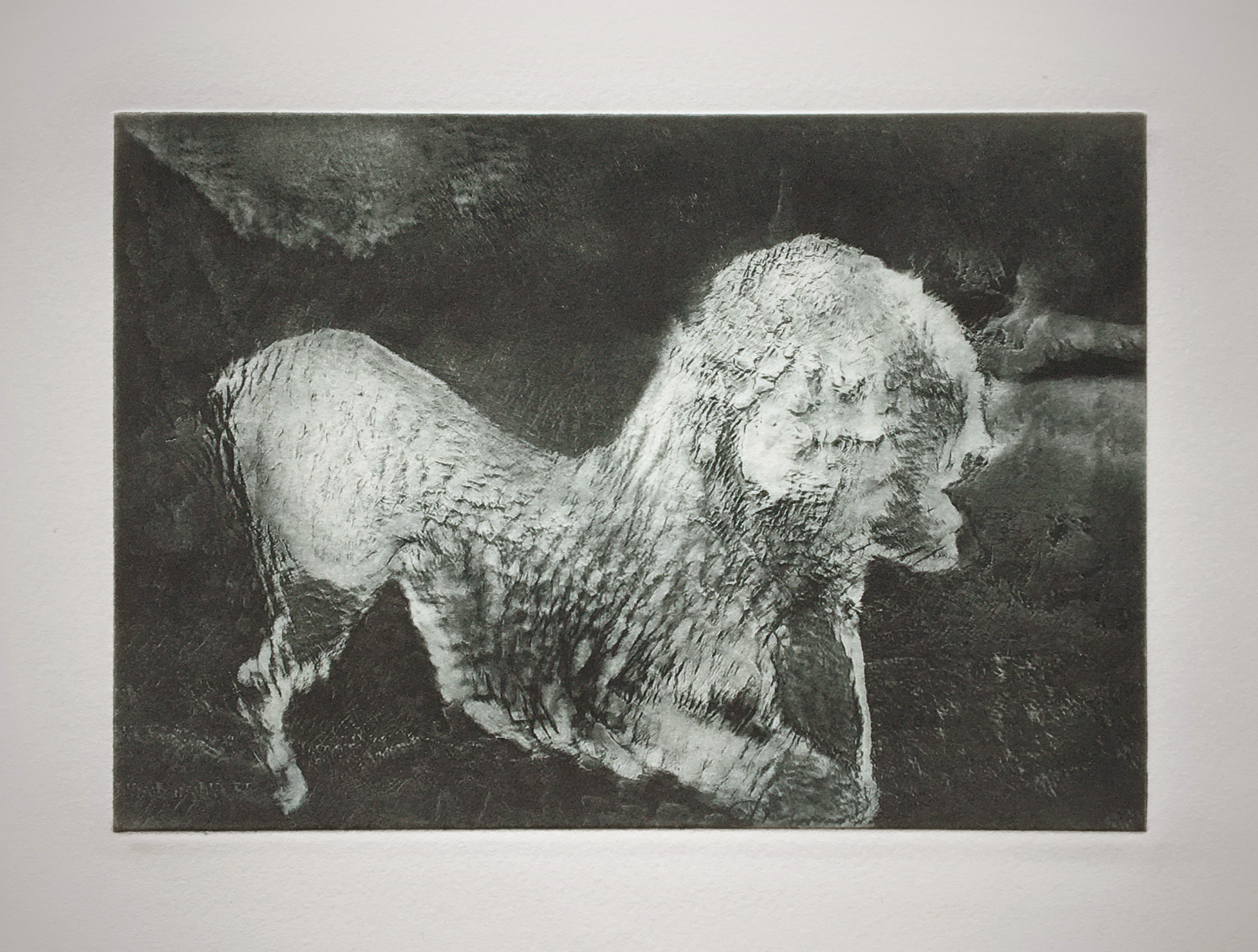
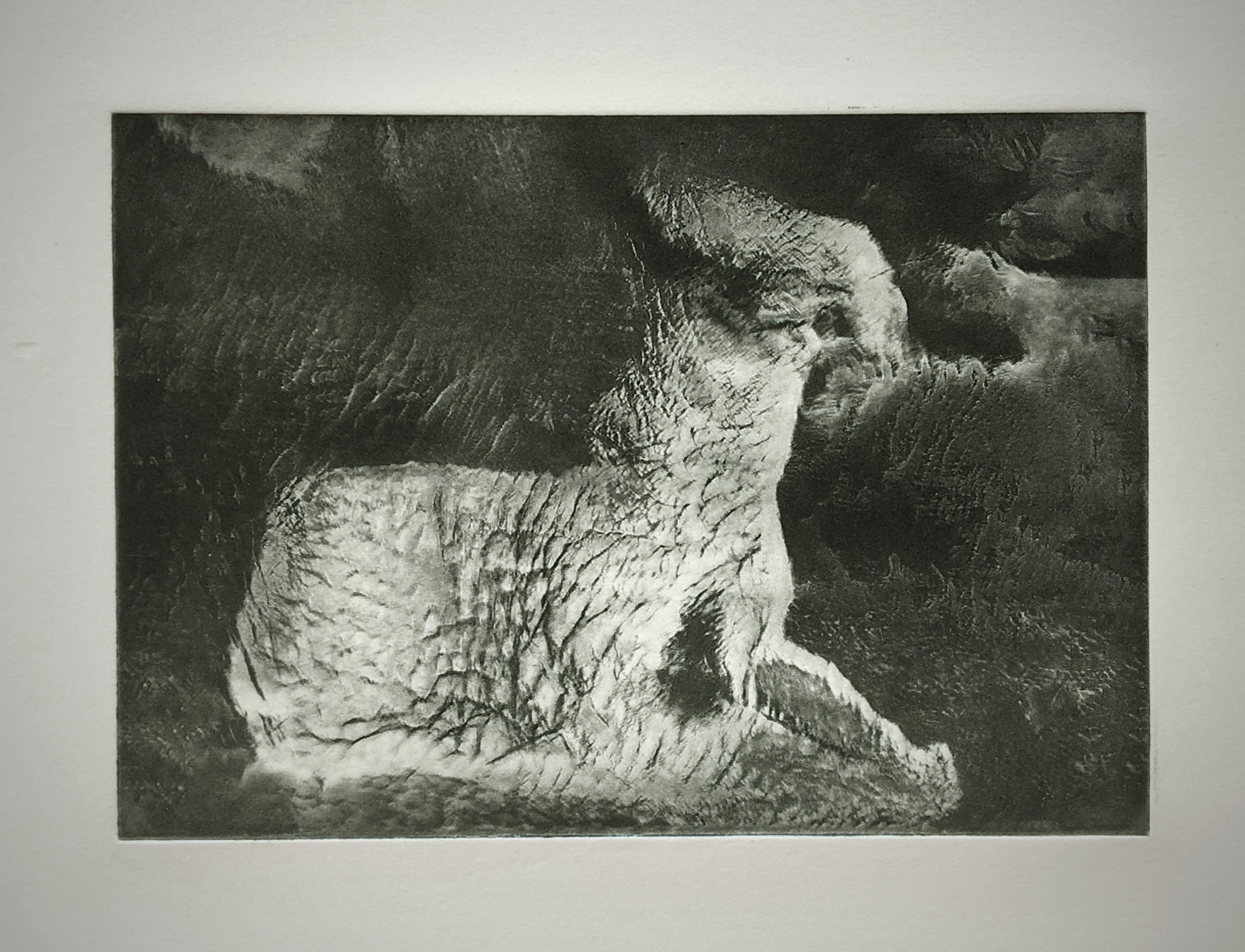
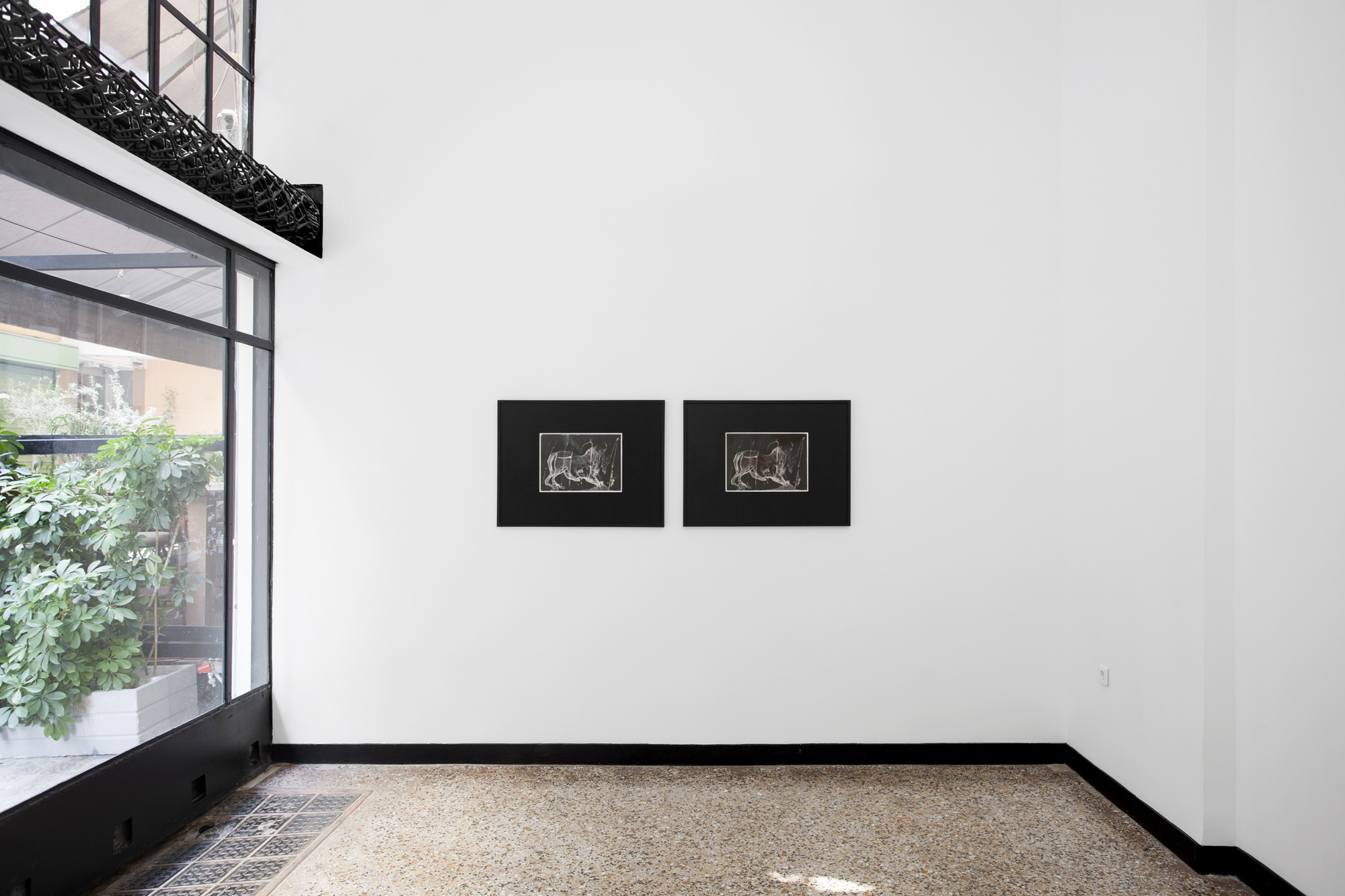
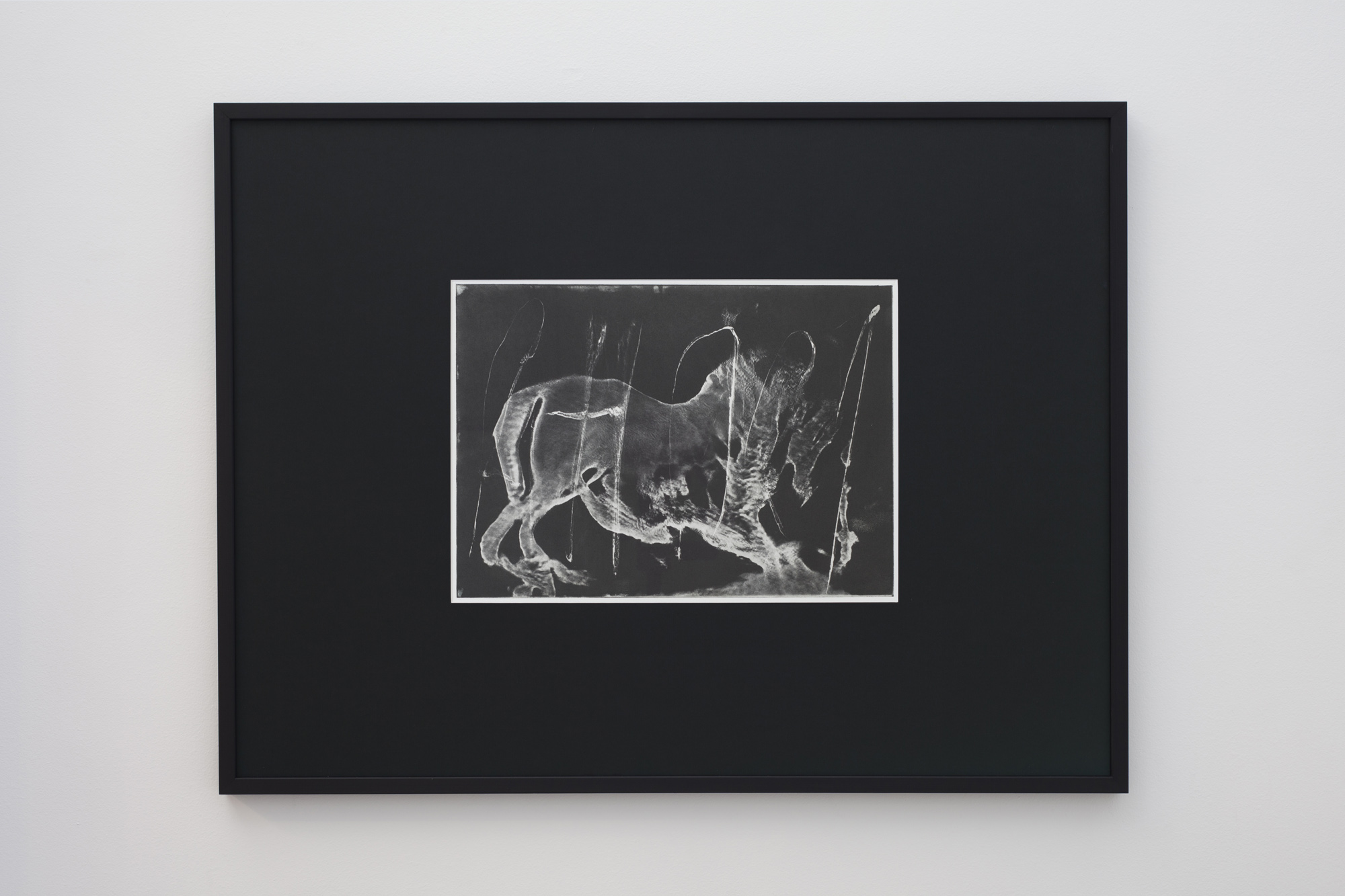
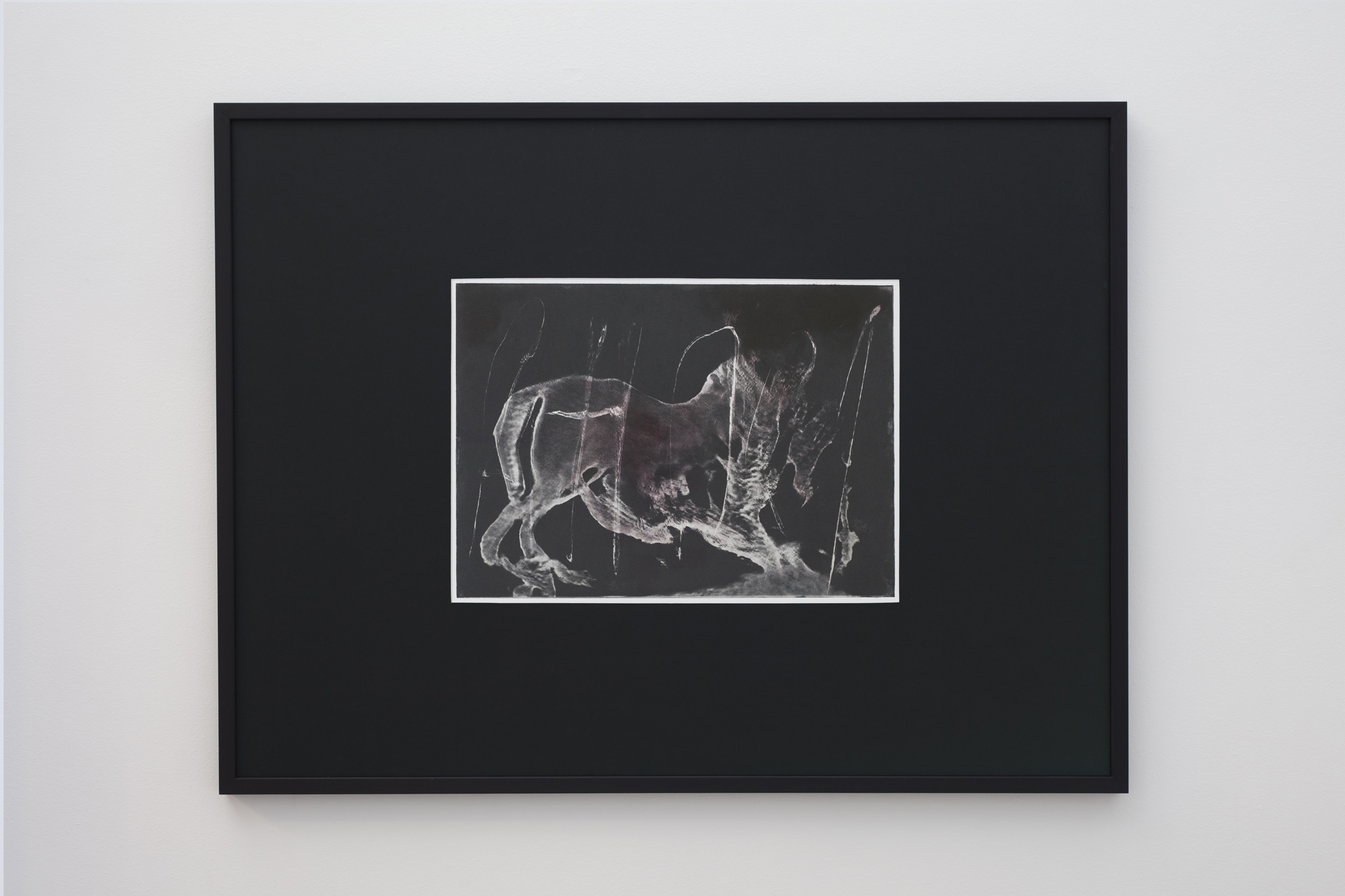
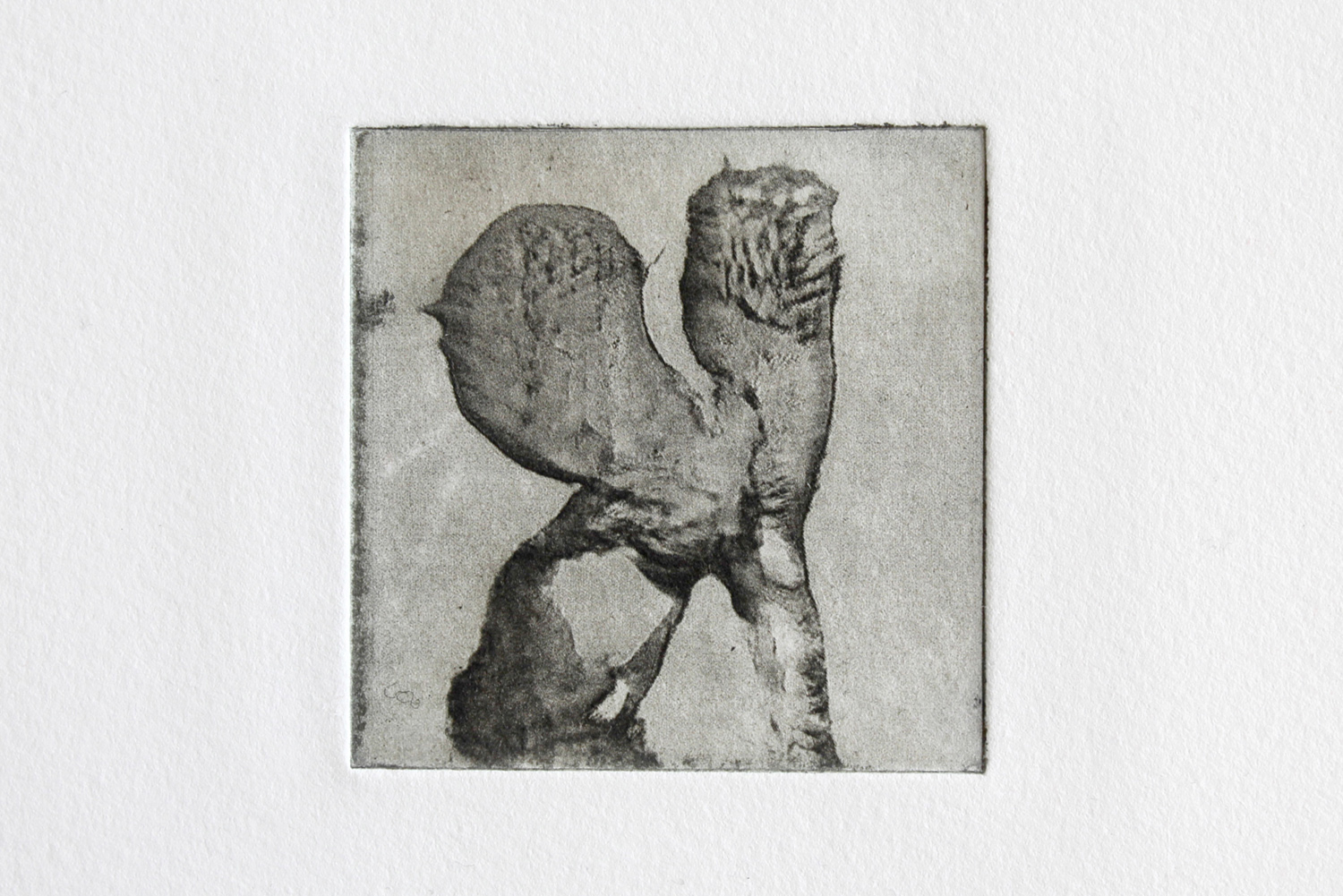
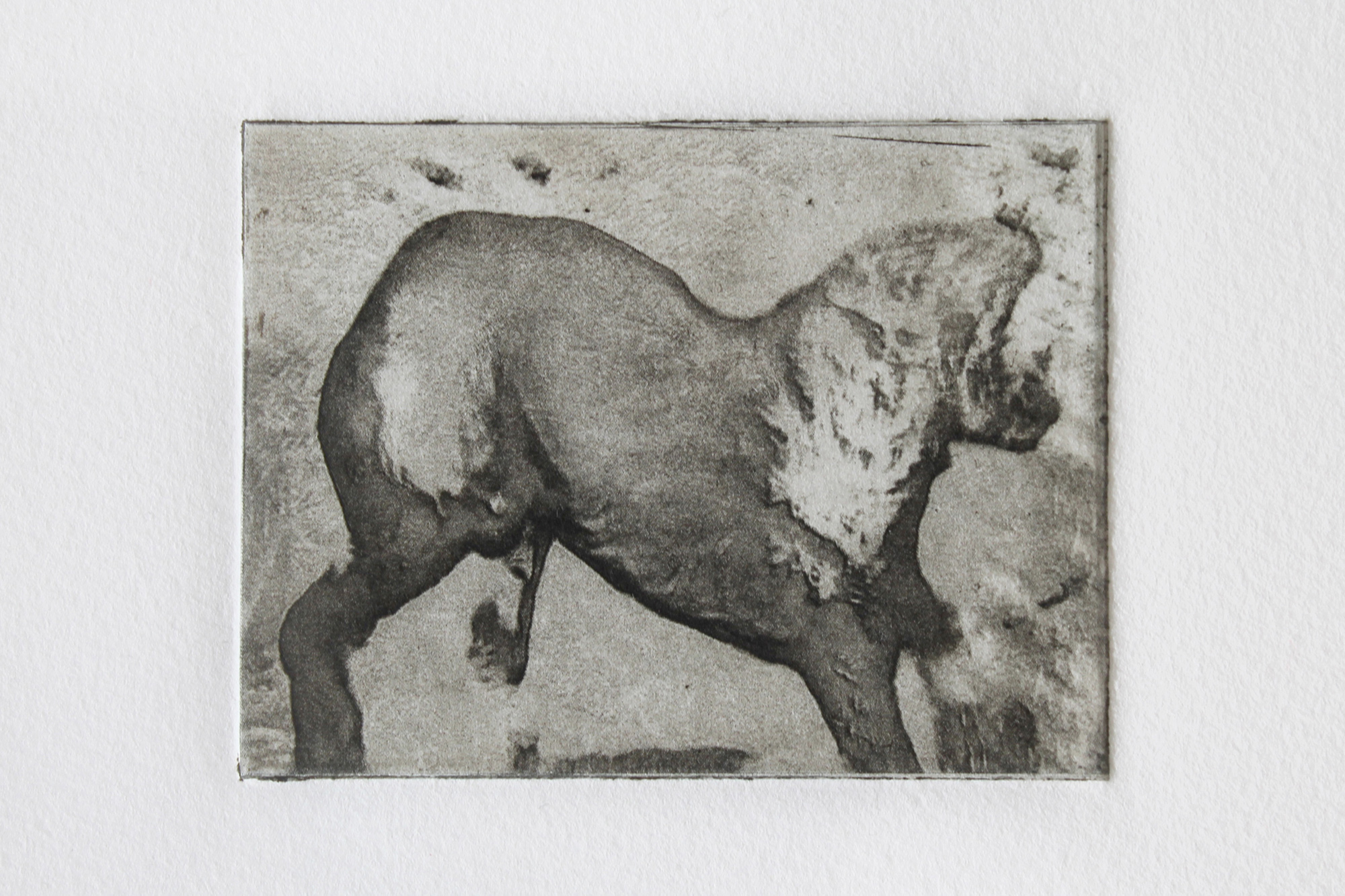
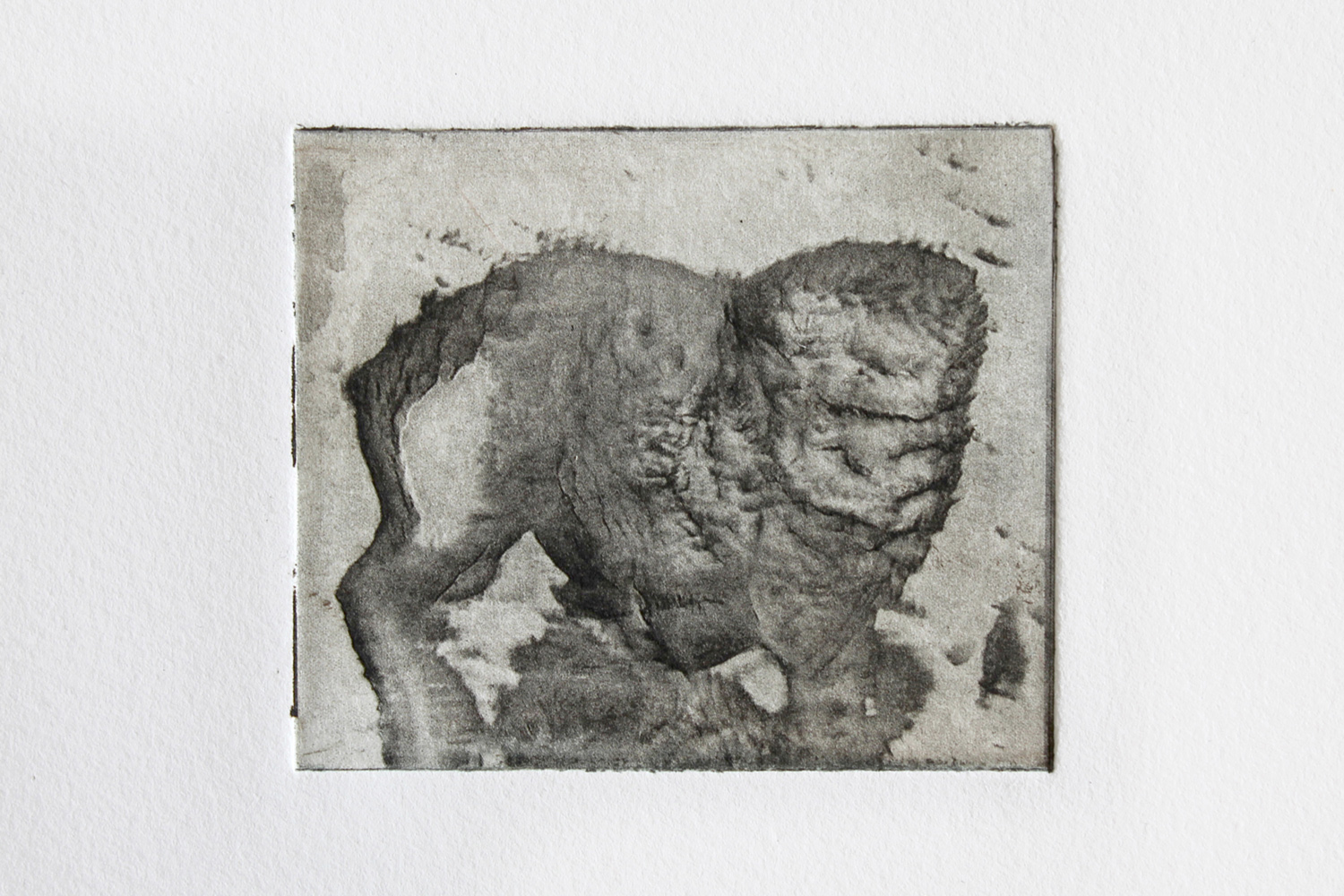
Developed under the radiation of the Greek sun, and printed in London during Petros’s residency, the solar intaglio etchings derive from algorithmic machine-learning mutations performed on Petros’s own photographic archives of the animal-resembling sculptures which used to inhabit the ancient Kerameikos cemetery in Athens as the protectors of the threshold between the underworld and the life above.
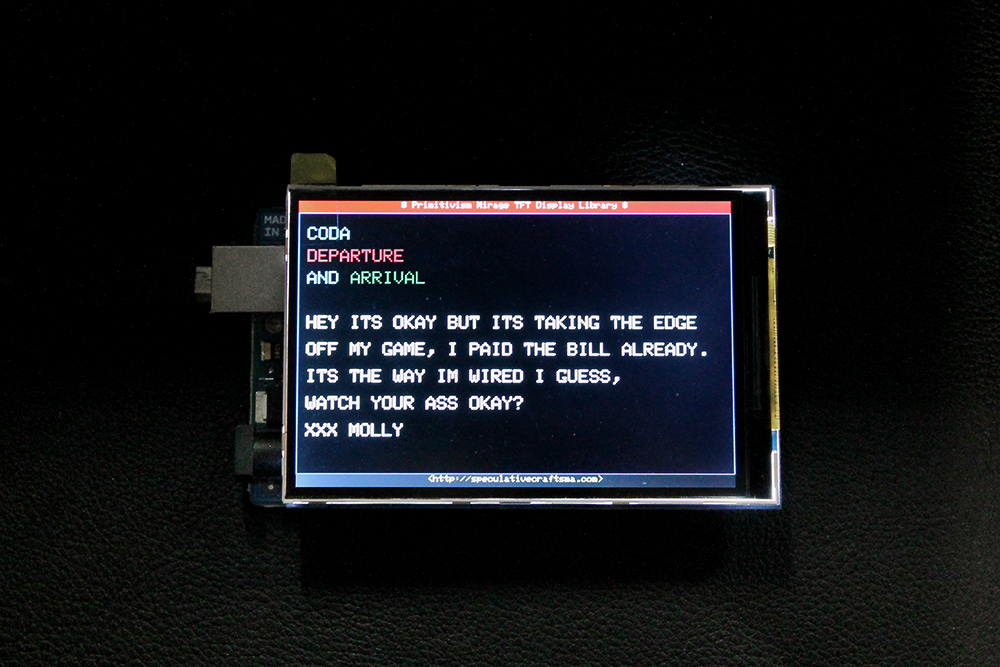
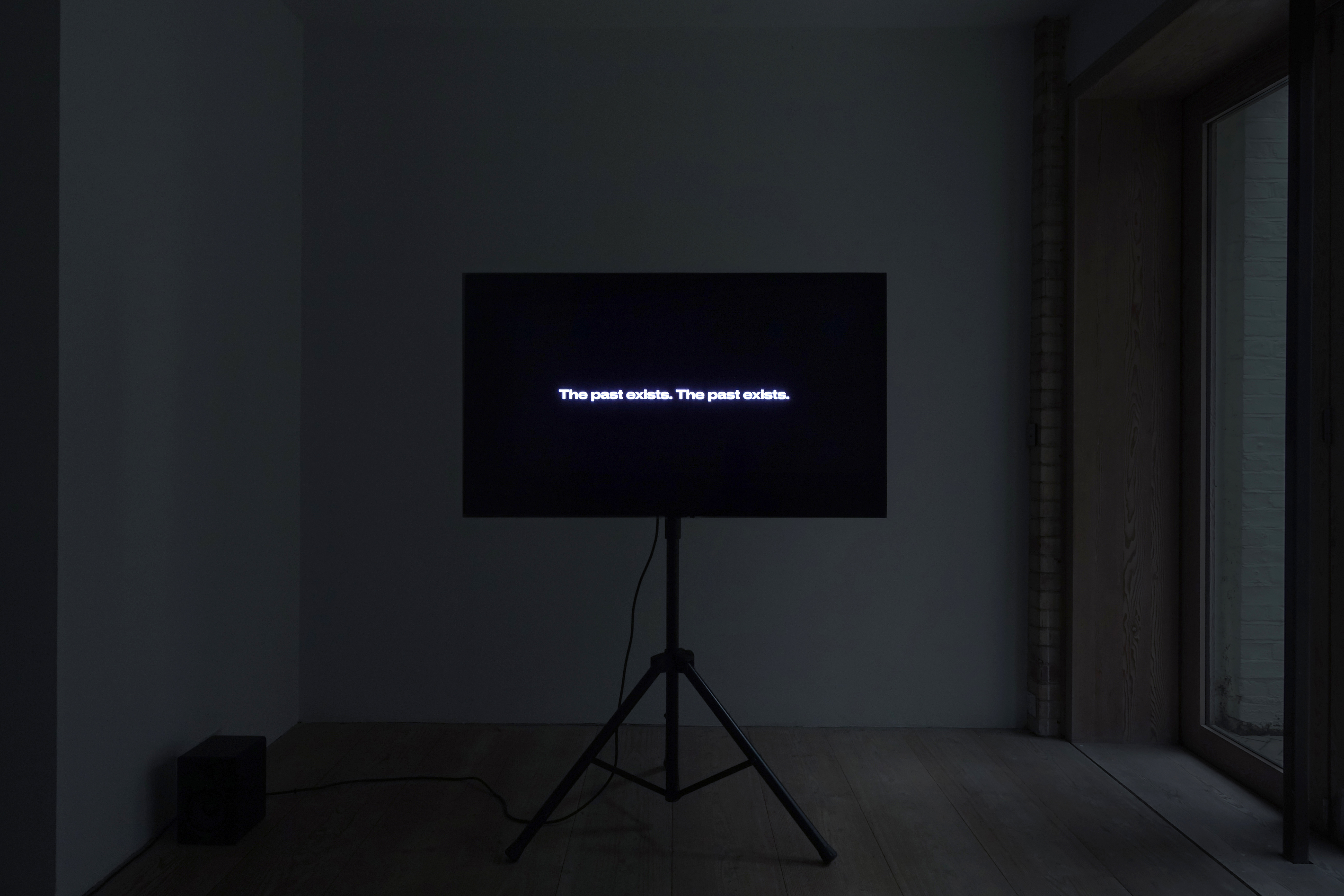
Brought into dialogue with the etching is a prototype version of the text-based work Harvest. Using a similar algorithmic logic of machinic prediction it generates an endless stream of abstract “oracles”; texts of a synthetic language left to contingent human interpretation.
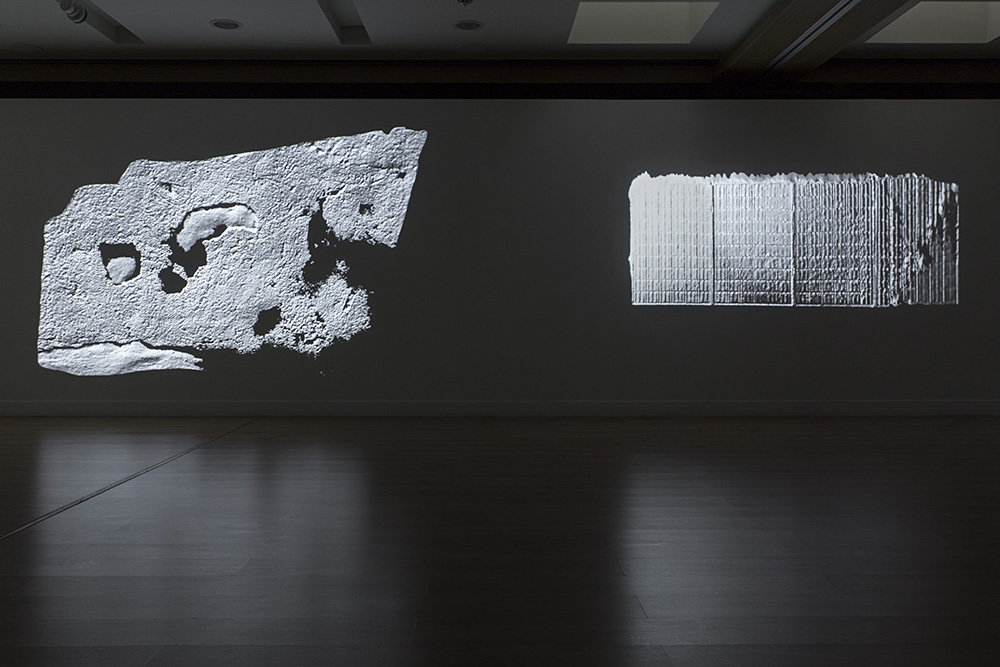
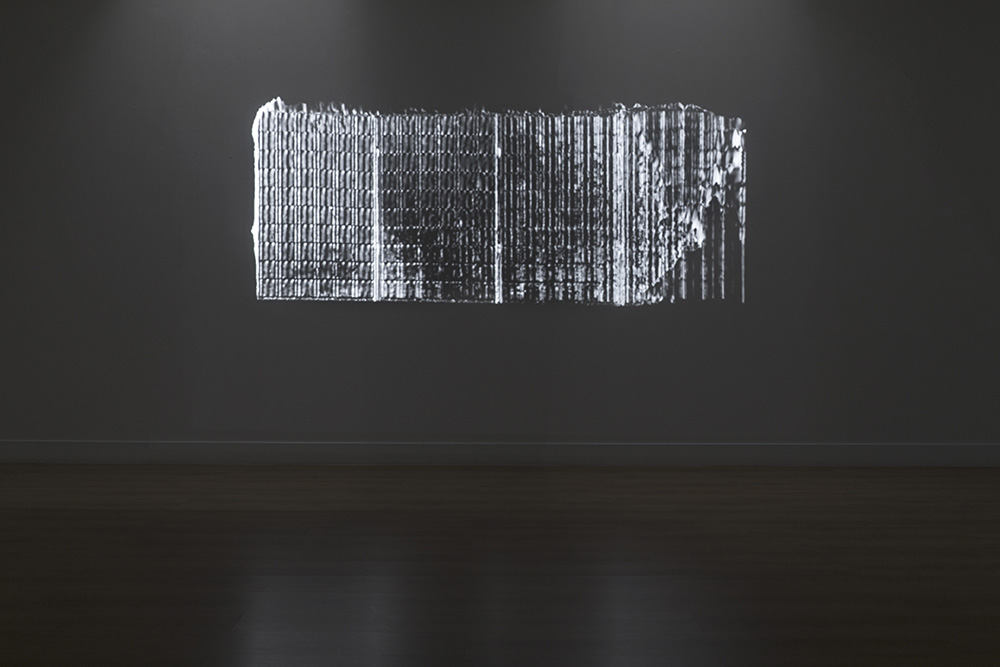
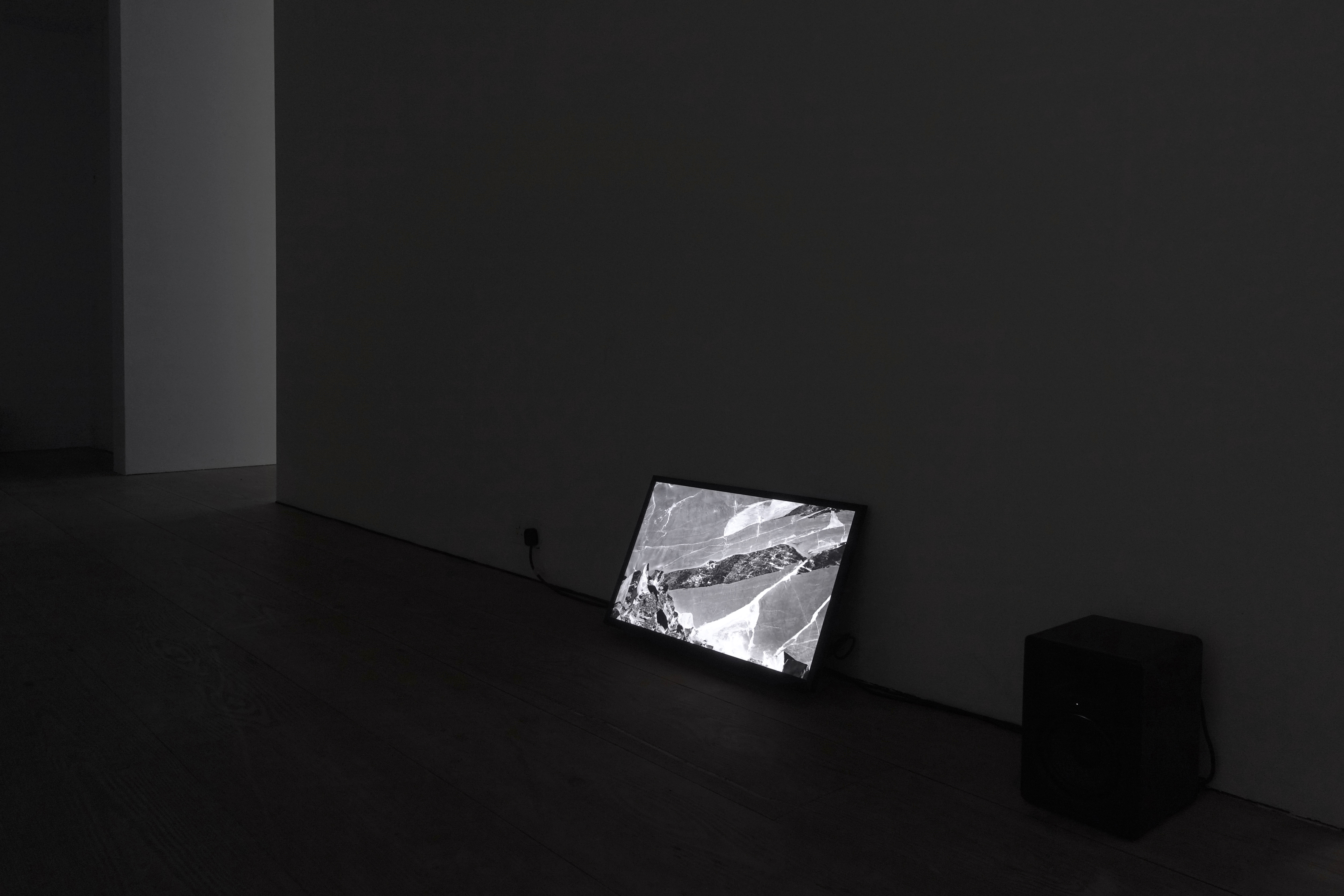
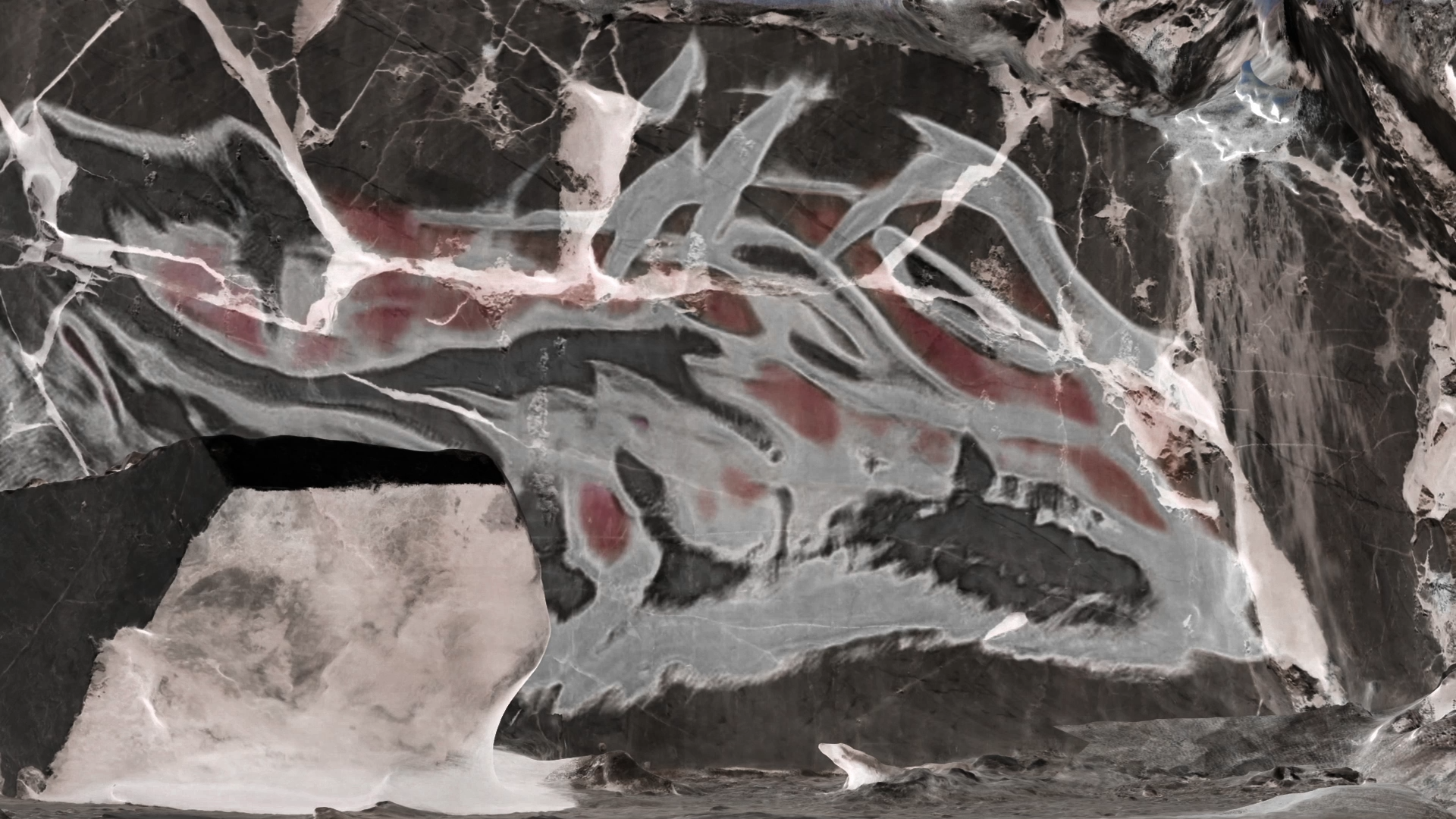
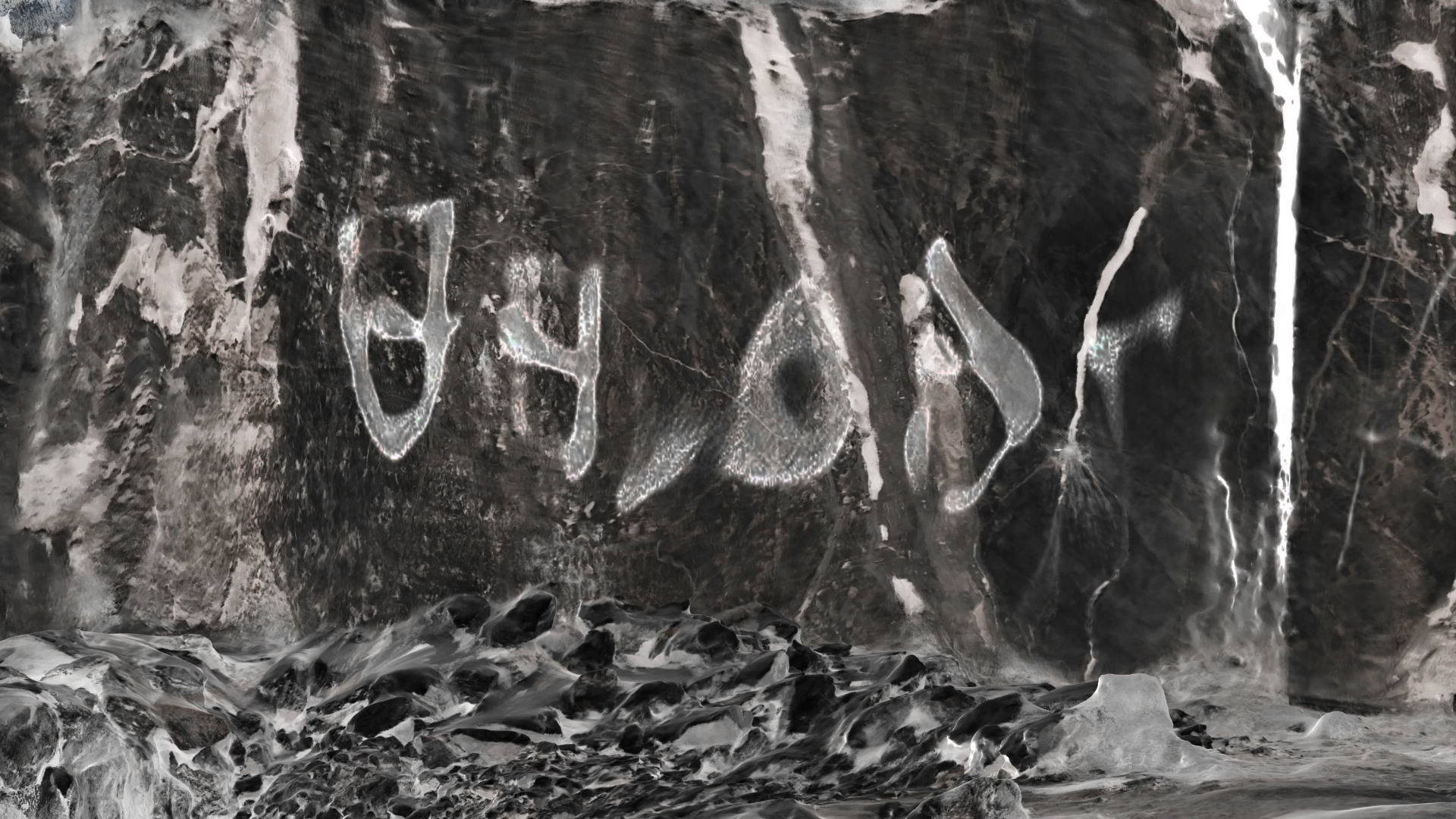
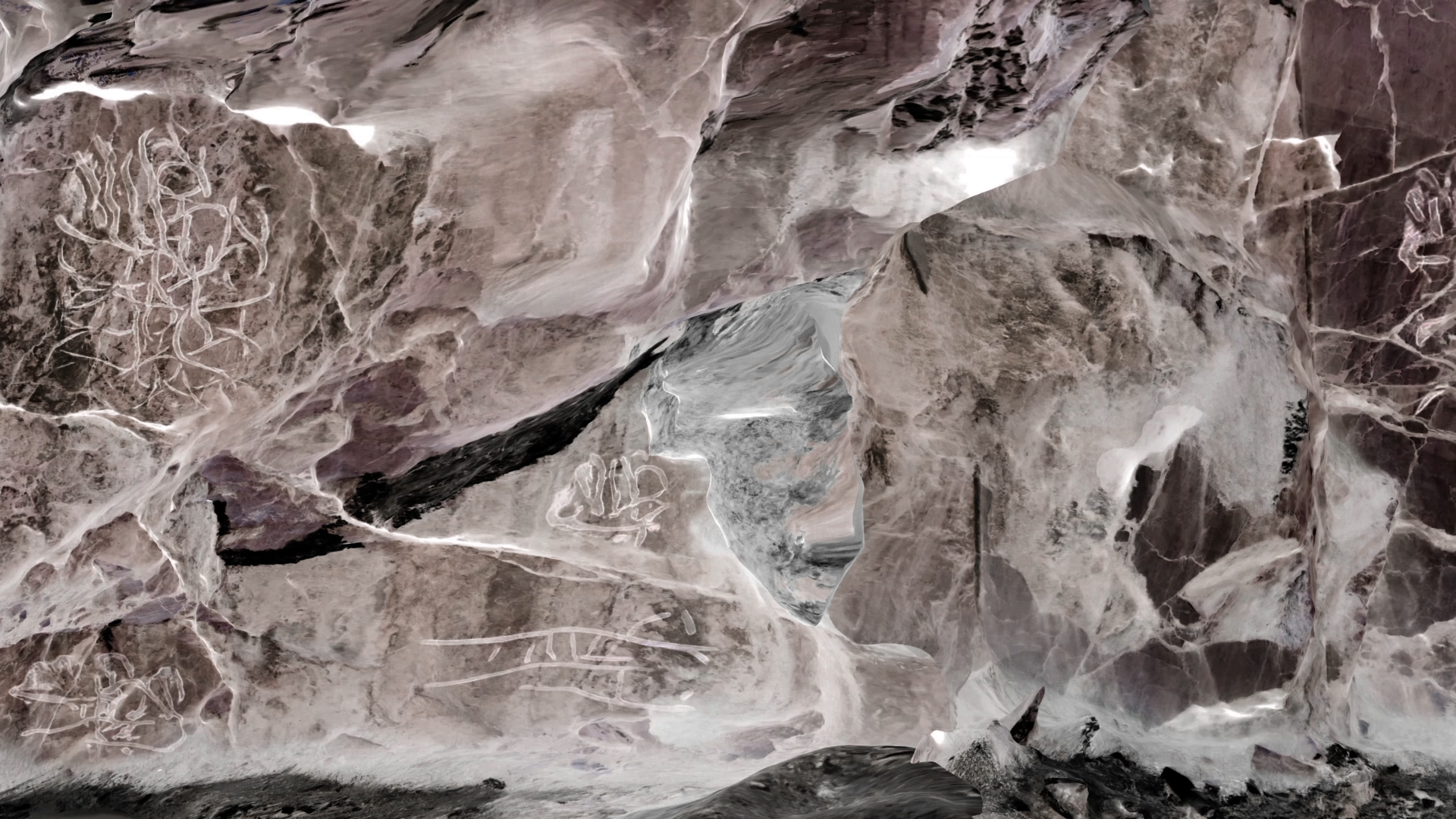
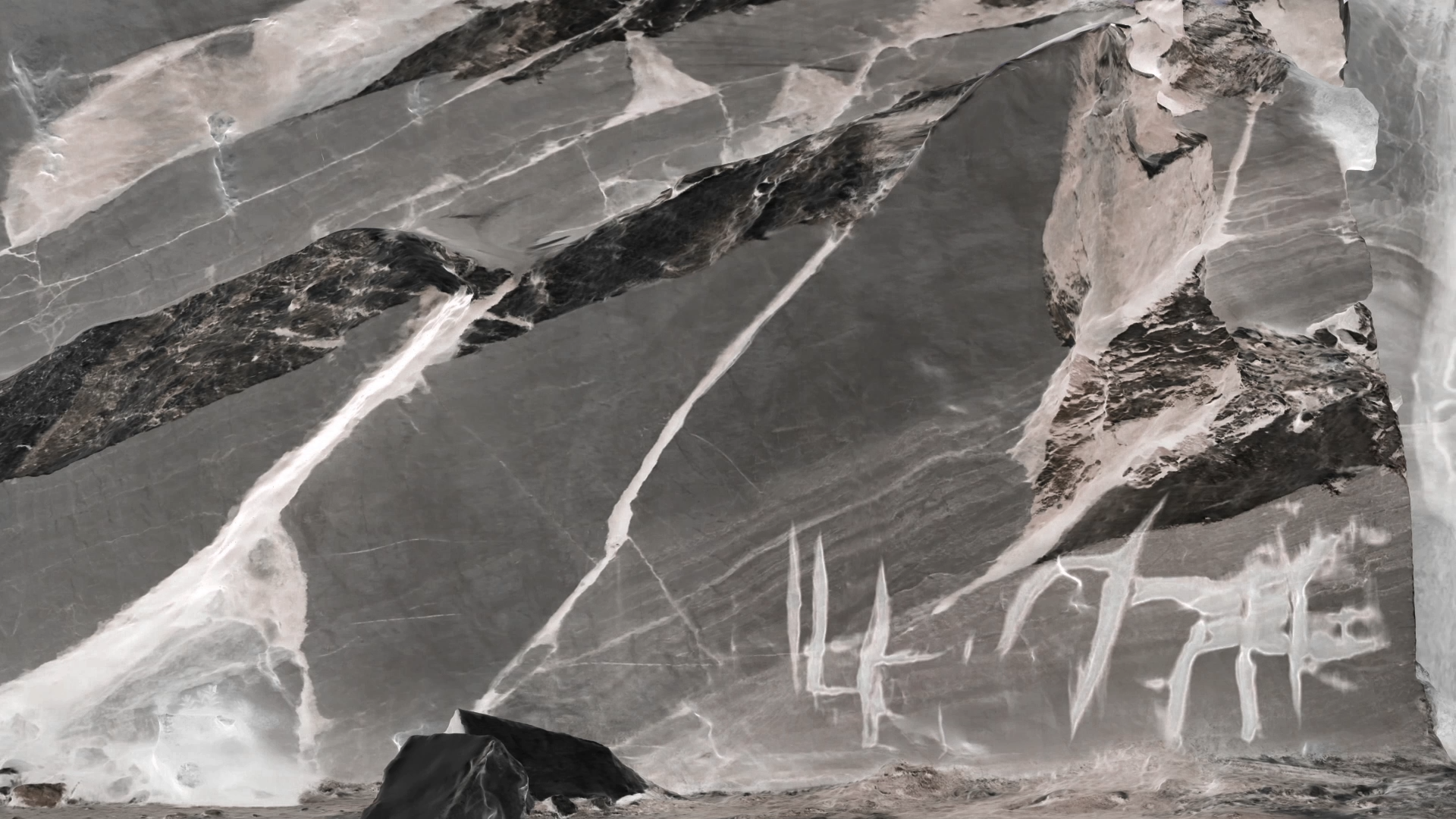
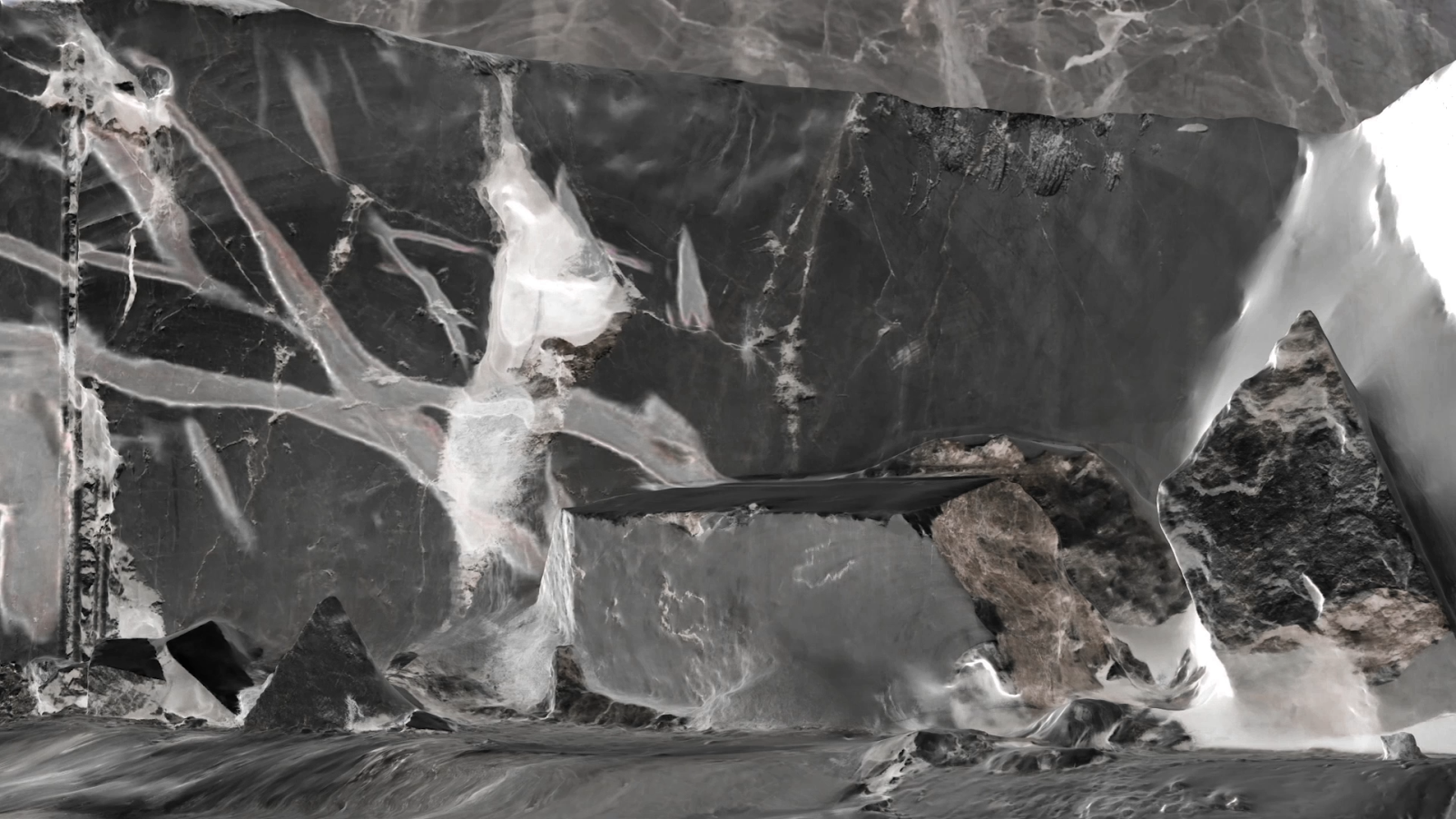
Reflecting back to the earthly materiality of the Kerameikos marble sculptures, the 3D-animated video Quarry Time (Ghost) unfolds as a negative image rendering of a haunted geological landscape, re-modeled after old photogrammetric scans of a marble quarry located between Athens and the artist’s hometown, Lamia.
Closing the loop between the celestial and the subterranean, the helioseismological soundscape will permeate Delfina’s underground space, reintroducing the cosmic presence of the sun through a year-long recording of solar oscillations, translated into an audible hum.
Wednesday, February 9th, 2022 | Posted in activity |
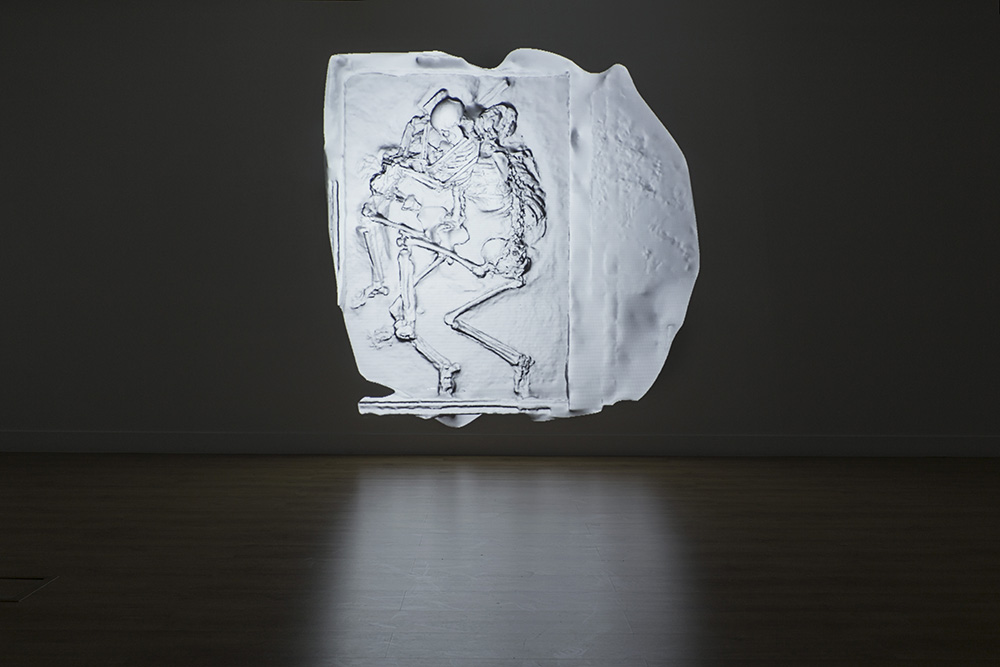
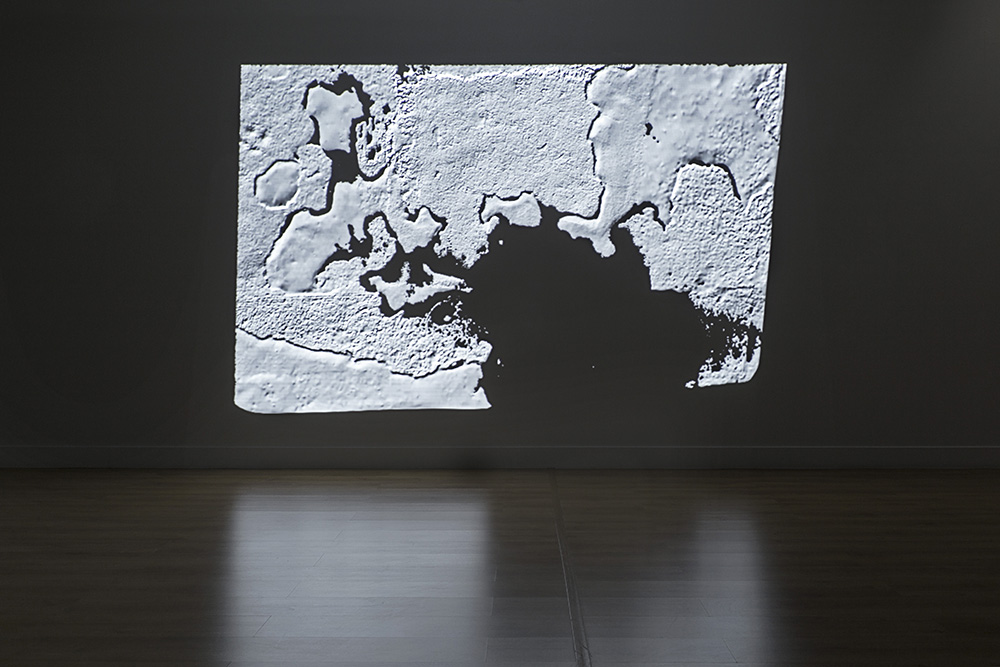
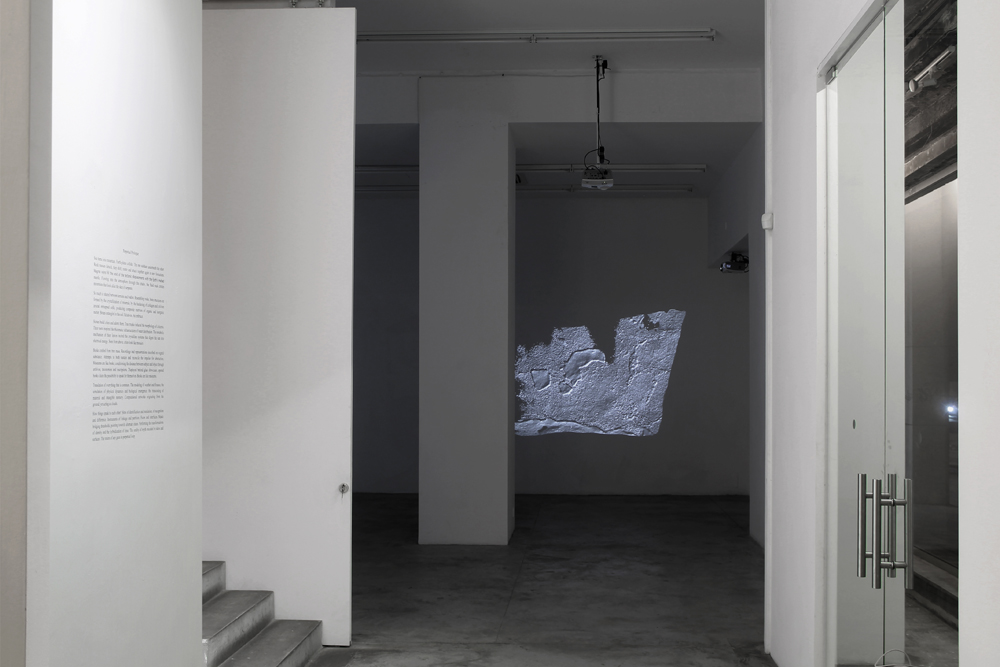
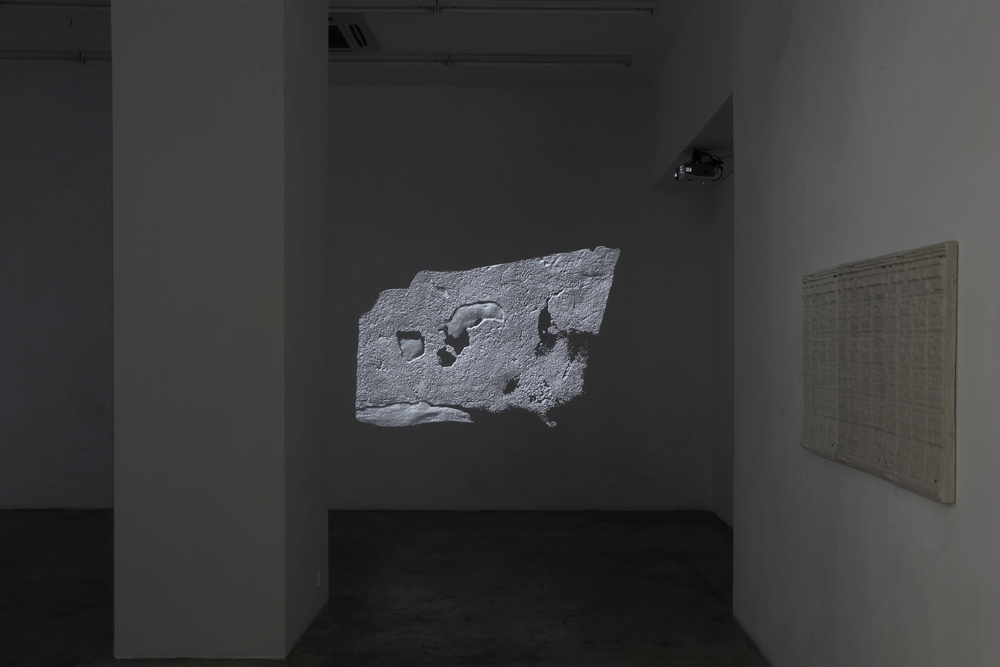
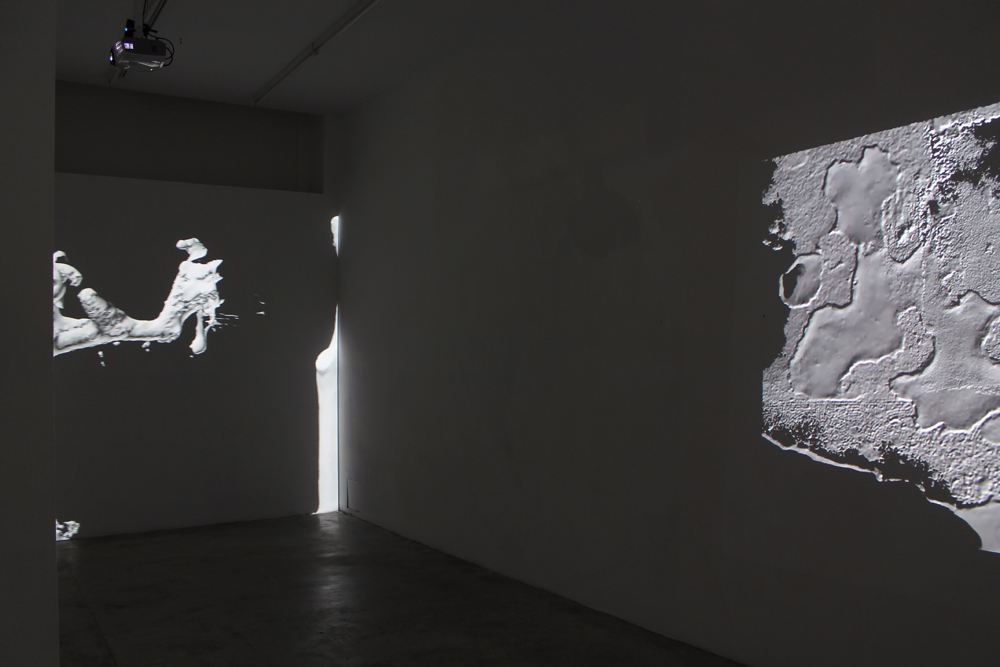
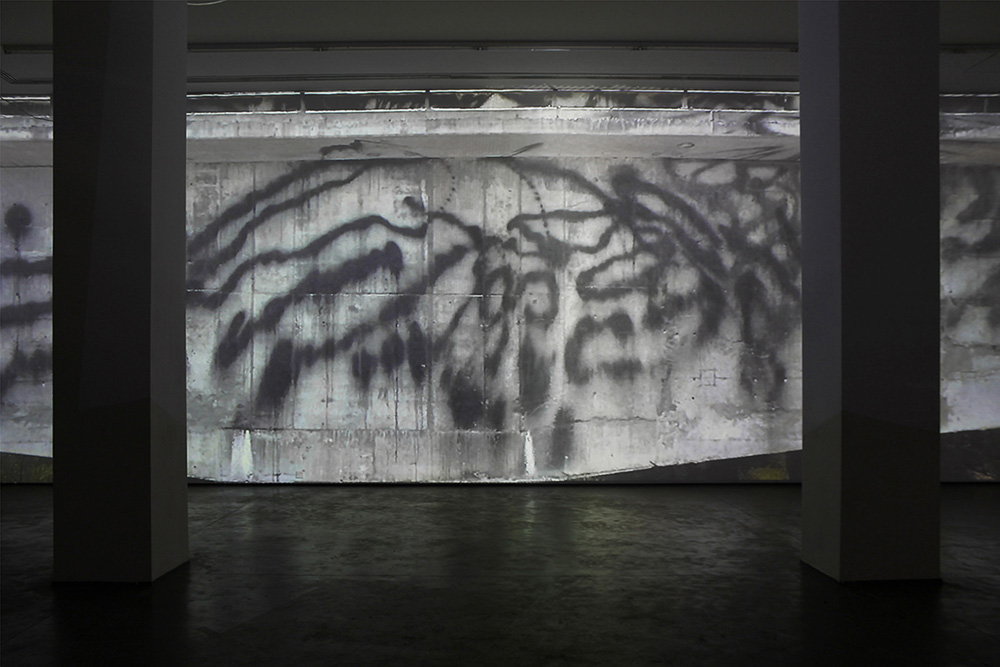
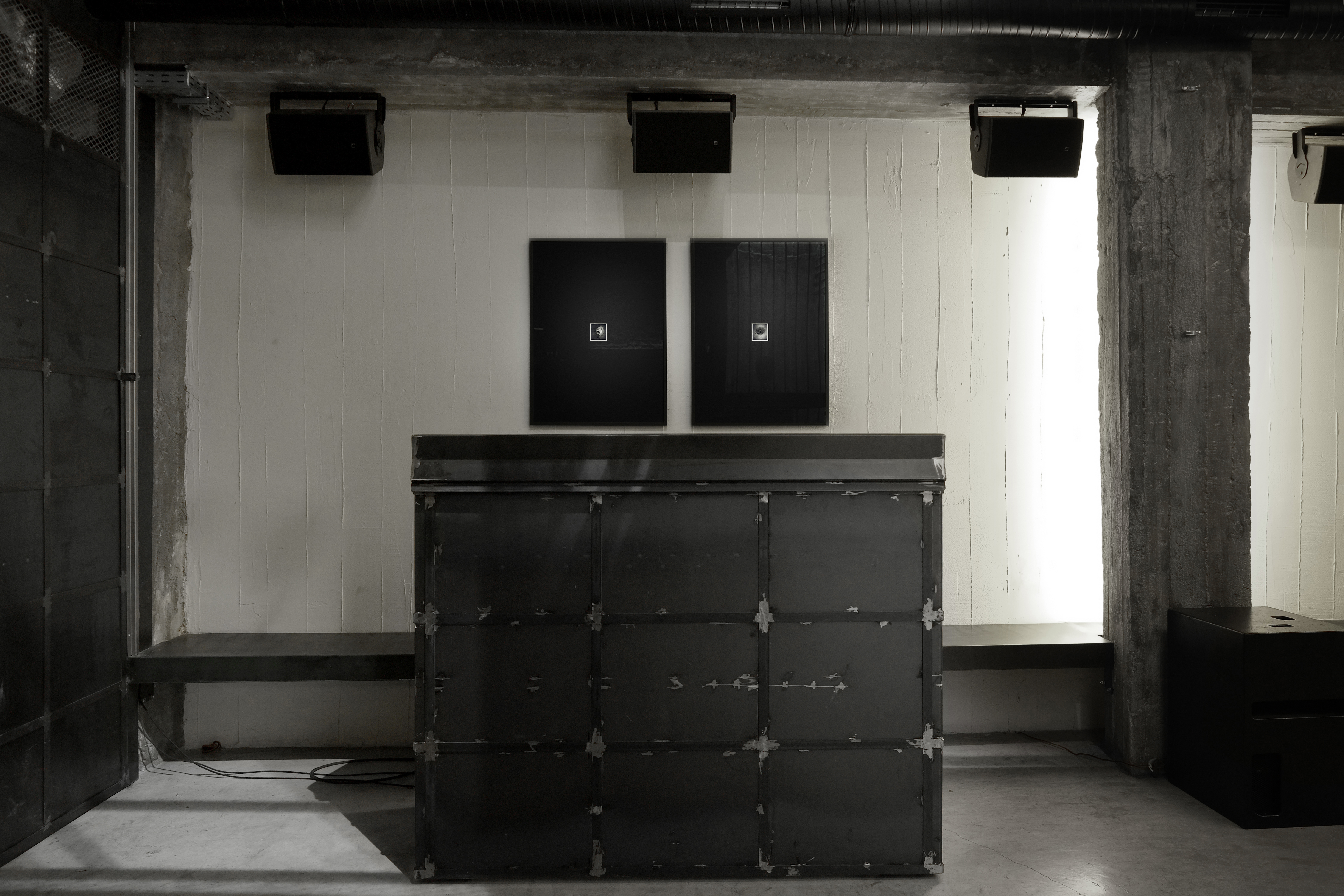
Quarry Time (Ghost) unfolds as a perpetual rendering of haunted geological landscapes, modeled after three-dimensional representations of marble quarries located in Greece.
Shaped by the tearing marks of mining, the rock formations present in the video are infested with mutated inscriptions, ancestral or futuristic hybrid figures, and unrecognizable signs.
Suspended between documentation and simulation, the geological scenery radiates the soundscape of a year-long recording of solar oscillations: patterns of the sun’s constant seismic vibrations which were translated into audible frequencies.
Thursday, October 14th, 2021 | Posted in activity |
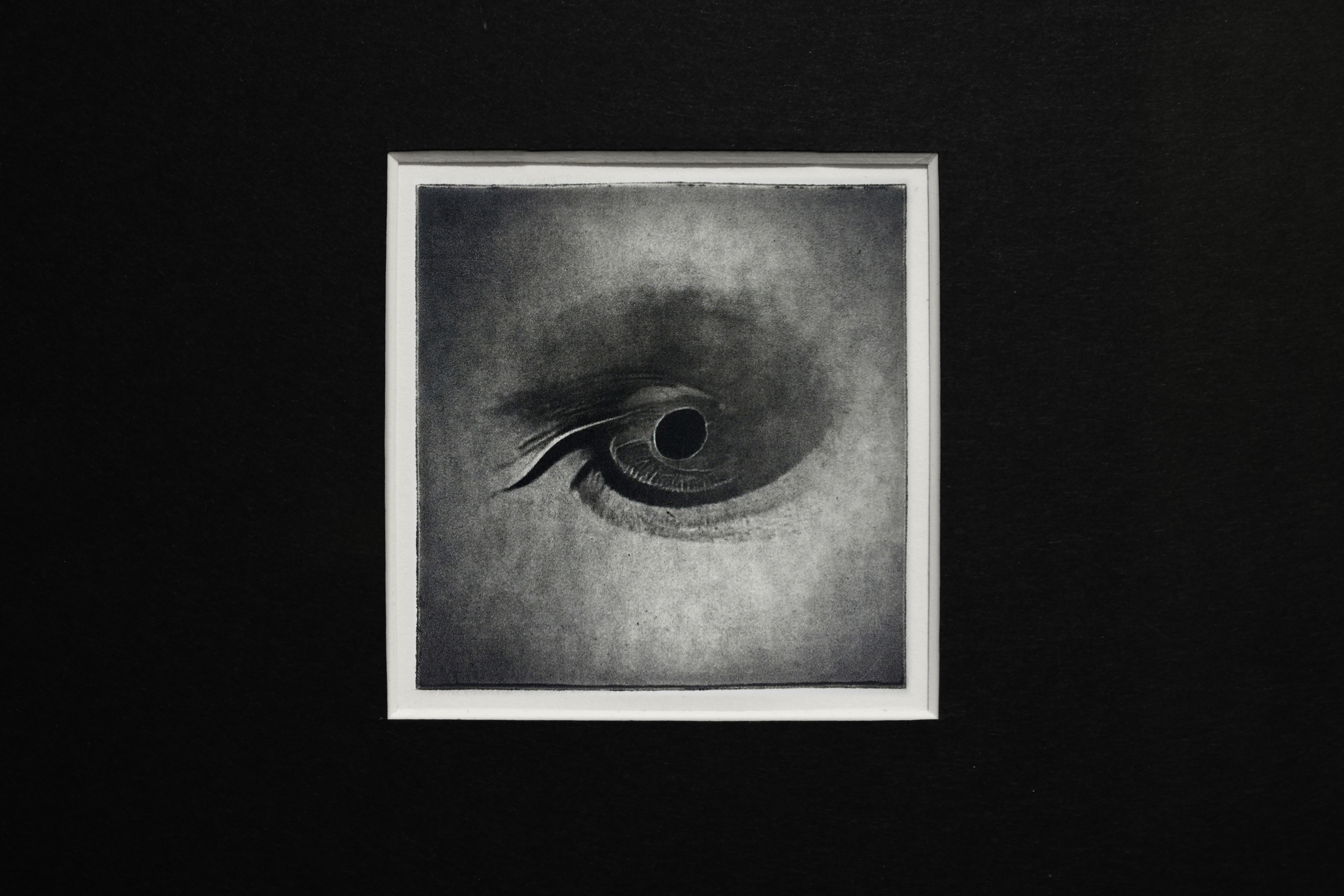
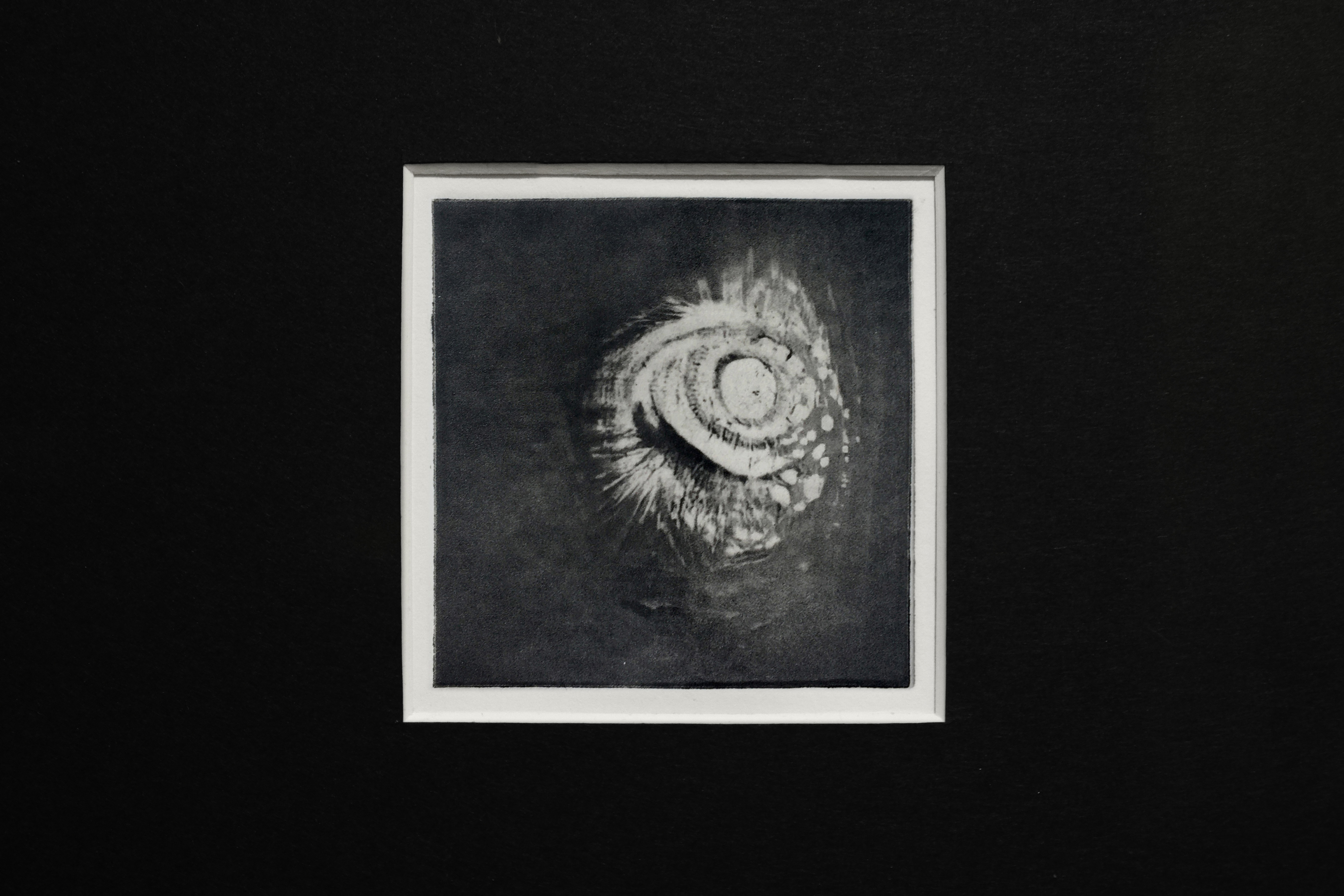
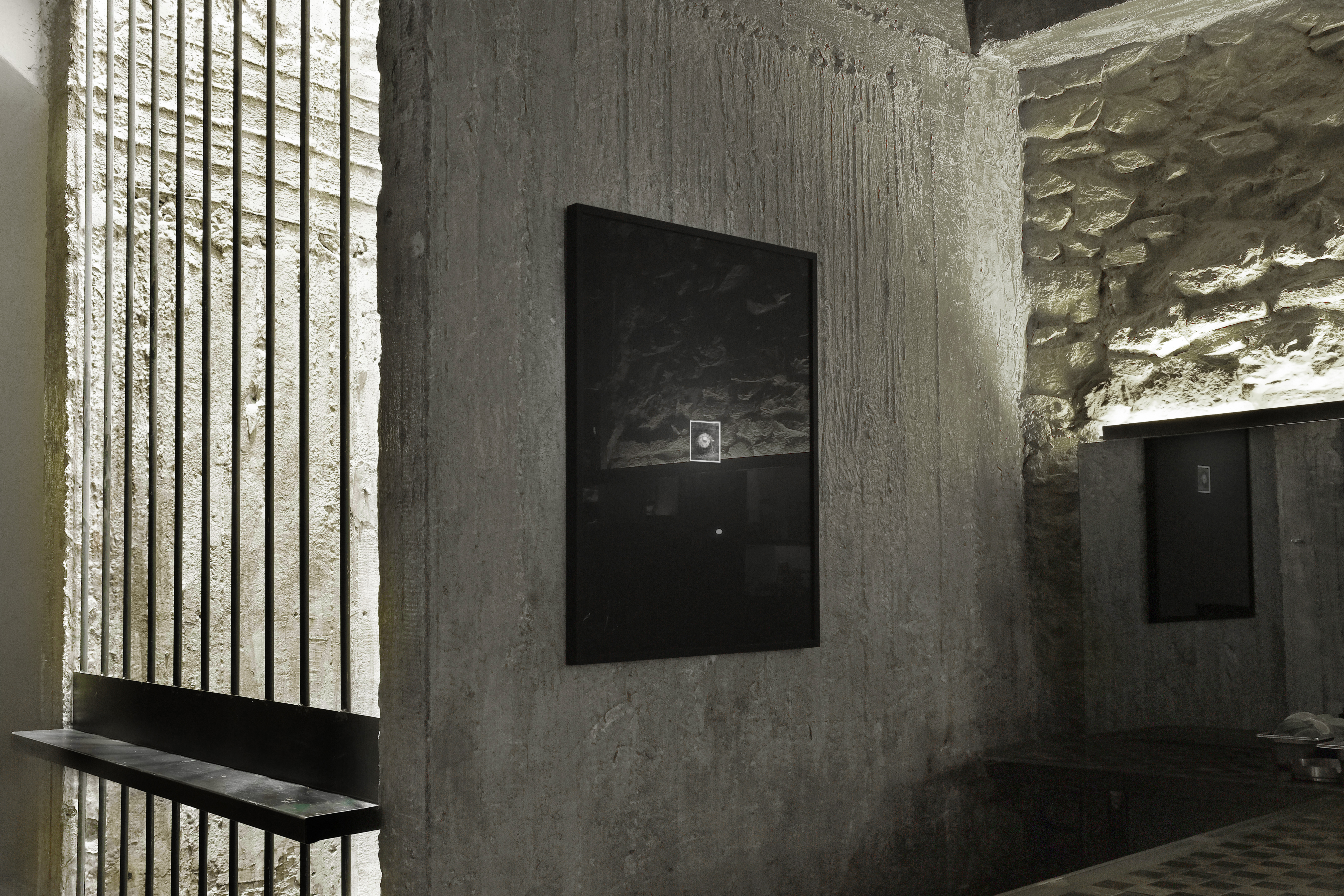
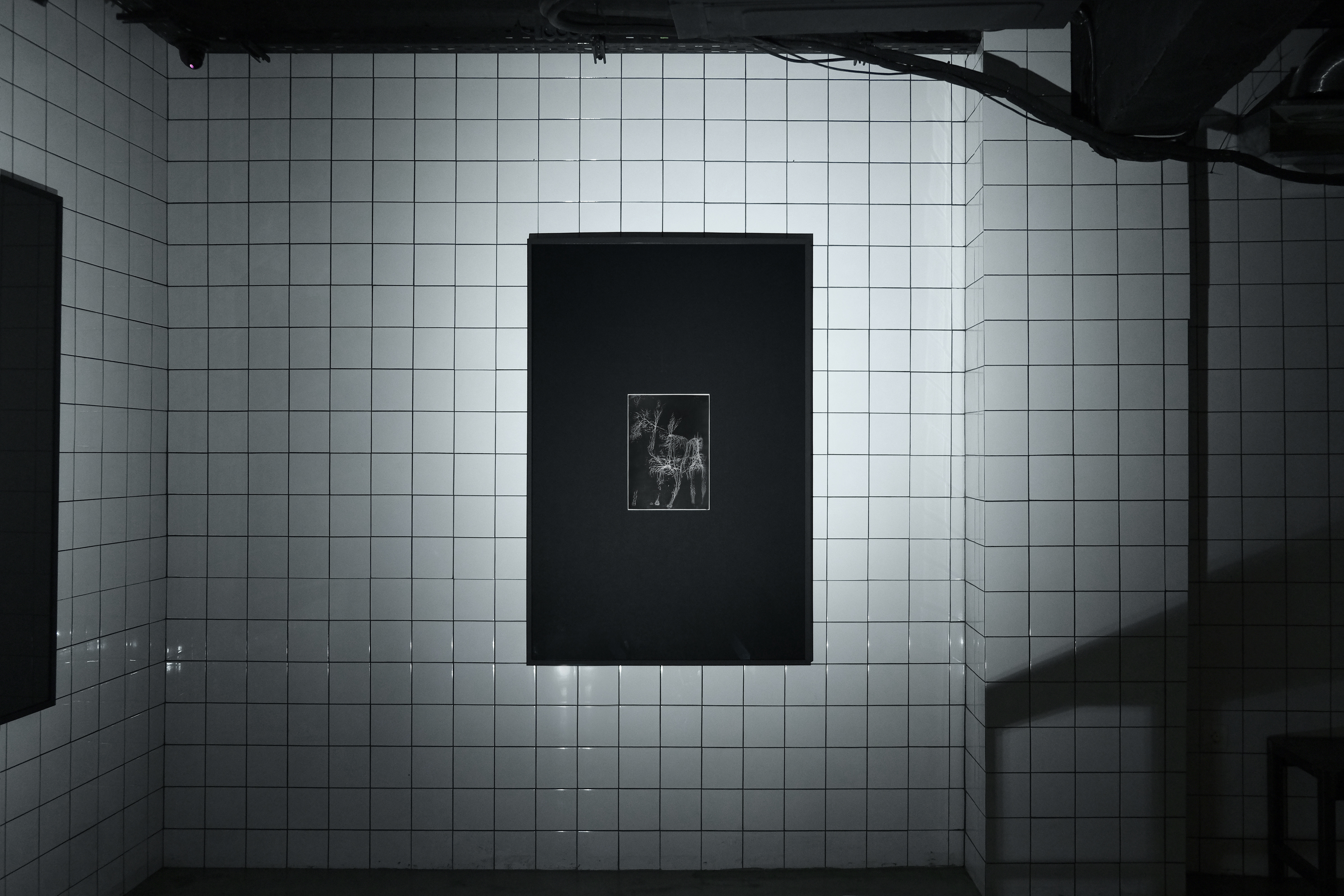
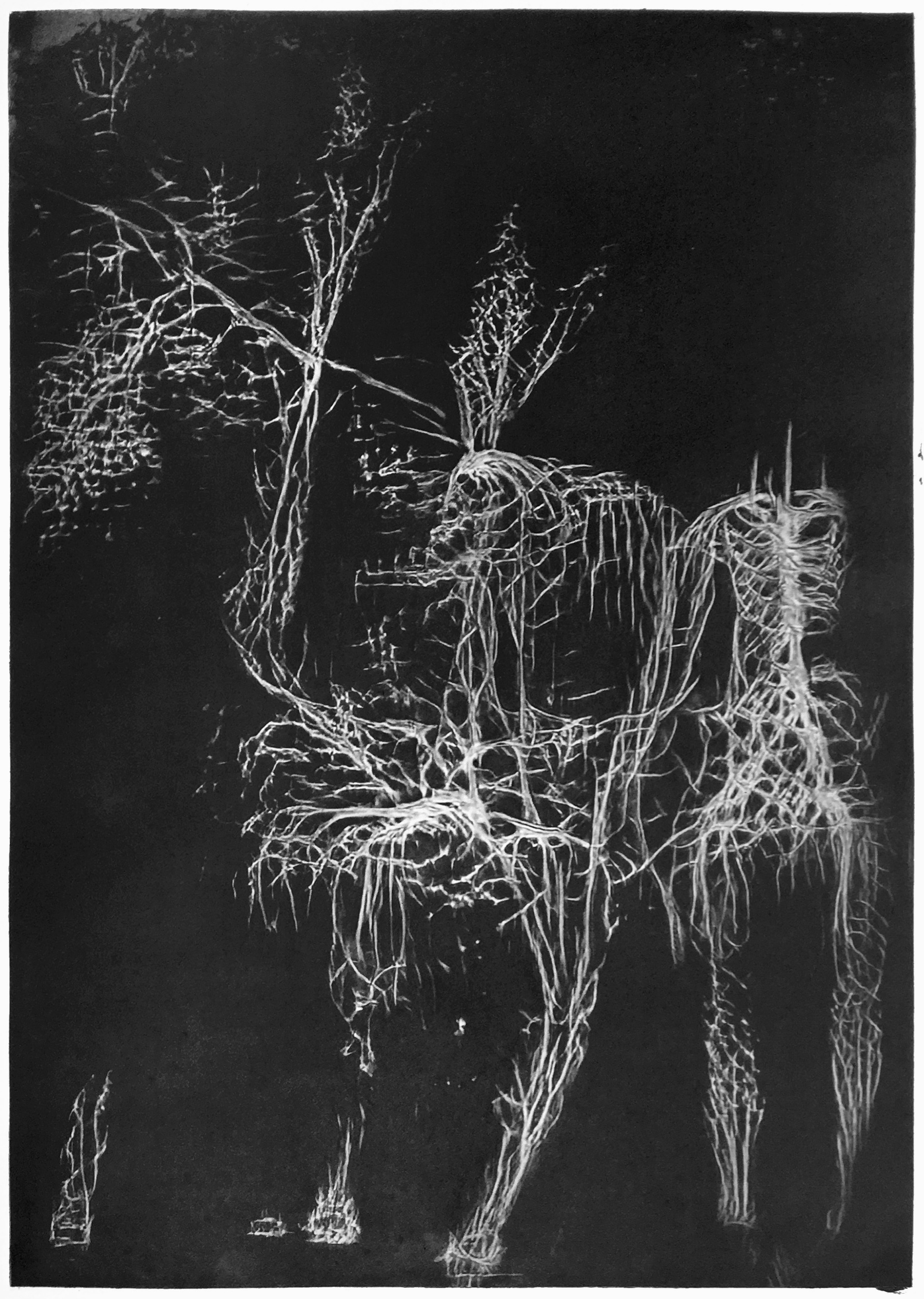
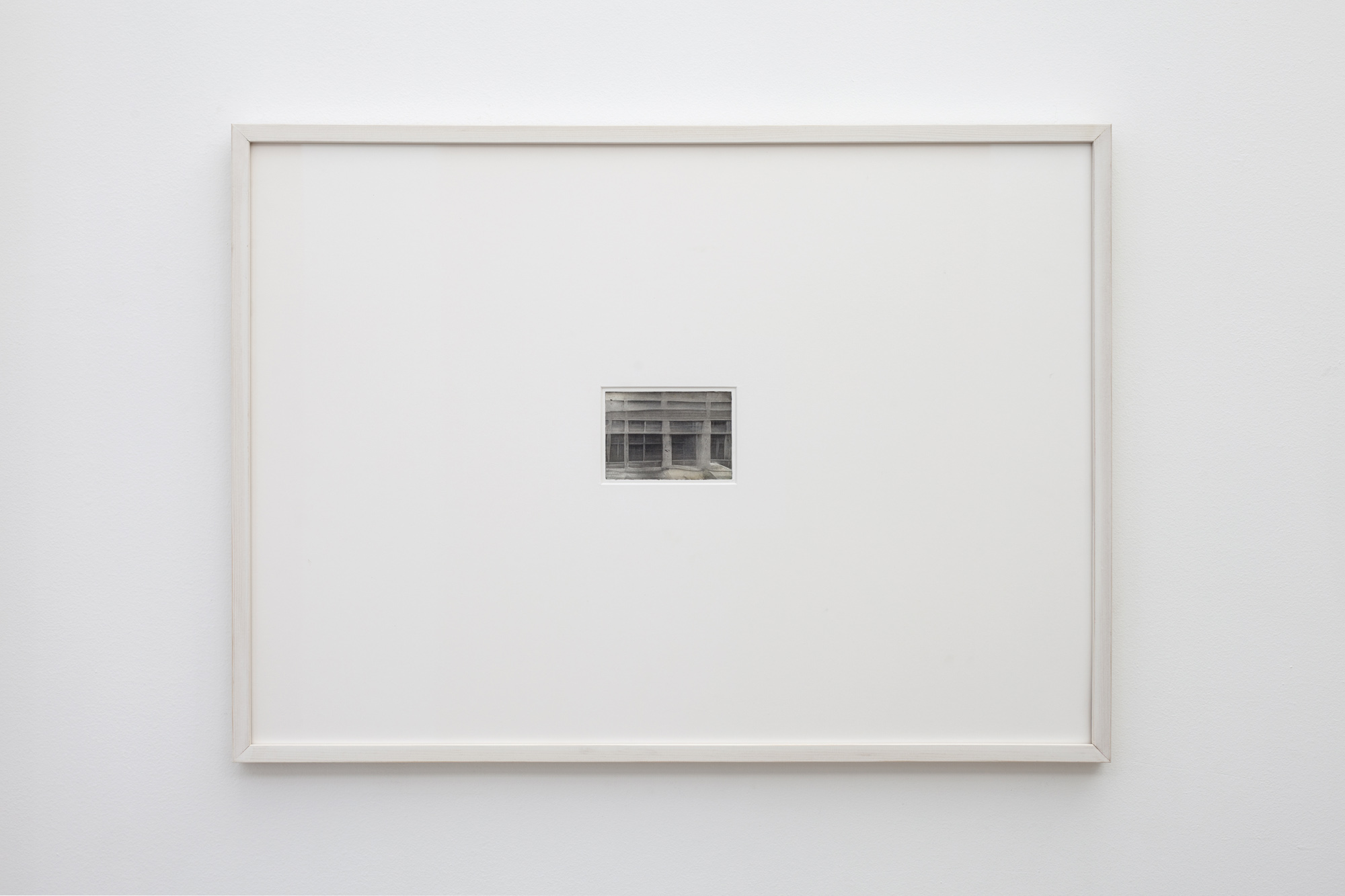
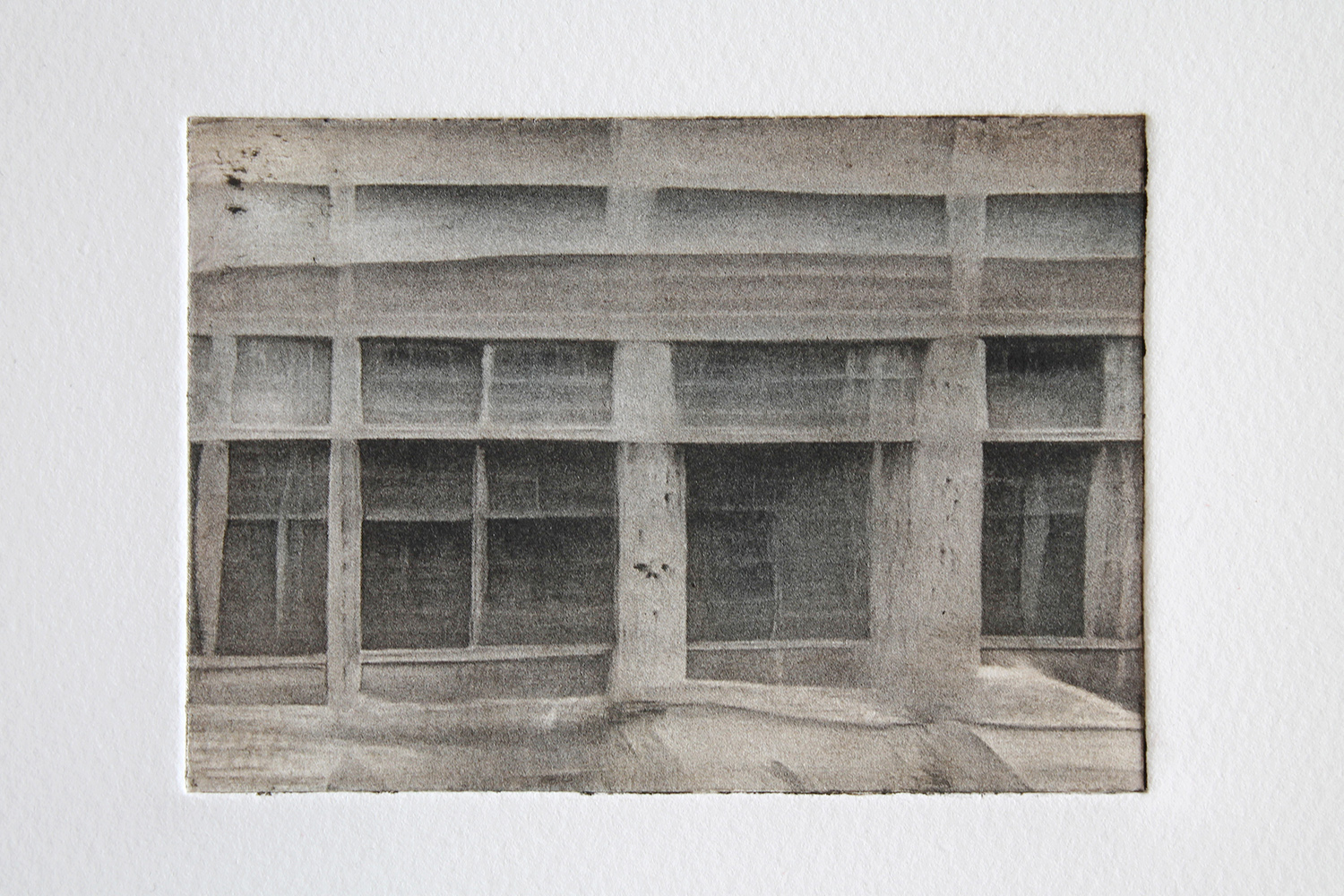
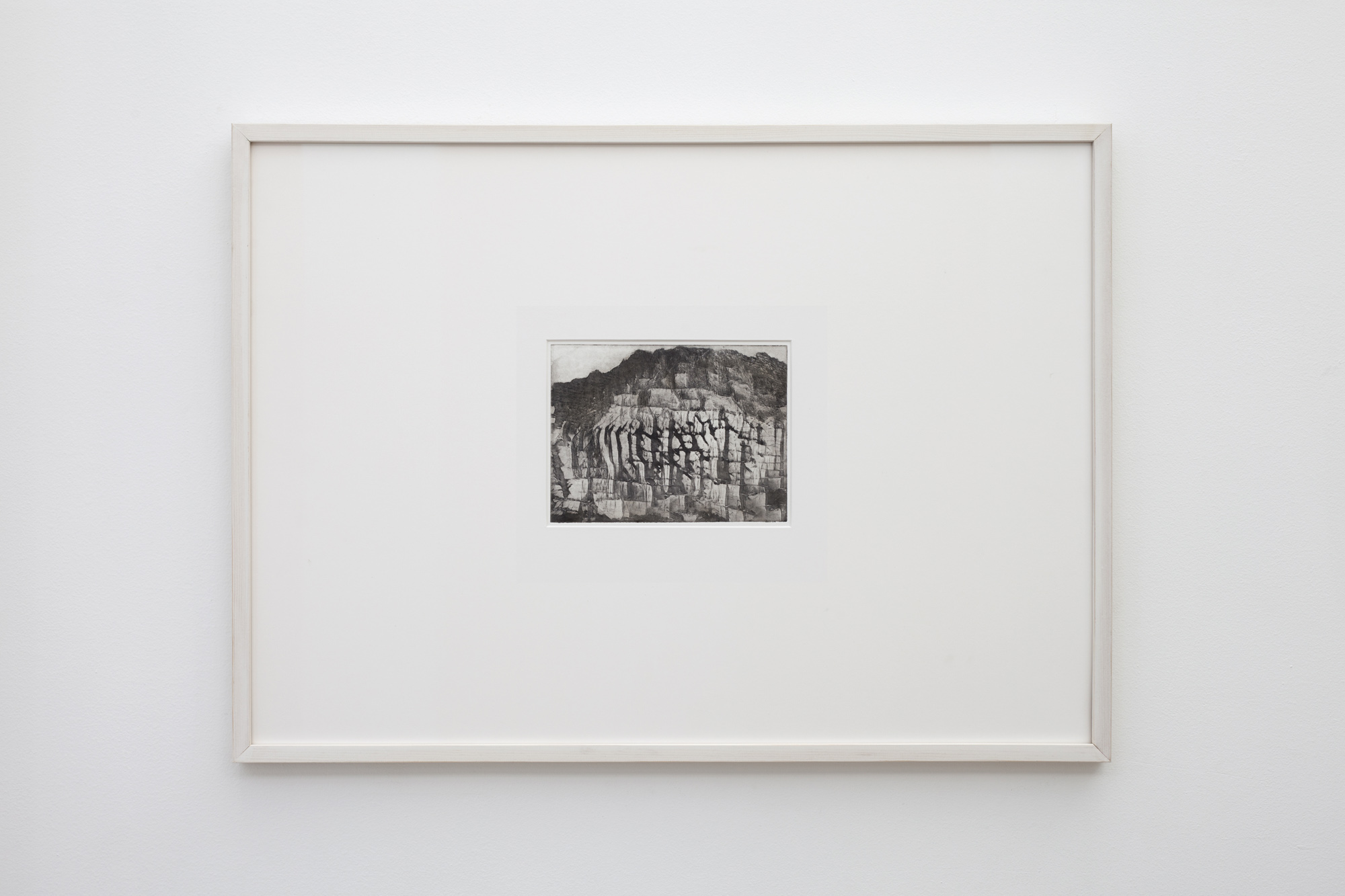
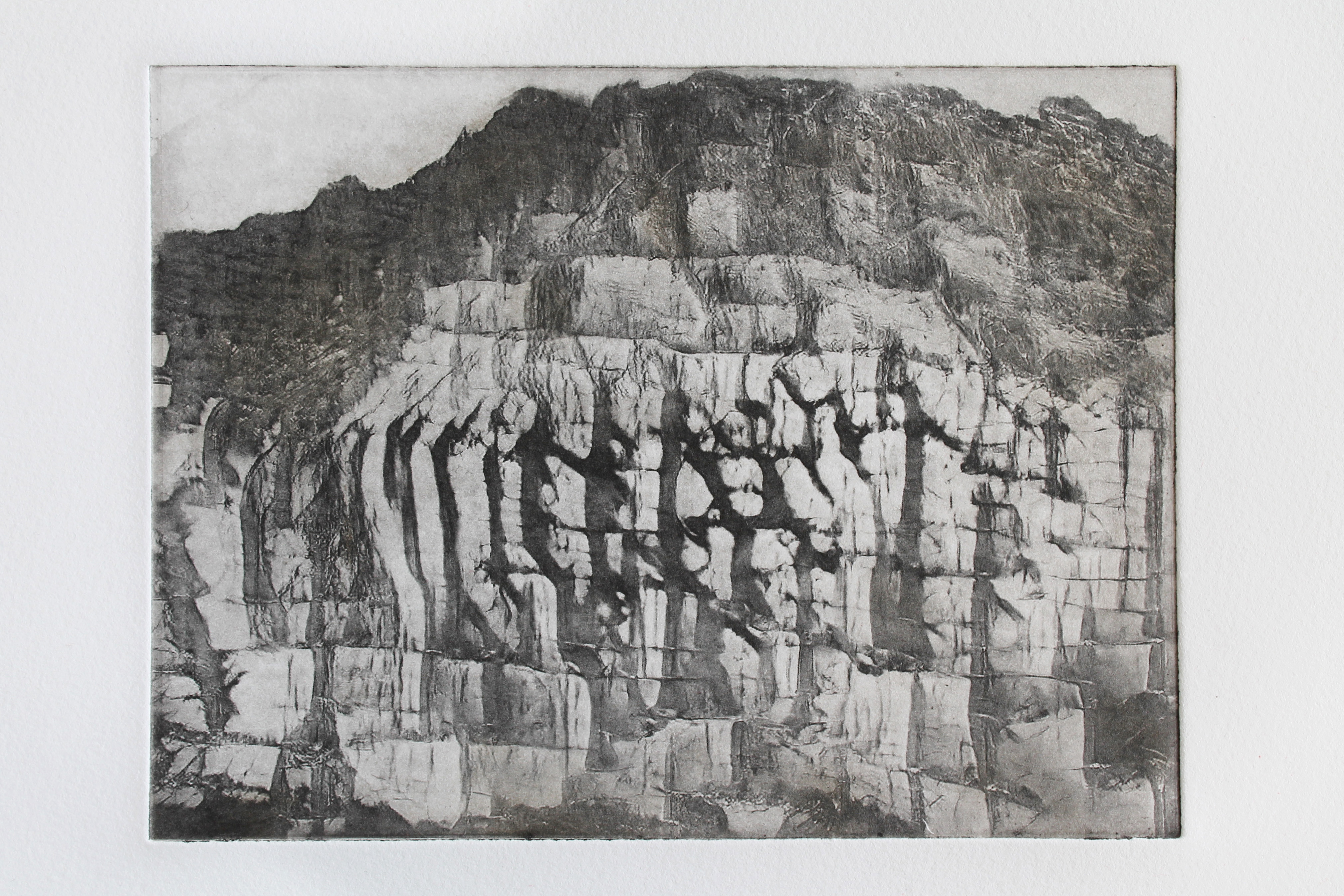
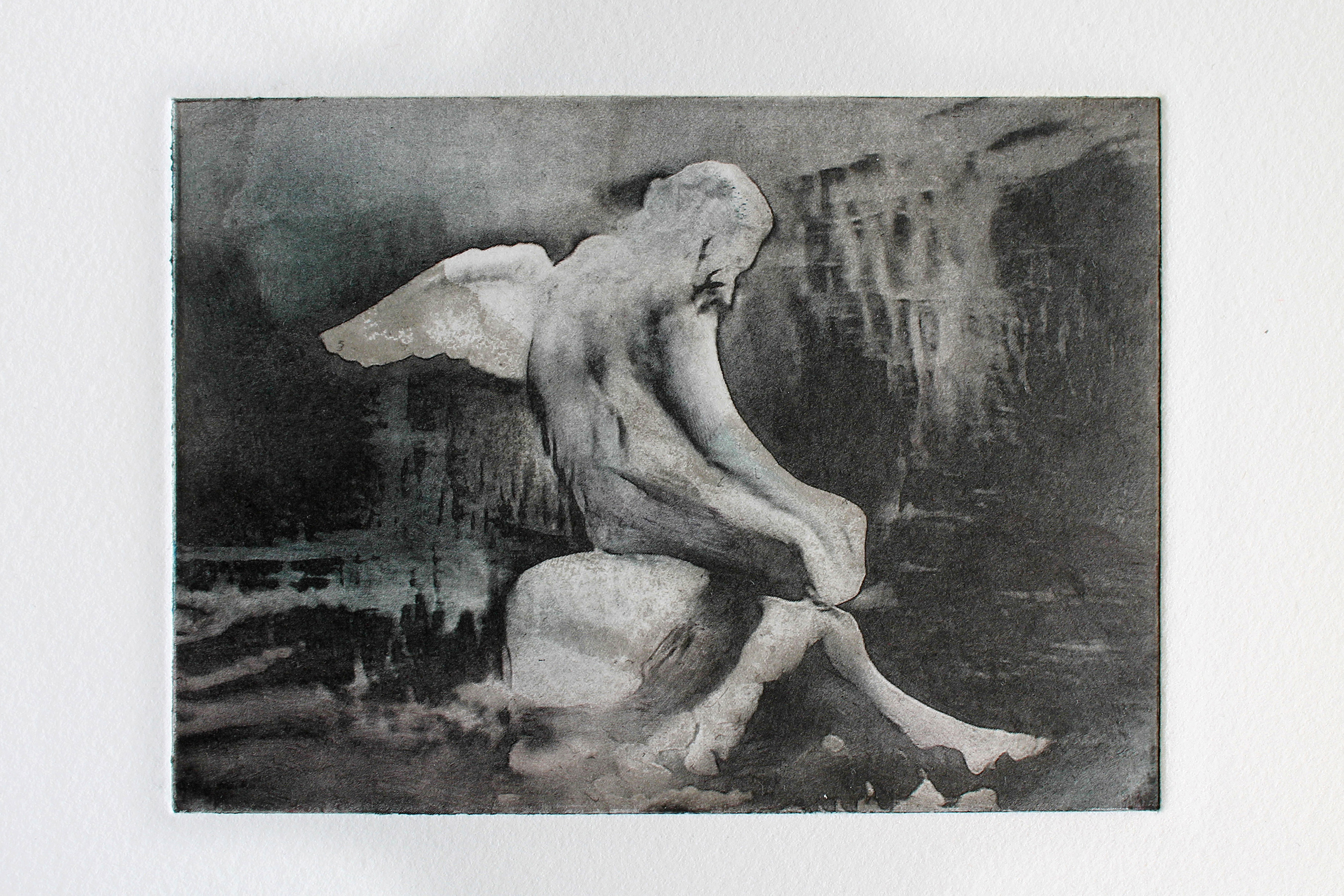
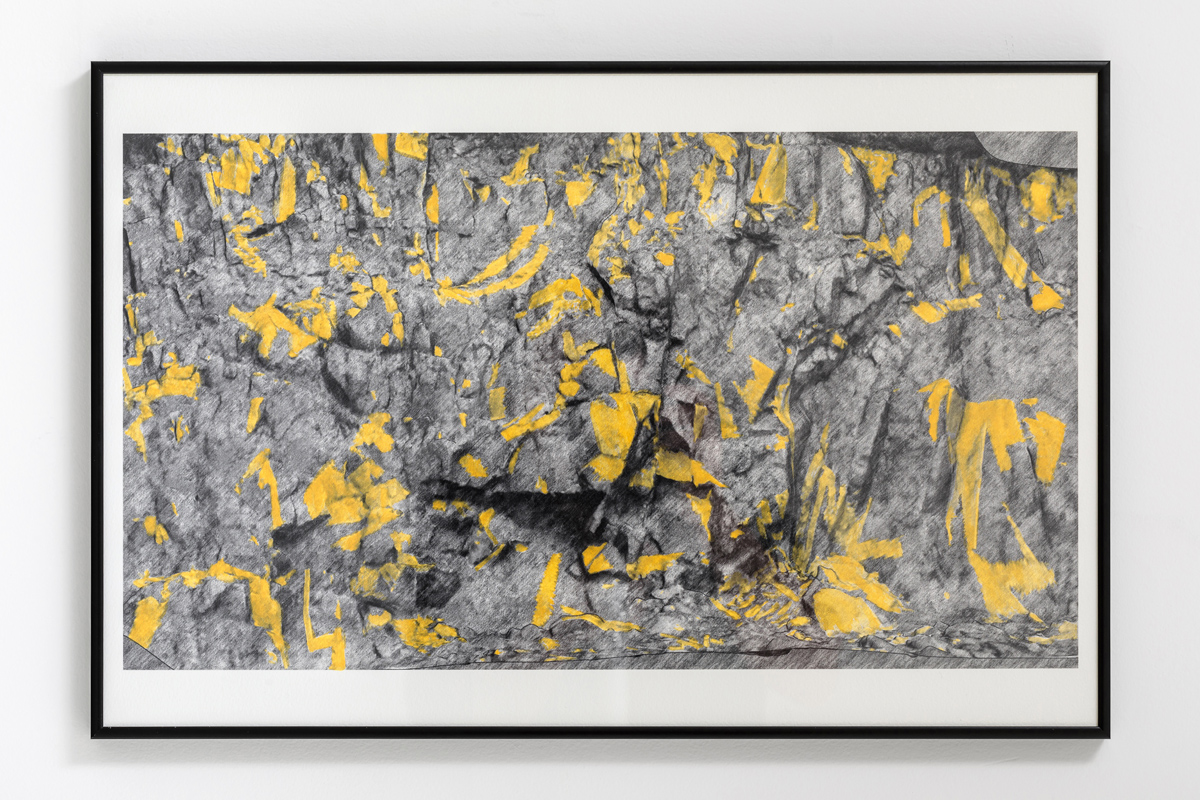
Vectors is a series of solar intaglio etchings that revolves around computational “mutations” performed by generative adversarial network algorithms on photographic archives collected in Athens and beyond: sceneries depicting urban environments, vegetal and geological formations, inscriptions on architectural structures, public sculptures, and archaeological artifacts. In the exhibition SOLAR VECTOR at Radio Athènes (Athens, 2021), a selection of this etching series was brought together with a sound installation based on one year’s helioseismological recordings of the Sun’s solar oscillations activity.
Vector 17069-I-1, 2020
Solar etching, oil ink on cotton paper
60 x 80 cm (framed)
Vector 17069-II-U/S, 2020
Solar etching, oil ink on cotton paper
60 x 80 cm (framed)
Vector 17069-I-1, 2020
Vector 17069-II-U/S, 2020
Solar Vector, installation view at Radio Athènes (Athens, 2021)
Solar Vector, installation view at Radio Athènes (Athens, 2021)
Vector 08185-IX-U/S, 2020
Solar etching, oil ink on cotton paper
50 x 70 cm (framed)
Vector 08185-IX-U/S, 2020
Vector 11041-XI-V/E, 2020
Solar etching, oil ink on cotton paper
50 x 70 cm (framed)
Vector 11041-XI-V/E, 2020
Vector 08200-I-1, 2020
Solar etching, oil ink on cotton paper
60 x 80 cm (framed)
Vector 08200-I-1, 2020
Vector 08200-I-1, 2020
Solar Vector, installation view at Radio Athènes (Athens, 2021)
Vector 12071-I-2, 2020
Solar etching, oil ink on cotton paper
50 x 70 cm (framed)
Vector 12071-I-2, 2020
Solar Vector, installation view at Radio Athènes (Athens, 2021)
Solar Vector, installation view at Radio Athènes (Athens, 2021)
Vector 12522-IX-U/S, 2020
Solar etching, oil ink on cotton paper
60 x 80 cm
Vector 12522-IX-U/S, 2020
Vector 12522-IX-U/S, 2020
Solar Vector, installation view at Radio Athènes (Athens, 2021)
Vector 00980-A-XI-U/S, 2020
Solar etching, oil ink on cotton paper
150 x 100 cm (framed)
Solar Vector, installation view at Radio Athènes (Athens, 2021)
Vector 16999-II-V/E, Vector 16696-II-V/E, Vector 16695-II-V/E, 2020
Solar etching, oil ink on cotton paper
40 x 55 cm (framed, each)
Vector 16695-II-V/E, 2020
Vector 16999-II-V/E, 2020
Vector 16696-II-V/E, 2020
Vector 16695-II-V/E, 2020
Thursday, October 7th, 2021 | Posted in activity |
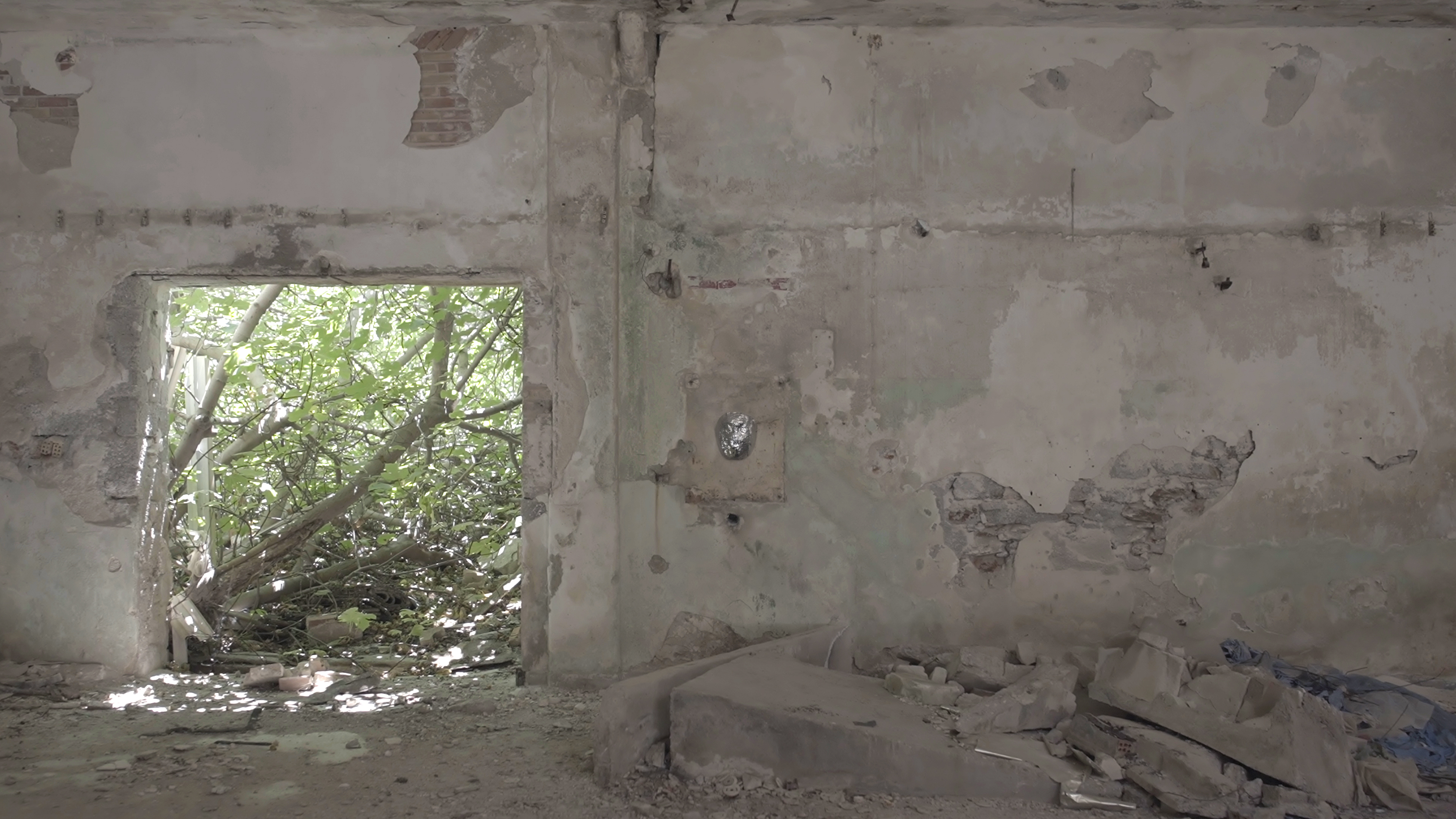
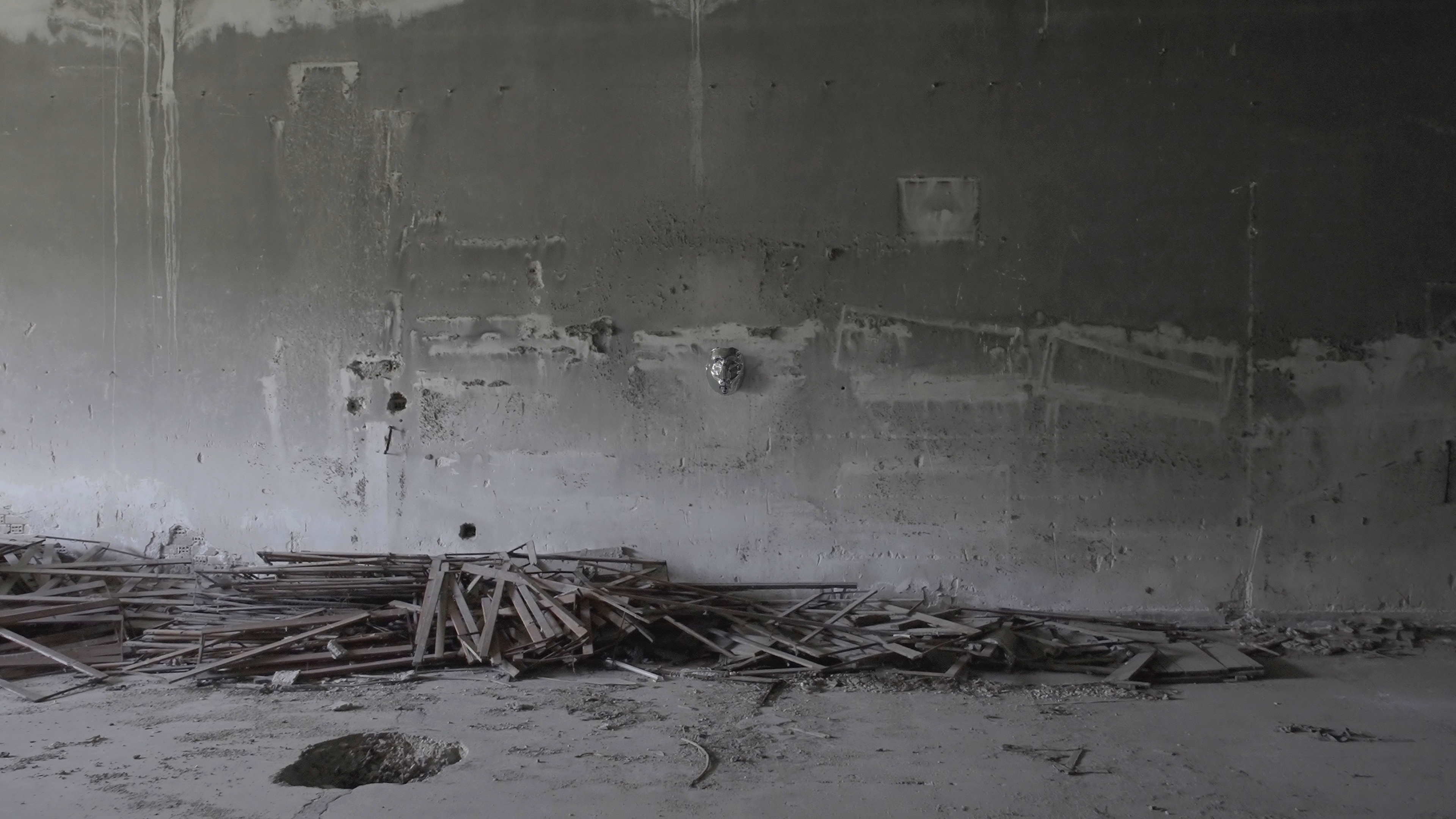
Oracle occurs in a derelict textile factory in Laurium, a seaside town in Attica that used to be a significant silver mine territory since antiquity, the main source of ancient Athenian wealth and naval power. Those mines were reworked from the late 19th century to the 1980’s for ore extraction, an activity that left its grave environmental impact on the area’s soil to this day. Once part of the local industrial economy that collapsed before the turn of the millennium, this specific industrial ruin was recently leaked to be the future site of a datacenter complex to be built by one of the so-called “Big Five” multinational information technology corporations for the purpose of running dedicated Cloud, IoT and AI services.
Sculptural appearances inhabit the entropic spaces of this industrial ghost site, hybrids between human-resembling and non-human facial forms, seeding from chimeric compositions between archaeological photogrammetric scans and online-found threedimensional models referencing contemporary technocultures. Their metallic materiality reflects the local geological heritage and the mineral composition of the electronic hardware that enables the uncanny machinic intelligence and the haunting abstraction of computational operations. The digital interface of Oracle is permeated by formations of visual coding and written language generated by simulated processes of pattern recognition, predictive mutations, and synthetic apophenia. The physical and psychic underground space is still the origin of such forms of contemporary oracular production, where the ancient practices of hallucination deriving from subterranean chemical fumes gave their place to the extractivism of minerals and psychosocial data that feeds the deep-dreaming of the algorithmic Cloud.
As a place of memory and a place to become, an assemblage of mythological, historical, and technological entities, a generative process, or a resulting outcome left for interpretation, Oracle becomes a mediative entanglement of collapsing timelines, of imaginaries and anxieties bound to technological, socioeconomic and environmental transformation.
4000 generations during a night time is an unfolding series of digital video vignettes, composed by processing found and fabricated image archives through the inhuman gaze of AI generative algorithms. Instances from the city of Athens undergo simulated mutations that embrace the entropic forces of material, mythological and social change, while submitting to accidental escapes from linear time.
Future Bestiary (Kerameikos) is a series of digital sculptures dedicated to the entanglements between subterranean memory and the anthropogenic construct of the future.
The ethereal forms of these sculptures originate from archaeological artefacts depicting daemonic beings and mythical animals that were once considered to be protectors of both life and death. Their bodies are carriers of linguistic signs and visual imagery that encode wishful speculations and emerging anxieties about natural ecosystems, algorithmic sovereignty, and sociopolitical change.
Both consciousnes of the past and foresight of what is to come can be extracted from the Earth’s underground wealth. This is the haunted gift of these chthonic entities that form a bestiary of power and vulnerability, burdened with terrestrial trauma and graced with the potential of fierce transformation.
The Gift of Automation comprises a series of sculptural installations that investigate the hopes and fears related to the evolution of automation, by looking at its historical development and contemporary manifestations as a shared imaginary of technological, cultural and economic progress. The work draws morphological and conceptual inspiration from the surviving descriptions of ancient “automata”: sculptural machines that were developed as compositions of scientific innovation and aesthetic wonder from the Hellenistic to the Medieval and early Modern times.
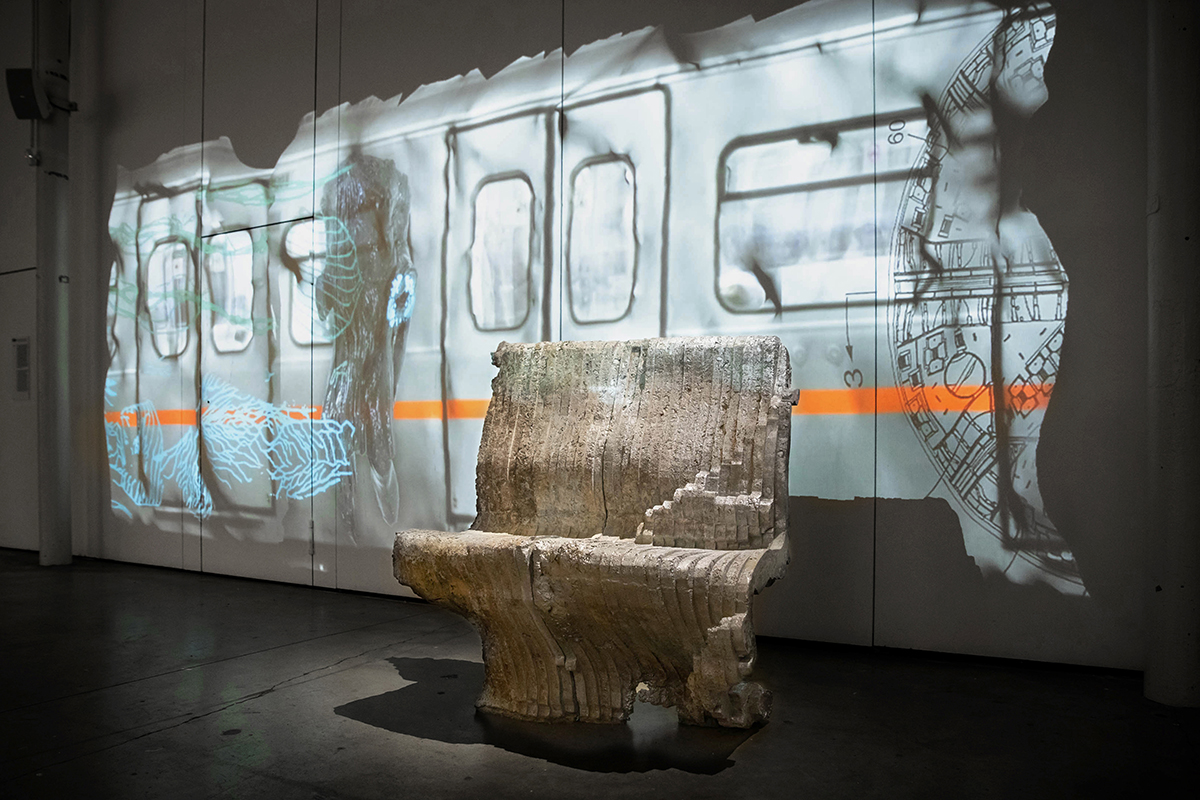
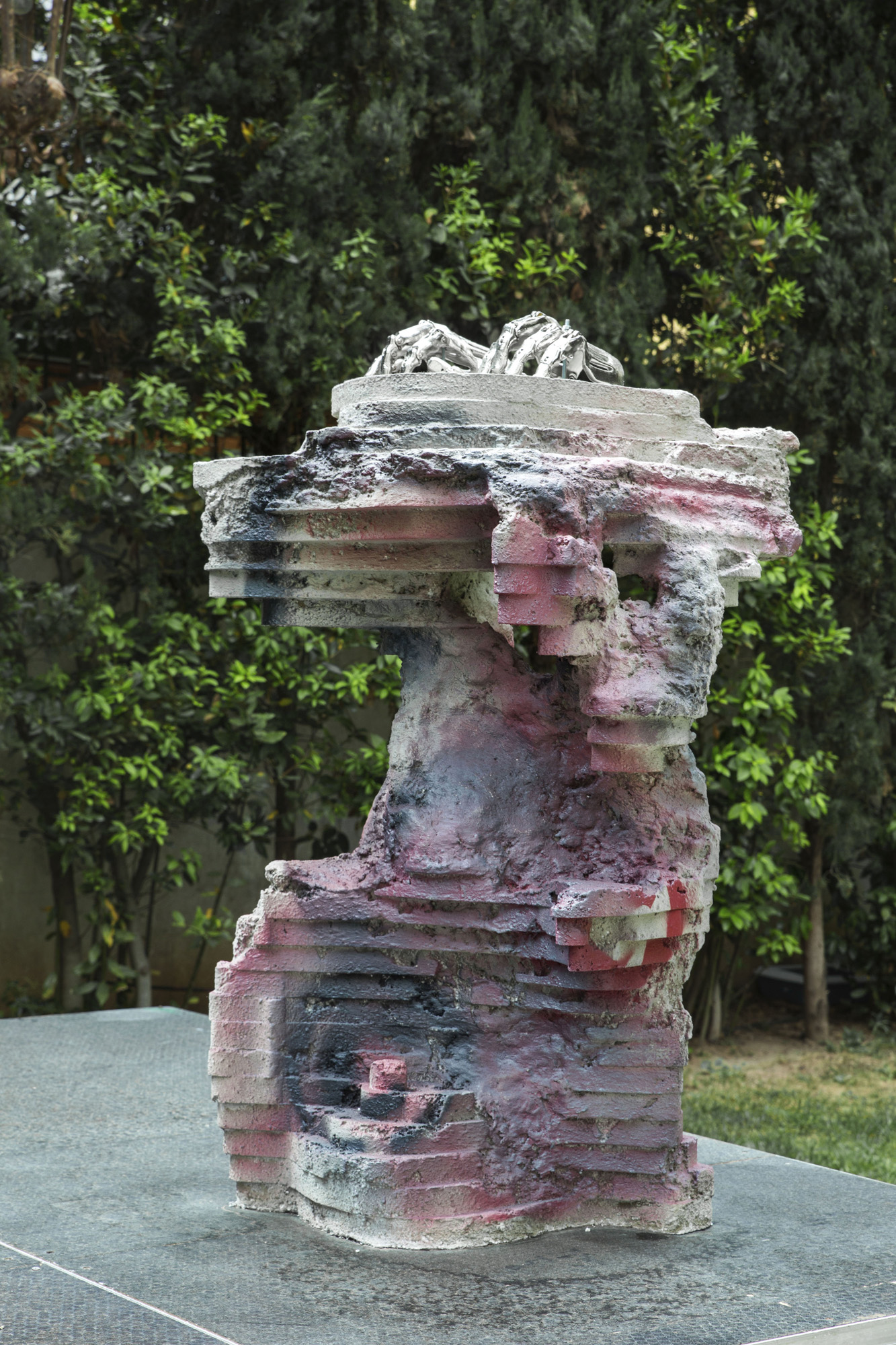
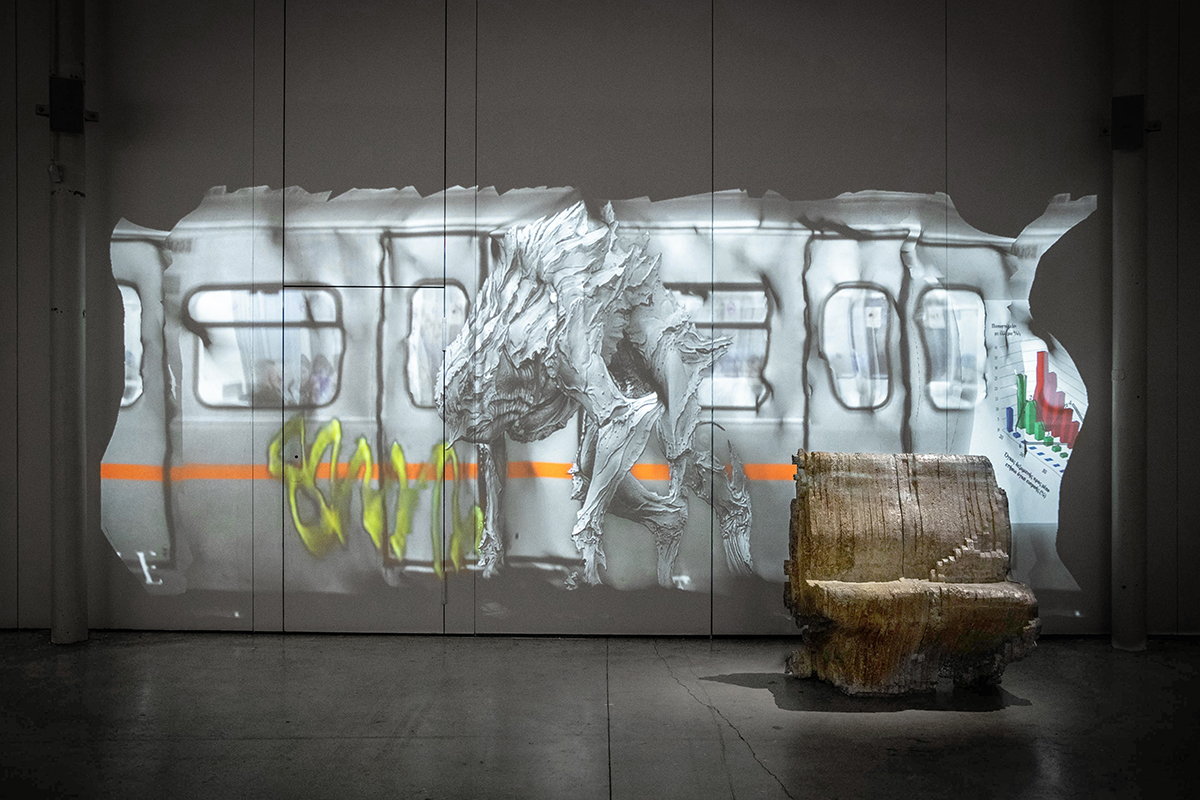
Idle Tunnel, 2019
HD video projection loop, Athenian slate rock, cement, metallic spray paint
Dimensions variable
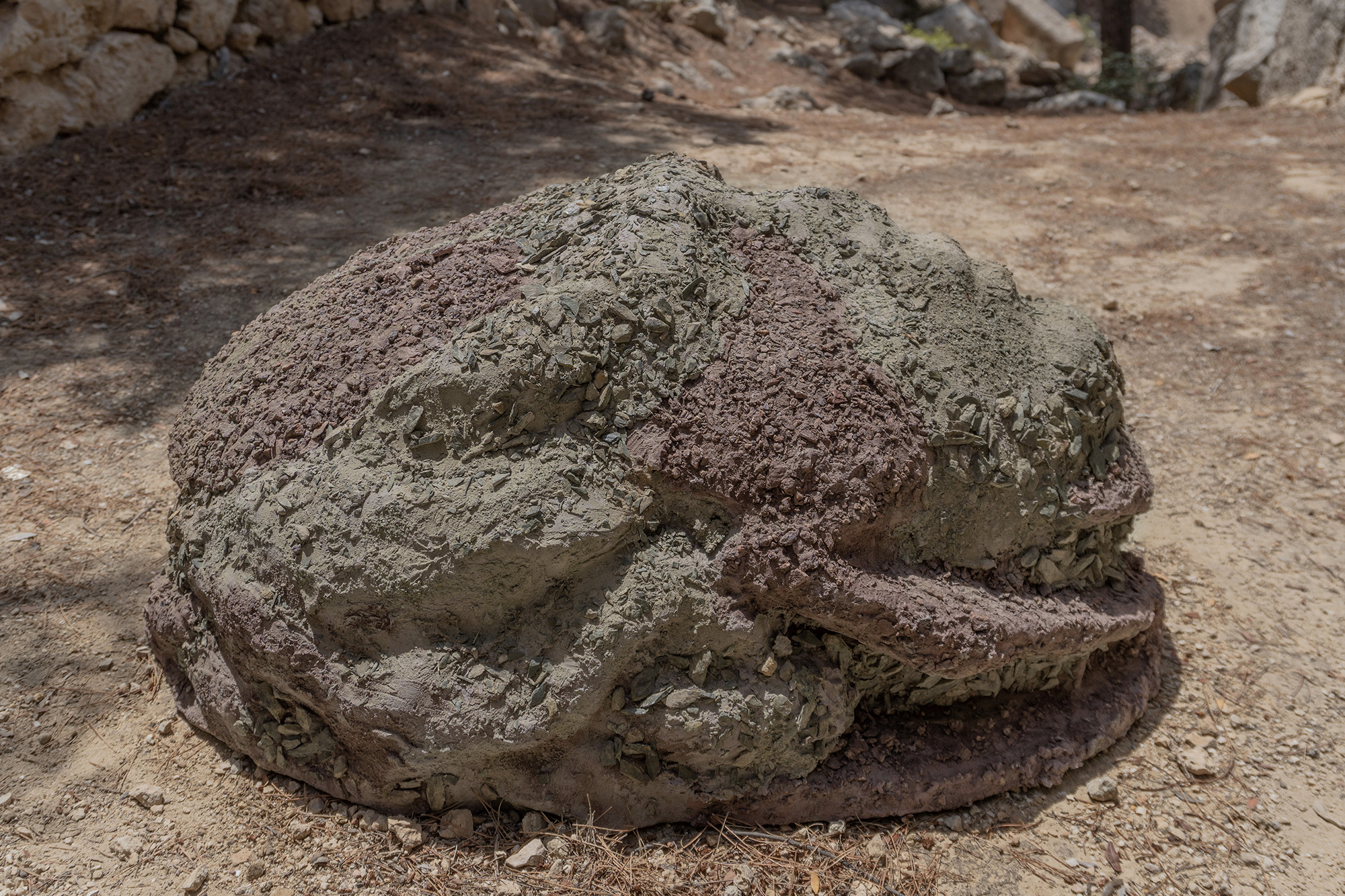
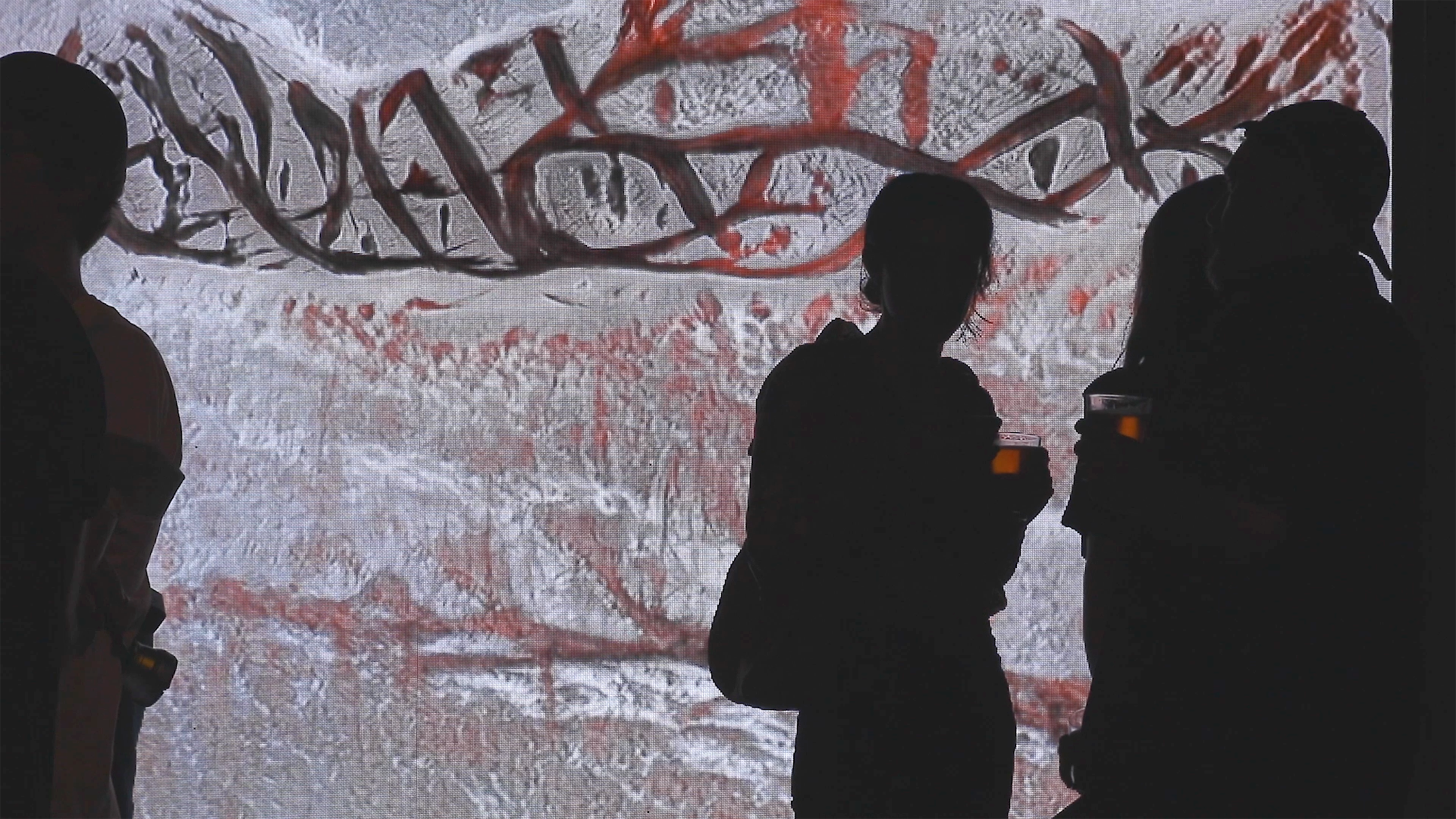
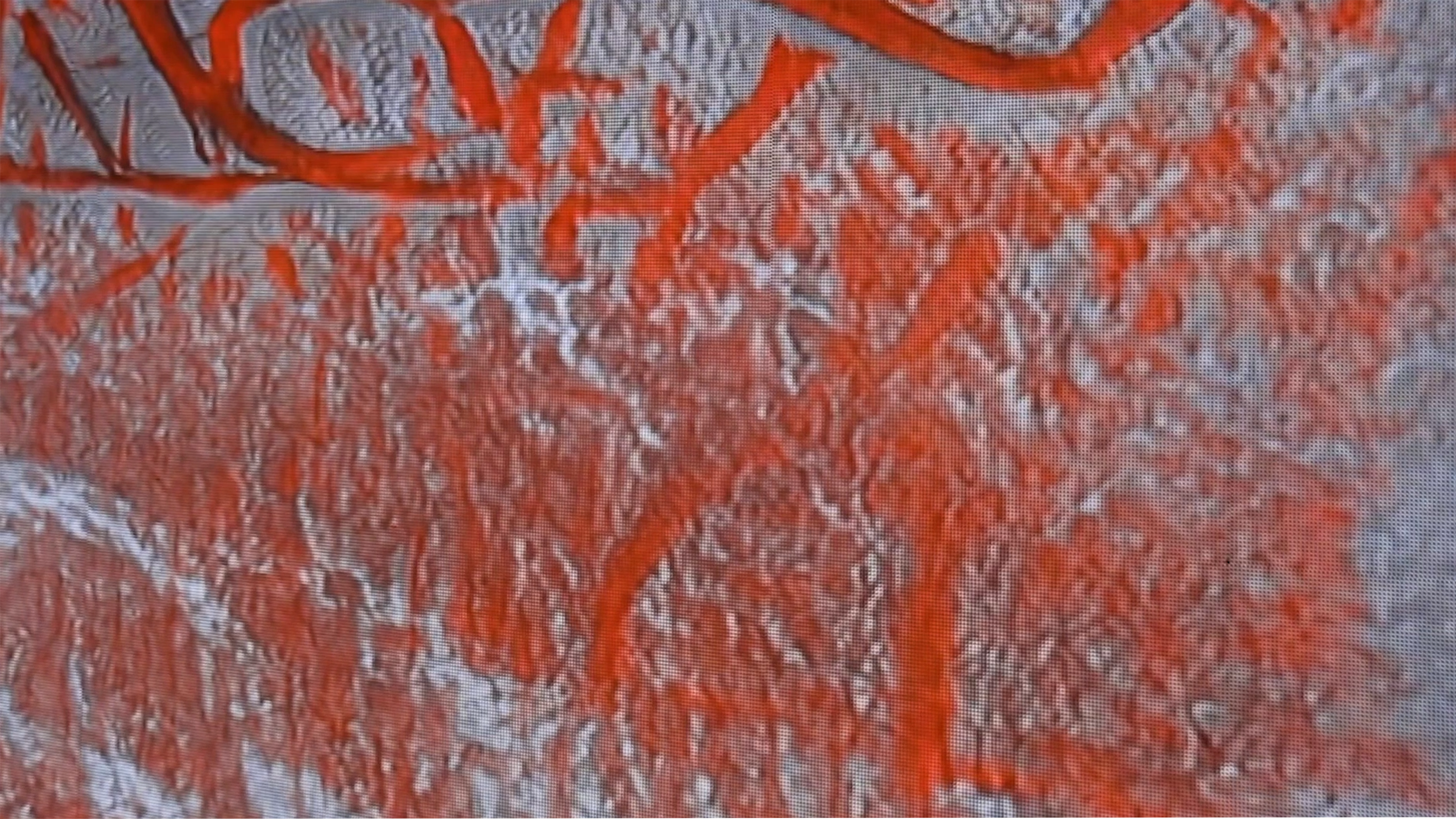
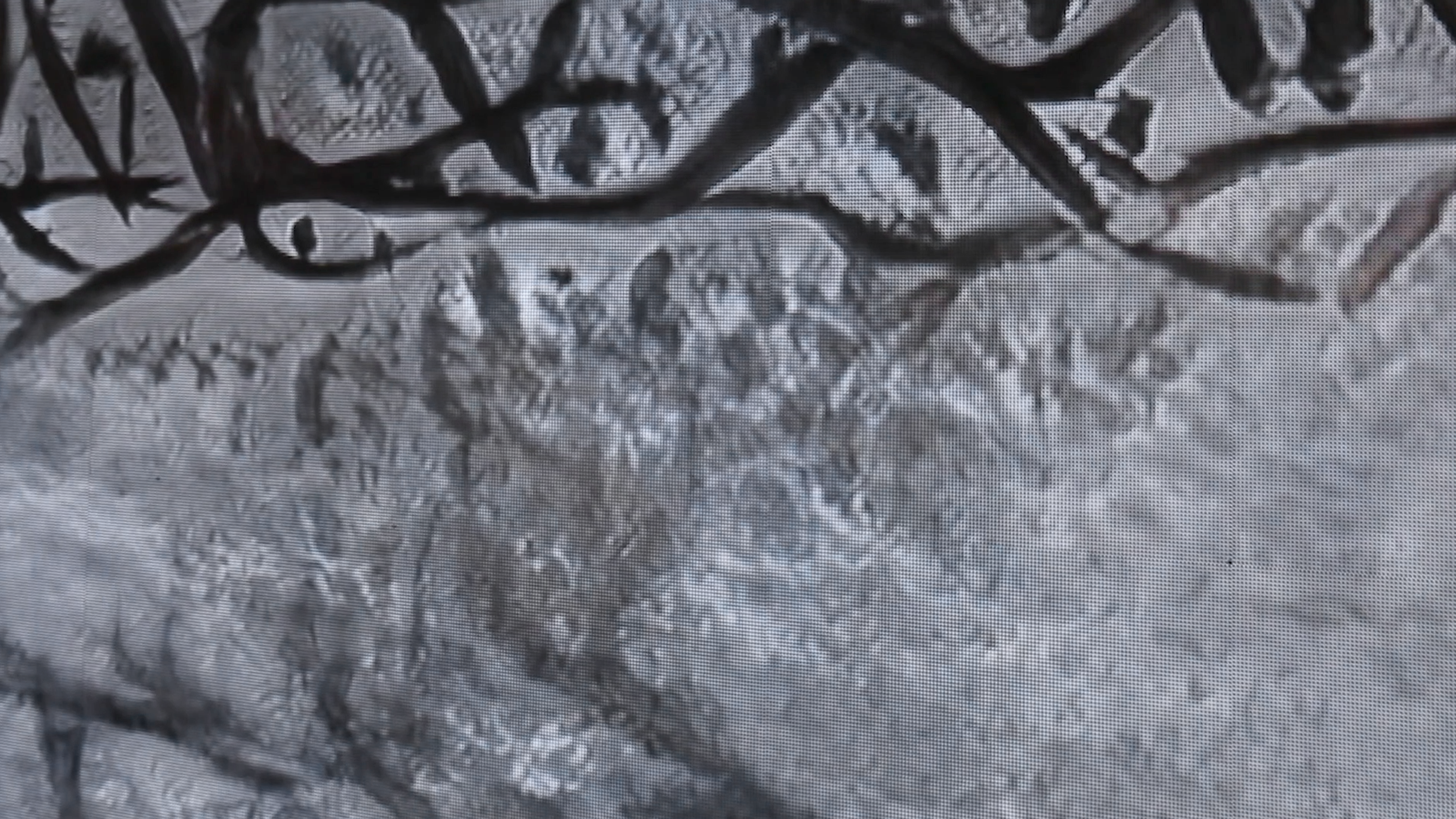
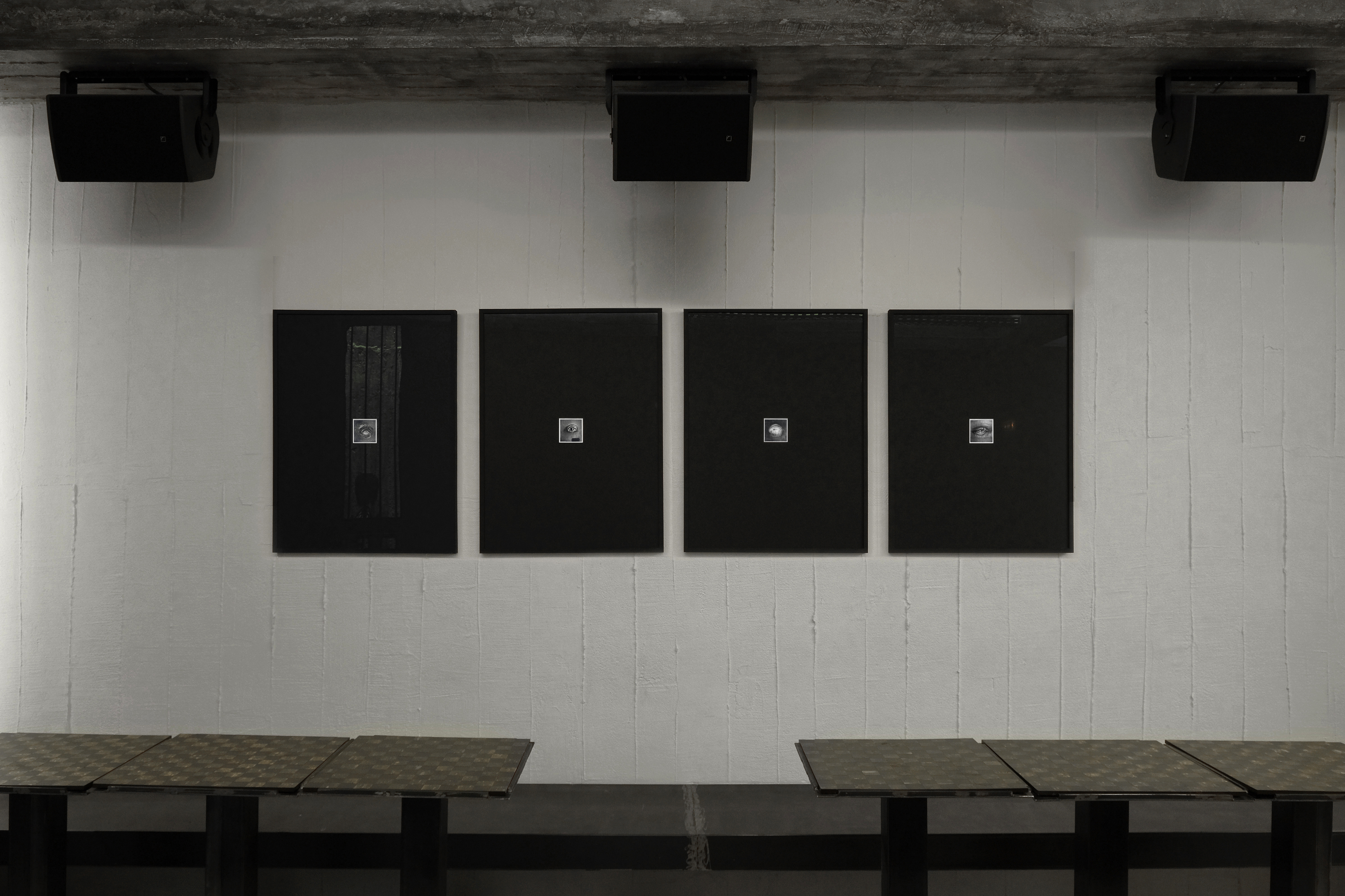
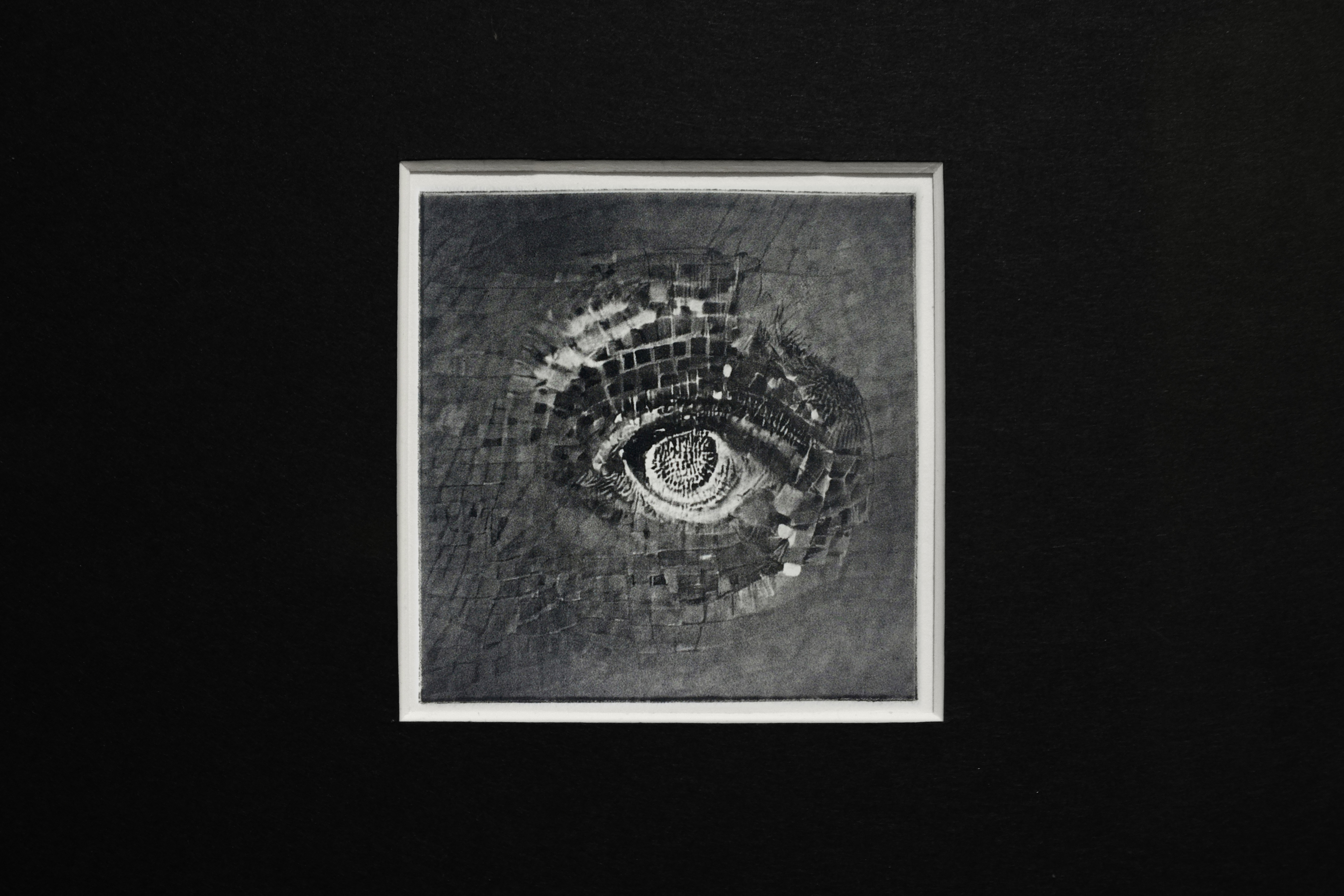
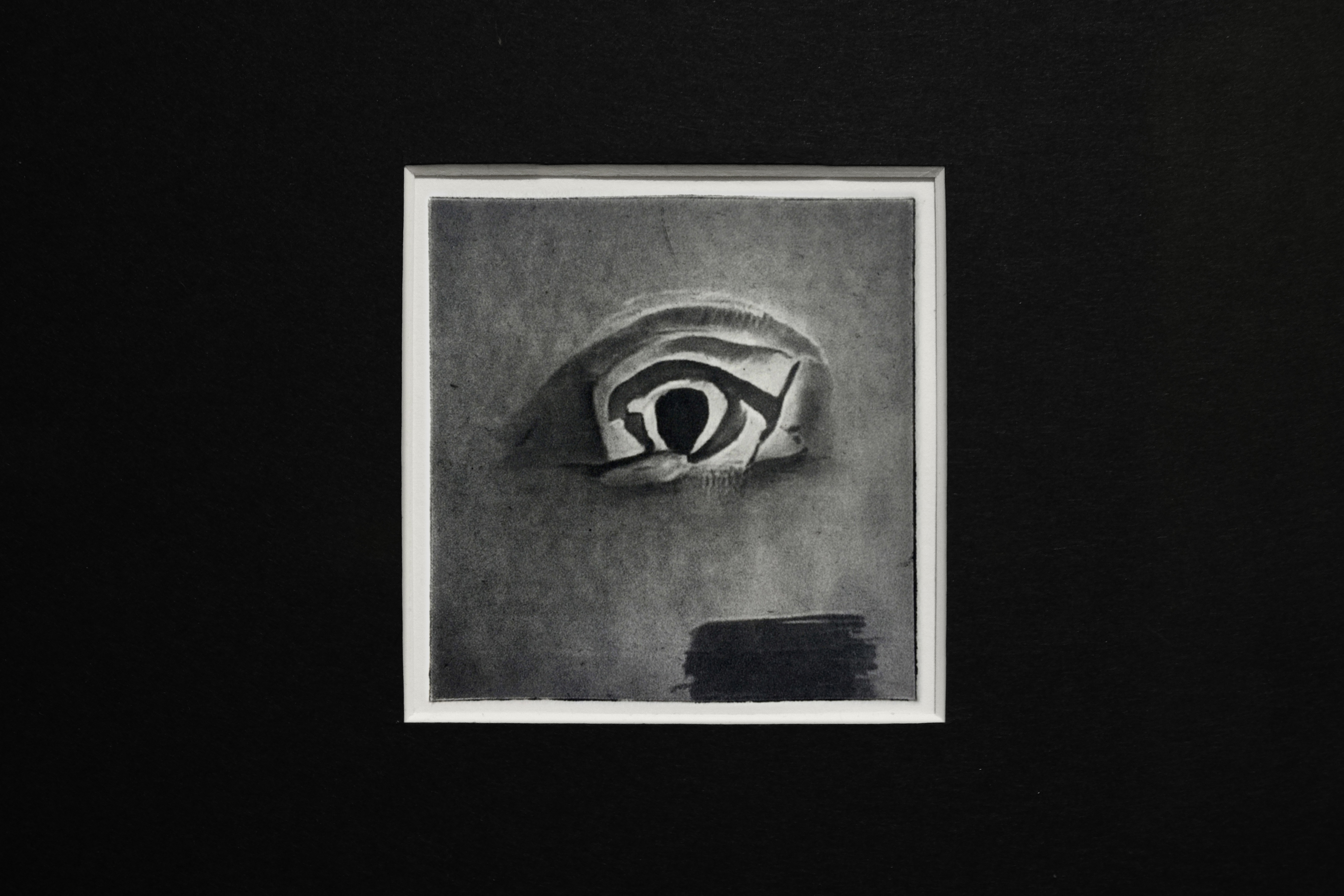
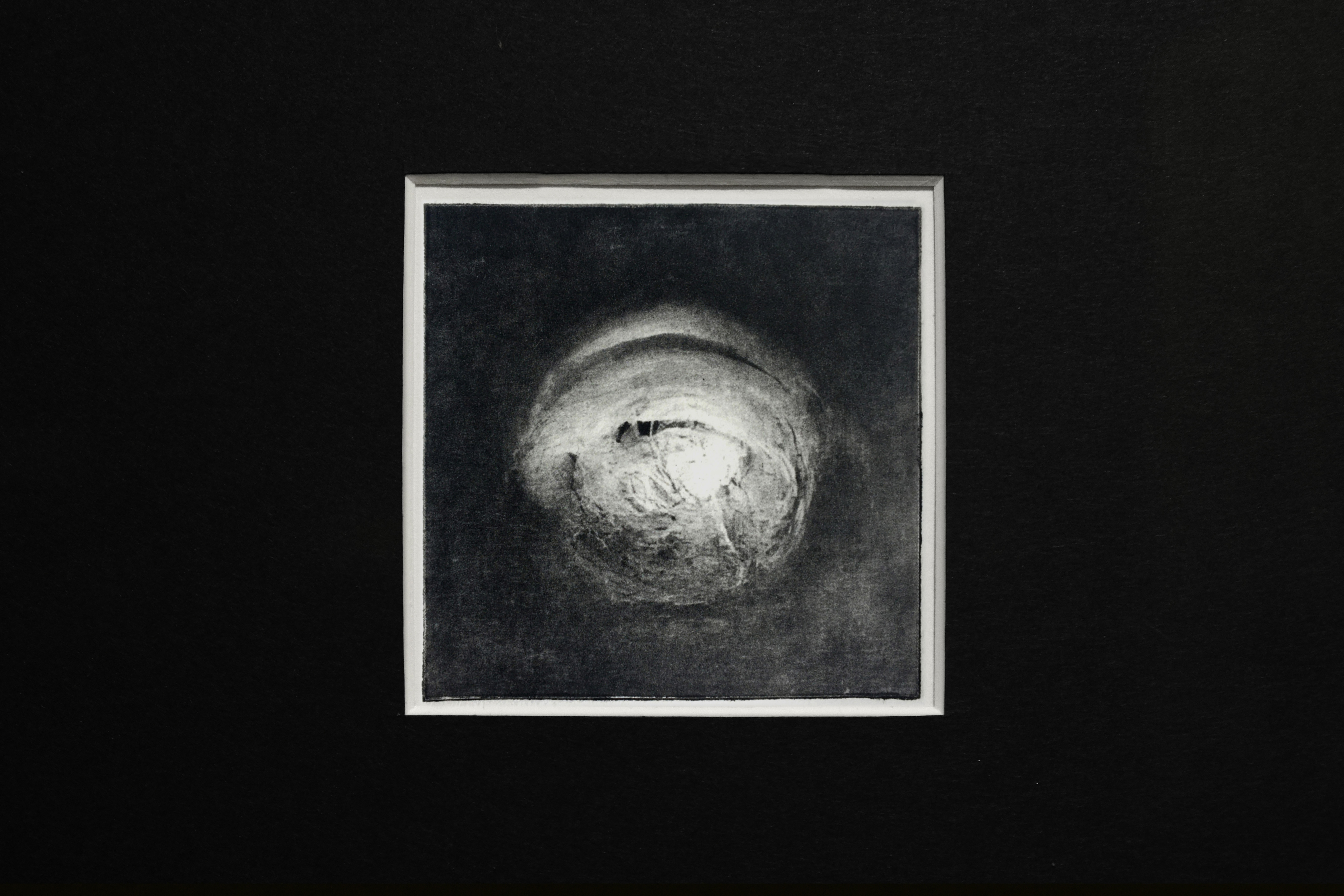
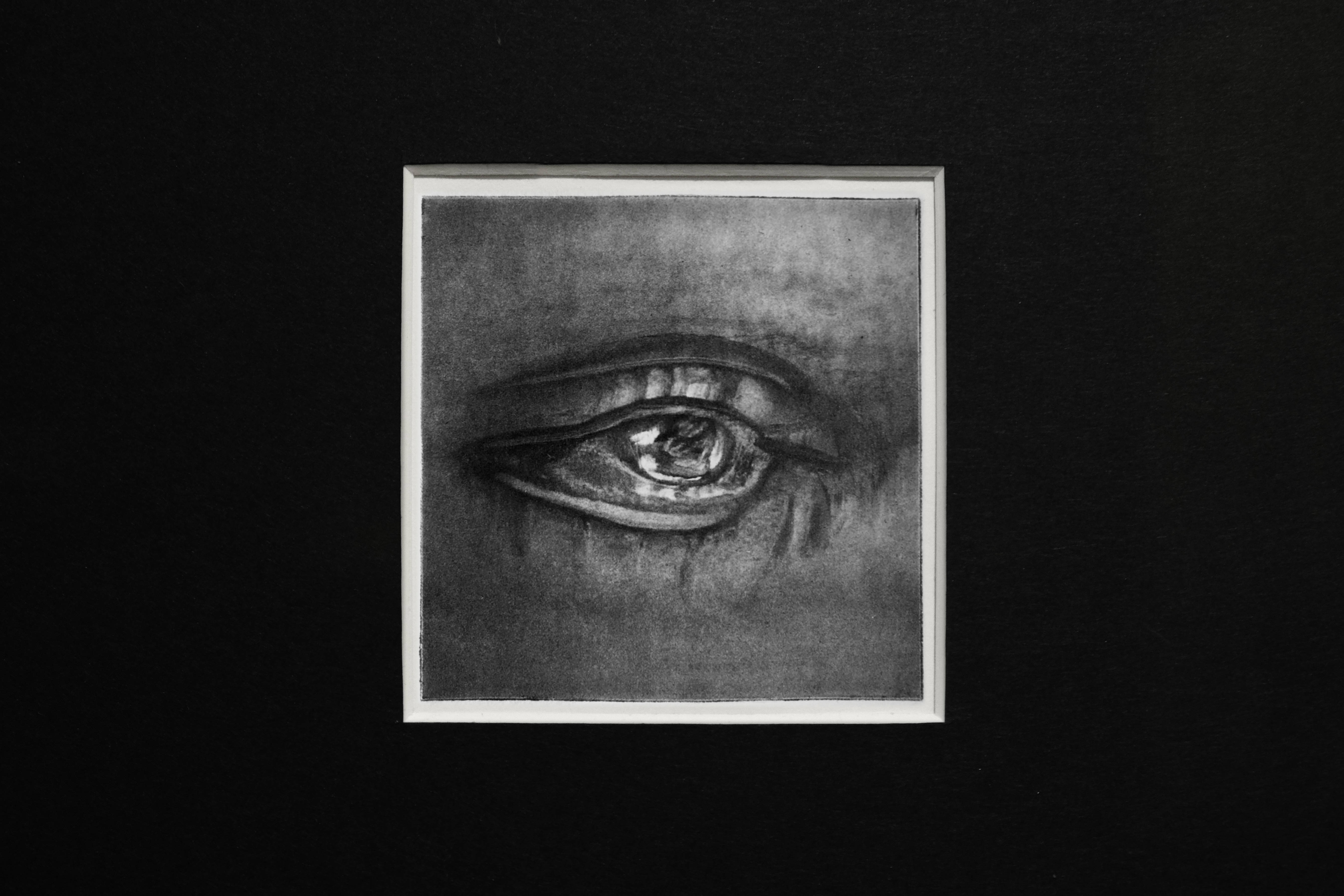
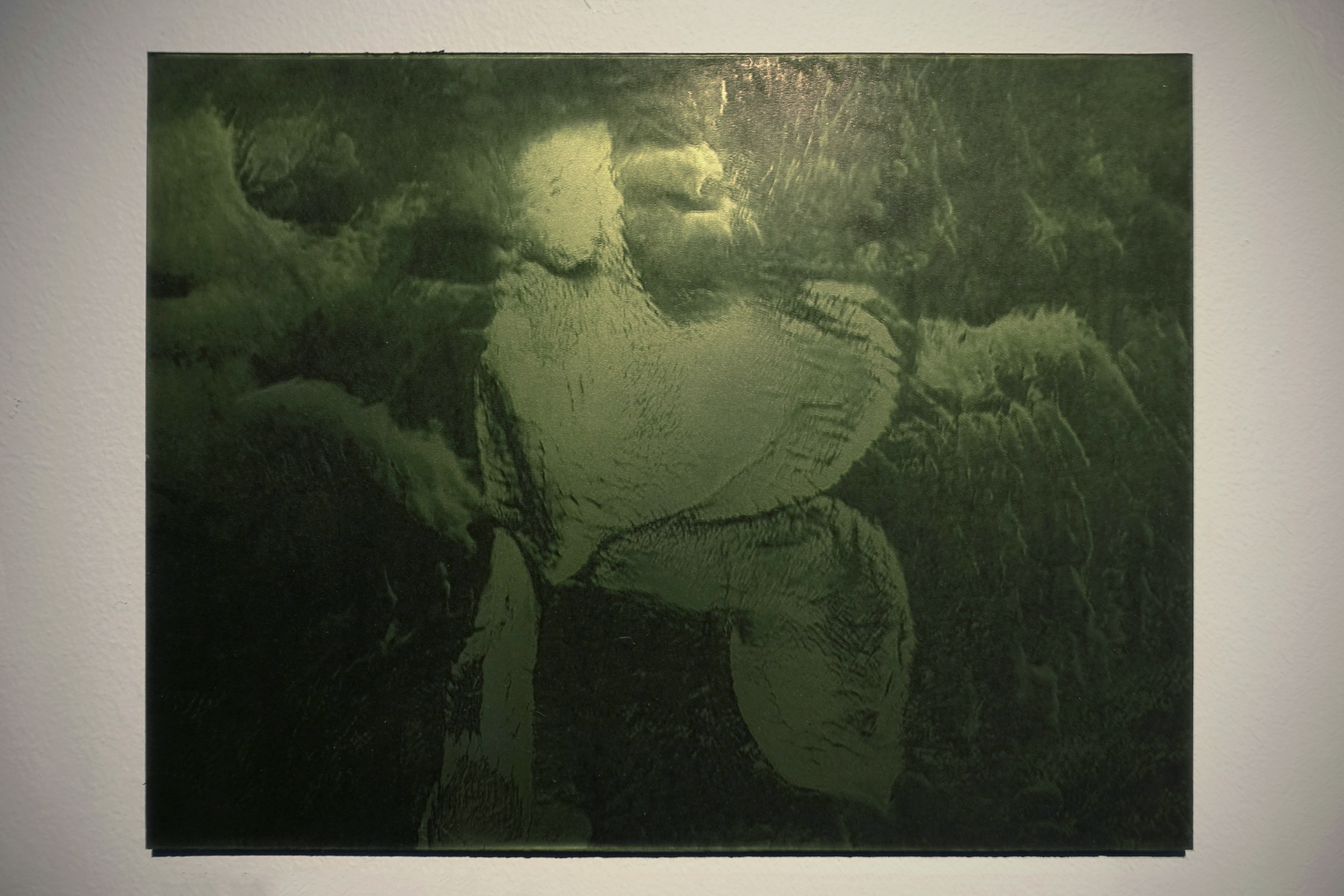
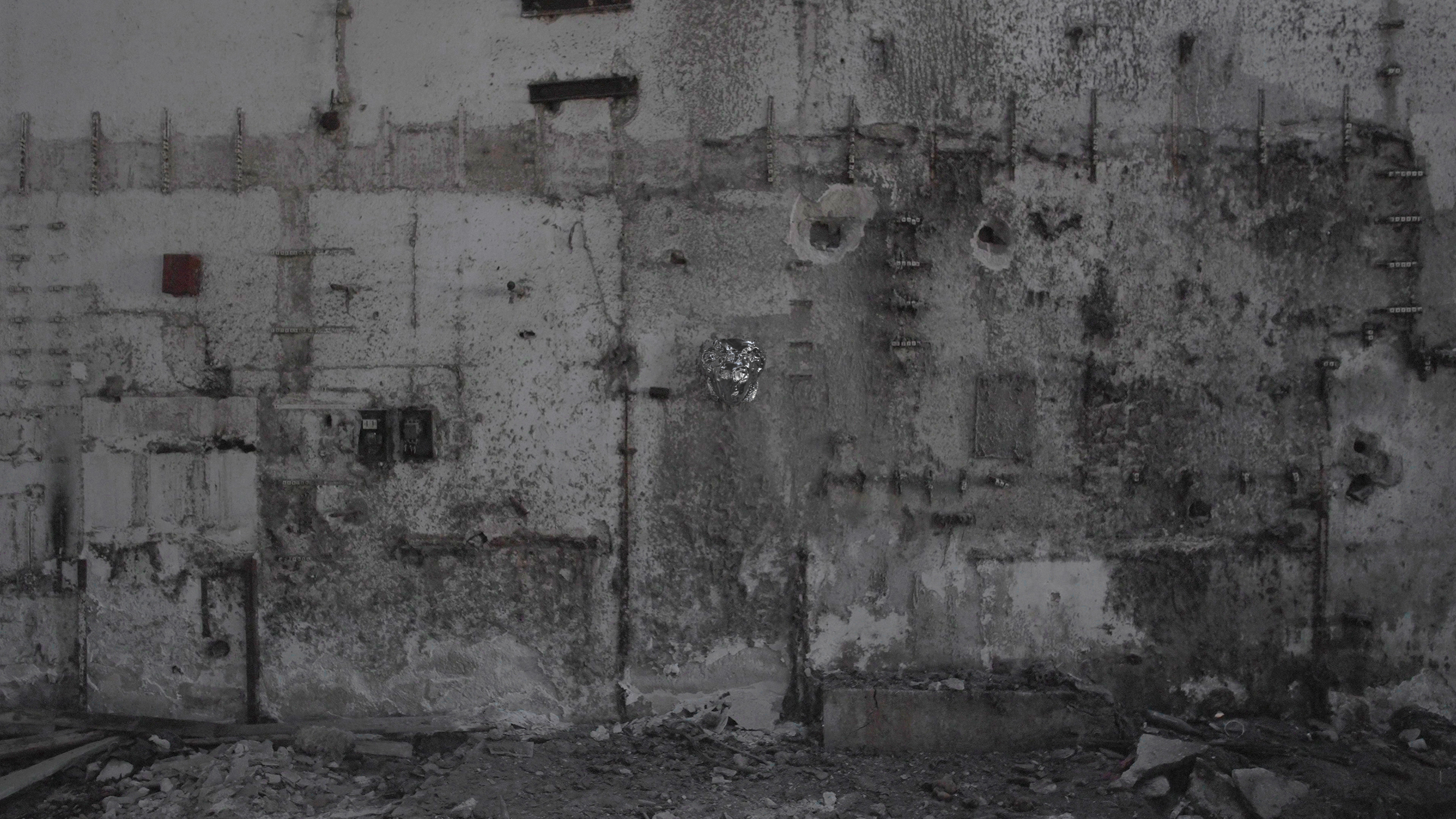
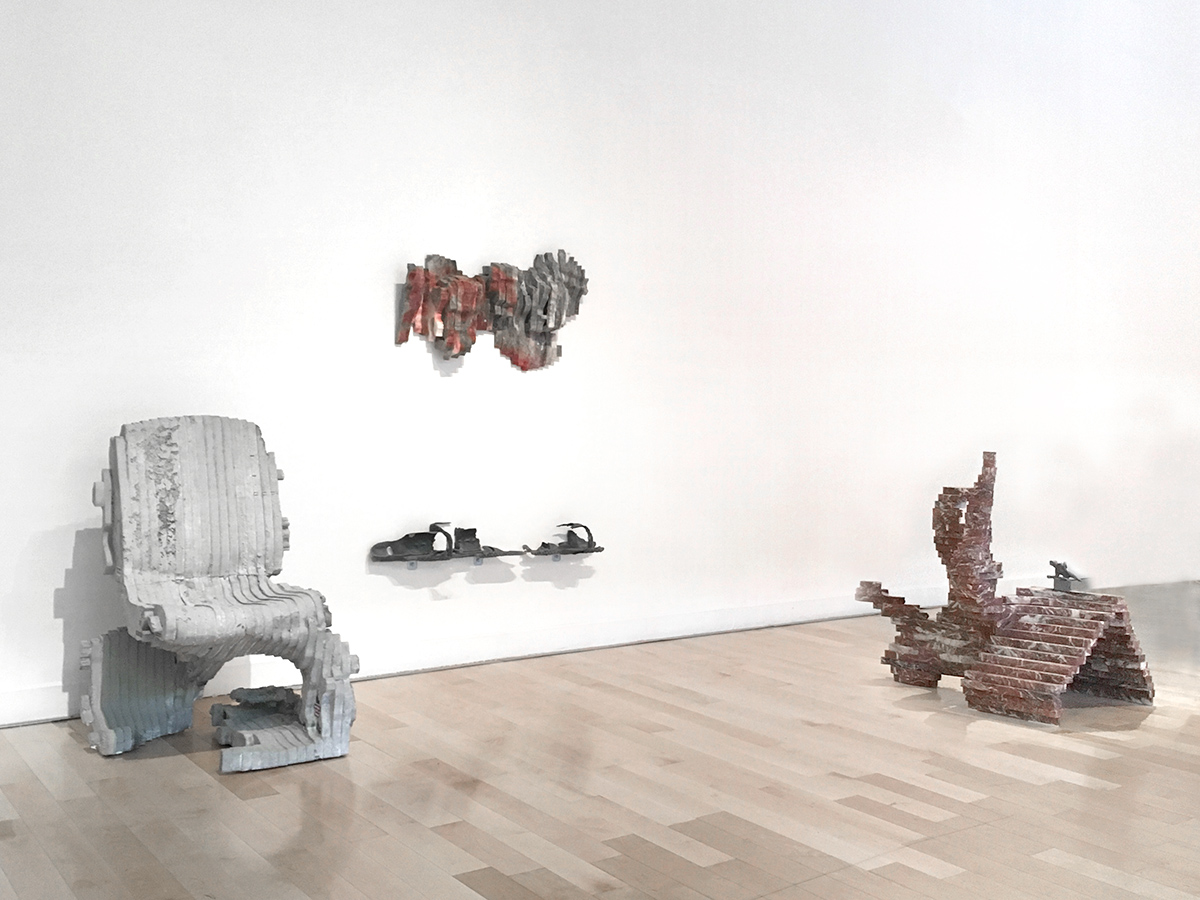
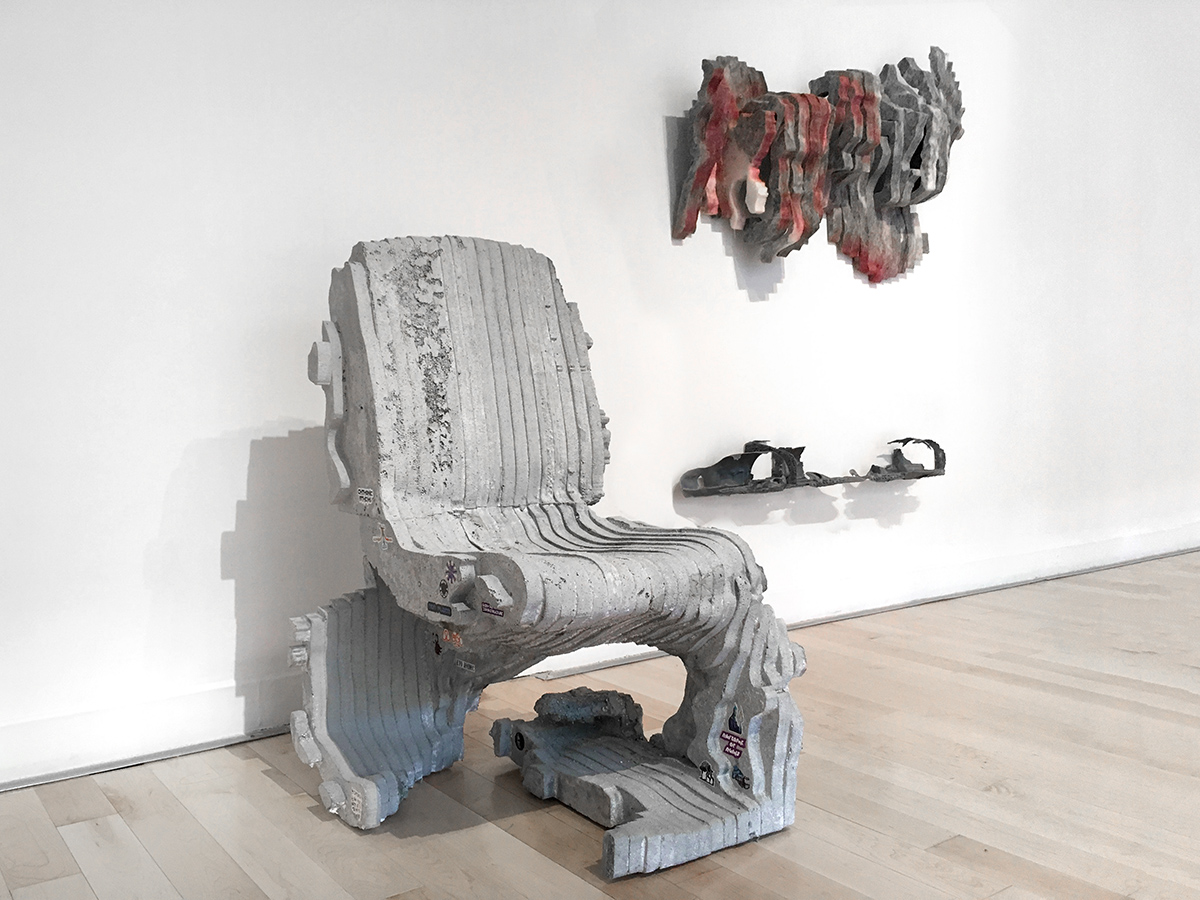
Idle Tunnel is a video installation that derives from an ongoing research project that looks at the Athenian subway system as a multifaceted infrastructure: a hybrid between an urban development project, an unceasing archaeological excavation and a curious museological mechanism of antiquities and works of contemporary art.
The looping video-projection originates from extensive documentation of photogrammetric digital scans that the artist operated in the totality of the subway system. In Idle Tunnel, the reconstructed 3D models of the Athenian subway trains provide the surface for unfolding a visual research archive dealing with subjects of geological trauma, transmutating biopolitical phenomena within hyper-modernities, literary and philosophical references on the form of the network and the form of the fragment, as well as representations of the mythological underworld through the centuries.
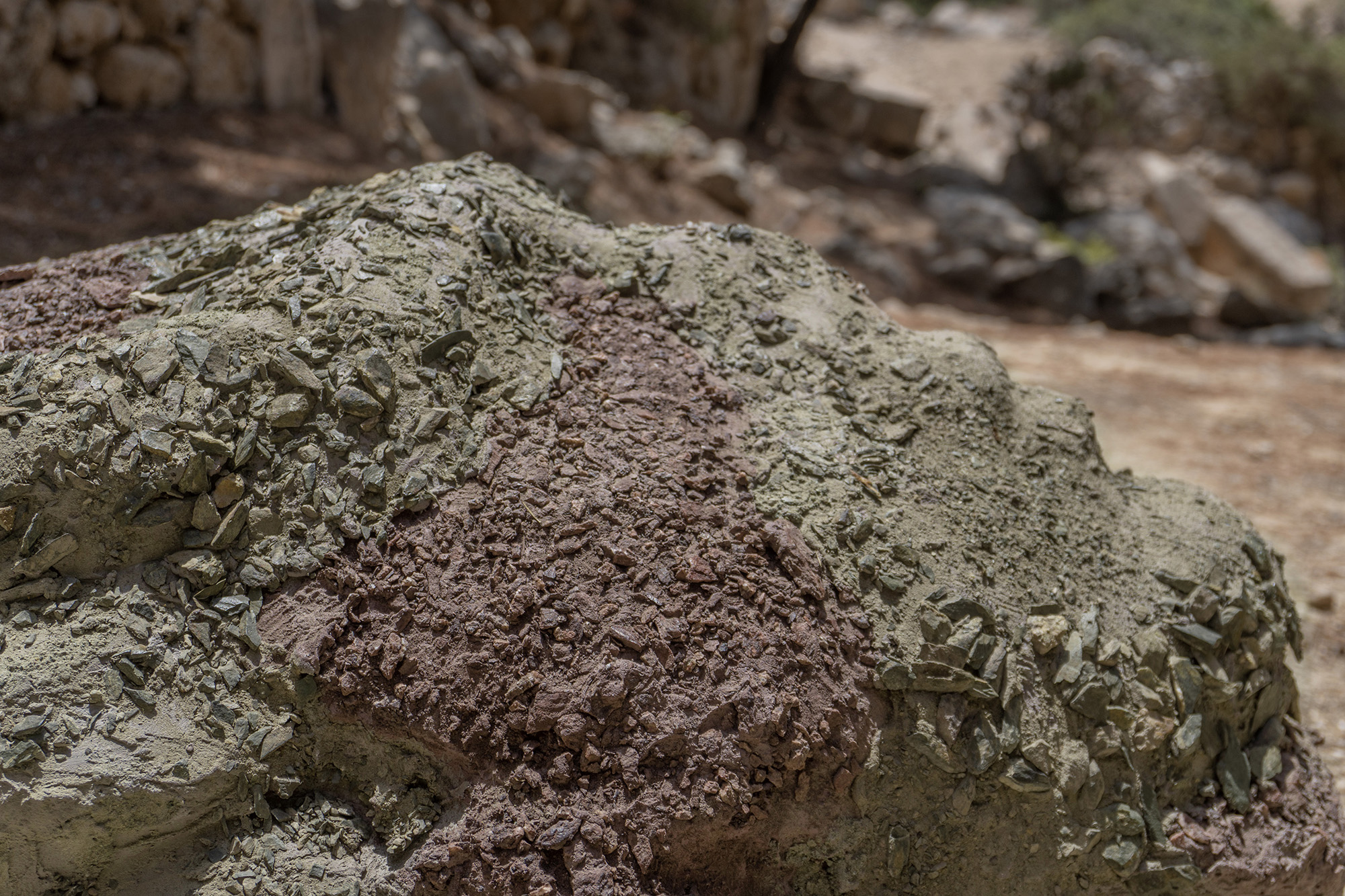
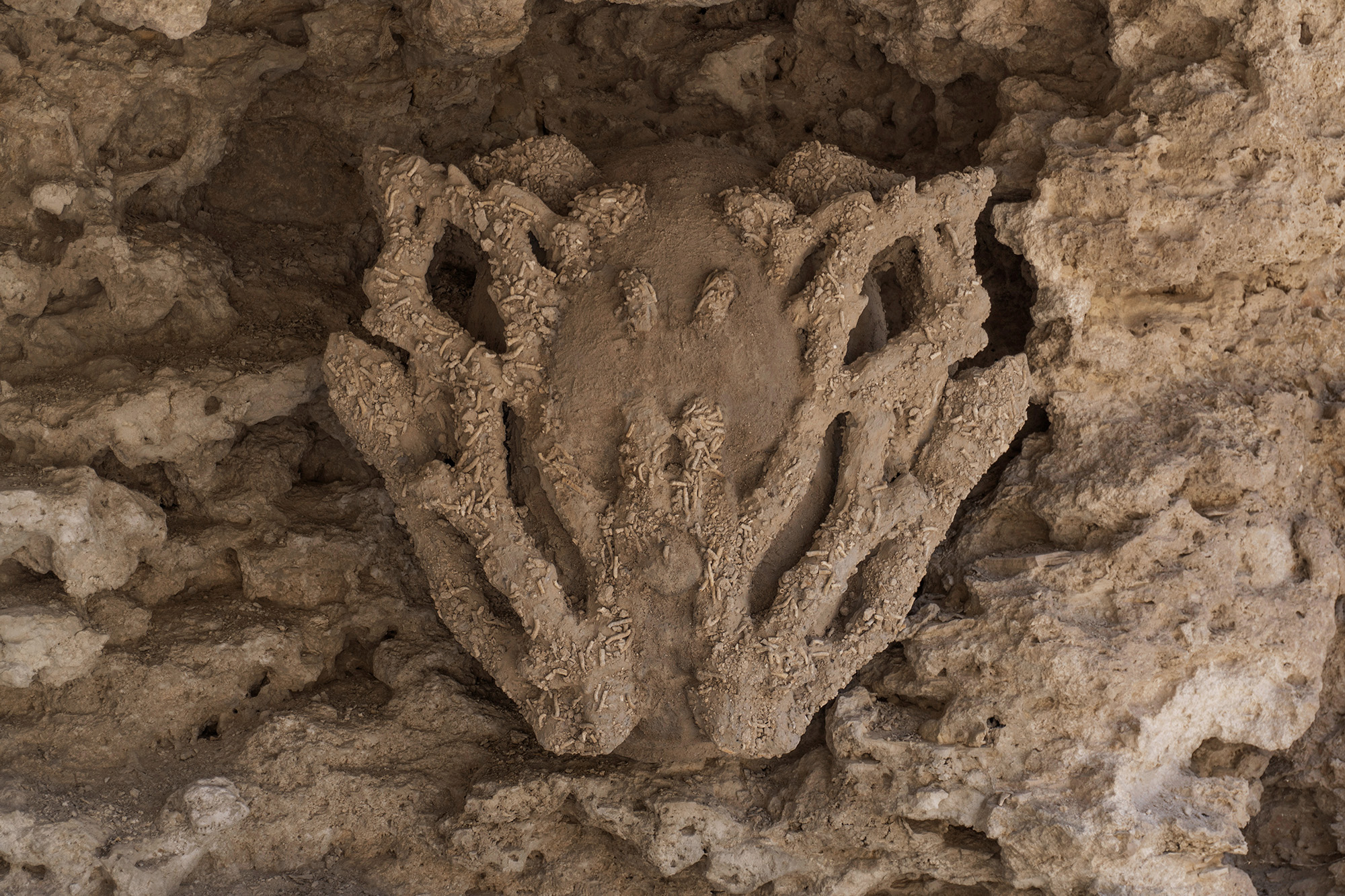
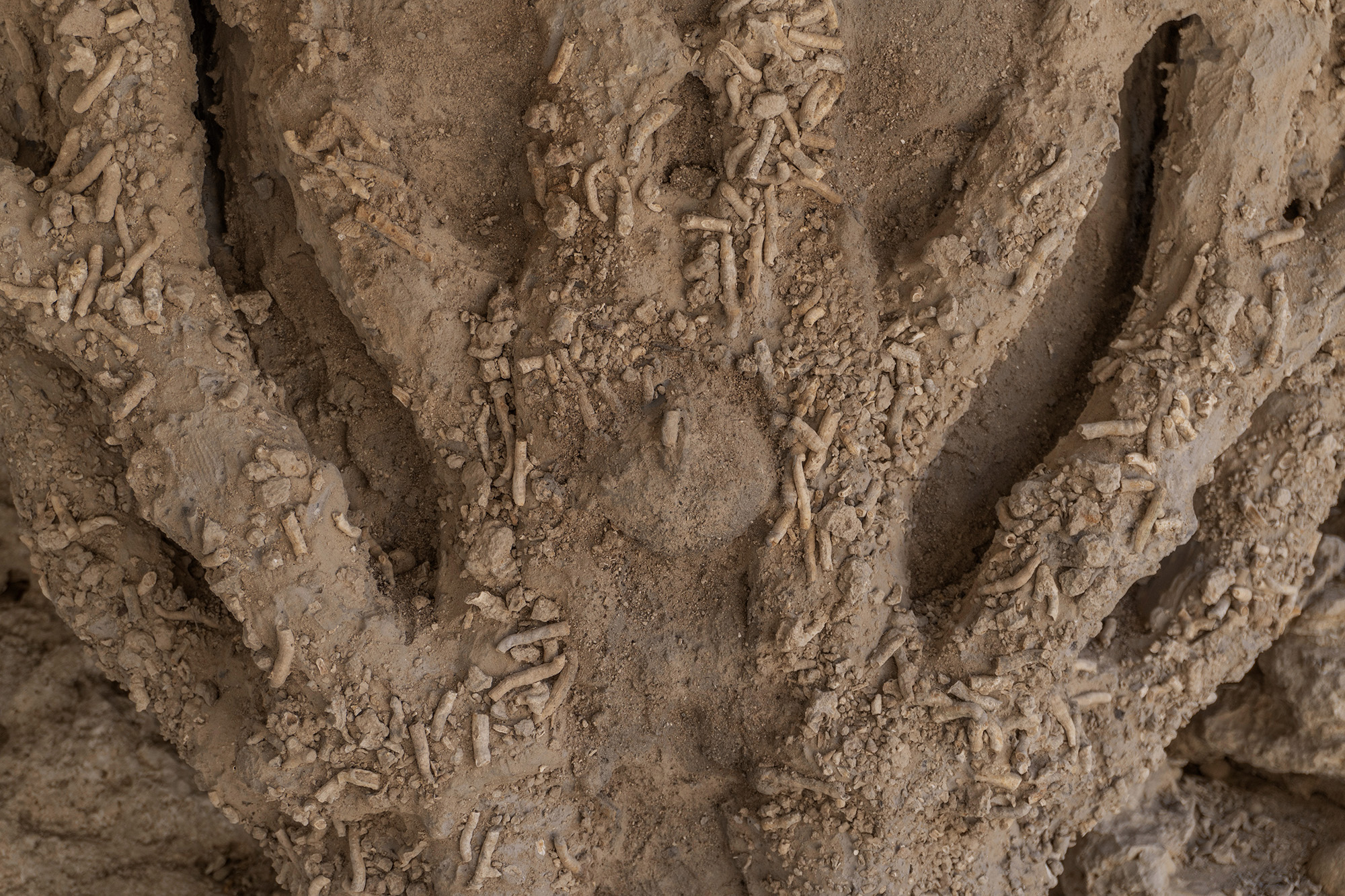
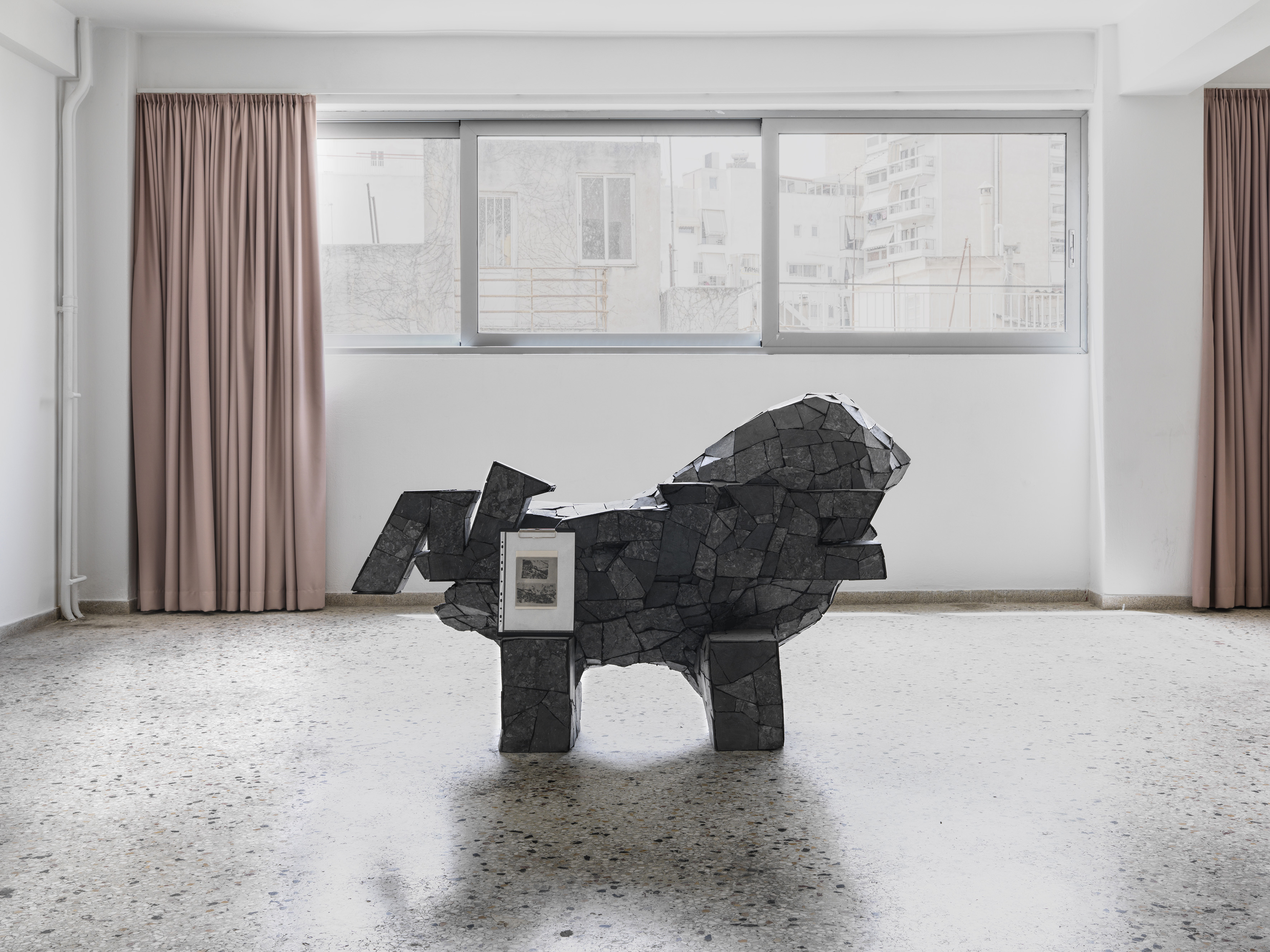
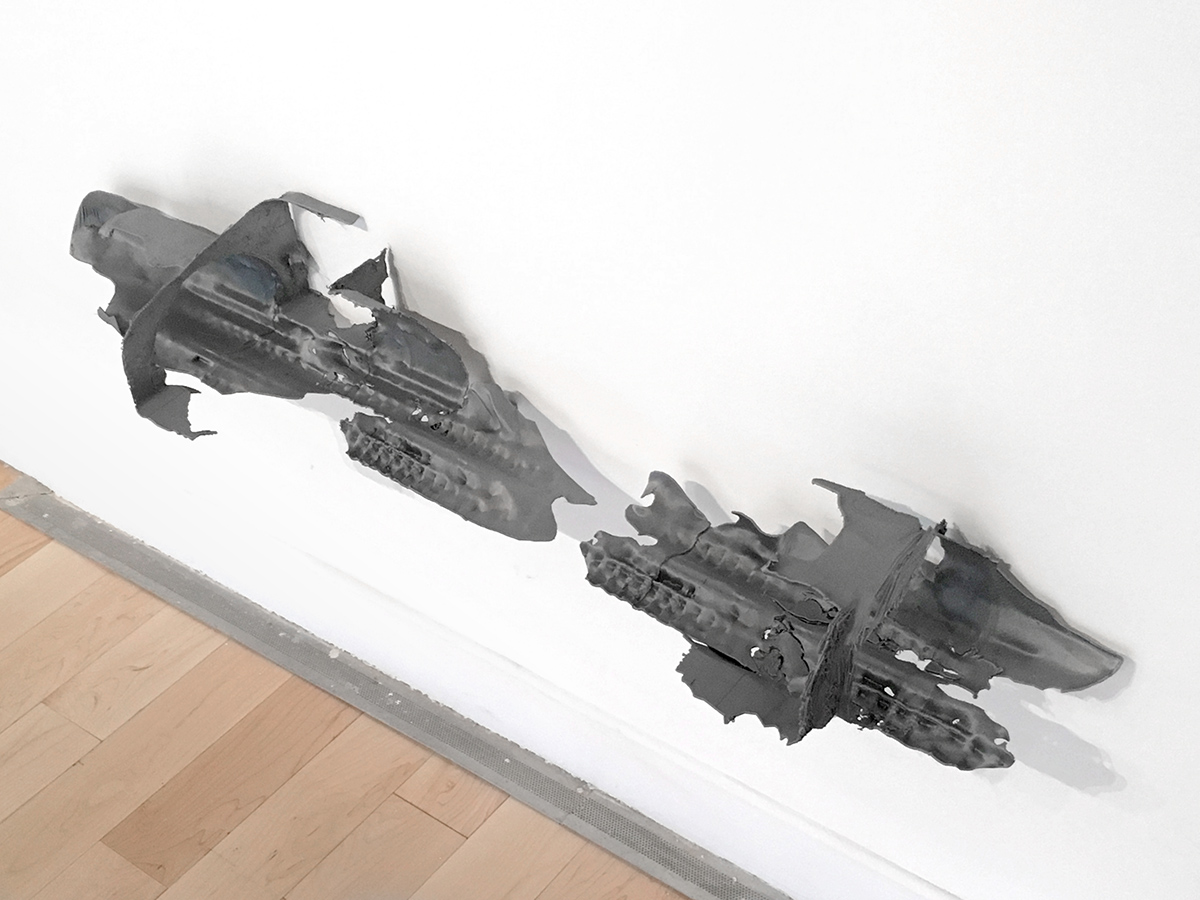
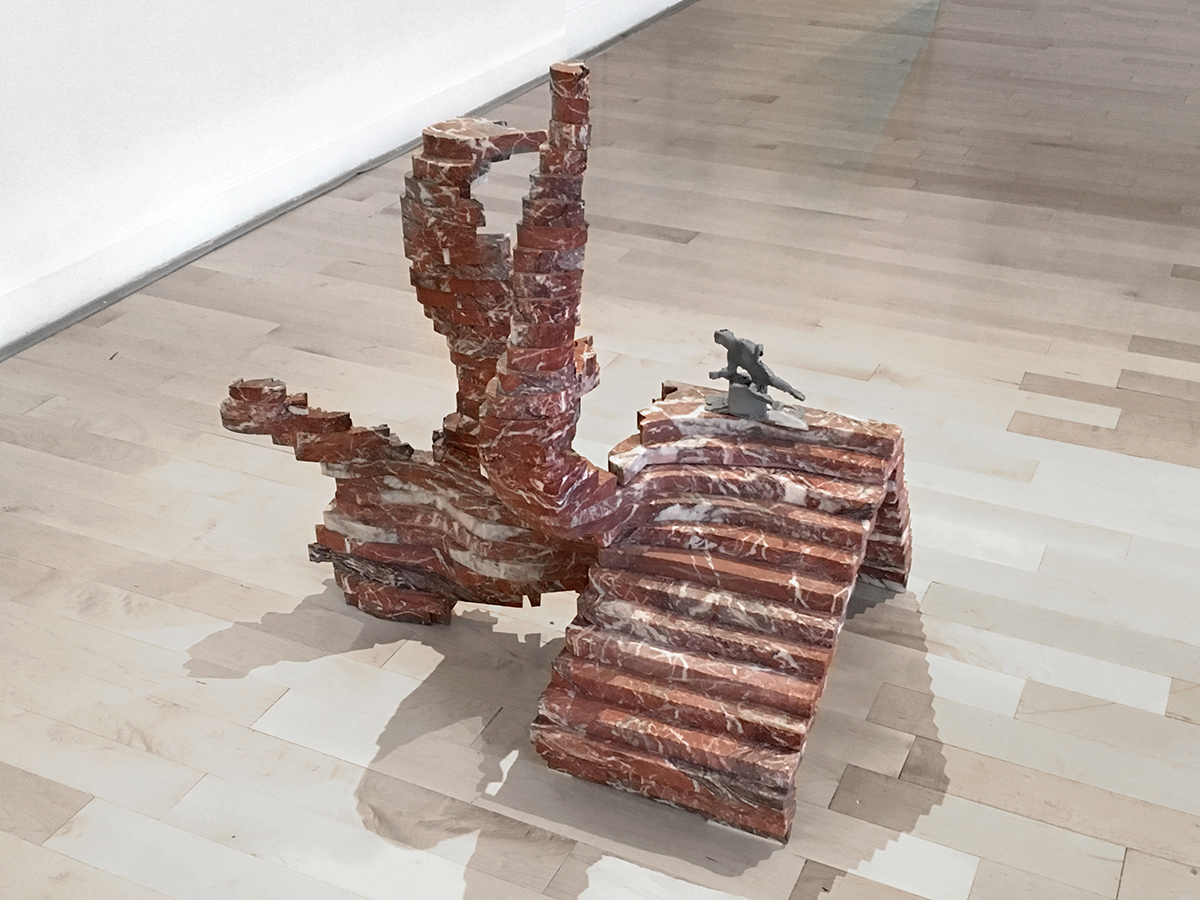
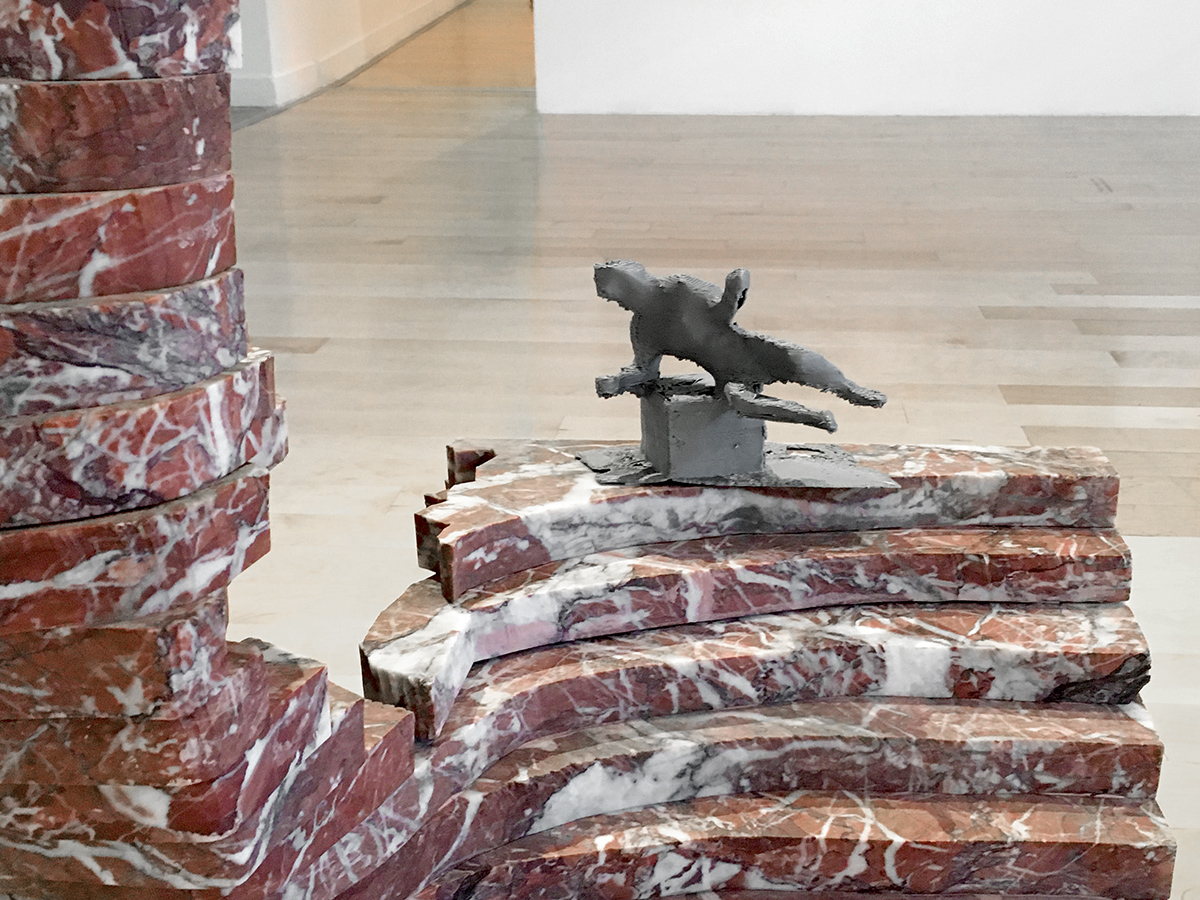
Brought into spatial relation with the projection is a sculpture made of cast Athenian slate, the type of metamorphic rock that was excavated by the tunnel boring machines during the subterranean railway construction. Produced by the means of an improvised rapid-prototyping technique, the sculpture takes its form from a pair of 3D-scanned seats found inside one of the subway trains. As it goes with the projection’s glitched imagery, the sculptural form is likewise distorted through the digital scanning and fabrication process, pointing to an uncanny material and mental landscape, a dialectical state between deep memory and violent accelerations.
Wednesday, March 13th, 2019 | Posted in activity |
Entanglement, 2018
Permanent installation of mosaic made of pebbles, sand, and cement
Last July, I and Lito would drive every morning, as early as possible to Moulari beach here in Nisyros, hoping every time that we would be the only people there. Every morning, we would spend a couple of hours shuffling slowly with our hands the wet landscape of shiny pebbles. Every now and then we would pick up one of the glossy stones and keep it in an empty water bottle. We would stop when the sun had already become intolerable.
A pebble is a clast of rock of a certain size, a solid aggregate of one or more natural minerals. During the millennia pebbles on this planet became smoother and smoother, slick and polished, scrubbing between each other, being worn by the countless waves, caressed by tentacles and mixed around by strong fins and underwater currents.
You have now to imagine rivers, the rivers of rainwater that we are all familiar with, but this time flowing in reverse, from the sea to the terrestrial landscape, dragging back the many submarine layers of rocky pebbles that lay on the ocean crust and pilling them up slowly ashore. In this way, flatlands become hills again. Then hills transform into the mountains that were once eroded by water, fires, winds and earthquakes, mountains that grow up once more, forming altogether what we know as the Earth’s continents.
Now, the several continents are pulling each other close again, restructuring into the single landmass that is known to us as Pangea.
During this time, volcano crevices formed the topography of the planet’s surface, spitting out molten rock from the insides of a much younger Earth. Every single drop of water disappears as time progresses backward to what is named by scientists the Hadean Eon, the age when Earth was a spherical rock resembling Hades hell, an environment of extreme heat and no life. A spherical rock getting smaller and smaller, becoming some hundreds of kilometers wide, then even smaller, the size of just some dozens of meters.
Finally, through a process that probably no one witnessed to unfold, a process represented only by puzzling computer simulations, the planet’s core that was once forged out of strong gravitational bonds between mineral formations, brakes apart. These mineral clusters, what scientific models show to be mere pebbles will scatter around space, amid the gas and dust created at the moment of the birth of everything.
Monday, September 17th, 2018 | Posted in activity |
KERNEL, Petros Moris, Pegy Zali, Theodoros Giannakis As you said, things resist and things are resistant, 2018
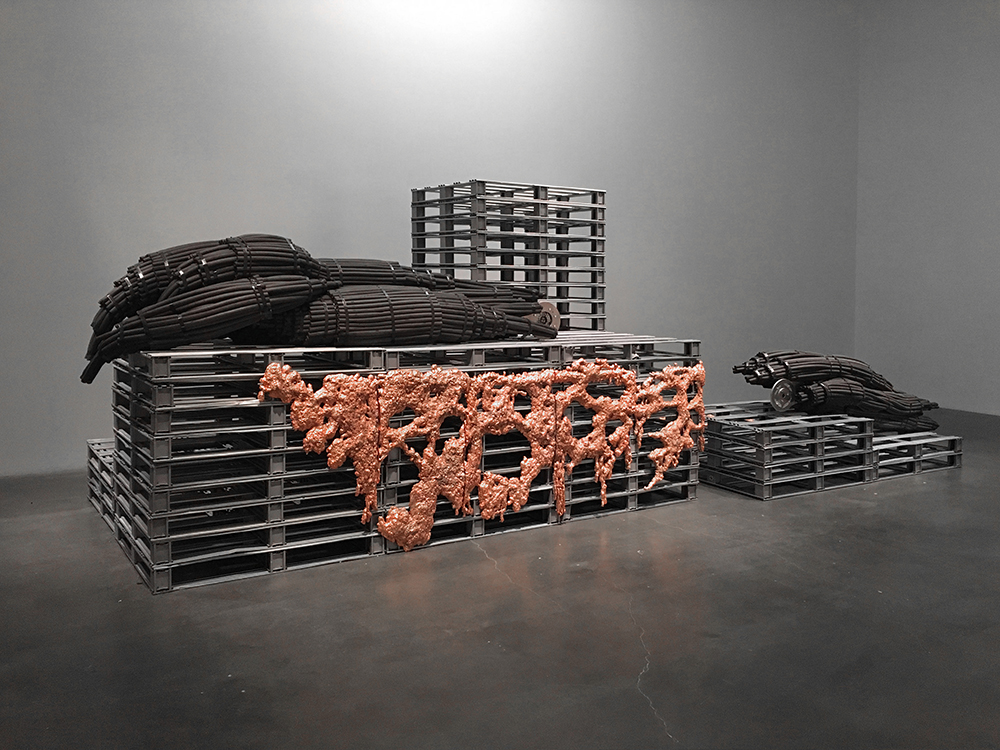
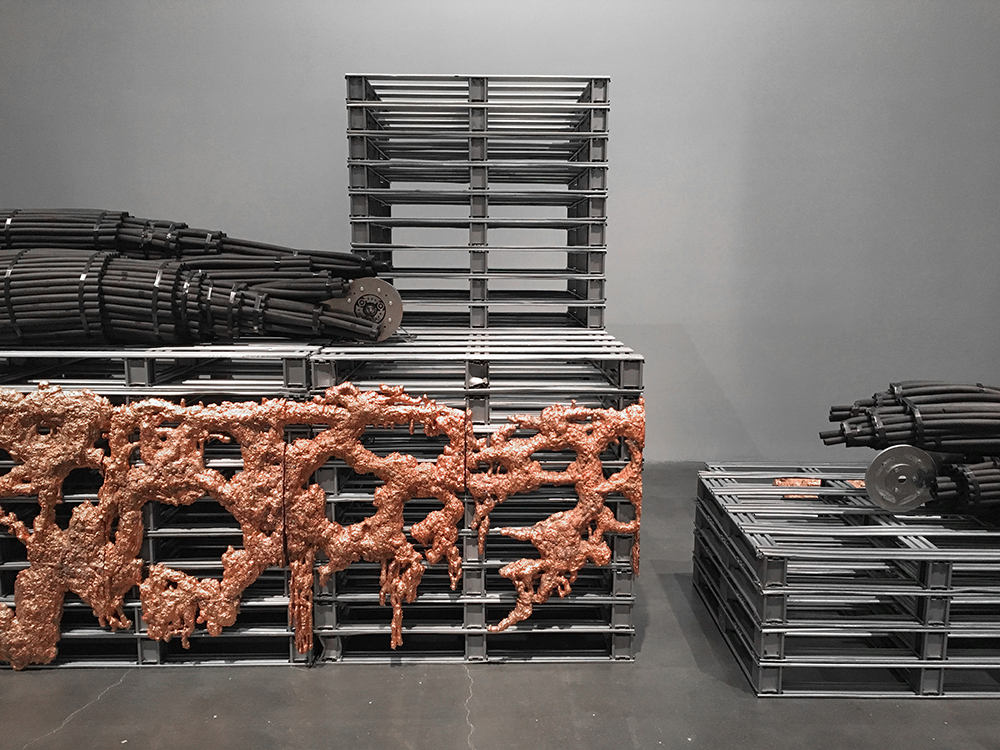
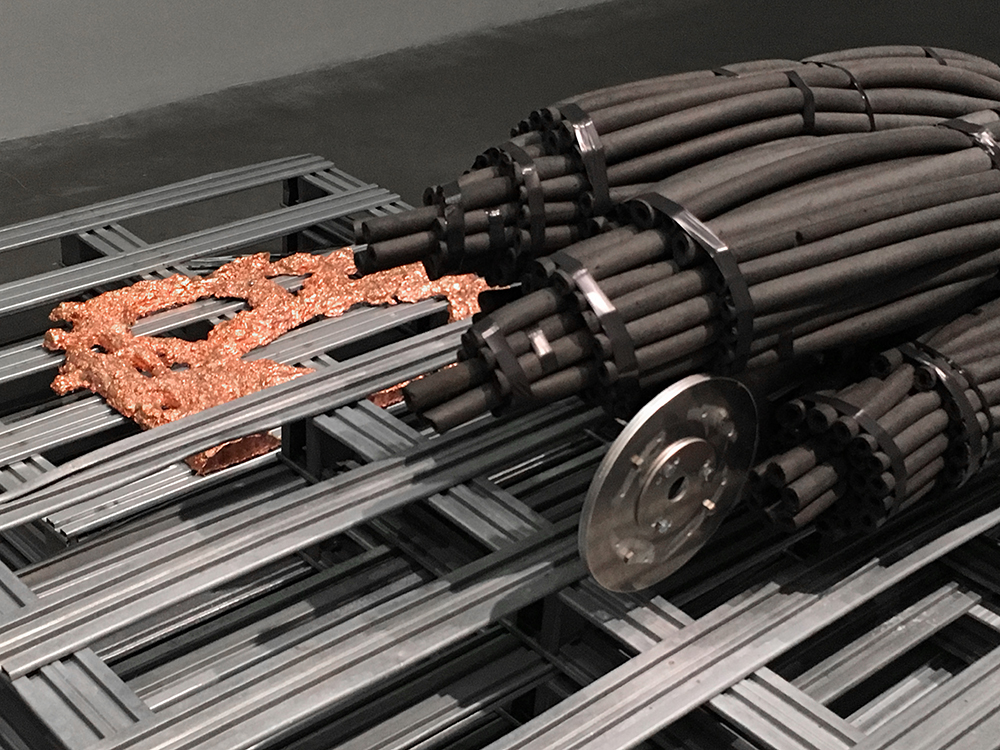
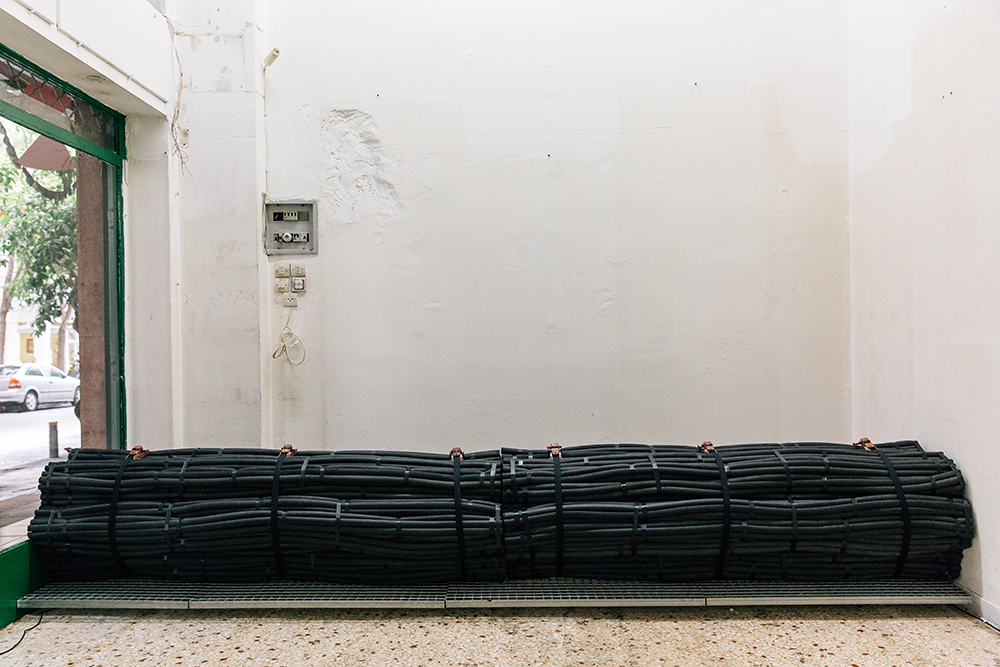
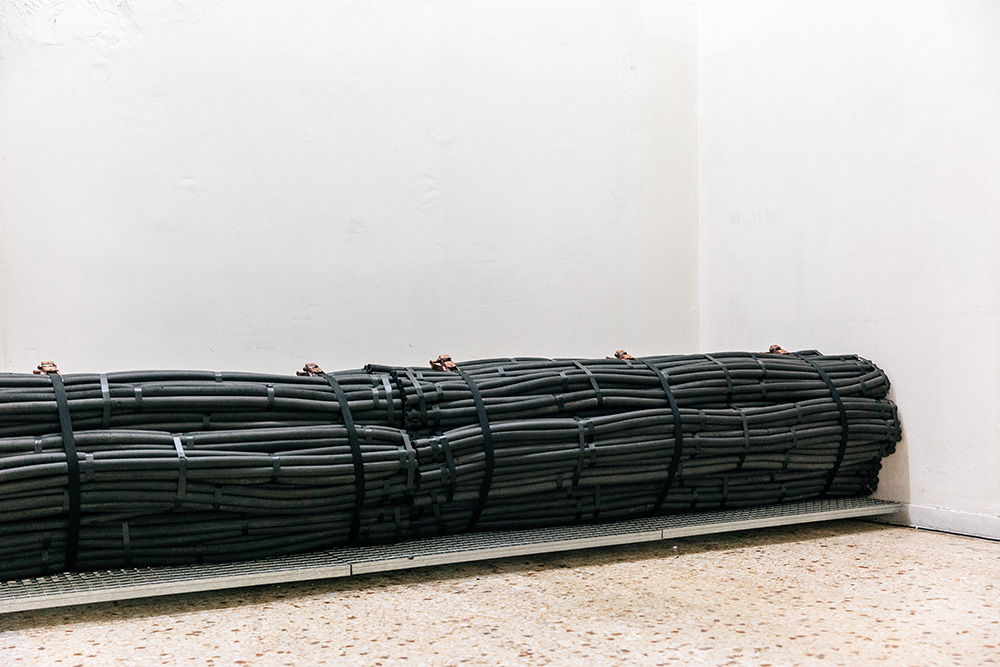
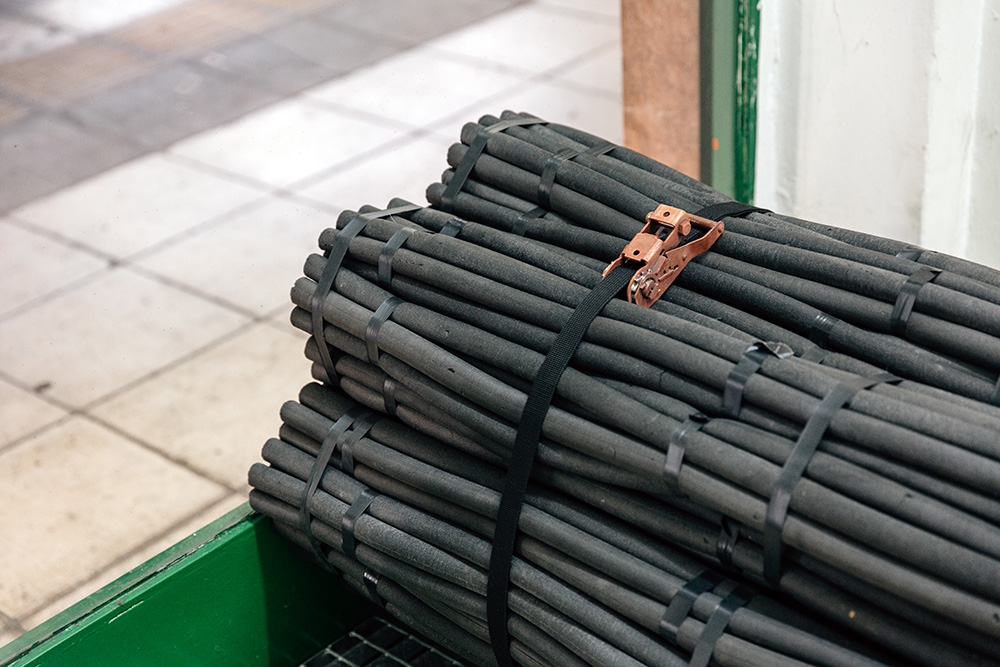
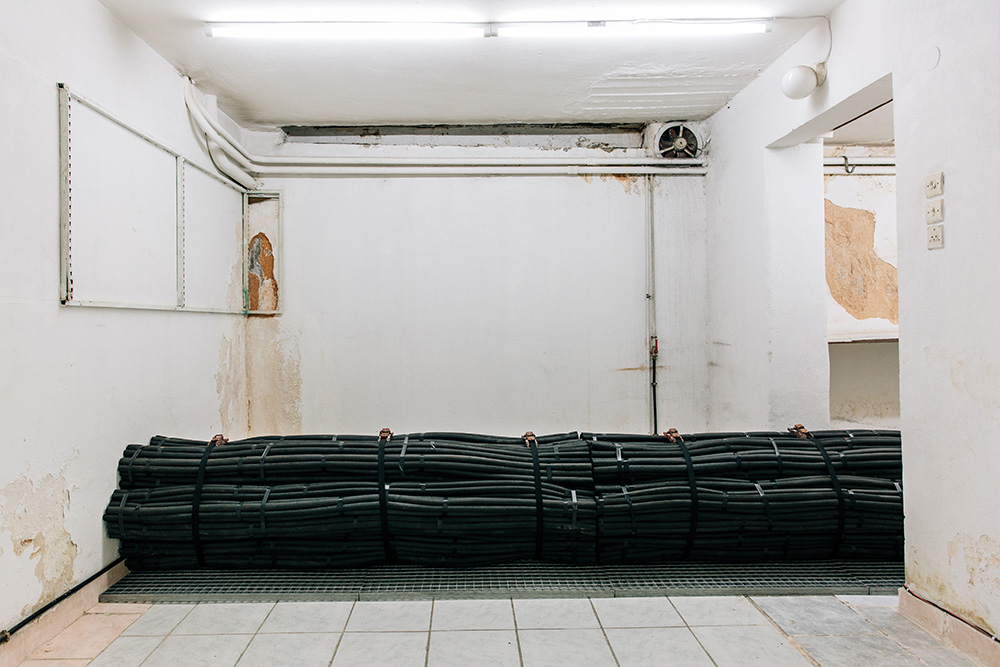
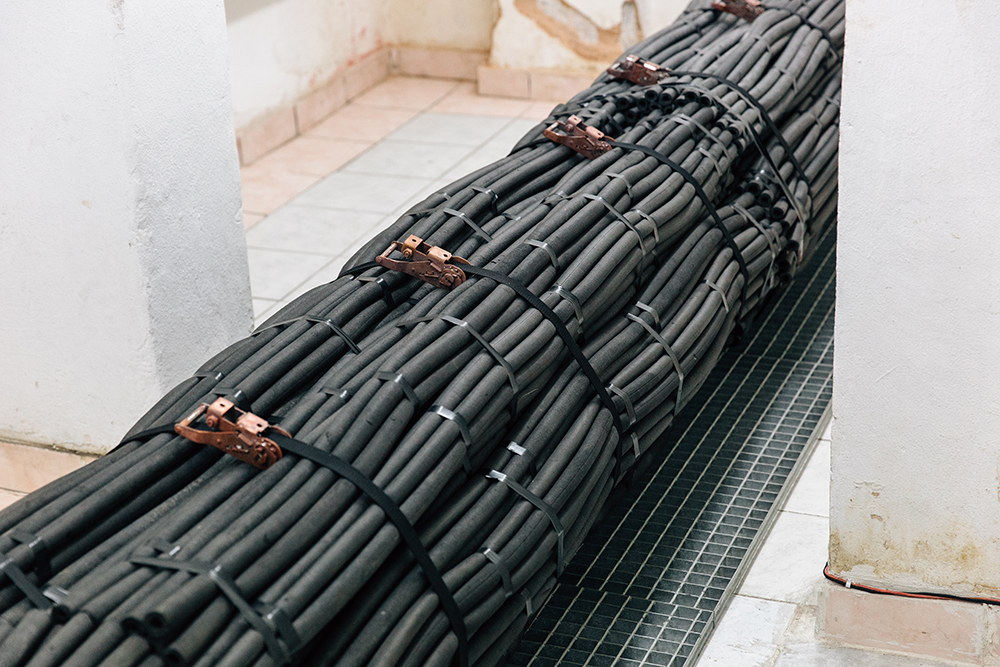
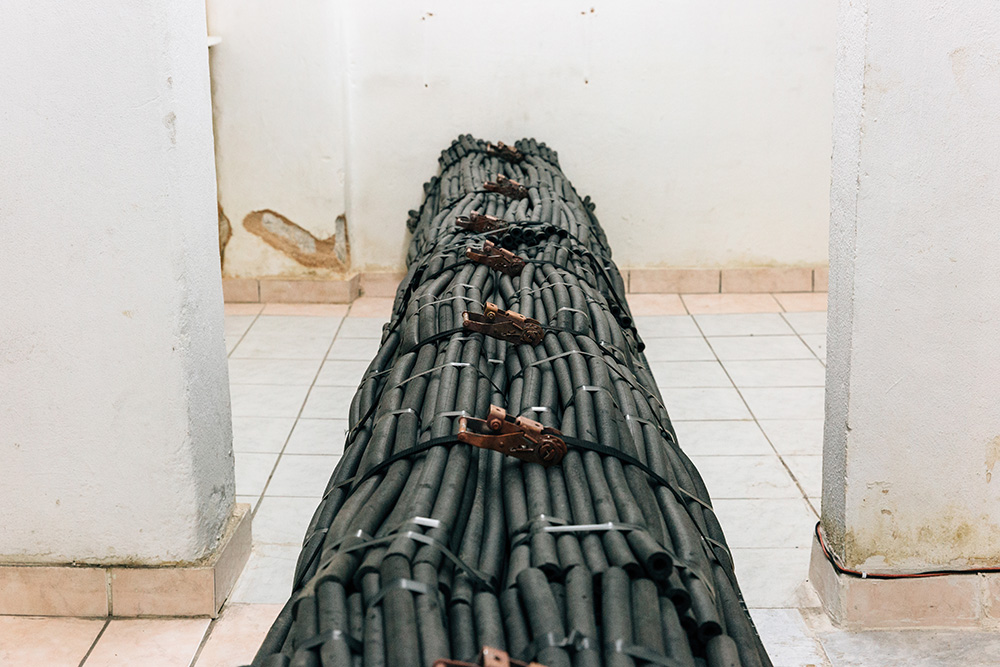
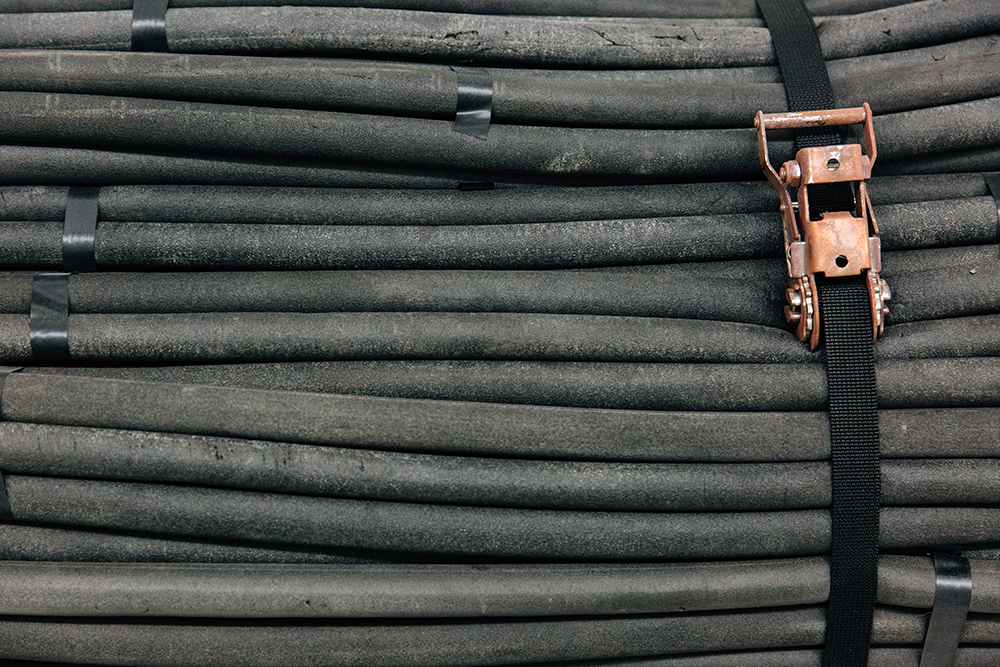
Alumunim pallets, copper-electroplated acrlylic resin, foam cable-jackets, electrical tape, steel, robotic mechanism
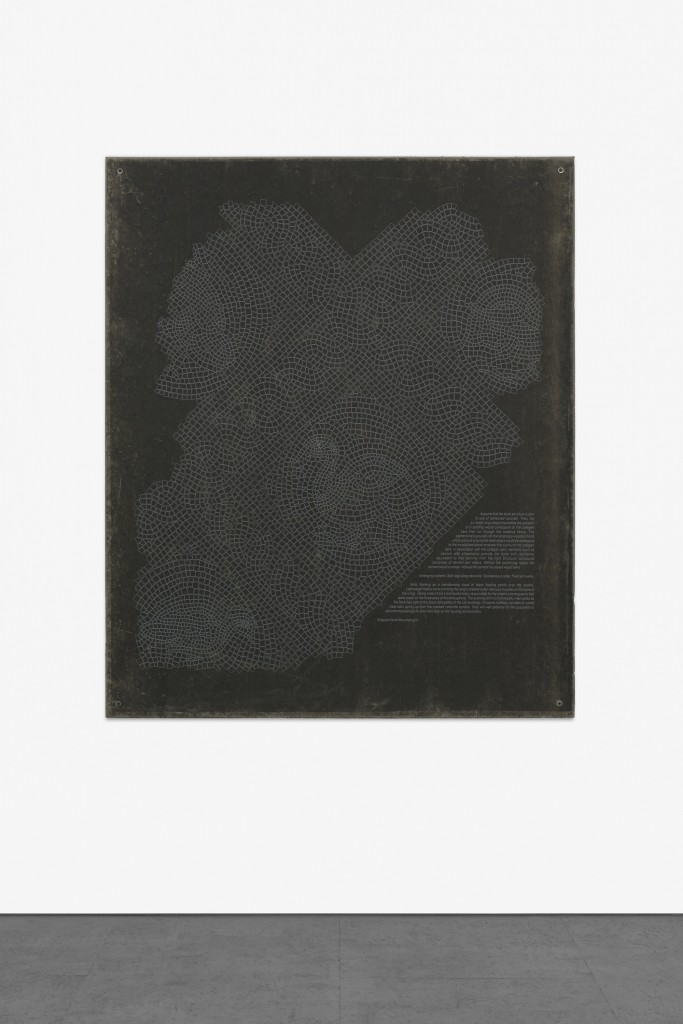
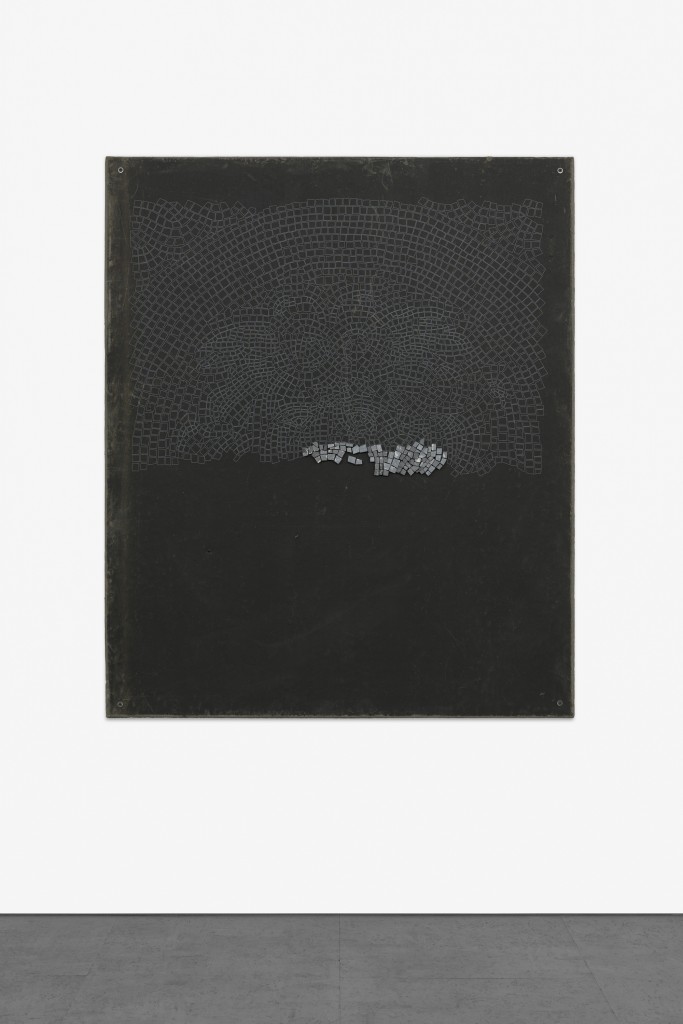
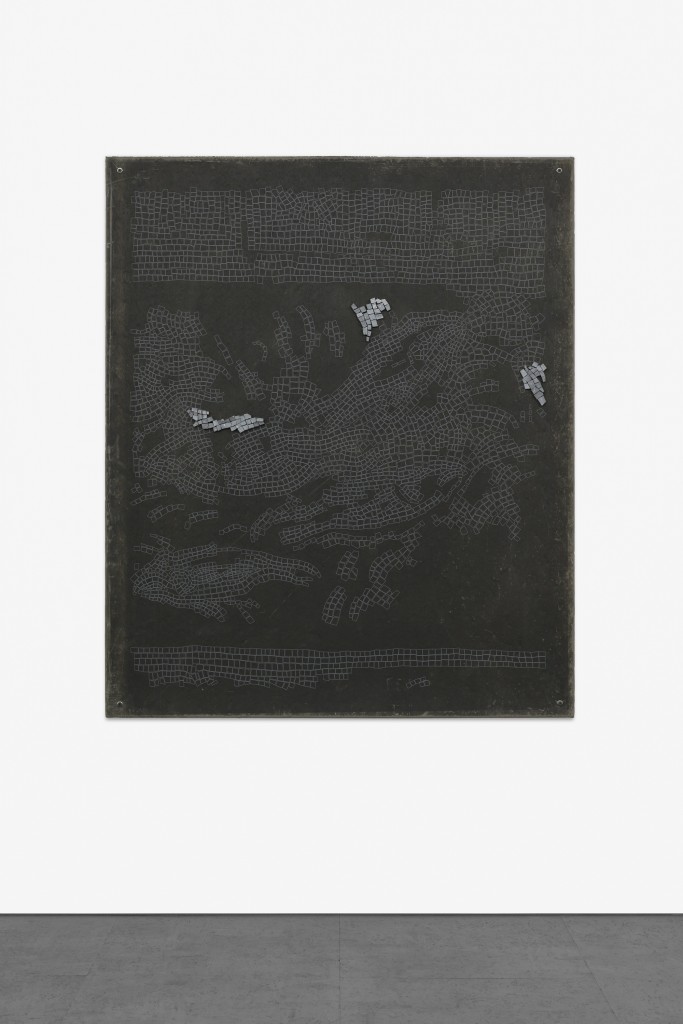
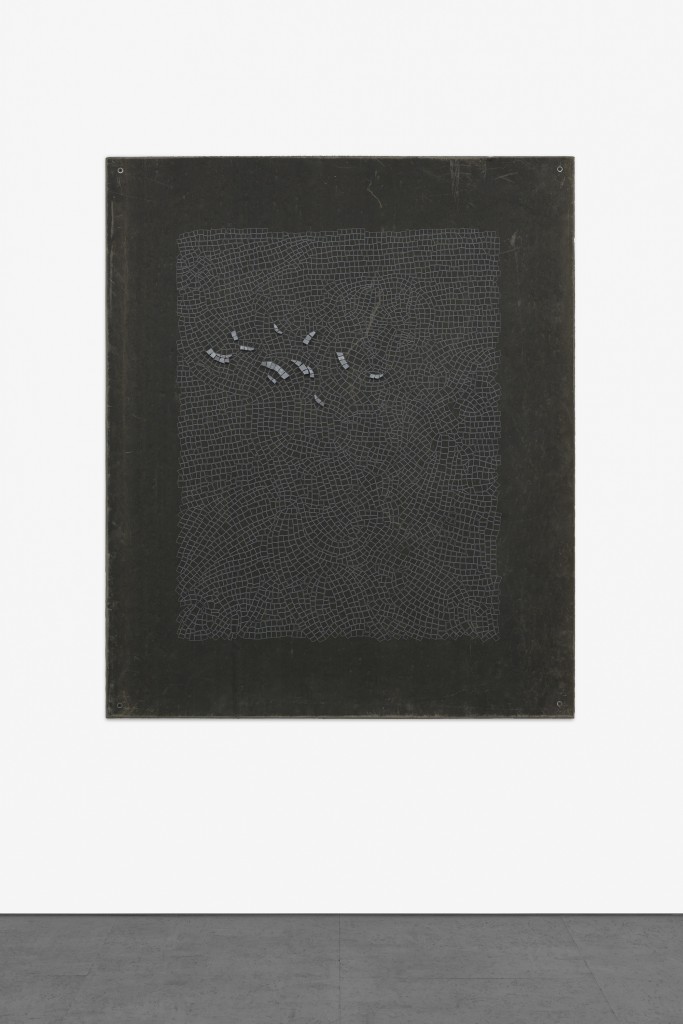
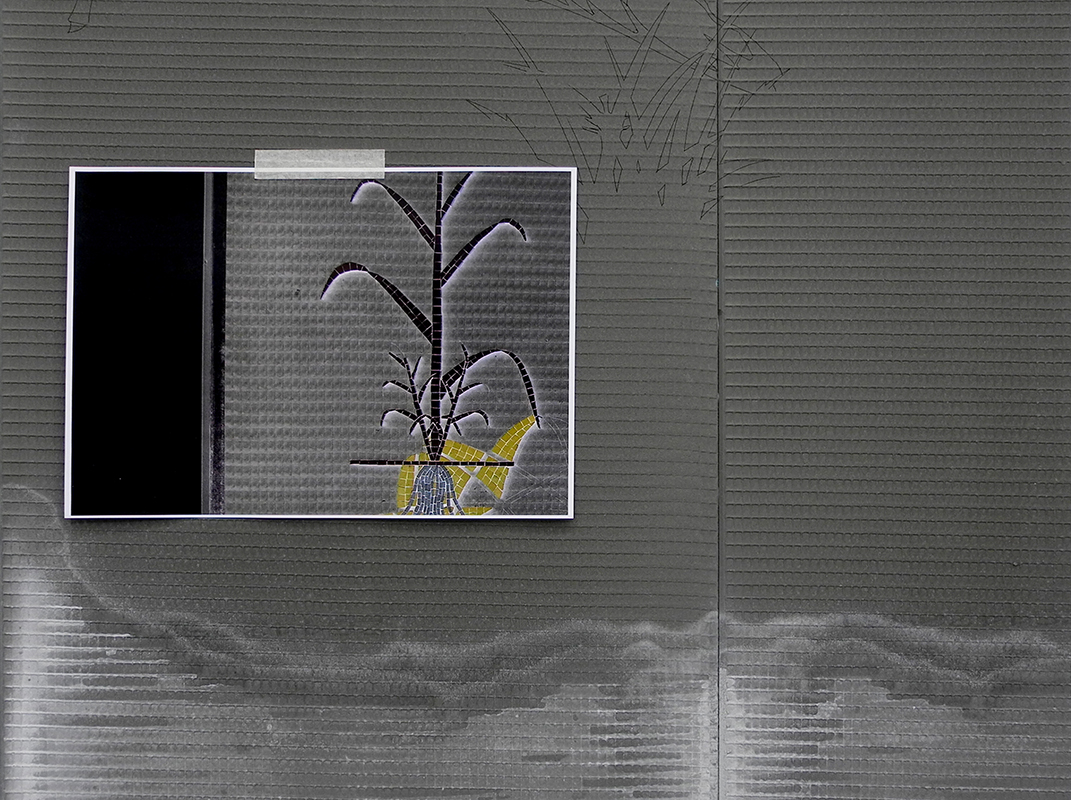
In 1985, a few years after they settled in my hometown, Lamia, my parents participated in a GLSL program (General Secretariat for Lifelong Learning). The program included the delivery of mosaic lessons to primary school children. It also involved the production of a mosaic project in collaboration with the children who participated in the program. Part of the whole project was the mosaic to be permanently installed in a public space. The work was finally installed in a municipal playground in the city center, in a plot that was expropriated due to archaeological finds. As a child, my visits to the specific playground were not regular. I can confidently say that I had been there about five times the most in my whole life. For this reason, I could only vaguely recall the subject and the composition of the mosaic. I can somewhat remember its earthy colours of pink and yellow marble. I can roughly bring to mind its general style, a fusion of pre-cubism, socialist realism and children’s book illustration.
My parents studied mosaic in Ravenna, where they met each other and fell in love. My personal relation to the studio they still maintain in Lamia was quite problematic from the time I can remember myself and till I left my hometown to study. I was insistently reacting to my involvement in their professional activity and my systematic help in the studio at that time. This turned me passionately towards computer science during my school years, planning to study programming and network security. In this scientific field I assumed that I could find my distance from the manual practice and the aesthetic range of applications of mosaic and craft in general. Nevertheless, I eventually studied visual arts.
I decided to pay a visit at the playground a hot afternoon last August, when I happened to be in town. The plot was surrounded by multi-storey apartment buildings. From the first minute of my arrival I got conquered by a thin feeling of disappointment. After scanning with my eyes the few square meters of the space that were not covered with vegetation, obsolete recreational equipment, benches and dried leaves, I concluded that my parents’ mosaic had been removed from the site. For some moments my gaze wandered randomly on the blind walls of the surrounding buildings that were on their larger part covered with rough, sprawling graffities. Apart from a poorly designed sign that read “Lamia”, most of the graffities (or at least the ones I could actually decipher) were in fact the tag of a solely guy that signed with the alias “Alone”. Alone’s graffities ranged typologically from sketchy “tags” to crappy “bombs” that almost overlapped each other on the walls of the west side of the playground. Among them, a slightly more sophisticated graffiti, around three by two meters size, was standing in a distance from the wall, on what it looked like a mismatched brick pedestal. Like the rest of the graffities, it featured the signature “Alone” with bold capital letters. The whole background was painted with silver spray paint, while the letters were outlined in black. Yellow and green stencilled flowers were sprayed over the silver surface, most likely in retrospect, by another graffiti writer. The whole composition was completed by a small sprayed heart and a couple of additional tags, painted in blue.
As I approached slowly towards the “masterpiece” of Alone’s unlawful art, I immediately understood why the whole graffiti caused me from the beginning an awkward but elusive uncanny feeling: at five meters distance it was already apparent that Alone’s thick silver spray paint had found as a landing surface the very mosaic for which I visited the playground in the first place.
Bridge Side A (Ofrah Fergal Kasei), 2016
Video projection
Figure (Near Real Time), 2016
Video projection / Kinect interface
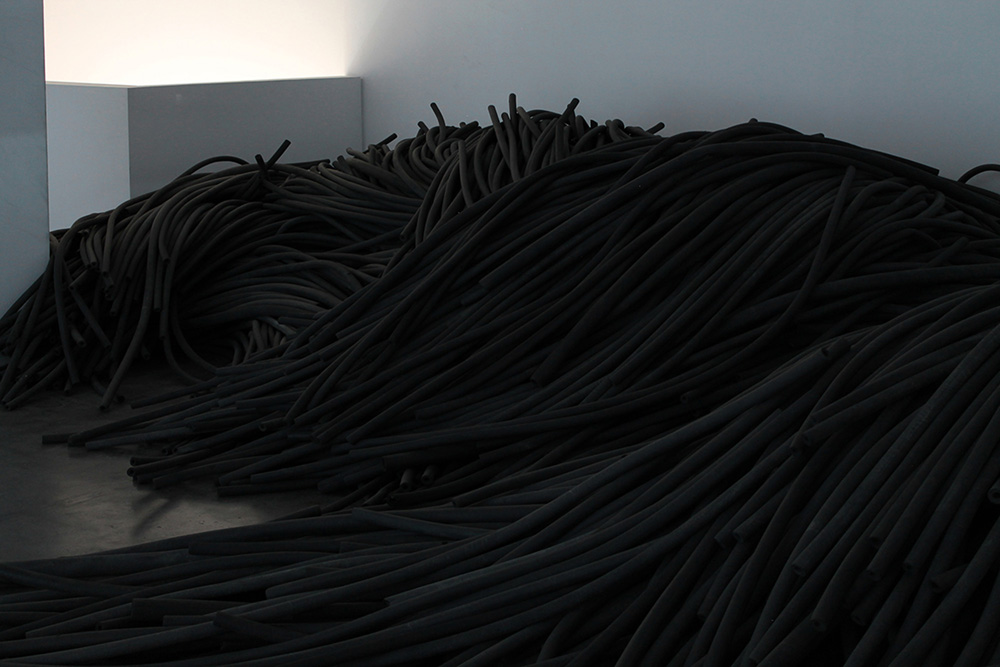
Torrent, 2016
Disposed plastic cable jackets
Gefyra, 2016
Installation view
Two Years Ago, 2016
Printed text
Gefyra, 2016
Installation view
Impact (Grade B), 2016
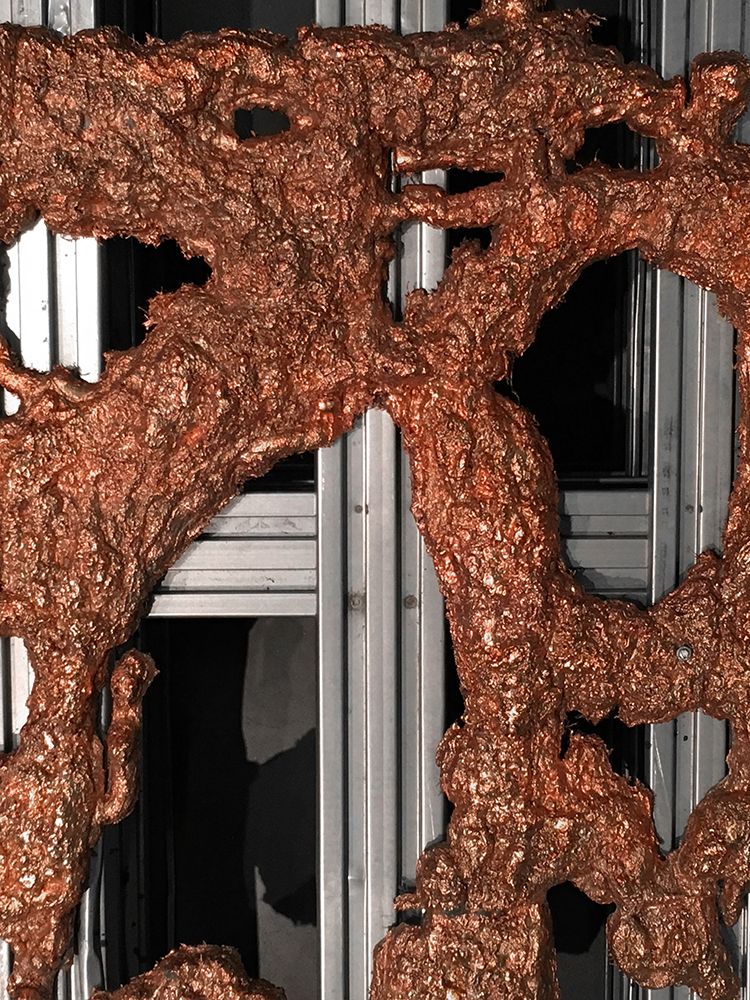
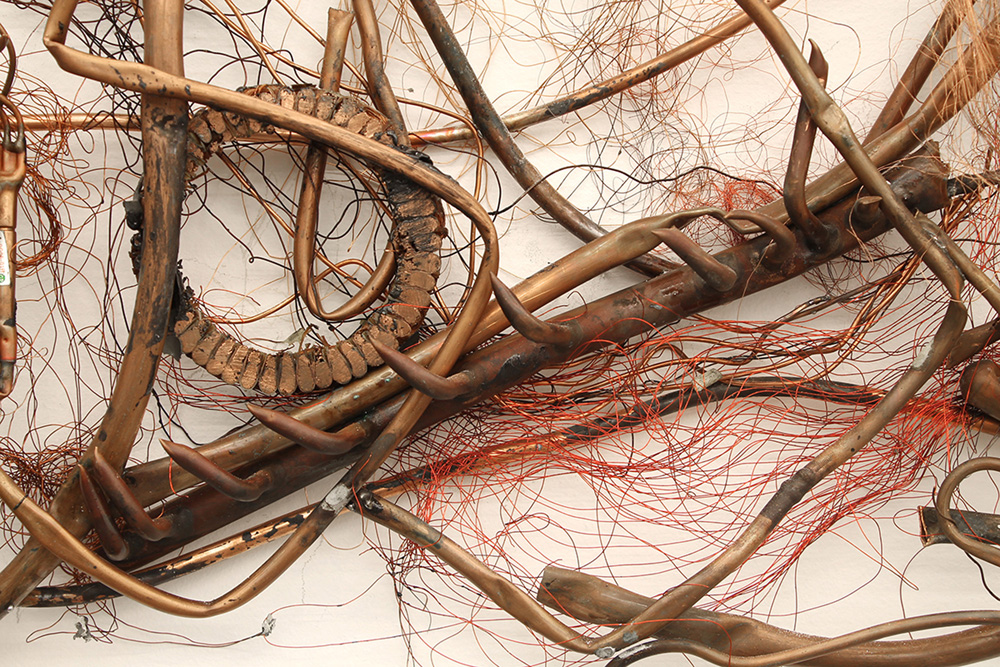
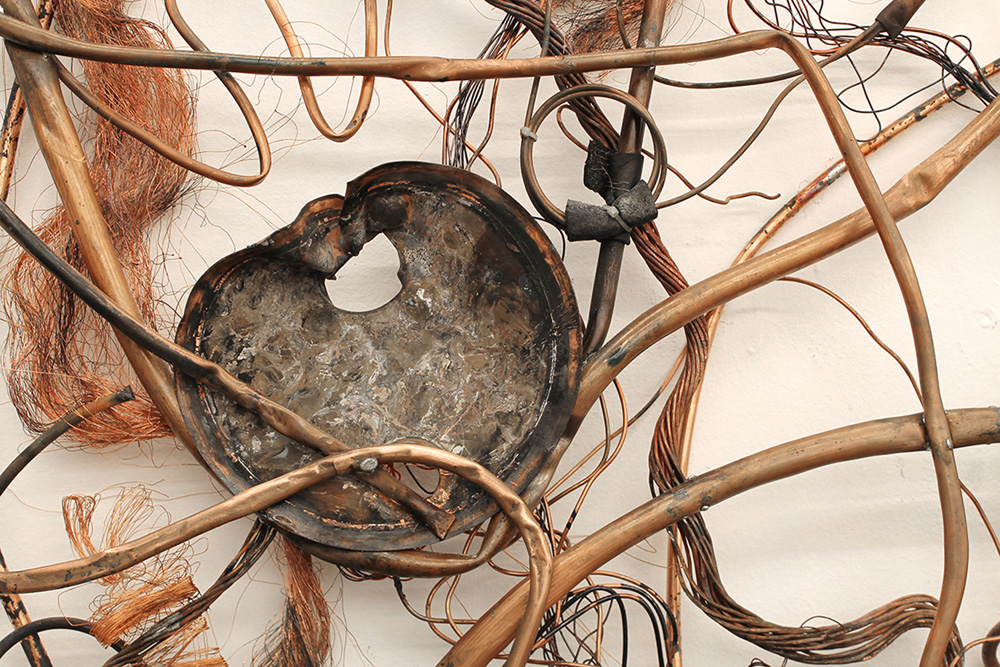
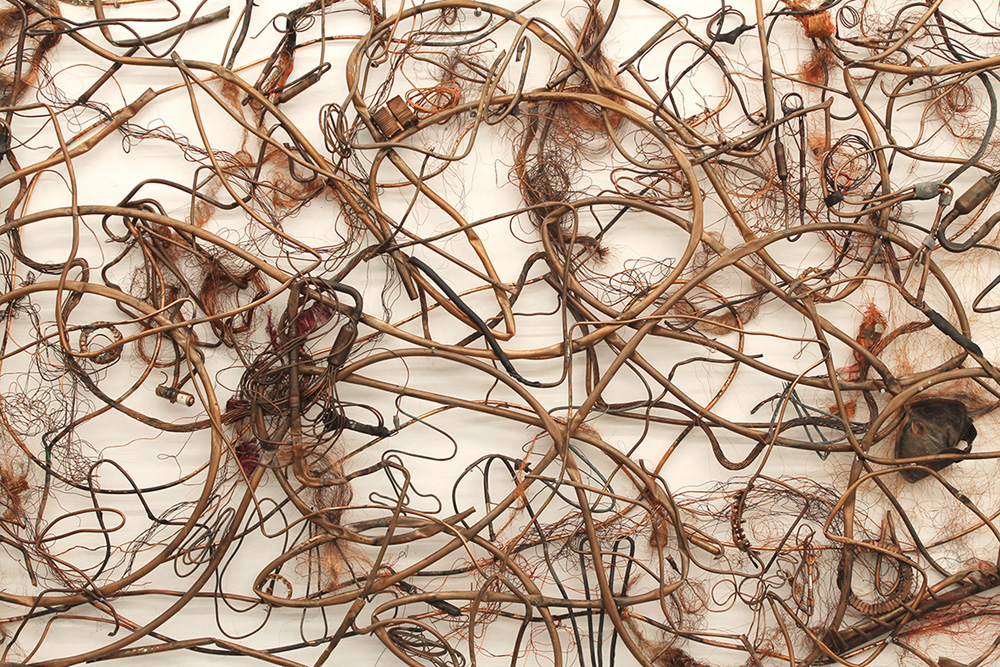
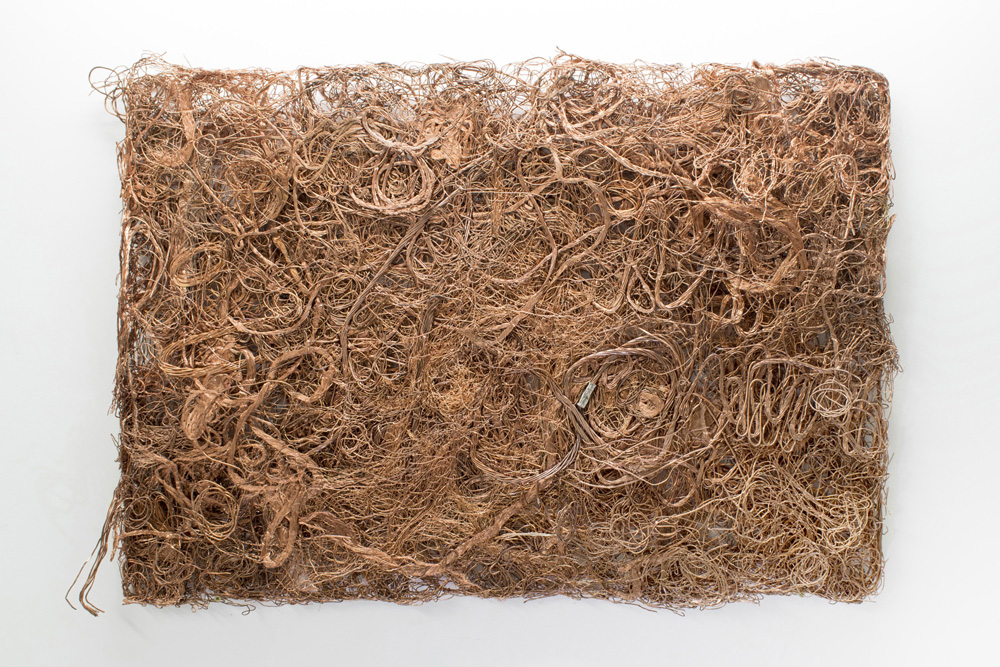
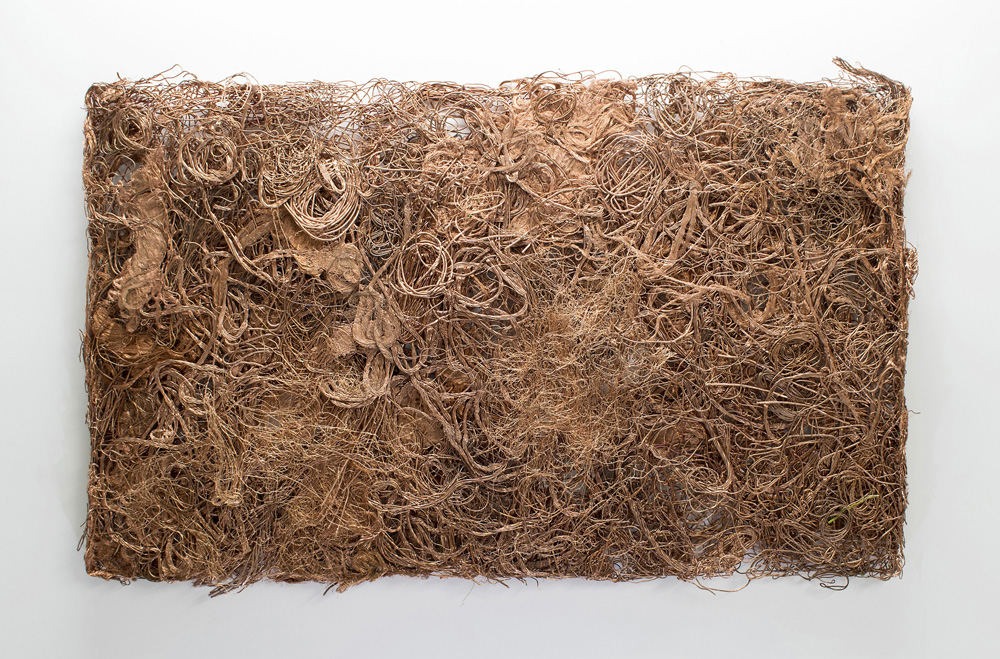
Scrap copper
Impact (Grade B), 2016
Scrap copper (detail)
Impact (Grade B), 2016
Scrap copper (detail)
Impact (Grade B), 2016
Scrap copper (detail)
Two years ago, we climbed up a hill situated on the edge of the Athenian suburbs. The specific hill is connected with its opposite twin hill by a railway bridge. We had seen this bridge several times before in the past. We had been passing tens of meters beneath it, traveling with buses on the highway that runs between the two hills. We got on the bridge by following a wide uphill path. Then, we climbed up a short but steep slope that was covered with red soil and harsh rocks. We finally passed through the violated mesh of a rusty steel fence that forbid the entrance to the passers-by. To our right, the city took the form of a white mass, composed by thousands of packed dots. To the left, we had a view of the port, of a silver sea and the coastline of the nearby island. Shipyards, factories and small settlements were scattered around the valley. Transmission towers were crowning the top of the opposite cliff. Cypresses and pines created a deep green layer beneath us.
We decided to climb up the hill and get to the bridge, after we heard of an incident that happened on the railway’s inaugural journey. The event got no press, apart from an article in a local blog. What the train driver reported was an impact that happened inside the railway’s tunnel. According to his story, the engine that pulled the thirty-eight container wagons of the train, collided with an improvised barricade. It was a stack composed of a huge cable coil made of wood, of lighting tubes and piled metallic trays. The later were ripped-off from inside the tunnel. The wooden coil must have been rolled up to that point, all the way up the steep slope, barely passing through the opening of the mesh fence. The train crashed on the unexpected obstruction. There were no significant casualties, so the engine and the thirty-eight containers continued their route. However, the mysterious sabotage was repeated on the train’s return journey. The same people that built up the stack in the first place, were probably the ones that installed it again, more or less in the same spot as before. Like in the first attempt, no remarkable damage was caused. As the train driver reported, the result was just the delay of the service, in order for the tunnel to be cleaned up from the scattered wood, the destroyed lighting tubes and the deformed metal that was still obstructing the rails.
The bridge was built some years ago as part of a greater infrastructural project, a commercial railway of foreign interests. The railway was supposed to expand the national railway network, by specifically connecting the industrial areas around Athens with the Piraeus port. To our knowledge, no one claimed the action of the sabotage in the railway’s tunnel.
The first time we visited the bridge we thought that we would find some evidence of the train’s double collision. We found nothing. Probably because the nearby tunnel that perforates the specific hill is not the only one along the length of the railway. We climbed up the same path some months later. Nothing seemed to have changed. We saw the same view. The port and the shipyards. The factories and the villages. The transmission towers, the cypresses and the pines. That time, we decided to cross the bridge all the way through, and climb down to reach the highway from the opposite hill. The iron rails looked still impressively new. The gray-green stone that was laying in between the rails looked freshly paved.
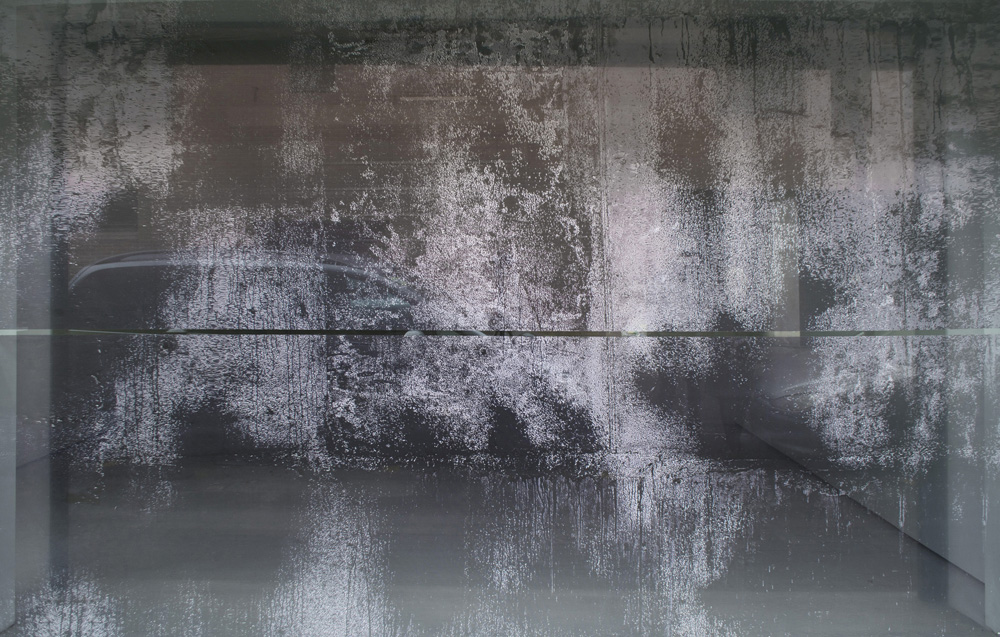
However, this time, the surface of the two sides of the bridge was covered in its entirety with forms of black paint. The whole image was so abstract and curious that it was difficult to say if the composition that was unfolding in front of us was an intended human intervention, or a strange material reaction that took place on the gray cement. The perplexity and chaos of what could possibly be described as a mural, looked like the residue of organically orchestrated movements. Like traces of processes and conflicts. These illegible inscriptions seemed to have sprung up from the landscape in the same mysterious way that the surrounding hills, the trees and the impressive infrastructural constructions had emerged. We took some pictures of the dark surface, without having decided about the origin of the vast painting. However, at the point where the bridge touches the slope of the hill that we finally reached, just where we took the path of returning, we saw a sprayed inscription consisting of three letters: “OFK”.
We finally started climbing down the hill. Within the warm and clear afternoon atmosphere, the rustling of the trees was competing with the confusing whistling of the highway. The delirious traffic was carrying bodies to the city and the suburbs, the shipyards and the factories. Like a torrent, it was dragging with it local produce, imported goods, stolen and recycled matter. At the middle of our journey we heard a loud noise. It sounded like giant rocks were rolling down the hill, or trees being uprooted by a strong wind. Between the cypresses, we saw the engine passing through the railway’s route. After a couple of seconds, it had disappeared inside the stone hill. It was the first and last time that we ever actually saw the train.
Last year, we exhibited one of the pictures that we took that day from the surface of the bridge. We included the signature that we discovered in the title of that photo. About a month later, we got an email from a funny account name. The content of the email was signed as “Ofrah Fergal Kasei”. It included one single question: Why you climbed up that bridge?
The million-year metamorphosis occurs when carbonate and dolomitic sediments or limestones are exposed to the high temperature and intense pressure of lower geological layers. When they are worn by the collisions and frictions of continental shifts and tectonic phenomena. When they become subject to the occasional intrusion of magma and to the presence of active chemical substances. Then, their atomic bonds break. The atoms move around to form new bonds. Textures and structures are destroyed and new carbonate crystal types are formed. Mineral impurities such as clay, sand, iron oxides and firestone constitute the primary material of the trembling veins that traverse the mass of the metamorphosed marble. The vein formations resemble electrical discharges. Growing trees and expanding roots. Rivers that split into multiple watercourses. Things built to flow and things built to resist.
Brain
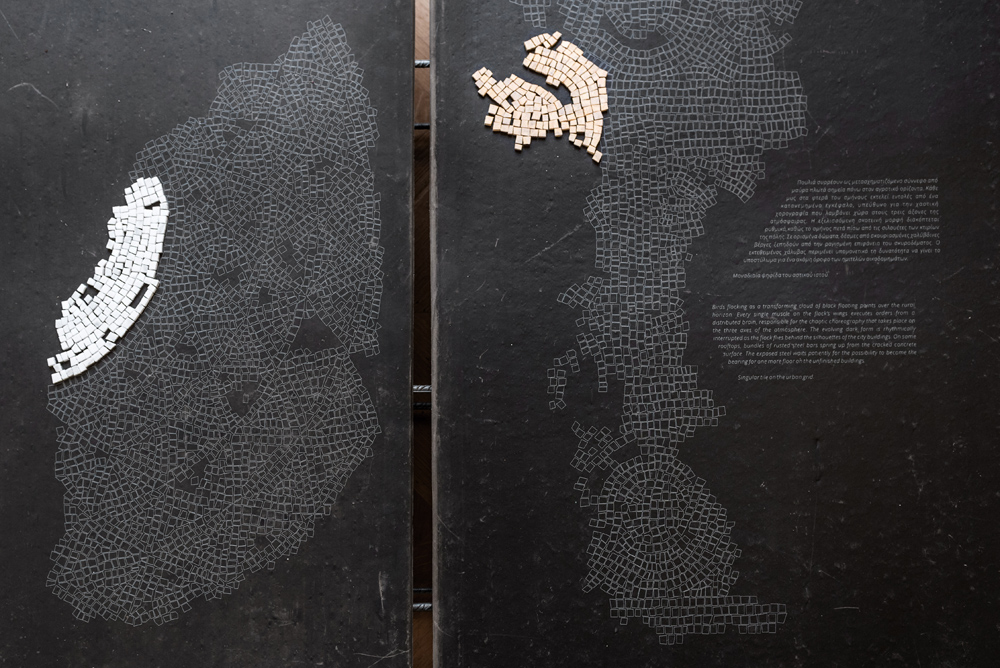
Birds flocking as a transforming cloud of black floating points over the rural horizon. Every single muscle on the flock’s wings executes orders from a distributed brain, responsible for the chaotic choreography that takes place on the three axes of the atmosphere. The evolving dark form is rhythmically interrupted as the flock flies behind the silhouettes of the city buildings. On some rooftops, bundles of rusted steel bars spring up from the cracked concrete surface. The exposed steel waits patiently for the possibility to become the bearing for one more floor on the unfinished buildings.
Transformation
The nymph Daphne pleaded her father Peneus to transform her to the tree of the same name, so that she would escape from Apollo’s amorous embrace. Zeus transformed into a swan in order to approach Leda, who got pregnant from him and gave birth to Helen of Troy, Clytemnestra and the Dioskouri, Castor and Pollux. The once beautiful priestess Medusa was transformed by the goddess Athena into a monster with snakes for hair, as a punishment for her being raped by Poseidon inside the temple of the goddess. Whoever looked at Medusa’s hideous face, was in turn transformed into stone.
Skeleton
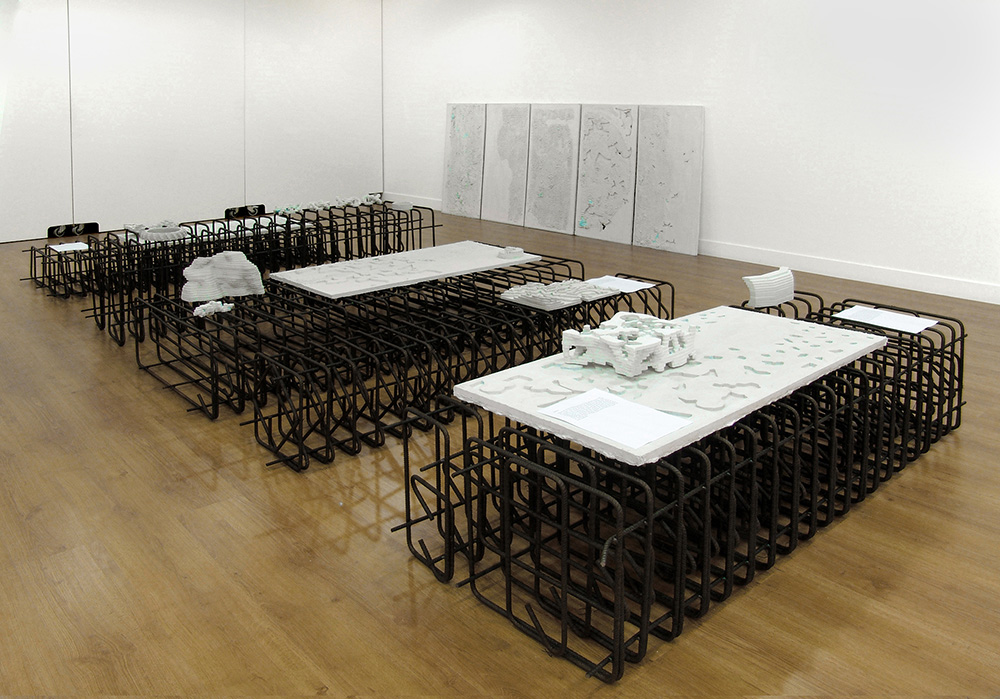
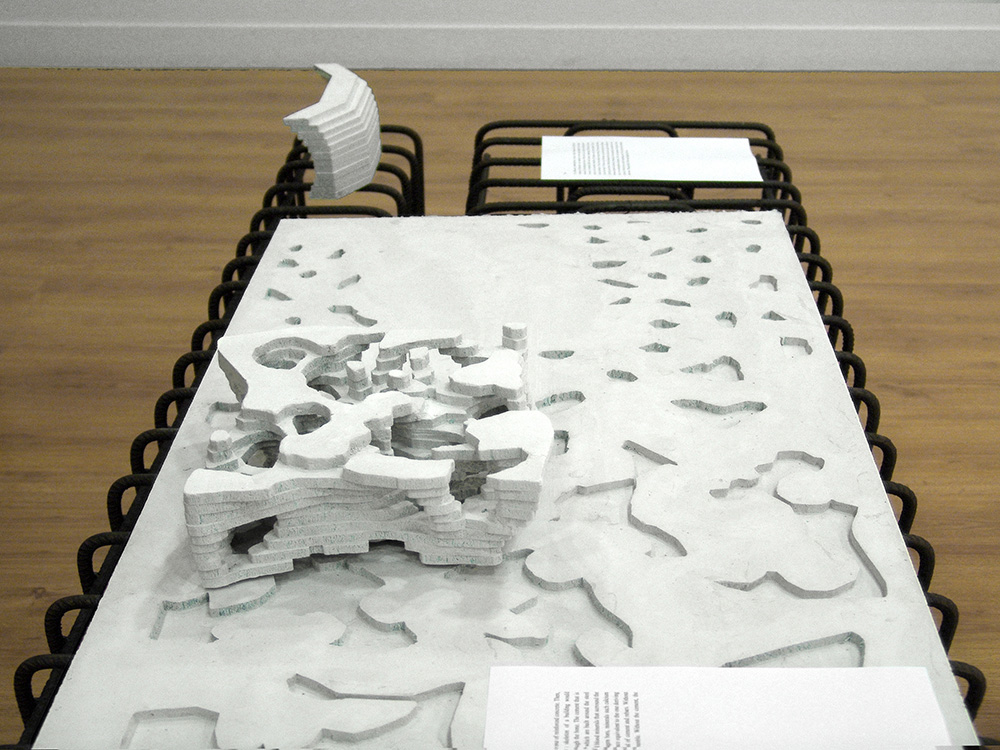
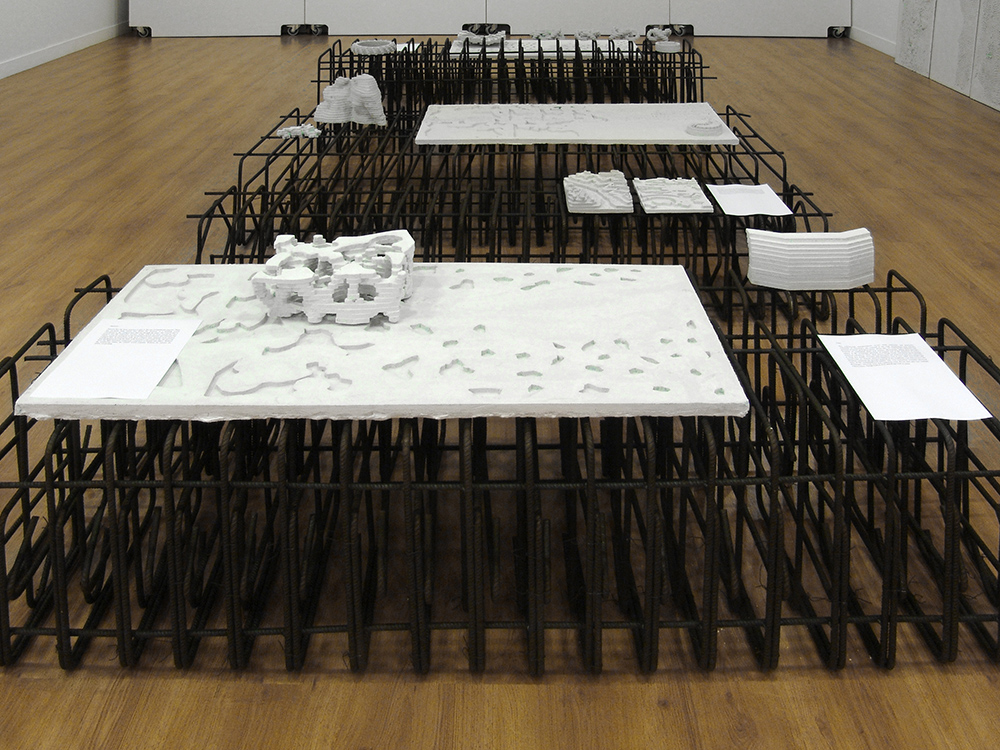
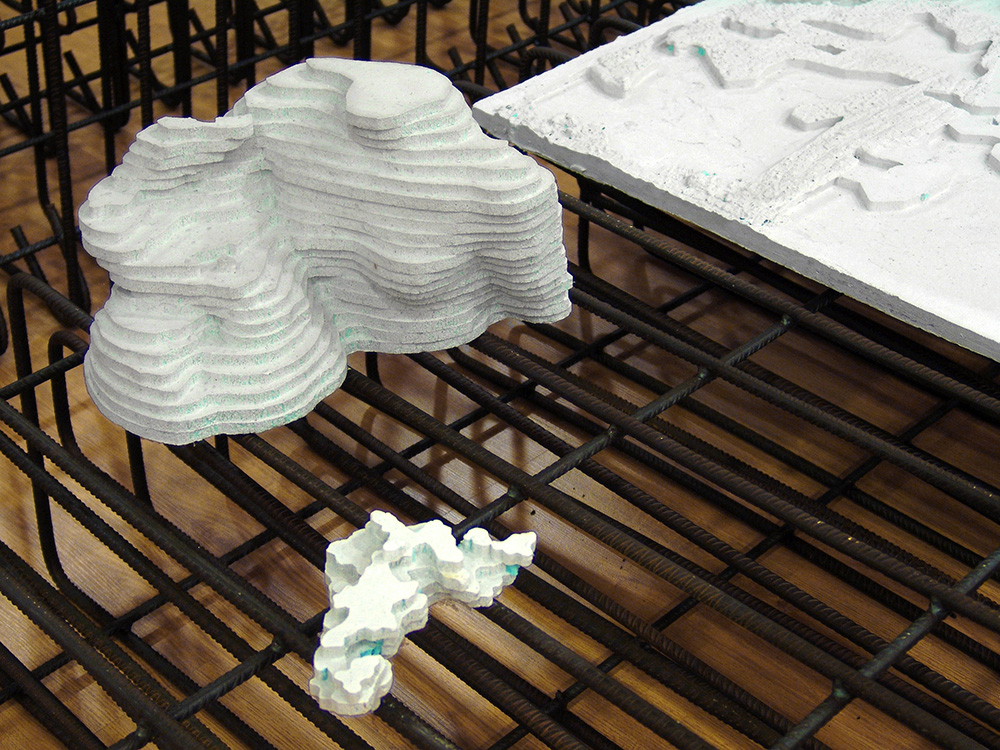
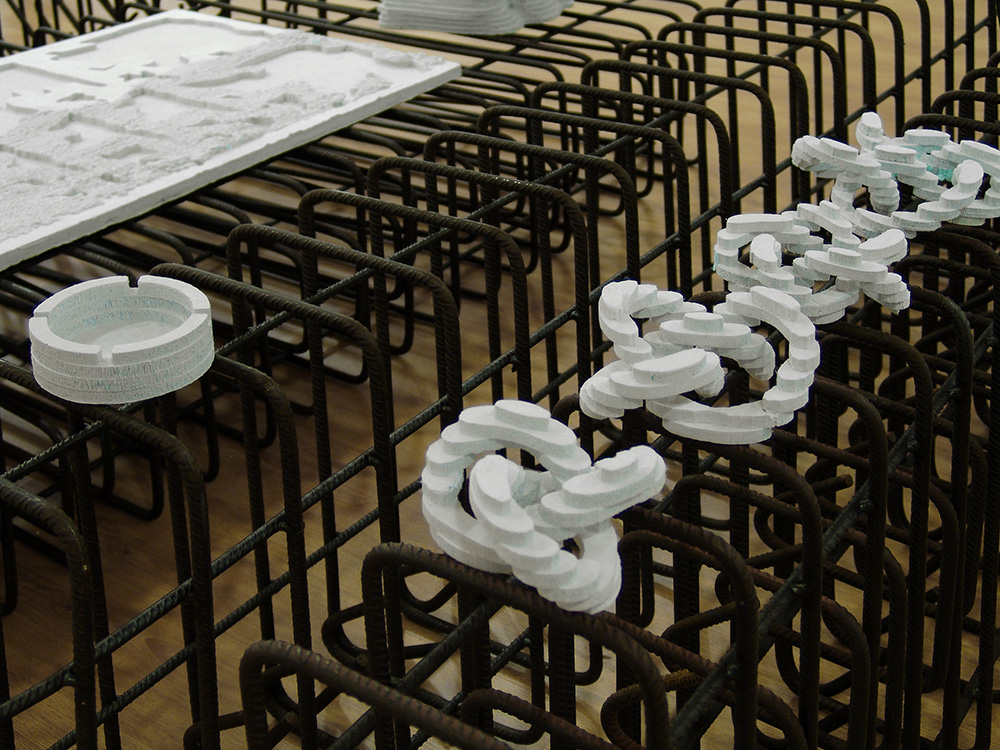
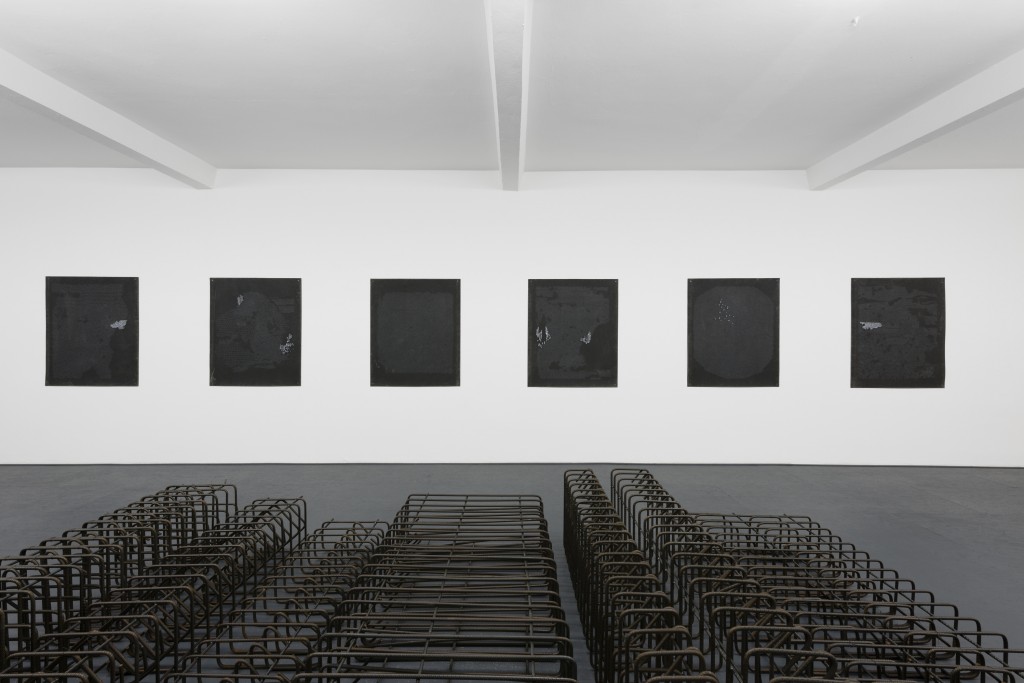
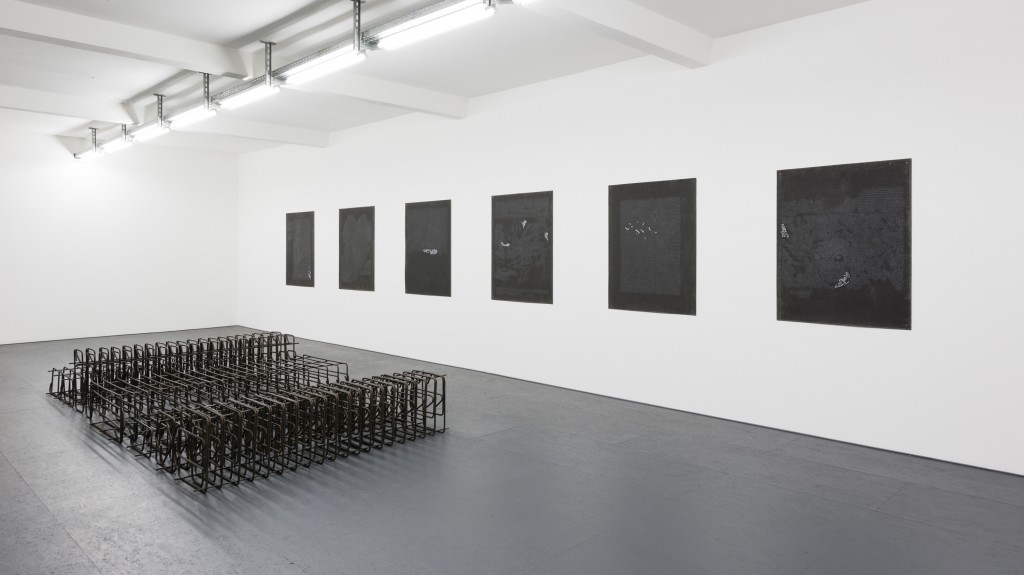
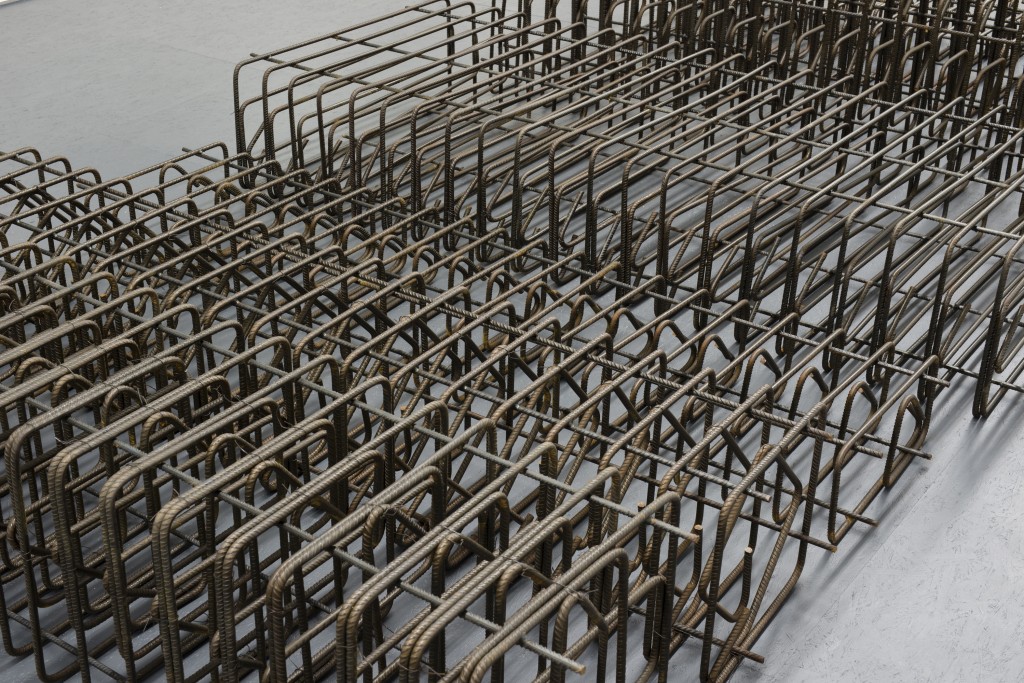
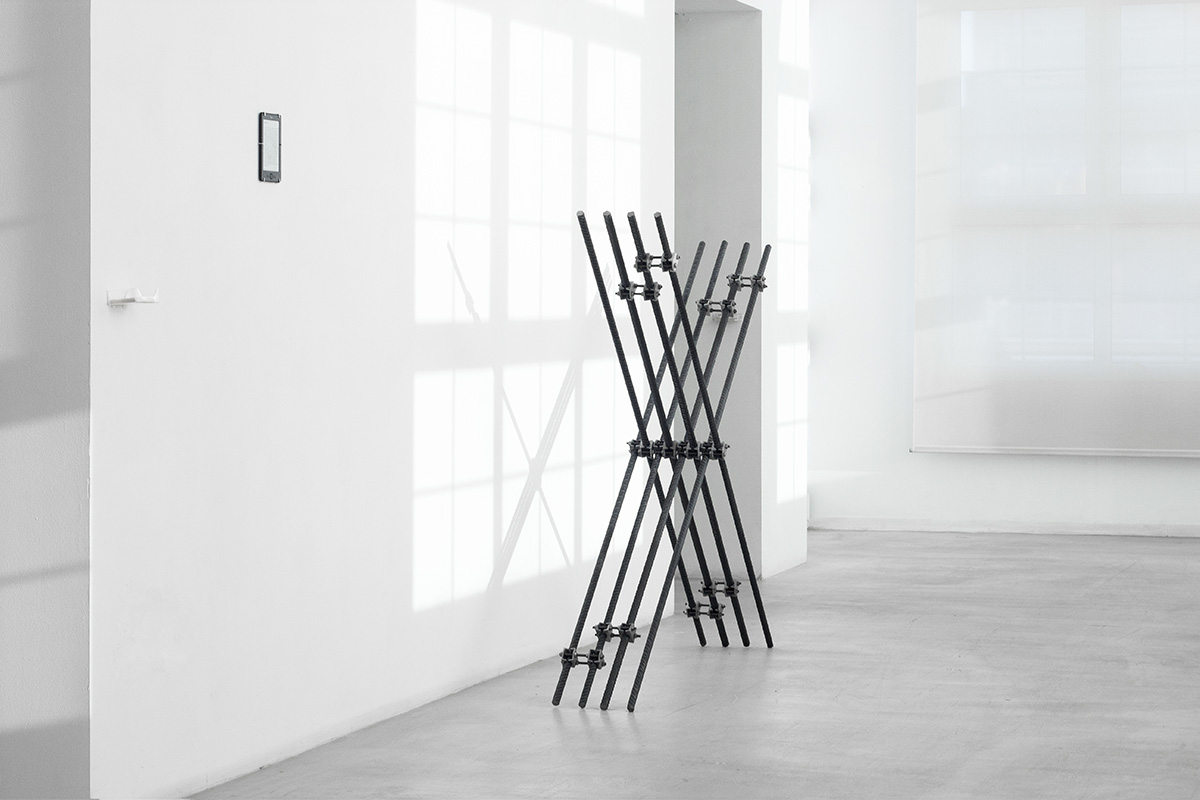
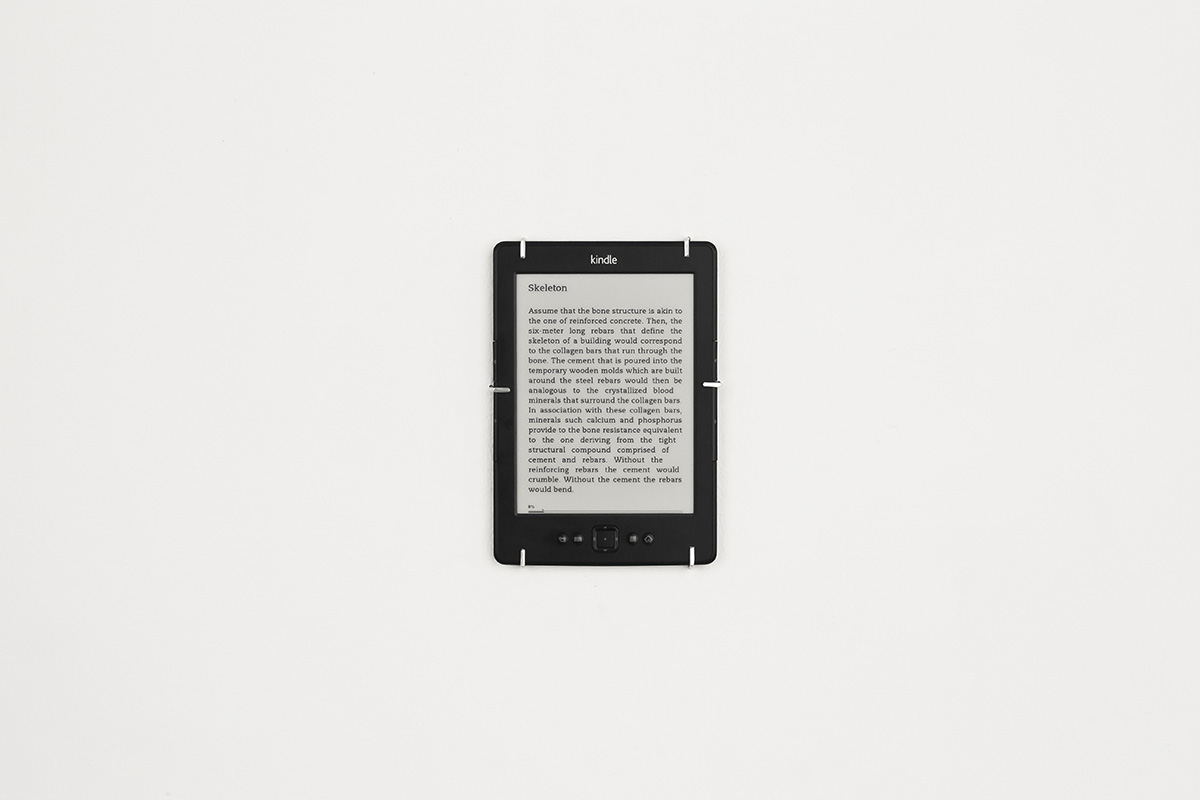
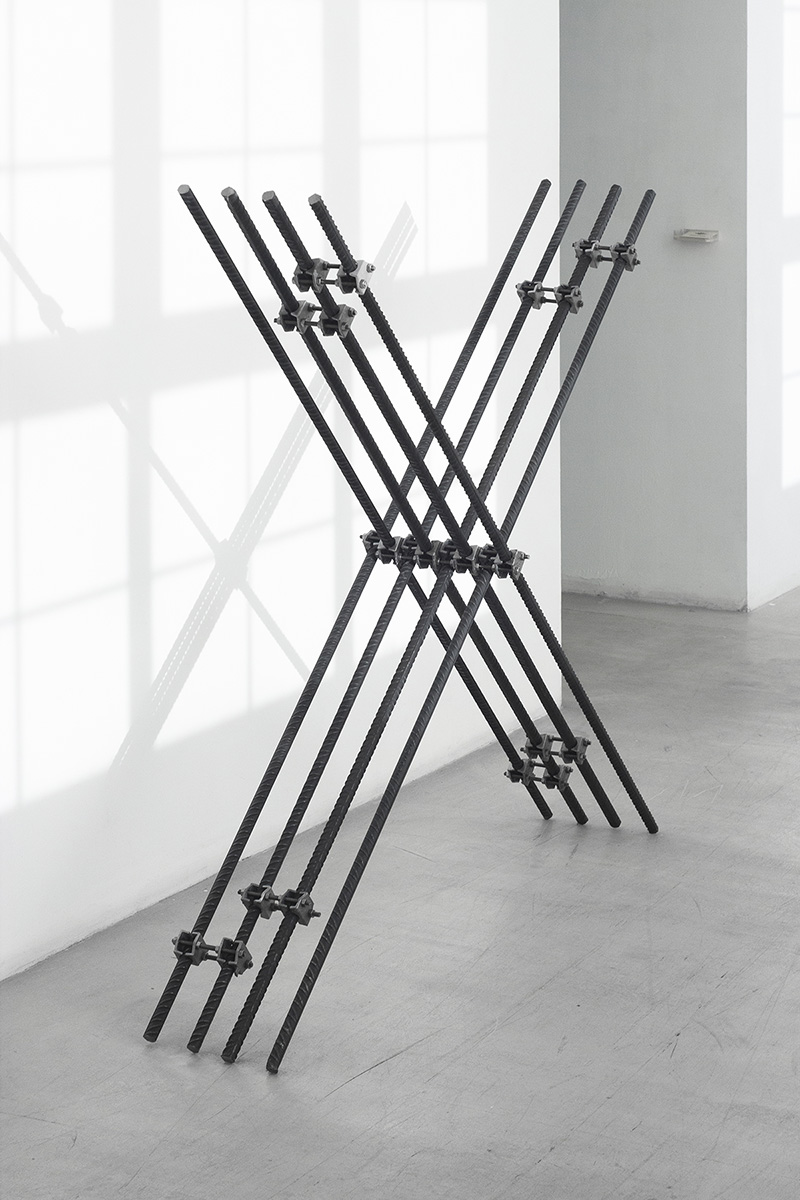
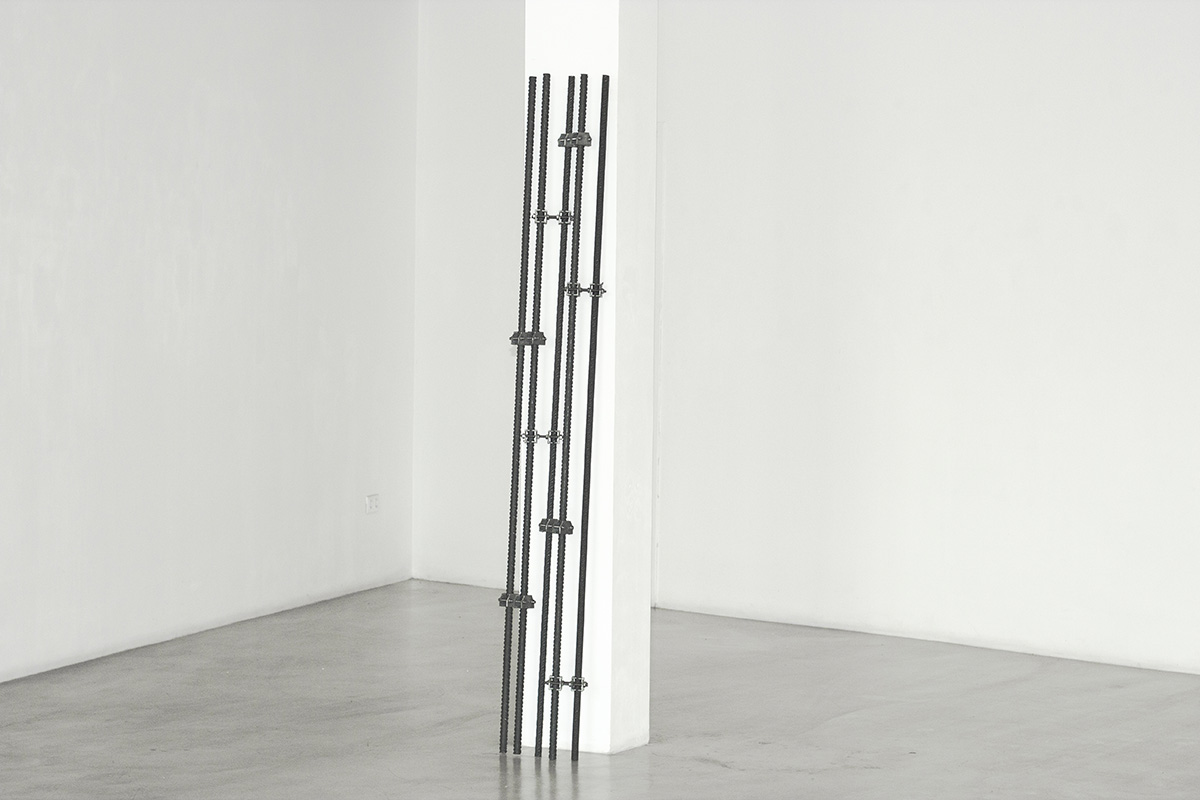
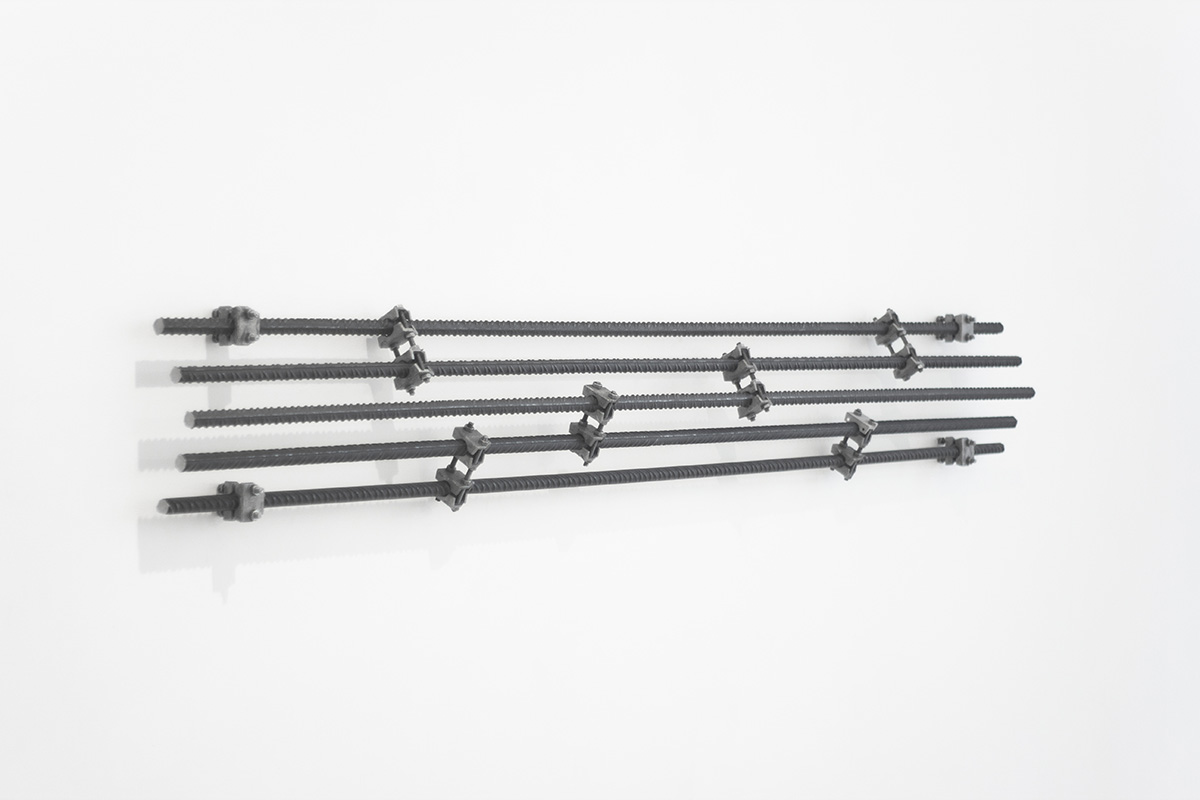
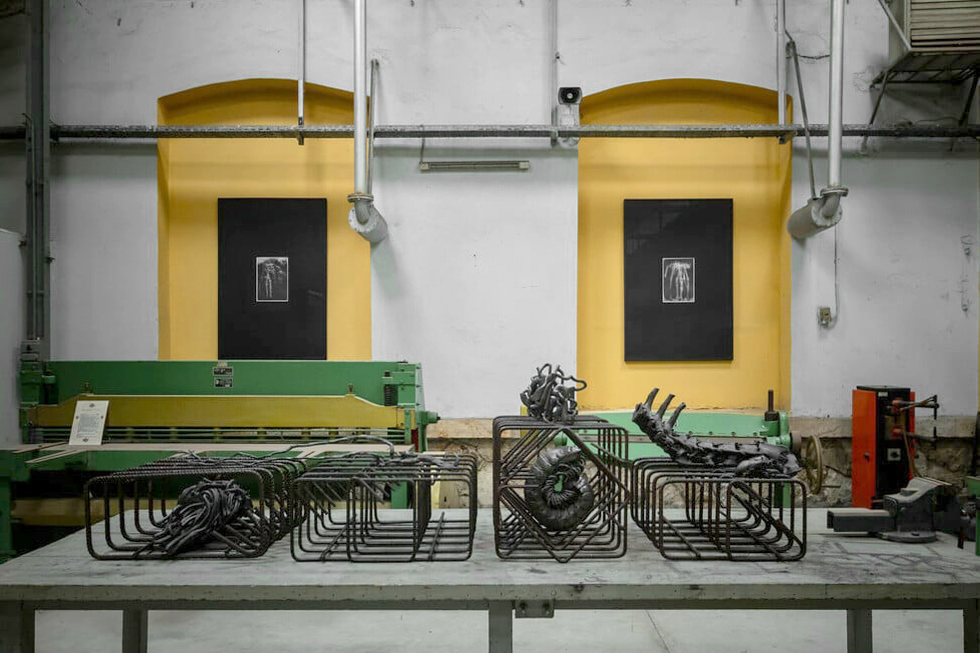
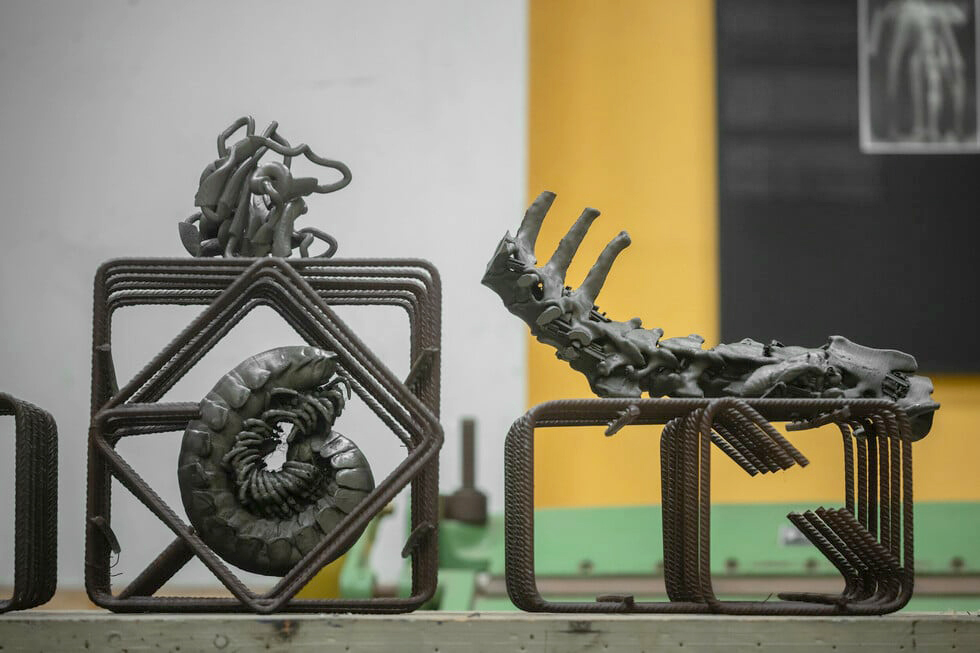
Assume that the bone structure is akin to the one of reinforced concrete. Then, the six-meter long rebars that define the skeleton of a building would correspond to the collagen bars that run through the bone. The cement that is poured into the temporary wooden molds, which are built around the steel rebars, would be analogous to the crystallized blood minerals that surround the collagen bars. In association with these collagen bars, minerals such calcium and phosphorus provide the bone with resistance equivalent to the one deriving from the tight structural compound comprised of cement and rebars. Without the reinforcing rebars, the cement would crumble. Without the cement, the rebars would bend.
Friday, November 27th, 2015 | Posted in activity |
Aristide Antonas and Petros Moris, The structure of observation (38.275993, 22.295730 Cast 1, 2), 2015
Aristide Antonas and Petros Moris, The structure of observation (38.275993, 22.295730 Cast 3), 2015
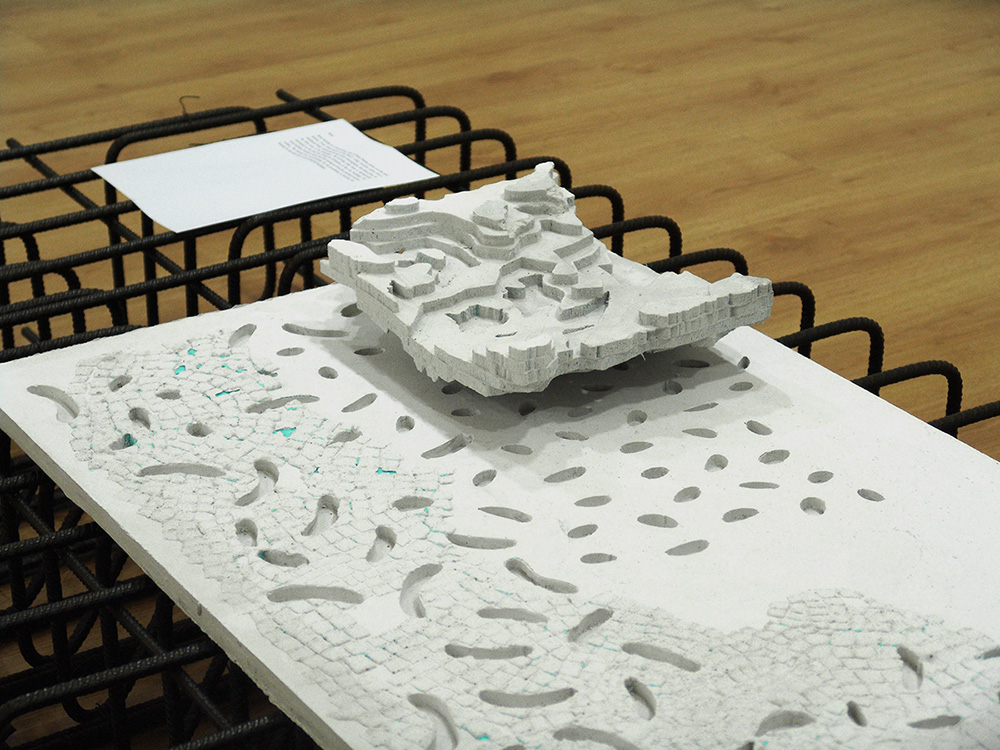
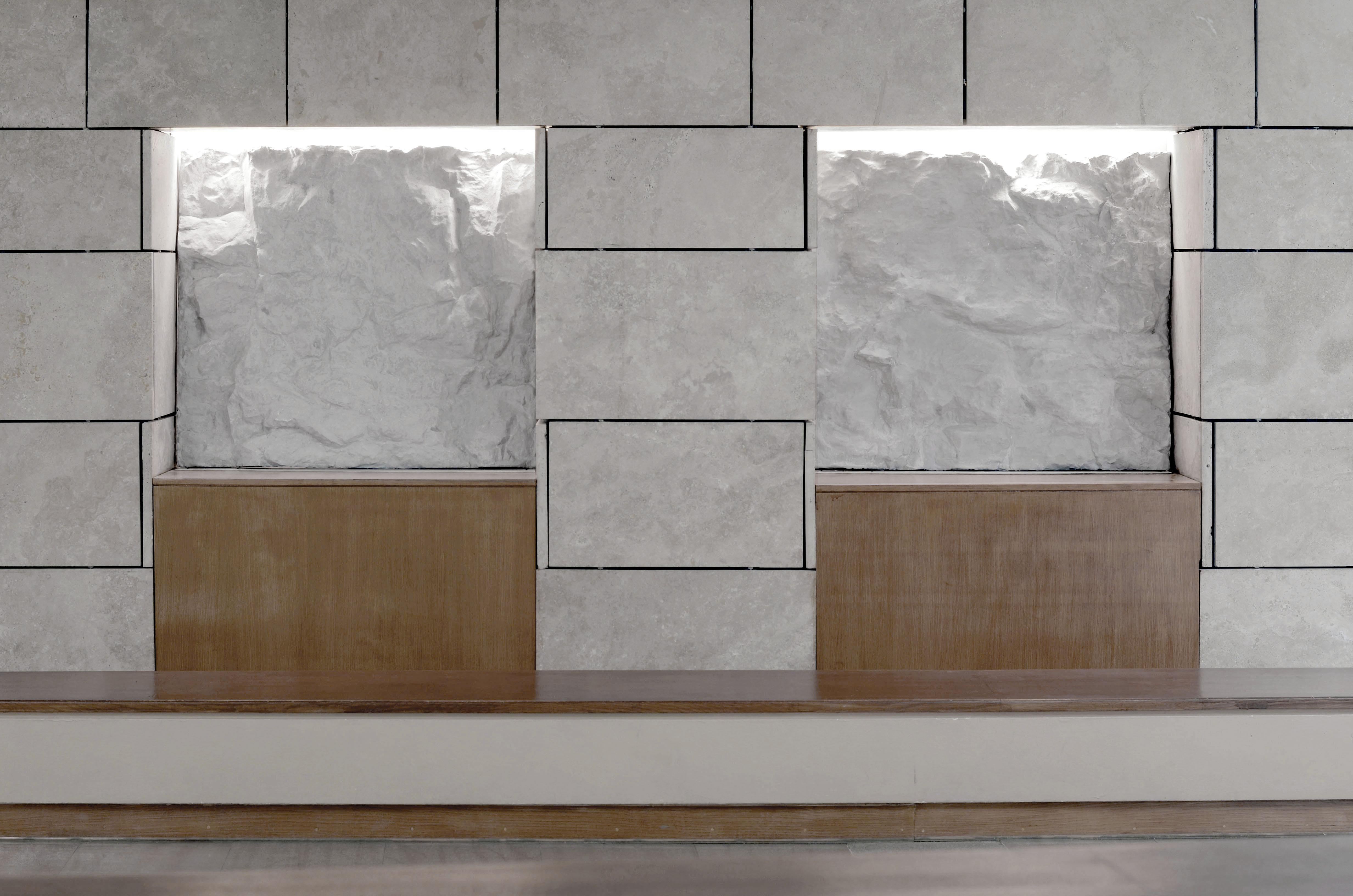
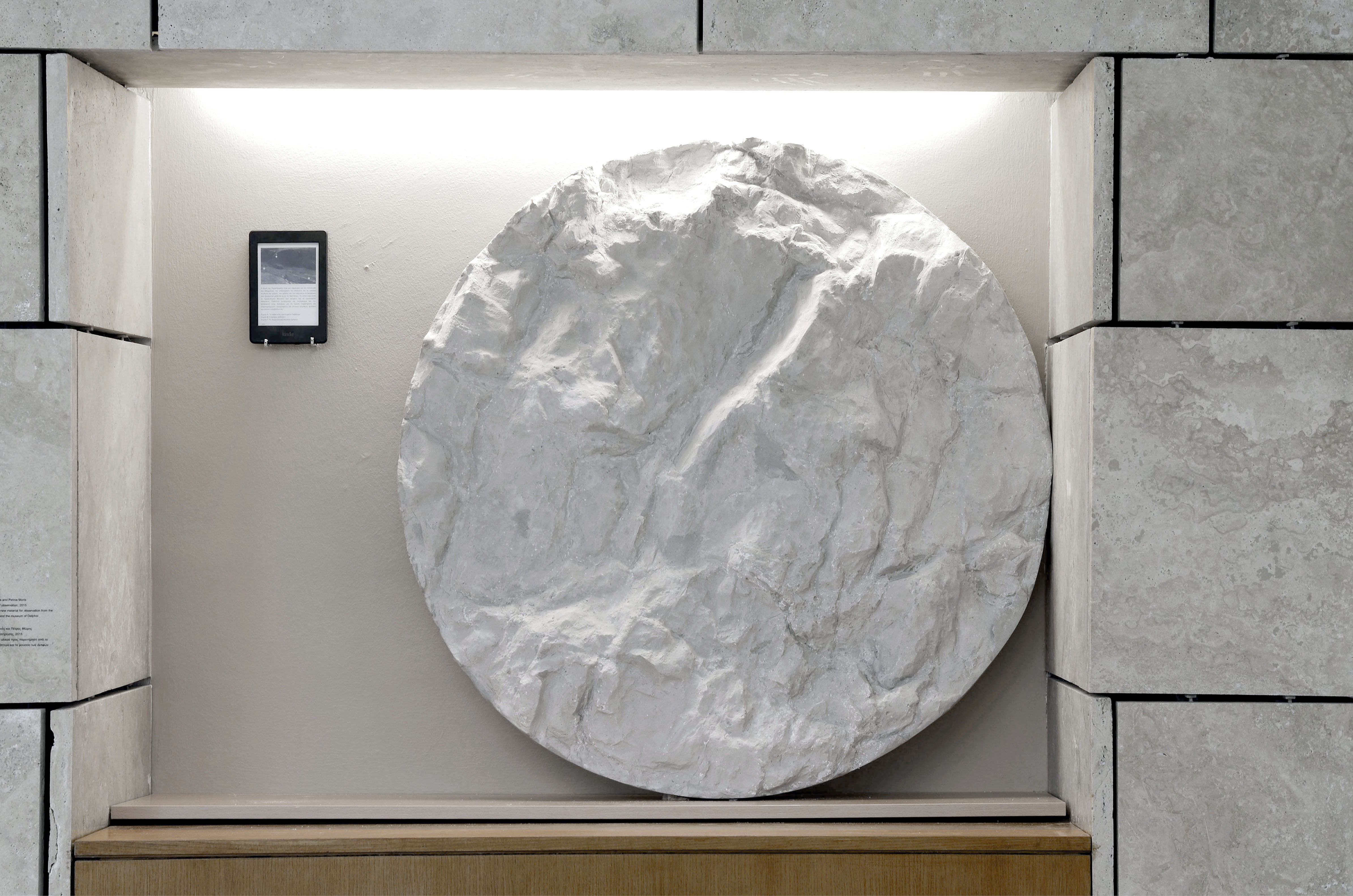
The structure of observation is a note on the topology of the gaze, the recognition of the one across and the mental connection of space, time and the scopic objects within these dimensions. The landscape around the Museum of Delphi and the ruins of the stone-built Pavilion served as the outline for constructing a dialogue about the relation between observer and observed, geographic and visual scales, natural and manmade environment. Proximity and distance, the familiar and the Other, the local point of reference and the scopic field were all relativised and arranged in proportion to the theatrical stage and in conjunction with the questions posed by the historical significance and the synchronic condition of Delphi. The gaze performed according to set parameters which led to the process of defining the extraneous entity through the protocol of supervision of the referential field. The project evolved through the synthesis of a series of disparate objects: digital images from the ephemeral work on the ruined pavilion, satellite records from parts of the region, casts taken from elements of the landscape, samples of geological material. All these are installed under the condition of a complex process of displacement which takes place in the institutionalised context of the archaeological site. The various stages of exploration of the site and its meanings, just as the journey made by the two artists and the curator from Athens to Delphi, the stopovers and the obstacles that occurred and determined the pace and the span of their discourse and activities — all these constitute an inevitable and integral part of the project. A key moment in this course was the awkwardness before the condition of surveillance of the forest security unit which keeps an observation point next to the ruined building. This prismatic assemblage is shown both in the exhibit presented by Aristide Antonas and Petros Moris at the Archaeological Museum of Delphi and in the marginally visible trace they left on the observatory.
Evangelia Ledaki, 2015
Thursday, October 29th, 2015 | Posted in activity |
Hunt (Patras), 2015
Digital print on insulation elastic sheet, marble, steel
Traced contours and sculpted landscapes. Stratification of matter. Layering of human activity. Hands, tools and automations. The work done by any muscle and bone of the body. Loss and regain of integrated skills and comprehensive knowledge. Physical interfaces of ergonomics and psychology. Ethereal interfaces of efficiency and familiarity. Applied patterns of economic and social reform. Fragmented history. Spontaneous order. Radical novelty. Inheritance as a gift. Inheritance as a burden.
Fishes (Nikopolis), 2015
Digital print on insulation elastic sheet, marble, steel
The million-year metamorphosis occurs when carbonate and dolomitic sediments or limestones are exposed to the high temperature and intense pressure of lower geological layers. When they are worn by the collisions and frictions of continental shifts and tectonic phenomena. When they become subject to the occasional intrusion of magma and to the presence of active chemical substances. Then, their atomic bonds break. The atoms move around to form new bonds. Textures and structures are destroyed and new carbonate crystal types are formed. Mineral impurities such as clay, sand, iron oxides and firestone constitute the primary material of the trembling veins that traverse the mass of the metamorphosed marble. The vein formations resemble electrical discharges. Growing trees and expanding roots. Rivers that split into multiple watercourses. Things built to flow and things built to resist.
Snake Eater (Ilissos), 2015
Digital print on insulation elastic sheet, marble, steel
Patterns of three eras (Athens,Thessaloniki, Volos), 2015
Digital print on insulation elastic sheet, marble, steel
Birds flocking as a transforming cloud of black floating points over the rural horizon. Every single muscle on the flock’s wings executes orders from a distributed brain, responsible for the chaotic choreography that takes place on the three axes of the atmosphere. The evolving dark form is rhythmically interrupted as the flock flies behind the silhouettes of the city buildings. On some rooftops, bundles of rusted steel bars spring up from the cracked concrete surface. The exposed steel waits patiently for the possibility to become the bearing for one more floor on the unfinished buildings.
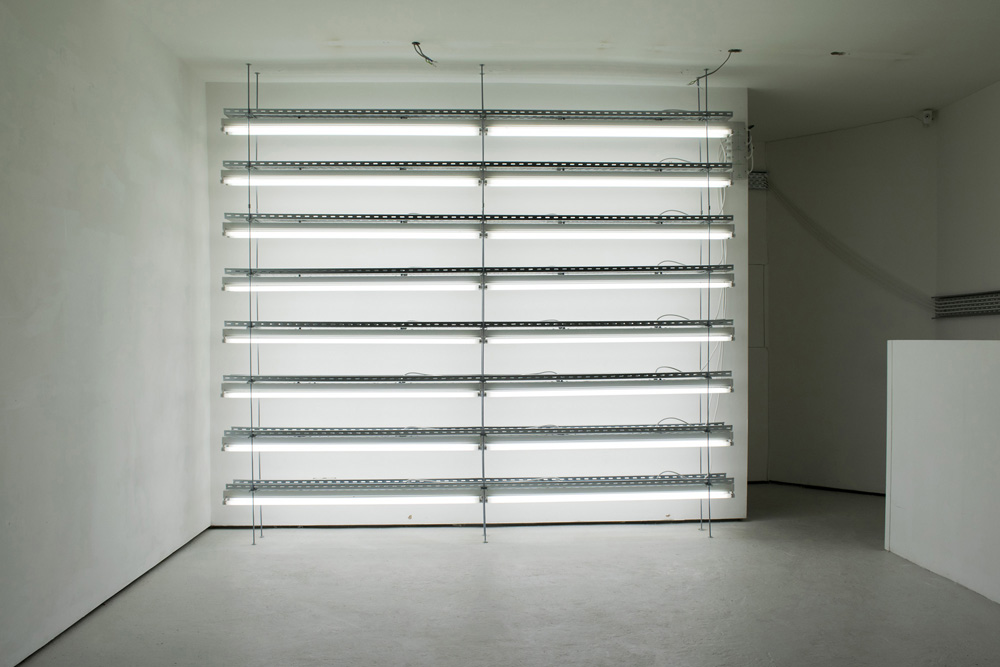
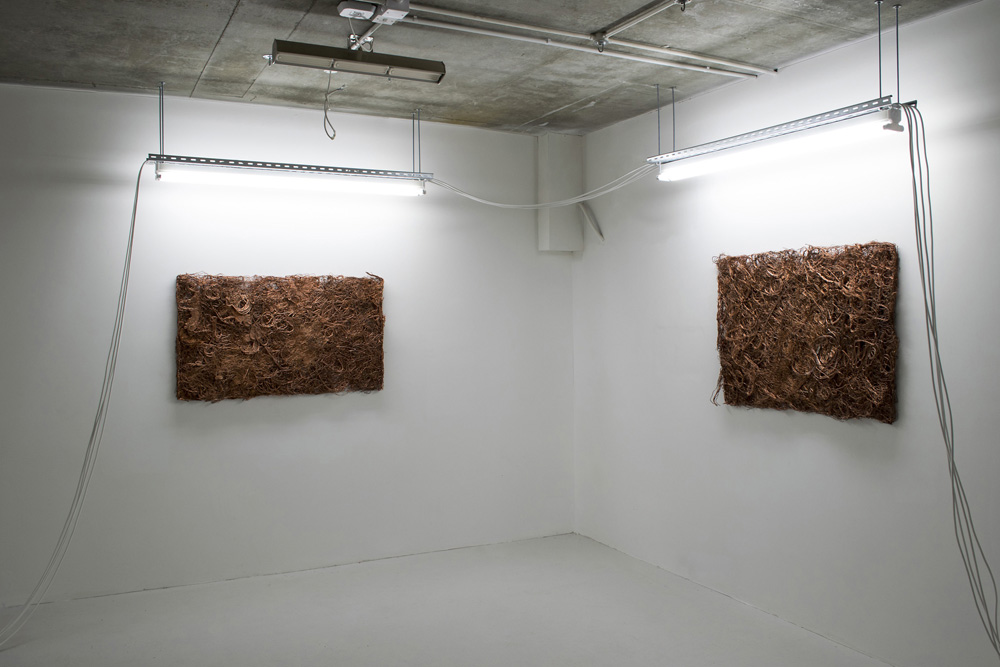
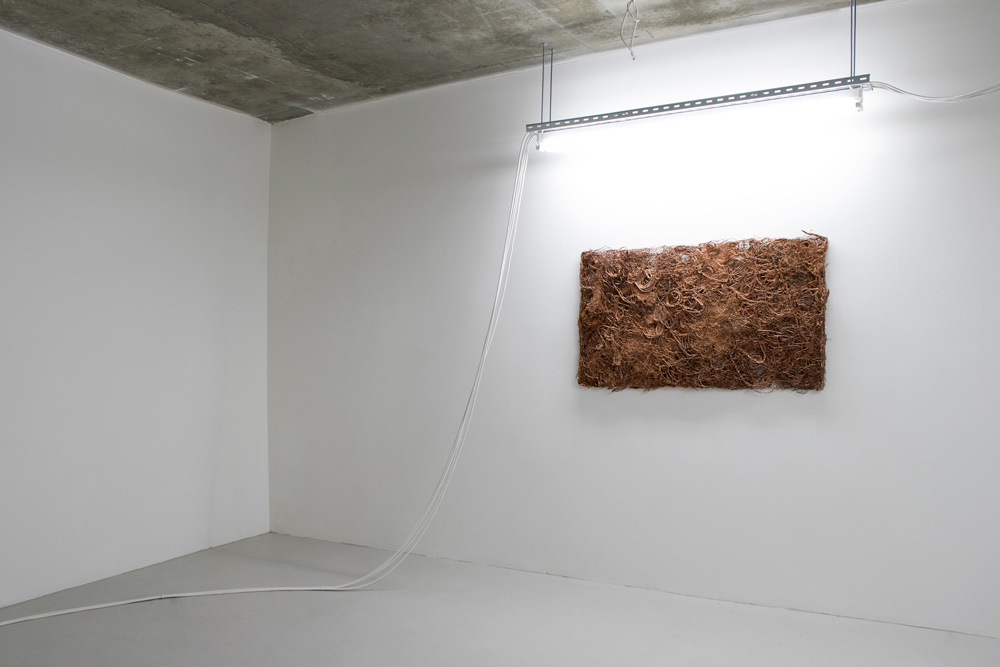
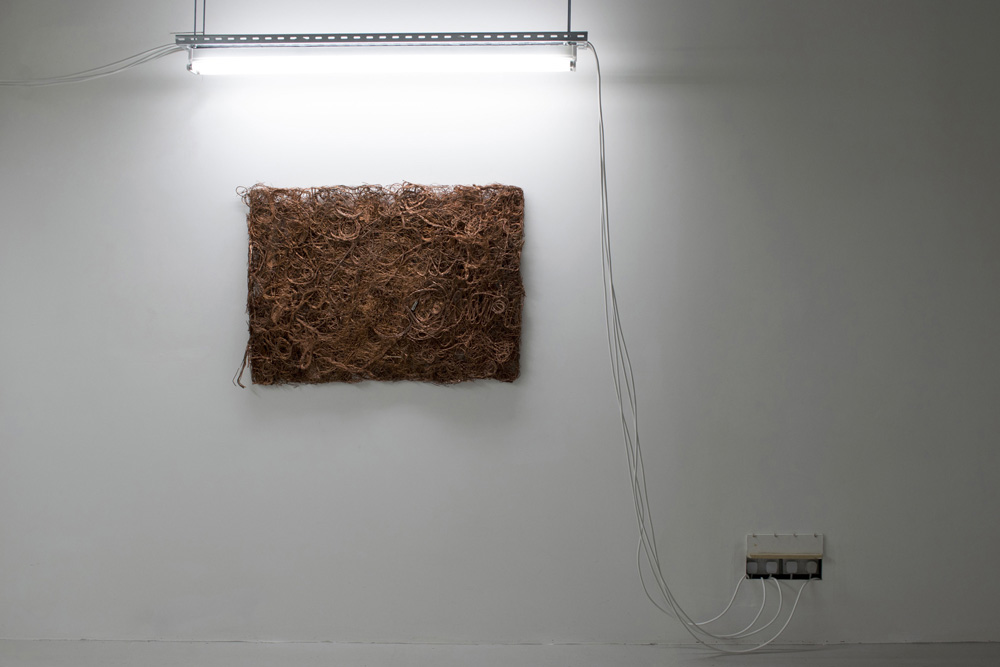
Passage (Overground/Underground), 2015
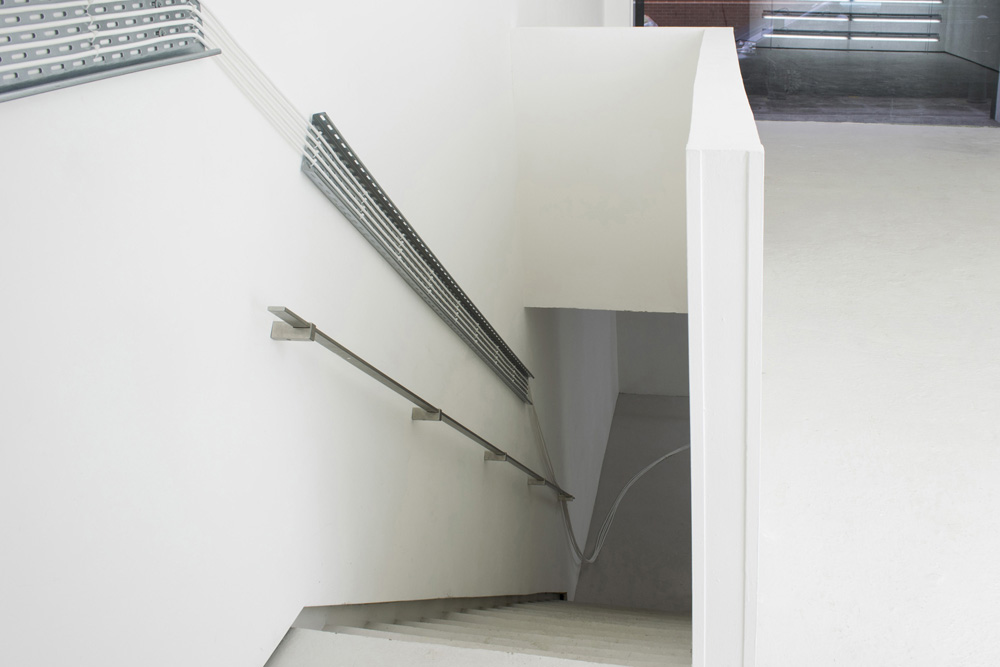
Fluorescent lambs, galvanized sheet metal cable-trays, cables
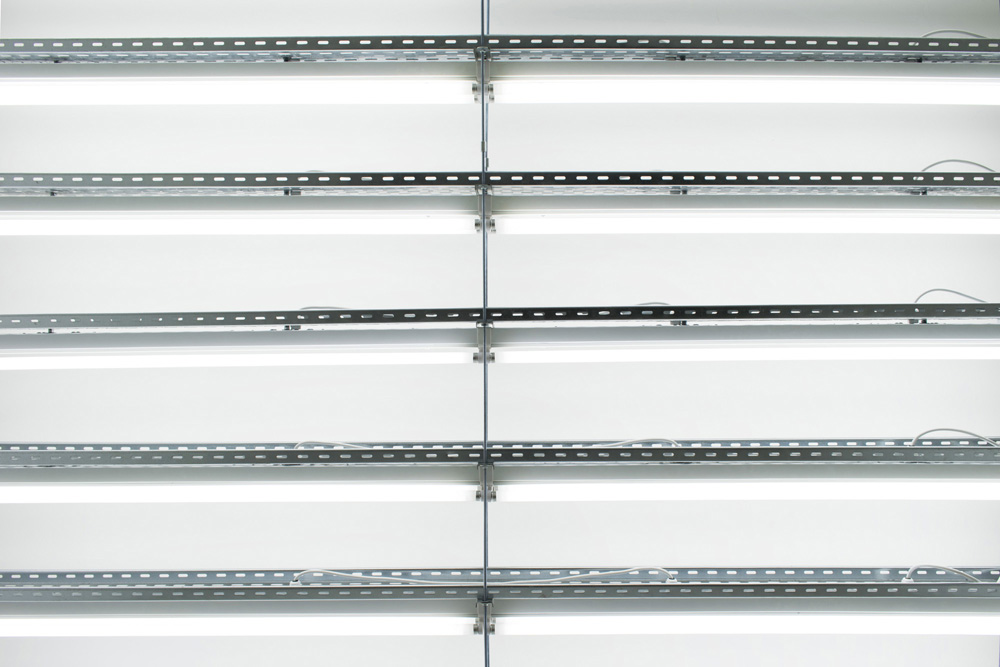
Passage (Overground/Underground), 2015
Fluorescent lambs, galvanized sheet metal cable-trays, cables
Passage (Overground/Underground), 2015
Fluorescent lambs, galvanized sheet metal cable-trays, cables
Passage (Overground/Underground), 2015
Fluorescent lambs, galvanized sheet metal cable-trays, cables
Passage (Overground/Underground), 2015
Fluorescent lambs, galvanized sheet metal cable-trays, cables
Impact 1 and 2, 2015
Scrap copper (grade A)
Impact 1, 2015
Scrap copper (grade A)
Impact 2, 2015
Scrap copper (grade A)
Impact 1, 2015
Scrap copper (grade A)
Impact 2, 2015
Scrap copper (grade A)
Days later, millions of microscopic fragments of phosphor-coated lamp glass, deformed metal and wood chips are still lying within the tunnel, mixed with the gray crushed stone of the railway. Every now and then, instances of light reflect on the scattered copper debris. Then, the sound of the machines fades slowly as the train proceeds on the black-painted structure of the bridge.
In Bridge, a peripheral event becomes the inspiration for KERNEL to re-imagine a critical narrative on the contemporary geopolitical shifts that relate to the worldwide movements of matter, energy and people. Contemplating on the location of Greece as a historical node between East and West, Bridge is a reference to a newly built infrastructural project located in the suburban landscape of Athens: a transport railway bridge of Chinese and American interests that was mysteriously sabotaged on its inaugural journey.
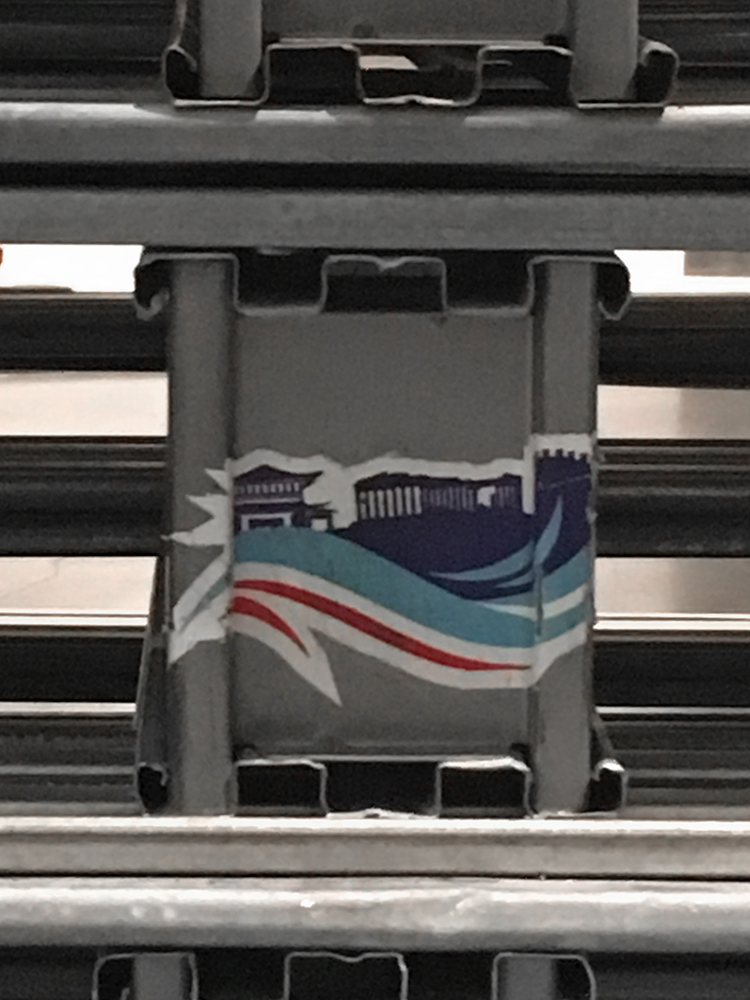
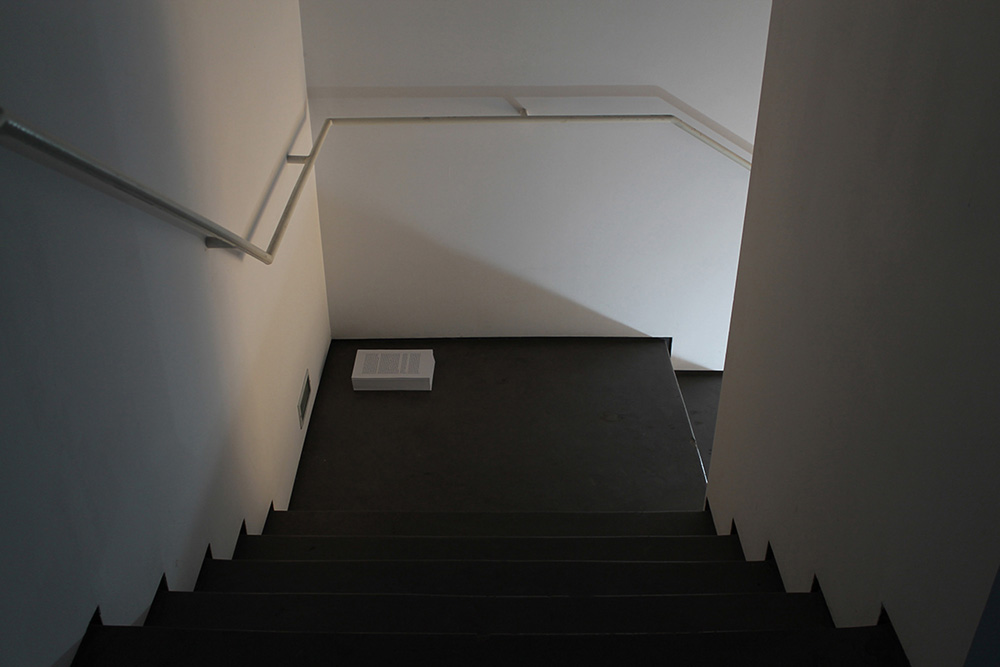
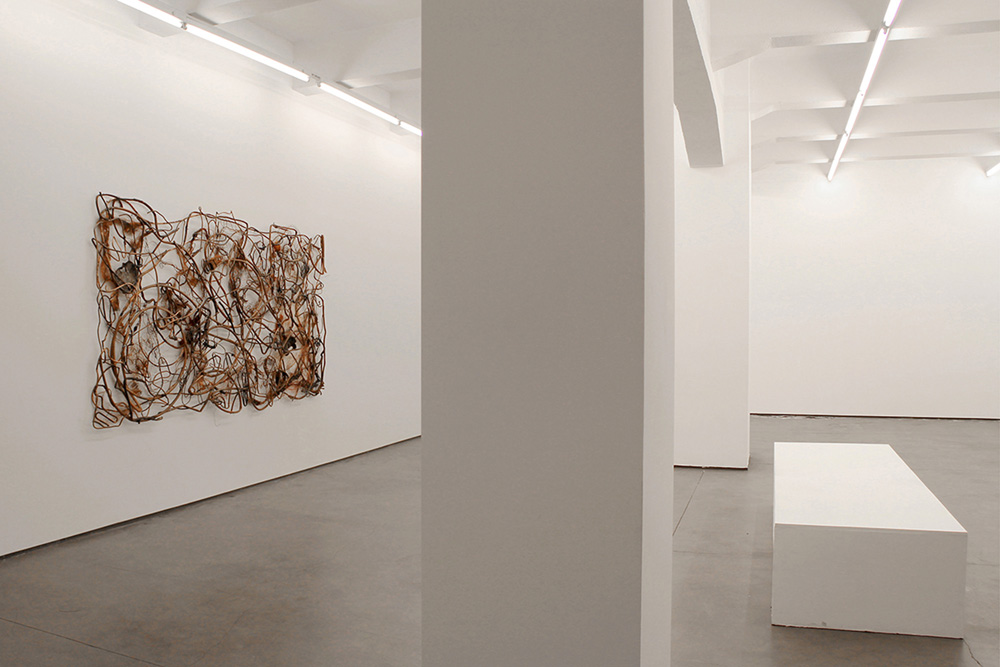
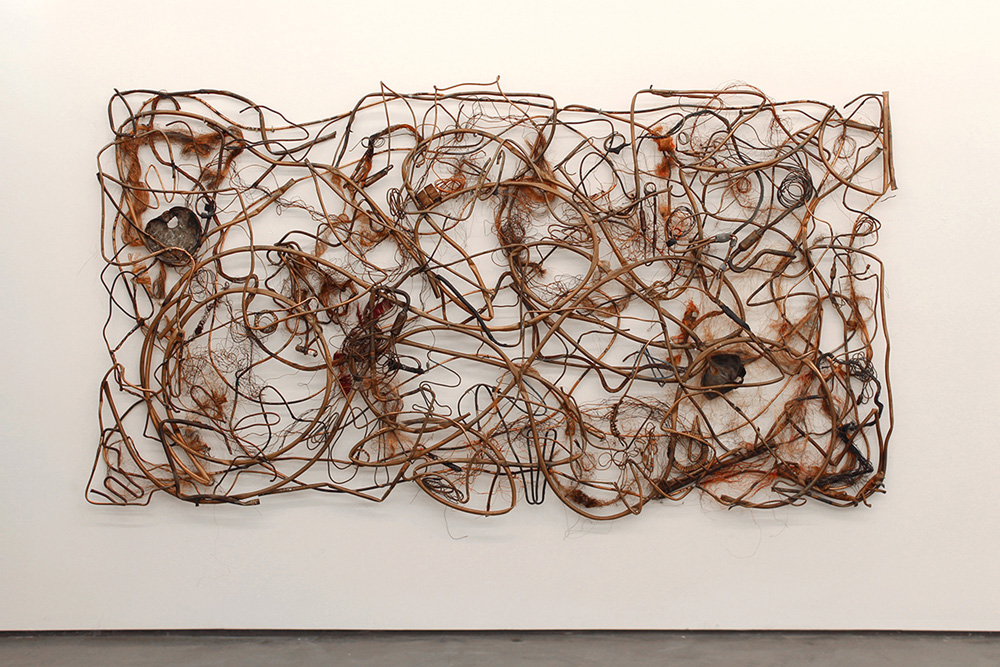
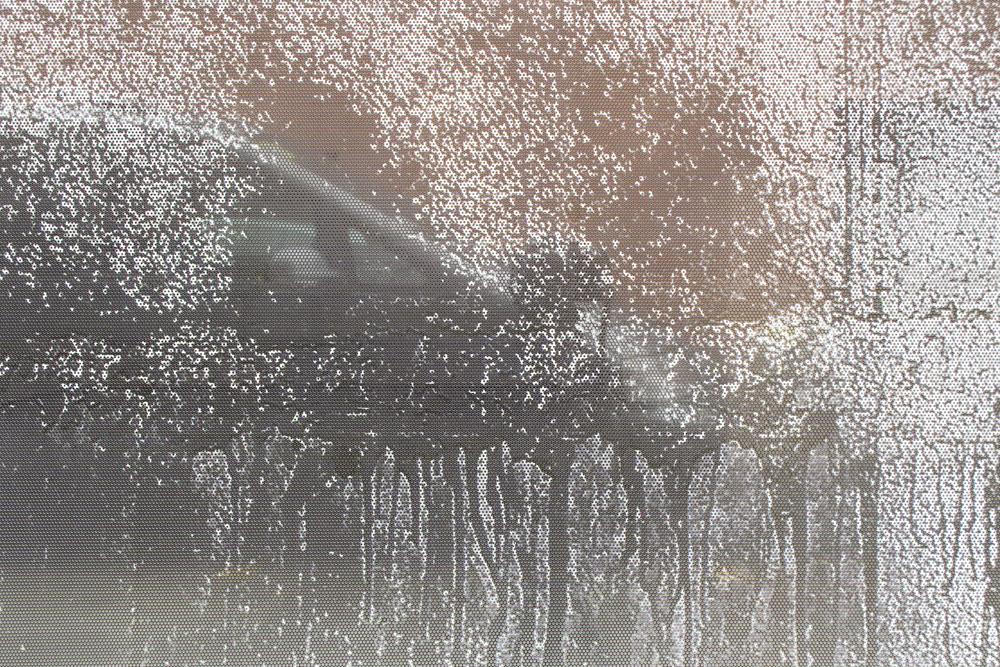
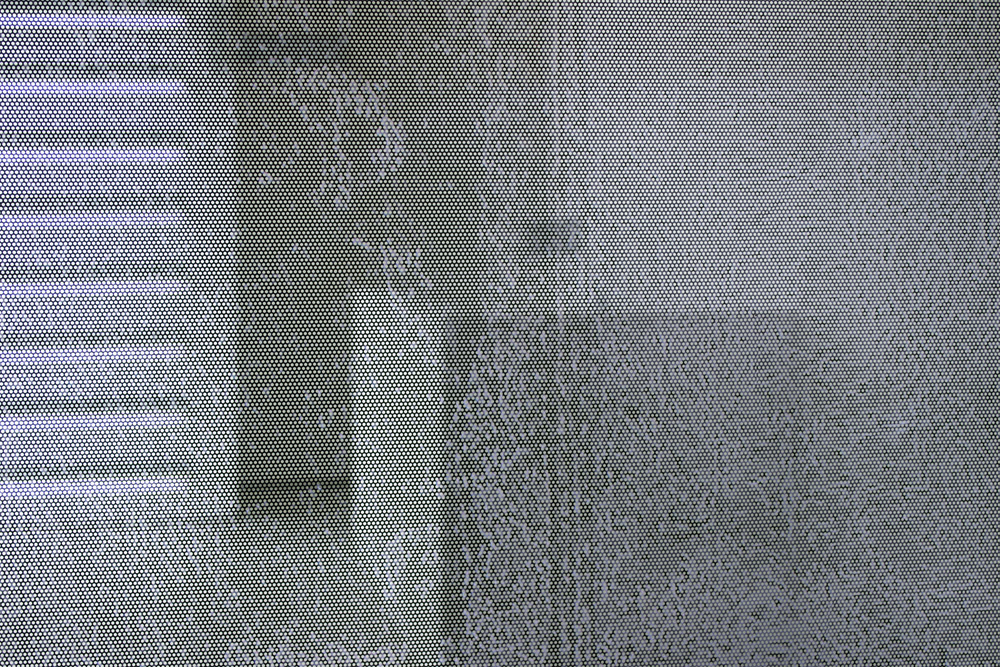
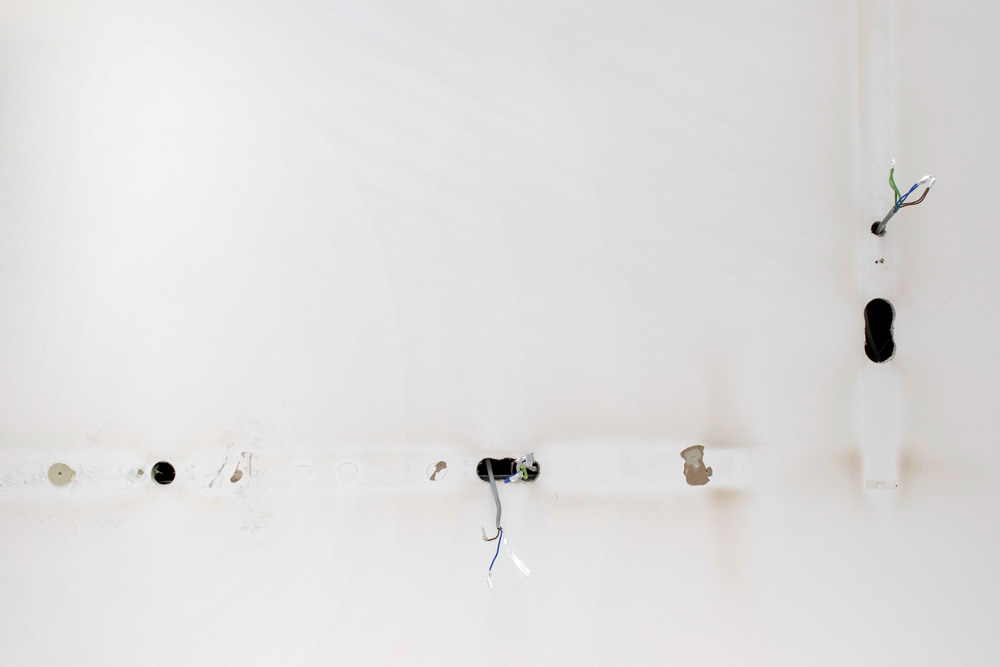
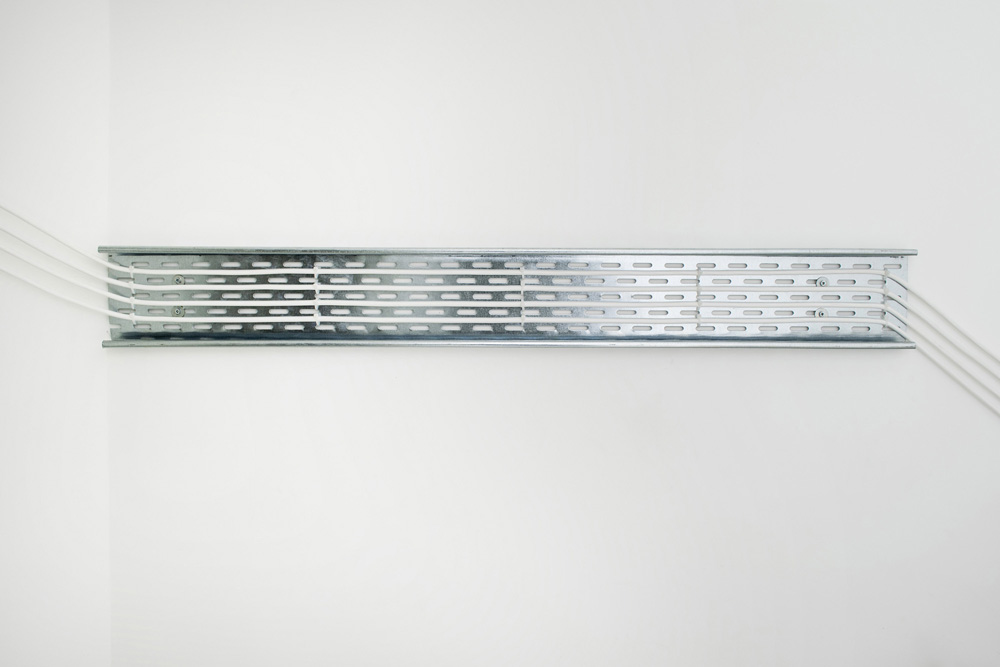
Installed on the gallery’s glass storefront, a perforated vinyl print depicts a 1:1 scale fragment of a black monochrome graffiti that was painted recently throughout the bridge by a local graffiti crew that signs as “OFK”. Facing the street, this abstract particular of the illicit intervention on the structure’s concrete surface suggests an idiosyncratic documentation and a metaphoric geographical displacement between two remote and diverse kinds of public space. Spanning the gallery’s two floors, the sculptural installation titled Passage (Overground/Underground) constitutes a rearrangement of the existing fluorescent lamps of the exhibition space. On the ground floor, the lamps have been detached from their original positions and have been accumulated in order to compose a light wall made of metallic cable-trays. This two-dimensional stack is powered up from the power sockets of the lower floor, through an extension of the cable-tray structure that connects the two levels of the gallery. On the lower floor, this minimal infrastructure gets a more functional character by supporting the hanging of the last remaining pair of fluorescent lamps. Setting an atmospheric dim environment, the lamps are adjusted to light up directly the wall-mounted works that are installed in this space: two rectangular surfaces composed of compressed copper wiring that was sourced from scrap yards around the area of the bridge.
Global logistical operations of automated networks and non-human subjectivities intersect in Bridge with local parasitical economies and obscure processes of material resources recycling. By the means of spatial and material coding, KERNEL looks at the moments of friction and resistance within systems of paradoxical colonization, of real-time connectivity and maximized efficiency that perpetually suggested extreme scenarios for the organization
of human time and life.
Assume that the bone structure is akin to the one of reinforced concrete. Then, the six-meter long rebars that define the skeleton of a building would correspond to the collagen bars that run through the bone. The cement that is poured into the temporary wooden molds which are built around the steel rebars would be analogous to the crystallized blood minerals that surround the collagen bars. In association with these collagen bars, minerals such calcium and phosphorus provide to bone with resistance equivalent to the one deriving from the tight structural compound comprised of cement and rebars. Without the reinforcing rebars the cement would crumble. Without the cement the rebars would bend.
Saturday, January 25th, 2014 | Posted in activity |
The warehouse keeps two rows of neon lights always on. Even during the night, when all the work is over. Once the palettes have been stacked, depending on the time of the next day delivery.
<br/ >
As the hours go by, the humidity melts a minimum amount of synthetic glue, which was by accident slipped among the multiple layers of the cargo.
<br/ >
The double metallic door of the vehicle opened and the ramp lowered slowly and noisily. It stopped suddenly five centimeters above the asphalt, almost without trembling at all.
<br/ >
Where no cars are parked by the sidewalk, the front passenger can see his reflection in the shopping windows, as he carries the load with a trolley in the middle of the temporarily closed road.
<br/ >
Right is left.
White is black.
And the other way around.
<br/ ><br/ >
Wednesday, December 4th, 2013 | Posted in activity |
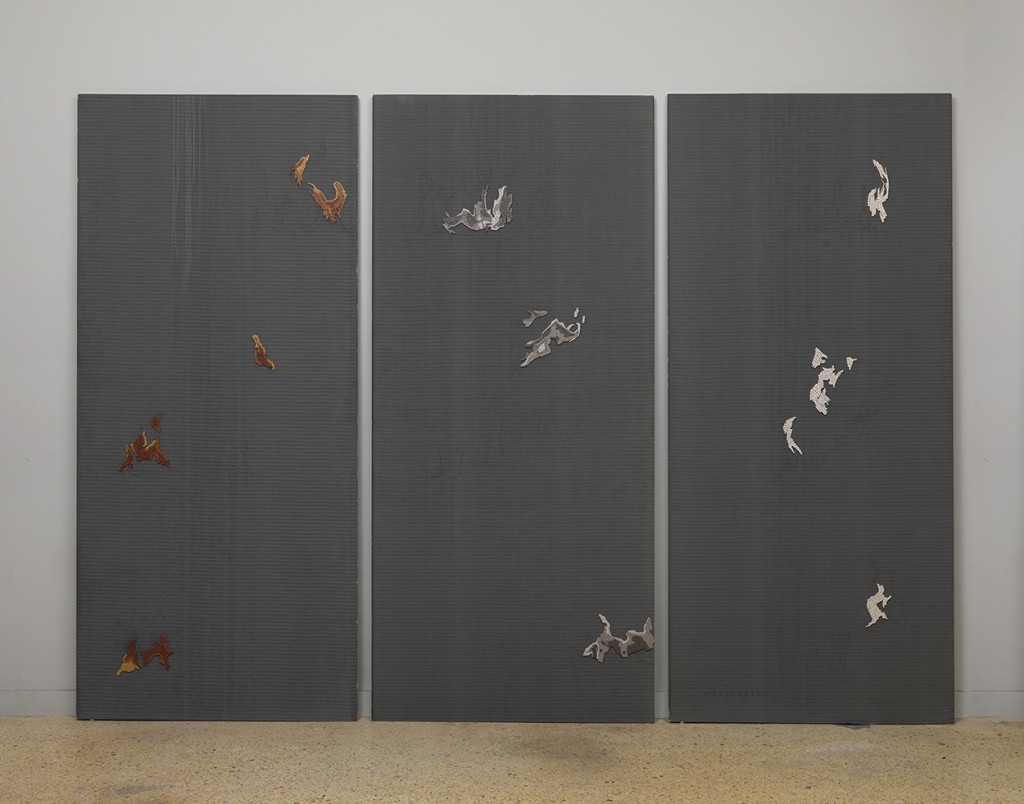
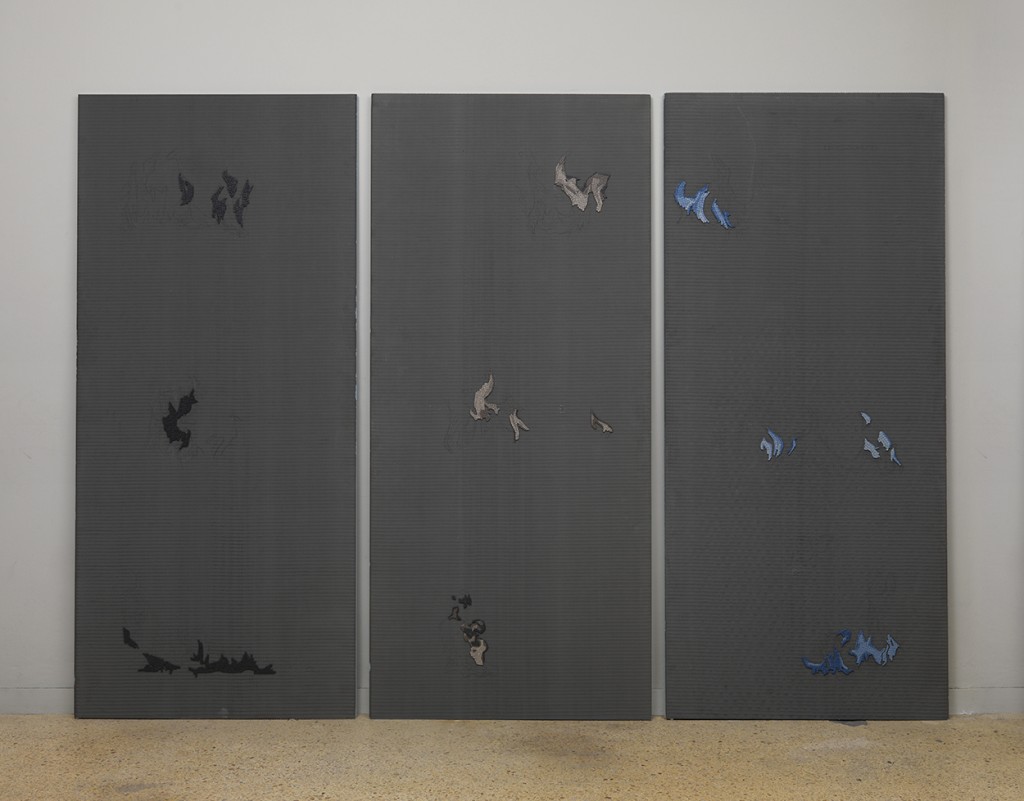
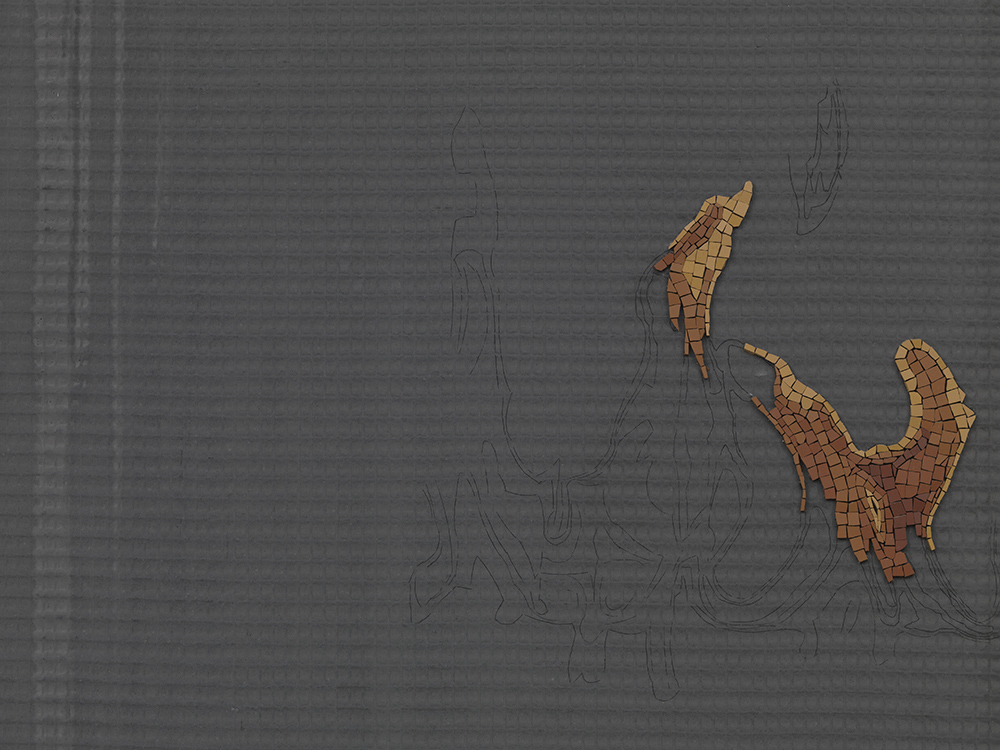
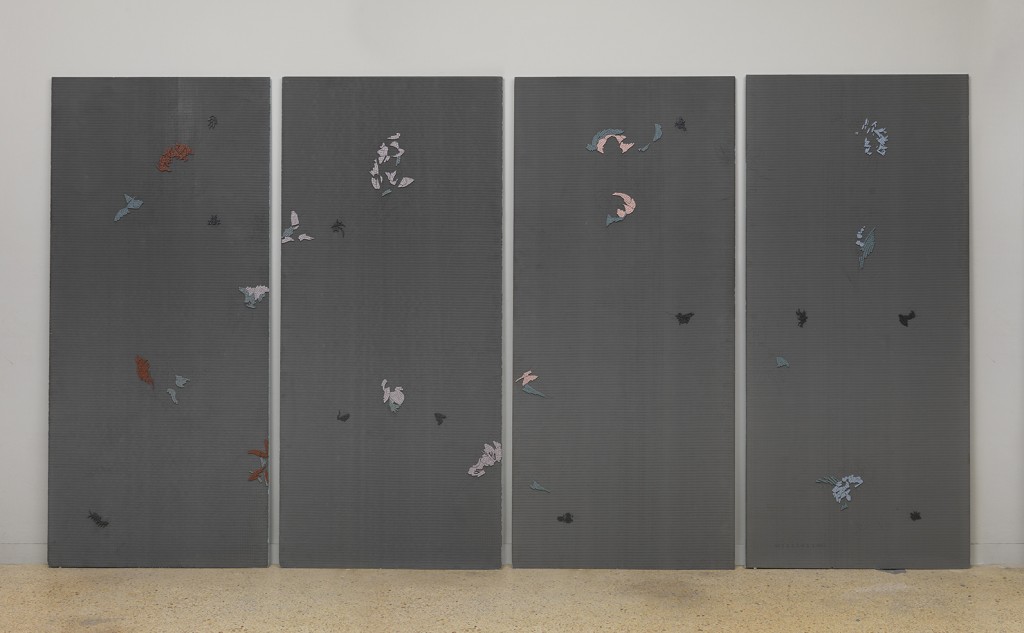
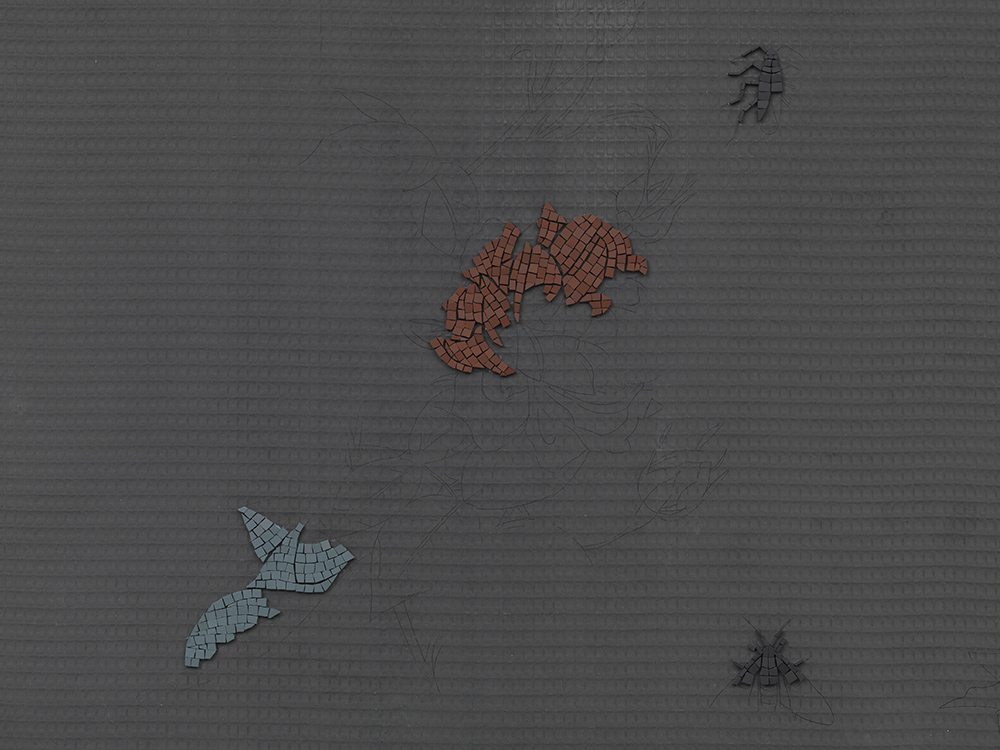
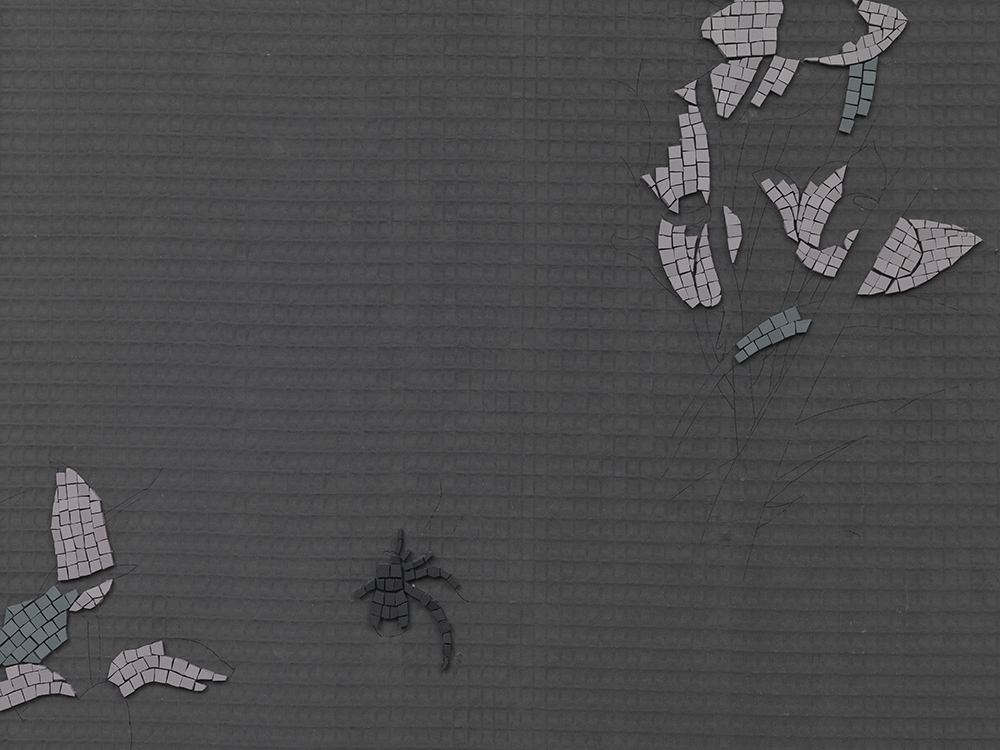
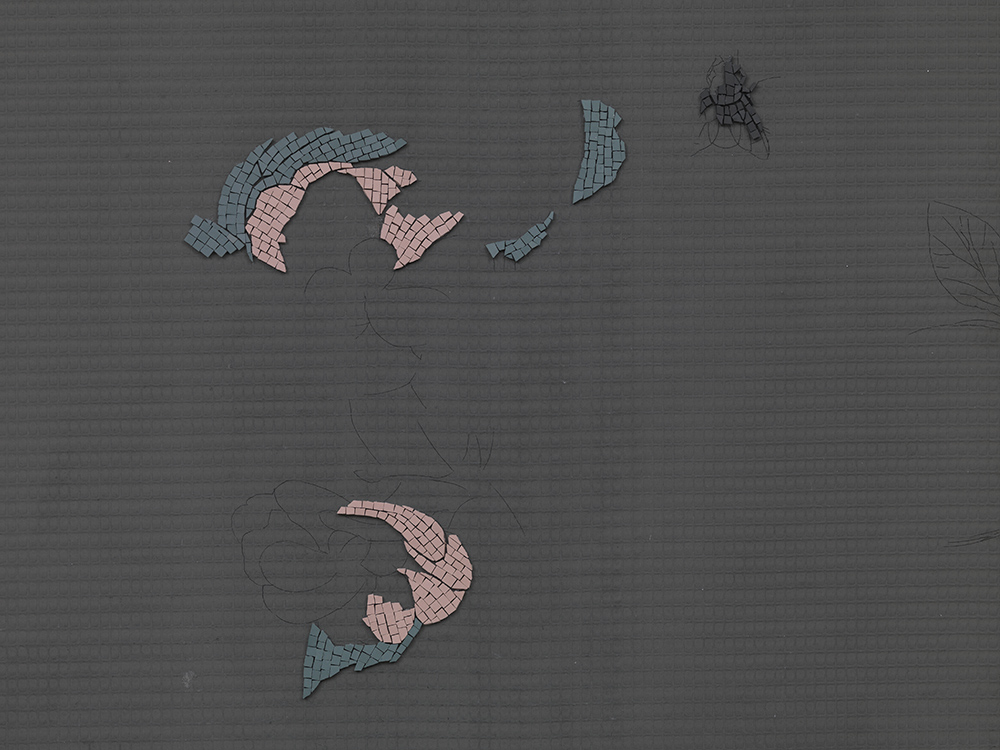
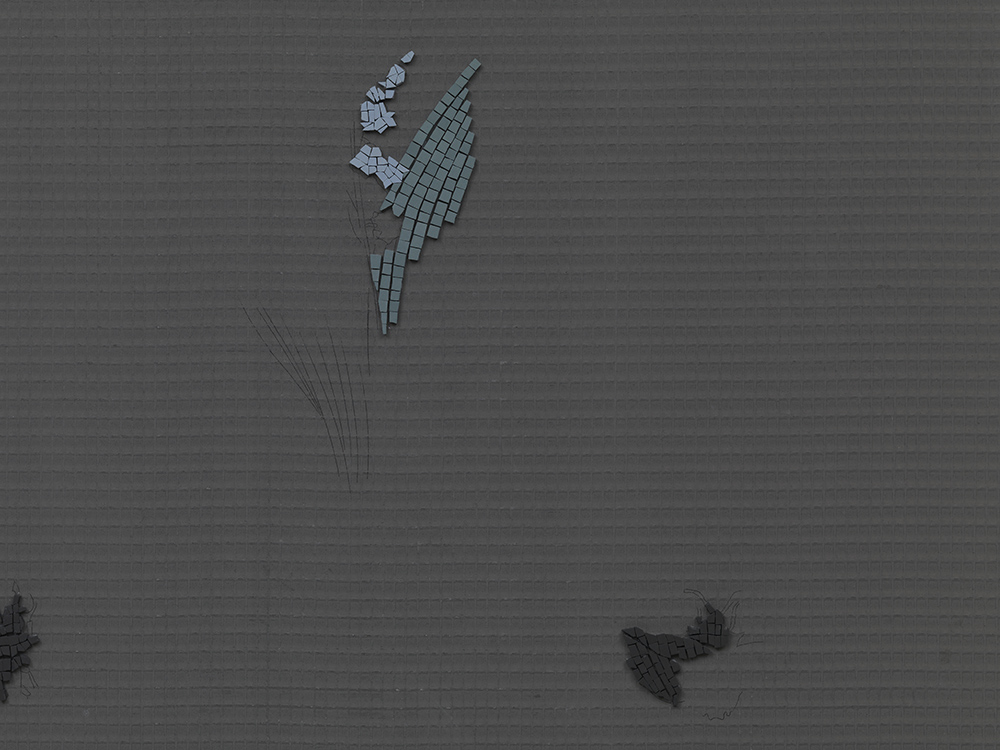
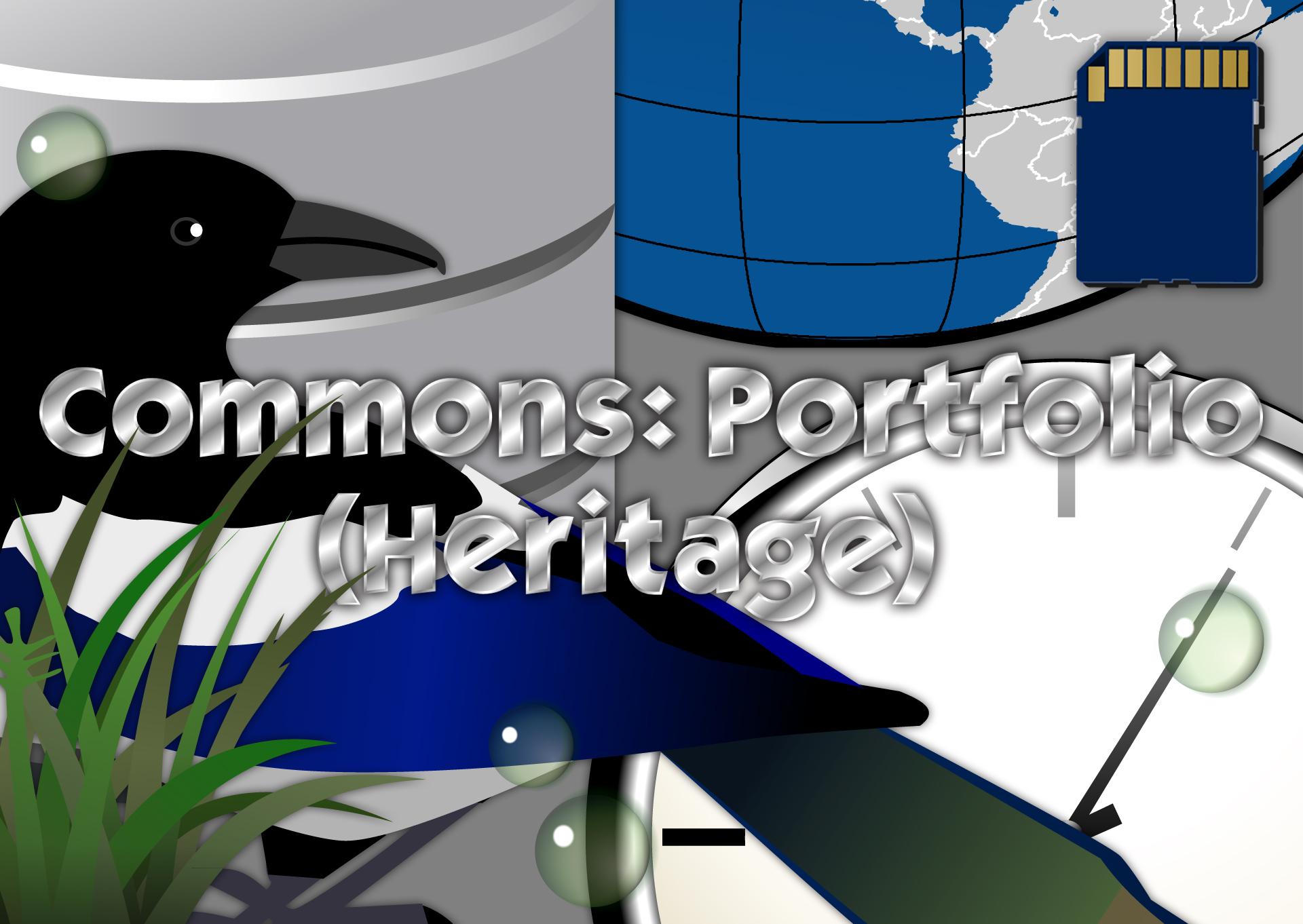
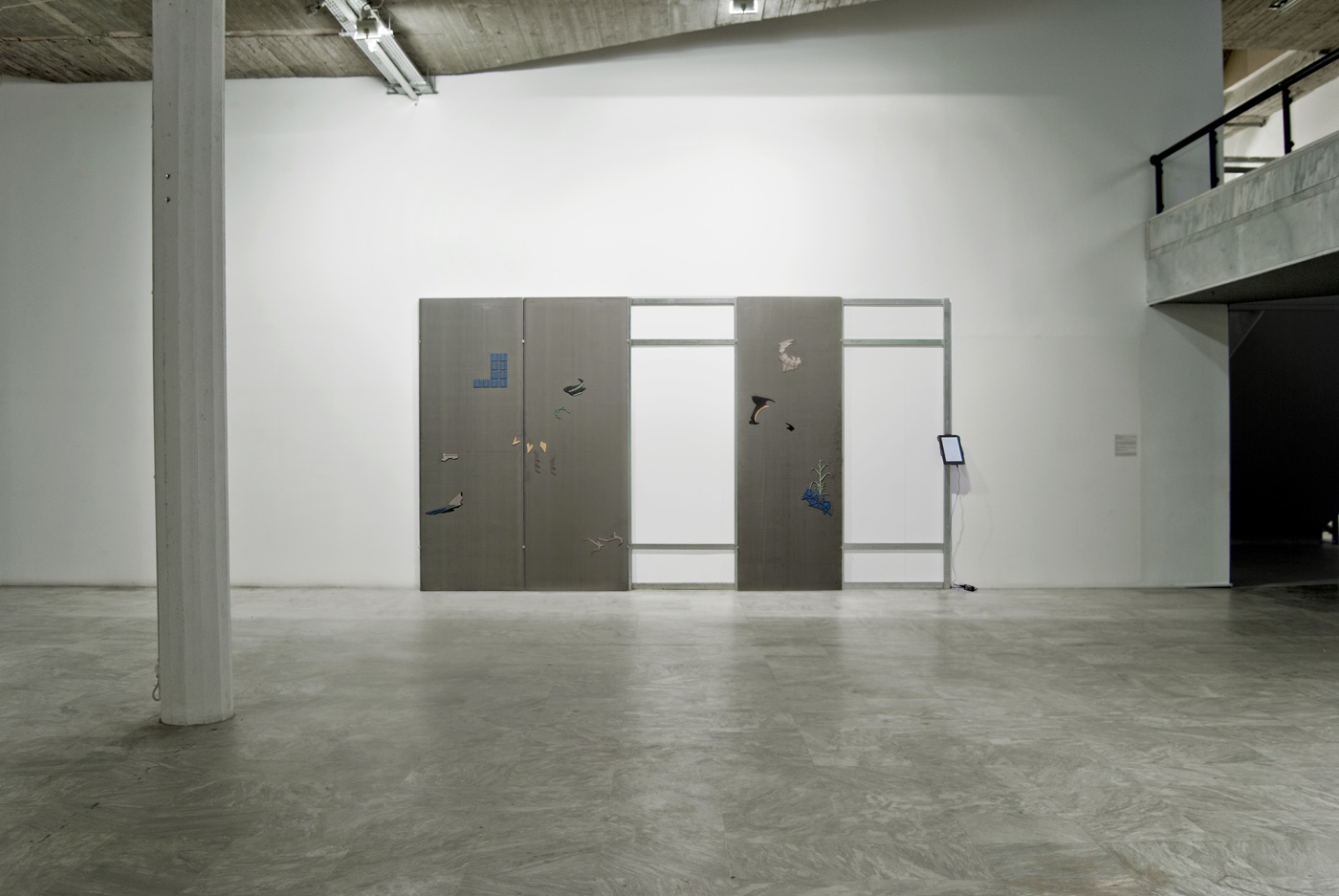
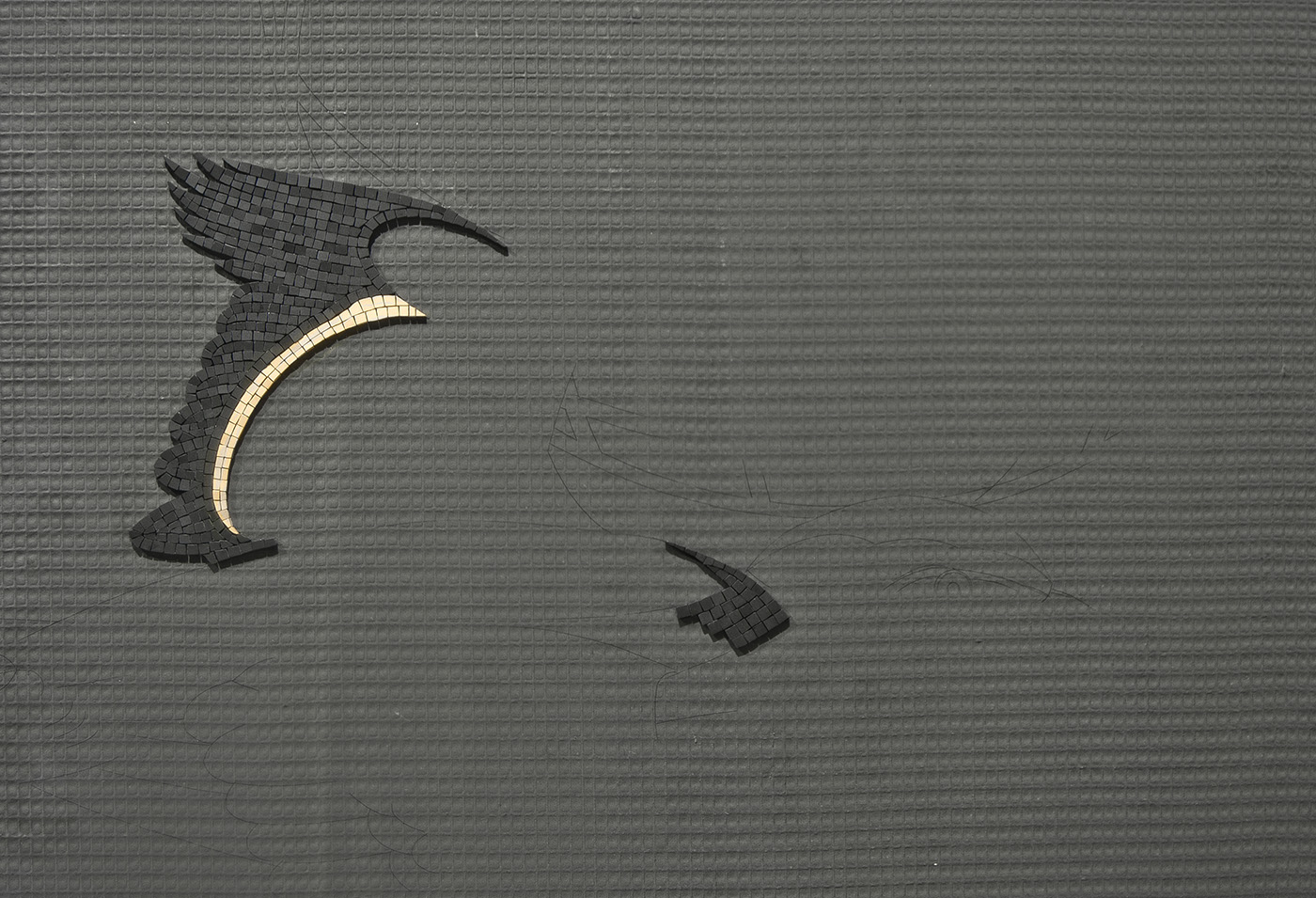
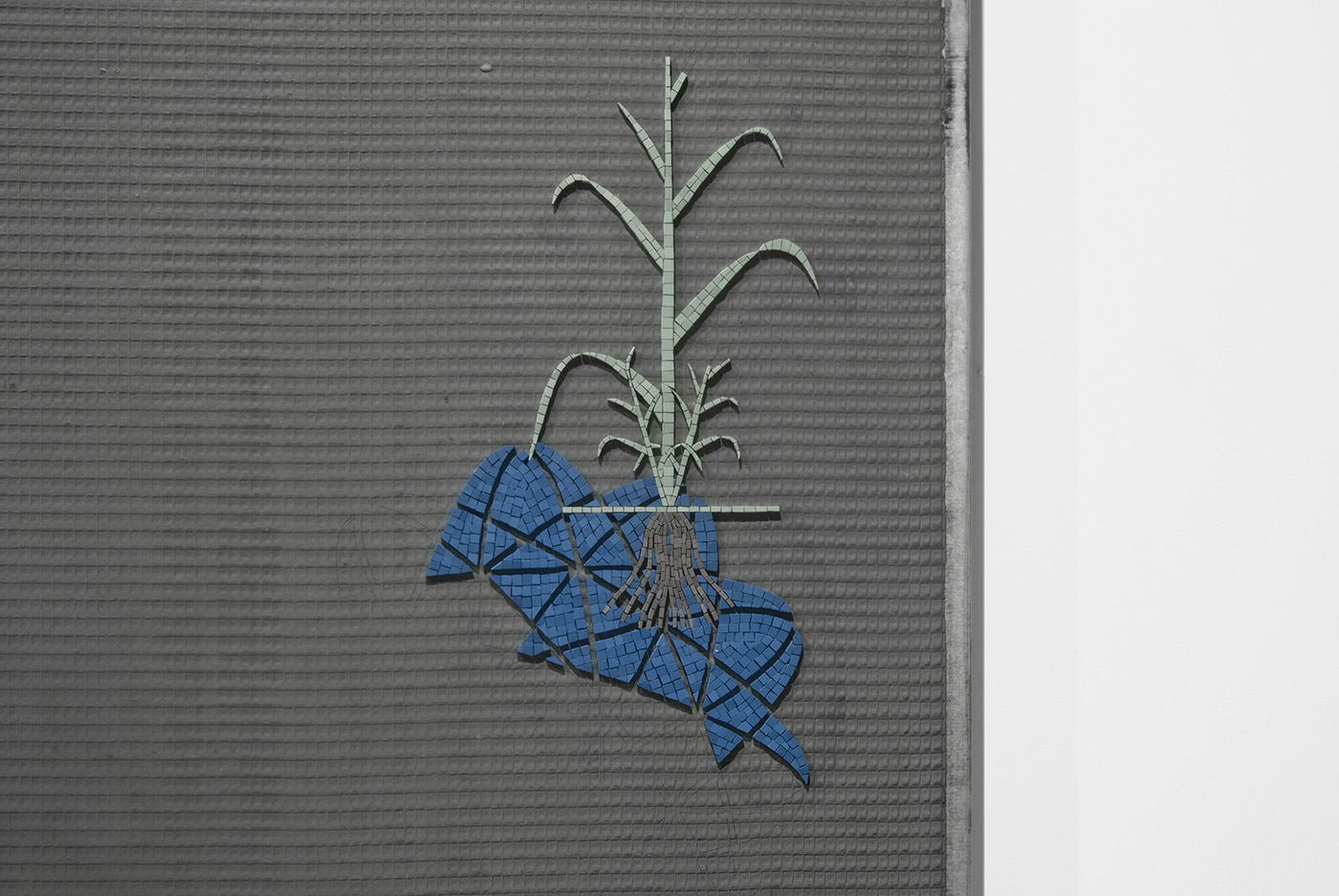
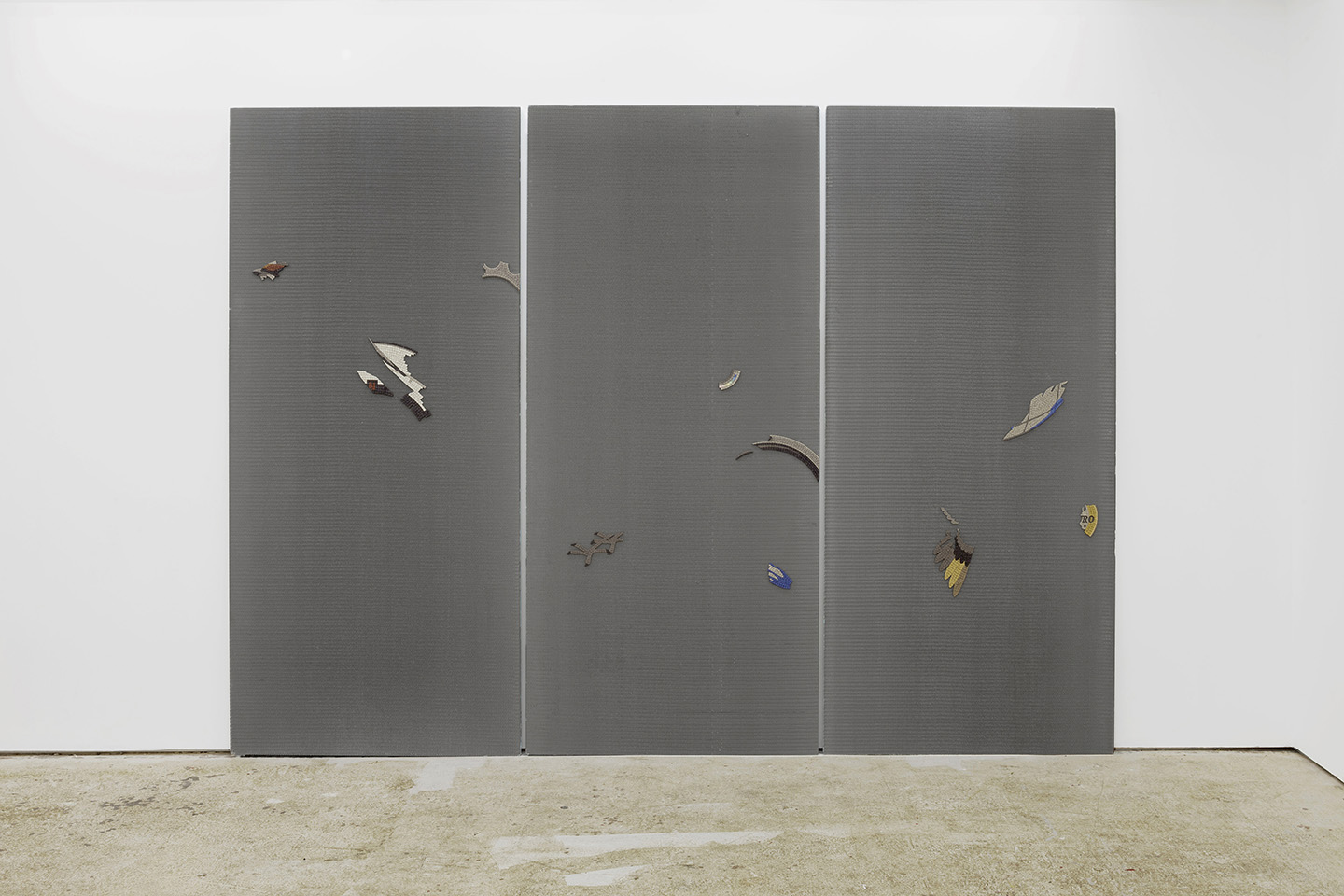
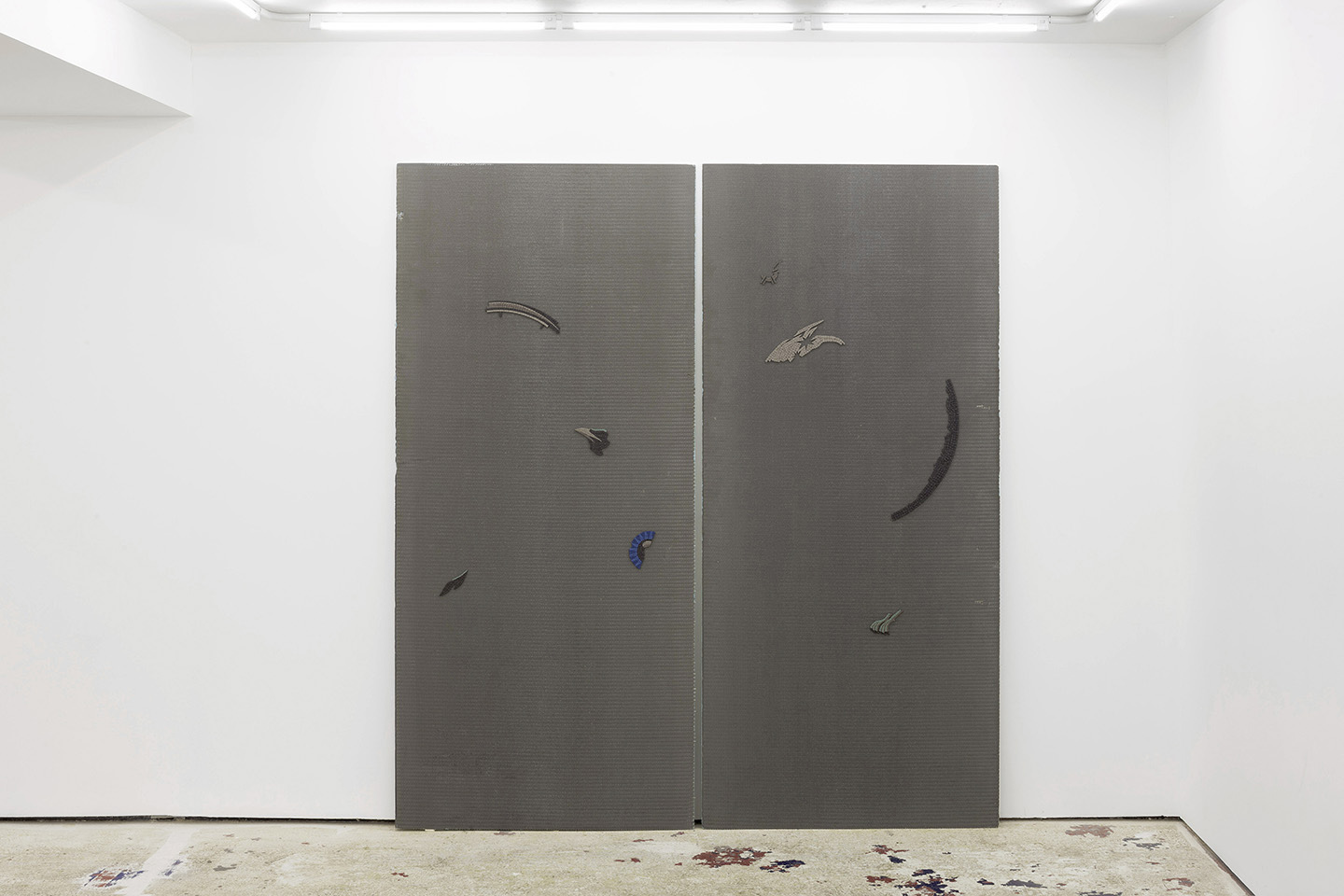
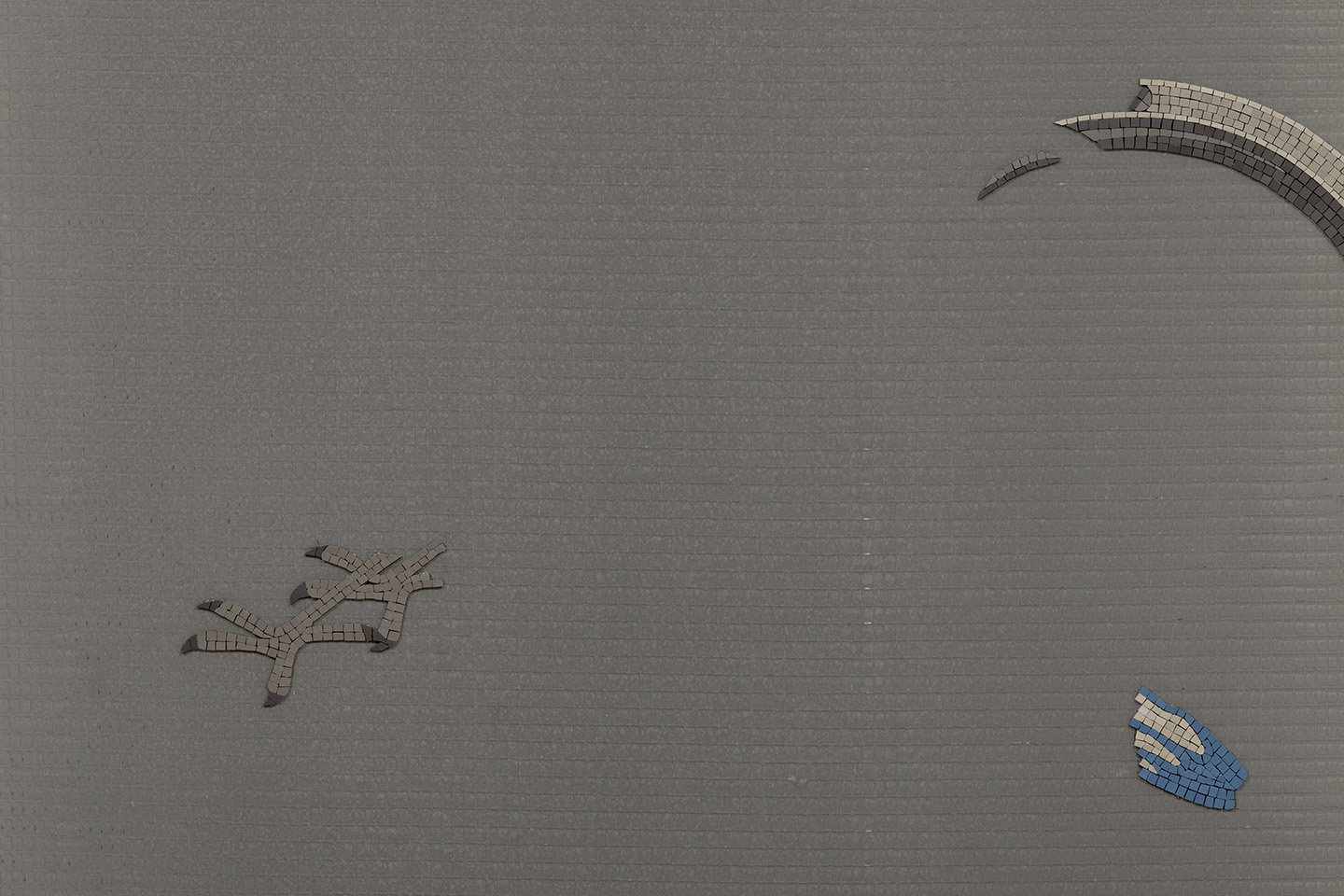
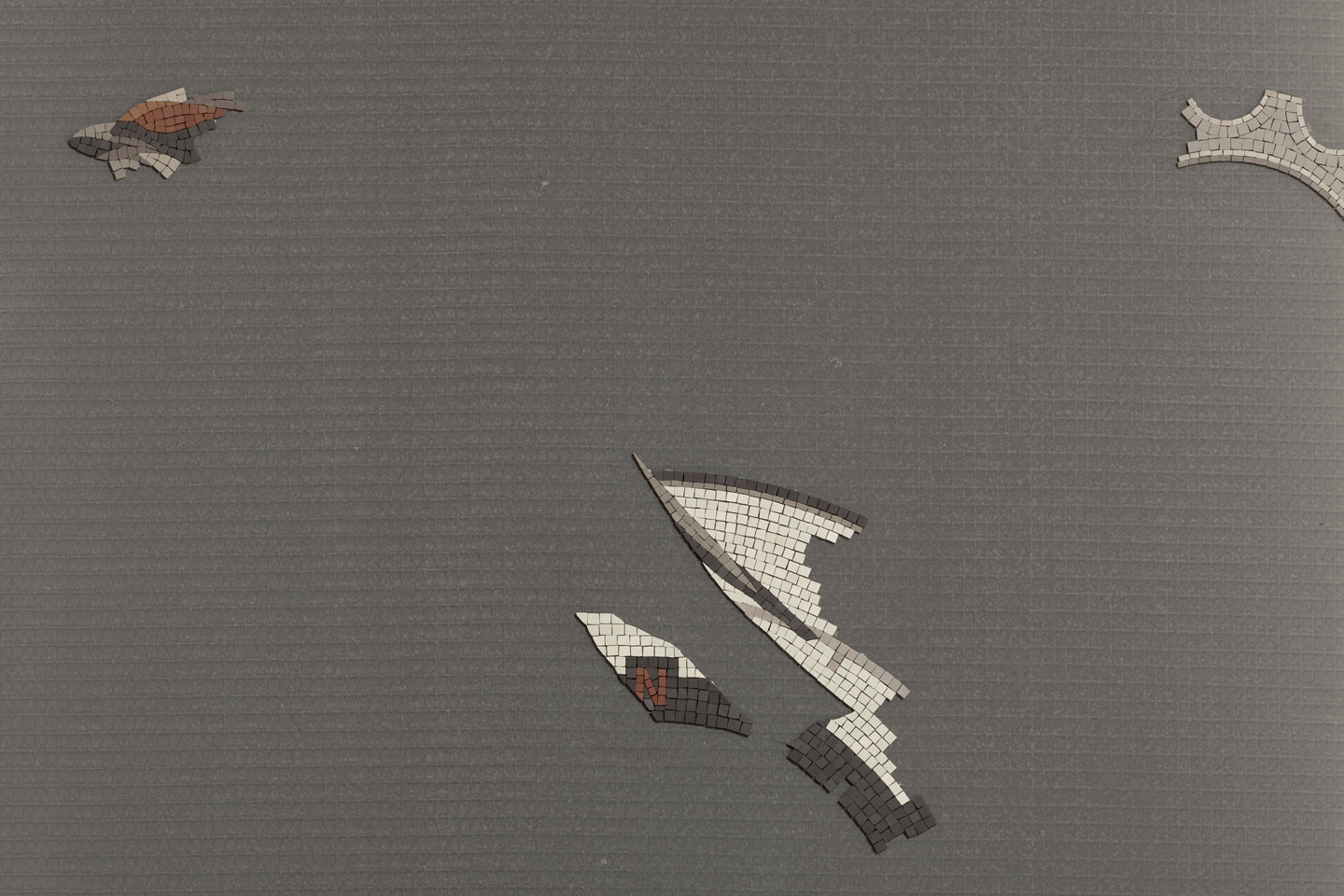
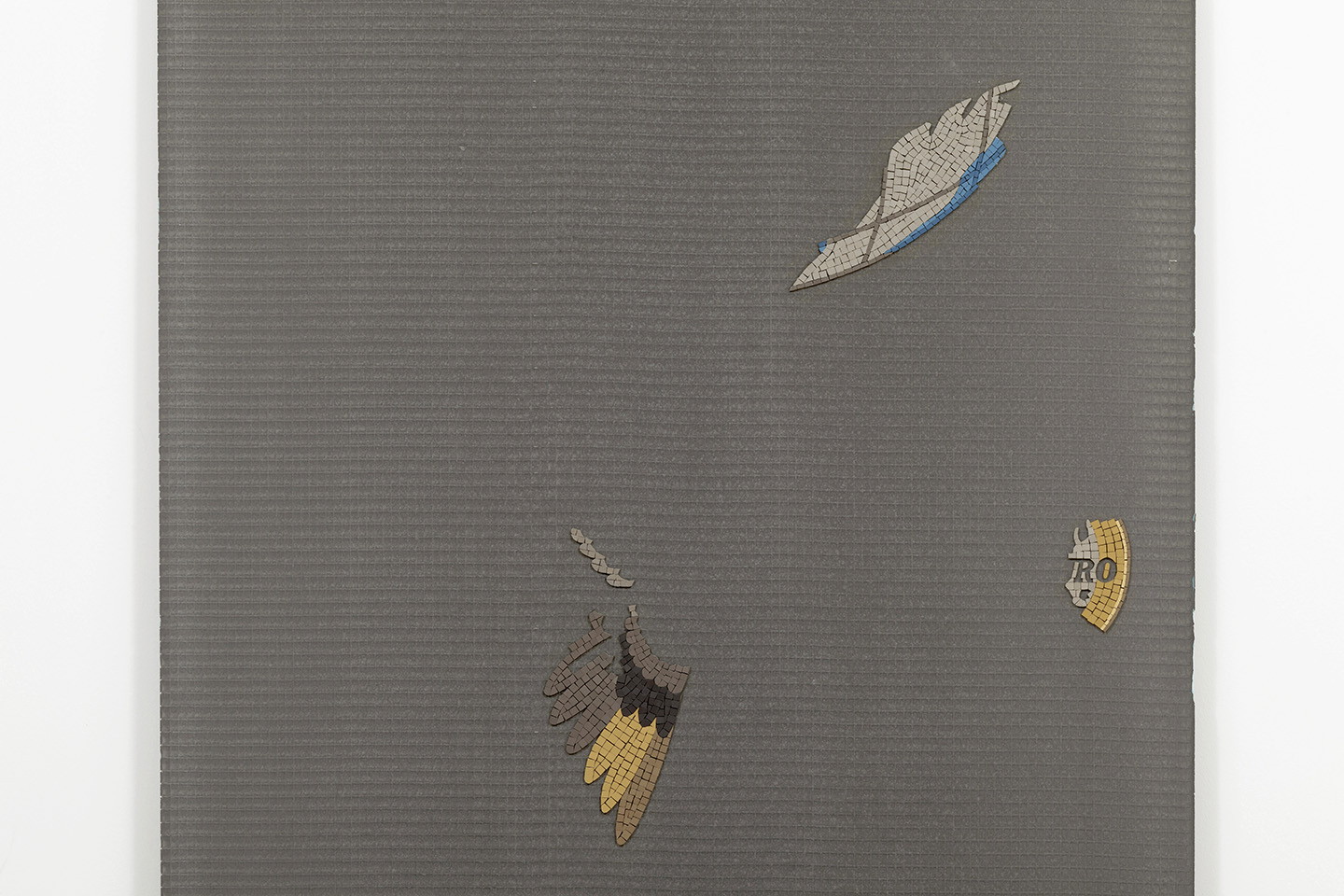
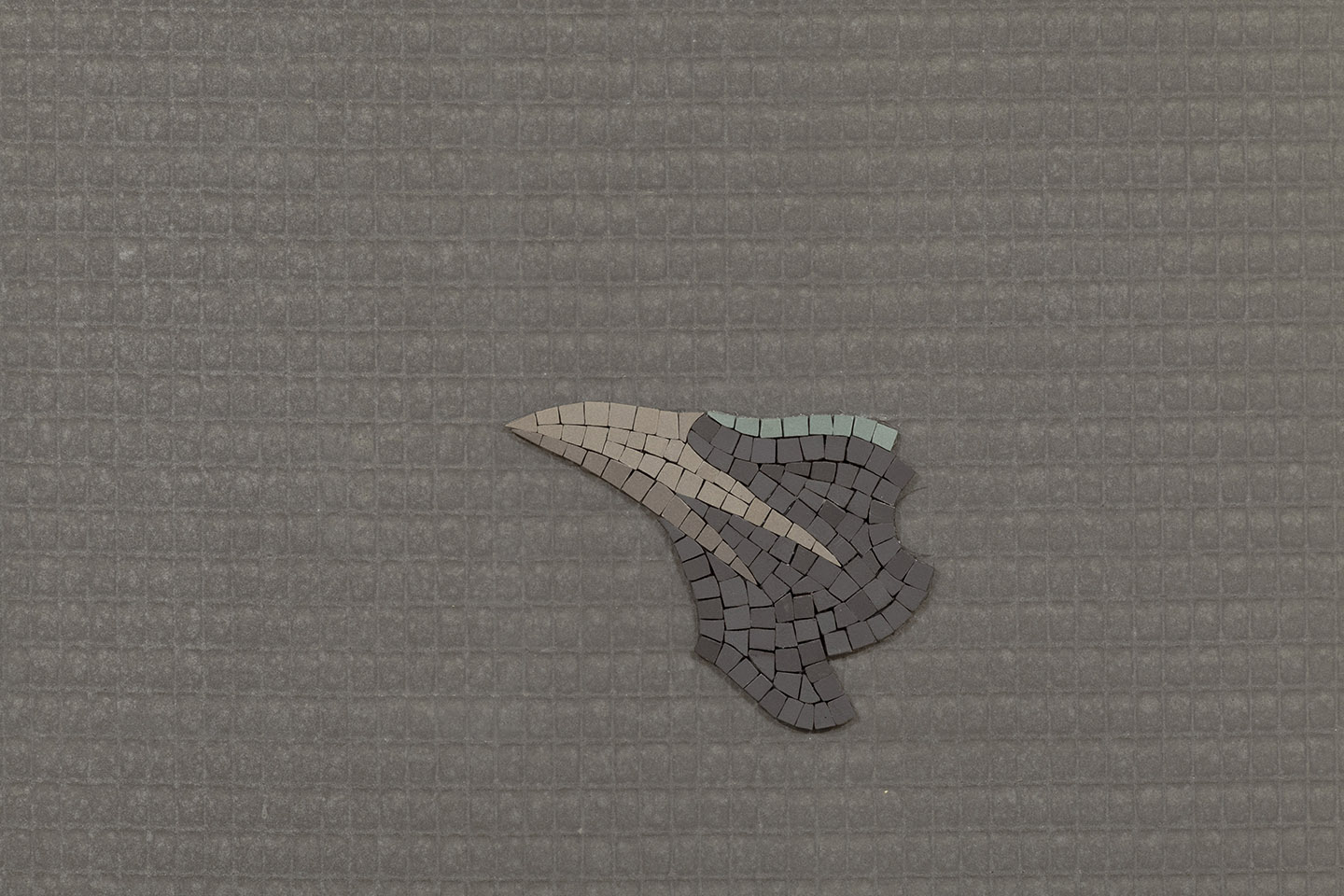
Commons are things shared and commons are things ordinary. Like translation and transformation, invention and discovery, the global economy, time and observation, scales and forces.
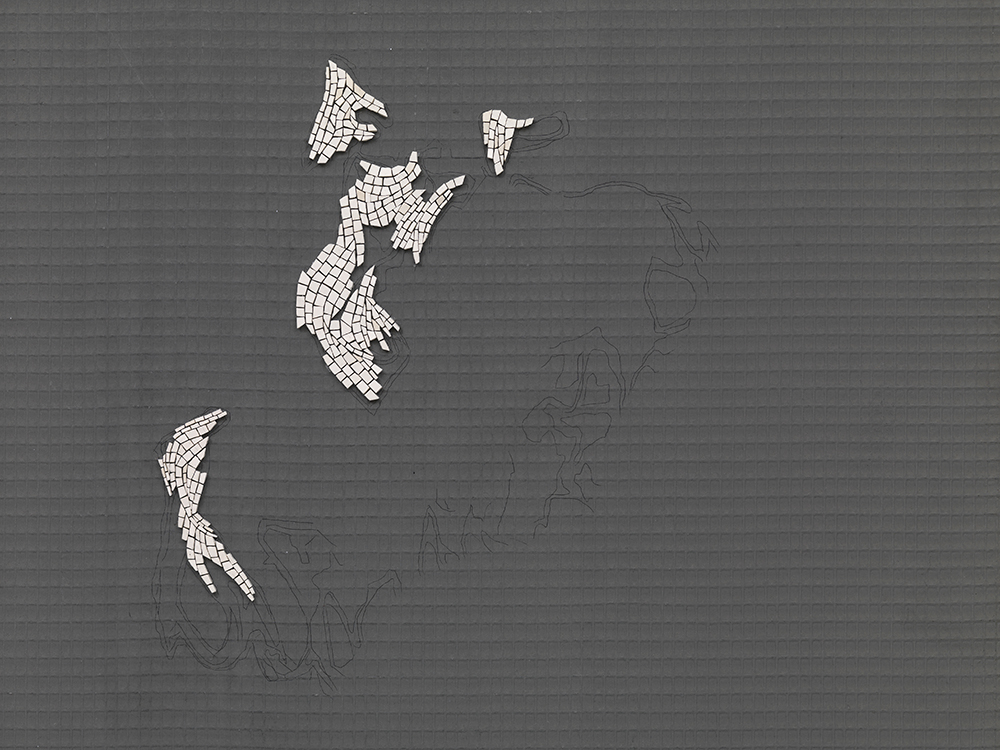
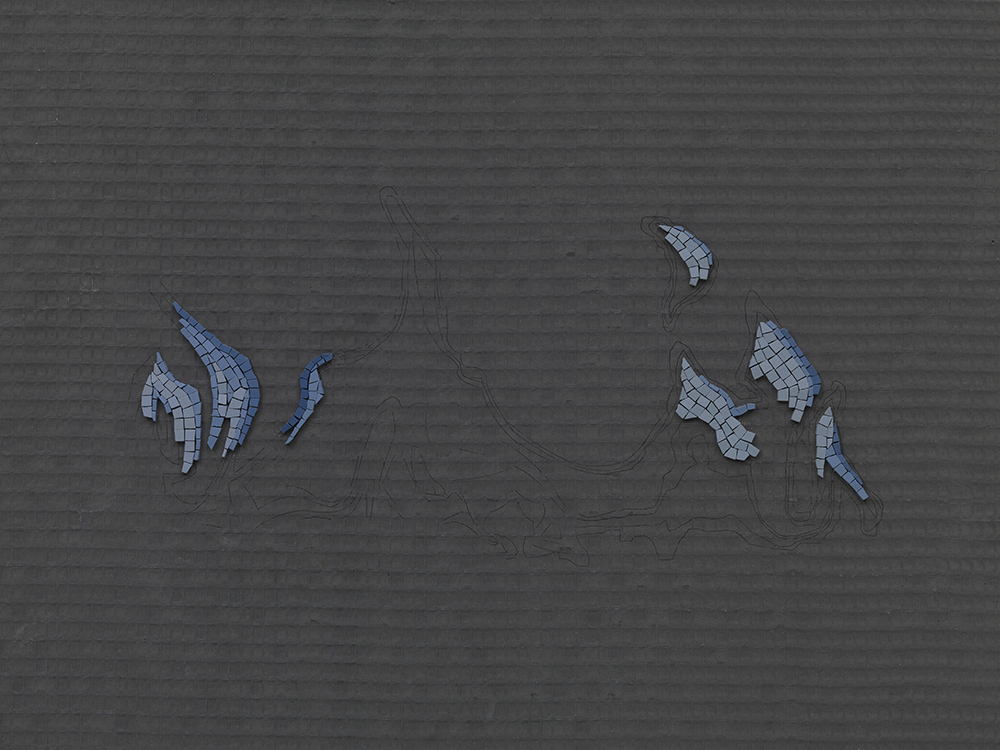
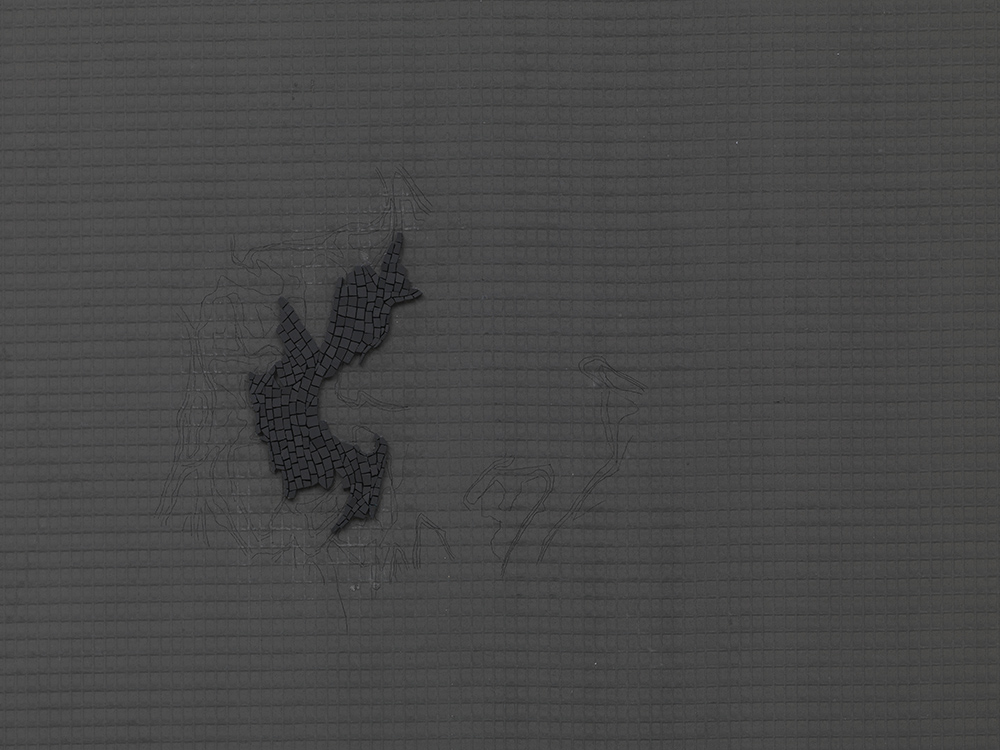
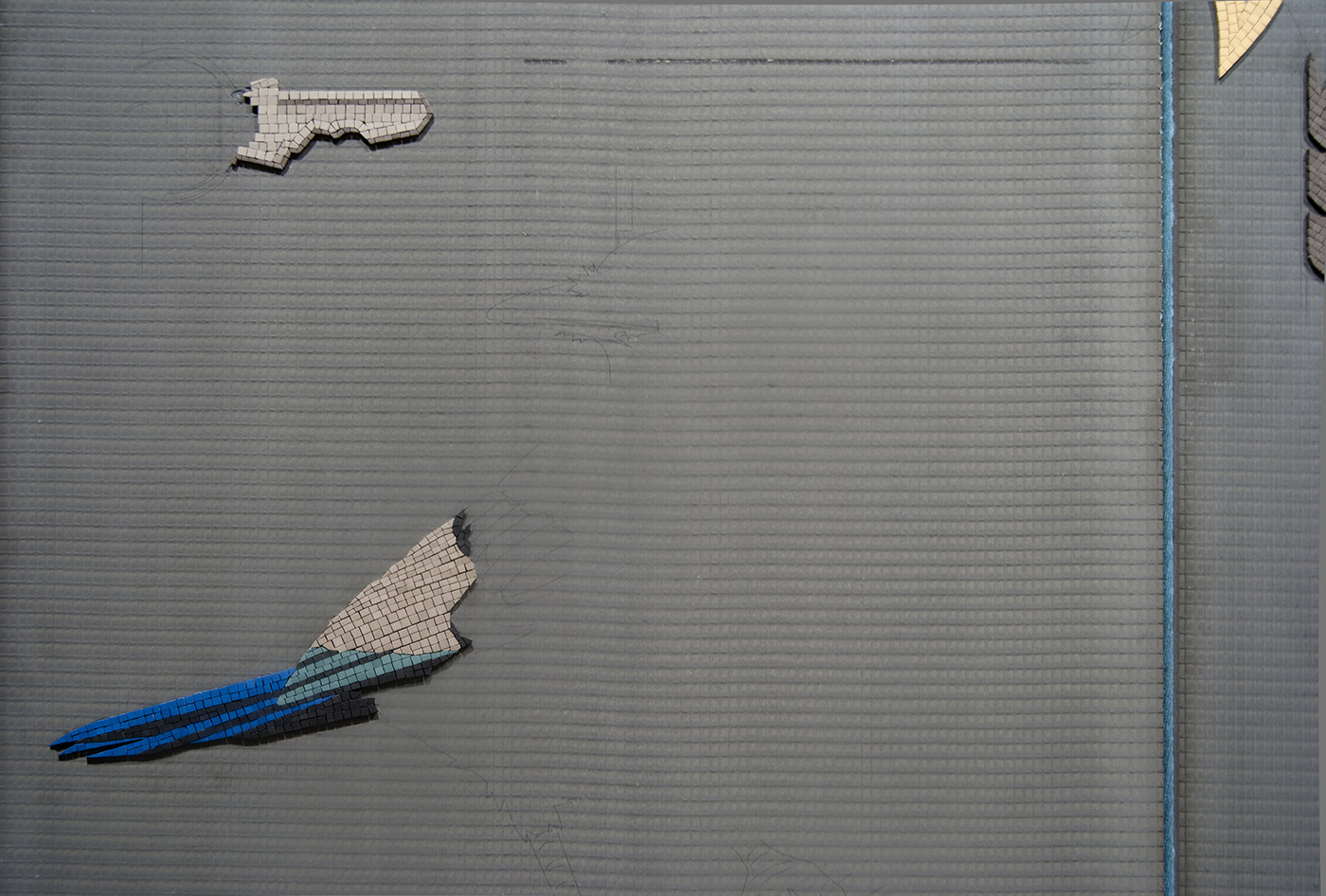
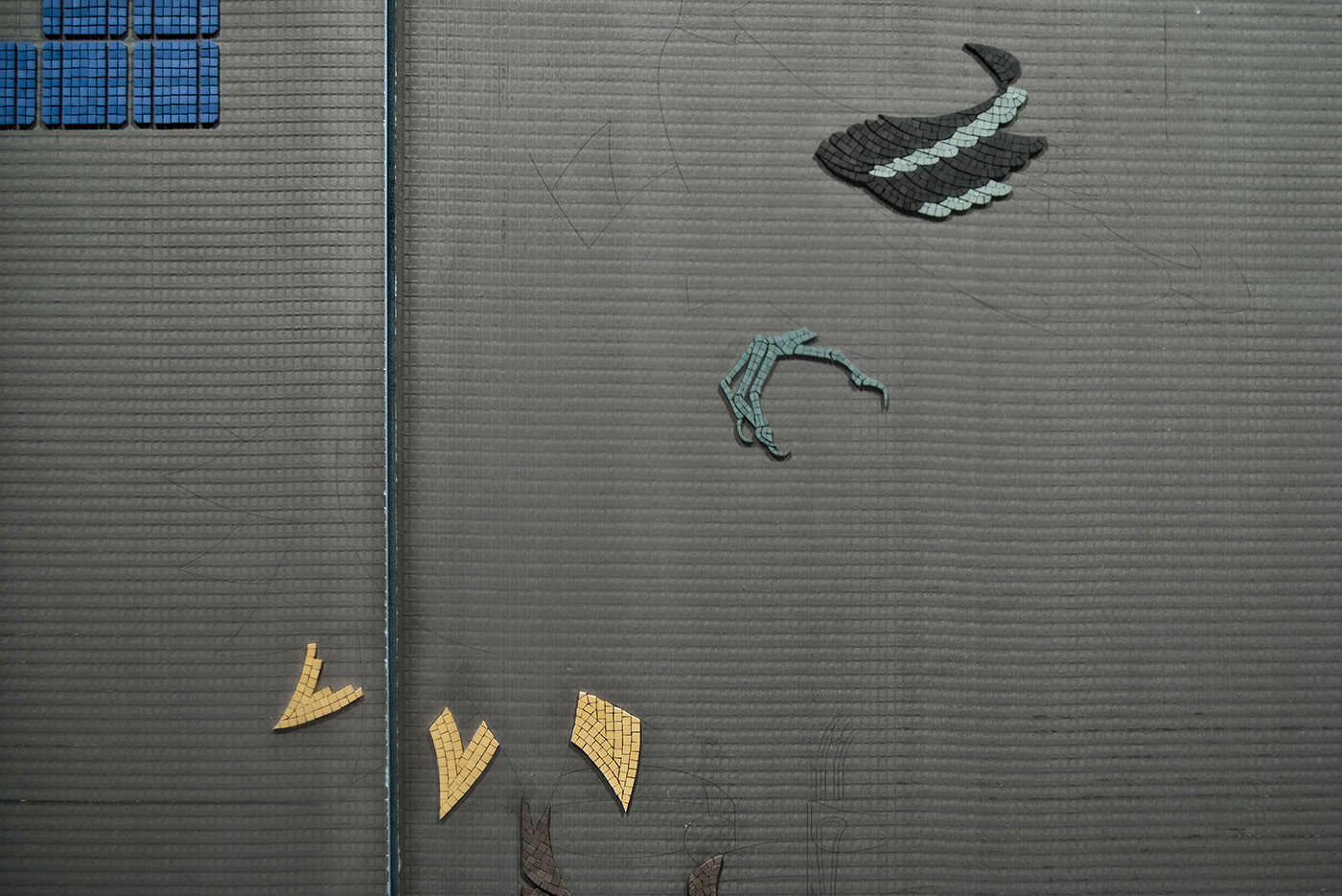
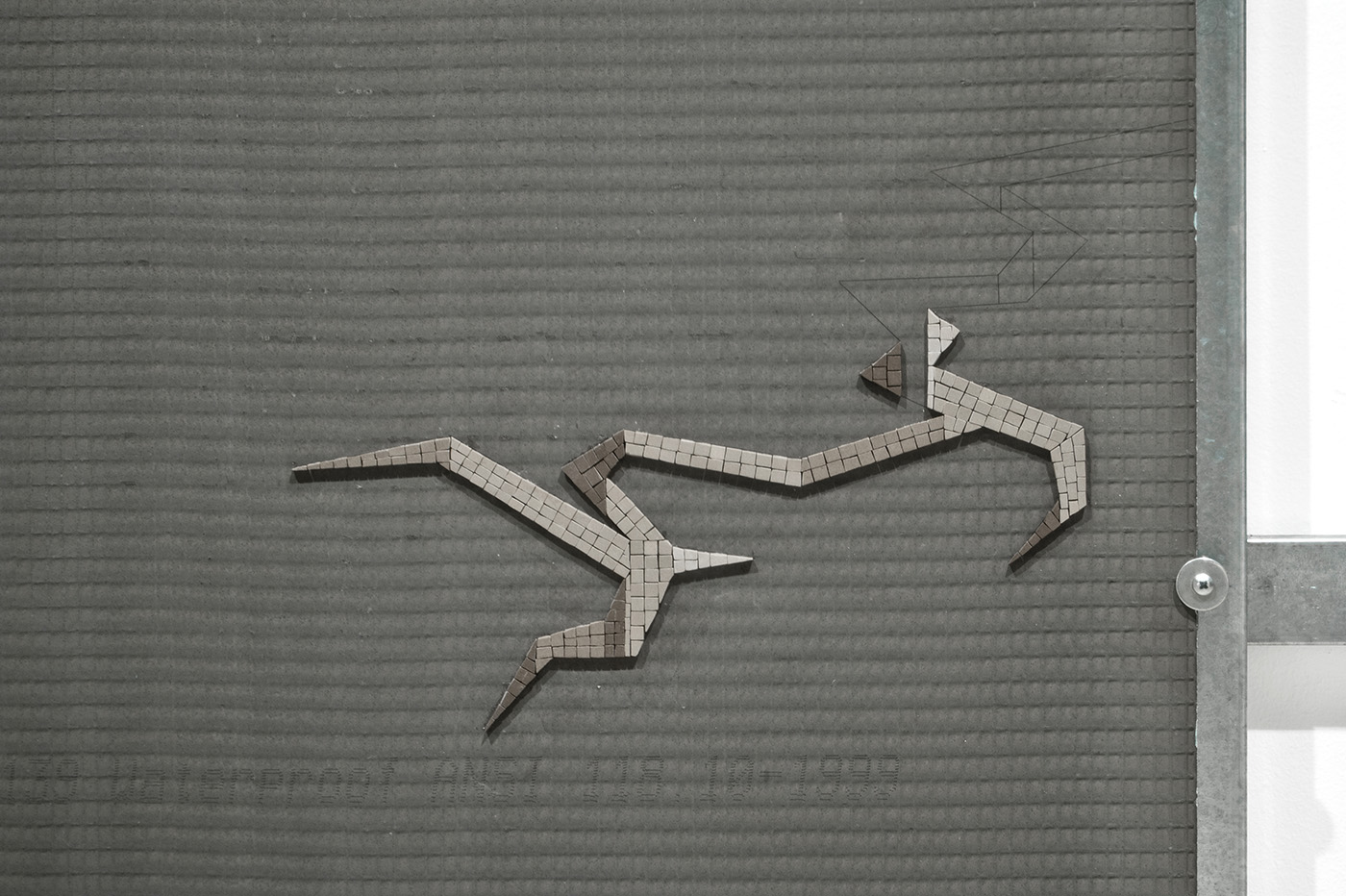
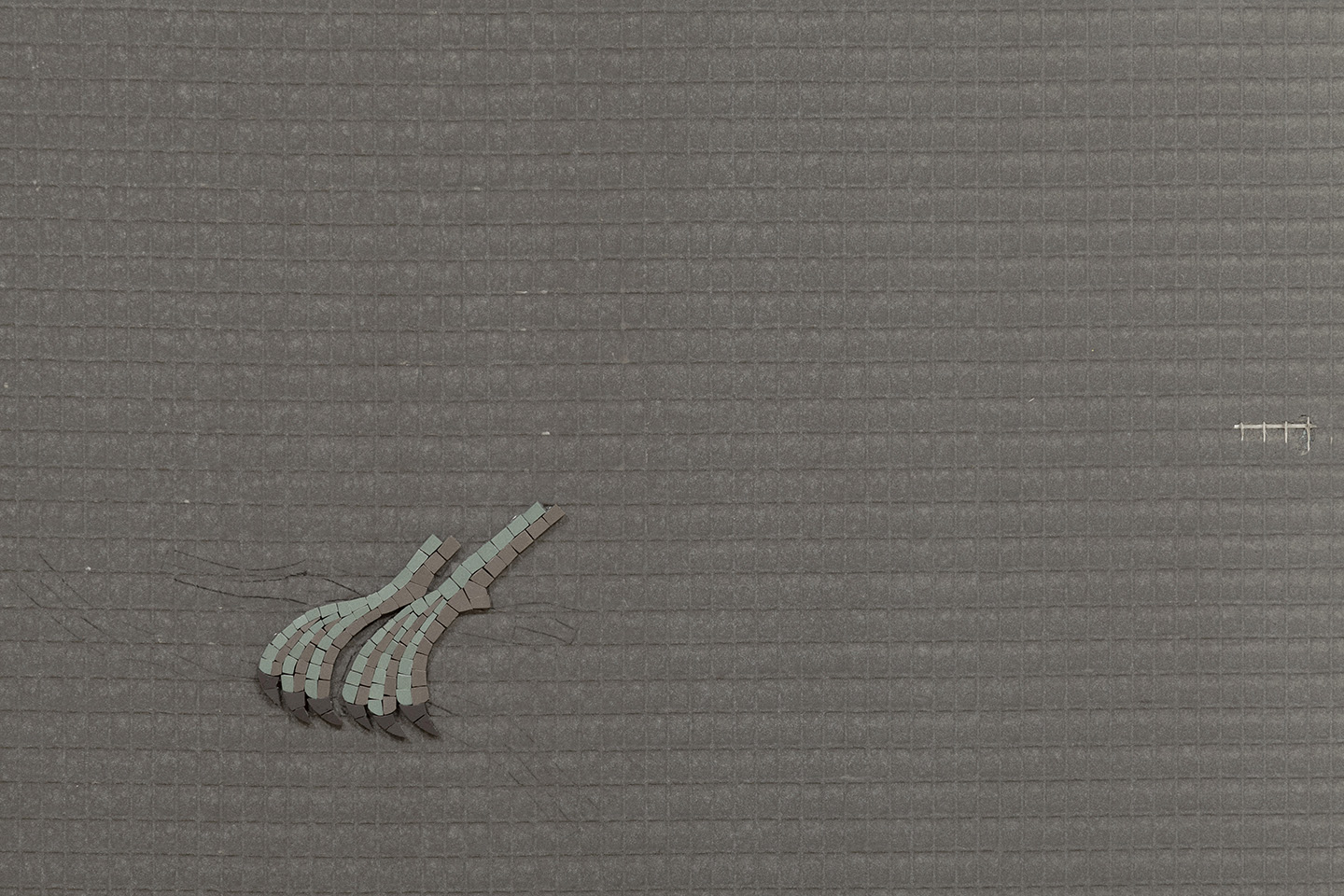
Unglazed fired ceramic tiles, extruded polystyrene rigid foam construction panels coated with synthetic polymer plaster and reinforced with glass-fibre.
Mosaic compositions based on public domain vector graphics material.
Commons (1, 2 & 3), 2013
Mosaic compositions based on public domain vector graphics material.
Unglazed fired ceramic tiles, extruded polystyrene rigid foam construction panels coated with synthetic polymer plaster and reinforced with glass-fibre.
Commons (4 & 5), 2013
Commons 1, 2013
Detail
Commons 2, 2013
Detail
Commons 3, 2013
Detail
Commons 4, 2013
Detail
Commons 5, 2013
Detail
Monday, September 9th, 2013 | Posted in activity |
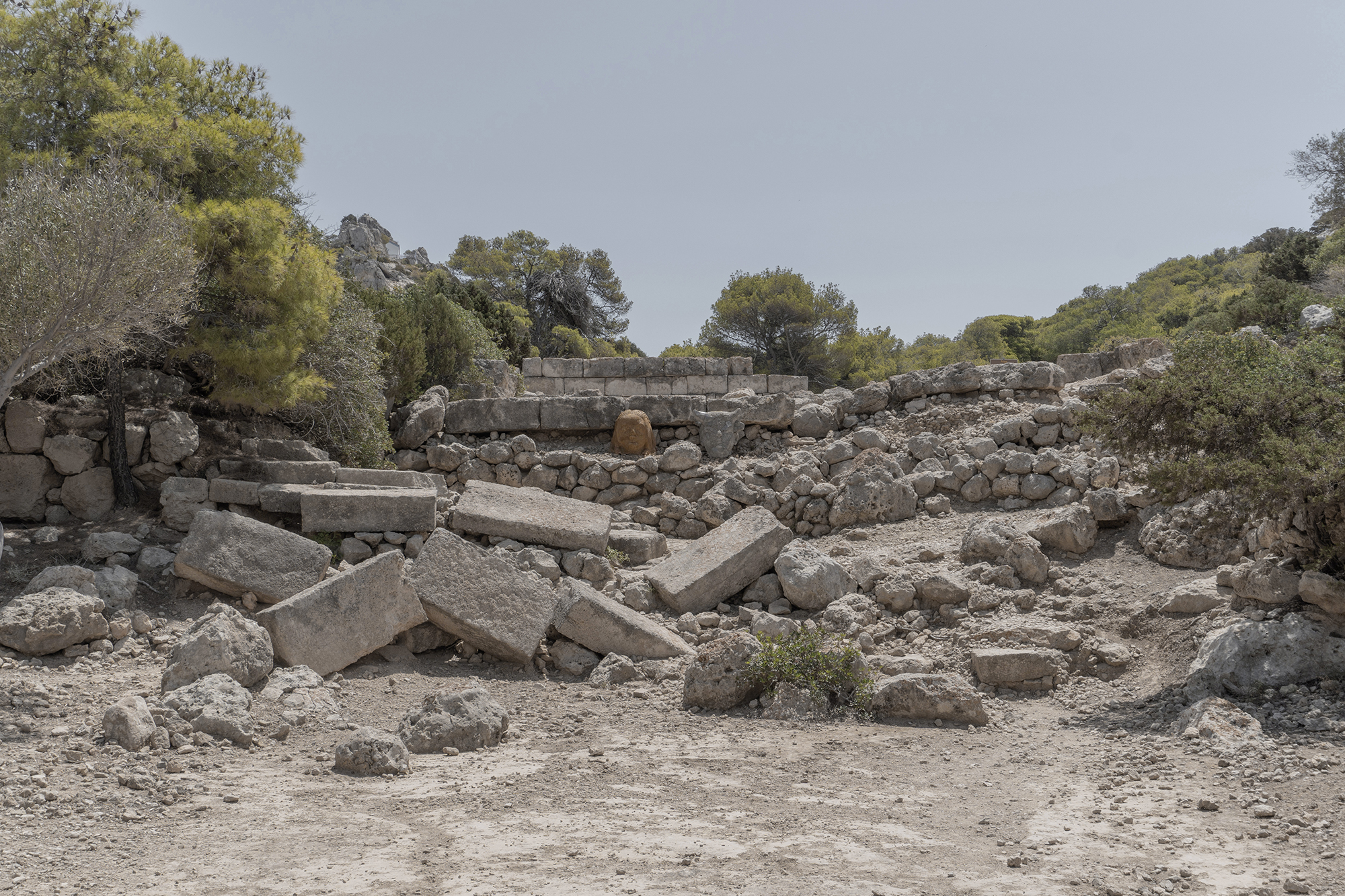
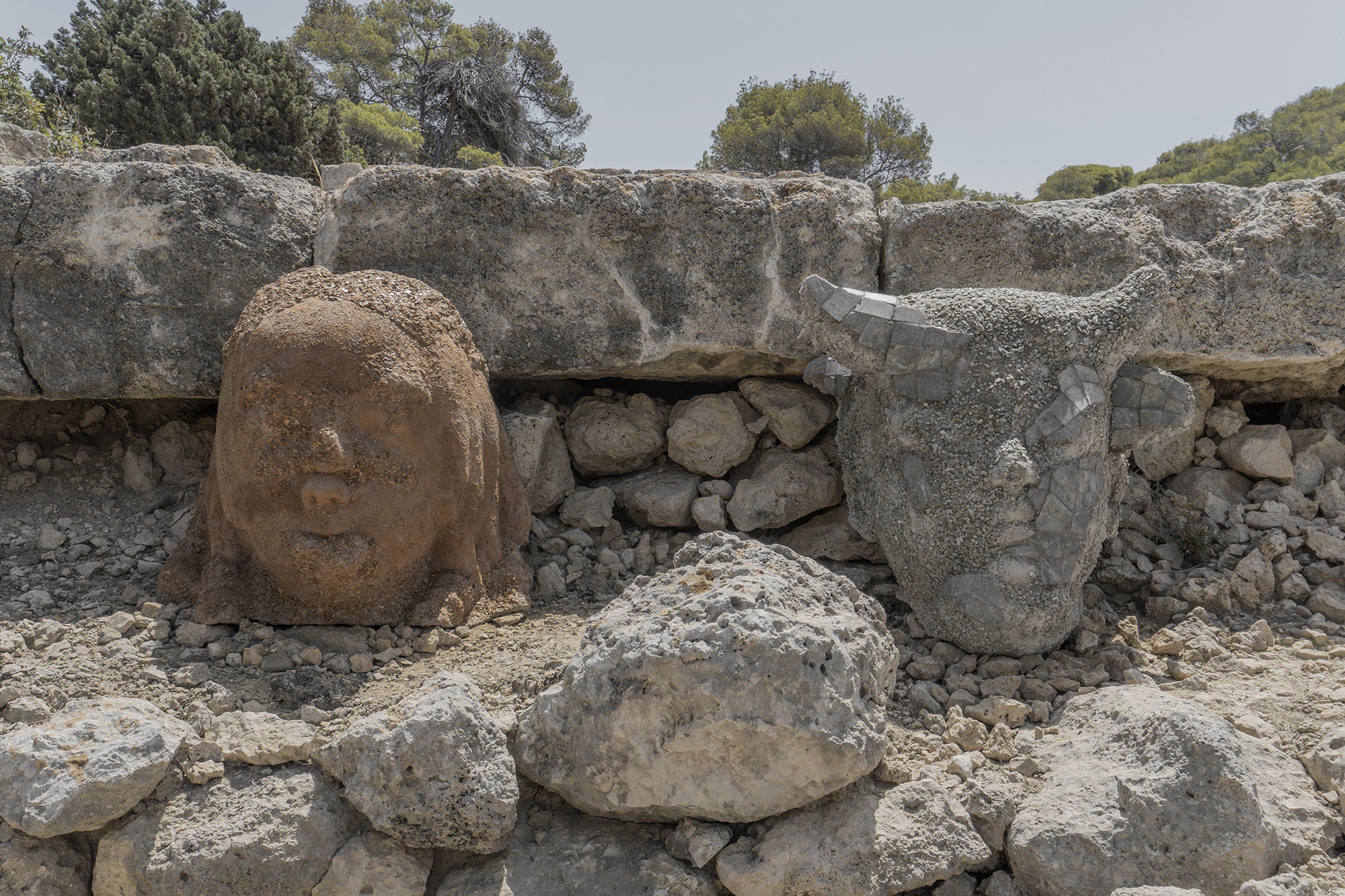
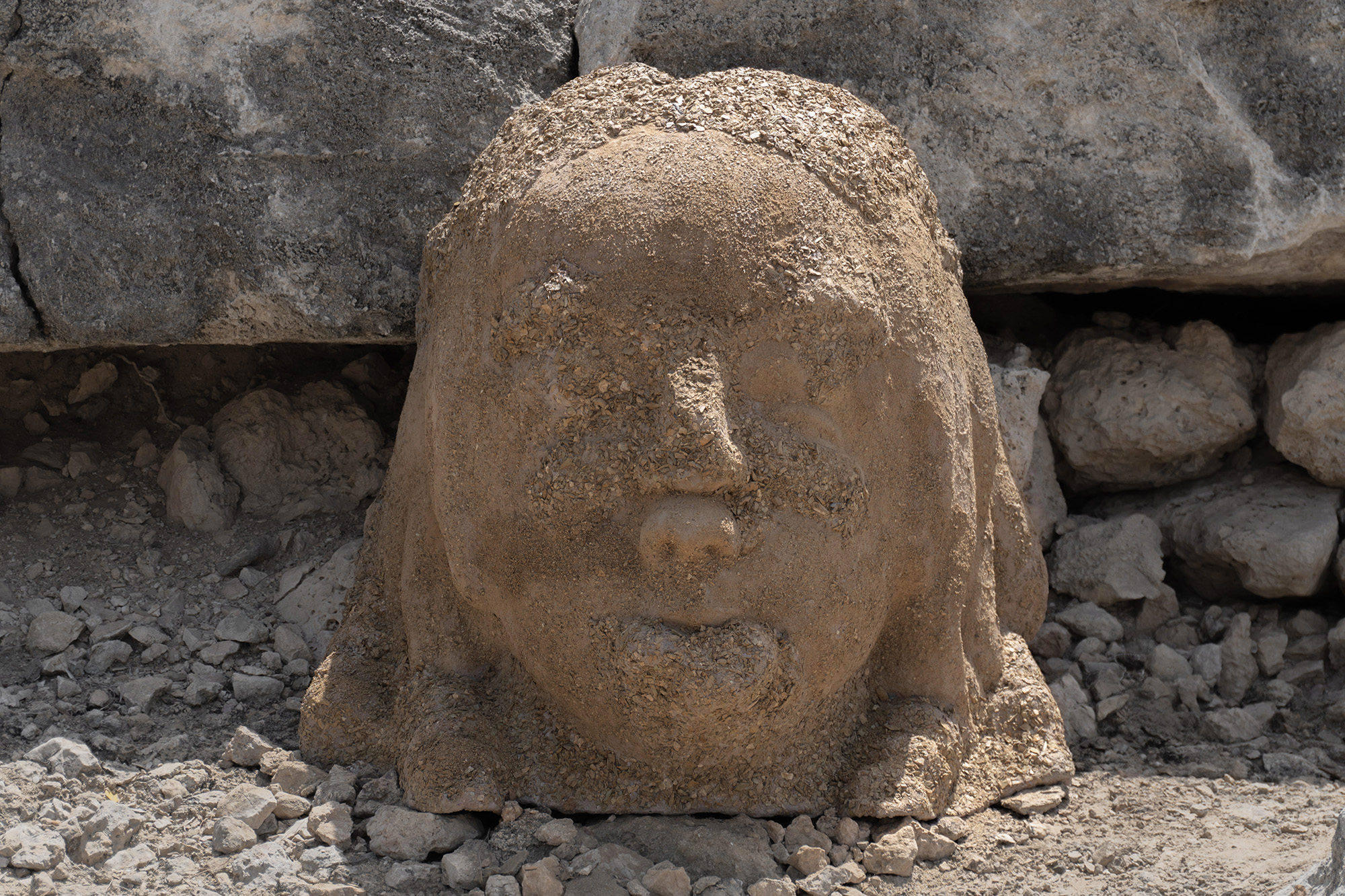
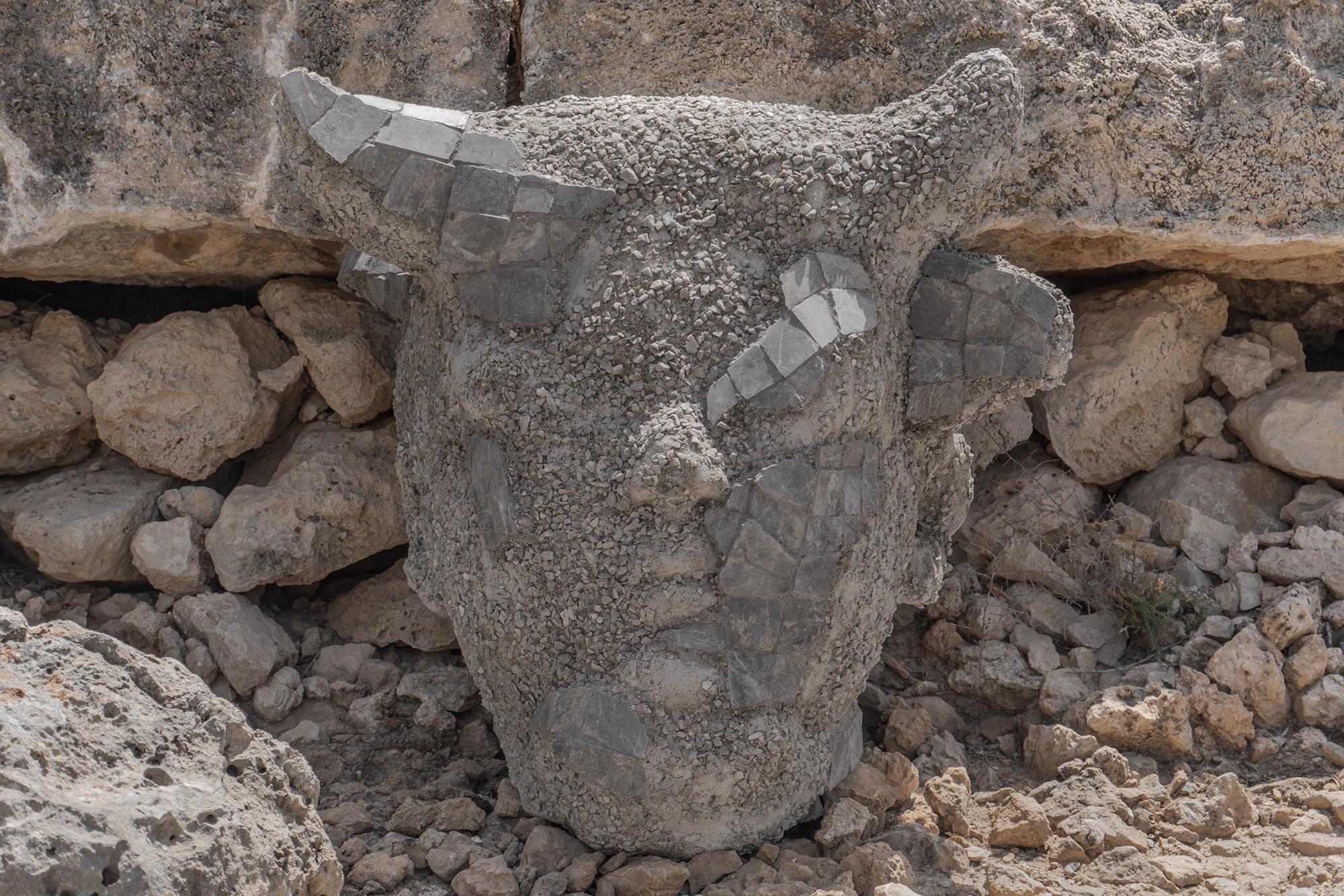
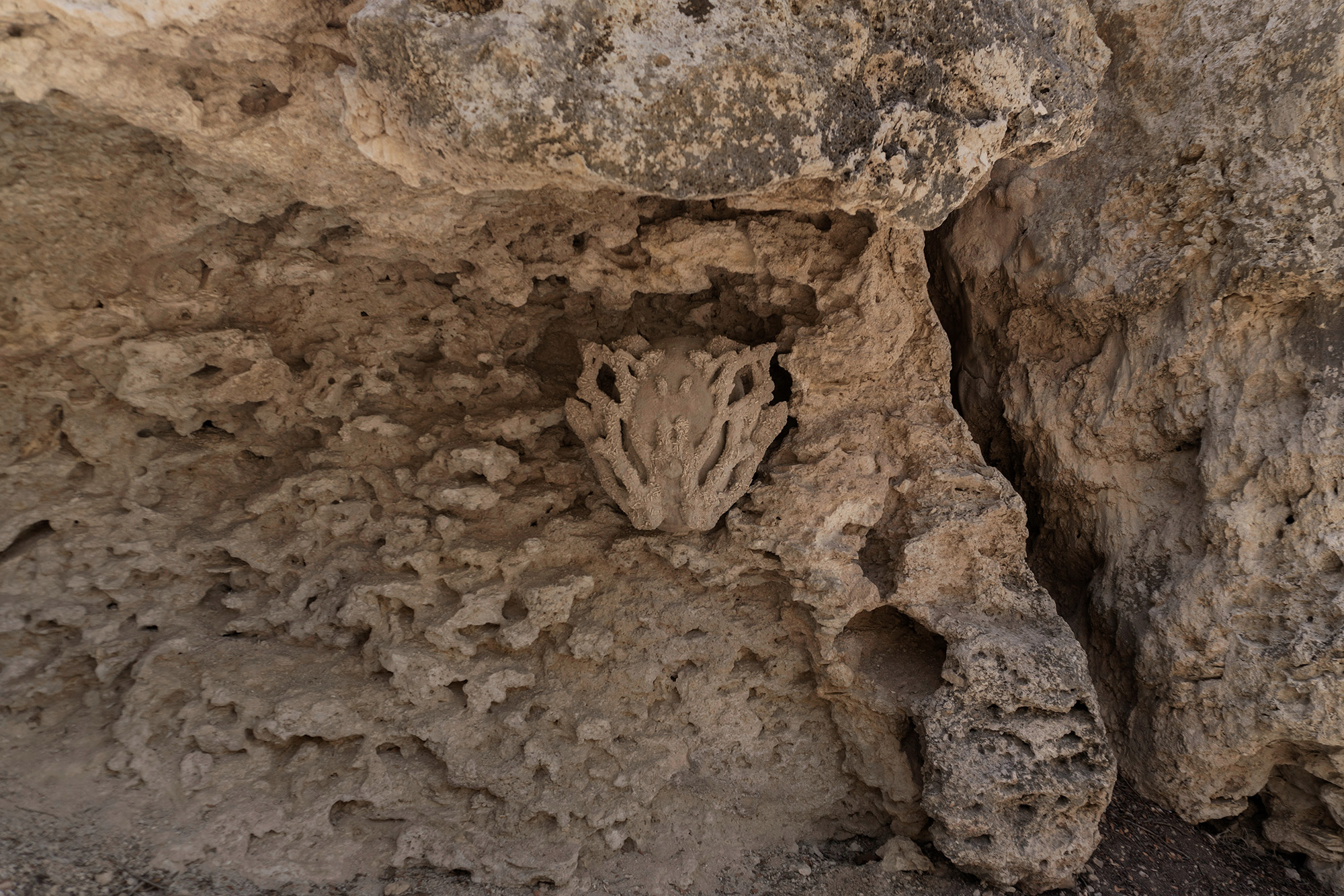
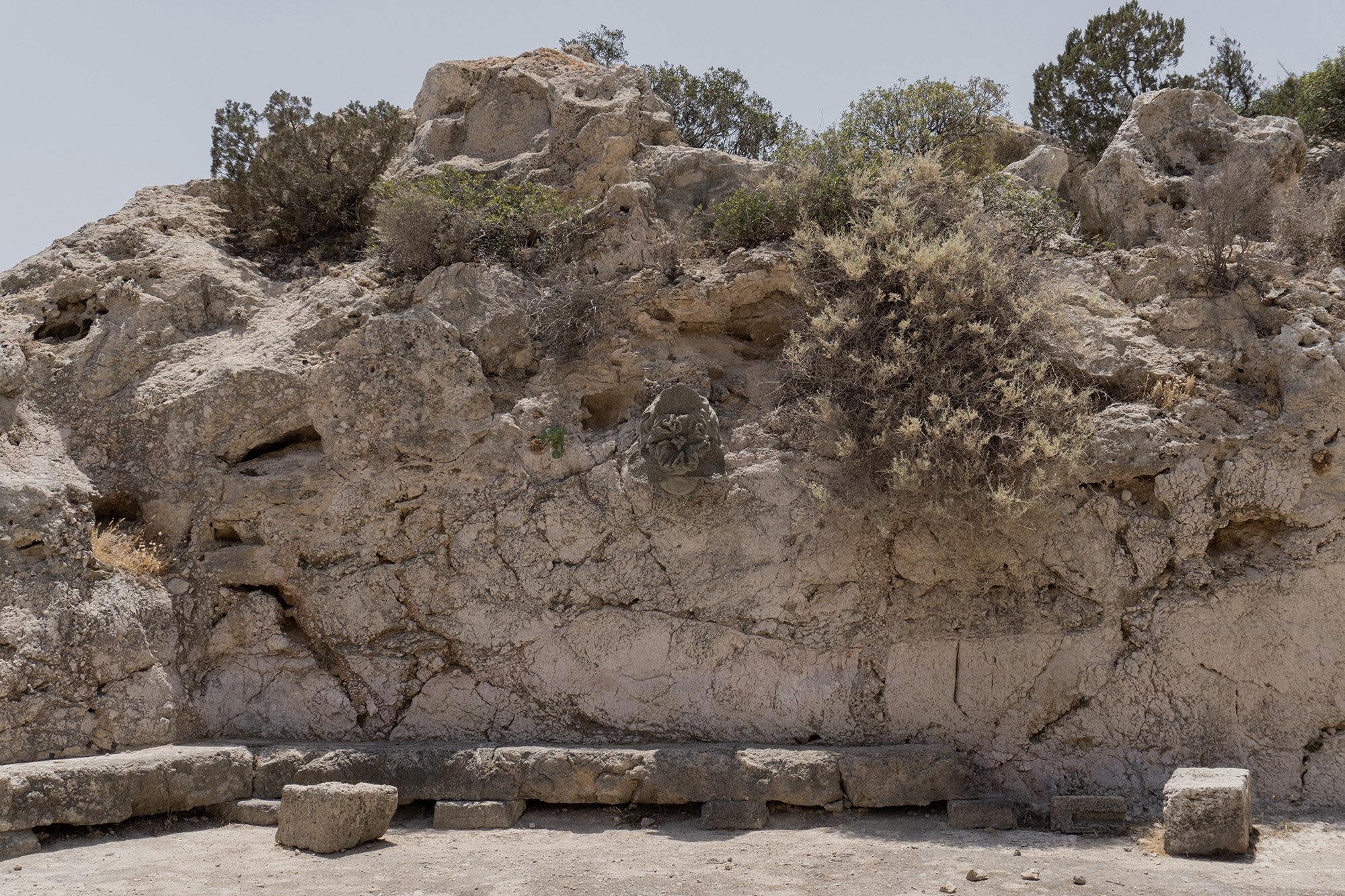
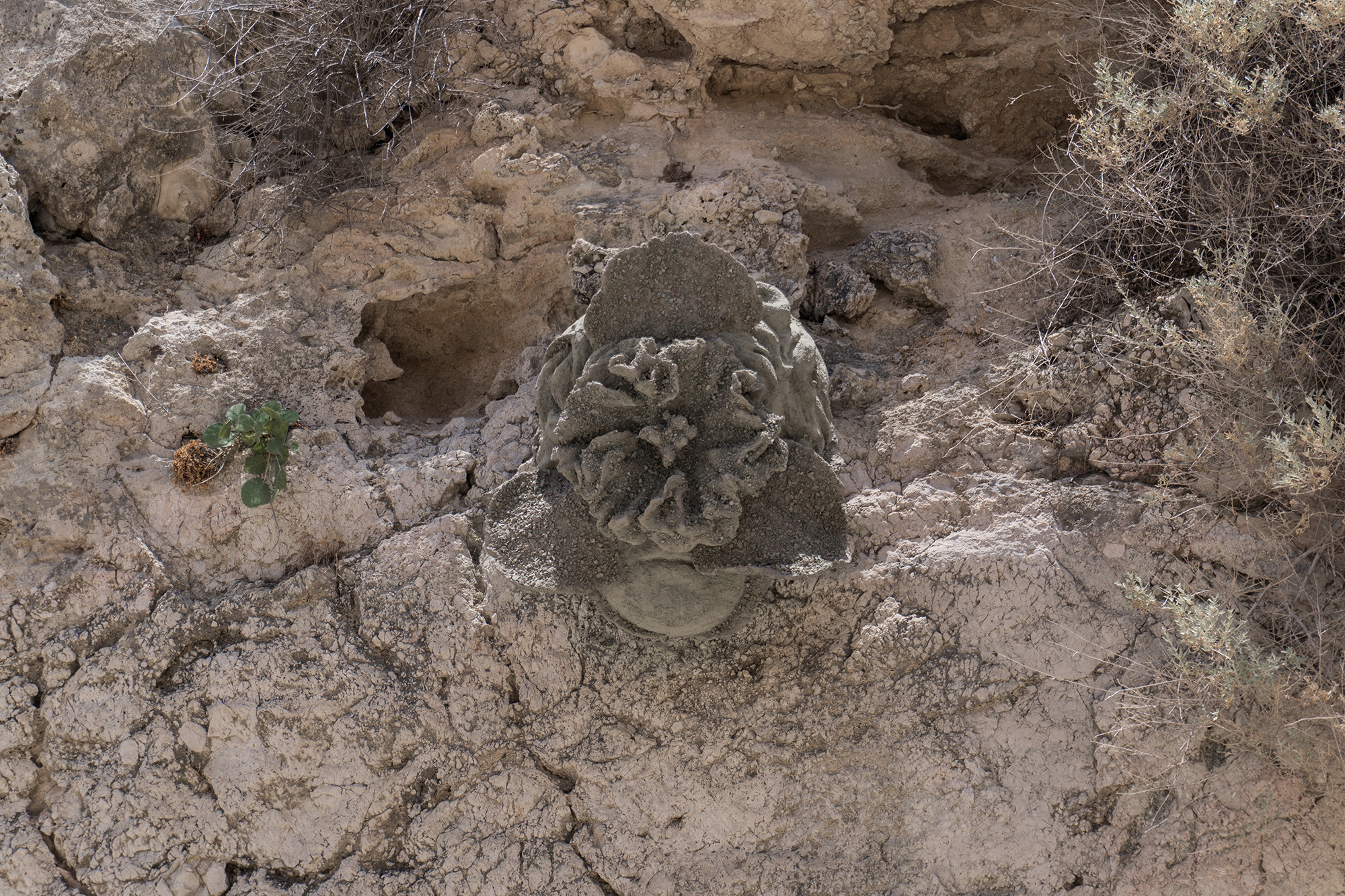
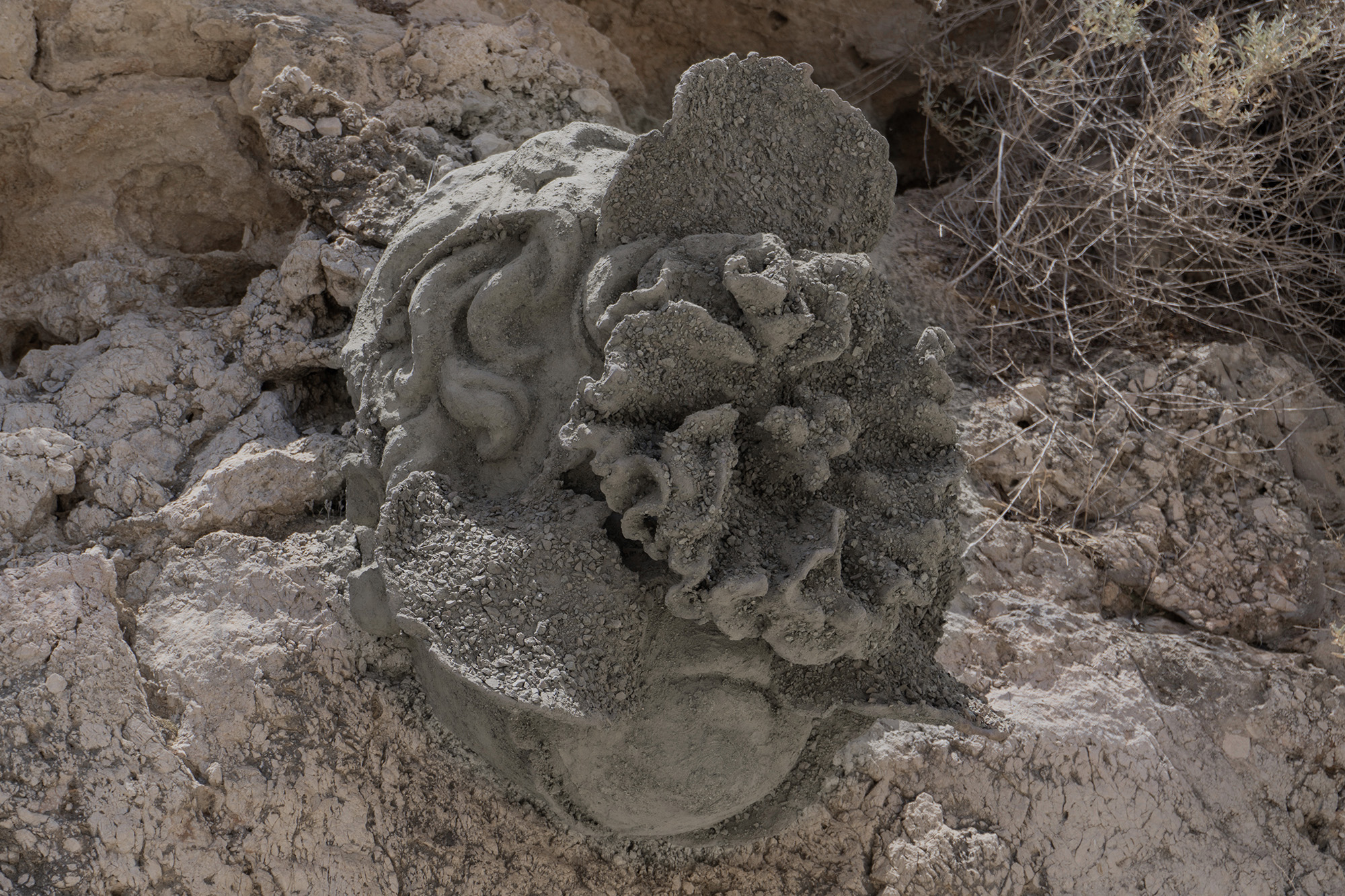

 Idle Tunnel, 2019